
Forklift Dealer Guide: Choosing the Right Dealer for Sales and Service
Complete forklift dealer guide covering authorized vs independent dealers, 🗨️ sales process, service contracts, parts availability, and finding reliable
What a Forklift Dealer Actually Does
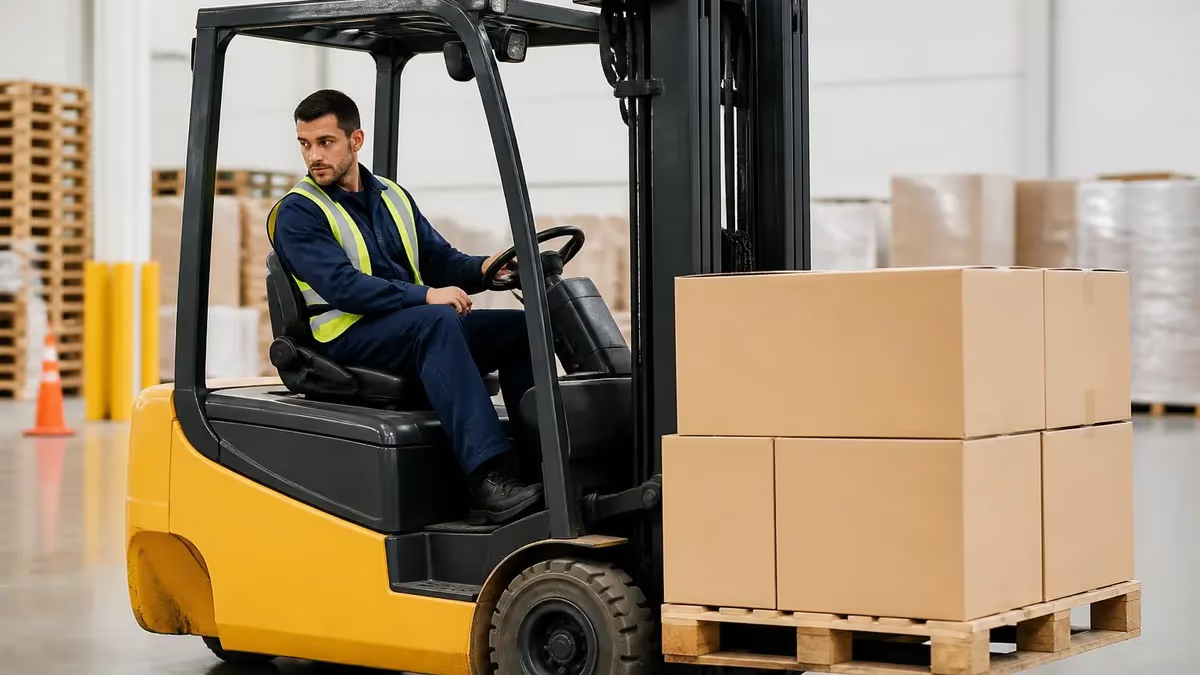
A forklift dealer serves as the primary commercial channel through which businesses acquire, maintain, and service their material handling equipment. Dealers handle new equipment sales, used equipment trades, rental fleets, parts distribution, scheduled and emergency service, operator training, and consultation on equipment selection for specific applications. The role extends far beyond simple equipment sales into ongoing partnership relationships that often span decades for established business customers.
Authorized dealers carry manufacturer franchise rights for specific brands such as Toyota, Hyster, Yale, Crown, Raymond, or Caterpillar. These dealers receive factory training, stock genuine parts, provide manufacturer warranty service, and represent the brand directly within their assigned territory. Brand-authorized dealers typically charge premium prices justified by official support relationships and consistent quality standards across their operations.
Independent dealers operate without exclusive manufacturer franchise but often handle multiple brands of new and used equipment. Independent operations offer more flexibility in equipment selection, sometimes lower prices, and broader used inventory than single-brand authorized dealers. Quality varies more between independent dealers than between authorized dealers, making reputation research particularly important when working with independent operations across competitive bidding processes.
The forklift dealer ecosystem in the United States includes thousands of independent operations alongside hundreds of authorized franchise locations representing major brands. Geographic coverage extends to every major metropolitan area and most secondary markets, though rural areas may require longer travel distances to reach the nearest authorized dealer location. Most dealers serve territories spanning fifty to two hundred fifty miles from their primary location depending on market density and competitive dynamics.
Industry consolidation over the past two decades has produced larger dealer groups operating multiple locations under common ownership. Companies including MH Equipment, Heli Americas, and various regional consolidators now represent substantial portions of national dealer capacity. Consolidation produces benefits including consistent training, broader parts availability, and stronger purchasing power but sometimes reduces the personal service that smaller independent dealers historically delivered to long-term customers.
Learn more in our guide on forklift driver job description. Learn more in our guide on forklift propane tank. Learn more in our guide on used forklifts for sale.
Forklift Dealer Quick Facts
Authorized dealers carry manufacturer franchise rights for specific brands with factory-trained technicians and genuine parts. Independent dealers handle multiple brands with more pricing flexibility. New equipment, used equipment, rental, parts, and service represent the five main service categories most dealers offer. Service contracts ranging from one to five years lock in support relationships and predictable costs.
Modern dealer operations integrate telematics, electronic service scheduling, and online parts ordering through customer portals. Service technician training requirements continue advancing as equipment electronics and lithium-ion battery systems require updated skills beyond traditional mechanical service knowledge.
Authorized vs Independent Forklift Dealers
Authorized dealer advantages include factory-trained service technicians, genuine OEM parts inventory, manufacturer warranty service, access to new equipment ordering channels, and brand-specific operator training programs developed by the manufacturer. The integration with the manufacturer support system produces consistent quality across geographic markets and reliable resolution paths when equipment issues arise outside normal repair scope.
Independent dealer advantages include multi-brand inventory selection, more flexible pricing negotiations, deeper used equipment expertise, and freedom from manufacturer mandates that sometimes restrict authorized dealer operations. Independent dealers often develop strong relationships with specific industries or applications, becoming subject matter experts for particular customer types beyond what authorized dealers serving broader markets can match.
The choice between authorized and independent dealers depends on the customer specific priorities. Operations needing factory warranty support, brand-specific training, and consistent service quality across multiple locations typically benefit from authorized dealer relationships. Operations prioritizing equipment variety, competitive pricing, and specialized industry knowledge often find independent dealers deliver better value for their specific situation despite the absence of factory backing.
Hybrid arrangements occasionally exist where dealers carry one authorized brand alongside independent representation of other brands. These hybrid operations attempt to combine the support benefits of authorized status with the inventory flexibility of multi-line independent operations. The structure works well when the authorized brand and independent brands serve different market segments without direct competition for the same customer applications.
Manufacturer support intensity varies significantly between brands and across dealer relationships. Some manufacturers invest heavily in dealer training, marketing support, and demonstration equipment while others provide minimal support beyond basic parts supply chains. The strength of manufacturer support affects the value of authorized status meaningfully, with strongly supported brands producing better dealer outcomes than weakly supported ones across the customer experience.

Major Forklift Dealer Services
Dealers represent manufacturers in their assigned territories for new truck orders. Authorized dealers handle factory orders directly while independents may broker through wholesale channels for new equipment requests. Selecting dealers offering this specific service capability matches well with operations that prioritize this aspect of the dealer relationship over time.
Dealers maintain used equipment inventories from trade-ins, lease returns, and direct purchases. Reconditioned trucks with dealer warranty options provide alternative to new equipment at substantial discount to new pricing. Selecting dealers offering this specific service capability matches well with operations that prioritize this aspect of the dealer relationship over time.
Short-term and long-term rental services let customers access equipment without capital purchase. Rental rates typically run two to four percent of equipment value per month for shorter commitments. Selecting dealers offering this specific service capability matches well with operations that prioritize this aspect of the dealer relationship over time.
Field service technicians, in-shop major repairs, parts inventory, planned maintenance contracts, and emergency response capabilities form the ongoing dealer relationship after initial equipment purchase. Selecting dealers offering this specific service capability matches well with operations that prioritize this aspect of the dealer relationship over time.
How to Evaluate Forklift Dealers
Dealer reputation provides the strongest signal of likely service quality and long-term relationship value. Asking other businesses in similar industries about their dealer experiences reveals patterns of strong performance or recurring problems that may not be visible from sales presentations alone. Online reviews on Google, Yelp, and specialized industry forums add additional perspective though should be read with awareness that disgruntled customers post more readily than satisfied ones.
Service capacity affects equipment uptime significantly. Dealers with strong service operations including multiple field technicians, large parts inventories, and dedicated emergency response capability deliver faster service when equipment breaks down. Single-technician dealers can leave customers waiting days for repairs when the technician is committed elsewhere. Asking about service technician count, average response time, and parts availability metrics reveals true service capacity beyond marketing claims.
Financial stability matters for dealers who maintain ongoing relationships with customers. Dealers facing financial pressure may cut staff, reduce parts inventory, or sell to consolidators that change service quality significantly. Researching dealer ownership history, recent acquisitions, and broader market position helps identify stable partners likely to support customers through equipment lifecycles rather than introducing disruption through ownership changes.
Site visit to dealer facilities reveals operational quality patterns that web research cannot capture fully. Clean organized parts departments, well-equipped service bays, professional sales offices, and engaged staff indicate dealer commitment to customer service. Chaotic facilities, outdated equipment, and disengaged staff suggest deeper operational issues that will affect customer experience throughout the relationship period.
Demonstration capabilities at dealer facilities matter when evaluating equipment options. Strong dealers maintain demo equipment that customers can test before purchase, allowing realistic evaluation of comfort, control feel, and visibility from the operator position. Dealers without demo equipment force customers to make decisions based on specifications alone, which can produce buyer remorse when delivered equipment does not match expectations from brochure descriptions.
Working With Forklift Dealers
Equipment purchase typically begins with needs assessment where the dealer visits the customer site, discusses applications and load profiles, and recommends specific truck configurations. Quotes follow with detailed specifications, pricing, and delivery timelines. Comparing quotes from multiple dealers ensures competitive pricing and identifies subtle differences in included features or service terms.
Understanding the specific business considerations within each interaction type produces better outcomes than treating all dealer engagement as interchangeable. Each engagement model carries distinct economic and relationship characteristics.
Service Contracts and Maintenance Plans
Planned maintenance contracts schedule routine inspections, fluid changes, and component checks at defined intervals such as every two hundred fifty operating hours. These contracts produce predictable budgeting for maintenance costs while preventing the deferred maintenance that compounds into expensive repairs when ignored. Most dealers offer planned maintenance at hourly rates lower than ad hoc service rates to encourage preventive scheduling.
Full-service contracts go beyond planned maintenance to include unlimited service calls, parts replacement under warranty terms, and sometimes operator training and certification. These comprehensive contracts approach the economics of equipment leasing because they transfer most ownership cost risk to the dealer. Pricing typically runs two to five percent of equipment purchase price annually depending on coverage scope and equipment age.
Contract negotiation matters because contract terms vary substantially between dealers and even between offerings from the same dealer. Reading the fine print on covered components, excluded conditions, response time guarantees, and termination conditions identifies real value differences beyond headline pricing. Engaging legal counsel for review of multi-year contracts protects against terms that might disadvantage the customer during the contract period.
Telematics integration with service contracts has emerged as a recent development that improves preventive maintenance scheduling significantly. Modern forklifts equipped with telematics report operating hours, fault codes, and usage patterns automatically to dealer service centers. The data enables more precise preventive maintenance scheduling based on actual use rather than calendar intervals that may miss heavy-use periods or trigger service before truly needed.
Contract escalation clauses warrant careful review during multi-year contract negotiation. Standard contracts may include annual price escalations tied to consumer price index or service labor inflation. Caps on annual increases protect against runaway pricing during periods of high inflation. Negotiating these terms upfront prevents disputes during the contract period when underlying cost dynamics shift in unexpected directions.

Some dealers represent themselves as authorized when they are not. Manufacturer warranties may not apply when service or parts come from unauthorized sources. Verifying authorization directly with the manufacturer through their official dealer locator tools confirms claims that affect warranty validity and service quality consistency for the equipment ownership period.
Direct manufacturer contact through customer service hotlines also verifies dealer authorization status and helps resolve disputes when authorized dealer service does not meet expectations. Documentation of any warranty service issues protects customer rights under manufacturer warranty terms.
Parts Availability and Logistics
Parts inventory at the local dealer determines repair speed for common maintenance and service work. Dealers with strong parts inventories complete most repairs within hours of arrival at the customer site. Dealers with thin inventories may require parts ordering with two to seven day waits, leaving equipment idle during the wait period. Asking about specific parts availability for the customer equipment models reveals real inventory depth.
Genuine OEM parts versus aftermarket alternatives represents a recurring decision for service customers. OEM parts produced by the equipment manufacturer typically cost more but offer reliable quality and exact fit. Aftermarket parts from independent manufacturers cost less but vary in quality and may produce subsequent reliability issues. Dealers typically offer both options at different price points for customers to choose based on budget and reliability priorities.
Emergency parts shipping options exist for critical situations where standard supply chains are too slow. Most major dealers operate hub distribution centers with overnight shipping capabilities for parts not available locally. Premium shipping adds cost but reduces downtime substantially compared to standard ground delivery. Knowing these options exist before emergencies arise allows quick decisions when minutes of downtime carry meaningful business cost.
Parts pricing varies dramatically across sources for the same component. Genuine OEM parts purchased through authorized channels typically cost the most. Wholesale OEM parts purchased through independent dealers may cost less for identical parts. Aftermarket parts from independent manufacturers cost least but quality varies. Understanding the price-quality trade-offs across these sources helps customers manage parts costs over equipment lifetime.
Parts return policies vary by dealer and may affect total parts cost meaningfully. Some dealers offer thirty-day no-questions-asked returns on standard parts. Others restrict returns to specific conditions or require restocking fees on returns. Reading return policies before ordering parts prevents disputes when initial part selection turns out wrong for the actual repair needed at the customer site.
Forklift Dealer Selection Checklist
- ✓Verify manufacturer authorization status directly through the manufacturer official dealer locator tools
- ✓Research dealer reputation through online reviews, industry forums, and references from current customers
- ✓Confirm service technician count, average response time, and emergency service capabilities
- ✓Inquire about parts inventory depth for the specific equipment models you plan to purchase or service
- ✓Compare quotes from multiple dealers including detailed specifications, pricing, and included services
- ✓Review service contract terms carefully including coverage scope, response guarantees, and exclusions
- ✓Verify financial stability and ownership history to identify partners committed to long-term relationships
- ✓Visit dealer facilities in person to evaluate operational quality beyond what web research alone reveals about the dealer
- ✓Discuss specific equipment models with sales representatives to gauge their technical knowledge depth of the products
Negotiating With Forklift Dealers
Pricing negotiation produces meaningful savings even with authorized dealers where headline prices follow manufacturer suggested retail pricing. Dealer margins on new equipment typically run ten to twenty percent of list price, leaving room for negotiation on individual transactions. Bundling equipment purchase with multi-year service contract or training packages often produces better effective pricing than negotiating on equipment price alone.
Trade-in value negotiations require independent valuation of existing equipment to avoid accepting low trade-in offers that mask higher effective pricing on new equipment. Online marketplace listings of similar used equipment establish realistic market value ranges. Some customers sell existing equipment privately rather than trading in, capturing higher value than typical trade-in offers from dealers focused on retail margins on subsequent resale.
Delivery and setup terms vary between dealers and warrant explicit discussion before commitment. Some dealers include delivery, basic operator training, and initial warranty inspection in equipment pricing while others charge separately for these services. Clarifying what is included prevents surprise charges after delivery and supports apples-to-apples comparison across competing dealer quotes during the selection process.
Timing of negotiations affects pricing meaningfully. End-of-month, end-of-quarter, and end-of-year periods often produce better pricing as dealers seek to meet sales targets. Manufacturer-sponsored promotional periods bring factory discounts that dealers may not advertise broadly but will discuss during direct negotiation. Awareness of these patterns lets customers time purchase decisions for maximum use.
Long-term relationship value sometimes justifies less aggressive single-transaction negotiation. Dealers remember which customers negotiated hard on initial purchases and may respond with less flexibility on later service or rental needs. Building reasonable margins into transactions while requesting fair pricing produces stronger ongoing relationships than extracting maximum value from each individual transaction at the cost of dealer goodwill.
National vs Local Forklift Dealers
National dealer networks such as those operated by major franchise organizations offer consistent quality across geographic locations, useful for businesses operating multiple sites in different regions. Centralized procurement teams can negotiate fleet-wide agreements that cover all locations through a single relationship rather than managing many independent dealer relationships across the geographic footprint.
Local independent dealers often deliver more personalized service than national chains because owners and managers know individual customers personally. Long-term relationships with local dealers can produce informal flexibility on service scheduling, custom configurations, and credit terms that national chains with standardized policies cannot easily match. The trade-off involves limited geographic coverage and consistency across markets.
Mixed strategies serve some multi-location operations effectively. Primary equipment relationships with national dealers handle most needs while local relationships in specialized markets address unique requirements that national operations may not match. Hub locations may use one network while satellite locations use different providers based on local availability and service quality patterns observed over time.
Communication patterns differ between national and local dealer organizations. National chains typically operate through structured account management with formal communication channels and standardized response procedures. Local independents often allow direct access to owners and senior managers when issues arise. The communication style preference depends on customer organizational maturity and preferred working relationships across business interactions.
Cultural fit between customer organization and dealer matters more than rational analysis sometimes acknowledges. Customers and dealers who share working styles, communication preferences, and business values produce stronger long-term relationships than mismatched pairs that may produce friction even with strong underlying capabilities. Trusting initial impressions about cultural fit alongside rational evaluation of capabilities improves dealer selection outcomes.

Forklift Dealer Quick Numbers
Common Dealer Types
Single-brand dealers carrying manufacturer franchise with factory training, genuine parts inventory, and direct warranty service capabilities for their authorized brand. Selecting dealers offering this specific service capability matches well with operations that prioritize this aspect of the dealer relationship over time.
Dealers carrying multiple brands of new and used equipment with broader inventory and pricing flexibility than single-brand authorized operations. Selecting dealers offering this specific service capability matches well with operations that prioritize this aspect of the dealer relationship over time.
Dealers focused on used equipment with deep expertise in evaluating, refurbishing, and warranting older trucks for budget-conscious customers and seasonal users. Selecting dealers offering this specific service capability matches well with operations that prioritize this aspect of the dealer relationship over time.
Dealers focused on equipment rental rather than sales, often serving construction, special events, and temporary use scenarios with flexible short-term agreements. Selecting dealers offering this specific service capability matches well with operations that prioritize this aspect of the dealer relationship over time.
Dealer Operator Training Services
OSHA-compliant operator training represents a service most dealers offer alongside equipment sales and rental. Training combines classroom instruction on safety regulations, equipment specifications, and operating procedures with hands-on practice and evaluation on actual equipment. Most training programs run four to eight hours total with certification valid for three years before refresher training becomes required under OSHA rules.
On-site training conducted at customer facilities allows operators to learn on the equipment they will actually use, in the environment where they will actually work. The relevance produces stronger learning outcomes than generic off-site training conducted on different equipment in different environments. Most dealers offer on-site training at modest additional cost over their training facility rates for groups of four or more operators.
Train-the-trainer programs equip customer staff to deliver in-house operator training thereafter, eliminating recurring training fees. The investment in initial trainer certification pays back quickly for operations with many operators or high turnover that would otherwise require frequent external training engagements. Most dealers offer trainer certification at substantially higher cost than standard operator training to reflect the deeper instructor preparation required.
Documentation of operator training serves regulatory compliance purposes beyond just the training itself. OSHA inspections frequently review training records to verify operator certifications are current and complete. Strong dealers provide complete documentation packages including individual certificates, sign-in sheets, course content summaries, and trainer credentials. Weak documentation can produce compliance issues during audits even when actual training was conducted thoroughly.
Refresher training timing matters because operator certifications expire after three years under OSHA rules. Strong dealer partnerships include proactive reminders before certification expiration, scheduling assistance for refresher classes, and bulk discounts on refresher training for larger operator groups. These ongoing support elements distinguish strong dealer relationships from purely transactional providers focused only on initial certification revenue.
Authorized vs Independent Dealer Pros and Cons
- + —
- + —
- + —
- + —
- + —
- − —
- − —
- − —
- − —
- − —
Forklift Questions and Answers
About the Author
Certified Crane Operator & Skilled Trades Exam Specialist
Ferris State UniversityRobert Martinez is a Journeyman Ironworker, NCCCO-certified crane operator, and forklift trainer with a Bachelor of Science in Construction Technology from Ferris State University. He has 21 years of ironworking, rigging, and heavy equipment operation experience across high-rise and industrial construction sites. Robert prepares candidates for crane operator, rigger, forklift, and skilled trades certification examinations.