
When Is the Florida Civic Literacy Exam? Complete FCLE Guide 2026 September
When is the Florida Civic Literacy Exam? Learn FCLE dates, requirements, format & how to prep with a free fcle practice test. ✅ Full 2026 September guide.

If you are wondering when is the Florida Civic Literacy Exam, you are not alone — thousands of Florida college students search for this answer every semester. The FCLE, or Florida Civic Literacy Exam, is a state-mandated requirement for all students pursuing an associate or baccalaureate degree at a Florida public college or university. Florida law requires that every student demonstrate civic literacy competency before graduating, and the FCLE is the primary assessment used to fulfill that requirement. You can begin preparing today with a free fcle quizlet to benchmark your knowledge before test day.
The Florida Civic Literacy Exam is administered on an ongoing basis throughout the academic year — there is no single annual test date. Instead, your institution schedules testing windows each semester, typically during the fall, spring, and sometimes summer terms. Students generally must pass the FCLE before the completion of their 60th credit hour, making it critical to schedule the exam early enough in your academic career to allow for retakes if needed. Contact your institution's testing center or registrar to confirm your campus-specific testing windows.
Florida Statute 1007.25 established the civic literacy requirement, and the State Board of Education approved the FCLE as one of two accepted assessments to satisfy it. The other option is a passing score on the Advanced Placement (AP) United States Government and Politics exam, with a score of 3 or higher, or the AP United States History exam. However, the vast majority of students in Florida public colleges take the FCLE directly, making familiarity with its format, schedule, and content absolutely essential for degree completion.
Understanding the timing of the FCLE matters more than most students initially realize. If you wait too long to take the exam and do not pass on your first attempt, you may find yourself scrambling to satisfy the requirement before graduation. Most Florida institutions enforce the 60-credit-hour rule strictly, meaning that students who reach that threshold without passing could face holds on further course registration. Proactive scheduling — ideally in your first or second year — gives you the buffer you need to retake the exam if necessary.
The FCLE covers foundational knowledge in American government, political institutions, constitutional history, civil rights, and civic responsibilities. The exam consists of 100 multiple-choice questions, and you must answer at least 60 correctly — a 60% passing score — to satisfy the state requirement. While the test is not designed to be a high-stakes barrier, students who have not reviewed basic civics since high school often find themselves surprised by the specificity of the questions. A structured study plan and regular use of practice materials make a significant difference in first-attempt pass rates.
This comprehensive guide covers everything you need to know about the FCLE: when it is offered, how it is structured, what content it tests, and how to build an effective preparation strategy. Whether you are a first-time test-taker or returning for a retake, the information here will help you approach the exam with confidence. From understanding your school's specific testing calendar to leveraging the best free study tools available online, we have you covered with actionable, up-to-date guidance for the 2026 academic year.
Florida Civic Literacy Exam by the Numbers
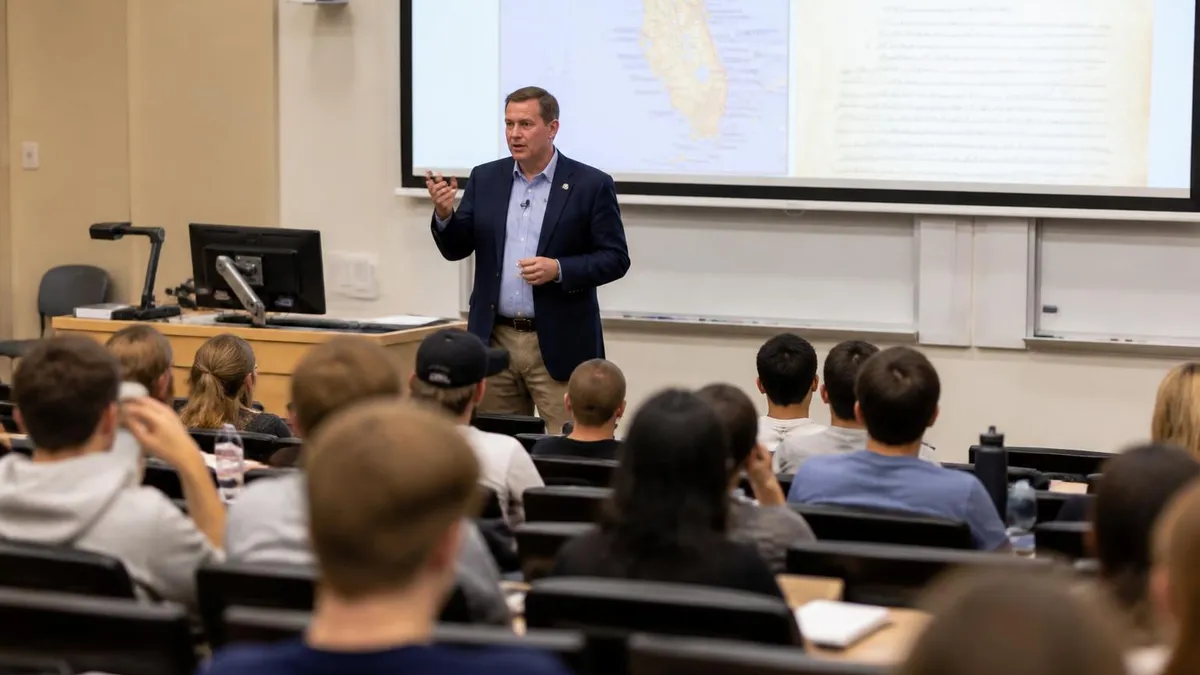
FCLE Exam Format & Structure
| Section | Questions | Time | Weight | Notes |
|---|---|---|---|---|
| American History & Constitutional Foundations | 35 | ~42 min | 35% | Declaration of Independence, Constitution, Bill of Rights |
| American Government & Political Institutions | 30 | ~36 min | 30% | Branches of government, federalism, elections |
| Citizenship Rights & Responsibilities | 20 | ~24 min | 20% | Civil rights, civil liberties, civic participation |
| Civic Literacy & Current Application | 15 | ~18 min | 15% | How government works today, landmark court cases |
| Total | 100 | 2 hours | 100% |
The Florida Civic Literacy Exam is not administered on a single date each year — instead, it operates on a rolling testing model that gives students flexibility in choosing when to sit for the exam. Most Florida public colleges and universities schedule testing windows at least twice per semester: once near the beginning of the term and once toward the end.
This structure means that in a typical academic year, students may have four to six separate opportunities to take the FCLE without special arrangements. Checking your institution's academic calendar and testing center website at the start of each semester is the best way to stay informed.
The specific dates for FCLE testing vary by institution. Large state universities such as the University of Florida, Florida State University, and Florida International University tend to offer the most frequent testing windows, sometimes providing walk-in testing on specific weekdays throughout the semester. Smaller Florida College System institutions — such as Broward College, Miami Dade College, and Valencia College — typically schedule the FCLE during designated assessment periods and may require advance registration. Call your campus testing center or log into your student portal at least four weeks before you plan to test to secure your seat.
For students at Tallahassee State College and other institutions using the TSC testing platform, you can access structured preparation through an fcle practice test tsc that mirrors the actual exam interface. Familiarizing yourself with the testing platform before your scheduled appointment reduces anxiety and eliminates surprises on exam day. Many students report that navigating an unfamiliar computer-based testing system consumes mental energy they need for the actual questions, so a platform dry run is always worth the time investment.
Online proctored delivery has expanded significantly since 2022, and many Florida institutions now offer the FCLE in a remote format for students who cannot easily come to campus. If your school offers online proctoring, you will need a quiet testing environment, a reliable internet connection, and a compatible device with a functioning webcam and microphone. Remote testing appointments often have different scheduling windows than on-campus sessions, and slots can fill up quickly during peak periods — particularly in April and November when students rush to meet end-of-semester deadlines.
Transfer students face unique timing considerations when it comes to the FCLE. If you transferred to a Florida public institution with credits from another state or a private college, those credits count toward the 60-credit threshold even if they were earned before you enrolled. Many transfer students arrive at their new school already past the deadline point and must take the FCLE as one of their first orders of business. Reaching out to your academic advisor within the first week of enrollment is critical to understanding your personal deadline and scheduling timeline.
Students with documented disabilities or accommodations through the Americans with Disabilities Act (ADA) should contact their school's Office of Student Accessibility Services well in advance of testing. Extended time, separate testing rooms, screen readers, and other accommodations must be arranged before you register for an FCLE session — they cannot typically be requested at the testing center on the day of your appointment. Processing accommodation requests can take anywhere from one to four weeks, so plan accordingly. The florida civic literacy exam quizlet article provides additional details on exam timing and pacing strategies for students using extended time.
Summer semester testing availability varies widely across institutions. Some colleges offer only one FCLE window during the summer — often in June — while others suspend testing entirely during certain summer sessions due to staffing constraints. If you plan to test in the summer, verify availability with your testing center no later than April to avoid finding yourself locked out of summer options. Students who rely on passing the FCLE during summer to lift a registration hold before fall enrollment must be especially proactive about confirming their institution's summer testing schedule.
FCLE Practice Test Study Strategies by Learning Style
Visual learners excel on the FCLE when they use graphic organizers, constitutional timeline charts, and color-coded branch-of-government diagrams. Creating a visual map of the three branches — legislative, executive, and judicial — with their powers, limits, and relationships helps cement abstract concepts. Flashcard apps that include images or diagrams of historical documents such as the Constitution, the Declaration of Independence, and the Bill of Rights work particularly well for this group.
Supplementing your study with short documentary clips about landmark constitutional moments or Supreme Court decisions reinforces visual memory pathways. Sites like Khan Academy's U.S. government course offer illustrated explainers on topics that appear frequently on the Florida Civic Literacy Exam. Pairing visual materials with a timed fcle practice PDF lets you track which visual concepts still need reinforcement before test day.
Taking the FCLE Early vs. Waiting Until Later in Your Degree
- +Failing early leaves plenty of time to retake before the 60-credit deadline
- +Civic knowledge is fresher if taken soon after high school civics or AP Government courses
- +Passing early removes a registration hold risk that could delay future enrollment
- +Lower stakes psychologically when you still have many semesters ahead
- +More prep resources and campus tutoring are available to first- and second-year students
- +Passing early allows you to focus senior-year energy on capstone courses and internships
- −Less time for test prep if you are adjusting to college coursework simultaneously
- −Some students benefit from taking related college coursework before attempting the exam
- −Scheduling conflicts with orientation and early-semester registration can create complications
- −Testing center availability may be limited during the first weeks of a new semester
- −Students who change majors or transfer may face disrupted timelines
- −Procrastinating students who register early may still delay actually sitting for the exam
FCLE Preparation Checklist: 10 Steps Before Test Day
- ✓Contact your institution's testing center to confirm the next available FCLE testing window and register early.
- ✓Request ADA accommodations through your school's accessibility office at least four weeks before your test date.
- ✓Take a full-length diagnostic practice test to identify your weakest content areas before beginning structured study.
- ✓Review all four FCLE content domains: American history, government structure, citizenship rights, and civic literacy.
- ✓Memorize the 27 constitutional amendments, focusing especially on the First, Second, Fourth, Sixth, and Fourteenth.
- ✓Study at least five landmark Supreme Court cases, including Marbury v. Madison and Brown v. Board of Education.
- ✓Practice with timed sessions of 100 questions in two hours to build exam-pace stamina and time management skills.
- ✓Review the three branches of government, their powers, checks and balances, and how federal legislation is enacted.
- ✓Confirm the testing platform your institution uses (in-person, TSC online, or remote proctoring) and do a tech check.
- ✓Get a full night of sleep before exam day, arrive early, and bring required photo identification as specified by your testing center.
The 60-Credit Rule Is a Hard Deadline — Don't Wait
Florida law requires all students at public colleges and universities to demonstrate civic literacy competency before earning 60 credit hours. Missing this window can trigger registration holds that prevent you from enrolling in future semesters. Schedule your FCLE during your first or second year — ideally between your 30th and 45th credit hours — to give yourself at least one retake opportunity before the deadline hits.
Passing the Florida Civic Literacy Exam on your first attempt is entirely achievable with the right preparation strategy — but it requires more than a last-minute cram session. Students who pass on the first try typically study for two to four weeks using a combination of content review, practice testing, and targeted remediation of weak areas. The key is not simply reading a civics textbook but actively engaging with the material through practice questions, answer explanations, and spaced repetition. A structured study plan that allocates specific hours per week to each content domain is far more effective than unfocused reviewing.
American history content on the FCLE focuses primarily on the founding era through the Civil War and Reconstruction, with additional emphasis on the Progressive Era, World War II, and the Civil Rights Movement. Students frequently underestimate how much specific factual knowledge the exam requires — not just general concepts, but specific dates, authors, and provisions of key documents. For example, knowing that the Declaration of Independence was adopted on July 4, 1776, is not enough; you may also need to know its primary author (Thomas Jefferson) and its core philosophical foundations (natural rights theory drawn from John Locke).
Constitutional knowledge is the backbone of the FCLE. You need a thorough understanding of all seven articles of the Constitution, what each article establishes, and the significance of the Preamble. Beyond the document itself, you need to understand the context of its creation: the failure of the Articles of Confederation, the Constitutional Convention of 1787, the Federalist Papers, and the ratification debates. The Bill of Rights — the first ten amendments — receives heavy emphasis, so memorizing which amendment protects which right is non-negotiable preparation. Flash through these regularly until recall becomes automatic.
Government structure questions test your understanding of how the three branches operate, how they check each other's power, and how laws are made. A surprisingly large number of FCLE questions focus on the legislative process: how a bill becomes a law, the roles of the House versus the Senate, the significance of the filibuster, and the override procedure for presidential vetoes. Understanding the Electoral College, the roles of political parties, and the distinction between federal and state powers under the Tenth Amendment also appear with regularity. These topics reward students who learn the process, not just the facts.
Supreme Court cases are a high-yield area that many students neglect until late in their preparation. The FCLE regularly tests knowledge of landmark decisions such as Marbury v. Madison (judicial review), McCulloch v. Maryland (implied powers), Plessy v. Ferguson (separate but equal), Brown v. Board of Education (desegregation), Tinker v. Des Moines (student speech rights), and Miranda v. Arizona (rights of the accused). For each case, you should know the year, the constitutional issue, the ruling, and why it was historically significant.
Using a case-by-case flashcard system is the most efficient way to master this material in a limited time frame.
Citizenship and civil rights content on the FCLE covers both historical civil rights milestones and contemporary civic responsibilities. Questions in this domain may address the suffrage movement, the 19th Amendment, the Civil Rights Act of 1964, the Voting Rights Act of 1965, and landmark figures such as Martin Luther King Jr. and Rosa Parks. You may also encounter questions about contemporary civic duties — registering to vote, jury duty, the census, and the naturalization process for immigrants. These questions tend to be more conceptual and less date-specific, making them among the more accessible on the exam for well-prepared students.
Time management during the actual exam deserves deliberate practice. With 100 questions in 120 minutes, you have an average of 72 seconds per question. Most questions can be answered in 30 to 50 seconds, leaving extra time for the 15 to 20 questions you will need to think through more carefully.
Develop a personal pacing strategy: mark difficult questions, move on, complete the rest, then return with fresh eyes. Students who get stuck on hard questions early often run out of time for easier questions they would have answered correctly. Practice this strategy during every timed session so it becomes instinctive on test day.
Florida public colleges and universities are required by state law to enforce the 60-credit-hour civic literacy requirement. Students who reach this threshold without passing the FCLE may face holds on course registration, preventing enrollment in future semesters until the requirement is satisfied. Check your credit total and your institution's specific FCLE policy before the start of each term — and never assume a hold will be waived.
If you do not pass the FCLE on your first attempt, the Florida Board of Education policy allows students to retake the exam without limitation — but your institution sets the specific rules around waiting periods between attempts. Most Florida colleges require a minimum waiting period of 30 days between retake attempts, giving you time to address the knowledge gaps that caused you to fall short.
Some institutions allow same-semester retakes if the first attempt was early enough in the term, while others require you to wait until the next available testing window. Clarify this policy immediately after receiving your results so you can plan your next steps without delay.
Your score report after an FCLE attempt provides domain-level feedback showing how you performed in each of the four major content areas. Use this report as a targeted study guide for your retake preparation: allocate the majority of your remaining study time to your lowest-scoring domains rather than reviewing material you have already mastered. Many students make the mistake of studying what they know — it feels productive — but the marginal return on reviewing strong areas is far lower than shoring up weak ones. Discipline your retake study plan around your score report data.
Free and low-cost study resources for FCLE retakers are widely available. PracticeTestGeeks.com offers a full library of practice questions organized by content domain, making it straightforward to drill specifically on government structure, constitutional history, or civil rights depending on where your score report shows the greatest gaps. Instructional videos, printable study guides, and mobile-friendly quiz formats are all available at no cost. For students who prefer printed materials, a downloadable practice PDF is an excellent complement to screen-based studying, particularly for those who retain information better when reading on paper.
Peer tutoring and campus learning centers are underutilized resources for FCLE retakers. Many Florida colleges offer free tutoring for the FCLE through their Academic Success Centers, often staffed by students who recently passed the exam and are trained to explain difficult concepts in accessible ways. These tutors can provide personalized guidance on the specific constitutional concepts or historical events you are struggling with, and they can run you through practice questions in a low-pressure environment. If your campus offers FCLE workshops or group study sessions, attending even one can provide a significant confidence and knowledge boost before your retake.
Online study communities are another powerful resource that students frequently overlook. Social media groups, Reddit communities (such as r/FloridaCollege), and Discord servers focused on Florida college students often include dedicated threads for FCLE preparation, where past test-takers share study tips, highlight the topics they found most heavily tested, and recommend specific practice resources. While informal peer advice should always be cross-referenced with official materials, the collective experience of students who have recently taken the exam provides genuine insight into what to prioritize in your final weeks of preparation.
For students who have failed the FCLE multiple times, Florida law provides an alternative pathway: completing an approved civic literacy course. If you fail the FCLE after multiple attempts, your institution may allow you to enroll in a designated civic literacy course — typically a one-credit or three-credit American government or history course — and earning a passing grade satisfies the civic literacy requirement even without a passing FCLE score.
This option is not a shortcut and requires genuine coursework, but it provides a meaningful safety net for students who struggle with the standardized testing format but can demonstrate civic knowledge through coursework-based assessment.
Ultimately, the best retake strategy is a confident one. Students who approach their second or third attempt with a concrete study plan, a clear understanding of their weak areas, and regular practice under timed conditions perform significantly better than those who simply re-read a textbook and hope for a different outcome.
Use the tools available to you — from fcle practice test tsc simulators to campus tutoring centers to peer study groups — and approach your retake with the same seriousness and structure you would bring to any important academic assessment. The FCLE is passable, and with targeted preparation, you will pass it.
Building a realistic, week-by-week study schedule is one of the most impactful things you can do to prepare for the Florida Civic Literacy Exam. Students who study with a plan consistently outperform those who study the same total number of hours without structure.
A four-week preparation timeline works well for most students: Week 1 focuses on American history and the founding era, Week 2 covers constitutional law and amendments, Week 3 addresses government structure and landmark court cases, and Week 4 is dedicated entirely to full-length practice tests and targeted remediation. This sequencing ensures that content knowledge is in place before you stress-test it under timed conditions.
Using the Pomodoro technique during your study sessions dramatically improves focus and retention. Study in 25-minute intervals with a 5-minute break, then take a longer 15-minute break after every four intervals. During each 25-minute block, focus on a single topic area — do not jump between constitutional amendments and Supreme Court cases in the same block. This focused, interval-based approach prevents cognitive fatigue, which is one of the leading causes of poor performance on practice tests for students who try to study for three or four consecutive hours without adequate breaks.
Memorization strategies matter enormously for FCLE content. The amendments to the Constitution, in particular, are a high-frequency topic that rewards rote memorization. Consider using a mnemonic device to remember the order of amendments: for example, the first ten amendments (the Bill of Rights) can be grouped thematically — speech/religion/press/assembly/petition (1st), arms (2nd), quartering (3rd), search and seizure (4th), self-incrimination (5th), speedy trial (6th), jury trial (7th), excessive bail (8th), unenumerated rights (9th), and reserved powers (10th). Creating vivid mental associations for each one cements the connections in long-term memory far more effectively than simple repetition.
Practice test analysis is the highest-leverage study activity available to FCLE candidates. After completing a timed practice test, spend at least as much time reviewing the results as you spent taking the test itself. For every question you missed, identify whether the error was a knowledge gap (you did not know the content), a reasoning error (you knew the content but misapplied it), or a careless mistake (you knew the right answer but selected incorrectly). Categorizing your errors this way tells you exactly what kind of additional study or practice you need, making your remaining preparation time maximally efficient.
Staying motivated across several weeks of preparation can be challenging, especially when you are balancing the FCLE with coursework, jobs, and other responsibilities. Break your goal into smaller milestones and reward yourself for reaching them: finish your constitutional amendments review, take a practice quiz, see an improvement on your score, then reward yourself with something you enjoy.
Progress tracking — whether in a notebook, a spreadsheet, or a study app — provides visible evidence of improvement that sustains motivation during difficult stretches. Seeing your practice test scores trend upward week over week is a powerful reminder that your effort is working.
The week before your FCLE appointment, shift your focus from new learning to consolidation and confidence-building. Stop introducing new content and instead review your notes, re-read your flashcards, and take one or two final practice tests under simulated exam conditions. Get plenty of sleep in the final three or four days before the exam — sleep consolidates memory far more effectively than late-night cramming. Eat a nutritious meal before the exam, arrive at the testing center early, and bring all required identification documents. These logistics are simple but their impact on your test-day performance is real and meaningful.
After you pass the FCLE, your civic literacy requirement is permanently satisfied — you will never need to take the exam again, regardless of how many additional degrees you pursue at Florida public institutions. Your passing score is recorded in the state's student information system and travels with your academic record.
Some students who pass with strong scores even find that the civic knowledge they built during preparation becomes genuinely useful in daily life — understanding how laws are made, how courts interpret the Constitution, and what rights citizens hold under the Bill of Rights are not just exam topics but lifelong tools for engaged democratic participation.
FCLE Questions and Answers
FCLE Practice Test PDF (Free Printable 2026)
FCLE Practice Test TSC: Free Florida Civic Literacy Exam Questions
FCLE Practice Test: Florida Civic Literacy Exam Free Prep 2026

How Long Is the FCLE? Complete Florida Civic Literacy Exam Guide 2026

FCLE Supreme Court Cases: What You Need to Know for the Florida Civic Literacy Exam
About the Author

Educational Psychologist & Academic Test Preparation Expert
Columbia University Teachers CollegeDr. Lisa Patel holds a Doctorate in Education from Columbia University Teachers College and has spent 17 years researching standardized test design and academic assessment. She has developed preparation programs for SAT, ACT, GRE, LSAT, UCAT, and numerous professional licensing exams, helping students of all backgrounds achieve their target scores.
Join the Discussion
Connect with other students preparing for this exam. Share tips, ask questions, and get advice from people who have been there.
View discussion (7 replies)