
How to Check FCLE Scores: Complete Guide to the Florida Civic Literacy Exam
Learn how to check FCLE scores step by step. Covers score release timelines, passing thresholds, retake rules & free florida civic literacy exam prep. 🎓
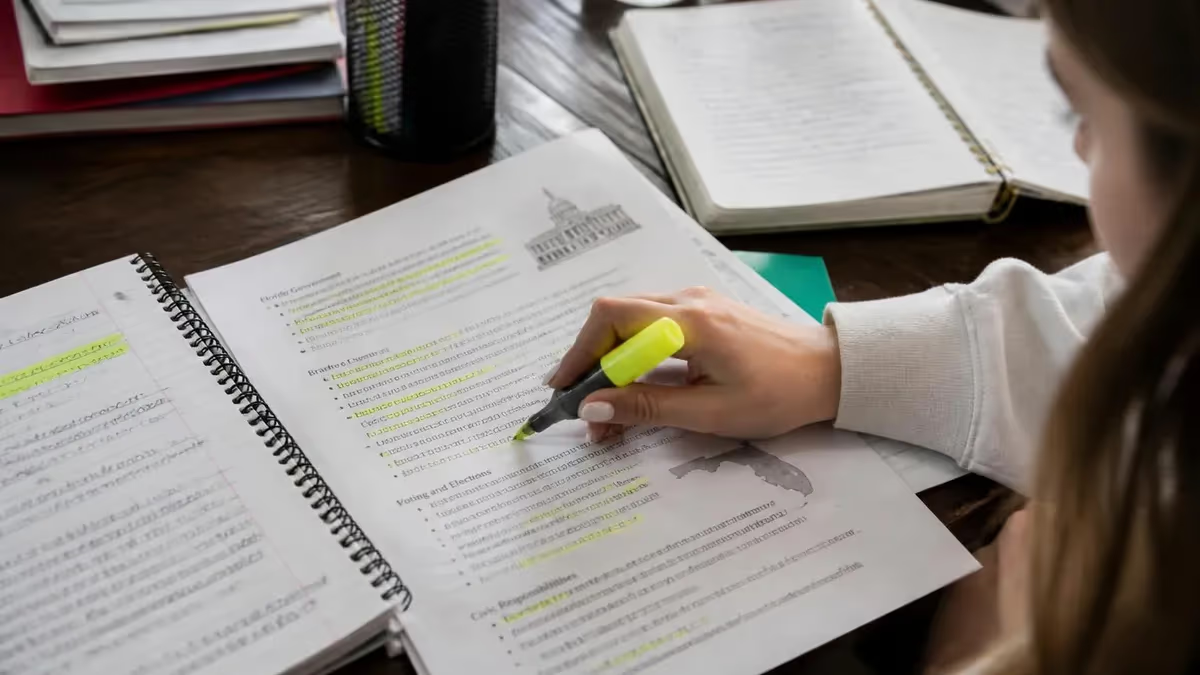
Knowing how to check FCLE scores is one of the first things every Florida college student wants to figure out after sitting for the Florida Civic Literacy Exam. The FCLE is a state-mandated graduation requirement for students enrolled in Florida College System and State University System institutions, which means your score has real consequences for your academic future.
Scores are released through your institution's student portal, typically within two to four weeks of your test date, though the exact timeline varies by campus and testing session. Taking an fcle practice test before exam day is the single most effective step you can take to ensure you walk in prepared and walk out with a passing score.
The Florida Civic Literacy Exam was created to assess whether graduating students understand the foundations of American democracy, the structure of the federal government, and the rights and responsibilities of citizenship. The exam draws on content aligned with the Florida Civics and Government course standards, covering topics from the Constitutional Convention through contemporary civic institutions.
Students who do not pass must retake the exam until they achieve a passing score before their degree is conferred. Understanding the scoring system, how scores are transmitted between the testing vendor and your institution, and what your options are if you do not pass on the first attempt are all critical pieces of information that can reduce anxiety and keep your graduation timeline on track.
Score checking is not a uniform process across all Florida institutions. At some schools, scores appear in the same portal you use to register for classes. At others, your advising office or registrar is notified directly and you must inquire through those channels.
The State University System (SUS) and the Florida College System (FCS) both receive score data from the testing vendor, but each institution has its own data integration schedule. This guide walks you through the official channels for every major pathway so you always know exactly where to look and what to do next regardless of which Florida campus you attend.
One source of confusion for many students is the difference between the TSC (Test of Student Competency) version of the exam administered through certain institutions and the standardized FCLE administered statewide.
If you registered through your school's assessment center or used an fcle practice test tsc resource to prepare, your scores are still reported back to your institution through the same official channels, but the internal tracking identifiers may differ slightly from what you see in your portal. Knowing this distinction ahead of time prevents you from panicking if the score description in your portal does not match exactly what you expected to see.
Preparation and score literacy go hand in hand. Students who understand the scoring rubric before they sit for the exam are much less likely to be surprised by their results. The FCLE uses a scaled score model, and the minimum passing threshold is set by the Florida Department of Education.
Scores are not curved from one administration to the next; rather, each student's raw score is converted to a scaled score that reflects their level of mastery. If your scaled score meets or exceeds the passing cutpoint, you have satisfied the civic literacy graduation requirement and no further action is required on your part.
This guide covers every stage of the score-checking process: from the moment you submit your last answer on test day through the official score release, portal navigation, institutional reporting, and the steps to take if a retake is necessary.
We also provide a structured study schedule, a detailed checklist of preparation actions, and answers to the ten most common questions Florida students ask about their FCLE results. Whether you are preparing for your first attempt or trying to understand why your score has not yet appeared in your student account, you will find a clear, actionable answer in the sections below.
Finally, remember that the fastest way to guarantee a good score is comprehensive preparation before the exam. Students who use quality practice materials, review landmark court cases, and test themselves under realistic timed conditions consistently outperform those who rely solely on reviewing class notes. Use the free practice resources linked throughout this guide, build a study schedule that fits your semester, and approach score-checking day with confidence rather than anxiety. The information you need is available, and this guide puts all of it in one place.
FCLE Scores & Exam by the Numbers
Key Facts at a Glance
| Item | Value | Details |
|---|---|---|
| Questions on Exam | 50 | Multiple-choice format |
| Score Release Time | 2–4 Wks | After exam date |
| Retake Attempts | Unlimited | Until passing score achieved |
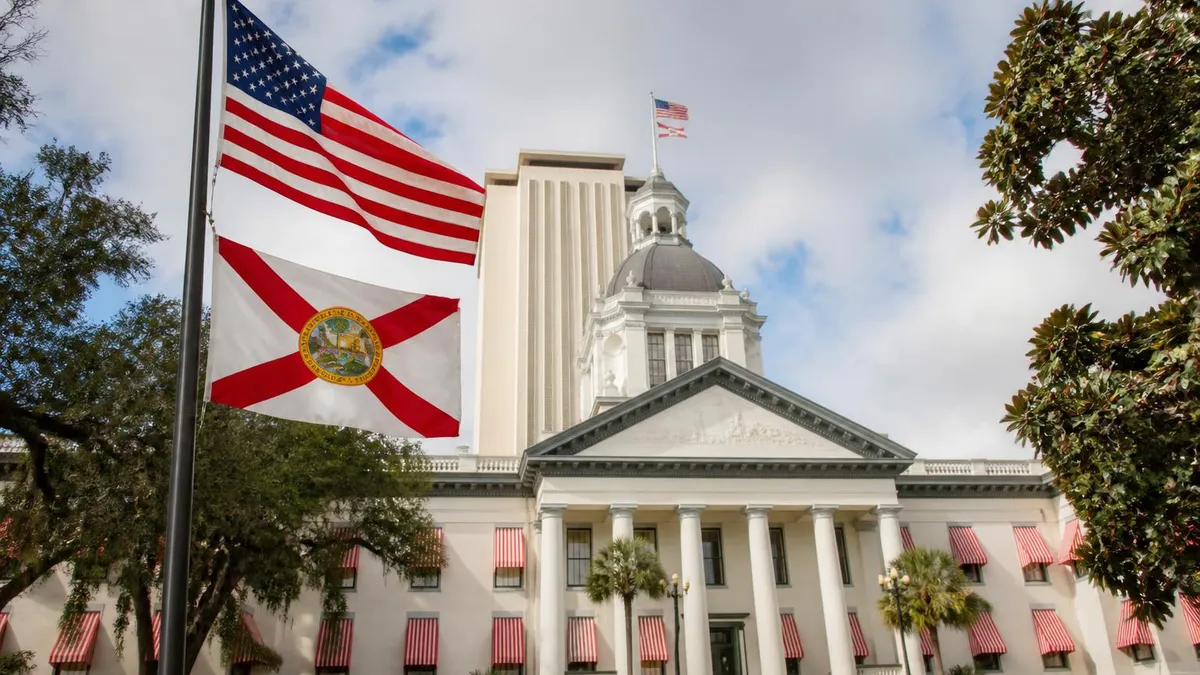
FCLE Score Release: Step-by-Step Timeline
Complete Your FCLE Exam
Vendor Processes Your Results
Score Transmitted to Your Institution
Score Posted to Student Portal
Verify Requirement Satisfied
Schedule Retake If Needed
To check your FCLE scores, begin by logging into the official student portal at your Florida institution. Every Florida College System and State University System school uses a student information system — common platforms include Banner, PeopleSoft, Atlas, and myFSCJ — and each of these systems has a section dedicated to graduation requirements or placement test results.
Navigate to the area labeled something like 'Academic Requirements,' 'Student Records,' 'Test Scores,' or 'Degree Audit.' The exact menu path varies, but the FCLE result is almost always located near other standardized test scores such as SAT, ACT, or placement exam records. If you cannot find it in the first few menus you check, use the portal's internal search bar and type 'FCLE' or 'civic literacy.'
If your score has not appeared in your portal within four weeks of your test date, the next step is to contact your institution's assessment office or testing center directly. Do not email a general advising inbox, because advisors often do not have direct access to test score data — they rely on the same portal you do.
Instead, find the specific assessment services phone number or email for your campus. When you reach out, have your student ID number, your test date, and your testing appointment confirmation number ready. These three pieces of information allow the assessment office to locate your record quickly in both the institutional database and the vendor's reporting system.
Students who tested through a third-party remote proctoring arrangement may find that their score takes slightly longer to appear. Remote proctored sessions require an additional review step by the vendor to flag and resolve any technical issues before the score is finalized. If you tested remotely and are still waiting after three weeks, contact both your institution's assessment office and the proctoring vendor's support team simultaneously. Keep a record of your correspondence in case you need to escalate to the registrar or your academic dean's office.
The fcle scoring scale is not published with the same transparency as many other standardized tests, which is a frequent source of student frustration. The Florida Department of Education sets the passing cutpoint, but the exact numerical score that constitutes passing is not always displayed prominently on the score report you see in your portal.
What you will typically see is a pass or fail notation alongside a scaled score or a percentage correct. If you passed, the degree audit will reflect the requirement as completed. If you did not pass, the notation will typically say 'not met,' 'not satisfied,' or similar language depending on your institution's terminology.
Some Florida institutions send automated email notifications when your FCLE score posts to your student record. Others do not send any notification at all and expect students to check their portals proactively. To avoid missing your score release, log into your portal every two to three days beginning approximately ten business days after your test date. Set a calendar reminder if necessary. Do not rely on email alone, because institutional email systems sometimes filter automated messages to spam or send them to an email address you no longer monitor regularly.
Students at Florida International University, University of Florida, Florida State University, and other large SUS schools can also contact their Office of the University Registrar directly if portal issues arise. At FCS schools like Miami Dade College, Broward College, or Valencia College, the Assessment Services department is typically the primary point of contact.
Each institution publishes its assessment services contact information on its official website, and most offer both phone and email support during regular business hours. If you are unsure which office to contact, your academic advisor can direct you to the correct department even if they cannot pull your score directly.
One practical tip: take a screenshot or print a PDF copy of your score report as soon as it appears in your portal. Institutional portals sometimes undergo maintenance updates that temporarily hide historical test scores, and having a personal copy of your passing score confirmation ensures you are never left without documentation if a discrepancy arises during graduation clearance. This is especially important if you are applying for a second bachelor's degree or re-enrolling after a gap, as older records may not always transfer cleanly to updated portal systems.
Florida Civic Literacy Exam: Study Strategies That Work
The most effective way to prepare for the Florida Civic Literacy Exam is to take multiple full-length fcle quizlet-style practice sets under timed conditions. Aim to complete at least three to five complete practice exams before your scheduled test date. After each practice session, review every question you answered incorrectly and identify the underlying concept you missed, whether that is the specific powers of each branch of government, the amendment ratification process, or the rights guaranteed by the Bill of Rights. Targeted review of weak areas is far more efficient than re-reading entire textbook chapters.
Spacing your practice sessions across multiple days rather than cramming them all into a single weekend produces significantly better retention. Cognitive science research consistently demonstrates that distributed practice — studying the same material across multiple shorter sessions — leads to stronger long-term memory consolidation than massed practice sessions of equal total duration. For the FCLE, this means scheduling thirty to forty-five minutes of focused practice daily for two to three weeks rather than spending an entire day reviewing civic content the night before the exam. Use practice quizzes to surface the specific facts and concepts that require reinforcement, then target those gaps in your daily study blocks.

Retaking the FCLE: Benefits vs. Challenges
- +No limit on the number of retake attempts allowed
- +No mandatory waiting period between attempts at most institutions
- +Domain-level score breakdown helps you study more efficiently for a retake
- +Free and low-cost practice materials are widely available online
- +Passing the FCLE satisfies the graduation requirement permanently — no expiration
- +Retake scheduling is handled locally by your institution's assessment center
- −Retake fees may apply depending on your institution's testing cost policy
- −Repeated testing adds stress during an already busy semester
- −Score release timelines mean you may not know results before registration deadlines
- −Content spans a broad range of U.S. history and civics knowledge
- −Portal inconsistencies across institutions can delay official score confirmation
- −Some campuses have limited testing windows that may push your retake to the next term
FCLE Score Check & Exam Prep Checklist
- ✓Log in to your institution's student portal 10 business days after your exam date to begin checking for your score.
- ✓Navigate to 'Academic Requirements,' 'Test Scores,' or 'Degree Audit' in the portal menu to locate your FCLE result.
- ✓Save your appointment confirmation number from your FCLE registration email before exam day.
- ✓Screenshot or print your score report immediately once it appears in the portal for your personal records.
- ✓Contact your institution's Assessment Services office — not general advising — if your score has not posted after four weeks.
- ✓Request a domain-level score breakdown if you did not pass, so you know exactly which content areas to target for your retake.
- ✓Complete at least three full-length FCLE practice tests before each attempt to simulate real testing conditions.
- ✓Review all missed practice questions to identify patterns in your weak content areas.
- ✓Confirm your degree audit shows the civic literacy requirement as 'satisfied' after a passing score posts.
- ✓Schedule your FCLE retake through your campus assessment center as soon as you receive a non-passing score notification.
Your Passing Score Never Expires
Once you achieve a passing score on the Florida Civic Literacy Exam and it is recorded in your institution's student information system, that requirement is permanently satisfied. There is no expiration date on a passing FCLE score, even if you stop out for a semester, transfer to another Florida public institution, or pursue a second degree. You will never need to retake the exam as long as your passing score is on file with a Florida public institution.
If you did not pass the FCLE on your first attempt, the most important thing you can do is resist the urge to reschedule immediately without first analyzing your performance. Review your score report carefully, paying close attention to any domain-level breakdown provided. The FCLE tests content across several major categories: American history and founding principles, the structure and function of the federal government, the roles and responsibilities of citizens, landmark Supreme Court decisions, and the core documents of American democracy including the Constitution, the Bill of Rights, and the Declaration of Independence.
Students who fail the exam almost always have one or two specific domains where their performance dropped significantly below the overall average, and targeting those domains for retake preparation is far more efficient than conducting a broad review of everything.
After identifying your weak domains from your score report, build a focused two-to-four week retake study plan. Break the content into daily study blocks of thirty to forty-five minutes. Begin with the domain where your score was lowest, spend the first week building foundational knowledge in that area, then transition to the second weakest domain in week two. Reserve the final few days before your retake to take two or three full-length practice exams under timed conditions. This approach mirrors the preparation strategies used by students who report the highest improvement rates between their first and second FCLE attempts.
One of the most common reasons students fail the FCLE is insufficient familiarity with the specific constitutional amendments and the rights they protect. Many students have a general sense of what the Bill of Rights covers but cannot accurately match specific rights to specific amendments under time pressure.
Flashcard practice is particularly effective for this type of content because it trains rapid recognition rather than slow reasoning. Create a set of flashcards for each amendment — or use a pre-built digital deck — and review them daily until you can instantly identify the rights protected by each of the first ten amendments without hesitation.
Landmark Supreme Court cases are another area where focused study pays large dividends. The FCLE consistently tests students on major decisions such as Marbury v. Madison, Brown v. Board of Education, Miranda v. Arizona, Tinker v. Des Moines, and several others that shaped the interpretation of constitutional rights.
For each case, you need to know the basic facts, the constitutional question at stake, the Court's decision, and the lasting legal principle established. You do not need to memorize lengthy legal opinions — a two-to-three sentence summary of each case's significance is sufficient for exam purposes. Review materials specifically designed for the FCLE will present this content in exactly the format the exam tests it.
The structure of the federal government is another high-weight content area that trips up many students. Be sure you can accurately describe the specific powers and responsibilities of Congress, the executive branch, and the federal judiciary without confusing the different branches.
Know the difference between expressed powers (those explicitly granted by the Constitution), implied powers (those derived from the Necessary and Proper Clause), and reserved powers (those retained by the states under the Tenth Amendment). Understanding federalism — the division of power between the federal government and state governments — is essential because FCLE questions often test whether students can correctly classify a power or function as belonging to the federal government, the states, or both.
Study groups can be highly effective for FCLE retake preparation, particularly for students who learn well through discussion and debate. Find two or three classmates who are also preparing for a retake and meet weekly to quiz each other, discuss confusing concepts, and share study strategies.
Teaching a concept to someone else is one of the most reliable ways to solidify your own understanding of it. When you can explain the significance of the Civil War amendments, the process of judicial review, or the difference between civil rights and civil liberties clearly to a peer, you have achieved the depth of understanding the FCLE requires.
Finally, make sure your physical and mental state on retake day supports your best performance. Get a full night of sleep the night before the exam — sleep deprivation significantly impairs the recall of factual information even when overall knowledge is strong. Eat a balanced meal before your test appointment and arrive at the testing center at least fifteen minutes early to avoid any last-minute stress.
Manage test anxiety by reminding yourself that you have prepared thoroughly, that retakes are available if needed, and that this exam, while important, is one component of a much larger academic journey. Students who approach the retake with calm confidence and a specific preparation plan consistently outperform those who rush back to the testing center without a structured study effort.
Most Florida institutions require all graduation requirements — including FCLE passage — to be fulfilled by a specific clearance deadline, typically four to six weeks before the graduation ceremony. If your score has not posted by your institution's clearance deadline, your name may be removed from the graduation list even if you took the exam in time. Always confirm your institution's specific FCLE score deadline with your registrar's office well in advance of your intended graduation term.
Maximizing your score on an FCLE retake requires a fundamentally different mindset than your first attempt. Rather than approaching the exam as new territory you are exploring for the first time, treat it as a targeted mission to demonstrate mastery in specific areas where your first attempt revealed gaps. This shift in framing changes how you study: instead of reading broadly through civics content, you are drilling precisely on the content categories where your score report showed the greatest room for improvement. This targeted approach consistently produces the largest score gains in the shortest amount of preparation time.
Quality practice materials matter enormously in this phase. Generic civics review websites that cover general U.S. history content are not as effective as resources specifically designed and aligned to the Florida Civic Literacy Exam's content specifications. The FDOE publishes a content specification document that outlines exactly which topics and standards the FCLE assesses.
Cross-reference that document with your score report's domain breakdown to confirm you are spending your study time on content the exam actually tests rather than on adjacent content that may be interesting but is not directly relevant to your score. Use resources built specifically for the FCLE whenever possible.
Practice test conditions matter just as much as the content you review. Take your full-length practice exams in a quiet environment, without interruptions, using only the tools available to you during the actual exam. Set a timer and commit to finishing within the allotted time. Students who take practice exams under realistic conditions perform measurably better on the real exam than students who review practice questions in a relaxed, open-book format. The goal is not just to know the material but to retrieve it quickly and accurately under the mild pressure of a timed standardized test environment.
Review your incorrect answers systematically rather than skipping over them after a quick glance at the correct option. For each question you missed, ask yourself three things: Did I know the correct answer and make a careless error? Did I understand the concept but misread the question? Or did I genuinely not know the answer? These three error types require different remediation strategies.
Careless errors call for slower, more careful reading habits. Misread questions call for attention to qualifier words like 'NOT,' 'EXCEPT,' and 'BEST.' Genuine knowledge gaps call for targeted content review. Sorting your errors by type helps you address the actual root causes of your performance rather than just re-exposing yourself to the same material in the same way.
One often-overlooked preparation strategy is reviewing the primary source documents the FCLE tests directly. The Constitution, the Bill of Rights, the Declaration of Independence, the Federalist Papers, and select landmark speeches are all fair game for direct comprehension questions. Rather than trying to memorize these documents word for word, focus on understanding the core argument or principle of each section.
The preamble to the Constitution, the specific rights enumerated in each amendment, and the key arguments in Federalist No. 10 and No. 51 are the most frequently tested passages. Reading these documents actively — pausing to summarize each section in your own words — produces far better retention than passive reading.
The weeks immediately preceding your retake are also the right time to revisit the civic process content: how a bill becomes a law, the structure of the federal budget process, how amendments to the Constitution are proposed and ratified, and how the electoral college operates. These procedural topics are tested frequently and require precise knowledge of sequential steps rather than general understanding.
Many students have a fuzzy sense of these processes from high school civics but cannot accurately name each step in the correct order under testing conditions. Use flowcharts, step-by-step outlines, or process diagrams to lock these sequences into memory before your exam.
On retake day, use your time wisely from the very first question. Read each question stem carefully before looking at the answer choices, and try to predict the correct answer before you see the options. This strategy — known as prediction before viewing — prevents the well-documented psychological phenomenon of being anchored to a plausible-sounding distractor.
Once you have a clear prediction, scan the answer choices for the option that best matches your prediction. If two options seem equally plausible, eliminate the ones you can rule out definitively and make your best-informed choice from the remaining options. Never leave a question blank — there is no penalty for guessing on the FCLE, and an educated guess is always better than no answer at all.
Building a long-term civic literacy foundation goes beyond passing a single exam. The Florida Civic Literacy Exam was designed not just as a graduation gate but as an opportunity to ensure every Florida college graduate leaves with the knowledge necessary to participate meaningfully in democratic life.
Whether you are preparing for your first attempt or your second, approaching the material with genuine curiosity rather than grudging compliance produces better outcomes in both senses: you learn the content more thoroughly, and you perform better on the exam. Students who find one or two aspects of the content genuinely interesting — whether that is constitutional law, the mechanics of the legislative process, or the history of civil rights milestones — often discover that the study process becomes engaging rather than tedious.
The most effective long-term study habit for the FCLE is consistent low-stakes practice spread across several weeks. Rather than marathon study sessions, aim for daily micro-sessions of fifteen to thirty minutes using practice quiz tools. Even a small daily commitment to reviewing FCLE content compounds rapidly over the course of a month. By day thirty of daily practice, students typically report feeling genuinely confident about the material rather than anxious about the exam. This confidence is not merely psychological — it reflects the real knowledge consolidation that happens when content is reviewed repeatedly over time with spaced repetition.
Pay particular attention to content that bridges historical events and contemporary civic applications. The FCLE does not test only historical trivia — it also assesses whether students understand how constitutional principles apply in real, contemporary contexts. Questions may ask you to apply the First Amendment framework to a hypothetical situation, or to identify which level of government has jurisdiction over a specific type of policy. This applied comprehension requires not just memorization but genuine conceptual understanding. Practice questions that present novel scenarios and ask you to reason from constitutional principles are the best preparation for this type of question.
Keep in mind that many Florida students have found community-based study resources extremely helpful. Study groups organized through campus tutoring centers, civic literacy workshops offered by student government associations, and peer-led review sessions before exam windows all provide structured learning opportunities that go beyond solo studying.
If your campus offers any formal FCLE preparation support, take advantage of it. These resources are often free, taught by students or instructors who know the exam well, and provide the added benefit of accountability — you are far less likely to skip a study session when you have committed to meeting peers at a specific time and place.
As you approach your exam date, shift from broad content review to active recall practice. Active recall — forcing yourself to retrieve information from memory without looking at your notes — is the most powerful learning technique identified by cognitive science research.
Every time you successfully retrieve a piece of information from memory, you strengthen the neural pathway associated with that knowledge, making it faster and easier to retrieve under the time pressure of the real exam. Flashcards, practice quizzes, and self-testing exercises all use active recall. Passive re-reading of notes, by contrast, creates a feeling of familiarity without producing the same depth of retention.
In the final forty-eight hours before your exam, shift your focus from learning new content to reviewing what you already know. This is not the time to introduce new topics or attempt to close large content gaps — that window has passed.
Instead, do a light review of your strongest content areas to build confidence, quickly scan your flashcards to refresh key facts, and get your logistics sorted: confirm your test appointment time, know how to get to the testing center, and prepare your identification documents. Mental preparation and logistical readiness in the final days before an exam have a measurable impact on test-day performance.
After you pass the FCLE and your score posts to your student record, verify your degree audit reflects the satisfied requirement before your institution's graduation clearance deadline. Then take a moment to acknowledge the work you put into achieving this milestone.
Civic literacy is a genuine and valuable form of knowledge — understanding how your government works, what rights you hold as a citizen, and how the founding principles of American democracy shape contemporary institutions makes you a more informed participant in public life. The FCLE is ultimately not just a graduation requirement but an invitation to take that civic knowledge seriously throughout your life well beyond your college years.
Sample FCLE - Florida Civic Literacy Exam Practice Questions
Try these questions from our free FCLE - Florida Civic Literacy Exam practice tests. The correct answer and an explanation follow each question.
Which city is the capital of Florida?
- A. Miami
- B. Orlando
- C. Jacksonville
- D. Tallahassee
Answer: D. Tallahassee
Tallahassee has been Florida's state capital since 1824 and is home to the Legislature and the Governor's mansion.
The U.S. Supreme Court decision in Bush v. Gore (2000), which halted the Florida presidential election recount, relied primarily on which constitutional clause?
- A. Due Process Clause
- B. Equal Protection Clause
- C. Commerce Clause
- D. Supremacy Clause
Answer: B. Equal Protection Clause
The Supreme Court ruled 5–4 that differing recount standards across Florida counties violated the Equal Protection Clause of the 14th Amendment.
Florida was one of the Confederate states during the Civil War. In what year was it readmitted to the Union?
- A. 1865
- B. 1868
- C. 1872
- D. 1877
Answer: B. 1868
Florida was readmitted to the United States on June 25, 1868, after meeting Reconstruction requirements.
Florida's Governor serves a term of how many years?
- A. 2 years
- B. 4 years
- C. 6 years
- D. 8 years
Answer: B. 4 years
The Governor of Florida serves a four-year term and is limited to two consecutive terms under the Florida Constitution.
Take the full FCLE - Florida Civic Literacy Exam practice test
FCLE Questions and Answers
FCLE Practice Test PDF (Free Printable 2026)

FCLE Court Cases: Key Landmark Decisions You Must Know for the Florida Civic Literacy Exam

FCLE Practice Test TSC: Free Florida Civic Literacy Exam Questions
FCLE Practice Test: Florida Civic Literacy Exam Free Prep 2026

How Long Is the FCLE? Complete Florida Civic Literacy Exam Guide 2026
About the Author

Educational Psychologist & Academic Test Preparation Expert
Columbia University Teachers CollegeDr. Lisa Patel holds a Doctorate in Education from Columbia University Teachers College and has spent 17 years researching standardized test design and academic assessment. She has developed preparation programs for SAT, ACT, GRE, LSAT, UCAT, and numerous professional licensing exams, helping students of all backgrounds achieve their target scores.
Join the Discussion
Connect with other students preparing for this exam. Share tips, ask questions, and get advice from people who have been there.
View discussion (7 replies)