
FAA Part 107 Practice Test: Free Questions, Topics Covered, and How to Pass the Drone Pilot Exam
FAA Part 107 practice test: free practice questions for commercial drone pilot exam. Topics covered, study tips, passing score, and how to prepare. ✍🏼

The FAA Part 107 practice test is essential preparation for the commercial drone pilot certification exam. The Part 107 Aeronautical Knowledge Test is required to legally fly drones for commercial purposes. With a $175 exam fee and a 70% passing score requirement, getting your preparation right matters. Free practice tests reveal what you need to study and build the confidence to pass.
What Part 107 is. The Federal Aviation Administration's regulation for commercial drone operations. Required for anyone flying drones to earn money — real estate photography, agriculture, inspections, mapping, content creation. Replaces older Section 333 exemption process.
Who needs Part 107. Commercial drone operators. Photographers selling aerial photos. Surveyors using drones. Inspectors using drones. Realtors with drone photography. YouTubers monetizing drone content. Hobbyists who want to fly larger drones (over 0.55 lbs).
Test format. 60 multiple-choice questions. 2 hours allowed. 70% passing score (42/60 correct). $175 testing fee at FAA-approved testing centers. Computer-based exam.
Pass rate. National average around 90% first attempt with practice. Without preparation, much lower (~60-70%). Practice tests dramatically improve outcomes.
This guide covers Part 107 exam topics, practice test resources, study strategies, and how to pass on first attempt.

Key Information
- Format: 60 multiple-choice questions
- Time: 2 hours
- Passing score: 70% (42/60 correct)
- Cost: $175 testing fee
- Location: FAA-approved testing centers
- Format: Computer-based
- Validity: Initial certification, renewal every 24 months
- Age requirement: 16+ years old
- Renewal: Free online recurrent training course
- Job market: Strong demand for certified pilots
What's tested on Part 107 exam. Major topic areas.
Regulations. Part 107 rules in detail. Operating limitations. Pilot certification requirements. Aircraft registration. Reporting incidents.
Airspace classification. Class A, B, C, D, E, G airspace. Where drones can fly. Where they can't. Special use airspace.
Weather. Weather sources. METARs and TAFs reading. Weather effects on drone operations. Density altitude. Visibility minimums.
Loading and performance. Drone weight calculations. Center of gravity. Performance limitations. Battery capacity.
Emergency procedures. Lost link procedures. Engine failure protocols. Bird strikes. Other emergencies.
Crew resource management. Single pilot operations. Working with visual observers. Crew coordination.
Radio communication. Common pilot radio procedures. Communicating with ATC when needed. Standard phraseology.
Aviation physiology. Hypoxia. Dehydration. Stress effects. Drug and alcohol effects.
Decision-making and judgment. Aeronautical decision making (ADM). Hazardous attitudes. Risk management.
Airport operations. Airport markings. Approaches. Departures. Working near airports.
Maintenance and inspection. Pre-flight inspection. Post-flight checks. Required maintenance records.
Exam Topics
Part 107 rules. Operating limitations. Certification requirements.
Class A-G. Where drones can/can't fly. Special use airspace.
METARs, TAFs. Weather effects. Density altitude.
Weight, center of gravity, performance limitations.
Lost link, engine failure, bird strikes.
ADM. Hazardous attitudes. Risk management.
How to prepare for Part 107 exam.
Free practice tests. PracticeTestGeeks (free, comprehensive). 3DR Robotics free tests. Drone pilot ground school free practice. Repeat practice tests until 85%+ scoring.
Paid prep courses. Drone Pilot Ground School ($299). Pilot Institute ($249). UAV Coach ($199). Online video courses with practice tests. Strong investment for first-time test takers.
FAA study materials. FAA's UAS Study Guide (free PDF). Pilot Handbook of Aeronautical Knowledge (free PDF). FAA Airman Knowledge Testing Reference Materials. All free from FAA.gov.
Books. The Drone Pilot's Handbook. Drone Pilot Manual. Part 107 Made Easy. $20-40 each. Budget option.
Apps. ASA Part 107 Test Prep. Various drone exam prep apps. Mobile-friendly study.
YouTube videos. Tony Northrup's drone test review. Pilot Institute YouTube channel. Free visual learning. Great supplement.
Study schedule. 4-8 weeks typical preparation. Daily 30-60 minutes. Mix of: reading study materials, watching videos, taking practice tests, reviewing wrong answers.
Practice test strategy. Take at least 5-10 full practice tests. Score 85%+ before scheduling real exam. Each test in timed conditions. Review wrong answers thoroughly.
Weak area focus. Identify topics where you score lowest. Spend extra study time on those. Build to mastery before exam.
Final preparation. Last week: take 2 timed practice tests. Verify 85%+ scoring. Light review. Get good sleep.
Prep Resources
PracticeTestGeeks free Part 107 practice tests. FAA study materials (free PDFs). YouTube tutorials. Pilot Institute YouTube. Free option for budget-conscious learners. Strong foundation possible.
Step-by-step certification process.
Step 1: Determine eligibility. 16+ years old. Read English. Mental and physical condition to safely operate drone.
Step 2: Prepare for exam. 4-8 weeks of study. Multiple practice tests. Master topics.
Step 3: Schedule exam. Visit IACRA (faa.gov/iacra) to apply. Or schedule directly at PSI Exams. Find FAA-approved testing center near you.
Step 4: Take exam. Photo ID required. 60 questions, 2 hours. Pass at 70%+.
Step 5: After passing. Receive temporary airman certificate. Apply for permanent certificate via IACRA. Receive plastic card in 6-8 weeks.
Step 6: Start flying commercially. Within rules of Part 107. Maintain knowledge.
Step 7: Maintain certificate. Free online recurrent training every 24 months. Updated FAA changes. Maintain currency.
Cost summary. Exam fee: $175. Practice test prep: $0-300 (depending on resources). Total to first license: $175-475.
Failed attempts. Can retake after 14 days. Same $175 fee. Most pass on second attempt with focused study.
Time to certification. 4-12 weeks typical from start to license in hand.
Certification Steps
16+ years. English. Physically/mentally able.
Practice tests, study materials, weak area focus.
IACRA or PSI Exams. Find approved testing center.
60 questions, 2 hours, 70% to pass.
Via IACRA. Permanent card 6-8 weeks.
Free recurrent training every 24 months.

Test-taking strategies for Part 107.
Read carefully. Each question has 3 answer choices. Read all before selecting. Some include 'not' or 'except' — easy to miss.
Time management. 60 questions in 120 minutes = 2 minutes per question. Plan accordingly. Mark difficult ones and return.
Eliminate clearly wrong. Most multiple-choice questions have 1-2 obviously wrong answers. Increases odds on remaining options.
Use context. Some questions have references to charts or images. Look at them carefully. Often contain the answer.
Don't overthink. First instinct often correct. Change answer only with clear reason.
Mark and return. Difficult questions: skip, return later if time. Don't get stuck.
Answer everything. No penalty for wrong answers. Guess if needed. Better than blank.
Review at end. If time permits, review marked questions. Double-check answers.
Specific tips by topic. Airspace: memorize key boundaries (Class C 10nm radius up to 4,000 feet). Weather: METAR format and TAF interpretation. Performance: pre-flight calculation procedures. Emergency: standard procedures step-by-step.
Day of test. Bring photo ID. Arrive 30 minutes early. Comfortable clothes. Stay hydrated. Don't cram morning of.
What you can bring. Photo ID. Approved calculator (programmable not allowed). Some testing centers provide calculator.
What you can't bring. Phone (typically). Notes. Backpacks/personal items (lockers provided). Verify specific testing center rules.
1. Arrive 30 minutes early. Allow time for check-in, restroom, settling in.
2. Bring photo ID. Required for entry. Government-issued only.
3. Eat light breakfast. Avoid heavy meals or excessive caffeine.
4. Sleep well night before. 7-8 hours minimum.
5. Use restroom before. Once in, restroom breaks count against time.
6. Read questions carefully. Watch for 'NOT' or 'EXCEPT' in question wording.
7. Pace yourself. Time check every 15-20 questions.
8. Don't dwell. Mark difficult questions, move on, return if time.
9. Answer every question. No penalty for wrong. Guess if needed.
10. Trust your prep. You've prepared. You can do this.
What to do after passing.
Immediate steps. Receive temporary airman certificate (printed at testing center). Valid for 120 days. Can fly commercially during this period.
Apply for permanent certificate. Via IACRA (faa.gov/iacra). Submit application within 14 days of passing test. Wait 6-8 weeks for plastic card.
Register your drone. Required for all drones over 0.55 lbs. $5 registration fee at FAA DroneZone (faa.gov/dronezone). Valid 3 years.
Start flying commercially. Within Part 107 rules: under 400 ft AGL, daylight or twilight, line-of-sight, not over people, etc.
Building a business. Real estate photography. Construction inspection. Agriculture monitoring. Insurance claims. Event coverage. Mapping and surveying.
Liability insurance. Strongly recommended. $50-200/year typical for commercial drone insurance. Verifyly Premium ($240/yr), DroneInsurance.com, others.
Equipment needs. Drone (DJI Phantom, Mavic, etc.). Backup batteries. Storage. Cleaning supplies. Tablets for mission planning.
Job opportunities. Independent contractor work. Established drone service companies. Pilot positions at construction, real estate, surveying firms. Salary potential $40K-100K+ for full-time.
Stay current. Free recurrent training every 24 months. Stay updated on FAA changes. Industry news through drone publications.
Track your hours. Log flight hours. Building reputation. May qualify for additional certifications or recognition.
Avoid violations. Stay within Part 107 rules. Violations can result in fines or certificate suspension. Stay legal.
After Certification
Receive immediately at testing center. Valid 120 days. Can fly commercially during this period. Carry with you when flying. Apply for permanent within 14 days.
Common drone businesses to consider after certification.
Real estate photography. Aerial shots of homes for listings. $100-500 per shoot. High demand. Strong start business. Build relationships with realtors.
Wedding/event photography. Aerial shots of weddings, corporate events. $500-2,000 per event. Specialty premium. Strong photography skills needed.
Construction monitoring. Track project progress. Aerial measurements. Generate reports. $300-1,500 per visit. Recurring revenue.
Agricultural monitoring. Crop health monitoring. Multispectral imaging. NDVI analysis. $300-1,000 per acre or per visit. Specialized but growing.
Insurance claims. Roof and property inspections. Storm damage documentation. $200-800 per claim. Insurance companies hire drone pilots regularly.
Mapping and surveying. Topographic maps. Volume calculations. Photogrammetry. $500-5,000 per project. Specialized but lucrative.
Inspections. Tower inspections. Bridge inspections. Industrial facility inspections. $300-2,000 per inspection. Strong demand.
Content creation. YouTube, Instagram, TikTok content. Tourism photography. Travel content. Variable income.
Search and rescue. Volunteer with first responders. Some paid gigs through SAR organizations.
Film and TV. Hollywood drone operator. Higher entry barrier. $500-2,000+ per day. Specialized skills.
Sales and trade shows. Drone demonstrations. Product launches. Variable income.
Education. Teach drone classes. Workshops. Training others. $50-200 per hour.
Drone Business Options
$100-500/shoot. High demand. Strong start.
Towers, bridges, industrial. $300-2,000/inspection.
Crop monitoring. NDVI. $300-1,000/acre.
Progress monitoring. $300-1,500/visit. Recurring.
Claims photography. $200-800/claim. Strong demand.
Surveying, volumetric. $500-5,000/project.
Common Part 107 questions and answers.
What does Part 107 cover? Commercial drone operations in U.S. airspace. Requires aeronautical knowledge test. $175 exam fee. 70% passing score. Valid for commercial purposes.
How long does it take to study? 4-8 weeks typical. 30-60 minutes daily. Faster with intensive study. Time depends on prior aviation knowledge.
How hard is the test? Moderate difficulty. ~90% pass with preparation. Without preparation, much lower pass rate. Practice tests dramatically help.
Can I take it without prep? Yes, but pass rate much lower. Not recommended unless you have extensive aviation background.
What if I fail? 14-day waiting period before retake. Same $175 fee. Most pass on second attempt with focused study.
How long is certificate valid? Initial: 24 months. Renewal: every 24 months via free online recurrent training.
Do I need Part 107 for personal drone flying? Only for commercial use. Hobby flyers under 0.55 lbs need just registration. Larger hobby drones need separate testing (TRUST).
What drones are covered? Any drone used commercially. Weight not restricted by Part 107 itself. Below 0.55 lbs has additional considerations.
Can I fly anywhere? No. Within Part 107 rules: under 400 ft AGL, daylight (with anti-collision lights for twilight), line-of-sight, not over uninvolved people, not near airports without authorization, etc.
How profitable is drone work? Variable. Top performers: $80-150K. Mid-range: $40-80K. Part-time: $5-30K. Strong start to commercial drone career.
Best drone to start with? DJI Mavic 3 Pro ($2,200), DJI Air 3 ($1,100), or DJI Mini 3 Pro ($760). Budget-friendly: Autel Robotics Evo Lite ($800).

FAA Pros and Cons
- +FAA practice tests reveal knowledge gaps that content review alone can't identify
- +Timed practice builds the pace needed for the real exam
- +Reviewing wrong answers is the highest-ROI study activity
- +Multiple free sources available
- +Score tracking shows measurable readiness
- −Third-party tests vary in quality and exam alignment
- −Taking tests before content review produces misleading scores
- −Memorizing answers without understanding concepts doesn't transfer
- −Authentic official practice material is limited
- −Practice scores don't perfectly predict actual exam performance
Pros and Cons at a Glance
| Pros | Cons |
|---|---|
| FAA practice tests reveal knowledge gaps that content review alone can't identify | Third-party tests vary in quality and exam alignment |
| Timed practice builds the pace needed for the real exam | Taking tests before content review produces misleading scores |
| Reviewing wrong answers is the highest-ROI study activity | Memorizing answers without understanding concepts doesn't transfer |
| Multiple free sources available | Authentic official practice material is limited |
| Score tracking shows measurable readiness | Practice scores don't perfectly predict actual exam performance |
Part 107 Key Numbers
Deeper dive into key Part 107 topics. Understanding these areas thoroughly improves your exam performance dramatically.
Airspace classifications. Class A airspace (18,000 to 60,000 feet): off-limits to drones without specific authorization. Class B airspace (around major airports, 0 to 10,000 feet): requires ATC authorization via LAANC system. Class C airspace (around smaller airports, 0 to 4,000 feet, 10nm radius): requires LAANC authorization. Class D airspace (small airports with control tower): requires LAANC. Class E airspace (controlled airspace not in other categories): generally permissible above 400ft AGL. Class G airspace (uncontrolled, generally below 1,200ft AGL): most permissive, where most recreational and Part 107 flying occurs.
Special use airspace. Restricted areas (R): prohibited to civil aircraft. Prohibited areas (P): completely off-limits. Warning areas (W): hazardous activities, exercise caution. Military operations areas (MOA): exercise caution. Alert areas (A): high volume of pilot training or unusual aerial activity. National security areas (NSA): security restrictions. All shown on sectional charts with specific symbols.
Weather essentials. METAR: current weather observations including location, time, wind, visibility, weather phenomena, cloud cover, temperature, altimeter setting. TAF: forecast weather for 24-30 hours. Drone pilots focus on wind speed (especially gusts), visibility (Part 107 requires 3 statute miles minimum), cloud cover, and density altitude.
Critical Procedures
Visual inspection of drone for damage. Battery check (charge, swelling). GPS lock confirmation. Control link test. Propeller condition. Weather check. Airspace verification. Ground crew briefing if applicable. Build inspection habit.
Performance and loading considerations. Drone weight in flight affects everything from flight time to maneuverability. Center of gravity affects stability and turning characteristics. Battery capacity directly affects flight time available — typically 20-30 minutes for most consumer drones. Wind affects effective range significantly, especially headwinds that reduce flight time. Manufacturer specifications are starting point — test in safe conditions before pushing limits.
Density altitude affects drone performance significantly. Density altitude is pressure altitude corrected for non-standard temperature. High density altitude means thinner air, reducing drone performance. Hot summer days at high elevation produce significant performance reduction — calculate or estimate before flying in challenging conditions like mountainous terrain on hot days.
Radio communication for drone pilots. CTAF (Common Traffic Advisory Frequency) at uncontrolled airports. Standard phraseology when communicating with manned aircraft pilots. When near controlled airports, ATC communication may be required via LAANC system. Most drone pilots avoid towered airports to minimize complexity and need for ATC coordination.
Post-flight checks. After every flight: visual inspection for damage to airframe and propellers, battery temperature and charge level documentation, mission notes (what worked, what didn't), equipment storage, debrief if applicable with other crew members. Building reliable maintenance habits prevents in-flight failures during future operations and extends your drone lifespan significantly over time.
Part 107 Questions and Answers
Final thoughts. The FAA Part 107 practice test is the most valuable preparation tool for commercial drone certification. With $175 testing fee at stake and 70% passing score required, free practice tests dramatically improve your chances of passing on first attempt.
Start with practice tests. PracticeTestGeeks free Part 107 practice tests are an excellent starting point. Build foundation before paid prep courses.
Plan 4-8 weeks of preparation. Daily 30-60 minutes. Mix reading study materials, watching videos, taking practice tests, reviewing wrong answers.
Focus on weak areas. Take baseline practice test. Identify topics where you score lowest. Build to mastery before scheduling real exam.
Score 85%+ on practice tests. Consistent high scores indicate readiness. Don't schedule real exam until you've achieved this level.
Pass on first attempt. Saves $175 retake fee. Saves time. Builds confidence for actual commercial drone work.
After passing, start your career. Real estate, inspections, mapping, content creation — strong opportunities for certified commercial drone pilots. Many earn $40-100K+ annually.
Stay current. Free recurrent training every 24 months. Easier than initial test. Required to maintain certification.
The drone industry is growing rapidly. With proper Part 107 certification and quality flying skills, you can build a rewarding career. Practice tests are the gateway to that career. Invest the time in preparation. The investment pays back many times over.
About the Author
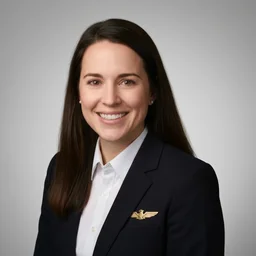
Commercial Pilot & FAA Certification Specialist
Embry-Riddle Aeronautical UniversityCaptain Jennifer Walsh graduated with honors in Aerospace Engineering from Embry-Riddle Aeronautical University and holds FAA Airframe & Powerplant and Airline Transport Pilot certificates. With 11 years of commercial aviation experience and 6 years as a ground school instructor, she guides aviation mechanics and student pilots through FAA written exams and practical tests.
Join the Discussion
Connect with other students preparing for this exam. Share tips, ask questions, and get advice from people who have been there.
View discussion (9 replies)