
Intensive Driving Test: Complete UK Guide to Fast-Track Courses, Booking and Passing First Time in 2026
🏆 Intensive driving test guide for UK learners: course costs, booking, pass rates, and proven tips to pass first time in 2026.
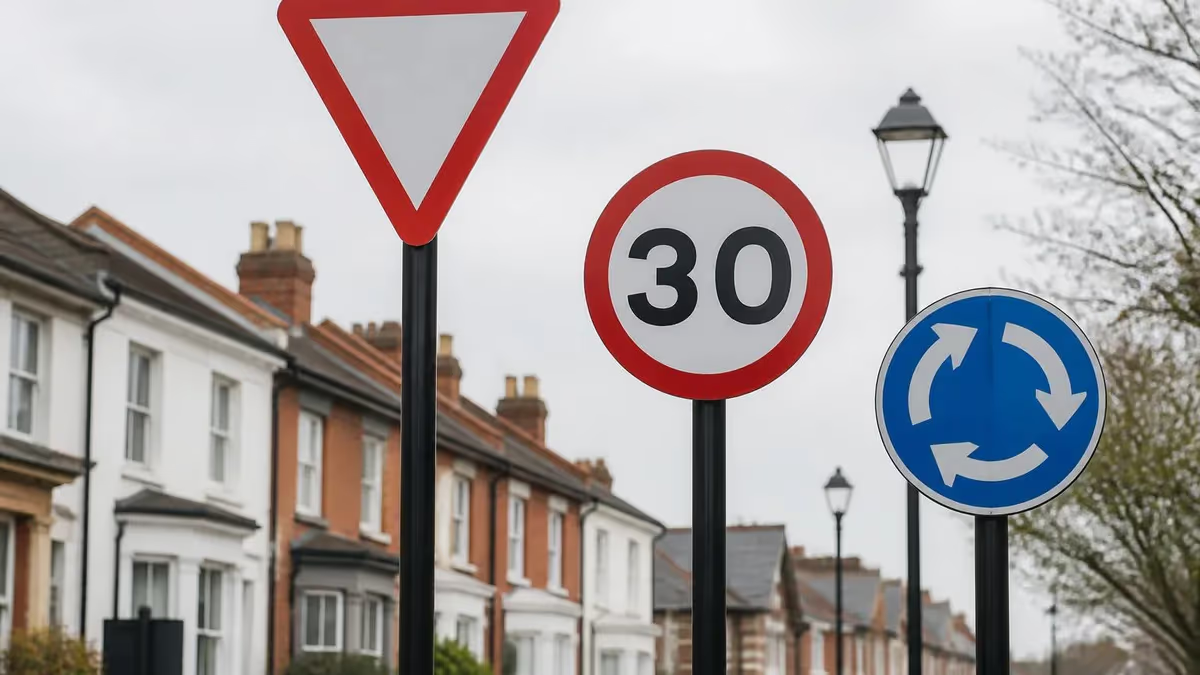
The intensive driving test route has become one of the most popular ways for UK learners to get on the road quickly, particularly for adults with work commitments or students trying to gain independence before university. Instead of stretching weekly one-hour lessons across six or twelve months, an intensive driving test course compresses 20 to 40 hours of tuition into a single week or fortnight, ending with a practical test booked at the close of the programme. For motivated learners, the result is a full UK licence in days rather than years. Practice with the free DVSA UK Driving Theory practice test on PracticeTestGeeks (7 questions with answer explanations).
However, the intensive route is not simply a shortcut. The driving test checklist test standards remain identical whether you trained for two weeks or two years, which means examiners still expect confident roundabout handling, accurate independent driving, and faultless safety checks. The intensity of the schedule means your brain is constantly absorbing new information, and stamina, focus, and a calm mindset matter just as much as steering technique. Learners who treat intensive courses as a holiday tend to underperform, while those who treat them like a job typically pass.
Before booking, you must already hold a valid provisional licence and have passed your DVSA theory test. Most reputable intensive schools will not accept students without a theory pass certificate because the practical test slot at the end of the course depends on it. If you still need to sit theory, build that into your planning, because test date last minute can derail an entire intensive booking and leave you out of pocket.
The financial commitment is substantial. A typical UK intensive driving test package costs between £900 and £1,800 depending on hours, region, and whether the test fee is included. Manual courses dominate the market, but automatic intensive courses are growing fast as electric vehicles reshape learner demand. Comparing prices alone is misleading: car quality, instructor grading, test pass guarantees, and pickup location all affect value. The cheapest course is rarely the one with the highest first-time pass rate.
Pass rates for intensive students sit slightly below the national average of around 48%, mainly because absolute beginners attempt the practical too soon. Learners who have already had 10 to 20 hours of standard tuition before going intensive consistently outperform complete novices. The DVSA does not differentiate between intensive and traditional candidates in published statistics, but instructor surveys suggest experienced learners on top-up intensives pass at rates above 60%, while complete beginners on five-day crash courses sit closer to 35%.
This guide walks you through everything: how intensive courses are structured, realistic costs, what the practical test contains, how to prepare in the days before, and what to do if you fail. Whether you are looking at a weekend top-up or a full 40-hour residential package, the information below will help you choose the right course, avoid the common pitfalls, and walk into your test centre with the best possible chance of a first-time pass in 2026.
DVSA: upcoming dates and official changes
- Updated Oct 19, 2026: Eligibility (Car practical driving test) is now Theory pass usually required; 185 days' residency in England, Wales or Scotland (previously Theory pass usually required; 185 days' GB residency).
- Updated Oct 19, 2026: Time limit (Independent driving) is now 20 to 35 minutes (previously 20 to 35 minutes).
- Updated Oct 19, 2026: Eligibility is now Age 17+ (16 with higher-rate PIP mobility); provisional licence required (previously Age 17+ (16 with higher-rate PIP mobility), provisional licence required).
Facts verified Oct 20, 2026 against Driver and Vehicle Standards Agency (DVSA), GOV.UK. Dates that have passed are removed automatically.
- The hazard perception part of the UK driving theory test consists of 14 video clips. (Driver and Vehicle Standards Agency (DVSA), GOV.UK)
- The UK driving theory test multiple-choice part has 50 questions. (Driver and Vehicle Standards Agency (DVSA), GOV.UK)
- The UK car practical driving test involves driving for around 35 minutes. (Driver and Vehicle Standards Agency (DVSA), GOV.UK)
- The independent driving part of the UK car practical test lasts 20 to 35 minutes. (Driver and Vehicle Standards Agency (DVSA), GOV.UK)
- The pass mark for the hazard perception part of the UK driving theory test is 44 out of 75. (Driver and Vehicle Standards Agency (DVSA), GOV.UK)
- The pass mark for the multiple-choice part of the UK driving theory test is 43 out of 50. (Driver and Vehicle Standards Agency (DVSA), GOV.UK)
- The UK car practical driving test costs £62 on weekdays. (Driver and Vehicle Standards Agency (DVSA), GOV.UK)
- The UK car theory test costs £23. (Driver and Vehicle Standards Agency (DVSA), GOV.UK)
- After failing the UK driving theory test you must wait at least 3 working days before taking it again. (Driver and Vehicle Standards Agency (DVSA), GOV.UK)
Facts verified Oct 20, 2026 against Driver and Vehicle Standards Agency (DVSA), GOV.UK. Dates that have passed are removed automatically.
DVSA Exam at a Glance
| Item | Detail | Official source |
|---|---|---|
| Number of questions (Hazard perception) | 14 video clips | Driver and Vehicle Standards Agency (DVSA), GOV.UK |
| Number of questions (Multiple-choice questions) | 50 multiple-choice questions | Driver and Vehicle Standards Agency (DVSA), GOV.UK |
| Time limit (Car practical driving test) | Around 35 minutes of driving | Driver and Vehicle Standards Agency (DVSA), GOV.UK |
| Time limit (Independent driving) | 20 to 35 minutes | Driver and Vehicle Standards Agency (DVSA), GOV.UK |
| Time limit (Multiple-choice questions) | 57 minutes | Driver and Vehicle Standards Agency (DVSA), GOV.UK |
| Passing score (Hazard perception) | 44 out of 75 | Driver and Vehicle Standards Agency (DVSA), GOV.UK |
| Passing score (Multiple-choice questions) | 43 out of 50 | Driver and Vehicle Standards Agency (DVSA), GOV.UK |
| Exam fee (Car practical driving test (weekday)) | £62 on weekdays | Driver and Vehicle Standards Agency (DVSA), GOV.UK |
| Exam fee (Car theory test) | £23 | Driver and Vehicle Standards Agency (DVSA), GOV.UK |
| Retake policy | Wait at least 3 working days | Driver and Vehicle Standards Agency (DVSA), GOV.UK |
| Validity | 2 years | Driver and Vehicle Standards Agency (DVSA), GOV.UK |
| Eligibility | Age 17+ (16 with higher-rate PIP mobility); provisional licence required | Driver and Vehicle Standards Agency (DVSA), GOV.UK |
| Eligibility (Car practical driving test) | Theory pass usually required; 185 days' residency in England, Wales or Scotland | Driver and Vehicle Standards Agency (DVSA), GOV.UK |
| Score release | At the test centre, same day | Driver and Vehicle Standards Agency (DVSA), GOV.UK |
| Registration opens | Online booking 6am–11:40pm | Driver and Vehicle Standards Agency (DVSA), GOV.UK |
| Testing window (Car practical driving test) | Released 24 weeks ahead, 6am every Monday | Driver and Vehicle Standards Agency (DVSA), GOV.UK |
Facts verified Oct 20, 2026 against Driver and Vehicle Standards Agency (DVSA), GOV.UK. Dates that have passed are removed automatically.
Free DVSA UK Driving Theory Study Tools
Interactive DVSA UK Driving Theory resources on PracticeTestGeeks, free to start:
- DVSA UK Driving Theory flashcards — review key terms and concepts card by card
- DVSA UK Driving Theory study guide — topic-by-topic overview of what the exam covers
- DVSA UK Driving Theory cheat sheet — one-page printable summary for last-minute review
Intensive Driving Test by the Numbers
How an Intensive Driving Test Course Is Structured
Designed for learners who have already taken 20+ hours of standard lessons and need polish before test. Usually two full days of driving plus the practical on Monday morning.
The most common format. Five consecutive days of four to five hours daily, mixing town driving, dual carriageways, manoeuvres, and a mock test on day four before the real test on day five.
For absolute novices with zero road experience. Spread over 7-10 days to avoid burnout. Includes cockpit drills, clutch control basics, and gradual progression to independent driving routes.
Accommodation included, often in a quieter region with shorter test waiting times. Lasts 6-10 days and suits learners whose local test centres have multi-month waiting lists.
Shorter and slightly cheaper because there is no clutch to master. Typically 18-25 hours over four to six days. Growing rapidly in popularity with EV-curious learners.
The cost of an intensive driving test course varies dramatically across the UK, and understanding what drives the price helps you avoid overpaying or, worse, underpaying for a substandard experience. Urban areas like London, Birmingham, and Manchester command premium rates because instructor demand outstrips supply and fuel costs are higher. Rural courses can be 20% cheaper, but you may spend valuable lesson time driving to suitable practice roads, which eats into your learning hours.
A reputable 30-hour intensive course in 2026 typically ranges from £1,150 to £1,500, with the DVSA practical test fee of £62 sometimes included and sometimes not. Always read the small print: some providers advertise headline prices that exclude the test fee, fuel surcharges, or the cost of using the instructor's car on test day, which is usually £50 to £80. By the time you add everything up, the apparent bargain becomes the most expensive option on the market.
Pass-guarantee courses are marketed aggressively but are rarely as generous as they sound. Most guarantees only cover an additional five to ten hours of tuition and re-entry into a future test, not a refund. Some require you to have completed every mock test without major faults during the original course, which is a high bar. Compare this honestly against a pay-as-you-go top-up after a first attempt failure, and the maths often favours booking a shorter initial course and saving the difference.
Hidden costs catch many learners by surprise. If you live an hour from your nearest test centre, you may need to pay for accommodation or extended pickup fees. If your provisional licence has the wrong address, the DVSA will refuse to test you, and updating it takes weeks. If you fail your theory test the week before your intensive course, most schools charge a hefty rescheduling fee, similar to what you would pay when intensive driving course with test.
Funding options exist but are limited. Some learners use personal loans, 0% credit cards, or instalment plans offered directly by larger driving schools like RED, AA, or LDC. The Motability scheme does not cover learners, and student loans cannot legally be used for driving instruction. If your employer requires a driving licence for your role, you may be able to claim part of the cost as a training expense, particularly in care work, sales, or trade apprenticeships.
Cancellation policies vary wildly. Top-tier schools allow free cancellation up to two weeks before the course starts, while budget operators charge 50% to 100% of the fee for cancellations inside 14 days. Always pay with a credit card if possible because Section 75 protection covers you if the school goes bust or fails to deliver the agreed lessons. Several mid-sized intensive providers have collapsed in the past three years, leaving learners hundreds of pounds out of pocket.
Finally, beware of social media "deals" advertising sub-£700 intensive courses with guaranteed passes. These are almost always either scams or run by unregistered instructors using their own car without dual controls. Always verify your instructor on the DVSA Approved Driving Instructor register before paying any deposit. The check takes thirty seconds and protects you from the most common driving-school fraud in the UK.
DVSA Practice Test Questions
Prepare for the DVSA - UK Driving Theory Test exam with our free practice test modules. Each quiz covers key topics to help you pass on your first try.
DVSA Eco-Friendly Driving and Vehicle Loading
DVSA Exam Questions covering Eco-Friendly Driving and Vehicle Loading. Master DVSA Test concepts for certification prep.
DVSA Hazard Awareness
Free DVSA Practice Test featuring Hazard Awareness. Improve your DVSA Exam score with mock test prep.
DVSA Incidents, Accidents and First Aid
DVSA Mock Exam on Incidents, Accidents and First Aid. DVSA Study Guide questions to pass on your first try.
DVSA Motorway Rules and Smart Motorways
DVSA Test Prep for Motorway Rules and Smart Motorways. Practice DVSA Quiz questions and boost your score.
DVSA Rules of the Road (Highway Code)
DVSA Questions and Answers on Rules of the Road (Highway Code). Free DVSA practice for exam readiness.
DVSA - UK Driving Theory Hazard Awareness ...
DVSA Mock Test covering - UK Driving Theory Hazard Awareness and Perception. Online DVSA Test practice with instant feedback.
DVSA - UK Driving Theory Motorway Rules an...
Free DVSA Quiz on - UK Driving Theory Motorway Rules and Regulations. DVSA Exam prep questions with detailed explanations.
DVSA - UK Driving Theory Road and Traffic ...
DVSA Practice Questions for - UK Driving Theory Road and Traffic Signs. Build confidence for your DVSA certification exam.
DVSA - UK Driving Theory Rules of the Road
DVSA Test Online for - UK Driving Theory Rules of the Road. Free practice with instant results and feedback.
What Happens on Intensive Driving Test Day
Most intensive instructors collect you 90 minutes before your test slot for a final warm-up drive around the test centre area. This is not a lesson — it is a confidence-building session designed to settle your nerves and re-familiarise you with the gear ratios, mirror positions, and biting point of the test car. Avoid trying new manoeuvres or asking complicated questions at this stage.
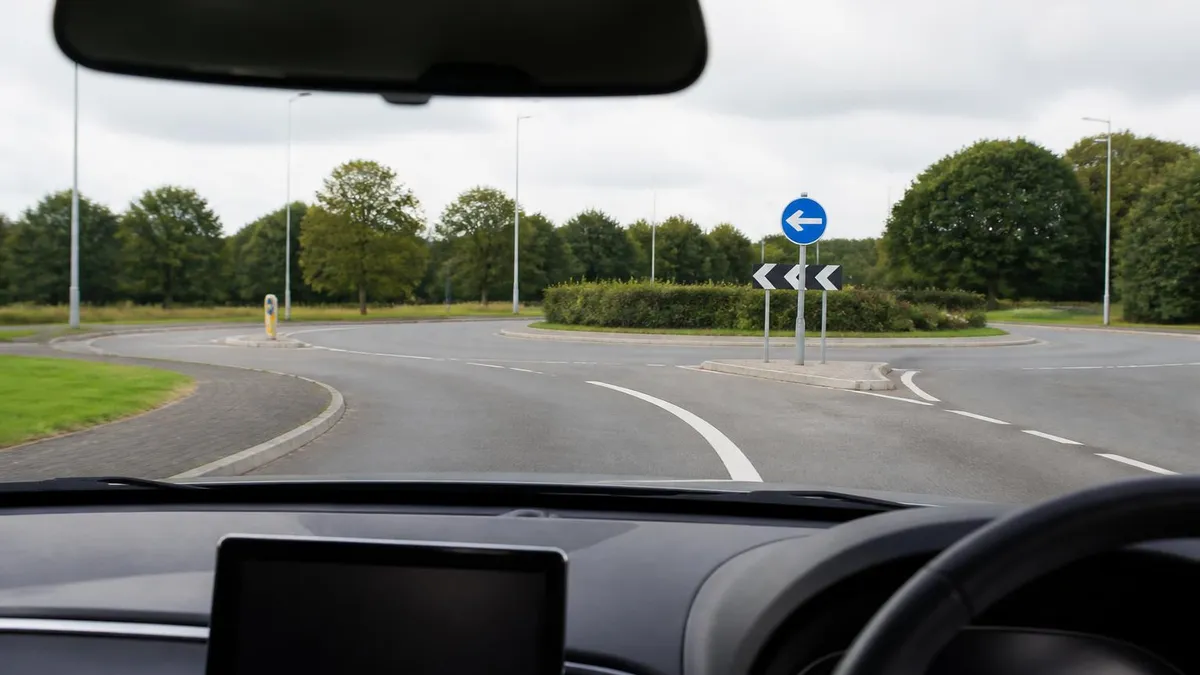
You will typically practise one bay park, one parallel park, and a controlled stop in a quiet residential street. Your instructor may also drive you along common test routes so the roundabouts, traffic light sequences, and tricky junctions feel familiar. Eat a light breakfast, drink water, and avoid caffeine if it makes you jittery. The goal is calm alertness, not adrenaline.

Is an Intensive Driving Test Course Right for You?
- +Get your licence in 1-2 weeks instead of 6-12 months
- +Total cost often lower than weekly lessons over a year
- +Continuous learning improves muscle memory and confidence
- +Single test fee booking removes rebooking admin
- +Ideal for university starters, new jobs, or relocations
- +Daily mock tests sharpen exam technique fast
- +Frees up weekends after completion for actual driving
- −Steep learning curve causes mental fatigue by day three
- −Failure means waiting 10 working days before retest
- −Limited time to absorb feedback between lessons
- −Less exposure to varied weather and road conditions
- −Upfront cost of £1,000+ creates financial pressure
- −Not all DVSA test centres have short-notice slots available
- −Higher stress can negatively affect exam performance
Pros and Cons at a Glance
| Pros | Cons |
|---|---|
| Total cost often lower than weekly lessons over a year | Steep learning curve causes mental fatigue by day three |
| Continuous learning improves muscle memory and confidence | Limited time to absorb feedback between lessons |
| Single test fee booking removes rebooking admin | Less exposure to varied weather and road conditions |
| Ideal for university starters, new jobs, or relocations | Not all DVSA test centres have short-notice slots available |
| Daily mock tests sharpen exam technique fast | Higher stress can negatively affect exam performance |
Intensive Driving Test Pre-Course Checklist
- ✓Confirm your provisional licence shows your current address
- ✓Pass and print your DVSA theory test certificate
- ✓Verify your instructor on the official DVSA ADI register
- ✓Read the school's cancellation and refund terms in writing
- ✓Pay deposits with a credit card for Section 75 protection
- ✓Book accommodation early if travelling for a residential course
- ✓Arrange time off work covering the full course plus test day
- ✓Practise eyesight check at 20 metres on a typical car number plate
- ✓Prepare comfortable, flat-soled shoes suitable for pedal control
- ✓Download a sat-nav app and study local test centre routes
- ✓Stock up on healthy snacks and water for long driving days
- ✓Notify family the test result will come immediately after the drive
Book the practical test BEFORE the course starts
Many learners assume the driving school books the test slot for them. In reality, most schools require you to book the practical yourself via the DVSA website using your theory pass number. Test slots release up to 24 weeks ahead (6am every Monday), and the median wait nationally was 11.1 weeks as of Aug 2026 (longer in some regions) — so secure your slot first, then build the intensive course around it. This single tip prevents 80% of last-minute course collapses.
Understanding the real numbers behind intensive driving test outcomes helps you set realistic expectations and prepare appropriately. DVSA national statistics for 2024 to 2025 show an overall practical driving test pa of 48.4%, with male candidates passing at around 51% and female candidates at approximately 46%. These figures combine all test types — first attempts, retests, intensive students, and learners who took years to reach test standard.
Age plays a measurable role. Seventeen-year-olds achieve the highest pass rate at roughly 55%, with figures declining steadily through each decade of life. Learners in their forties and fifties pass at around 38% on first attempt, partly because confidence-building takes longer when adult learners overthink decisions. Intensive courses can level this playing field for older candidates because the immersion shortens the analysis-paralysis phase that plagues mature learners during weekly lessons.
Test centre geography matters more than most learners realise. Centres in quieter market towns like Kendal, Llandrindod Wells, and Pwllheli regularly post pass rates above 65%, while busy metropolitan centres such as Belvedere, Wood Green, and Birmingham Garretts Green hover around 30%. Some intensive schools deliberately route learners to higher-pass-rate centres, which is legal and increasingly common. Just remember you will drive home from the test, so a centre two hours from home may not suit nervous beginners.
The number of pre-test driving hours strongly predicts outcomes. DVSA-commissioned research suggests learners who have logged at least 45 hours of professional instruction plus 22 hours of private practice pass at significantly higher rates than those relying solely on professional tuition. This is why blended pathways — 15 hours of standard lessons followed by a 20-hour intensive top-up — consistently outperform pure five-day crash courses for absolute beginners.
Fault distribution from DL25 marking sheets reveals where intensive candidates lose points. The top three serious-fault categories nationally are observation at junctions, use of mirrors when changing direction, and inappropriate speed for the conditions. Intensive learners are statistically more likely to fail on junction observation because their reading of complex urban traffic patterns lags behind learners with months of seasonal exposure. Targeted mock tests at busy junctions should be non-negotiable on any reputable intensive syllabus.
Weather is the unspoken variable. Intensive courses booked in November through February have lower pass rates because dark afternoons, wet roundabouts, and frost-affected visibility all increase difficulty. May to September bookings enjoy the highest pass rates but also face longer test driving test wa. If you have flexibility, an April or October course offers the best balance of mild weather and reasonable test availability across most UK regions.
Finally, the choice of car affects outcomes more than learners suspect. Modern instructor cars with hill-hold, automatic handbrakes, and reversing cameras feel different from older basic models, and your nervous system locks onto whichever you trained in. If your intensive school cannot guarantee the same car for the test as for your lessons, ask for at least three hours in the actual test car before exam day.
DVSA test slots release up to 24 weeks ahead every Monday at 6am; the national median wait was 11.1 weeks as of Aug 2026, though some centres run longer. Short-notice slots released by cancellations are snapped up within minutes. Never assume you can book a test in the week before your intensive course starts. If your school promises a guaranteed test slot, ask for written proof of the booked date and reference number before paying.
Avoiding the well-documented pitfalls of intensive driving test preparation is often the difference between a confident first-time pass and an expensive failure. The single most damaging mistake is underestimating mental fatigue. After three consecutive days of four-hour driving sessions, your reaction times slow, your patience thins, and your ability to absorb new feedback drops sharply. Build in genuine rest evenings — no socialising, no late-night study cramming — and treat sleep as part of the curriculum.
The second major pitfall is over-reliance on instructor prompts. Weekly learners gradually wean themselves off being told when to change gear or check mirrors. Intensive learners often never reach that independence because there is no time gap between lessons to practise self-reliance. Insist that your instructor goes silent for the final third of your course, intervening only on safety grounds. If they cannot do this, your independent driving section will fall apart on test day.
Choosing the wrong test centre is another costly error. Some intensive schools advertise centres with high pass rates that are 60 miles from your home. Driving an unfamiliar urban centre alone after passing is genuinely stressful for a brand-new licence holder. Pick the closest centre with acceptable pass rates, even if it means waiting longer. Pass rate alone is meaningless if your post-test driving immediately puts you in scenarios you never trained for, as discussed in our guide to driving test centre.
Skipping mock tests is a fatal shortcut. A proper mock test is conducted by a different instructor — ideally a former examiner — who follows the official DL25 scoring sheet silently and gives feedback only at the end. Mock tests run by your own instructor are useful but lack the unfamiliar-examiner element that causes most candidates to panic. Pay extra for one external mock if your school offers it; the £50 to £80 investment routinely turns near-misses into clean passes.
Ignoring the show-me-tell-me questions is another easy fix. There are 19 set questions covering basic vehicle safety, and the full list is published on the DVSA website. Answering one wrong gives you a minor fault but does not fail you. Refusing or fumbling badly, however, can shake your confidence for the first ten minutes of driving. Memorise all 19 questions during the evenings of your intensive course — twenty minutes per night is enough.
Eating poorly is surprisingly common. Adrenaline suppresses appetite, but driving for four hours on an empty stomach causes blood-sugar crashes that mimic anxiety. Pack slow-release carbohydrates — oats, bananas, wholegrain sandwiches — and avoid sugary energy drinks that spike and crash. Hydration matters too, but pace your water so you are not desperate for the toilet during a 40-minute test.
Finally, do not let nerves convince you to cancel. Statistically, candidates who turn up shaky still pass at roughly the same rate as confident candidates because examiners are looking at driving behaviour, not facial expressions. Adrenaline sharpens reactions, and the first five minutes of test driving are almost always the worst — once you settle into the rhythm, the remaining 35 minutes feel surprisingly normal. Trust the training you paid for and drive the test you have rehearsed dozens of times.
In the final 48 hours before your intensive driving test, your focus should shift from learning to consolidation. Resist the urge to cram extra hours of practice into the day before the exam. Sports psychology research applied to driving consistently shows that an over-driven candidate performs worse than a well-rested one. Limit the day before test to a 90-minute refresher covering manoeuvres and the show-me-tell-me checks, then stop entirely by mid-afternoon. Spend the evening doing something genuinely unrelated to driving.
Lay out everything you need the night before. Your provisional licence is the only document the examiner legally requires, but bring your theory pass certificate and a backup form of ID in case of system glitches. Check your test confirmation email for the exact arrival time, the test centre address, and any covid-era protocols that may still apply. Build in 30 minutes of buffer for traffic, parking, and toilet stops — arriving flustered is a quiet killer of first-time passes.
Dress for comfort, not for style. Wear layers so you can adjust to temperature changes inside the car, choose flat shoes that give you precise pedal feel, and avoid bulky jackets that interfere with seatbelts. Remove sunglasses before pulling away unless the glare is genuinely severe — examiners need to see your eyes to assess observation, and tinted lenses can make this harder. Tie back long hair if it could obstruct your shoulder checks during blind-spot observations.
Mentally rehearse the test in detail. Visualisation is a proven technique used by professional drivers and athletes. Close your eyes and walk yourself through arriving at the centre, completing the eyesight check, performing the show-me-tell-me, pulling away, navigating a roundabout, executing a parallel park, and returning to the centre. Repeat the visualisation three or four times. Your brain treats imagined rehearsal as partial real practice, which reduces test-day novelty stress significantly.
Have a contingency plan if you fail. Statistically, around half of all candidates fail their first attempt, including many intensive students. Pre-decide what your next step will be: top-up lessons, a different test centre, a switch to automatic. Making this decision in advance prevents the spiral of disappointment that derails so many learners. Most second-attempt candidates pass within six weeks of their first failure, and many top examiners argue that a single failure produces a safer long-term driver.
Plan how you will get home. If you pass, you can legally drive yourself home immediately, but if you fail you may be too emotional to drive safely even with your provisional. Arrange for a family member or instructor to be available either way. Some intensive schools include a post-test debrief in the package — take it seriously, because the feedback from your examiner is the single most valuable piece of professional advice you will ever receive about your driving.
Looking beyond test day, plan your first six months of solo driving carefully. Consider booking a Pass Plus course, which adds motorway training and can reduce insurance premiums by up to 30%. Motorway driving is not formally tested in the standard practical, yet it is statistically the most dangerous learning curve for new drivers. The intensive route gets you on the road fast, but ongoing skill development is what keeps you alive and insurable in the years that follow.
For a fuller set of questions on this topic, see our hazard perception test practice resource.
For a fuller set of questions on this topic, see our free theory test practice resource.
For a fuller set of questions on this topic, see our driving test change resource.
Sample DVSA UK Driving Theory Practice Questions
Try these questions from our free DVSA UK Driving Theory practice tests. The correct answer and an explanation follow each question.
At a crash scene, a vehicle is on fire with a casualty inside. What should you do first?
- A. Try to remove the casualty immediately
- B. Call the emergency services
- C. Attempt to put the fire out yourself
- D. Wait for other motorists to help
Answer: B. Call the emergency services
You should call the emergency services immediately so trained professionals can deal with both the fire and the casualty safely.
When driving in wet conditions, what is the minimum time gap you should leave between your vehicle and the one in front?
- A. A one-second gap
- B. A two-second gap
- C. A three-second gap
- D. A four-second gap
Answer: D. A four-second gap
The Highway Code advises that in wet weather, you should double the normal two-second gap to at least a four-second gap. This is because your vehicle will take longer to stop on a wet surface, and the increased distance provides a safer stopping margin.
You have just bought a brand-new car. When will it need its first MOT test?
- A. On the first anniversary of its registration.
- B. After it has been driven 12,000 miles.
- C. On the third anniversary of its registration.
- D. When the manufacturer's warranty expires.
Answer: C. On the third anniversary of its registration.
A new car in the UK does not require an MOT test until the third anniversary of its first registration date. After this, it must be tested annually.
In which situation is it safe to move an injured person after a road collision?
- A. When they are in immediate danger such as fire or further collision risk
- B. Whenever you think it will help them
- C. Only when they ask you to move them
- D. Only when another motorist tells you to
Answer: A. When they are in immediate danger such as fire or further collision risk
An injured person should only be moved if leaving them in place poses an immediate threat to their life, such as fire or risk of being struck by traffic.
DVSA Questions and Answers

DVSA Car Practical Test: Complete Guide to Passing First Time
How to Change Theory Test Date: Complete DVSA Rebooking Guide for 2026
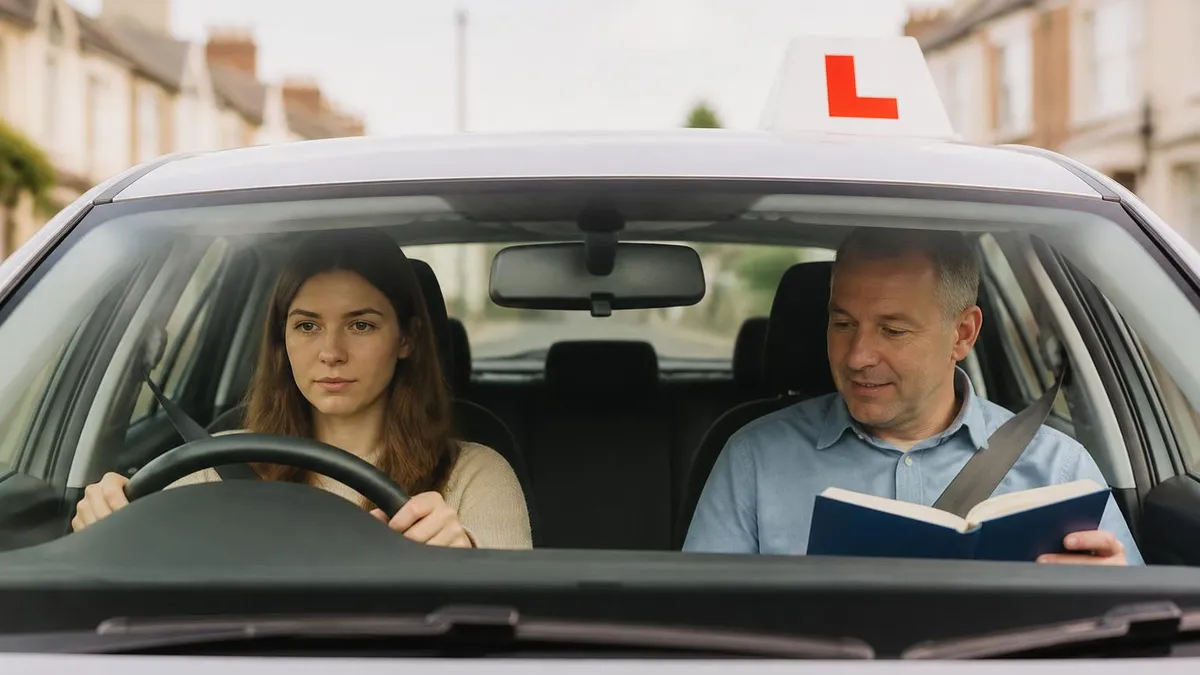
Intensive Driving Course With Test: Complete UK Guide to Fast-Track Your Licence in 2026

Hazard Perception Pass Mark: The Complete UK Guide to Scoring 44/75 in 2026

Exeter Driving Test Centre: Complete Guide to UK Test Centre Locations, Routes & Pass Rates 2026
How this page was made: written with AI tools and published by Nathan Beja, founder of Practice Test Geeks, who is responsible for its content. Exam facts are checked against the official sources listed below. Not reviewed by a subject-matter expert. Editorial policy
Sources & references
Exam facts on this page (fees, format, dates, passing scores) are checked against these official sources; the date is our last check. Editorial policy
- gov.uk — Eligibility, registration, test dates, passing score, retake policy, score release, score validity, time limit, exam format · verified Oct 2026