
Majors and Minors in Driving Test: Complete UK Guide to Faults, Limits and Passing
Understand majors and minors in the driving test ✅ Learn fault limits, what examiners mark, and how to avoid a serious or dangerous fault.

Understanding majors and minors in driving test marking is one of the most important things any learner driver can do before sitting their practical test. The DVSA examiner uses a structured fault-recording system throughout your test, and every single manoeuvre, observation check, and control input is being assessed against that system. Knowing how the marking sheet works — and exactly where the line falls between a minor fault and something far more serious — puts you in a much stronger position to pass first time and feel confident behind the wheel.
The DVSA practical driving test is assessed using three categories of fault: minor, serious, and dangerous. Minor faults, sometimes called driving faults, are small lapses that do not immediately endanger anyone. Serious faults are those that could have endangered the driver, a passenger, another road user, or a pedestrian, and a single serious fault means an automatic fail. Dangerous faults are direct acts of danger that actually put someone at risk, and these also result in an immediate fail. Knowing where each type sits on the spectrum helps you understand what examiners are genuinely looking for during the test drive.
Many learner drivers focus exclusively on dramatic errors — stalling, mounting the kerb, or missing a junction — without realising that a quiet accumulation of minor faults can also end a test. You are allowed up to 15 minor faults before they become a problem; reach 16 and you fail. However, collecting the same minor fault repeatedly — say, consistently failing to check the left mirror before turning left — can cause an examiner to upgrade that pattern into a serious fault, even if each individual instance seemed harmless. This is a nuance that surprises many candidates on test day.
The marking system applies across all elements of the practical test: vehicle safety questions, eyesight check, general driving ability, reversing exercises, independent driving, and the sat-nav section. Every competency on the DL25 marking sheet can receive a minor, serious, or dangerous mark. Understanding the breadth of what is assessed — not just the dramatic moments but also the quiet, routine checks — is the foundation of consistent, examiner-ready driving. For more context on how the scoring relates to pass thresholds, see the detailed breakdown of driving test majors minors across all DVSA licence categories.
One of the biggest misconceptions among learner drivers is that the examiner is trying to catch them out. In reality, the examiner's job is to observe and record what happens — nothing more, nothing less. They will not tell you whether you have made a fault during the test, and they will not coach or advise you on how to drive.
This neutral role is deliberate: it ensures every candidate is assessed against the same standard, regardless of who is in the passenger seat. Understanding this removes a great deal of test-day anxiety and helps you focus on the driving itself rather than trying to read the examiner's body language.
Preparation is the single most reliable way to avoid both minor accumulations and serious faults. Candidates who understand the marking system tend to drive with more intentional awareness — they check mirrors in the correct sequence, signal early and consistently, and approach junctions at appropriate speeds because they know those are precisely the areas where faults are recorded. Structured practice, ideally combining lessons with a qualified ADI and dedicated hazard-perception work, closes the gap between driving competently and driving to test standard. The difference is often less about physical skill and more about systematic, examiner-aware habits.
This guide covers everything you need to know about the fault system: definitions of each fault type, how the DL25 sheet works, common causes of serious and dangerous faults, strategies for keeping your minor tally low, and what happens after the test regardless of the outcome. Whether you have a test date looming or are still in the early stages of learning, understanding how examiners mark your performance is knowledge that will directly improve your chances of driving away with a full UK licence.
Driving Test Fault Marking by the Numbers
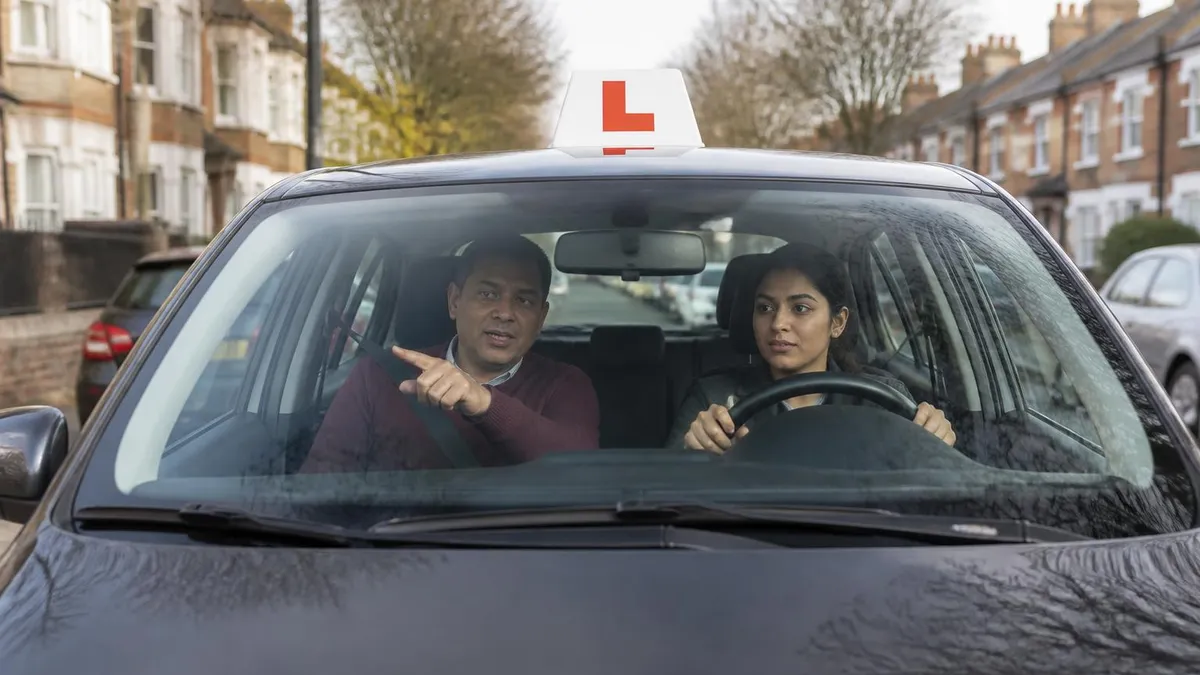
How the DL25 Marking Sheet Works
Small errors that do not endanger others. Up to 15 are permitted. A tally is kept per category — repeated minor faults in the same area can trigger an upgrade to serious, so consistency matters even when individual errors seem small.
A single serious fault means an automatic test failure. These are errors that could have caused danger — a poorly judged emerging manoeuvre, ignoring a give-way line, or loss of full vehicle control. The test continues but cannot be passed.
The most severe category: the examiner or another road user had to take action to prevent an accident. A dangerous fault ends the test immediately in most cases and is recorded separately on the DL25 sheet for DVSA analysis.
The sheet covers over 50 individual competencies including mirrors, signals, junctions, positioning, speed, and clearance. Each can receive a mark in any fault column, giving the examiner a granular, evidenced record of exactly how you drove.
The distinction between a minor fault and a serious fault is not always as obvious as learner drivers expect, and this is where a thorough understanding of the system genuinely pays off. A minor fault — officially called a driving fault — occurs when a driver makes an error that, in the examiner's professional judgement, did not create a situation of potential danger.
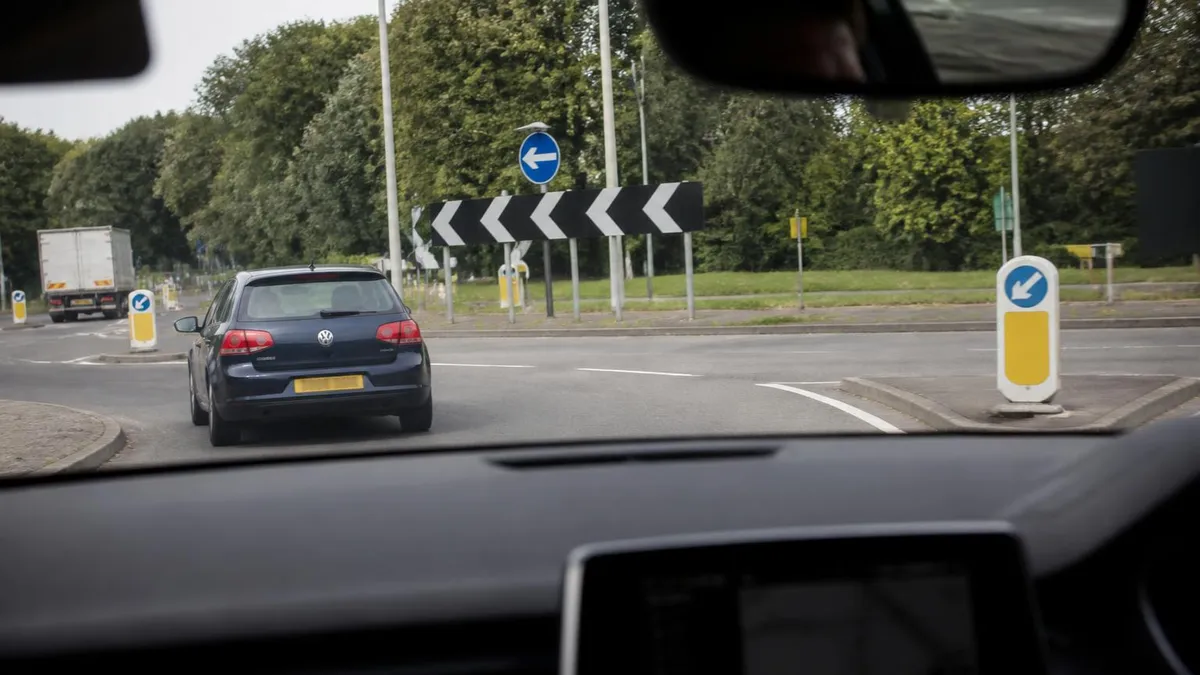
For example, approaching a roundabout slightly too fast but then slowing safely and emerging correctly might attract a minor mark for speed, but no more. The key phrase is potential danger: if the error could plausibly have led to a collision or near-miss under slightly different conditions, the examiner is likely to record a serious fault instead.
Serious faults cover a wide range of behaviours. Common causes include emerging from a junction without adequate observation, failing to comply with traffic lights or road markings, incorrect use of the handbrake on a hill start leading to rollback, and positioning errors on roundabouts that force other drivers to adjust.
The DVSA trains examiners to apply a consistent standard across the country, so a serious fault recorded in Edinburgh should represent the same level of risk as the same fault recorded in Plymouth. That standardisation is achieved through regular moderation — examiners accompany one another and compare marking to ensure alignment.
Dangerous faults are relatively rare because the system is designed so that examiners can intervene verbally before a situation escalates that far. An examiner who sees a candidate about to drive through a red light will say clearly, stop, and the fault will be recorded as serious — dangerous action prevented.
A dangerous fault only results when the candidate's action was so sudden or severe that actual danger occurred before any intervention was possible. Mounting a pavement with pedestrians present, pulling out directly in front of an oncoming vehicle, or accelerating toward a closed level crossing are examples that have historically resulted in dangerous fault recordings.
The concept of the minor tally is something every candidate should internalise. Because 16 minors equal a fail, candidates with a broadly safe driving style can still fail if they are inconsistent across many small areas.
A candidate who collects two minor faults on mirrors, two on signals, two on junction approach speed, two on positioning, and so on — all different categories — can reach 16 very quickly without ever committing what feels like a significant single error. This is why driving instructors emphasise building complete, systematic habits rather than just avoiding the big obvious mistakes. The minor tally rewards consistency.
Another area of confusion is the relationship between serious and dangerous faults in terms of test termination. Many candidates believe that a dangerous fault means the examiner physically takes control of the vehicle and stops the test immediately. In practice, the examiner uses a dual-control vehicle with a passenger-side brake pedal, and they will intervene if necessary.
However, the test is not always terminated at the moment of intervention — in many cases, the examiner allows the test to continue so that the candidate can complete the full drive, receive a comprehensive debrief, and understand all of the areas they need to improve before rebooking.
Understanding how fault severity is determined also helps candidates during the debrief. After the test, the examiner will explain each fault using the DL25 sheet as a reference, describing where and why each mark was awarded. Candidates who understand the system can engage meaningfully with this feedback — asking clarifying questions about specific moments, understanding whether a fault was on the borderline between categories, and identifying which areas to prioritise in further practice. Examiners are trained to give constructive, professional debriefs, and the information they provide is genuinely useful for planning the next phase of training.
It is also worth noting that serious faults recorded on the DL25 are categorised into specific competency areas, and DVSA publishes annual data showing which areas generate the most serious faults nationally. Junctions — specifically observation at junctions — consistently top the list, followed by mirrors, signals, and reversing exercises. This data is publicly available and gives learner drivers a clear roadmap of where national failure patterns lie, allowing them to focus preparation on the areas that statistically matter most. Combining that national picture with personalised feedback from a qualified ADI is the most efficient approach to test-ready driving.
Common Fault Categories on the Driving Test
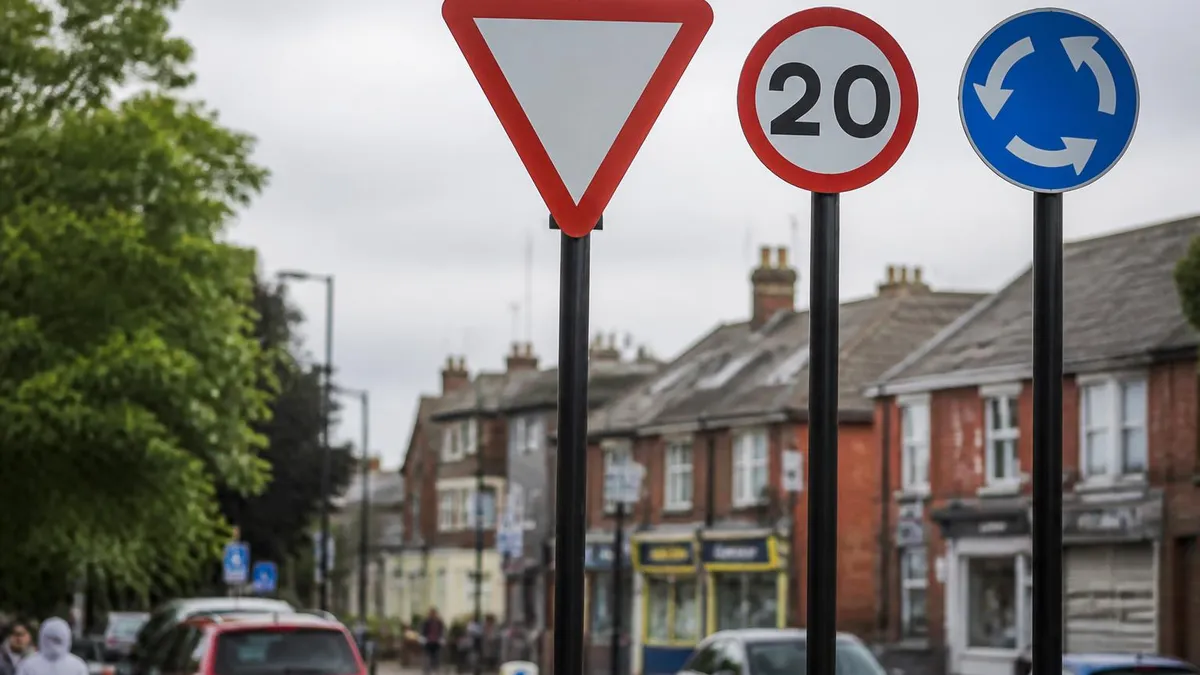
Junctions are the single most common source of serious faults on the UK practical driving test. The examiner assesses your approach speed, observation before emerging, correct positioning, and whether you gave way appropriately. Emerging without adequate observation — pulling out when a vehicle is approaching — is the textbook serious fault at junctions, and it accounts for a significant proportion of all test failures recorded by DVSA each year.
Candidates often underestimate how far left and right they need to look before emerging from a give-way line, particularly on busy or fast roads. The examiner expects you to look both ways at least once, and ideally multiple times if your view is restricted by parked vehicles or vegetation. If you emerge and the examiner visibly reacts or uses the passenger brake, that junction has almost certainly produced a serious or dangerous fault. Practise emerging at a variety of junction types — T-junctions, crossroads, and box junctions — in different traffic conditions to build robust observation habits.
Understanding the Fault System: What Helps and What Catches Candidates Out
- +You can make up to 15 minor faults and still pass, giving real margin for small errors
- +The DL25 debrief tells you exactly where each fault occurred, making future practice focused
- +Examiners apply a national standard, so results are consistent regardless of test centre
- +The test continues after a serious fault, allowing you to receive a full, comprehensive debrief
- +Minor fault patterns on the DL25 identify your specific weak areas precisely
- +Knowing the system reduces anxiety — you understand exactly what is and is not a fail
- −A single serious fault fails the test instantly, with no opportunity to compensate
- −Sixteen or more minor faults in total also produce an automatic fail, catching unprepared candidates
- −The same repeated minor fault can be upgraded to serious, penalising inconsistent driving habits
- −Examiners cannot tell you during the test whether you have collected a fault, which increases anxiety
- −Dangerous faults are recorded even if the examiner intervenes — intervention does not cancel the mark
- −The test environment differs from lessons, and pressure can cause candidates to drop good habits under observation
Pre-Test Checklist: Reducing Your Minor and Serious Fault Risk
- ✓Check all mirrors in the correct sequence (interior then relevant exterior) before every manoeuvre
- ✓Signal early enough to inform — at least three seconds before a turn in normal conditions
- ✓Approach every junction at a speed that allows you to stop safely if necessary
- ✓Look both ways at least twice before emerging from any give-way or stop line
- ✓Maintain appropriate following distance using the two-second rule in dry conditions
- ✓Complete all blind-spot checks before moving off, changing lanes, or opening car doors
- ✓Apply the MSM routine consistently during independent driving and the sat-nav section
- ✓During reversing exercises, check all mirrors and look over both shoulders throughout
- ✓Position your vehicle correctly at roundabouts — choose the lane that matches your exit
- ✓Keep to appropriate speed limits and slow down progressively rather than braking sharply
16 Minors Fails the Test — Even Without a Single Serious Fault
Most learner drivers know that a serious fault means an automatic fail, but many are unaware that accumulating 16 or more minor faults also results in failure — no matter how safe the overall drive appeared. Spread across many different categories, minor faults can add up silently. Track your minor tally during mock tests with your instructor so you know exactly where you stand before test day.
One of the most important things to understand about the DVSA fault system is how examiners decide to upgrade a minor fault into a serious one. This decision is not arbitrary — it follows a consistent professional framework based on the concept of potential danger. An examiner watching a candidate repeatedly fail to check a specific mirror is observing a pattern.
Where a single omission might reflect a momentary lapse, four or five omissions across the same competency over the course of a 40-minute drive suggests a systematic gap in the candidate's driving awareness, and that gap represents a genuine risk on public roads.
The upgrade process is sometimes described in terms of frequency and consequence. A minor fault that is repeated enough times — the DVSA guidance does not specify an exact number, because context matters — crosses a threshold where it begins to represent a systemic rather than incidental failure.
At that point, the examiner has a professional obligation to record it as serious, because the pattern demonstrates that the candidate has not fully internalised the safe behaviour and is unlikely to maintain it reliably after passing. This is why driving instructors tell candidates to drive consistently throughout the entire test rather than just during the moments they feel are being watched most closely.
Context also influences the severity assessment significantly. A missed mirror check on a quiet rural road during a routine bend is assessed differently from a missed mirror check before a lane change on a busy urban dual carriageway with a lorry in the adjacent lane. Both attract a mark in the same DL25 category, but the examiner's severity assessment reflects the actual risk presented by the specific road environment at that specific moment. This contextual judgement is precisely what makes the examiner's role a skilled professional one rather than a mechanical checklist exercise.
Candidates sometimes ask whether it is possible to query or challenge the examiner's assessment after the test. The short answer is no — the examiner's professional judgement during the test is final. However, the DVSA does have a formal complaint and review process for candidates who believe the test was conducted improperly — not incorrectly marked, but conducted in a way that breached the standard process.
Examples might include an examiner giving instructions that were confusing or incorrect, the vehicle having a mechanical fault, or the test environment being unsafe due to factors outside the candidate's control. These complaints are investigated, and if upheld, the candidate is typically offered a free retest.
An important practical implication of the upgrade system is that candidates should never try to hide or compensate for a fault mid-manoeuvre. If you have misjudged your positioning entering a bay park, the best response is to straighten up and correct the issue calmly and safely — not to rush the manoeuvre to a conclusion in the hope the examiner did not notice the error.
A calm correction often results in a minor mark for the initial misjudgement; a hurried, unsafe correction risks escalating the situation into a serious or even dangerous fault. Examiners are experienced professionals who respond well to composed, considered driving even when things do not go perfectly.
The independent driving section of the test — which accounts for around 20 minutes of the 40-minute drive — has its own nuances within the fault system. During this section, the examiner gives less explicit direction, and candidates must follow either a series of verbal directions held in their memory or the route displayed on a sat-nav. Making a wrong turn during independent driving is not a fault — the DVSA explicitly states this.
What is assessed during this section is how safely the candidate drives, not whether they follow the route perfectly. A candidate who misses a turn but continues to drive safely will not receive a fault for the navigation error; a candidate who brakes sharply or swerves to correct a missed turn absolutely will receive one for the unsafe reaction.
Finally, it is worth understanding that the DL25 is not just a pass/fail instrument — it is a diagnostic tool that provides a detailed picture of a candidate's driving. Even candidates who pass with a clean sheet can benefit from examining which minor faults appeared, because those marks represent the areas where their driving fell below the ideal standard.
A candidate who passes with 12 minor faults concentrated in the mirrors category should note that as an area to continue developing as a new driver. The test is a threshold, not a ceiling, and the habits developed in training continue to matter long after the licence is issued.
Collecting 15 minor faults and passing is not the same as driving well — it means you reached the legal threshold on a single assessment. Patterns of minor faults in areas like mirrors, signals, or junction observation indicate habits that should be corrected through continued practice. New drivers with high minor tallies are statistically more likely to be involved in incidents within the first two years of driving.
Once the practical test is complete, the debrief is the most valuable learning tool available regardless of the outcome. If you have passed, the examiner will explain any minor faults recorded and indicate which areas of your driving you should continue to develop as a new driver.
If you have failed, the debrief covers each serious or dangerous fault in detail, including where on the route it occurred and what specifically triggered the examiner's assessment. This is not a judgement — it is structured professional feedback designed to help you improve, and you should listen carefully and ask questions if anything is unclear.
Many candidates feel emotionally overwhelmed at the moment of the debrief, particularly after a failure, and find it difficult to retain the information being shared. It is entirely acceptable to ask the examiner to repeat or clarify a point. You can also take brief notes during the debrief — examiners are used to candidates doing this and will not rush you.
Some driving instructors attend the test and wait outside the test centre to receive a verbal summary from the candidate immediately afterward, which helps consolidate the feedback while it is fresh. Recording the debrief on your phone, however, is not permitted.
After a failed test, the DL25 sheet becomes the primary tool for planning your next phase of training. Your driving instructor should review it with you carefully, identifying not just the specific faults recorded but the underlying habits or knowledge gaps that produced them.
For example, a serious fault for emerging at a junction without adequate observation might reflect insufficient mirror-signal-manoeuvre discipline, overconfidence about gap assessment, or anxiety causing rushed decisions. Each of these root causes requires a different training response, and a good instructor will design practice sessions that address the specific issue rather than just repeating the same manoeuvre more times.
The waiting time for a practical test retest varies significantly depending on your location and the time of year. In urban areas with high demand, waits of six to ten weeks are common, though cancellation slots occasionally appear with much shorter notice. Some candidates use dedicated apps and services that monitor DVSA availability and alert them when earlier slots appear.
This is a legitimate approach — the DVSA website allows candidates to log in and change their test date online at no extra cost, provided they give more than three working days notice. Last-minute test changes within three working days result in the forfeiture of the test fee.
Between a failed test and a retest, the most effective use of time is targeted, structured practice that directly addresses the faults identified on the DL25. Generic additional lessons that cover the same ground as before may provide confidence but are less efficient than lessons specifically designed around the examiner's feedback.
If junctions produced your serious fault, your next ten hours should include a disproportionate number of complex junctions — busy crossroads, visibility-restricted T-junctions, filter lanes — until your observation and emerging decisions are consistently safe and unhesitating. Specificity in preparation is what separates candidates who pass on their second attempt from those who need four or five tries.
It is also worth reflecting on the role of test-day nerves in fault accumulation. Research and anecdotal evidence from driving instructors consistently suggest that the most common cause of minor faults on otherwise competent drivers is anxiety — the heightened stress of assessment causes normally automatic habits to become effortful and inconsistent.
Practical strategies to manage test-day anxiety include mock tests conducted in the same test centre area as the real test, breathing exercises in the minutes before the test begins, and deliberate pre-test routines that settle the nervous system. Understanding that the examiner is a neutral observer, not an adversary, is also psychologically important for maintaining composure throughout the drive.
The practical driving test is fundamentally a measurement of whether you can drive safely and independently on UK public roads. The fault system — minors, serious, and dangerous — is the instrument through which that measurement is taken.
Candidates who understand the system, who know what examiners are recording and why, and who have built consistent, observable safe habits through structured training, enter the test in a fundamentally stronger position than those who treat the test as an unknown quantity. Knowledge of the DL25, combined with honest practice and quality instruction, is the most direct path to passing first time and driving confidently for life.
Practical preparation for the driving test should extend beyond lessons with your ADI into deliberate, independent study and practice. Hazard perception skills — the ability to identify developing hazards on the road before they require evasive action — translate directly into test performance, because the habits that reduce hazard perception reaction times also reduce the likelihood of serious faults on the practical test. A driver who spots a pedestrian stepping toward the kerb 80 metres ahead and reduces speed smoothly is demonstrating exactly the kind of anticipatory awareness that prevents fault-worthy situations from developing in the first place.
Understanding the specific competencies on the DL25 sheet allows you to self-audit your driving during practice. When you are out with a family member or friend on a supervised drive, mentally tick through the categories — mirrors, signals, junctions, clearance, speed, positioning — and ask yourself honestly whether each element of every manoeuvre met the standard. This kind of deliberate self-assessment is qualitatively different from just driving around gaining experience; it builds the metacognitive awareness that distinguishes test-ready candidates from those who drive adequately without knowing exactly why or how.
Speed management is an area where many candidates underestimate their fault exposure. The DL25 assesses speed in two directions: driving too fast for the conditions (speeding, failing to reduce speed for hazards) and driving too slowly and causing an obstruction or failing to make normal progress. Both attract faults. Many learner drivers err on the side of driving very slowly throughout the test, believing this demonstrates caution.
In reality, driving significantly below the speed limit on a clear, dry road with good visibility can attract a serious fault for undue hesitancy, because it impedes traffic flow and is itself a hazard. Appropriate speed — matching conditions rather than always minimising — is what the examiner is looking for.
The show-me tell-me vehicle safety questions at the start of the test also contribute to the fault tally. There are two questions: one answered verbally (tell me) and one demonstrated practically with the engine off (show me). Getting one wrong produces a single minor fault on the DL25. Getting both wrong produces one minor fault — not two, because the questions together count as a single competency.
This is a common misconception among candidates who believe two wrong answers produce two faults. In reality, the maximum penalty for vehicle safety questions is one minor fault, so while preparation is important, this section carries relatively low risk compared to the driving itself.
Motorway driving is not assessed in the standard practical driving test for car candidates — motorway lessons with an ADI are permitted for learner drivers, but the practical test does not include motorway sections. This means the DL25 categories related to dual carriageways and high-speed roads are assessed on A-roads rather than true motorways.
Candidates should practise on the fastest roads available within their test centre's route area, including national speed limit dual carriageways, to ensure they are comfortable with higher speeds and the lane discipline required on those roads. Missing mirrors before overtaking on a dual carriageway is a common source of serious faults that catches candidates by surprise if they have only practised on lower-speed urban roads.
Post-pass, the DVSA NewDriver app provides access to your test result and DL25 feedback digitally, which is a useful resource for new drivers who want to continue developing beyond the minimum pass standard. Many newly qualified drivers also consider Pass Plus — a structured six-hour course covering motorways, rural roads, night driving, and other scenarios not fully assessed in the standard test — as a way of building confidence and experience in the first months of solo driving. Some insurers offer a discount to Pass Plus graduates, though the primary benefit is developmental rather than financial.
Ultimately, the fault system exists to protect everyone on the road — the candidate, their passengers, and all other road users. The categories of minor, serious, and dangerous are not bureaucratic abstractions; they reflect real distinctions in the level of risk that different driving errors create.
A candidate who genuinely understands and respects that framework — who has internalised why observation at junctions matters, why consistent mirror use matters, why speed management matters — is not just better prepared for the test. They are a more capable, safer driver for the rest of their life, which is exactly what the DVSA practical test was designed to produce.
DVSA Questions and Answers
UK Theory Test Pass Mark: Car, Bike, LGV, PCV & ADI Scores

Free Theory Test App: The Complete UK Guide to Choosing, Using and Passing With Mobile Practice in 2026

Cancelling Driving Test: The Complete UK Guide to Refunds, Rebooking and Avoiding Lost Fees in 2026
Theory Test Certificate: Complete UK Guide to Passing and Using Your DVSA Pass Letter in 2026
Driving Test Nerves: The Complete UK Guide to Calming Anxiety and Passing First Time in 2026
About the Author

Licensed Driving Instructor & DMV Test Specialist
Penn State UniversityRobert J. Williams graduated from Penn State University with a degree in Transportation Management and has spent 20 years as a certified driving instructor and DMV examiner consultant. He has personally coached thousands of applicants through written knowledge tests, skills assessments, and commercial driver licensing programs across more than 30 states.