
Book Practical Driving Test NI: Complete 2026 October Guide to Booking, Preparing and Passing in Northern Ireland
🎯 Book practical driving test NI step-by-step: DVA booking, fees, eligibility, test centres, waiting times and prep tips to pass first time in 2026 October.
If you are ready to book practical driving test NI candidates must take, the process is run by the Driver & Vehicle Agency (DVA), not the DVSA used in Great Britain. Northern Ireland operates its own booking system, fee structure and test centre network across Belfast, Newtownards, Lisburn, Craigavon, Newry, Omagh, Londonderry, Ballymena, Coleraine, Cookstown, Enniskillen and Larne. Understanding the NI-specific rules before you log in to nidirect saves weeks of frustration and avoids the common pitfalls that cause around one in two NI candidates to fail at the first attempt.
The practical car driving test in Northern Ireland costs £65.00 on weekdays and £95.00 at evenings, weekends or bank holidays as of 2026. You can only book once you hold a valid provisional licence, have passed the theory test within the last two years, and have completed your minimum learner period if you are under a restricted licence. driving test wa currently average eight to twelve weeks at urban centres like Belfast Balmoral and Newtownards, while rural centres such as Enniskillen and Cookstown often offer slots within four weeks.
This guide walks you through every step of the NI booking process, from creating your nidirect account to selecting a centre, paying the fee, rescheduling without losing money, and arriving on test day with the right documents. We cover the differences between the NI test and the GB DVSA test, what examiners actually mark, the R-plate rules for new drivers, and how the restricted licence period affects you for the first year after passing.
You will also learn how to choose between the regular test and the Approved Driving Instructor (ADI) recommendation route, how to use cancellation-checker services responsibly, and what happens if you fail. The article includes real cost breakdowns, a printable pre-driving test checklist, the exact documents required at the centre, and answers to the questions NI learners ask most often on forums and search engines.
Whether you are a seventeen-year-old taking your first test in Lisburn, a returning driver after a long break, or someone transferring from a foreign licence, the rules below apply equally. The DVA does not negotiate on paperwork — turn up without your provisional or your theory pass certificate and the test is cancelled with no refund. Read every section carefully and bookmark this page so you can return to it the night before your test.
One final note before we begin: Northern Ireland does not yet operate a fully digital licence, so all booking confirmations are sent by email but you must bring a physical provisional photocard to the centre. The DVA also enforces stricter rules on accompanying drivers and vehicle condition than many learners expect. Get those wrong and you will be sent home without sitting the test, losing both your fee and several weeks of waiting time.
NI Practical Driving Test by the Numbers
How to Book Your Practical Driving Test NI: Step-by-Step
Create or Sign In to nidirect
Confirm Eligibility Details
Choose a Test Centre
Pick a Date and Time Slot
Pay the Fee and Receive Confirmation
Before the DVA system will let you complete a booking, you must meet four eligibility checks. The first is age: you must be at least seventeen on the day of the test, or sixteen if you receive the higher rate mobility component of Disability Living Allowance or the enhanced rate of Personal Independence Payment. The system verifies your date of birth automatically against your provisional licence record, so there is no way to bring a test forward if you miscalculate your eligibility window.
The second requirement is a valid Northern Ireland provisional driving licence in category B (car). If you hold a GB DVLA provisional you cannot use it to book an NI practical test — you must first exchange it for a DVA-issued licence, which takes around three weeks. Photocard provisionals issued before 2014 may need updating, and any change of address since issue must be processed before your test date or the examiner will refuse to start.
Third, you need a current theory test pass certificate. NI theory passes are valid for two years from the date of the multiple-choice and hazard perception sections. If your two-year window expires before your practical, you must retake the theory in full — there are no extensions, even for medical reasons or pandemic-related backlogs. For context on retesting deadlines see our companion guide on test date, which covers the rebooking process in detail.
The fourth check is the minimum learner period. NI does not impose the GB-style mandatory hours, but you cannot sit the practical until you have held your provisional for at least one full calendar year. There is no exception to this rule. Many candidates are caught out because they passed theory quickly but cannot book a practical date earlier than twelve months after their provisional issue date. Plan your booking around this anniversary rather than around your theory pass.
You also need to have completed all logbook-eligible lessons if you booked them through an ADI scheme, though logbook completion is not technically mandatory for the test itself. The DVA recommends a minimum of 45 hours of professional instruction plus 22 hours of private practice, mirroring research-backed thresholds for first-time pass success. Candidates with fewer than 30 hours of professional lessons have a sub-40% pass rate in NI, well below the national average.
Finally, the car you bring must meet strict roadworthiness criteria. It needs valid MOT (if over four years old), valid road tax, valid insurance covering you for the test, two functioning L-plates, an additional interior rear-view mirror for the examiner, and seatbelts that work in every seat. Cars without head restraints fitted to the front passenger seat are automatically rejected. We cover the full vehicle checklist in the pre-test section below.
If you are considering a shortcut to test-ready status, an intensive driving course with test can compress the learning timeline to one or two weeks, though this works best for confident learners with some prior wheel time.
DVSA Practice Test Questions
Prepare for the DVSA - UK Driving Theory Test exam with our free practice test modules. Each quiz covers key topics to help you pass on your first try.
DVSA Eco-Friendly Driving and Vehicle Loading
DVSA Exam Questions covering Eco-Friendly Driving and Vehicle Loading. Master DVSA Test concepts for certification prep.
DVSA Hazard Awareness
Free DVSA Practice Test featuring Hazard Awareness. Improve your DVSA Exam score with mock test prep.
DVSA Incidents, Accidents and First Aid
DVSA Mock Exam on Incidents, Accidents and First Aid. DVSA Study Guide questions to pass on your first try.
DVSA Motorway Rules and Smart Motorways
DVSA Test Prep for Motorway Rules and Smart Motorways. Practice DVSA Quiz questions and boost your score.
DVSA Rules of the Road (Highway Code)
DVSA Questions and Answers on Rules of the Road (Highway Code). Free DVSA practice for exam readiness.
DVSA - UK Driving Theory Hazard Awareness ...
DVSA Mock Test covering - UK Driving Theory Hazard Awareness and Perception. Online DVSA Test practice with instant feedback.
DVSA - UK Driving Theory Motorway Rules an...
Free DVSA Quiz on - UK Driving Theory Motorway Rules and Regulations. DVSA Exam prep questions with detailed explanations.
DVSA - UK Driving Theory Road and Traffic ...
DVSA Practice Questions for - UK Driving Theory Road and Traffic Signs. Build confidence for your DVSA certification exam.
DVSA - UK Driving Theory Rules of the Road
DVSA Test Online for - UK Driving Theory Rules of the Road. Free practice with instant results and feedback.
Compare Northern Ireland Practical Test Centres
Belfast Balmoral is the busiest test centre in Northern Ireland with around 14,000 tests per year. Pass rates hover at 48%, slightly below the national average due to congested urban routes featuring multi-lane junctions, bus lanes, the Boucher Road retail traffic, and several roundabouts of varying complexity. Waiting times average 10 to 12 weeks and parallel parking on a busy side street is almost guaranteed on the route.
Newtownards serves the Ards Peninsula and east Belfast commuter belt. Pass rates run at 53% with routes typically including the Comber Road, Movilla Road, and a stretch of dual carriageway. Waits average eight weeks. The centre is popular with Belfast learners willing to travel because routes are slightly less complex than Balmoral while still offering enough challenge to satisfy DVA testing standards.
Should You Travel to a Rural NI Test Centre for an Earlier Date?
- +Significantly shorter waiting times — often four weeks instead of twelve
- +Higher historical pass rates at centres like Omagh, Cookstown and Newry
- +Less complex routes with fewer multi-lane roundabouts and bus lanes
- +Reduced test-day stress thanks to quieter test centre car parks
- +Easier parallel parking and bay parking on residential streets
- +Cheaper instructor hire if travelling with a local ADI
- −Long travel time to and from the centre on test day adds fatigue
- −Unfamiliar routes you cannot easily practise in advance with your usual instructor
- −You may need to hire a local instructor's car if yours is unsuitable
- −Rural roads have unfamiliar hazards like farm vehicles and unmarked junctions
- −Limited backup options if your car breaks down far from home
- −Some employers may not approve a half-day off plus a 90-minute round trip
Pre-Test Day Checklist: Book Practical Driving Test NI Documents
- ✓Bring your NI provisional photocard licence — paper counterparts no longer accepted
- ✓Bring your theory test pass certificate, printed or saved as PDF on your phone
- ✓Confirm your booking reference number is accessible by email or SMS
- ✓Check the test vehicle has valid MOT, insurance and road tax
- ✓Fit L-plates to the front and rear of the vehicle, magnetic or sticker
- ✓Ensure the vehicle has an additional interior rear-view mirror for the examiner
- ✓Top up fuel to at least a quarter tank to avoid mid-test refuelling
- ✓Check all lights, indicators, brake lights and number plate bulb are working
- ✓Confirm tyre tread is above 1.6mm and pressures are correct for the load
- ✓Wear comfortable shoes that allow precise pedal control — no flip-flops or platforms
- ✓Arrive 10 minutes early to complete eyesight check and paperwork calmly
- ✓Switch your phone to silent or off before entering the examiner's office
You need three full working days' notice to reschedule or cancel without losing your fee.
If you cancel less than three clear working days before your test (excluding Sundays and bank holidays), the DVA keeps your full £65.00 or £95.00 fee. Reschedule via nidirect using your booking reference. Genuine medical emergencies with a doctor's letter can sometimes be refunded at the DVA's discretion, but do not rely on this — apply within 10 days of the missed test.
On test day, aim to arrive at the test centre 10 to 15 minutes before your slot. The centre waiting room is usually small with limited seating, particularly at Belfast Balmoral and Newtownards. Bring a bottle of water but avoid large quantities of coffee — examiners will not pause the test for bathroom breaks, and 40 minutes feels much longer with a full bladder. Use the toilet immediately on arrival before the examiner calls your name from the waiting list.
Your examiner will call you forward and check both your provisional licence and theory pass certificate before walking outside. The first task is the eyesight check: you must read a registration plate from 20 metres for new-style plates, or 20.5 metres for older-style plates. Failing the eyesight check ends the test immediately and you lose your full fee. If you wear glasses or contacts, put them on before you arrive — do not say you can read it without them and then fumble for spectacles halfway through.
Next comes the show-me-tell-me vehicle safety questions. The examiner asks one tell-me question (explain how you would check something) before you start driving, and one show-me question (demonstrate while driving) during the test. Common topics include checking tyre pressure, demist controls, headlights, hazard warning lights, and how you would clean the windscreen. Getting either wrong counts as one minor fault, not a serious — so do not panic if you stumble on the answer.
The drive itself lasts approximately 38 to 40 minutes and includes general driving on a variety of road types, one reversing manoeuvre selected from parallel park, bay park (in or out), or pull up on the right and reverse two car lengths. Around one in three tests also includes an emergency stop. The final 20 minutes is the independent driving section, where you follow either road signs to a destination or a series of verbal directions given at the start.
Marking is split into three categories: minor faults (driving faults), serious faults, and dangerous faults. You can accumulate up to 15 minor faults and still pass. A single serious or dangerous fault — including any incident that required examiner intervention — results in an immediate fail. Common serious faults in NI include failing to observe at junctions, incorrect use of mirrors before signalling, and crossing solid white lines at roundabouts.
If you pass, the examiner issues a pass certificate immediately and explains any minor faults you accrued. You can drive home unaccompanied straight away, though you must display R-plates for one year as a restricted driver. If you fail, the examiner gives a detailed debrief explaining exactly where you went wrong. Take notes — these become your targeted improvement plan before rebooking, which you can do after a mandatory 10-working-day waiting period.
Forgetting either your physical NI provisional photocard or your theory test pass certificate will result in your test being cancelled with no refund and no rebooking priority. Digital copies of the provisional are not accepted, even shown on the DVA app. Print your theory pass certificate the night before as a backup, even if you have it saved to your phone — phone batteries die at the worst possible moment.
Passing the practical test in Northern Ireland is only the start. For the first 12 months after passing, you are classed as a restricted driver and must display red R-plates on the front and rear of any vehicle you drive. R-plates carry a speed limit of 45 mph regardless of the posted limit, even on motorways and dual carriageways where the national limit is 70 mph. Exceeding 45 mph as an R-driver is treated as a speeding offence and adds points to your new licence.
The restricted period applies to every car you drive, not just your own. If you borrow a friend's car or hire a vehicle, you must fit R-plates and stick to 45 mph. There is no test-out option to remove the restriction early — you must complete the full 12 months, even if you have already driven many thousands of miles safely. Removing R-plates before 12 months elapses is an offence punishable by a fine and licence points.
Insurance for new NI drivers is typically expensive — often £1,800 to £3,500 for a 17 to 21 year old on a small first car. Black box telematics policies can reduce premiums by 30 to 50% but enforce strict curfews and speed alerts. Shop around at least three weeks before passing, get quotes ready, and have insurance live from the moment you pass so you can drive home unaccompanied without breaking the law.
Many NI learners follow up the practical with the Pass Plus scheme, which provides six additional modules covering motorway driving, night driving, all-weather conditions, rural roads, town driving, and dual carriageways. Pass Plus is not mandatory but some insurers offer a 10 to 20% discount for the first year if you complete it. For motorway-specific preparation see our overview of the car practical test, which covers post-pass progression in detail.
If you accumulate six or more penalty points within your first two years of driving, your licence is automatically revoked and you must retake both theory and practical tests as a learner. This catches out roughly 1 in 12 new NI drivers, most commonly for speeding, mobile phone use, and driving without insurance. Treat your first two years as a probationary period and drive accordingly — the cost of a relapse to learner status easily exceeds £1,000 once retests, lessons and insurance recalculations are factored in.
The DVA recommends keeping your test pass certificate in a safe place for at least three years. You may need it as proof of passing when applying for international driving permits, exchanging your licence overseas, or proving your driving history to insurers after an early-years claim. The DVA does not issue duplicate pass certificates after a delay, so treat the original as a vital document the moment you receive it.
The final ten days before your booked NI practical test should focus on three priorities: route familiarisation, manoeuvre confidence, and mock test conditions. Ask your instructor for at least two lessons that cover the actual test routes from your selected centre. While the DVA does not publish official routes, experienced local instructors know the patterns by heart — at Lisburn there are roughly six common loops, at Belfast Balmoral about ten. Drive each at least once before test day so nothing surprises you.
Manoeuvre confidence is the single biggest predictor of pass success at NI centres. The four possible manoeuvres are parallel park, bay park forward, bay park reverse, and pull up on the right with a reverse. You will only be asked one, but you do not know which until the examiner tells you. Practise all four to a consistent standard in different cars and at different camber angles. A manoeuvre that worked perfectly on flat tarmac may suddenly drift on a sloping road.
Mock tests with an instructor in examiner mode are invaluable. Ask your instructor to remain silent for 40 minutes, give only the directions an examiner would give, and mark your driving on the standard DL25 form. Aim to score fewer than five minor faults on three consecutive mocks before you sit the real test. If you cannot achieve this, postpone your test rather than burn the fee — rebooking is much cheaper than retraining bad habits after a fail.
Sleep matters more than most learners realise. Get a full eight hours the night before, eat a normal breakfast (avoid sugar crashes), and skip the energy drink. driving test spike heart rate and impair judgement. If you experience severe anxiety, try diaphragmatic breathing in the car park for two minutes before walking inside — slow inhale for four counts, hold for four, exhale for six. This single technique drops cortisol levels measurably within 90 seconds.
On the way to the centre, drive your usual practice routes for at least 30 minutes to warm up. Avoid the test centre car park if you have time — examiners sometimes watch new arrivals park, and a bad reverse bay there can shake your confidence before you even meet them. Park on a nearby street and walk the final 200 metres to settle your nerves. Bring a bottle of water, your documents in a folder, and your reading glasses if needed.
If you do fail, do not panic. The average NI driver passes on the second or third attempt. Take the examiner's debrief seriously, book a follow-up lesson with your instructor within seven days while the faults are fresh, and rebook for a date roughly three weeks out. Many candidates rush back too quickly without addressing the underlying weakness and fail again. Use the mandatory 10-day waiting period as targeted prep time, not anxious downtime.
Finally, remember the bigger picture. The practical test is a snapshot of one 40-minute drive on one specific day. Pass or fail, it does not define you as a driver. The real skill comes from the thousands of hours of driving after you pass — particularly through your first NI winter, your first motorway run after R-plates come off, and your first long journey to GB or Republic of Ireland. Drive humbly, drive defensively, and the test fee will soon feel like the best £65.00 you ever spent.
DVSA Questions and Answers

DVSA Car Practical Test: Complete Guide to Passing First Time
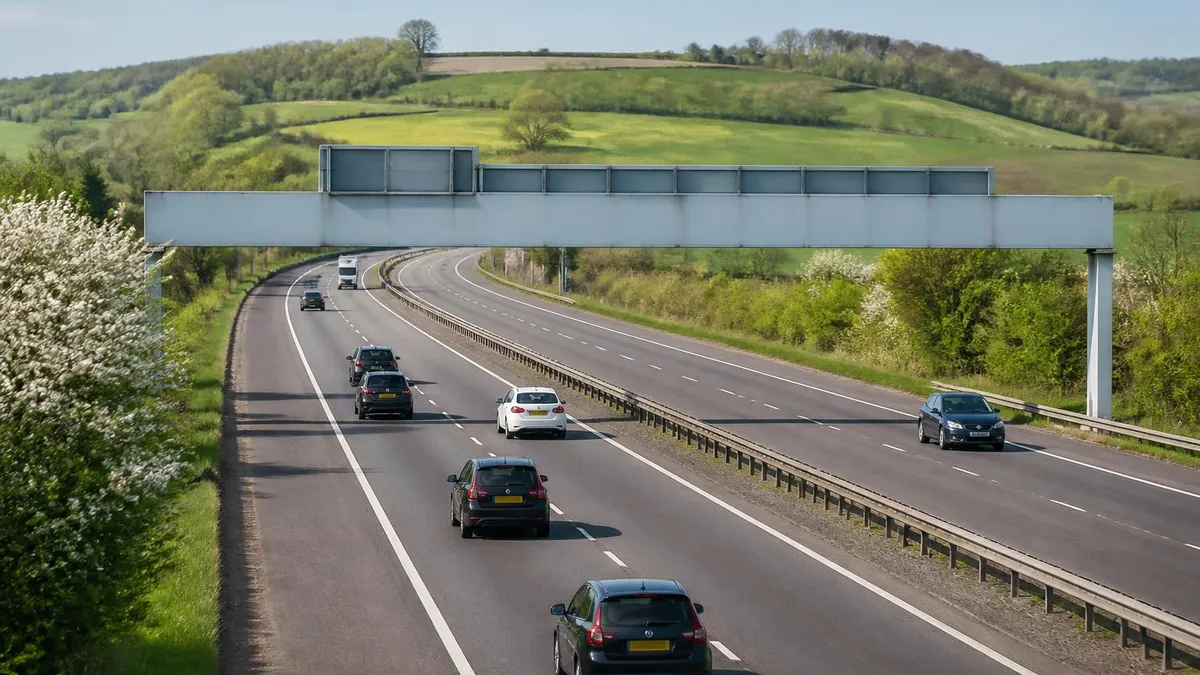
How to Change Theory Test Date: Complete DVSA Rebooking Guide for 2026
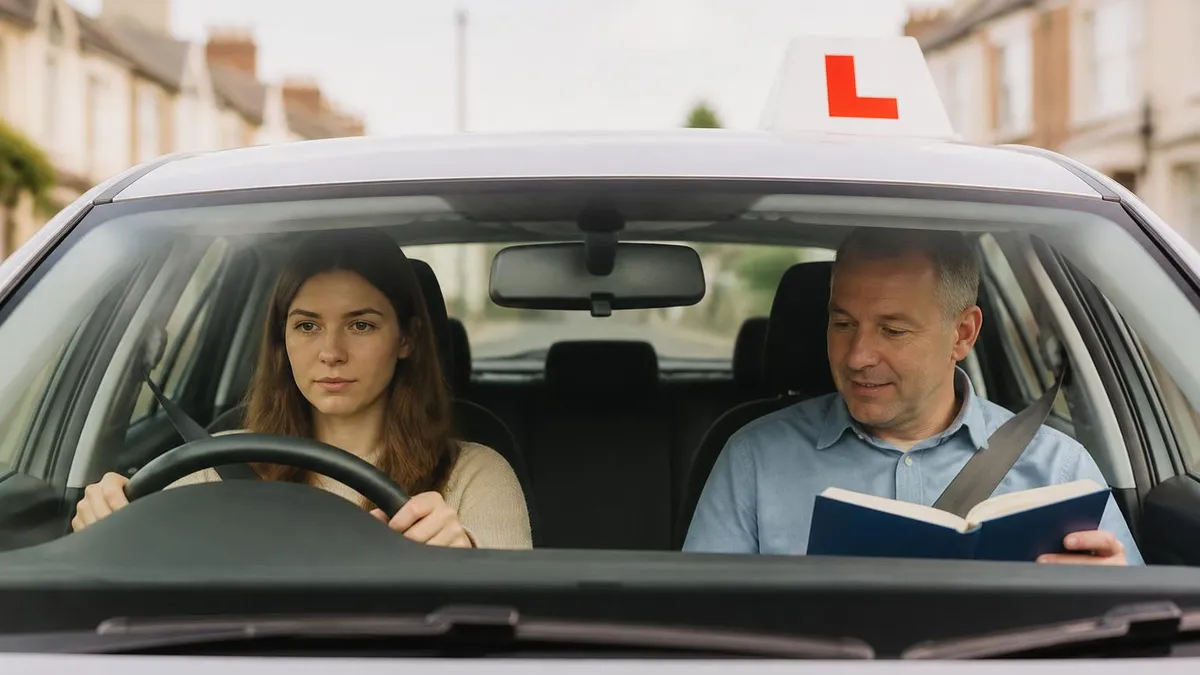
Intensive Driving Course With Test: Complete UK Guide to Fast-Track Your Licence in 2026

Hazard Perception Pass Mark: The Complete UK Guide to Scoring 44/75 in 2026

Exeter Driving Test Centre: Complete Guide to UK Test Centre Locations, Routes & Pass Rates 2026
About the Author
Licensed Driving Instructor & DMV Test Specialist
Penn State UniversityRobert J. Williams graduated from Penn State University with a degree in Transportation Management and has spent 20 years as a certified driving instructor and DMV examiner consultant. He has personally coached thousands of applicants through written knowledge tests, skills assessments, and commercial driver licensing programs across more than 30 states.