DMV Licensed Traffic Schools & State Training: Your Complete Guide 2026 June
Learn about DMV licensed traffic schools, state training programs, dmv registration renewal, and how to pass your dmv practice test in every US state.

Whether you're preparing to get behind the wheel for the first time or looking to reduce points on your license, DMV licensed traffic schools and state-approved driver training programs are among the most valuable resources available to American motorists.
Every state — from the Wisconsin DMV to the ncdot dmv in North Carolina — maintains a list of certified schools that meet strict curriculum standards, and choosing the right one can mean the difference between passing your road test on the first try and scheduling a costly retake. Understanding how these programs work is the first step toward becoming a safer, more confident driver.
The landscape of driver education varies significantly from state to state. The dmv new york state system, for example, requires new drivers under 18 to complete a five-hour pre-licensing course before even scheduling a road test, while California's dmv (often searched as ca dmv) mandates 30 hours of classroom instruction plus six hours of behind-the-wheel training for minors. These state-specific requirements are designed to ensure that new drivers are thoroughly prepared before they ever merge onto a highway or navigate a busy urban intersection. Staying informed about your state's exact requirements is critical.
Beyond initial licensing, state-approved traffic schools serve drivers at every stage of their motoring life. Adults cited for minor traffic violations in many states can enroll in a defensive driving course to have a ticket dismissed or prevent points from appearing on their record. Seniors approaching license renewal age can take refresher courses that may qualify them for insurance discounts. Commercial drivers must complete specialized training to obtain or renew a CDL. The breadth of programs available reflects the reality that driver education is not a one-time event but an ongoing commitment.
Online learning has transformed how Americans approach state training requirements. Many states now allow drivers to complete the entire theory portion of their education through accredited online platforms, which offer the flexibility of self-paced study without the need to commute to a physical classroom. These courses typically cover road signs, right-of-way rules, speed regulations, and hazard recognition. However, behind-the-wheel training almost universally requires in-person instruction with a licensed driving instructor — a requirement that no digital platform can fully replicate.
Cost is another major factor when selecting a traffic school. Fees for a basic teen driver education package can range from under $200 in some rural areas to over $800 in expensive metropolitan markets like New York City or San Francisco. Many community colleges offer accredited driver education at subsidized rates, making them an attractive option for families on a budget. It's worth calling your state DMV or checking its official website to confirm which providers are currently approved, since school certifications can lapse and attending an uncertified school may mean your hours do not count toward your license requirements.
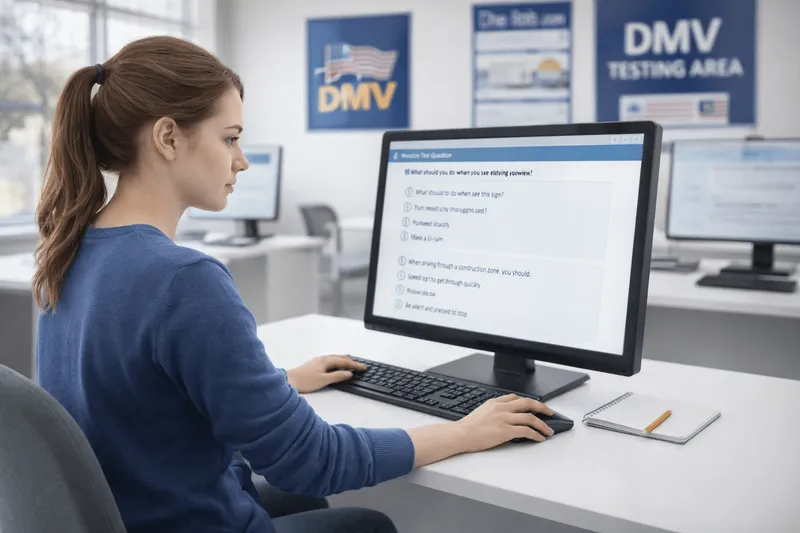
Preparation matters enormously before you set foot in a traffic school classroom or log into an online module. Students who study traffic laws, road signs, and safe driving principles ahead of time tend to absorb course material more effectively and score higher on knowledge tests. Using a reliable dmv practice test resource is one of the smartest things you can do before beginning formal training. Practice tests expose the exact types of questions your state DMV is likely to ask, helping you identify weak areas so you can focus your study time where it matters most.
This guide walks you through everything you need to know about DMV licensed traffic schools and state training programs across the United States — from registration and eligibility to curriculum content, exam preparation, and ongoing driving responsibilities like dmv reg renewal and emissions testing near me. Read on to build a clear, confident roadmap toward full licensure and safe, legal driving for years to come.
Driver Training in the US by the Numbers

How State Driver Training Programs Work
Students learn traffic laws, road signs, and safe driving principles through approved classroom or online instruction. Most states require 20–30 hours for minors. Adults completing traffic school for ticket dismissal typically need 4–8 hours of coursework depending on state.
Licensed instructors supervise real driving sessions covering basic maneuvers, highway merging, parking, and emergency braking. California DMV and most states require a minimum of 6 hours with a professional instructor before a road test can be scheduled.
Beyond formal instruction, teens must log supervised practice with a licensed adult driver. Requirements range from 40 hours in Ohio to 60 hours in California and Florida, with a portion mandated at night to ensure exposure to low-visibility driving conditions.
After completing required training hours, applicants schedule a written knowledge test and a road skills exam at their local DMV office. Passing both is required for a full license. Some states allow online scheduling through the Wisconsin DMV, NCDOT DMV, or NY State DMV portals.
Once all requirements are met, the traffic school issues a completion certificate that must be presented at the DMV along with proof of identity, residency, and parental consent for minors. The DMV then issues a graduated or full driver's license.
Selecting the right DMV licensed traffic school is a decision that deserves careful research. Not all schools are created equal — some offer little more than rote memorization exercises, while the best programs combine engaging multimedia instruction with real-world simulation exercises and highly experienced instructors. Begin your search by visiting your state DMV's official website, which will list every currently approved provider along with any complaints or disciplinary actions on file. A school that appears on the state's approved list but has multiple unresolved complaints is a red flag worth heeding.
Location and scheduling flexibility matter as much as curriculum quality, especially for working adults or students with packed schedules. Many reputable schools now offer hybrid formats: you complete the theory modules online at your own pace and then schedule in-person driving lessons at times that work for you. This approach has become especially popular in large states like Texas, Florida, and California, where commuting to a physical school location can add significant time and expense to the training process. Confirm that any online component is state-approved before enrolling, since not all states accept online-only theory coursework for teen licensing.
Instructor credentials are a non-negotiable quality indicator. Every instructor at a state-licensed school must hold a valid driving instructor certificate issued by the state DMV, which typically requires a clean driving record, a background check, and completion of an instructor training program. Don't hesitate to ask a prospective school how long their instructors have been certified and whether any have specialties — such as experience working with anxious drivers, commercial vehicle training, or instruction for drivers with physical disabilities. The right instructor can dramatically reduce test anxiety and accelerate skill development.
Reading verified student reviews on third-party platforms provides insight that promotional materials never will. Look specifically for comments about how well instructors explain concepts, whether the school's cars are well-maintained, and how organized the scheduling process is. Schools that have consistent complaints about last-minute cancellations, poorly maintained vehicles, or instructors who spend lessons on their phones are worth avoiding, regardless of their price point. Paying a bit more for a school with consistently excellent reviews is almost always worth it in the long run.
If you're enrolling in a traffic school for ticket dismissal or points reduction rather than initial licensing, the rules are slightly different. Many states specify that the course must be completed within a certain number of days after the citation date, and you may need court approval before registering. The dmv new york state system, for instance, requires drivers to complete the Point and Insurance Reduction Program (PIRP) through a DMV-approved provider, and completion automatically notifies both the DMV and your insurance carrier. Missing the enrollment deadline can forfeit your eligibility, so act quickly after receiving a citation.
Cost transparency is another quality marker. Legitimate schools publish their full fee schedule upfront, including any charges for rescheduling, additional driving hours, or replacement certificates. Be wary of schools advertising unusually low prices that later tack on fees for required materials, online platform access, or testing. A total cost comparison across three or four local providers — factoring in all fees — will give you a realistic sense of fair market pricing in your area and help you avoid unpleasant billing surprises mid-course.
Finally, consider what supplementary resources the school provides. Top-tier programs give students access to state-specific practice tests, digital flashcards for road signs, and video explanations of complex maneuvers like parallel parking and three-point turns. These extras reinforce classroom learning and can significantly improve your scores on both the written knowledge test and the road skills exam. The combination of strong school selection and consistent personal practice is the formula that produces safe, confident, test-ready drivers.
State-by-State DMV Requirements: Wisconsin, New York, and California
The Wisconsin DMV requires teen applicants to hold a learner's permit for at least 6 months before applying for a probationary license. During that period, minors must complete a state-approved driver education program that includes at least 30 hours of classroom instruction and 6 hours of behind-the-wheel training with a licensed instructor. Applicants must also log a minimum of 50 hours of supervised practice driving, including at least 10 hours at night, before scheduling their road skills test.
Adults relocating to Wisconsin from another state must surrender their out-of-state license and pass a Wisconsin knowledge test. The Wisconsin DMV offers online appointment scheduling for written tests, making it relatively straightforward to book a convenient time slot. Drivers over 65 must renew in person every 4 years, while younger drivers can renew online every 8 years. The standard license fee is $34 for an 8-year renewal, and Wisconsin DMV offices are located in every county for accessible in-person service.

Online vs. In-Person Traffic School: Which Is Right for You?
- +Online courses allow completely self-paced learning — study at midnight or during a lunch break
- +No commuting costs or time lost traveling to a physical classroom location
- +Many online platforms offer interactive animations and video explanations that reinforce key concepts
- +Instant digital certificates available in many states upon course completion
- +Often 20–30% less expensive than equivalent in-person classroom programs
- +Easily pause and resume lessons around work, school, and family commitments
- −Behind-the-wheel training always requires in-person sessions — no online substitute exists
- −Some states, including New York and New Jersey, do not accept fully online theory for teen licensing
- −Self-discipline required; without a set schedule, many students procrastinate and miss deadlines
- −Technical issues (poor internet, device compatibility) can interrupt progress at critical moments
- −Less opportunity to ask live questions or get immediate clarification from an instructor
- −Some courts require in-person enrollment verification for ticket-dismissal traffic school
DMV Licensed Traffic School Enrollment Checklist
- ✓Verify the school appears on your state DMV's current approved provider list before enrolling
- ✓Confirm total hours required for your specific license class (teen, adult, CDL, or ticket dismissal)
- ✓Check whether your state accepts online theory instruction for your license type and age group
- ✓Gather required documents: birth certificate, proof of residency, Social Security card, and parental consent if under 18
- ✓Compare full pricing from at least three schools, including all materials and scheduling fees
- ✓Schedule your written knowledge test at the DMV as soon as you complete classroom or online theory hours
- ✓Log all supervised driving hours in a practice log — some states require documentation at the DMV road test
- ✓Practice parallel parking and three-point turns specifically, as these are the most common road test failure points
- ✓Complete a full-length dmv practice test within 48 hours of your scheduled written knowledge exam
- ✓Bring your traffic school completion certificate, permit, and all required fees to your DMV road test appointment
Students Who Take 5+ Practice Tests Pass at Nearly Double the Rate
Research consistently shows that applicants who complete five or more full-length DMV practice tests before their written knowledge exam pass on the first attempt at a rate of nearly 80%, compared to roughly 45% for those who rely on reading the handbook alone. Timed practice under realistic test conditions builds both knowledge retention and the confidence needed to perform well under pressure at your state DMV office.
Passing your DMV knowledge test is the first major milestone on the road to full licensure, and success hinges almost entirely on how deliberately you prepare. The written exam covers a deceptively wide range of material: traffic control devices, right-of-way laws, speed limits in school zones and construction areas, DUI statutes, seat belt and child restraint requirements, and the specific rules governing your state's graduated licensing program. A driver's handbook alone — while essential — rarely prepares you for the tricky wording and scenario-based questions that modern DMV exams use to assess real comprehension rather than simple memorization.
Using a high-quality dmv practice test platform is the single most effective preparation strategy available. The best practice test resources mirror the exact format of your state's exam, presenting questions in the same multiple-choice structure with similar wording and comparable levels of difficulty. More importantly, they provide detailed explanations for every answer — including the wrong ones — so you understand not just what the correct response is but why the other options are incorrect. This explanatory feedback loop is what transforms passive reading into active, durable learning.
Spaced repetition is a proven memory technique that dramatically improves long-term retention of driving knowledge. Rather than cramming all your study into one or two marathon sessions, distribute your practice across a week or more, revisiting topics at increasing intervals. Most dedicated DMV practice test platforms have built-in spaced repetition systems that automatically surface questions you've previously answered incorrectly, ensuring you spend proportionally more time on your weak areas. After two weeks of consistent daily practice — even just 20 minutes per day — the material becomes second nature.
Road sign recognition deserves dedicated attention during your study sessions. Many first-time test takers are surprised to discover that their state's knowledge exam includes a standalone road sign section where shapes, colors, and symbols must be identified without any accompanying text. The regulatory signs (stop, yield, speed limit), warning signs (curves, pedestrian crossings, school zones), and guide signs (highway exits, route markers) each follow a distinct visual logic that becomes intuitive with enough exposure. Flashcard apps with road sign images are a useful supplement to practice tests for this specific component.
Managing test-day anxiety is a skill in its own right. Even well-prepared applicants sometimes freeze when they sit down at the DMV's testing terminal and see the countdown clock. The antidote is simulating test conditions during your practice sessions: set a timer, put your phone away, and complete full 40-question exams without pausing to look anything up.
When you can consistently score 90% or higher under timed conditions at home, you'll enter the DMV testing room with the kind of confidence that prevents mental blanks. Remember: the average state knowledge test allows 20 to 25 minutes for 35 to 50 questions — a comfortable pace if you're well prepared.
For applicants retaking the knowledge test after an initial failure, a structured review approach is especially important. Request a score breakdown from the DMV if available — many states will tell you which topic categories you missed — and focus your additional study time specifically on those areas. Applicants who simply retake the test without targeted remediation tend to fail again in the same categories. A focused two-week study sprint that includes at least 200 additional practice questions in your weak areas will typically be enough to move from a failing score to a comfortable pass.
Finally, don't neglect the practical knowledge that no written test can fully capture but that you'll need from your very first solo drive. Understanding how to read traffic flow on a busy highway, when to yield even when you technically have the right of way, and how to respond calmly when another driver behaves unexpectedly are skills that only real driving experience develops. The written exam validates your theoretical knowledge; the road ahead will develop your judgment. Approach both with equal seriousness, and the combination will make you a genuinely safe driver — not just a licensed one.

Driving with an expired registration can result in a fix-it ticket, fines exceeding $200, and in some states, vehicle impoundment. Most states send renewal notices 60 days before expiration, but it is your legal responsibility to renew on time even if you never receive the notice. Set a calendar reminder for 90 days before your registration expiration date and complete your DMV registration renewal — online, by mail, or in person — well before the deadline to avoid penalties.
DMV registration renewal and ongoing vehicle compliance responsibilities are things every licensed driver must manage long after their initial training is complete. Understanding the renewal timeline, required documentation, and available online options can save you hours of waiting at a DMV office and help you avoid the fines and legal complications that come with expired credentials. Most states now offer robust online renewal portals that make the process quick and painless — if you know what to expect and prepare accordingly.
Registration renewal cycles vary by state. Some states, like California and New York, issue annual renewals tied to the vehicle's purchase anniversary or a fixed calendar date. Others, like Wisconsin and North Carolina (via the ncdot dmv), offer multi-year registration options that reduce the administrative burden on drivers who maintain continuously insured, emissions-compliant vehicles.
Regardless of cycle length, you'll typically receive a renewal notice by mail — and increasingly by email — several weeks before your current registration expires. That notice will specify the renewal fee, any outstanding requirements such as a smog check, and the methods available to complete renewal.
Emissions testing is a prerequisite for registration renewal in 34 states and the District of Columbia, affecting hundreds of millions of vehicles. If you've ever searched for emissions testing near me, you know that certified stations range from dedicated smog check centers and auto repair shops to dealership service departments.
Requirements vary widely: California's smog program covers vehicles 1976 and newer in most counties, while states like Texas and Georgia restrict testing to vehicles in certain high-population metropolitan areas. Knowing your state's specific exemption rules — many states exempt new vehicles for the first two to four years — can save you time and money.
When your vehicle fails an emissions test, the path to registration renewal becomes more complicated but not impossible. Most states offer a repair cost waiver program that allows vehicles to be registered despite a failed test if the owner has spent a minimum threshold — typically $150 to $450 — on repairs without achieving a passing result. Additionally, vehicles that are more than a certain age (often 25 years) are typically exempt from emissions requirements altogether, reflecting the low volume of legacy vehicles and the impracticality of finding modern emissions equipment for vintage cars.
Insurance verification is another registration renewal requirement that catches many drivers off guard. Several states now cross-reference DMV registration databases with insurance company records in real time, automatically flagging vehicles that appear to have lapsed coverage. If your renewal notice includes an insurance verification step, make sure your coverage is current and that your insurer's records match the vehicle identification number on your registration. Discrepancies — such as a recently replaced vehicle that hasn't been updated with your insurer — must be resolved before renewal can proceed.
For state training programs that include driver responsibility modules, ongoing education requirements may also affect your renewal eligibility. Several states have introduced mandatory online refresher courses for drivers accumulating points on their license, requiring completion before the next renewal cycle. These courses typically run 4 to 6 hours and cover updated traffic laws, distracted driving statistics, and impaired driving consequences. While they add a step to the renewal process, they serve a genuine public safety purpose and have been shown to reduce recidivism among drivers with prior violations.
Managing all these renewal requirements — registration, emissions, insurance, and any mandated training — is much easier when you maintain a simple home filing system for vehicle documents. Keep your current registration, insurance card, last emissions test certificate, and any driver training completion records together in a dedicated folder. Set digital calendar reminders 90 days before each expiration date to give yourself enough time to address any complications — like a failed emissions test or an insurance gap — without scrambling at the last minute. Staying proactively organized is the hallmark of a responsible driver in every state.
Building lasting safe driving habits is the ultimate goal of every DMV licensed traffic school program, and that goal extends far beyond the day you receive your license. The most dangerous period for new drivers is the first six to twelve months of independent driving, when the supervision of a parent or instructor is no longer present and the novelty of driving creates a heightened risk of overconfidence.
Research from the AAA Foundation for Traffic Safety consistently shows that crash rates peak in the first year of licensure, making post-license self-education one of the most impactful safety investments you can make.
Defensive driving is a mindset, not just a skill set. It means constantly scanning the road environment for potential hazards — not just the vehicle directly ahead but also the vehicle two cars ahead, the pedestrian at the curb who looks like they might step into the street, and the traffic signal that has been green long enough that it may be about to turn yellow.
Defensive drivers create larger following distances than the law requires, anticipate the mistakes of others, and always leave themselves an escape route when merging or changing lanes. These habits are rarely taught explicitly in standard driver education but are the foundation of truly safe driving.
Cell phones remain the leading cause of distracted driving crashes in the United States, responsible for an estimated 3,000 deaths and 400,000 injuries annually. Every state has laws against handheld phone use while driving, and most prohibit texting entirely — including at red lights in states like California.
Despite knowing this, a significant percentage of drivers continue to use their phones behind the wheel. The most effective strategy is to put your phone in the back seat or glove box before starting your vehicle, making it physically inconvenient to reach. Voice-activated assistant features are useful for navigation but should be configured before you put the car in drive, not en route.
Weather adaptation is a practical driving skill that most traffic school curricula cover only briefly. Driving in heavy rain requires reducing speed by at least 10 mph below the posted limit, increasing following distance to 6 seconds or more, and avoiding puddles near curbs that may conceal deep water.
In snow and ice, the rules change even more dramatically: studded tires or chains may be required in mountain passes, and accelerating or braking smoothly — without sharp inputs — is essential to maintaining traction. Drivers who relocate from warm climates to states with harsh winters, or who move from the midwest to areas with frequent fog, should actively seek out information about local weather driving conditions.
Understanding how to parallel park confidently is a rite of passage that many new drivers dread — and many licensed drivers quietly still struggle with years later. The key to mastering how to parallel park is consistency: use the same reference points every time. Begin by pulling alongside the car in front of the space, aligning your rear bumper with theirs.
Turn the steering wheel toward the curb and reverse slowly until your car is at a 45-degree angle. Then straighten the wheel briefly, reverse until your front bumper clears the car ahead, and turn the wheel away from the curb to bring your front end in. Practicing this sequence in an empty parking lot before attempting it on a busy street builds the muscle memory needed for calm execution in real-world conditions.
Annual vehicle maintenance directly affects your safety and your ability to pass emissions and safety inspections at renewal time. Key maintenance milestones include oil changes every 5,000 to 7,500 miles (or per manufacturer guidance), tire rotation every 5,000 miles, brake inspection every 12,000 miles, and cabin air filter replacement every 15,000 to 25,000 miles. Keeping tires properly inflated — check monthly and before long trips — improves fuel economy, handling, and tire life. A well-maintained vehicle not only passes inspection more easily but also responds more predictably in emergency situations, giving you maximum control when you need it most.
Finally, remember that your driver's license is a privilege that can be suspended or revoked for a wide range of behaviors beyond simply accumulating too many points. Unpaid parking tickets, lapsed child support in many states, failure to appear in court, and even certain non-driving criminal convictions can trigger a license suspension.
Stay informed about your state's administrative suspension rules, pay fines promptly, and address any notices from the DMV or courts without delay. A proactive attitude toward your legal driving status — combined with the safe driving habits you developed in traffic school — ensures that you remain a licensed, confident, and responsible driver for the long road ahead.
DMV Questions and Answers
About the Author
Licensed Driving Instructor & DMV Test Specialist
Penn State UniversityRobert J. Williams graduated from Penn State University with a degree in Transportation Management and has spent 20 years as a certified driving instructor and DMV examiner consultant. He has personally coached thousands of applicants through written knowledge tests, skills assessments, and commercial driver licensing programs across more than 30 states.
Join the Discussion
Connect with other students preparing for this exam. Share tips, ask questions, and get advice from people who have been there.
View discussion (4 replies)