
Cheating on DMV Test Caught Red Handed: Real Consequences and How to Pass Honestly
🎓 Cheating on DMV test caught red handed leads to bans, fines, and fraud charges. Learn real consequences and proven study tips to pass legitimately.

Stories of cheating on dmv test caught red handed surface every few months across state news outlets, and the outcomes are rarely what offenders expect. Examiners at the dmv reg renewal counters and behind testing terminals are trained to spot phones tucked under sleeves, Bluetooth earpieces, prewritten answer sheets, and even applicants who pay imposters to take the knowledge exam in their place. The penalties stretch far beyond a failed test, ranging from one-year testing bans to felony fraud charges in several states.
This guide explains what really happens when someone is caught, why DMV offices treat cheating as identity fraud rather than a simple rule violation, and what investigators look for during in-person and online proctored exams. We will walk through documented cases from California, New York, Wisconsin, North Carolina, and Texas, where applicants faced criminal referrals, license suspensions, and even deportation consequences for non-citizens.
More importantly, we want to give honest test-takers a roadmap. The knowledge exam is genuinely passable on the first try when you study a state handbook, take ten to fifteen full-length practice tests, and review the questions you get wrong. The average state pass rate hovers around fifty-four percent on the first attempt, which sounds discouraging until you realize that nearly all failures come from people who studied for under two hours total.
We will also cover the technology side. Modern testing centers use forward-facing cameras, room scans, eye-tracking flags, and randomized question pools that make group cheating effectively impossible. Some states have moved to tablet-based exams with locked-down browsers and biometric identity checks at sign-in, while others still allow paper exams but require lockers for personal items before applicants enter the testing room.
If you are reading this because you are nervous about an upcoming test, you do not need to cheat. The questions are written at an eighth-grade reading level and pull from a public handbook that anyone can download for free. Most applicants who fail simply skipped the chapters on right-of-way, road signs, and blood alcohol limits, which together make up roughly forty percent of the question bank.
By the end of this article you will understand the legal risk of cheating, the surveillance methods used to detect it, the realistic study path to pass legitimately, and the resources that turn a nervous first-timer into a confident driver. Every section connects back to the same simple truth: studying is faster, cheaper, and safer than getting caught.
We will treat this topic with the seriousness it deserves because a single moment of poor judgment at the DMV can follow a person onto every future background check, insurance application, and employment screening they ever complete. Let's break down exactly what is at stake and how to avoid it.
DMV Cheating Cases by the Numbers
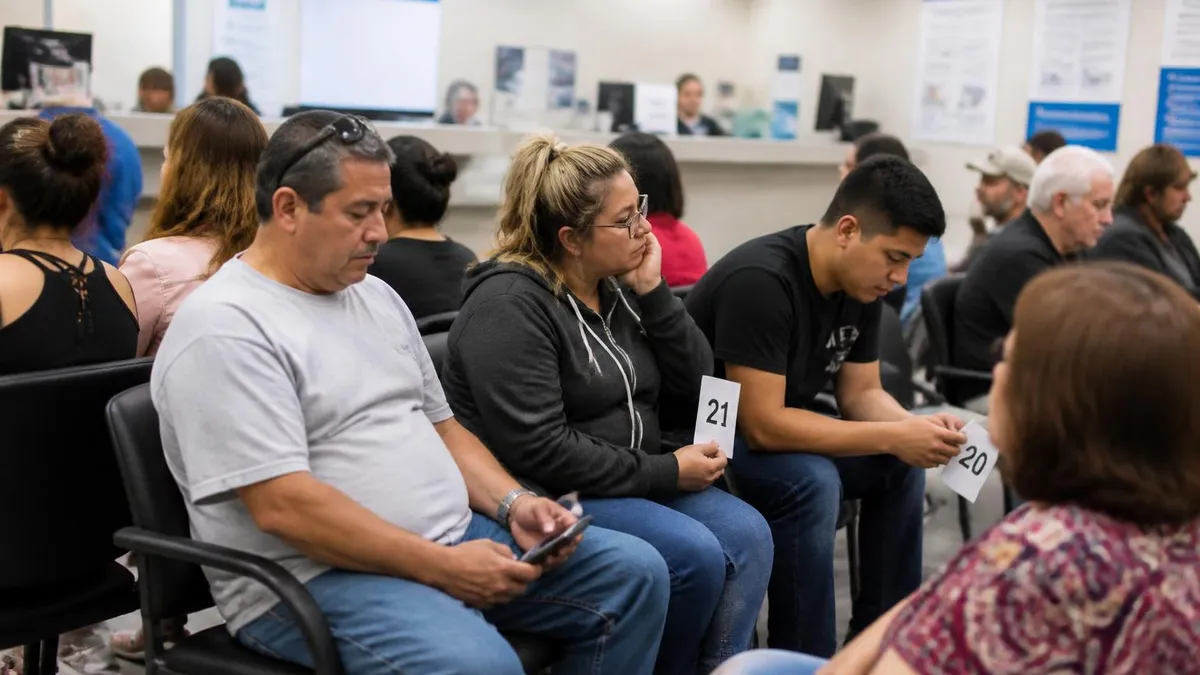
What Happens When You Are Caught
Your test is voided on the spot, your application is marked, and you are escorted out of the testing area without an opportunity to retest that day or apply at another office.
Most states impose a six-month to one-year ban on retesting. During this window your name, photo, and case file are flagged in the statewide DMV database accessible to every branch.
If a fake ID, paid imposter, or wireless device is involved, your case is forwarded to the DMV investigations unit or state attorney general for possible felony fraud charges.
A fraud conviction shows on background checks used by auto insurers, employers, and landlords. Premiums can jump thirty to sixty percent, and some carriers refuse coverage entirely.
For non-citizens, a fraud-related conviction can trigger removal proceedings, visa revocation, or denial of future green card applications because honesty is a core admissibility requirement.
DMV testing centers have invested heavily in detection technology over the past decade, and the methods used by examiners would surprise anyone who assumes the knowledge test is loosely monitored. The wisconsin dmv piloted tablet-based exams with built-in front cameras in 2018, and that model has since spread to dozens of states including California, Texas, Florida, and New York. Cameras record continuously and flag eye movement that drifts off the screen for more than a few seconds.
Examiners also rely on simple physical observation. Testing rooms are arranged so that a single proctor can see every screen and every applicant from a raised desk or rotating chair. Phones, smartwatches, earbuds, and even fitness trackers must be left in lockers before the test begins. Anyone who reaches into a pocket, looks at a watch, or whispers to a neighbor is immediately approached and asked to surrender the device.
The question pool itself is a deterrent. States typically maintain banks of three hundred to one thousand questions, and the software randomly selects twenty to fifty for each exam. Two applicants sitting next to each other almost never see the same test, which makes copying answers from a neighbor pointless. The order of multiple-choice options is also shuffled, so even memorizing letter patterns like B-C-A-D from someone else's test does not work.
Identity verification is the next line of defense. Every applicant must present two forms of ID at check-in, and a digital photo is taken and compared against the photo on file from the permit or license application. Some states use facial recognition software that flags mismatches in under five seconds. Impersonators who try to take the test for someone else are caught at the front desk before they ever sit down.
Bluetooth and cellular signal detection is now standard at large urban DMV offices. The same wand-style scanners used at courthouses are passed over applicants who appear nervous or who failed an earlier identity check. Hidden earpieces, smartwatches in silent mode, and even certain Bluetooth-enabled glasses are detected. Several documented cases in New York and New Jersey involved applicants caught wearing audio-receiver glasses that looked like ordinary prescription frames.
Online proctored exams, which a handful of states now offer for renewals, use the strictest monitoring of all. The applicant must perform a 360-degree room scan with their webcam, show both sides of their photo ID, and keep their face visible throughout. Browser lockdown software prevents opening any other tab, and a live human proctor watches the feed. Suspicious eye movement, second voices in the room, or any disconnection triggers an automatic fail.
The bottom line is that DMV examiners catch cheaters far more often than the public realizes, because most state agencies do not publicize individual cases. The records are there, however, in annual audit reports and investigative news stories, and they paint a clear picture: the systems work, and getting away with it is exceptionally rare.
DMV Practice Test Questions
Prepare for the DMV - Department of Motor Vehicles exam with our free practice test modules. Each quiz covers key topics to help you pass on your first try.
DMV Alabama Permit Test
DMV Exam Questions covering Alabama Permit Test. Master DMV Test concepts for certification prep.
DMV Alaska Permit Test
Free DMV Practice Test featuring Alaska Permit Test. Improve your DMV Exam score with mock test prep.
DMV Alaska Roads & Signs Test
DMV Mock Exam on Alaska Roads & Signs Test. DMV Study Guide questions to pass on your first try.
DMV Alaska Written Test
DMV Test Prep for Alaska Written Test. Practice DMV Quiz questions and boost your score.
DMV Arizona Roads & Signs Test
DMV Questions and Answers on Arizona Roads & Signs Test. Free DMV practice for exam readiness.
DMV California Drug and Alcohol Test
DMV Mock Test covering California Drug and Alcohol Test. Online DMV Test practice with instant feedback.
DMV General Drug and Alcohol Test
Free DMV Quiz on General Drug and Alcohol Test. DMV Exam prep questions with detailed explanations.
DMV Permit Test
DMV Practice Questions for Permit Test. Build confidence for your DMV certification exam.
DMV Practice Test
DMV Test Online for Practice Test. Free practice with instant results and feedback.
DMV Practice Test Methods Compared
The ca dmv uses tablet-based testing in most field offices, with forward cameras that record the entire session. Cheating attempts trigger an automatic case file in the DMV's Internal Affairs database, and applicants face a one-year testing ban plus referral to the state attorney general if a fake ID, imposter, or wireless device is involved.
California also publishes annual fraud-prosecution statistics, and the numbers are sobering. In a typical year the agency refers more than two thousand cases for criminal review, with conviction rates above seventy percent. Honest applicants benefit because question pools are large and rotated quarterly, which keeps memorized answer sheets useless within weeks of being created or sold online.
Cheating vs Honest Preparation: A Clear Comparison
- +Studying the official handbook costs nothing and is available online twenty-four hours a day
- +Free practice tests cover the same question pool examiners draw from on test day
- +A passed exam earned legitimately stays valid for life with no fraud risk on record
- +Honest preparation builds real driving knowledge that prevents future tickets and crashes
- +Most applicants who study ten hours total pass on the first attempt without stress
- +Insurance carriers reward clean records with lower premiums for new drivers under twenty-five
- +Employers and landlords who run background checks find no fraud entries from honest applicants
- −Cheating triggers an automatic one-year testing ban in most states with no exceptions
- −Fraud convictions appear on criminal background checks for seven to ten years minimum
- −Insurance premiums can jump thirty to sixty percent after a fraud-related conviction
- −Non-citizens risk visa revocation or denial of future immigration benefits if caught
- −Paid imposters often turn on clients during prosecution to reduce their own sentences
- −Wireless devices and earpieces are now detected by standard DMV scanning wands
Pros and Cons at a Glance
| Pros | Cons |
|---|---|
| Studying the official handbook costs nothing and is available online twenty-four hours a day | Cheating triggers an automatic one-year testing ban in most states with no exceptions |
| Free practice tests cover the same question pool examiners draw from on test day | Fraud convictions appear on criminal background checks for seven to ten years minimum |
| A passed exam earned legitimately stays valid for life with no fraud risk on record | Insurance premiums can jump thirty to sixty percent after a fraud-related conviction |
| Honest preparation builds real driving knowledge that prevents future tickets and crashes | Non-citizens risk visa revocation or denial of future immigration benefits if caught |
| Most applicants who study ten hours total pass on the first attempt without stress | Paid imposters often turn on clients during prosecution to reduce their own sentences |
| Insurance carriers reward clean records with lower premiums for new drivers under twenty-five | Wireless devices and earpieces are now detected by standard DMV scanning wands |
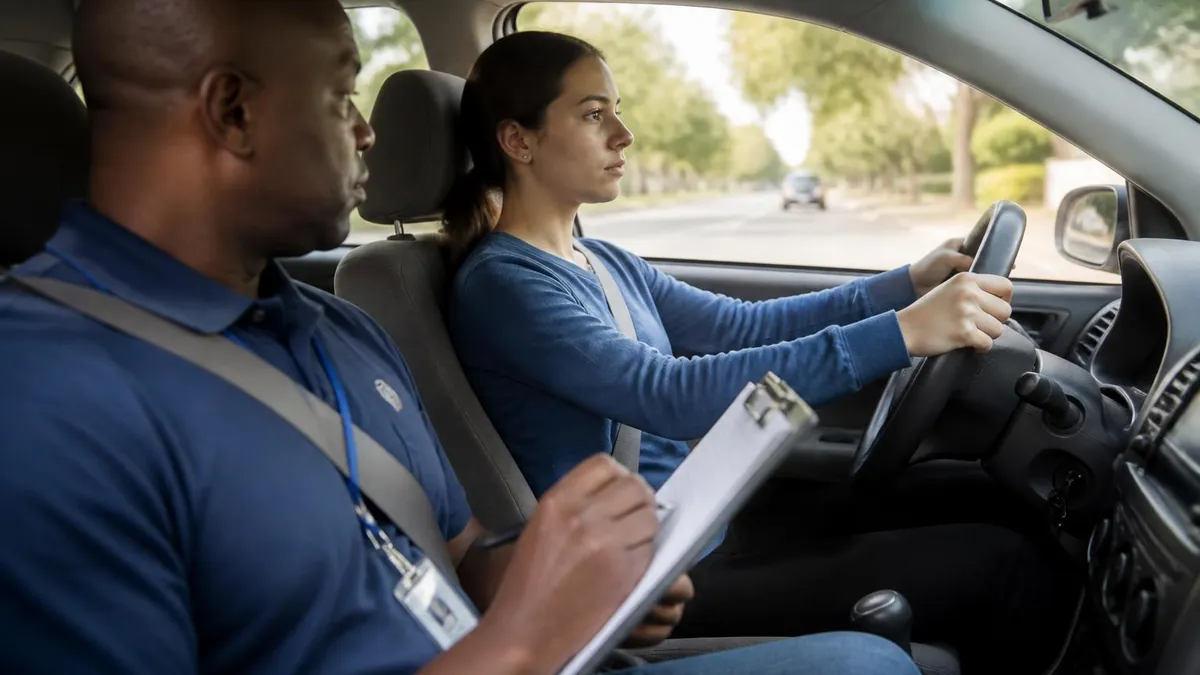
DMV Practice Test Prep Checklist
- ✓Download your official state driver handbook from the DMV website and read every chapter once
- ✓Highlight all signs, signals, and right-of-way rules because these account for forty percent of questions
- ✓Take a free online practice test before studying to identify your weakest topic areas
- ✓Study one chapter per day for seven to ten days rather than cramming the night before
- ✓Review every wrong answer carefully and look up the correct rule in the handbook
- ✓Take a second practice test after studying and aim for at least ninety percent correct
- ✓Memorize blood alcohol limits, following distances, and speed limits for school zones and residential streets
- ✓Practice ten full-length timed tests in the final week before your scheduled exam date
- ✓Get a full night of sleep before test day and eat a normal breakfast to stay focused
- ✓Arrive thirty minutes early with two forms of ID and any required application paperwork
Eight to twelve hours of honest study beats every cheating method
Internal DMV data from multiple states shows that applicants who complete the official handbook plus five or more practice tests pass on the first attempt over ninety percent of the time. That is roughly two evenings of study for a credential that lasts decades. No shortcut is faster, safer, or more reliable.
Honest preparation is not just safer than cheating, it is genuinely faster when you measure total time spent. Consider the math: locating a reliable cheating method online takes hours of searching dubious forums, vetting sellers, and trying to verify which answer sheets match current question pools. Most so-called answer banks are scams that take payment and deliver outdated or fake content. Meanwhile, an honest student using the dmv registration renewal prep materials can finish the entire handbook in eight to twelve hours.
The DMV question bank is also far more predictable than nervous applicants realize. Every state publishes a free driver handbook, and roughly eighty-five percent of test questions come directly from that book or paraphrase its content. The remaining fifteen percent involve scenarios that test common sense application of the rules you have already read. There is no secret content that can only be accessed through cheating.
Practice tests amplify this advantage dramatically. Free online practice tests pull from the same question banks examiners use, and after taking five or six full-length exams you will see most of the actual test questions in some form. The pattern recognition is built in, but only for applicants who actually do the work. Skipping practice tests is the single biggest predictor of first-attempt failure.
Time-wise, honest study breaks down into a manageable schedule. Day one: read the first three chapters of the handbook, about ninety minutes. Day two: chapters four through six, another ninety minutes. Day three: signs and signals reference section, plus one practice test, two hours. Day four: review missed questions and read chapters seven through nine, two hours. Day five: two more practice tests with full review, two hours. That is nine hours total spread over five days.
Compare that to the cheating timeline. Researching methods: three to five hours. Acquiring a fake ID or coordinating an imposter: another three to ten hours and significant cost. Hoping the method works on test day: stress and risk. Dealing with the aftermath if caught: months or years of legal proceedings, retest bans, and permanent record entries. The honest route wins on every dimension.
Cost is another factor most people underestimate. Cheating services charge two hundred to one thousand dollars per attempt, plus fake ID costs of fifty to three hundred dollars, plus legal fees if anything goes wrong. Honest preparation costs zero dollars for the handbook, zero for free practice tests, and a one-time exam fee that you would pay anyway. The total honest cost is the exam fee. The cheating cost can easily exceed five thousand dollars when consequences are factored in.
Finally, there is the confidence factor. Applicants who study legitimately walk into the testing room knowing the material, which dramatically reduces test anxiety and lowers the chance of careless mistakes. Cheaters arrive nervous, scanning for cameras, worried about the proctor noticing their earpiece. That stress alone causes mistakes that often get them caught before any wireless device is even detected.
Many applicants assume DMV cheating is similar to copying on a high school quiz. It is not. State law in nearly every jurisdiction classifies impersonation, document forgery, and wireless-aided testing as fraud offenses with criminal penalties. Convictions can include jail time, fines up to five thousand dollars, and a permanent record that affects employment, housing, and immigration status for life.
When test day arrives, the most successful applicants follow a consistent routine that has nothing to do with last-minute cramming or risky shortcuts. The same approach that helps applicants pass the dmv new york state permit test works in every other state because the underlying skill is calm, accurate recall of material you have already studied. Sleep matters more than one extra hour of review the night before.
Arrive at the DMV office at least thirty minutes before your appointment. This buffer covers parking, the check-in line, ID verification, and any paperwork corrections. Bring two forms of identification, your permit if you are advancing to a road test, the application confirmation, and the exact fee in cash or accepted card. Leave your phone, smartwatch, earbuds, and any other electronic device in your vehicle or in the office lockers.
During check-in, stay calm and answer questions directly. Examiners pay attention to nervous behavior because it correlates with cheating attempts. If your voice shakes or your hands tremble, that is normal first-timer anxiety, not suspicion. What gets flagged is fidgeting with pockets, checking watches, or glancing at other applicants. Stand still, make eye contact, and speak clearly when handing over your documents.
Once seated at your testing station, take a slow breath before tapping the start button. Read each question completely, including all four answer choices, before selecting an answer. Many DMV questions include trap options that are almost correct but missing one critical detail like distance, speed, or condition. Slowing down by even two seconds per question dramatically improves accuracy.
Use the flag-for-review feature if your state's test allows it. When you encounter a question you are unsure about, flag it, choose your best guess, and move on. Returning to flagged questions with fresh eyes after completing the rest of the test often surfaces the correct answer because you have warmed up your memory of related rules. Never leave questions blank if guessing carries no extra penalty.
Manage your time without rushing. Most knowledge tests allow thirty to sixty minutes for twenty to fifty questions, which is more than enough time. If you finish in under ten minutes, you almost certainly rushed and made avoidable errors. Use the full time, review every flagged question, and double-check your answers on right-of-way and blood alcohol questions because those carry the most weight in scoring.
If you fail, do not panic. Most states allow you to retake the exam within one to seven days for a small fee. Failing once is far better than the alternative outcomes from cheating. Review which questions you missed, return to those handbook chapters, take two more practice tests, and come back stronger. The pass rate for second attempts is significantly higher than first attempts because applicants have learned what to expect.
Finally, remember that the knowledge test is only the first step. Building real driving skills matters more than any test score. The same studying habits that help you pass legitimately will keep you safer behind the wheel for decades to come, which is the actual point of the entire DMV process.
Practical preparation in the final week before your exam should focus on three categories: signs, right-of-way, and impairment laws. These three topics consistently appear on every state's knowledge exam and together account for more than half of total questions. Master them and your odds of passing climb above ninety percent regardless of which state administers the test or whether you are scheduled at a busy urban office or a quieter rural branch location.
For signs, focus on shape and color recognition first. A red octagon is always stop. A yellow diamond is always a warning. A white rectangle is always a regulatory sign. A green rectangle is always directional. Once you have shape and color memorized, specific signs become much easier because you can deduce the general meaning even when you have never seen that exact sign before. Pair shape learning with the signs chapter in your handbook.
For right-of-way, memorize the priority order at every type of intersection. Four-way stops: first to arrive goes first; ties go to the driver on the right. T-intersections: the through street has priority. Yields: merging traffic gives way. Pedestrians in crosswalks: always priority over vehicles. Emergency vehicles with sirens: pull right and stop. School buses with flashing reds: stop in both directions on undivided roads. These rules appear on virtually every exam.
For impairment, memorize the blood alcohol limit for your state, which is 0.08 percent for adults twenty-one and older in every state, 0.04 percent for commercial drivers, and 0.00 to 0.02 percent for drivers under twenty-one depending on the state. Also learn the implied consent rule: by accepting a license you agree to submit to chemical testing if lawfully arrested, and refusal carries automatic license suspension regardless of whether you were actually impaired.
How to parallel park is a separate skill tested on road exams in most states, not on the knowledge test, but reviewing the steps is worth your time because the same logical reasoning applies to other maneuvers tested on paper. The standard four-step method is: align with the front car, reverse while turning the wheel toward the curb, straighten the wheel when the front car's bumper appears in your passenger window, then turn the wheel away from the curb to complete the angle.
Emissions testing near me is another phrase applicants often search when preparing for renewal-related questions, and the relevant rule for the knowledge test is simply that emissions inspections are required in some states as part of registration renewal. The frequency varies by state and vehicle age, ranging from annual to biennial, with exemptions for new vehicles in their first few model years.
The final piece of practical advice is to take a complete simulated exam the night before your real test. Use a free practice test, time yourself strictly, do not look up answers, and grade yourself honestly. Whatever score you get on that simulation is approximately what you will score the next morning. If you score ninety percent or higher, you are ready. If you score below eighty percent, take one more study session focused on weak areas and reschedule if you feel uncertain.
Sample DMV Practice Questions
Try these questions from our free DMV practice tests. The correct answer and an explanation follow each question.
The driver of the vehicle that is being passed is required to _________ until the pass is finished.
- A. not increase speed
- B. move to the left
- C. stop
- D. increase speed
Answer: A. not increase speed
When another vehicle is in the process of passing you, it is a legal and safety requirement for the driver being passed to not increase their speed. Maintaining your speed or even slightly reducing it allows the passing vehicle to complete the maneuver safely and efficiently, preventing a dangerous situation where both vehicles are accelerating.
Which car has the right-of-way when two vehicles collide on a high mountain road where neither can pass?
- A. The vehicle that arrives first
- B. Neither vehicle
- C. The vehicle traveling uphill
- D. The vehicle traveling downhill
Answer: C. The vehicle traveling uphill
When two vehicles collide on a steep mountain road, and neither can pass, the downhill vehicle must yield the right-of-way by backing up until the uphill vehicle can pass. When backing up, the car facing downhill has the most control.
A chemical test can be used to measure the:
- A. Vision
- B. Blood alcohol content
- C. Fatigue level
Answer: B. Blood alcohol content
Chemical tests can determine a person's blood alcohol content based on their breath, blood, urine, or saliva samples (BAC).
THE CAR BEHIND YOU BEGINS TO PASS YOU. YOU SHOULD
- A. Maintain your speed so traffic will flow smoothly
- B. Pull to the right and stop so he can pass
- C. Slow down slightly and stay in your lane
- D. Blow your horn to allow him to pass
Answer: C. Slow down slightly and stay in your lane
When another vehicle begins to pass you, it is your responsibility to facilitate the maneuver safely. You should maintain your speed or even slow down slightly to allow the passing vehicle to complete the pass without obstruction. Staying in your lane and not increasing speed helps ensure a smooth and safe transition for both vehicles.
DMV Questions and Answers
About the Author
Licensed Driving Instructor & DMV Test Specialist
Penn State UniversityRobert J. Williams graduated from Penn State University with a degree in Transportation Management and has spent 20 years as a certified driving instructor and DMV examiner consultant. He has personally coached thousands of applicants through written knowledge tests, skills assessments, and commercial driver licensing programs across more than 30 states.
Join the Discussion
Connect with other students preparing for this exam. Share tips, ask questions, and get advice from people who have been there.
View discussion (9 replies)