
What Do You Need to Bring to the DMV: Complete Document Checklist 2026 September
What do you need to bring to DMV? Full checklist of required documents for licenses, IDs & more. ✅ Avoid rejections with this 2026 September guide.
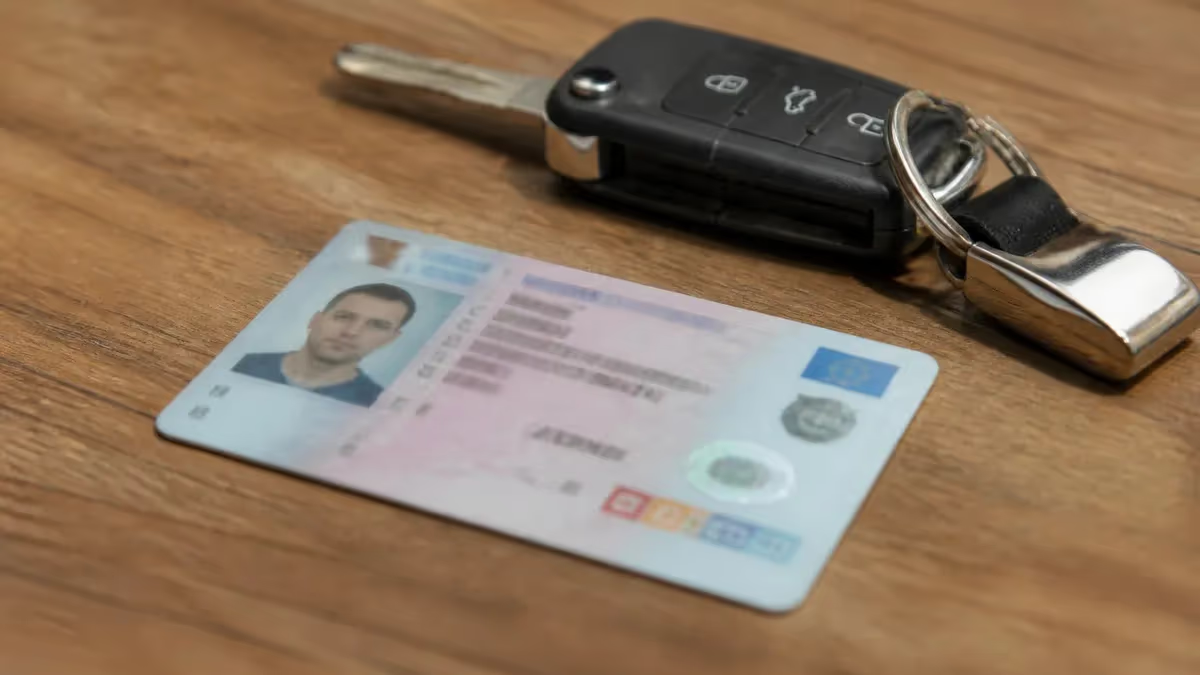
Knowing exactly what do you need to bring to the DMV before you walk through the door can mean the difference between leaving with a new license in hand and making a frustrating return trip. Every year, millions of Americans are turned away from DMV offices simply because they arrived without the correct paperwork. A documents to bring to dmv checklist tailored to your specific transaction — whether you are applying for a first-time driver's license, renewing an existing one, or obtaining a REAL ID — is the single most effective way to avoid that outcome.
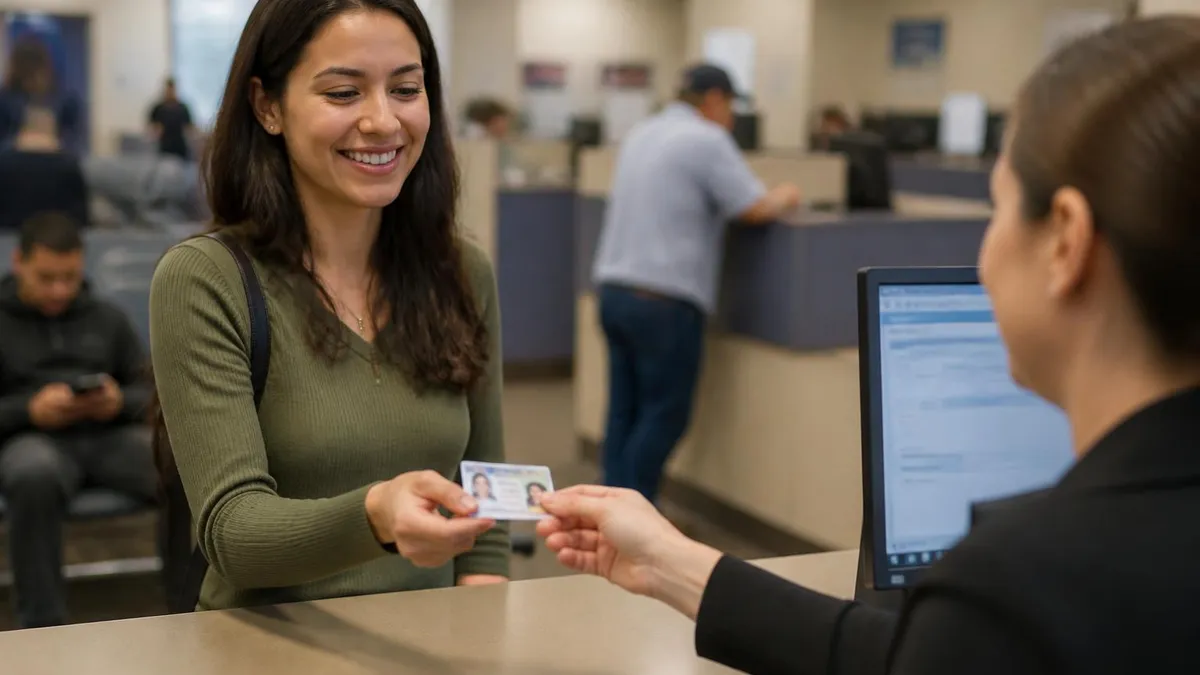
The DMV customer service representative you encounter at the counter is your first point of contact, and their job is to verify that every document you present meets state and federal standards. These professionals are trained to check authenticity, cross-reference databases, and flag discrepancies between your supporting documents. Understanding what they look for helps you prepare a cleaner, more complete application package, which speeds up processing time for everyone involved.
Document requirements vary significantly by transaction type and by state. A standard driver's license renewal in Texas requires different paperwork than a first-time REAL ID application in California. Federal REAL ID rules, which took full effect in May 2025, introduced stricter proof-of-identity requirements nationwide, meaning many applicants now need documents they never had to produce before — such as a certified birth certificate or valid U.S. passport.
Beyond identity documents, many transactions require proof of Social Security Number, proof of state residency (sometimes two separate documents), and proof of legal presence in the United States. Each category has approved document lists, and substitutions are rarely accepted. Bringing originals is almost always mandatory — photocopies, screenshots, or laminated versions are frequently rejected by DMV representatives, regardless of how clear or official they look.
If you are applying for a commercial driver's license (CDL) or a motorcycle endorsement, the documentation list expands further to include medical certificates, vision test results, and sometimes driving history records from other states. The stakes are higher in these cases because errors or omissions can delay your ability to work if you depend on your license for employment.
For teenagers applying for a learner's permit, parents and guardians often need to provide their own identification in addition to the minor's documents. Some states also require proof of school enrollment or a signed parental consent form. Missing even one of these supplemental documents can stall the entire application process, which is why planning ahead with a thorough checklist is essential.
This guide walks you through every major DMV transaction and the precise documents each one requires, explains what a DMV representative checks for and why, and gives you practical strategies to organize your paperwork so your next DMV visit goes smoothly from start to finish.
DMV Document Requirements by the Numbers
Core Document Categories Every DMV Requires
An original, government-issued document confirming your full legal name and date of birth. Acceptable documents include a U.S. birth certificate, valid U.S. passport, passport card, Permanent Resident Card (Green Card), or Employment Authorization Card. Photocopies are never accepted.
Your SSN must be verified through an original Social Security card, a W-2 or 1099 form displaying your full SSN, or a pay stub issued by an employer. Some states also accept SSA-issued benefit letters. Digital or printed copies are typically not accepted.
Most states require two documents confirming your current in-state address. Utility bills, bank statements, mortgage statements, lease agreements, or government mail addressed to you at your current address are commonly accepted. Documents must be dated within 60 to 90 days in most states.
Required for REAL ID-compliant credentials and for non-citizens. U.S. citizens prove legal presence with a birth certificate or passport. Non-citizens must present a valid visa, I-94 record, Permanent Resident Card, or Employment Authorization Document matching their immigration status.
Certain DMV visits require additional paperwork: vehicle title and bill of sale for registration, a medical certificate for CDL applicants, an existing license for renewals, or a court order for name change updates. Always verify your specific transaction's requirements in advance.
The federal REAL ID Act fundamentally changed what documents Americans must present at the DMV. Passed by Congress after the 9/11 Commission's recommendations, the Act set minimum security standards for state-issued driver's licenses and ID cards. Since May 2025, a REAL ID-compliant credential — marked with a star in the upper corner — is required to board domestic flights and enter certain federal facilities. If your current license lacks that star, your next DMV visit will require a more robust document package than you may be used to.
To obtain a REAL ID, you must prove four things: your full legal name, your date of birth, your Social Security Number, and your principal address of residence in the issuing state. The DMV customer service representative processing your application will verify each category against federal databases in real time. If your name on your birth certificate differs from your current legal name — due to marriage, divorce, or a court-ordered change — you must also bring the legal document that created that name change, such as a marriage certificate or court order.
Many applicants are surprised to discover that a standard passport alone is not always sufficient for a REAL ID application. While a valid U.S. passport satisfies the identity and citizenship requirements, you still need to separately establish your Social Security Number and your state residency. The SSN must typically come from an original Social Security card or a tax document, and residency must be proven with two address-bearing documents such as utility bills or bank statements dated within the past 90 days.
Non-U.S. citizens face additional complexity. A permanent resident holding a Green Card must present the card itself alongside proof of SSN and two residency documents. Those with temporary work visas must present the visa, an I-94 arrival/departure record, and any applicable Employment Authorization Document. Because REAL ID star credentials can only be issued for the duration of an applicant's authorized stay in the country, the card's expiration date may be shorter than the standard license term.
States that have implemented REAL ID also maintain a separate non-compliant credential option, sometimes called a "standard" or "non-REAL ID" license. These are still valid for driving but cannot be used as federal ID. If you only need a driving credential and have no plans to fly domestically or enter federal buildings, the document requirements are slightly less stringent — though you will still need proof of identity, SSN, and residency in most states.
DMV representatives are trained to spot fraudulent documents, and REAL ID processing involves both visual inspection and electronic verification. Birth certificates are checked for raised seals, state-issued security features, and proper issuer details. Social Security cards should be unsigned if they are original issue cards — the representative may ask you not to sign it on the spot. Understanding these nuances in advance prevents last-minute surprises at the counter.
If you have lost key documents like your birth certificate, you can request a certified copy from the vital records office of the state where you were born — a process that can take anywhere from one week to six weeks depending on the state. Planning for this lead time is critical if you are working toward a REAL ID renewal deadline or need to fly for an upcoming trip.
Documents by Transaction Type: DMV Representative Guide
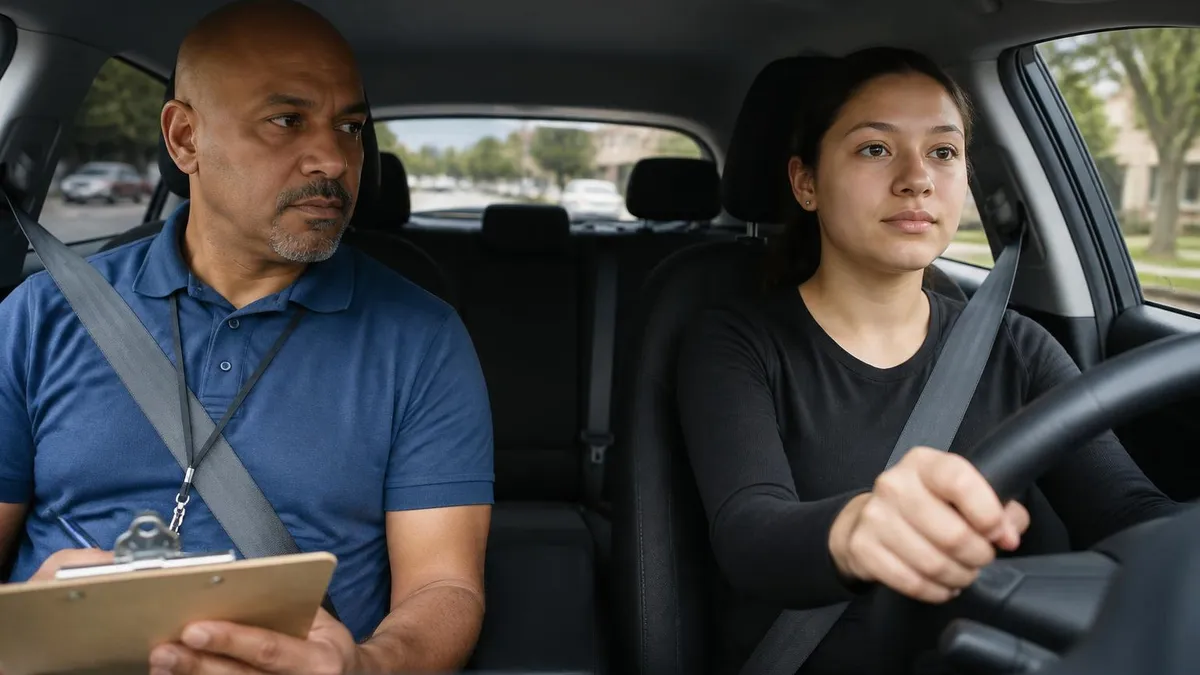
Applying for your first driver's license requires the most comprehensive document package of any DMV transaction. You will need proof of identity (birth certificate or passport), proof of Social Security Number (original Social Security card or W-2), and two proofs of current state residency such as utility bills or bank statements dated within the last 90 days. Teens under 18 must also bring a signed parental consent form and, in many states, proof of school enrollment or a certificate of completion from a driver's education program.
Beyond identity documents, first-time applicants must pass a written knowledge test and a vision screening before their license is issued. Some states require an appointment for the road skills test on a separate day. Bringing all paperwork organized in a folder — with your most recent residency document on top — helps the DMV customer service representative process your application faster and reduces the chance of a document being overlooked. Call your local DMV or check the state website the day before to confirm the exact accepted document list, as it can change with little notice.
Appointment vs. Walk-In: Which Is Better for Your DMV Visit?
- +Guaranteed shorter wait times — appointments often cut wait time by 50–75%
- +DMV representative can pull up your appointment record instantly, speeding check-in
- +Better mental preparation — you know your scheduled time and can organize documents in advance
- +Appointment slots available for complex transactions like REAL ID and CDL applications
- +Reduces stress and unpredictability, especially for applicants with work or childcare constraints
- +Some states allow you to upload documents digitally before an appointment, pre-verifying them
- −Appointment availability can be weeks out during peak periods in high-population states
- −Missing your appointment slot typically requires rebooking from scratch
- −Walk-in windows may still be faster for simple transactions like fee payments or form pickups
- −Online appointment systems can be glitchy or require account creation, adding friction
- −Some rural DMV offices don't offer appointments at all and only serve walk-ins
- −Emergency or time-sensitive situations may not wait for the next available appointment slot
Master DMV Document Checklist Before You Go
- ✓Bring your original birth certificate (certified copy with raised seal) or valid U.S. passport — not a photocopy.
- ✓Carry your original Social Security card, W-2, or 1099 showing your full Social Security Number.
- ✓Gather two proofs of current state residency dated within the past 60–90 days (utility bills, bank statements, or lease agreements).
- ✓If upgrading to REAL ID, include your legal presence document such as a Permanent Resident Card or Employment Authorization Document.
- ✓Include any name-change documents (marriage certificate, divorce decree, or court order) if your legal name differs from your birth certificate.
- ✓For vehicle registration, bring the original signed title, bill of sale, and proof of current auto insurance.
- ✓CDL applicants must include a valid DOT medical examiner's certificate dated within the past 24 months.
- ✓Minors applying for a learner's permit need a parent or legal guardian present with their own government-issued photo ID.
- ✓Confirm your payment method — many DMVs accept cash, check, and debit/credit cards, but not all accept every type.
- ✓Print or screenshot your appointment confirmation number and bring it to your visit for faster check-in.
Organize Documents in the Order the Representative Will Ask
DMV customer service representatives process documents in a specific sequence: identity first, then SSN, then residency, then legal presence. Place your documents in that exact order in a folder or envelope before you arrive. Representatives have noted that pre-organized applicants experience 30–40% faster processing times, and you are far less likely to accidentally leave a document at home when you have staged them the night before.
Understanding what a DMV representative actually examines when you hand over your documents gives you a significant advantage in preparing a clean, complete application package. DMV customer service representatives are trained to perform both visual and database-based verification, and they follow a standardized protocol for each document type. The representative's role is not adversarial — they want to complete your transaction successfully — but their obligation to the state means they cannot accept documents that fail verification, no matter how reasonable your explanation.
For identity documents, the representative will inspect security features unique to each document type. Certified birth certificates carry a raised or embossed seal, and the representative will feel for it rather than just look. U.S. passports have a distinctive cover texture, embedded chip indicators, and holographic elements on the data page. Permanent Resident Cards (Green Cards) contain laser-engraved personal data and a holographic overlay that is difficult to counterfeit. Any document that appears laminated, digitally printed on plain paper, or lacking its expected security features will be flagged immediately.
Social Security Number verification is increasingly handled electronically. In states that participate in the Social Security Administration's online verification service, your SSN is confirmed in real time during the application process. This means the representative is not just eyeballing your card — the number is being cross-referenced against federal records while you stand at the counter. Discrepancies, such as a name spelling difference between your SSN record and your birth certificate, must be resolved before the transaction can proceed.
Residency documents are checked for internal consistency. Both documents must show the same address — your current address — and both must be dated within the acceptable window, typically 60 to 90 days. The representative will also check that your name on the residency document matches your legal name on file. A bank statement addressed to a nickname rather than your full legal name, for example, may not be accepted in stricter states. Lease agreements are generally accepted but must be signed by both tenant and landlord; unsigned or undated leases are commonly rejected.
For vehicle title transfers, the representative verifies that the title is clear of liens by checking it against the state's motor vehicle database. If a lienholder is listed and no lien release is present, the transaction cannot be completed regardless of whether the physical loan is actually paid off. In this situation, you would need to obtain a lien release letter from your lender on official letterhead and return with it. This is one of the most common reasons vehicle registration transactions fail on the first attempt.
DMV representatives also play a role in detecting document fraud, which has increased alongside the REAL ID rollout. Staff receive periodic training on current document fraud trends — including altered birth certificates, counterfeit Social Security cards, and manipulated utility bills. If a document raises suspicion, the representative is required to document the incident and may involve a supervisor. This is not a personal accusation; it is a mandatory protocol. Presenting calm, originals-only documentation is always your best protection against unnecessary delays.
If you have questions mid-transaction about why a document is being flagged or what additional paperwork you need, asking the representative directly is always appropriate. Phrases like "What specific document would satisfy this requirement?" and "Can I speak with a supervisor to clarify?" are productive and professional. Learning how to speak with a DMV representative effectively — framing questions as requests for guidance rather than challenges — almost always produces better outcomes than frustration or confrontation.

DMV offices across all 50 states consistently reject photocopies, faxed copies, screenshots, and digital scans — even high-quality ones — as substitutes for original documents. REAL ID federal guidelines explicitly prohibit acceptance of non-original identity documents. If you arrive with a copy of your birth certificate instead of a certified original, you will be turned away and must reschedule your visit, potentially losing your appointment slot and waiting weeks for the next available time.
Avoiding a rejected DMV application is largely a matter of preparation, and the strategies that work best are simple and repeatable. The most effective first step is to visit your state DMV's official website and navigate directly to the page for your specific transaction — not a generic "documents" page, but the exact transaction you need, such as "first-time REAL ID application" or "title transfer for a used vehicle." Print or screenshot the required document list and use it as your pre-visit checklist. State requirements update periodically, and information from unofficial sources is frequently out of date.
Second, check the expiration dates on all documents you plan to bring. An expired passport may satisfy some identity requirements in some states for a limited period after expiration, but it will not satisfy REAL ID identity requirements. Your proof of residency documents must be dated within the acceptable window — and that window is measured from the date of your DMV visit, not the date you gathered the documents. A utility bill you pulled out two months ago for another purpose may no longer be within the 60-day window.
Third, address name discrepancies before you arrive. If your birth certificate lists you as "Robert James Smith" but your Social Security card reads "Robert J. Smith" and your utility bill says "Bob Smith," you are likely to encounter verification problems. Some states will accept minor initial variations between documents, but others will not. Checking your documents side-by-side for name consistency is a five-minute exercise that can prevent a wasted trip. If you find a discrepancy, contact the issuing agency to determine whether a correction can be made before your DMV appointment.
Fourth, call your local DMV the day before your visit to confirm hours, accepted payment methods, and any transaction-specific requirements that may have changed recently. This is especially important if you are visiting during or after a holiday weekend, as hours and staffing vary.
Knowing whether your office has a separate line for scheduled appointments versus walk-ins also helps you get to the right queue immediately upon arrival. If you want to know how do I speak to a dmv representative in NY or any other state, call the statewide DMV phone line early in the morning — wait times are shortest before 9 a.m. and after 4 p.m. on weekdays.
Fifth, organize your documents in the order the representative will request them. Most DMV workflows proceed from identity verification to SSN verification to residency to legal presence. Having each category ready in sequence — rather than shuffling through a pile while the representative waits — signals that you are prepared and makes the entire transaction more efficient. Use a labeled folder or envelope for each category if you have many documents.
Sixth, understand what to do if you are turned away. If the representative informs you that a document does not meet requirements, ask specifically what the deficiency is and what document would correct it. Request a written summary or a printed rejection notice if available — many states provide this.
This documentation will help you gather the correct materials before your return visit. Filing a complaint or escalating to a supervisor is appropriate if you believe the representative made an error, but it should be done calmly and with specific reference to the state's published document requirements rather than general frustration.
Finally, consider using your state's online pre-verification service if one is available. Several states, including California, New York, and Florida, allow applicants to upload document images through a secure portal before their DMV appointment, where they are pre-reviewed by DMV staff. If your documents are accepted digitally, your in-person appointment is much faster. This service is especially valuable for REAL ID applications, which involve the most complex document package of any standard DMV transaction.
Practical preparation for your DMV visit goes beyond simply assembling the right documents — it also means understanding the environment you are walking into and how to navigate it efficiently. Most DMV offices use a ticketing or queue management system that assigns you to a numbered queue based on your transaction type when you arrive.
Knowing in advance which queue you need — registration, licensing, REAL ID, or general inquiry — means you can go directly to the right kiosk or counter without wasting time. Some offices have separate express lanes for simple transactions like fee payments or form submissions that do not require document review.
Timing your visit strategically can shave significant time off your DMV experience. Data consistently shows that Tuesdays and Wednesdays are the least busy days at most DMV offices nationwide, while Mondays and Fridays tend to be the most congested. Mid-morning arrivals between 10 a.m. and 11 a.m. are generally faster than first-thing-in-the-morning rushes, which see high volume from people trying to get in and out before work. Avoiding the last week of the month is also wise, as that is when many vehicle registrations expire and volume spikes.
If your DMV visit involves a road skills test in addition to a document review, arrive with extra time. Road tests are scheduled in blocks and will not wait for late arrivals. The vehicle you use for the test must meet minimum safety requirements — working lights, mirrors, horn, and seatbelts — and the DMV examiner will perform a brief pre-test inspection. Bring your learner's permit, proof of insurance for the vehicle, and the vehicle's registration. If you are borrowing someone else's car, they must accompany you or provide a signed permission letter in some states.
For commercial driver's license applicants, the document requirements and the visit logistics are considerably more complex. CDL applicants must pass a written knowledge test for each endorsement they seek — Hazmat, Passenger, School Bus, and Tank Vehicle endorsements each have their own exam. The Hazmat endorsement additionally requires a Transportation Security Administration (TSA) background check, which takes approximately four to six weeks to complete and must be initiated before your CDL can be issued. Planning the CDL application timeline with these lead times in mind prevents unnecessary delays if you need your CDL for a job start date.
Many people underestimate how helpful the DMV's own resources are for preparation. State DMV websites publish driver's handbooks, sample knowledge test questions, official fee schedules, and printable document checklists. These are the authoritative sources — not third-party websites that may reflect outdated requirements. Bookmarking your state's DMV website and checking it as your primary reference before any visit is the single most reliable preparation habit you can develop.
If you are a new resident to a state, note that most states give you a limited window — typically 30 to 90 days from establishing residency — to obtain a new in-state driver's license. Driving on an out-of-state license after that window closes can result in fines or, in some states, driving without a valid license charges. New residents should prioritize their DMV visit and treat the document-gathering process as urgent rather than something to handle when convenient.
Seniors renewing their licenses may encounter additional requirements in some states, such as a mandatory vision test or a more frequent renewal schedule. Some states require seniors over a certain age to renew in person rather than online, ensuring a current vision check is on record. If you are helping an elderly parent or family member navigate their DMV renewal, check whether your state has any age-specific protocols and build those into your planning. A DMV representative will be able to walk through the specific requirements for senior applicants at the counter or over the phone.
DMV Questions and Answers

DMV Customer Service Representative: Complete Career Guide & Permit Test Practice

DMV Drivers License: Application, Tests, REAL ID and Renewals

DMV ID Card Cost: Complete 2026 Guide to Fees, Requirements, and Application Steps

Colorado DMV Walk-In Locations: How to Talk to a DMV Customer Service Representative

What Are 6 Points of ID for NJ DMV: Complete Guide to New Jersey ID Requirements
About the Author
Licensed Driving Instructor & DMV Test Specialist
Penn State UniversityRobert J. Williams graduated from Penn State University with a degree in Transportation Management and has spent 20 years as a certified driving instructor and DMV examiner consultant. He has personally coached thousands of applicants through written knowledge tests, skills assessments, and commercial driver licensing programs across more than 30 states.
Join the Discussion
Connect with other students preparing for this exam. Share tips, ask questions, and get advice from people who have been there.
View discussion (8 replies)