
DMV Customer Service Representative: Complete Guide to the California Driving Test
🎓 Master the test de manejo DMV California with expert tips. Learn what DMV representatives check, how to prepare, and pass on your first try.
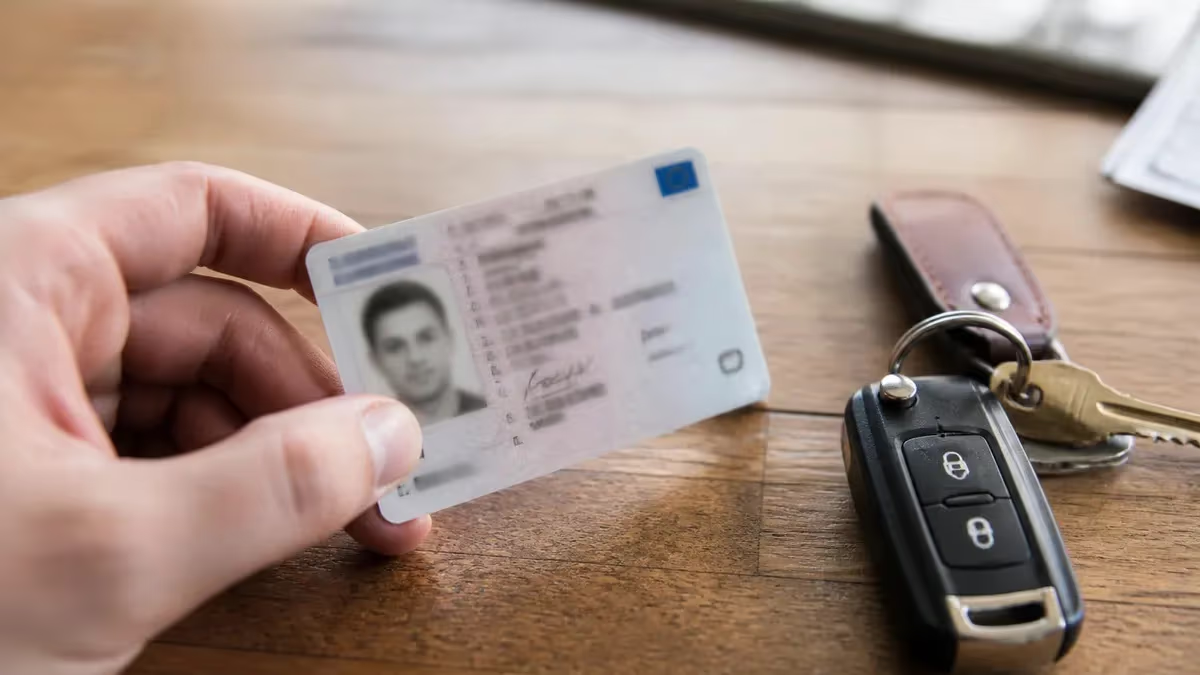
The test de manejo DMV California is one of the most important milestones for new drivers in the Golden State, and understanding how a dmv customer service representative fits into the process can make the entire experience far less stressful. Whether you are preparing for your first behind-the-wheel exam or retaking after a previous attempt, knowing exactly what examiners look for — and how to interact with DMV staff — gives you a decisive advantage before you ever turn the ignition key.
California's DMV administers hundreds of thousands of driving tests each year across its network of field offices, and the volume means that representatives follow strict, standardized evaluation protocols. A DMV representative assessing your road test will score your performance on a point-based system, marking errors in categories such as observation, lane discipline, speed control, and vehicle control. Understanding this scoring rubric in advance allows you to focus your practice sessions on the areas that carry the most weight on test day.
Many test-takers are surprised to discover that the driving exam itself is only one component of a multi-step licensing process. Before you even sit behind the wheel with a dmv representative, you must have passed the written knowledge test, held a valid provisional permit for the required period, and completed the mandatory practice hours logged in your Driver's Log if you are under 18. Each of these prerequisites is verified by DMV customer service staff during check-in, so arriving prepared saves you from last-minute scrambling at the counter.
Bilingual resources are a significant asset for California drivers, and the DMV offers the knowledge test in more than 30 languages. For Spanish-speaking applicants working toward passing the dmv california driving test, the department provides study materials, sample questions, and audio assistance at field offices. Knowing that language support is available removes one potential barrier and lets you focus entirely on mastering the rules of the road and the practical skills required during the behind-the-wheel portion.
Preparation resources have expanded dramatically in recent years. Online practice tests, video tutorials, and interactive hazard-perception modules are now accessible 24 hours a day through the DMV's official website and third-party platforms like PracticeTestGeeks.com. These tools replicate the format and difficulty level of actual exam questions, giving you a realistic preview of what to expect. Consistent, daily practice with these resources has been shown to significantly increase first-attempt pass rates among both teen and adult applicants.
This guide covers everything you need to know about the California driving test process from start to finish: the exam format, scoring criteria, common mistakes, how to communicate effectively with a DMV customer service representative, and the study strategies that consistently produce passing scores. Whether you are a nervous first-timer or a repeat test-taker looking to correct past errors, the information in the sections below will give you a clear, actionable roadmap to earning your California driver's license.
California DMV Driving Test by the Numbers
Exam Format
| Section | Questions | Time | Weight | Notes |
|---|---|---|---|---|
| Knowledge Test (Written) | 46 | No time limit | Pass/Fail | Must answer 38 correctly (83%) |
| Behind-the-Wheel Road Test | 0 | 15–20 min | Pass/Fail | Max 15 points; 1 critical = fail |
| Pre-Drive Safety Check | 5 | 3–5 min | Pass/Fail | Vehicle equipment questions asked by examiner |
| Total | 46 | Approx. 30–45 min (combined) | 100% |
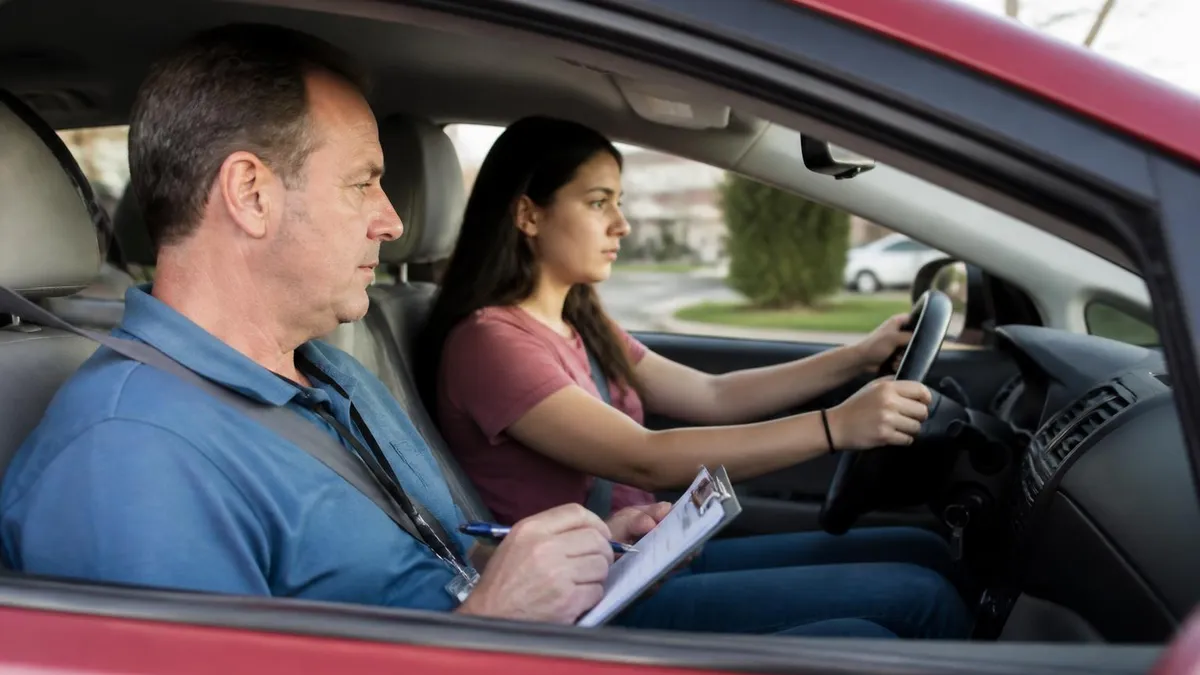
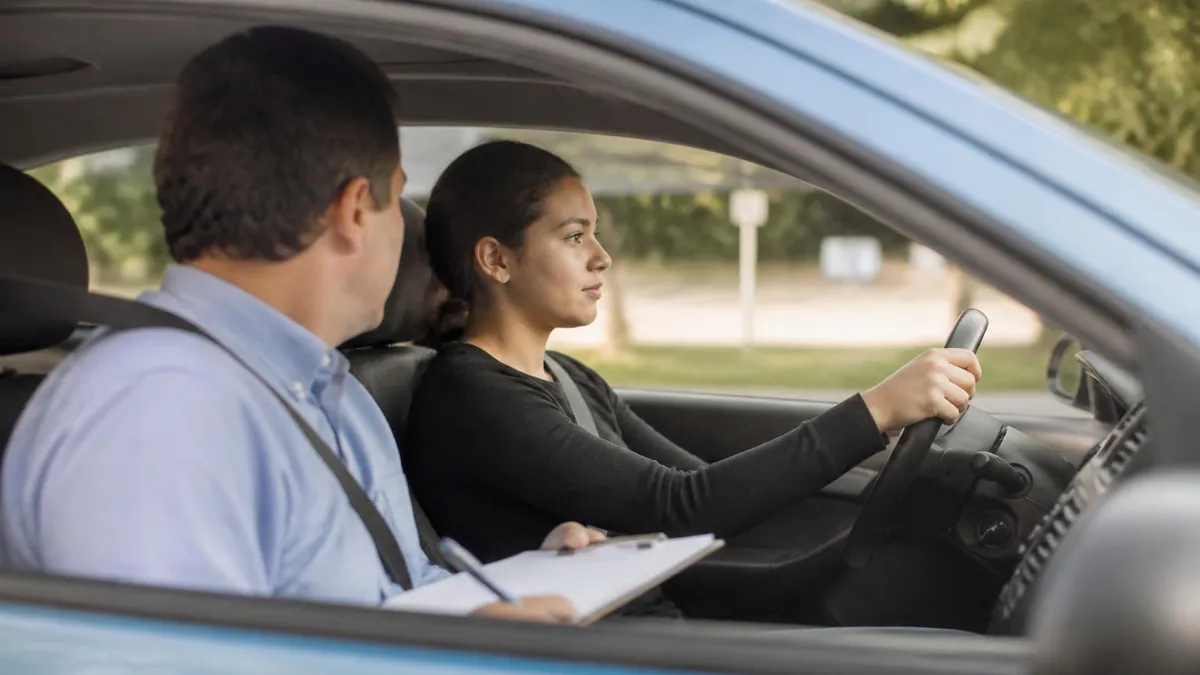
When a dmv customer service representative steps into your vehicle to begin the behind-the-wheel exam, the evaluation starts before you pull out of the parking space. The pre-drive safety check covers basic vehicle equipment: examiners will ask you to demonstrate windshield wipers, the defroster, emergency flashers, the horn, and the parking brake. Failing to correctly identify or operate any of these immediately signals unpreparedness, so spend five minutes before your test date running through each control until it becomes second nature.
The road test itself is scored on a cumulative error system. Minor errors, called "driving performance evaluation" points, are recorded each time you make a mistake that does not create an immediate hazard. You can accumulate up to 15 minor points and still pass.
However, a single critical error — such as running a red light, failing to yield to a pedestrian, striking a curb, or requiring the examiner to grab the wheel or brake — results in automatic failure regardless of how well you performed throughout the rest of the test. Understanding the distinction between minor and critical errors is crucial to managing your nerves on test day.
Observation is consistently the highest-scoring category in California road test evaluations. DMV representatives watch whether you check mirrors before braking, changing lanes, or turning; whether you perform a proper head-check for blind spots; and whether you scan intersections for cross-traffic before entering. Many applicants lose points not because they lack the physical driving skill but because they forget to make their observation habits visible to the examiner. A quick, deliberate head turn or exaggerated mirror check communicates confidence and awareness even when conditions are clear.
Speed control is another area where examiners pay close attention. Driving significantly below the posted speed limit — unless traffic or road conditions justify it — can be marked as impeding traffic, a minor error that accumulates quickly if the behavior is consistent. Conversely, even a brief moment of exceeding the speed limit is recorded. The ideal approach is to maintain a speed within 5 mph of the posted limit in most conditions, and to demonstrate smooth, gradual braking rather than last-second stops that suggest poor anticipation.
Lane discipline encompasses lane positioning, lane changes, and turning mechanics. When making right turns, your vehicle should hug the right lane; left turns should bring you into the nearest left lane on the target street. Weaving within your lane, drifting during turns, or choosing the wrong destination lane are all error-producing behaviors that are entirely preventable with practice. Consider spending dedicated sessions on a quiet residential street practicing turn mechanics before your scheduled exam date.
Interactions at intersections account for a large share of the errors recorded during California road tests. Controlled intersections require you to come to a complete stop behind the limit line — not at it, and certainly not past it. Uncontrolled intersections require you to slow, evaluate, and yield appropriately. Four-way stops trip up many applicants because the right-of-way rules depend on arrival order and, in tie situations, the vehicle to the right proceeds first. Reviewing these scenarios in a practice environment is a far better use of study time than rereading the same handbook page twice.
Parking maneuvers, including parallel parking and three-point turns, may or may not appear on your specific test route depending on which DMV field office administers your exam. Some offices in dense urban areas routinely include parallel parking; others in suburban settings rarely do. Calling your local office in advance or researching the typical route elements online can help you allocate practice time appropriately. A knowledgeable dmv representative at the front desk can often confirm whether a specific maneuver is part of your office's standard route.
How to Speak to a DMV Representative and Get Test Day Help
Arriving at your local DMV field office 15 to 20 minutes before your scheduled appointment gives you time to check in with a customer service representative, confirm your paperwork is complete, and mentally settle before the exam begins. Bring your permit, completed Driver's Log (if applicable), a valid parent or guardian signature if you are a minor, and proof of insurance for the vehicle you plan to use during the road test. Missing any document means automatic rescheduling.
When speaking with DMV staff at the front desk, be direct and calm. Ask specifically whether there are any known issues with your appointment slot, whether the test route includes parking maneuvers that day, and whether you need to park your vehicle in a designated staging area before the examiner arrives. Representatives are permitted to answer logistical questions like these, and doing so demonstrates organizational readiness — a habit that carries over into the exam itself.
Pros and Cons of Taking the California Driving Test at a Busy vs. Quiet DMV Office
- +Busy offices often have experienced examiners who provide detailed feedback after the test
- +Urban routes expose you to real-world traffic scenarios you will encounter as a licensed driver
- +High-volume offices frequently have the shortest wait times when using online appointment scheduling
- +Busy locations are more likely to offer bilingual customer service representatives on site
- +Urban test routes validate your ability to handle complex intersections and multi-lane roads
- +Larger offices often have more appointment slots available if you need to reschedule quickly
- −Heavy traffic near busy offices increases stress levels during the behind-the-wheel exam
- −Urban routes may include parallel parking or tight maneuvers not tested at suburban offices
- −Parking at large field offices can itself be stressful and time-consuming before your appointment
- −Wait times at the counter on walk-in days can be significantly longer at high-volume locations
- −Construction or road changes near urban offices can alter expected test routes without notice
- −Noise and activity outside the vehicle can distract less experienced drivers during the exam
Pre-Test Day Checklist for the California DMV Driving Exam
- ✓Verify your appointment date, time, and field office location via the DMV online portal at least 48 hours in advance.
- ✓Confirm your vehicle has current registration, valid insurance, and all lights and signals functioning properly.
- ✓Practice the pre-drive safety check — wipers, defroster, horn, flashers, and parking brake — until you can demonstrate each without hesitation.
- ✓Complete at least 10 practice driving sessions on routes similar to those near your testing office.
- ✓Review right-of-way rules at four-way stops, uncontrolled intersections, and pedestrian crosswalks.
- ✓Practice parallel parking until you can consistently complete the maneuver within two attempts.
- ✓Get a full night of sleep the evening before your test to ensure sharp reaction time and focus.
- ✓Arrive 15–20 minutes early with your permit, insurance, vehicle registration, and parent signature if under 18.
- ✓Take a 10-minute practice drive in your test vehicle to warm up and confirm all controls are familiar.
- ✓Review the error categories on the driving performance evaluation sheet so you know exactly what is being scored.

One Critical Error Ends Your Test Immediately
Unlike minor errors that accumulate, a single critical error — such as running a stop sign, failing to yield to a pedestrian in a crosswalk, or requiring the examiner to apply the brake — results in automatic failure regardless of your score up to that point. Always prioritize safety over speed, and when in doubt, yield. Defensive decision-making is the single most reliable strategy for avoiding a critical failure mark.
Common mistakes on the California driving test fall into predictable, avoidable patterns — and experienced DMV examiners see the same errors repeated across thousands of tests each year. The most frequent source of failure is inadequate observation at intersections, particularly the failure to perform a complete stop at the limit line and the failure to check for cross-traffic before proceeding.
Applicants who practice at quiet residential intersections often develop a habit of rolling slowly through stops, which is immediately flagged on a scored exam. Breaking this habit requires deliberate, conscious effort during every practice session, not just the week before the test.
Improper speed management is the second most cited reason for accumulated minor points leading to failure. New drivers often over-brake out of anxiety, traveling significantly below the posted speed limit even on clear, uncongested roads. While this feels safer to the driver, it actually creates hazards for other road users and signals poor situational awareness to the examiner. The goal is smooth, confident speed maintenance — accelerating and decelerating gradually, matching the flow of surrounding traffic while staying within legal limits.
Lane changes are an area where many intermediate-level drivers lose critical points. The California road test requires a specific sequence for every lane change: check the mirror, signal, check the blind spot with a head turn, verify space is available, and then smoothly merge.
Skipping the blind spot check even once — even when the road appears clear — is marked as an error. This sequence must become habitual through repeated practice, not something you consciously think through during the test itself. Muscle memory built over many practice hours is what allows you to execute these steps smoothly under test-day pressure.
Turn mechanics cause more errors than most test-takers anticipate. Wide right turns that drift into the adjacent lane, left turns that cut the corner and enter the wrong lane, and turns executed at excessive speed are all common error patterns. California law requires that right turns stay as close to the right curb as practicable, and left turns must enter the nearest available lane on the destination street. Practicing these mechanics in a parking lot before taking to public roads allows you to build the correct physical habits without the risk of traffic pressure affecting your technique.
Following distance is a less-discussed but frequently scored item during California road tests. The DMV expects applicants to maintain at least a three-second following distance under normal conditions, extending to four or more seconds in rain, fog, or heavy traffic. Examiners observe whether you close in on vehicles ahead when they slow down, or whether you consistently manage space proactively. This skill is closely tied to hazard perception — the ability to identify developing situations early enough to respond smoothly rather than reactively.
Residential driving scenarios are particularly important for teen applicants whose permit practice has been concentrated on major roads and highways. Residential streets bring unique challenges: children playing near the roadway, cyclists in the lane, frequent stop signs, school zones with reduced speed limits, and vehicles backing out of driveways. If your practice driving has been primarily on arterial roads, deliberately seek out residential route practice in the weeks before your test. The ability to read and respond to residential hazards is a core competency that California examiners actively evaluate.
Post-test debrief conversations with your DMV customer service representative are an underutilized resource. If you do not pass, the score sheet the examiner provides is essentially a personalized training plan. Each error category noted tells you exactly where to focus practice before your next attempt. Rather than treating the debrief as a discouraging conversation, approach it as a diagnostic session: ask the examiner to clarify any category you do not fully understand, and leave the office with a clear list of the specific skills you need to improve. This targeted approach consistently produces faster improvement than generic repeated practice.
California instruction permits are valid for 24 months from the date of issue. If your permit expires before you pass the behind-the-wheel exam, you must retake and pass the knowledge test before scheduling a new road test. Check your permit expiration date well in advance and schedule your driving test with enough lead time to allow for at least one retake if needed — appointment slots at busy urban offices can fill up weeks in advance.
Bilingual support and special accommodations are important components of California's DMV services, reflecting the state's diverse population. The knowledge test is available in more than 30 languages at DMV field offices, and audio versions are provided for applicants with reading disabilities or visual impairments. Scheduling an accommodation in advance — rather than requesting it at the counter on test day — ensures the DMV has the appropriate materials prepared and avoids unnecessary delays. Contact your local field office at least one week before your appointment to confirm accommodation availability.
For applicants seeking to understand how do i speak to a dmv representative in ny or compare California's process to other states, it is worth noting that California's examination structure is among the most standardized in the country. The scoring rubric is consistent across all field offices, the error categories are defined in the DMV's published examiner training materials, and the pass/fail threshold does not vary by location or examiner. This uniformity means that preparation resources developed for one California office translate directly to preparation for any other office in the state.
Adult learners taking the California driving test for the first time face a slightly different set of challenges than teenagers. Adults who have driven in other countries or other states may have ingrained habits — such as different intersection protocols or right-hand traffic rules — that conflict with California law.
The DMV knowledge test is specifically designed to identify these gaps, and the road test evaluates whether corrected knowledge has translated into corrected behavior. Spending extra time on California-specific rules, such as the state's unique cell phone restrictions and lane-splitting regulations for motorcycles, is time well invested for experienced drivers new to the state.
Insurance verification is a requirement that catches many test-takers off guard. The vehicle you bring to the road test must be covered by an active California-compliant insurance policy, and you must be able to present proof of that coverage at the time of your test. If you are borrowing a family member's vehicle, confirm that the policy covers occasional operators or that you are listed as a covered driver. An examiner will not begin the road test if insurance documentation is absent or expired, resulting in an automatic reschedule and a wasted appointment slot.
Vehicle condition is evaluated as part of the pre-drive check, and arriving in a mechanically deficient vehicle can result in test cancellation. Examiners are required to inspect basic safety equipment: working brake lights, functioning turn signals, properly inflated tires, clean windshields, and operational windshield wipers. If any required safety item fails during inspection, the test cannot proceed. The solution is a simple pre-test vehicle inspection conducted the evening before your appointment — replace any burned-out bulbs, check tire pressure, and confirm all fluid levels are adequate so there are no surprises the following morning.
Rescheduling and cancellation policies are another area where coordination with a dmv customer service representative pays dividends. California allows you to reschedule a road test appointment online at no charge as long as you do so at least one business day before the scheduled time. Same-day cancellations or no-shows are recorded in the system and may affect your ability to book future appointments during high-demand periods. If an emergency prevents you from attending, calling the office directly and explaining the situation to a representative often results in more flexibility than the standard online system allows.
Practice test resources from PracticeTestGeeks.com mirror the question formats, difficulty levels, and topic coverage of the actual California DMV knowledge exam, giving you a realistic benchmark for your readiness before the official test date. Combining consistent online practice with structured behind-the-wheel training sessions creates the dual-track preparation approach that produces the highest first-attempt pass rates. Use the quiz tools available here alongside the official California Driver Handbook to build both the knowledge base and the practical skills a DMV examiner expects to see from a fully prepared candidate.
Final preparation in the 48 hours before your California driving test should shift from learning new material to consolidating what you already know. Avoid cramming new rules the night before — at this stage, fatigue and information overload are more likely to hurt your performance than last-minute study is to help it. Instead, do a single review pass through the most commonly tested topics: right-of-way at intersections, speed limits in school and residential zones, proper signaling and lane change procedures, and the rules governing right turns on red. Brief, confident review is the goal.
Sleep quality in the nights leading up to your test has a measurable impact on reaction time, decision-making speed, and stress management — all of which are directly relevant to driving performance. Research consistently shows that even moderate sleep deprivation impairs cognitive functions to a degree comparable to mild intoxication. Aim for seven to nine hours of sleep the night before your test, avoid caffeine after early afternoon, and establish a calming pre-sleep routine. You are not just preparing your mind; you are also preparing the physical responsiveness that safe driving requires.
On the morning of your test, eat a light, nutritious meal before leaving home. Hunger or low blood sugar creates distraction and reduces concentration, while a heavy meal can cause drowsiness. Hydrate adequately, but not to the point where you will need to stop mid-test. Dress comfortably in clothing and shoes that allow you to feel the pedals clearly — avoid flip-flops, heavy boots, or any footwear that might interfere with smooth pedal modulation. These small physical preparations collectively create a foundation for clear-headed, focused driving.
Mental rehearsal is a technique used by athletes and performers that translates surprisingly well to driving test preparation. The night before your exam, visualize the entire test sequence from start to finish: arriving calm, presenting your documents confidently, completing the pre-drive check smoothly, navigating each common maneuver type with precision, and concluding the test knowing you performed at your best. This kind of positive mental rehearsal reduces anxiety by making the unfamiliar feel familiar before you ever arrive at the DMV.
During the test itself, maintain a running internal commentary on your actions — not out loud, but mentally. Narrate your observations: "checking mirror, signal on, blind spot clear, merging smoothly." This internal dialogue keeps your attention actively engaged with the evaluation criteria and prevents the mind-wandering that causes otherwise-prepared drivers to forget steps mid-maneuver. Experienced DMV instructors often teach this technique explicitly because it reliably improves consistency under pressure.
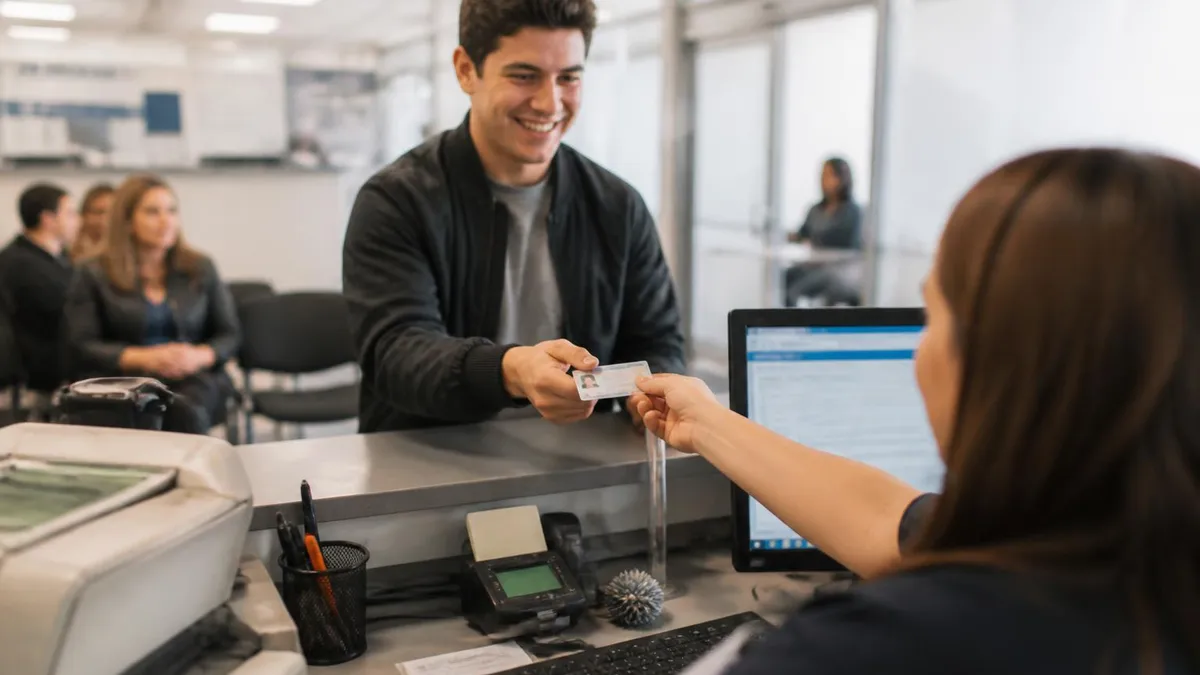
After passing your road test, a DMV customer service representative at the office counter will issue you a temporary paper license valid for 60 days while your permanent plastic card is produced and mailed. Keep this temporary document safely — it is your only official proof of licensure during that window.
Your permanent license typically arrives within three weeks; if it has not arrived after 60 days, contact the DMV promptly to verify the mailing address on file and request a replacement if necessary. Understanding this post-test process in advance prevents unnecessary anxiety when the permanent card does not arrive immediately.
Consistent preparation, strategic practice, and confident execution on test day are the three pillars of a successful California DMV driving test outcome. Use the practice quizzes and structured study resources available throughout this guide to build your knowledge base, invest in quality supervised driving practice to develop your physical skills, and approach your appointment with the calm confidence that thorough preparation provides. Your California driver's license is within reach — and every hour of honest practice brings you measurably closer to the day you drive away from the DMV with it in hand.
DMV Questions and Answers

Colorado DMV Renew Registration: Complete 2026 Guide to Renewing Your Vehicle Tags Online, By Mail, and In Person

How to Chat With DMV: Reach a Customer Service Representative Fast

DMV Representative Practice Test PDF (Free Printable 2026)
DMV Customer Service Representative: Complete Guide to DC DMV Registration and How to Get Help Fast
DMV Customer Service Representative: Complete Guide to Address Changes and Getting Help
About the Author
Licensed Driving Instructor & DMV Test Specialist
Penn State UniversityRobert J. Williams graduated from Penn State University with a degree in Transportation Management and has spent 20 years as a certified driving instructor and DMV examiner consultant. He has personally coached thousands of applicants through written knowledge tests, skills assessments, and commercial driver licensing programs across more than 30 states.
Join the Discussion
Connect with other students preparing for this exam. Share tips, ask questions, and get advice from people who have been there.
View discussion (8 replies)