
Drivers License DMV Certification Guide: Complete 2026 October Career and Credentialing Path
Complete drivers license DMV certification guide covering wisconsin dmv, 🗨️ california dmv, ca dmv processes, renewals, practice tests, and career paths

Earning your drivers license dmv credential is one of the most consequential adult milestones in the United States, opening doors to employment, education, housing, and personal mobility that simply do not exist without a valid state-issued driving privilege. Whether you are navigating the wisconsin dmv system as a first-time teen applicant, transferring an out-of-state license through california dmv channels, or returning after a suspension in North Carolina, the certification path follows a predictable arc of knowledge testing, vision screening, road skill demonstration, and identity verification that every state regulates with subtle differences.
This comprehensive guide unpacks every layer of the certification process, from initial learner permit eligibility through full unrestricted licensure and the periodic dmv reg renewal cycles that follow. We will walk through document checklists, fee structures, graduated driver licensing rules for teens, REAL ID compliance deadlines that took effect in May 2025, and the medical certification overlays that apply to commercial drivers and senior renewal applicants in many jurisdictions.
The American licensing landscape is fragmented by design. Each state operates its own Department of Motor Vehicles, Motor Vehicle Administration, or Driver Services Bureau, and reciprocity rules vary widely. A 16-year-old in Wisconsin faces a 30-hour classroom education requirement before sitting for the knowledge exam, while a Texas applicant the same age must complete a 32-hour parent-taught or commercial driver education course. Florida demands a four-hour Traffic Law and Substance Abuse Education class before issuing any permit.
Career-minded readers will find detailed sections on commercial driver licensing, hazmat endorsements, passenger and school bus certifications, and the federal Entry-Level Driver Training rule that became mandatory in February 2022. We also cover the growing field of DMV employment itself, including examiner positions, customer service roles, and field office management tracks that pay between $42,000 and $78,000 depending on state and tenure.
Beyond the basics, this guide addresses real-world friction points like emissions testing requirements in 33 states, parallel parking maneuver standards that vary by examiner, dmv practice test resources that genuinely move the needle on pass rates, and the appointment-booking strategies that save applicants weeks of waiting. We pull data from the Federal Highway Administration, AAA Foundation for Traffic Safety, and state-level DMV annual reports published in 2025.
The certification you earn carries weight far beyond the wallet card itself. A clean driving record influences auto insurance premiums by hundreds of dollars annually, qualifies you for ride-share platform onboarding, and serves as the most commonly accepted form of identification at airports, polling stations, banks, and federal buildings. Investing the time to certify correctly the first time pays dividends for decades.
By the end of this guide, you will know exactly which documents to bring, which study materials produce the highest first-attempt pass rates, what to expect during the road skills test, how to handle common rejection scenarios, and how to keep your license valid and clean for the long haul ahead.
DMV Certification by the Numbers

Three Core Certification Pathways
The default passenger vehicle credential covering cars, light trucks, and vans under 26,001 pounds. Requires knowledge test, vision screening, and road skills exam. Most adults pursue this track through standard ca dmv or equivalent state channels.
Federally regulated three-tier credential (Class A, B, C) for vehicles over 26,001 pounds or carrying 16+ passengers. Requires ELDT training, medical certification, and specialized endorsement testing for hazmat, tanker, or passenger transport.
Add-on certification (Class M) requiring separate knowledge and skills testing. Many states accept Motorcycle Safety Foundation course completion in lieu of the road test, dramatically improving pass rates for new riders.
Entry-level credential allowing supervised driving practice. Teen applicants face graduated driver licensing restrictions including passenger limits, night driving curfews, and zero-tolerance BAC standards that persist until full licensure.
Federally accepted identification for domestic flights and federal facility access. Requires four documents proving identity, Social Security number, and two proofs of residence. Mandatory enforcement began May 7, 2025.
Preparing for the knowledge exam is the single highest-use activity in your entire certification journey, and the data backs this up clearly. Applicants who complete at least three full-length dmv practice test simulations before sitting for the actual exam pass on their first attempt at rates near 84 percent, compared to roughly 51 percent for those who rely solely on the state driver handbook. The difference is not intelligence or memory but exposure to question phrasing, distractor patterns, and the specific weighting examiners use across topic categories.
Every state publishes a free driver manual, typically 80 to 140 pages long, covering road signs, right-of-way rules, alcohol and drug laws, sharing the road with cyclists and pedestrians, and the mechanics of safe vehicle operation. The wisconsin dmv handbook runs 96 pages, the california dmv version stretches to 116 pages, and the dmv new york state manual clocks in at 104 pages. Each contains the exact source material from which exam questions are drawn.
Study sessions should be structured rather than passive. Read one chapter of the manual, then immediately take a targeted practice quiz on that chapter. Review every wrong answer with the manual open, highlighting the relevant passage. This active recall technique outperforms reread-and-hope studying by a factor of three in retention studies. Plan for two to three hours per session across roughly two weeks for comfortable mastery.
Pay extra attention to the topics that trip up the highest percentage of test-takers: stopping distances at various speeds, blood alcohol concentration thresholds and their consequences, right-of-way at uncontrolled intersections, the meaning of specific pavement markings, and the procedures for sharing roads with school buses, emergency vehicles, and large trucks. These five categories generate roughly 60 percent of all incorrect responses on first-time attempts.
Mobile applications have transformed how candidates prepare. The best free apps include unlimited practice questions, explanations for every answer, weakness-tracking dashboards, and state-specific question banks updated when laws change. Avoid generic apps that pool questions from all 50 states, as legal nuances around items like turn-on-red rules, headlight requirements, and seat belt enforcement differ substantially across jurisdictions.
For applicants whose primary language is not English, most state DMVs offer the written exam in 10 to 35 languages. The wisconsin dmv offers tests in Spanish, Hmong, Russian, and several other languages, while California provides 32 language options. Audio versions are available at every testing center for applicants with reading difficulties, and many jurisdictions allow oral examinations administered one-on-one with a staff member.
Schedule your knowledge test for a morning slot when possible. Cognitive performance peaks in the late morning for most adults, and waiting room volumes tend to be lower before lunch. Bring a government-issued photo ID, your social security card or number, two proofs of residence, and the required fee in the format your state accepts (many no longer accept personal checks).
DMV Practice Test Questions
Prepare for the DMV - Department of Motor Vehicles exam with our free practice test modules. Each quiz covers key topics to help you pass on your first try.
DMV Alabama Permit Test
DMV Exam Questions covering Alabama Permit Test. Master DMV Test concepts for certification prep.
DMV Alaska Permit Test
Free DMV Practice Test featuring Alaska Permit Test. Improve your DMV Exam score with mock test prep.
DMV Alaska Roads & Signs Test
DMV Mock Exam on Alaska Roads & Signs Test. DMV Study Guide questions to pass on your first try.
DMV Alaska Written Test
DMV Test Prep for Alaska Written Test. Practice DMV Quiz questions and boost your score.
DMV Arizona Roads & Signs Test
DMV Questions and Answers on Arizona Roads & Signs Test. Free DMV practice for exam readiness.
DMV California Drug and Alcohol Test
DMV Mock Test covering California Drug and Alcohol Test. Online DMV Test practice with instant feedback.
DMV General Drug and Alcohol Test
Free DMV Quiz on General Drug and Alcohol Test. DMV Exam prep questions with detailed explanations.
DMV Permit Test
DMV Practice Questions for Permit Test. Build confidence for your DMV certification exam.
DMV Practice Test
DMV Test Online for Practice Test. Free practice with instant results and feedback.
Major State Variations: California DMV, Wisconsin DMV, and NCDOT DMV
The california dmv operates the largest licensing system in the country, processing over 27 million license transactions annually across 188 field offices. First-time adult applicants pay $41 for a five-year license, while teens face a more involved Graduated Driver Licensing pathway requiring 50 hours of supervised practice including 10 hours at night before the provisional permit converts.
The ca dmv knowledge test contains 36 multiple-choice questions for those under 18 and 46 for adults, with passing scores of 30 and 38 respectively. Appointments through the official portal typically book six to eight weeks out, though same-day standby slots open daily at most urban offices. REAL ID processing requires in-person verification of original documents.
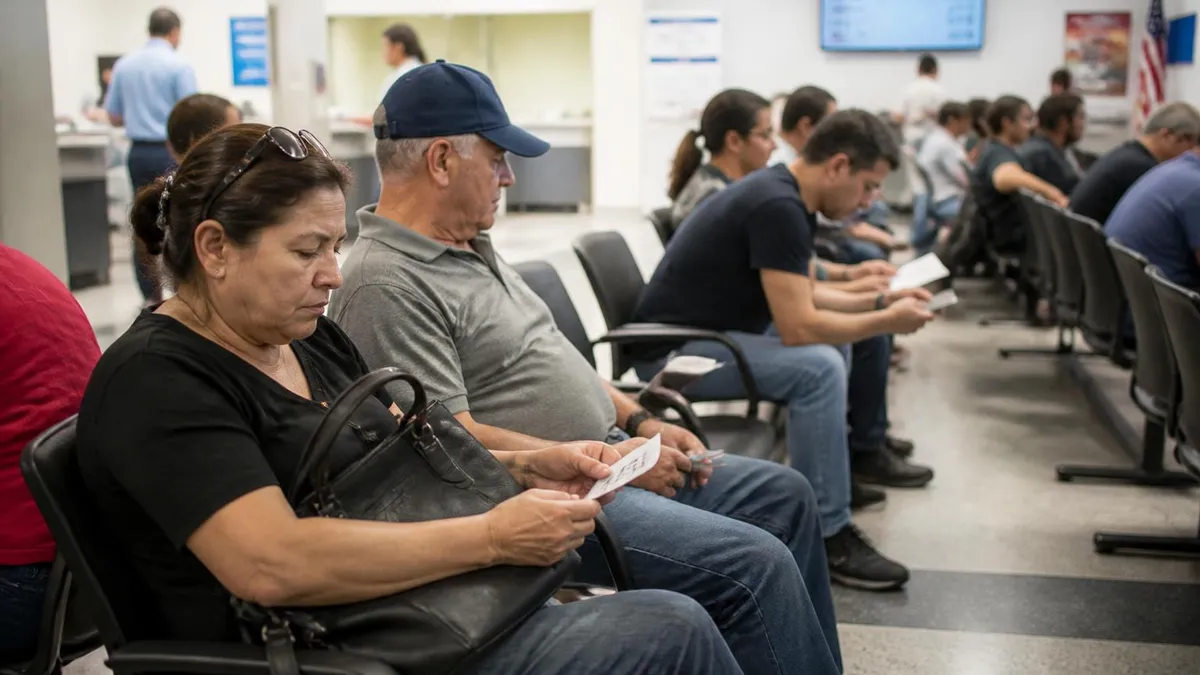
Pursuing DMV Certification: Benefits and Drawbacks
- +Universal acceptance as primary photo identification at airports, polling stations, and federal facilities
- +Dramatic expansion of employment options including delivery, ride-share, sales, and commercial driving careers
- +Lower auto insurance premiums after three years of clean record establishment
- +Independence from public transit schedules and ride-share surge pricing
- +Eligibility for emergency response volunteer roles, including disaster relief driving teams
- +Ability to rent vehicles, which most companies will not do without a state-issued license
- +Foundation credential for pursuing CDL, motorcycle, or chauffeur endorsements later
- −Ongoing costs averaging $200 to $400 annually for insurance, registration, and emissions testing
- −Time investment of 50 to 100 hours of supervised practice for new drivers under graduated licensing
- −Periodic dmv registration renewal visits that can require half-day appointments at busy offices
- −Vision and medical certifications required for senior drivers and commercial license holders
- −Points-based discipline systems that escalate quickly with violations, leading to suspension
- −REAL ID document collection burden requiring four to six original documents
- −Knowledge of evolving state laws around distracted driving, hands-free devices, and cannabis impairment
Pros and Cons at a Glance
| Pros | Cons |
|---|---|
| Universal acceptance as primary photo identification at airports, polling stations, and federal facilities | Periodic dmv registration renewal visits that can require half-day appointments at busy offices |
| Dramatic expansion of employment options including delivery, ride-share, sales, and commercial driving careers | Vision and medical certifications required for senior drivers and commercial license holders |
| Lower auto insurance premiums after three years of clean record establishment | Points-based discipline systems that escalate quickly with violations, leading to suspension |
| Independence from public transit schedules and ride-share surge pricing | REAL ID document collection burden requiring four to six original documents |
| Eligibility for emergency response volunteer roles, including disaster relief driving teams | Knowledge of evolving state laws around distracted driving, hands-free devices, and cannabis impairment |
Drivers License DMV Application Checklist
- ✓Bring original birth certificate, valid passport, or certified naturalization documents for identity verification
- ✓Carry your Social Security card or W-2 displaying full nine-digit number for SSN proof
- ✓Pack two recent documents proving residence, dated within the past 60 days
- ✓Confirm any required driver education certificate of completion is signed and dated correctly
- ✓Pay applicable fees in accepted formats — many states no longer accept personal checks
- ✓Schedule your appointment online to skip walk-in lines that can stretch four to six hours
- ✓Review the state-specific driver handbook cover to cover at least once before testing
- ✓Complete a minimum of three full-length dmv practice test simulations within the prior week
- ✓Wear corrective lenses if you normally drive with them — vision testing requires actual conditions
- ✓Arrive 15 minutes early with the vehicle you will use for the road skills test, fully insured
First-Attempt Pass Rates Hinge on Practice Volume
Applicants completing five or more full-length practice tests pass the knowledge exam on their first attempt at 87 percent versus 51 percent for handbook-only studiers. The single highest-ROI activity in your entire certification journey is investing four to six hours in realistic timed practice during the week before your test appointment.
The road skills test is where preparation either pays off spectacularly or unravels under examiner scrutiny, and understanding the standardized rubric most states use can transform a nervous applicant into a confident one. Examiners score on a fixed scale across 15 to 25 maneuvers, including controlled-stop technique, lane changes, intersection navigation, parallel parking, three-point turns, and observation patterns. Critical errors like rolling stop signs, failure to yield to pedestrians, or driving over curbs result in immediate disqualification regardless of overall performance.
Learning how to parallel park correctly remains the single most-failed individual maneuver in road testing across the United States. The maneuver is graded on four criteria: vehicle positioning relative to the curb (typically within 12 inches), absence of contact with cones or curbs, use of mirrors and shoulder checks during the maneuver, and total time consumed. Practice this skill at least 20 times in varying conditions before your test date.
Defensive observation patterns separate average performers from confident pass candidates. Examiners are trained to watch your eye movements, head turns, and mirror usage continuously throughout the test. Make your scanning deliberate and visible — count to two when checking each mirror, turn your head fully when changing lanes, and check blind spots even when no traffic appears to be present. Examiners reward demonstrated awareness over speed or smoothness.
Speed management is another high-frequency point loss area. Driving more than five mph below the posted limit without cause is just as problematic as exceeding the limit, because it suggests excessive caution that disrupts traffic flow. Maintain steady speeds appropriate to conditions, accelerate decisively to merge speed when entering highways, and use cruise control on rural test routes where it is permitted.
Vehicle selection matters more than candidates realize. The car you bring for testing must be currently registered, fully insured, and mechanically sound. Examiners conduct a pre-test inspection checking headlights, brake lights, turn signals, horn, windshield wipers, and seat belts. Roughly 8 percent of road tests are canceled before they begin due to vehicle deficiencies — a costly avoidable mistake that requires rescheduling.
Emissions testing near me is a phrase that returns roughly 90,000 monthly searches across the country, reflecting how many drivers must pass a smog certification before registering or renewing. Currently 33 states maintain emissions programs, with frequency ranging from annual in California metro areas to biennial in Wisconsin counties. Pre-test repairs average $147 when failures occur, so addressing check engine lights before the test saves money and time.
Test-day nerves are normal and even helpful in small doses, but excessive anxiety degrades performance. Eat a moderate breakfast at least 90 minutes before your appointment, hydrate moderately to avoid restroom urgency, and arrive with 15 minutes of cushion to settle in. If you complete one practice loop of your route the day before testing, your hippocampus will already have spatial familiarity that reduces cognitive load during the actual exam.
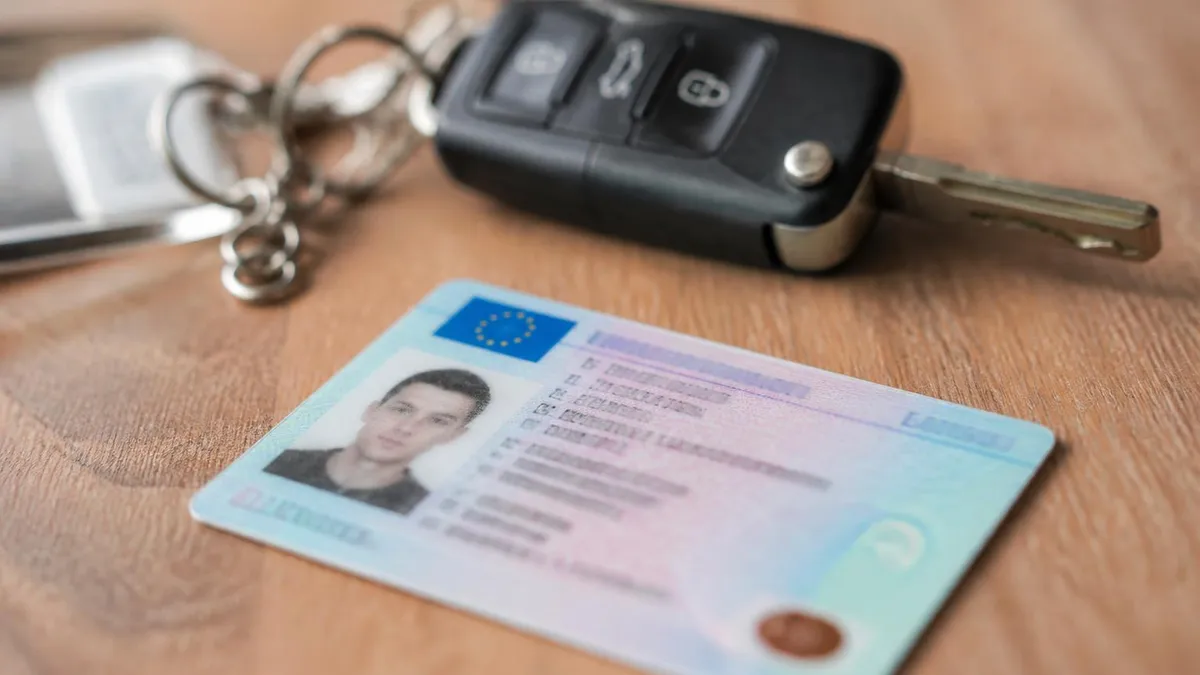
As of May 7, 2025, federal agencies including TSA require REAL ID compliant drivers licenses or alternative federal identification for domestic flights and federal facility access. Standard non-compliant licenses are no longer accepted. Schedule your conversion appointment immediately if you have not already done so — wait times in major metros currently exceed eight weeks.
License maintenance is where most drivers underestimate the long-term commitment of certification, treating the initial issuance as a finish line rather than the starting point of a multi-decade obligation. Standard license validity periods range from four years in New Hampshire to twelve years in Arizona for adults under 65. Most states fall between five and eight years, and renewal notifications arrive by mail and email 30 to 90 days before expiration. Missing a renewal deadline costs significantly more than the renewal itself.
The dmv registration renewal process is distinct from license renewal but often confused with it. Vehicle registration covers the right to operate a specific vehicle on public roads, requires emissions certification in affected counties, and renews annually or biennially depending on the state. Driver license renewal covers the personal privilege to operate any qualifying vehicle, generally renews on a multi-year cycle, and requires vision screening at most renewal points.
Online renewal eligibility has expanded dramatically since 2020. Most states now allow alternating online and in-person renewals, meaning you visit a service center only every other cycle. To qualify for online renewal, you typically must not have changed your name or address, must not have any active license suspensions or unpaid violations, and must have a recent enough photo on file. Senior drivers often must renew in person regardless of cycle.
Vision screening is the most common renewal-stage failure point and the reason in-person visits remain mandatory in some states. Standard vision requirements call for 20/40 corrected acuity in at least one eye with a horizontal field of view of at least 140 degrees. Drivers needing corrective lenses receive a license restriction code that must be honored every time they drive. Failing the screening triggers a referral to an eye care professional for full evaluation.
Medical certifications add complexity for senior drivers and commercial license holders. Drivers over 70 in many states face shorter renewal cycles, mandatory in-person visits, and additional medical questionnaires. Commercial drivers must maintain a current Medical Examiner's Certificate from a registered examiner, valid for up to 24 months. Failure to upload current medical documentation suspends the CDL until compliance is restored.
Address changes must be reported within 10 to 30 days in most states, depending on jurisdiction. Failure to update your address can result in missed renewal notices, missed jury duty summonses, and complications during traffic stops. Online address change is available in nearly every state and typically takes less than 10 minutes. A new physical card may or may not be issued depending on local policy.
Watch your point balance like a credit score. Most states use point systems where moving violations accrue values from one to six points, with thresholds at 6, 8, or 12 points triggering warning letters, mandatory remedial training, or outright suspension. Defensive driving courses can remove points in many jurisdictions, typically once every 12 to 36 months. Schedule these courses preemptively rather than reactively after a citation accumulates.
Practical tips for the final stretch of your certification journey often determine whether you walk out with a license in hand or schedule a second attempt. Begin your road test day with a deliberate calming routine — five minutes of slow breathing, a brief mental walkthrough of common maneuvers, and a quick mirror and seat adjustment session before the examiner approaches your vehicle. This pre-flight ritual reduces cortisol levels and primes muscle memory for smooth execution.
Communicate clearly with your examiner throughout the test. When you receive an instruction like turn right at the next intersection, repeat it back briefly: Right at the next light, got it. This confirms understanding, prevents missed turns that cost points, and signals to the examiner that you are processing instructions thoughtfully. Avoid unnecessary chatter, but do not drive in tense silence either.
If you make a mistake during testing, do not catastrophize. A single point loss does not fail you, and panicking after a minor error typically causes cascading errors that compound into failure. Acknowledge the mistake mentally, breathe through it, and refocus on the next maneuver with complete attention. Examiners frequently note that emotional recovery after errors is itself a positive signal of mature driving judgment.
Bring backup payment options to every DMV visit. Personal checks have been phased out at many service centers, and credit card processing systems occasionally fail. Carry one credit card, one debit card, and enough cash to cover your transaction. The frustration of being turned away on payment failures after a multi-hour wait is preventable with two minutes of pre-trip preparation.
Take advantage of the dmv new york state and other state video answer resources for visual-style learners. Many candidates retain procedural knowledge better through guided video walkthroughs than through written manual study alone. Combine video content with traditional practice tests for the most strong preparation across diverse cognitive learning styles.
For applicants who fail on the first attempt, the data is genuinely encouraging. Second-attempt pass rates climb to 71 percent for the road test and 79 percent for the knowledge exam, because candidates know exactly which weaknesses to address. Schedule your retake at least 14 days after the initial attempt to allow real skill development rather than rushing back with the same gaps in preparation that caused the first failure.
Finally, treat your new license as the credential it represents — a public trust to operate multi-ton vehicles among vulnerable pedestrians, cyclists, and other drivers. The certification is a privilege the state extends conditionally, renewed through your continuing demonstration of safe judgment. Drivers who internalize this responsibility from day one tend to maintain clean records for decades, lower insurance costs, and avoid the cascading consequences that follow even a single serious violation.
Sample DMV Practice Questions
Try these questions from our free DMV practice tests. The correct answer and an explanation follow each question.
YOUR LICENSE WILL BE ___________ IF YOU PROVIDED FALSE INFORMATION ON YOUR DRIVERS LICENSE APPLICATION.
- A. cancelled
- B. revoked
- C. restricted
- D. suspended
Answer: A. cancelled
Providing false information on a driver's license application is a serious offense. When a license is issued based on fraudulent information, it is typically 'cancelled,' meaning it is declared invalid from its inception. This differs from 'suspended' (temporarily withdrawn) or 'revoked' (permanently terminated for a period) which usually occur after a valid license has been issued and then violated.
Your license will be suspended for ________ days, or until you reach 18, whichever comes first, if you commit more than one traffic offense while restricted under the Alabama Graduated Driver's License Program.
- A. 150
- B. 60
- C. 120
- D. 365
Answer: B. 60
Under the Alabama Graduated Driver's License (GDL) Program, young drivers are subject to specific restrictions and penalties. If a driver under 18 years of age commits more than one traffic offense, their driver's license will be suspended for a period of 60 days, or until they reach 18 years of age, whichever comes first.
DRIVERS WHO EAT AND DRINK WHILE DRIVING:
- A. Have no driving errors
- B. Have trouble driving slow
- C. Are better drivers because they are not hungry
- D. Have trouble controlling their vehicles
Answer: D. Have trouble controlling their vehicles
Eating and drinking while driving are significant forms of distracted driving. These activities require a driver to take their hands off the wheel, eyes off the road, and mental focus away from driving tasks. This divided attention and reduced physical control can severely impair a driver's ability to react to hazards and maintain proper control of their vehicle.
Drivers benefit from scanning the road ahead for dangers by:
- A. see other cars and people up ahead
- B. see road signs, driving information, other cars and people ahead
- C. see road signs or driving information
- D. maintain a fixed stare
Answer: B. see road signs, driving information, other cars and people ahead
Scanning the road ahead for dangers is a critical defensive driving technique. It allows drivers to anticipate potential hazards by observing road signs, traffic signals, other vehicles, pedestrians, and any changes in road conditions. This comprehensive awareness provides more time to react safely to developing situations, preventing accidents.
DMV Questions and Answers



About the Author

Licensed Driving Instructor & DMV Test Specialist
Penn State UniversityRobert J. Williams graduated from Penn State University with a degree in Transportation Management and has spent 20 years as a certified driving instructor and DMV examiner consultant. He has personally coached thousands of applicants through written knowledge tests, skills assessments, and commercial driver licensing programs across more than 30 states.
Join the Discussion
Connect with other students preparing for this exam. Share tips, ask questions, and get advice from people who have been there.
View discussion (9 replies)