
DMV Eye Examination and Driver License Eligibility Requirements 2026 September
DMV eye examination requirements: 🔎 vision standards by state, what happens if you fail, restricted licenses, CDL vision rules, and full eligibility for...

DMV Eye Examination: The Vision Test for Driver Licensing
Every state DMV requires a vision examination before issuing a driver license. The eye exam ensures drivers can see well enough to operate motor vehicles safely on public roads. Most states require corrected vision of 20/40 in each eye for an unrestricted license, with peripheral vision and color vision standards varying by state. The DMV vision test is administered at the licensing office during your initial application or renewal, though many states accept eye doctor certification in lieu of in-DMV testing.
This guide walks through DMV eye examination requirements in detail: state-by-state vision standards, how the DMV vision test actually works, what happens if you fail, restricted licenses for vision-limited drivers, CDL vision standards, and the broader driver license eligibility framework including knowledge and skills tests. If you're preparing for your DMV knowledge test, the DMV practice test covers the content you'll be tested on. The DMV permit test guide covers learner permit specifics. The DMV test guide covers broader exam content.
For most candidates, the DMV vision exam is the briefest and least stressful component of the full driver licensing process. The knowledge test demands prep and the skills test demands real driving practice; the vision test simply measures what you can actually see. As long as you bring your prescription glasses or contacts if you wear them, the vast majority of candidates pass without issue.
For candidates with significant vision issues, the DMV exam is the gate that triggers needed corrective action. Many people discover they need glasses or contacts during their first DMV visit because they've been getting by with marginal vision in daily life. The DMV referral to an optometrist is often the prompt that gets them properly corrected for safer driving overall.
The economic cost of obtaining and maintaining vision correction is modest for most candidates. Basic eye exams cost $75-$150 at most optometrists, with single-vision driving glasses adding $100-$300. Many vision insurance plans cover these expenses fully or with low copays. The investment supports decades of safe driving capability.
Bottom Line
DMV eye exams require corrected vision of 20/40 in each eye in most states for unrestricted licensing. Snellen chart at 20 feet is the standard test. Failures typically result in glasses prescription referrals and retesting with corrective lenses. Drivers requiring glasses receive a LENS A restriction. CDL holders face stricter standards (20/40 each eye, color vision, peripheral 70 degrees). Some states allow eye doctor certifications in lieu of DMV testing.
Vision Standards by State
Most US states use 20/40 corrected visual acuity in each eye as the standard for unrestricted driver licensing. The 20/40 measure means you can see at 20 feet what a person with normal vision sees at 40 feet — moderately reduced but functional vision. Some states (Arizona, Idaho, Nevada, Wyoming) accept 20/50 with restrictions. A few states require slightly better vision (20/30 in some commercial categories). The 20/40 standard derives from research on safe driving capability with corrected vision.
Peripheral vision requirements vary more than central acuity standards. California requires 35 degrees on each side. New York requires 140 degrees combined. Texas requires similar peripheral coverage. Federal standards for CDL holders require 70 degrees on each side. Color vision testing is required in some states (typically just red-green distinction for traffic signal compliance) but not universally. Always check your specific state DMV's vision standards on their website — requirements can change and state-specific nuances matter.
For drivers planning to relocate, vision standards transfer smoothly when you transfer your license to the new state. The receiving state DMV applies their vision standards during the license transfer process. If you meet your originating state's standards but fail the receiving state's standards, you may need to obtain corrective lenses before licensing in the new state.
Some specialty drivers (commercial chauffeurs, school bus drivers, transit operators) face stricter vision standards than general DMV requirements. Combination of CDL with passenger endorsement plus state-specific employer requirements can produce vision standards above federal floor. Check your specific job role's vision requirements during career planning.
State-by-state variation also affects how driver licenses transfer between states. Most states recognize out-of-state licenses for non-residents but require new licensing for permanent residents. Vision standards apply at the licensing point — your originating state's standards may differ from your new state's.
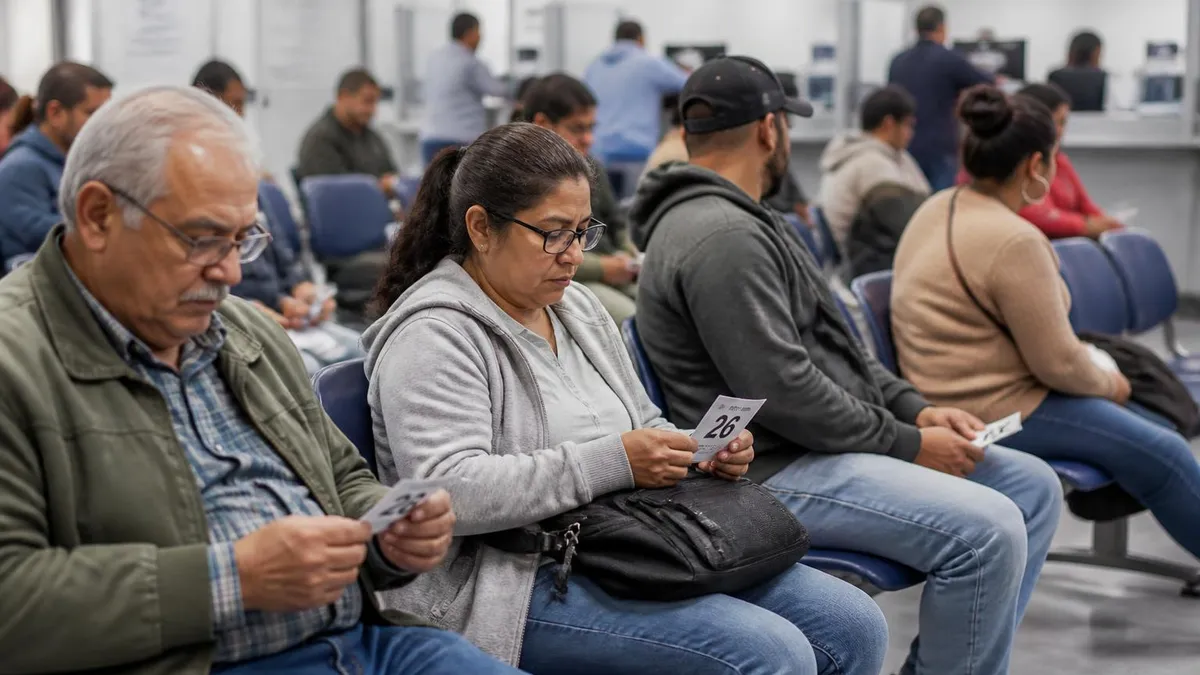
DMV Eye Exam by State Example
20/40 corrected each eye. Peripheral 35 degrees each side. Color vision not required. Vision retest required at each renewal (typically every 5 years). Accepts eye doctor certification (DL-62 form) in lieu of in-DMV testing for drivers with regular eye doctor relationships.
20/40 corrected each eye. Drivers must demonstrate adequate vision during licensing exam. Vision retest typically required at renewal (every 6 years for under-79 drivers, every 2 years for 79+). Eye doctor certifications generally not accepted in lieu of DMV testing.
20/40 corrected each eye. 140 degrees combined peripheral vision. Vision test at issuance and renewal. Accepts Eye Test Report from eye doctor (form MV-619) in lieu of in-DMV testing.
20/40 corrected each eye. Peripheral coverage of approximately 130 degrees combined. Color vision not required. Eye doctor certification accepted in lieu of DMV testing through Form HSMV 72010.
20/40 corrected each eye with both eyes open; 20/70 with one eye if other eye 20/30 or better (monocular accommodation). Peripheral vision required minimum 140 degrees combined. Eye doctor certification accepted via Form ILDOT M-1-30.
Generally follow 20/40 standard with state-specific peripheral and color vision requirements. Eye doctor certification acceptance varies widely — California, New York, Florida, Illinois accept; many other states require in-DMV testing exclusively.
How the DMV Vision Test Actually Works
The DMV vision test typically uses a Snellen chart placed 20 feet from the test position (or a calibrated viewer that simulates 20-foot distance). The DMV examiner asks you to cover one eye with a paddle (occluder) and read progressively smaller lines of letters or numbers. The smallest line you can read accurately determines your visual acuity rating in that eye. You then repeat for the other eye, then sometimes with both eyes together.
Most DMV examiners are practical rather than strict. If you bring your glasses or contact lenses, the test is conducted with corrective lenses in place. The examiner is testing what you can see while driving, not your raw uncorrected vision. If you read 20/30 with glasses, you pass for licensing purposes even though your underlying uncorrected vision might be much worse. Bring your driving glasses to the DMV; don't attempt the test without them if you wear them while driving.
Modern DMVs increasingly use computerized vision testing machines (Stereo Optical or similar). These machines display test images at simulated 20-foot distance and produce automated pass/fail decisions. The technology reduces examiner subjectivity and speeds up testing. Some candidates prefer traditional Snellen charts; both methods are accepted under state vision testing standards.
Some DMV vision tests check for color blindness through traffic-signal-color identification cards. Failing color vision tests rarely prevents licensing but may result in advisory notations recommending the driver position vehicles to better see traffic signal positions rather than relying on color identification alone.
What Happens at the DMV Vision Test
Examiner directs you to a vision testing station with Snellen chart. You stand or sit at the specified distance. Cover left eye and read lines starting from largest letters. Examiner records the smallest line you read accurately. Repeat for right eye. Sometimes test both eyes together. Process typically takes 2-3 minutes total.
What Happens If You Fail
Failing the DMV vision test is rarely a catastrophic event for most drivers. The standard response is referral to an eye doctor for examination and prescription glasses or contact lenses. Many people discover they need vision correction during their first DMV visit because they've been getting by with marginal vision in daily life. The DMV directs you to an optometrist, you obtain corrective lenses, and you return to the DMV for retest with glasses in place.
With corrective lenses, the vast majority of candidates pass the retest easily. The DMV adds a vision restriction (typically LENS A — must wear corrective lenses while driving) to your license. Your physical license shows the restriction code. Driving without your prescribed glasses is technically a license violation, equivalent to driving with an expired license — potential ticket, possible license suspension for repeated offenses. Get prescribed glasses, wear them while driving, and the restriction has minimal practical impact.
Failing the DMV vision test doesn't affect your driver license history beyond the requirement to obtain corrective lenses and retest. There's no record of failure attached to your driving record. The retest is treated as the same testing process; you don't face additional fees or wait periods beyond your normal optometrist appointment timeline.
Some drivers attempt to game the system by claiming they don't wear glasses and then driving without them, hoping to avoid restrictions. This rarely works because vision testing typically reveals the need for correction. Lying during DMV testing creates regulatory and legal risks far exceeding any inconvenience of getting glasses.
Modern eyewear technology has dramatically improved over the past decade. Progressive lenses, photochromatic coatings, blue-light filters, and other features make wearing prescription glasses while driving more comfortable than ever. Modern lens fashion has also expanded — wearing glasses while driving doesn't carry the social stigma it once did.
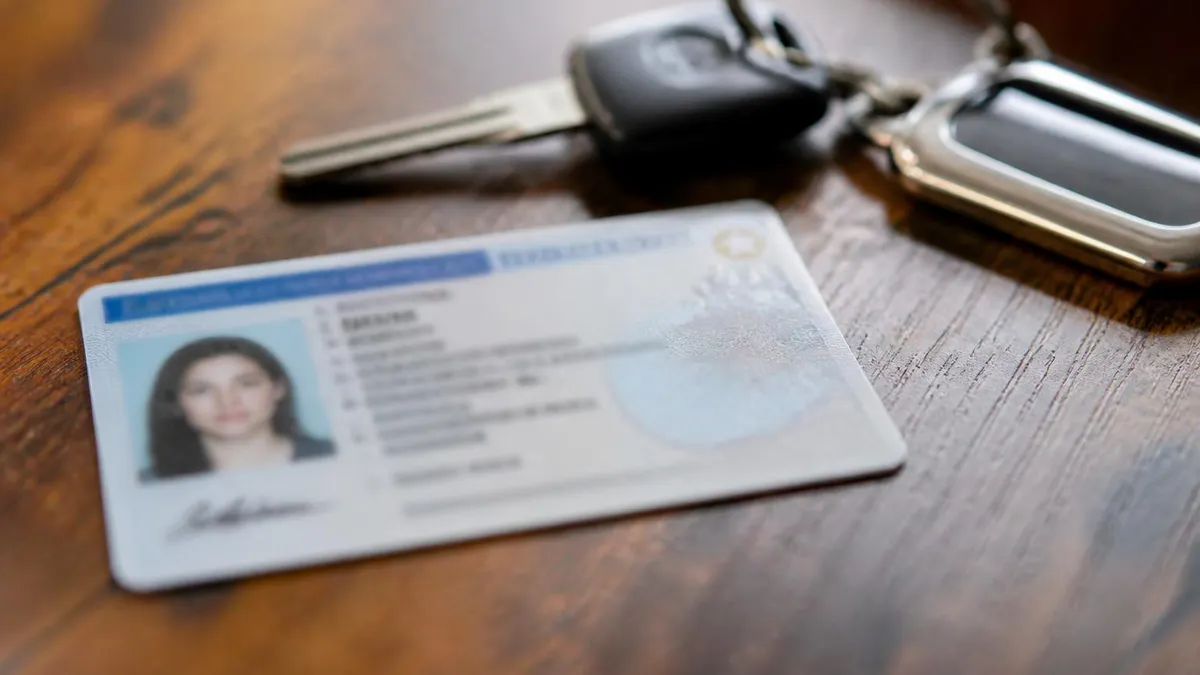
If your license shows a LENS A restriction (must wear corrective lenses), driving without your glasses or contacts is a license violation. Roadside stops can result in citations equivalent to driving with an expired or invalid license. Insurance companies may also deny claims for accidents that occur while you're driving without required corrective lenses. Always wear your prescription glasses or contacts while driving if you have a vision restriction. Keep a backup pair in your car for emergencies — replacing lost glasses while still legally driving avoids preventable problems.
CDL Vision Standards Are Stricter
Commercial Driver License (CDL) holders face stricter vision requirements than regular drivers because of the safety stakes involved in operating large commercial vehicles. Federal FMCSA standards require 20/40 corrected visual acuity in each eye AND 20/40 with both eyes together. Peripheral vision must cover at least 70 degrees on each side. Color vision required — drivers must distinguish red, amber, and green (traffic signal colors). These standards apply across all states for interstate commercial driving.
CDL vision testing happens through the DOT physical (Medical Examiner's Certificate) rather than DMV vision screening. A Medical Examiner on the FMCSA National Registry conducts the comprehensive medical exam including vision, hearing, blood pressure, and overall health. Vision failures during DOT physicals can require referral to vision specialists, prescription updates, or in severe cases participation in the federal Vision Variance program for drivers below the 20/40 standard but with demonstrated safe commercial driving capability.
Federal Vision Variance program participation is real but limited. Drivers below 20/40 in one eye but with monocular vision adaptation and demonstrated safe driving history can pursue variance approval. The application process involves vision specialist evaluation, intrastate driving experience documentation, and ongoing monitoring. Several hundred drivers operate under variance annually.
The variance program requires patience and detailed documentation but provides meaningful career continuity for affected drivers who would otherwise lose CDL eligibility.
Preparing for Your DMV Eye Exam
- ✓Bring your prescription glasses or contact lenses (if you wear them)
- ✓Keep your prescription updated if you haven't had an eye exam recently
- ✓Verify your state's specific vision standards on the DMV website
- ✓Consider getting an eye doctor exam before your DMV visit if you have vision concerns
- ✓Check whether your state accepts eye doctor certification in lieu of DMV testing
- ✓Bring any required forms (some states have specific vision certification forms)
- ✓Arrive at the DMV well-rested — fatigue affects vision performance
- ✓Don't squint during the test — read what you genuinely see clearly
- ✓Be honest about vision limitations rather than guessing
- ✓If you fail, schedule an optometrist appointment promptly for follow-up
The Full DMV Examination Process
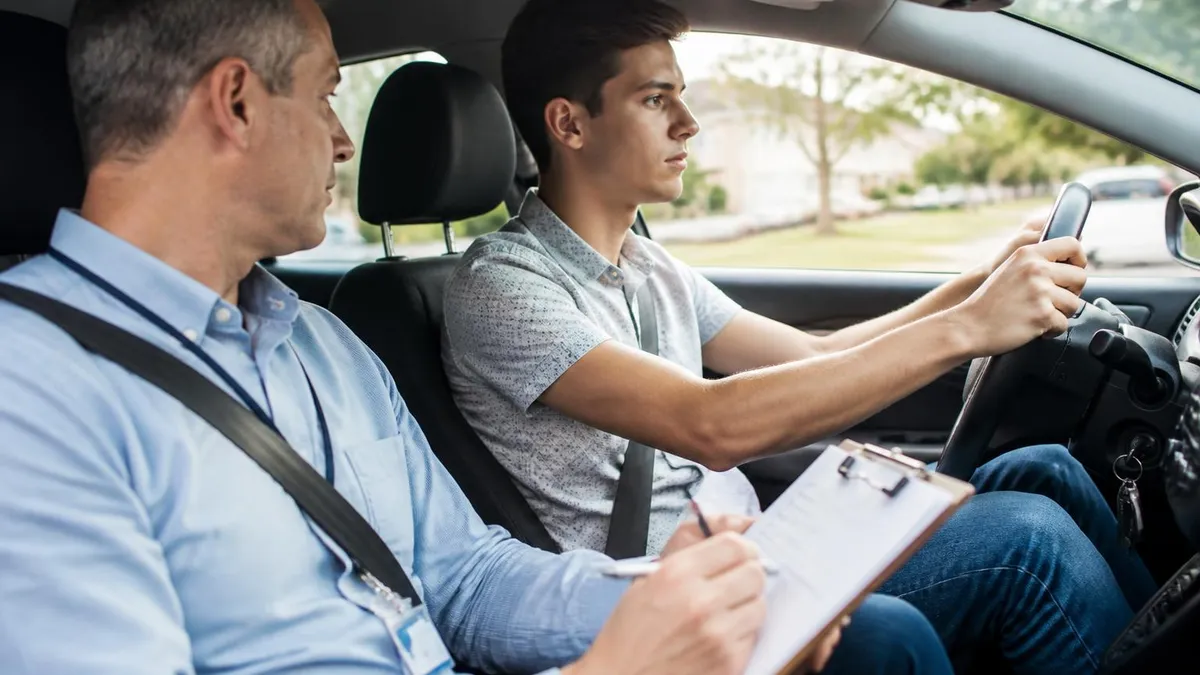
The DMV eye exam is one component of a broader licensing examination process. New drivers also take a knowledge test (covering state traffic laws, road signs, safe driving practices) and a skills test (in-vehicle road test demonstrating practical driving competence). The knowledge test is computer-based at most modern DMVs, with state-specific question pools drawn from the official driver handbook. The skills test happens in your own vehicle (or a DMV-provided vehicle in some states) with an examiner riding along to evaluate your driving.
For first-time drivers, the typical sequence is: complete required driver education (varies by state and age), pass DMV vision test, pass DMV knowledge test to receive a learner's permit, complete required behind-the-wheel hours under supervised conditions, schedule and pass the road skills test, receive your driver license. Total timeline runs 6 months to 2+ years depending on state graduated driver licensing (GDL) requirements and your individual pacing. Adult first-time drivers (over 18 in most states) face less demanding GDL requirements than teens.
Many states allow you to retake failed components without restarting the entire licensing process. Failed vision tests resolve with corrective lenses and retest. Failed knowledge tests typically allow same-day or next-day retests with additional fees. Failed road skills tests usually require a brief waiting period (1-2 weeks) before retesting plus additional fees.
For adults pursuing initial licensing after years of not having a license, the process is similar but typically faster than teens. No GDL requirements in most states for over-18 applicants, fewer required behind-the-wheel hours, and faster path to full licensing. The vision and knowledge exams are the same regardless of age.
Age Requirements and Graduated Licensing
Driver license age requirements vary by state. Most states allow learner permits at age 15-16 with restrictions on supervised driving. Provisional or intermediate licenses come at 16-17 with additional restrictions (limited passenger numbers, nighttime driving restrictions, no cell phone use). Full unrestricted licenses come at 17-18 typically. Some states (Idaho, Montana, North Dakota, South Dakota) allow learner permits as young as 14-15. Some states (New Jersey) require age 17 for full licensing.
Graduated Driver Licensing (GDL) programs in 50 states impose multi-stage requirements for new drivers under 18. Phase 1 (learner permit) requires supervised driving with adult licensed driver. Phase 2 (provisional/intermediate) allows unsupervised driving with restrictions. Phase 3 (full license) removes most restrictions. Each phase typically requires minimum time periods (6-12 months) and minimum supervised driving hours (40-50 hours typical, sometimes more). Adult applicants over 18 face shorter or no GDL requirements depending on state.
For teen drivers, GDL programs research consistently shows reduced crash rates compared to historical immediate full-licensing approaches. The phased approach builds driving competence under controlled conditions before granting full unrestricted privileges. Parents should support their teens through GDL phases rather than shortcutting through restrictions.
Senior driver programs operate alongside GDL programs in some states. Mature driver education courses, vision screening initiatives, and voluntary driver assessment programs help older drivers maintain safe driving capability as cognitive and physical abilities change with age.
Patience pays off.
DMV Vision and Licensing by the Numbers
Documentation Required at DMV
Government-issued photo ID, birth certificate, US passport, or other accepted documents proving identity. REAL ID Act compliance requires specific documents for federally-compliant licenses. List of accepted documents available at your state DMV website.
Most states require SSN verification, either via original Social Security card, W-2 form showing full SSN, or pay stub showing SSN. Required for license issuance under federal regulations. Foreign nationals provide alternative documentation.
Two documents typically required showing current state residence. Utility bills, lease agreements, bank statements, mortgage documents accepted. Documents must be recent (typically within 60 days) and show your name plus current physical address.
US citizenship or proof of lawful presence required under REAL ID standards. US citizens use passport, birth certificate, or other approved documents. Non-citizens provide visa documentation, green card, or other immigration paperwork.
For under-18 applicants, completion certificate from state-approved driver education program. Most states require minimum 30 hours classroom plus 6-12 hours behind-the-wheel instruction. Adult applicants typically not required to complete formal driver education.
For applicants under 18, signed parental or guardian consent required. Form provided by DMV typically. Parent or guardian usually must accompany minor to DMV during application process.
License Renewal and Periodic Vision Testing
Driver license renewal cycles vary by state but typically run 5-8 years. Many states require vision retesting at renewal — checking that your vision still meets state standards. Some states allow vision self-certification (you sign a statement attesting that your vision meets standards). Some accept eye doctor certifications submitted with renewal application. A few states (California, Texas) require in-DMV vision testing at every renewal regardless of recent eye exams.
Older drivers face stricter renewal requirements in many states. California requires in-person renewal at age 70+. Texas requires more frequent renewal cycles for drivers 79+. New York requires vision retesting at renewal for drivers 65+. These age-based requirements reflect research on declining vision with age and the safety implications for driving. Most older drivers maintain valid licenses through proper vision correction, but failed vision tests sometimes lead to license restrictions or surrender for drivers whose vision has deteriorated beyond correctable thresholds.
For drivers who develop vision issues between renewals, the appropriate action is voluntary self-reporting to the DMV to update license restrictions. Continuing to drive without disclosed vision changes creates liability if accidents occur and the vision deficit is later discovered. State DMVs typically accommodate voluntary disclosure with restriction updates rather than license suspension.
For drivers approaching ages where periodic vision retesting becomes mandatory (typically 65-79 depending on state), maintaining regular eye doctor appointments helps catch vision deterioration early. Annual or biennial eye exams identify changes before they affect DMV vision performance.
Plan ahead for vision changes that develop gradually with age.
DMV Vision Test vs Eye Doctor Certification
- +DMV vision test: handled during licensing visit, no separate appointment
- +DMV vision test: free as part of licensing process
- +DMV vision test: immediate results
- +Eye doctor certification: thorough exam beyond just acuity
- +Eye doctor certification: identifies vision issues beyond DMV minimum standards
- +Eye doctor certification: accepted in CA, NY, FL, IL, and some other states
- −DMV vision test: basic acuity check only, doesn't catch many vision issues
- −DMV vision test: subjective grading by examiner with limited expertise
- −DMV vision test: anxiety can affect performance for some test-takers
- −Eye doctor certification: requires separate appointment and cost ($75-$200 typical)
- −Eye doctor certification: not accepted in all states
- −Eye doctor certification: form must be current (typically within 6 months of submission)
Pros and Cons at a Glance
| Pros | Cons |
|---|---|
| DMV vision test: handled during licensing visit, no separate appointment | DMV vision test: basic acuity check only, doesn't catch many vision issues |
| DMV vision test: free as part of licensing process | DMV vision test: subjective grading by examiner with limited expertise |
| DMV vision test: immediate results | DMV vision test: anxiety can affect performance for some test-takers |
| Eye doctor certification: thorough exam beyond just acuity | Eye doctor certification: not accepted in all states |
DMV Questions and Answers
About the Author

Licensed Driving Instructor & DMV Test Specialist
Penn State UniversityRobert J. Williams graduated from Penn State University with a degree in Transportation Management and has spent 20 years as a certified driving instructor and DMV examiner consultant. He has personally coached thousands of applicants through written knowledge tests, skills assessments, and commercial driver licensing programs across more than 30 states.
Join the Discussion
Connect with other students preparing for this exam. Share tips, ask questions, and get advice from people who have been there.
View discussion (9 replies)