
DLPT French Practice Test: How to Prepare for the Listening and Reading Exam
🎯 A DLPT French practice test drills timed listening and reading, scored on the ILR 0–5 scale. See the format, a study plan, and free practice.
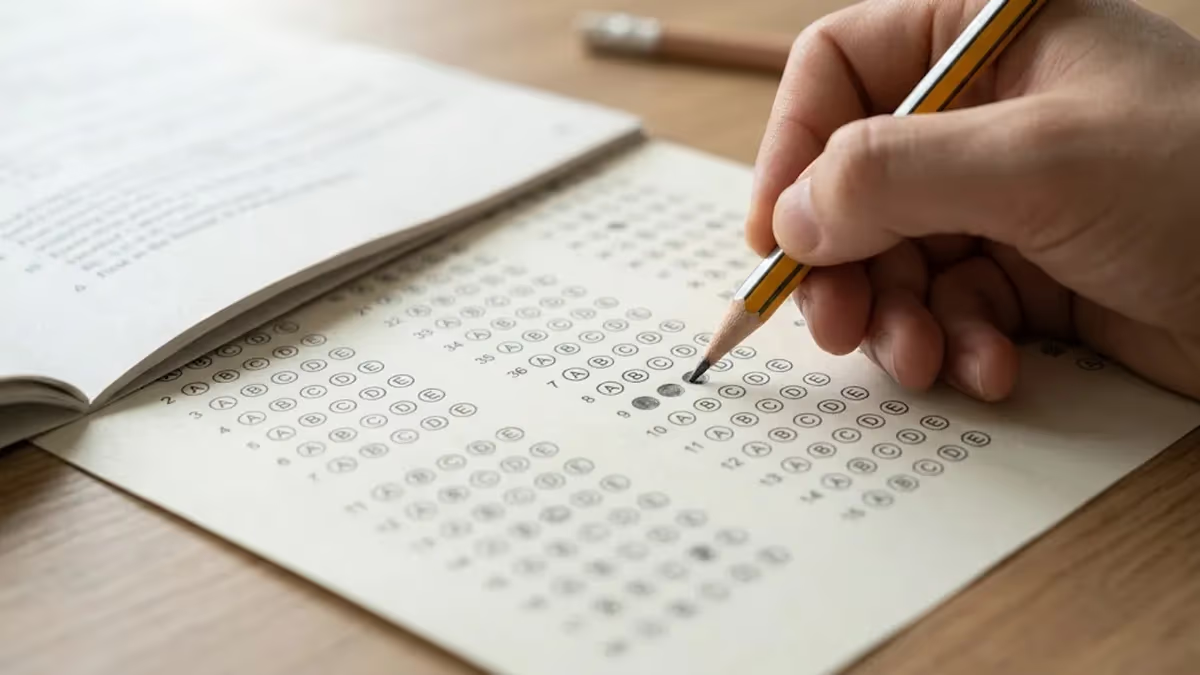
A DLPT French practice test is a timed set of multiple-choice listening and reading questions that mirrors the Defense Language Proficiency Test, scored against the ILR 0–5 scale. Official DLIFLC tests are administered through your test control officer, so practice means look-alike material, stamina for sections lasting up to three hours, and aiming at the ILR level you need.
DLPT French Practice Test: Key Facts (Updated October 2026)
| Fact | Details | Source |
|---|---|---|
| Administered by | Defense Language Institute Foreign Language Center (DLIFLC) | DLIFLC |
| Scoring scale | Interagency Language Roundtable (ILR) scale, 0 to 5 | DLIFLC |
| Skills tested | Listening and reading, scored separately | DLIFLC |
| Section length | Each section takes up to 3 hours | DLIFLC |
| Score validity | Generally valid for one year, so retesting is typically annual | DLIFLC |
| How to schedule | Through your command or installation test control officer | DLIFLC / local test control officer |
The Defense Language Proficiency Test measures how well a service member or government linguist understands a foreign language as it is really used. For French, that means hearing recorded passages such as radio news, conversations, and announcements, then reading articles, letters, and reports, and answering multiple-choice questions about what you understood. There is no speaking or writing component on the DLPT itself, which is why searching for a dlpt french practice test usually means hunting for realistic listening and reading drills.
Most candidates start with the hub page for the dlpt practice test series, then branch into language-specific prep. French sits in a comfortable middle ground. It shares Latin vocabulary with English, so beginners gain points fast, yet the listening section punishes anyone who has only learned French from a textbook. Liaison, elision, and rapid-fire news-anchor delivery turn familiar words into a blur until your ear is trained on real, unscripted audio.
Scores come back on the Interagency Language Roundtable scale, which runs from 0 (no proficiency) to 5 (functionally native). Results are reported separately for listening and reading, so a soldier might see a 2+/2 or a 3/2+. Lower-range tests cover levels up to 3, while upper-range tests extend further for people who already score at the top of the lower range. Knowing that structure helps you set a realistic target before you ever open a study guide.
Practice matters because the DLPT rewards test-taking skill as much as vocabulary. Passages are not labeled by difficulty, questions often ask for the main idea, the speaker's attitude, or an inference rather than a simple detail, and wrong answers are frequently built from words that really appear in the passage. A candidate who has never seen that pattern wastes minutes second-guessing. A candidate who has finished several full practice sets recognizes the traps and moves on calmly.
The stakes are practical. Language scores feed into assignments, linguist qualification, and, for eligible personnel, Foreign Language Proficiency Bonus pay, so a single ILR point can change a career path. Because DLPT scores are generally valid for about one year, many linguists retest annually, which turns preparation into a recurring habit rather than a one-time cram. Planning a repeatable routine now, with weekly listening and reading blocks, protects you from last-minute panic every testing cycle.
This guide explains what a French practice session should contain, how the exam is structured, how to read your results, and how to build a study plan around your weakest skill. It also points to free quiz sets that use the same multiple-choice, listening-and-reading style so you can rehearse pacing today, even while French-specific question banks are still limited. Work through it in order, or jump to the section that matches your current bottleneck.
How Many Levels and Hours Does the DLPT French Test Involve?
What Is on the DLPT French Practice Test?
Recorded French passages, from short announcements to extended conversations and broadcasts, followed by multiple-choice questions on main ideas, details, and inferences. The audio runs at natural speed with real accents and background noise, so ear training is essential.
Authentic-style French texts such as news stories, essays, letters, and reports. Questions test whether you grasp facts, tone, and implied meaning. Reading speed matters, because long passages and a long section reward steady pacing and disciplined time management.
Each skill earns its own ILR result, such as 1+, 2, 2+, or 3. The two scores are reported as a pair, and requirements for jobs, qualification, or bonus pay are usually written as that pair, for example 2/2.
Lower-range tests cover the lower and middle ILR levels, while upper-range tests are designed for people who already perform at the top of the lower range. Your command decides which version you take, so ask your test control officer.
Is There a Free French DLPT Practice Test?
Yes, though the best free material is unofficial. DLIFLC does not release live test forms, so any French DLPT practice test you find online is a look-alike built to imitate the real format. The most useful ones are multiple-choice, include audio for listening, and explain why each wrong answer fails. If a site promises the actual exam questions, treat that claim with suspicion, because genuine items are controlled and rotated to protect score integrity.
Soldiers searching for dlpt army resources often find printable packets, and the PDF guide on this site is a good example of a format-orientation tool. Use it to learn question styles and timing, not to memorize answers. French-specific audio is better supplemented with real broadcasts from RFI, France 24, and TV5Monde, which give you the same speed, accent range, and background noise that exam recordings contain.
Cross-training with sibling languages also helps because the structure is identical. Working through the dlpt practice test spanish guide, for example, shows you how DLPT questions are phrased, how distractors behave, and how passage length scales with difficulty. Those habits transfer directly to French. Since French and Spanish share many cognates, you can even compare how the same idea is tested and spot patterns in what examiners treat as a main idea.
What Does a 2+ in French Look Like on the DLPT?
Level 2 reading means you can follow straightforward factual material. A news item about a municipal budget vote tells you who voted, how much money was involved, and when the change takes effect. Level 2+ goes further. You also catch the council members' competing positions, the writer's mildly critical tone, and implied consequences that the text never states outright. Think of 2 as getting the facts and 2+ as getting the facts plus the angle.
Listening works the same way. At level 2, you understand a clear radio report about a transport strike and can say what happened and why. At 2+, you follow a fast interview where two speakers interrupt each other, use idioms such as mettre les pieds dans le plat, and shift between formal and casual register. These are illustrative examples, not actual test items, but they show why vocabulary breadth, idiom exposure, and inference practice matter more than grammar drills at this stage.
What Is the Best US Army French DLPT Study Guide?
No single book is official, so the best US Army French DLPT study guide is a combination. Start with the ILR level descriptions published by the government, which explain in plain language what each score means. Add a graded reader or news digest for reading, a podcast with transcripts for listening, and a vocabulary app with spaced repetition. Then test yourself with a timed practice set every week to track real progress and expose weak spots.
Your unit may also offer language training through Army education centers, the Defense Language Institute's online materials, or self-study licenses that some commands provide. Ask your language program manager what is available before paying for anything. Free institutional resources are often better matched to military vocabulary, including terms for logistics, border security, and humanitarian operations, which show up regularly in DLPT-style passages. Combine them with civilian sources for breadth and you will cover both registers.
How Should You Approach DLPT Test Practice for French?
Start with ten minutes of slow audio daily and build toward full-speed broadcasts. Listen once for gist without pausing, then write a one-sentence summary. Replay with a transcript, underline every word you missed, and say the sentence aloud. This three-pass routine trains recognition, not just comprehension, and it exposes the sound patterns, such as liaison and the dropped e, that make spoken French feel faster than the written text suggests.
Every two weeks, take a timed listening block of at least sixty minutes with no pausing, because the real exam does not let you rewind at will. Score it, tag each miss as vocabulary, speed, or inference, and set the next fortnight's goals around the biggest category. Over two months this cycle makes progress visible and keeps you from drifting into passive listening that feels productive but changes nothing.
Is a DLPT Practice Test Worth It for French Study?
- +Builds stamina for sections that can last up to three hours
- +Reveals whether listening or reading is your weaker skill
- +Teaches you to recognize common distractor patterns in multiple-choice items
- +Gives you a baseline score to track from week to week
- +Reduces test-day anxiety because the format feels familiar
- +Helps you target vocabulary by topic instead of studying randomly
- −Unofficial practice tests cannot predict your exact ILR score
- −French-specific question banks are more limited than Spanish or Arabic
- −Practice alone will not fix weak grammar or a thin vocabulary
- −Poor audio quality can teach bad listening habits
- −Over-practicing the same items leads to memorizing answers, not skills
- −Timed full-length sessions require large, uninterrupted blocks of time
What Should Be on Your DLPT French Practice Test Checklist?
- ✓Ask your test control officer which DLPT version and range you will take.
- ✓Set a target ILR pair, such as 2/2 or 2+/2+, before you start studying.
- ✓Take one untimed diagnostic set to find your weaker skill.
- ✓Schedule three listening and two reading sessions every week.
- ✓Listen to French news at normal speed at least four days a week.
- ✓Keep an error log with question type, cause, and fix.
- ✓Learn vocabulary by topic: politics, economy, security, health, and environment.
- ✓Complete one full timed practice set each weekend under test conditions.
- ✓Confirm ID requirements and testing-room rules a week before the date.
- ✓Sleep seven hours and eat breakfast on the day of the exam.
Fix your weaker skill first
Your score pair is only as strong as its weaker half, and listening trails reading for most French learners. Shift two-thirds of your study time to audio for eight weeks, review every miss in an error log, and retest with a timed set. That focused imbalance usually gains more than evenly splitting your hours.
How Does the DoD Language Test in French Compare With German?
The DoD language test in French and in German follows the same architecture: listening and reading sections, multiple-choice items, and ILR-based scoring. What differs is the learning curve. DLIFLC generally places French in a lower difficulty category than German, which means an English speaker typically reaches working proficiency in French with fewer classroom hours. That head start can tempt candidates to under-prepare, so treat the lower difficulty as an advantage to spend wisely, not an excuse to skip structured practice.
German candidates often search for a german dlpt practice test because case endings and long compound nouns slow their reading. French readers face a different problem: silent letters, homophones, and verb forms that sound identical in speech, such as parle and parles. Those quirks barely affect reading but badly affect listening. That is why your French plan should weight audio heavily, even if your reading score already looks strong on early practice sets and your confidence is high.
If you also study German, a dlpt practice test german session can reveal how well your test habits transfer between languages. Compare your pacing, your error patterns, and the types of questions you miss. Many learners find that their main-idea accuracy is stable across languages while detail questions fluctuate with vocabulary. That insight tells you whether the next hour should go to strategy or to word learning, which is the most efficient way to allocate limited study time.
How Should You Pace a Timed French DLPT Practice Session?
Treat every practice session as a dress rehearsal. Sit at a desk, silence your phone, wear headphones for listening, and set a timer that matches the real section limit of up to three hours. The goal is to rehearse concentration as much as knowledge. Many candidates lose points in the final third of a long section because attention fades, so stamina is a skill you must build deliberately, not hope for on test day.
For reading, a workable rule is to skim the questions first, read the passage once at a steady pace, then answer in order and mark anything uncertain. Do not spend four minutes on a single hard item when easier ones wait later. Because every question counts the same, an unanswered easy item costs as much as a missed hard one. Return to flagged questions only after finishing the section, and use any remaining time for them.
For listening, take notes sparingly. Jot numbers, names, and contrast words like mais, pourtant, and cependant, which signal where the speaker's argument turns. Many items ask what the speaker concludes or implies, and those cues point to the answer. If a passage is played more than once, use the first hearing for gist and the next to check details. If you lose a line, move on immediately; dwelling on it costs you the next sentence too.
Finish each session with an error log. Record the question type, why the wrong answer tempted you, and the French word or structure that tripped you. After ten sessions the log shows patterns: perhaps you misread negations or miss numbers spoken quickly. Fixing three recurring patterns usually adds more points than learning fifty new nouns. The same logic applies in any dlpt test, whatever the language, so build the habit now and carry it forward.
A practice test never produces a valid ILR score, and DLPT results are generally valid for about one year. Schedule the official exam through your test control officer, confirm which version you will take, and avoid any site that claims to sell real or leaked test questions.
What Does Your French DLPT Score Mean for Pay and Assignments?
Your two scores, listening and reading, are read together. Commands and career managers look at both, and many requirements are written as a pair, such as 2/2 for qualification or 3/3 for advanced billets. Because these requirements vary by service, unit, and job code, ask your language program manager which pair applies to you. Setting a target score before you begin practice keeps your study plan focused instead of vague, and it tells you when you can stop pushing.
Foreign Language Proficiency Bonus eligibility depends on policy that changes over time, but the pattern is consistent: higher proficiency in a higher-priority language usually pays more. French is widely studied, so its bonus rate may be lower than that of languages designated critical. Do not choose a language for pay alone, though. Linguists who enjoy the language practice more, and consistent practice, not the bonus table, is what actually moves a 2 to a 2+. Confirm current rates with your command.
The official defense language proficiency test (dlpt) process also expects personnel to keep scores current. Since results are generally valid for about a year, a lapse can mean losing bonus eligibility or a qualification flag. Put your retest window on a calendar at least three months ahead, and schedule your last full-length practice set two weeks before the date. That timing leaves room to fix any weakness the final practice reveals without cramming at the last minute.
Do French Highway Code PDFs Help With the DLPT?
Searchers sometimes land on French highway code PDFs while looking for exam material, and the overlap is small. The Code de la route teaches road-sign vocabulary and legal phrasing, which can help with a handful of words such as priorité, chaussée, and stationnement. DLPT passages, however, draw from news, essays, interviews, and reports. A highway code is a narrow, rule-based text that will not build the inferential reading skill the exam rewards, so use it only as a minor vocabulary supplement.
If you want authentic reading, choose sources with varied registers: Le Monde and Le Figaro for editorial opinion, Ouest-France for local news, government pages for formal prose, and French Wikipedia for explanatory text. Read one article daily, summarize it in two English sentences, and note the words you guessed from context. This habit mirrors the exam task of extracting main ideas under time pressure and quickly expands the passive vocabulary the DLPT measures across many subject areas.
How Do You Improve After a Disappointing French Score?
Start by identifying which skill dragged the pair down. If listening trails reading by a full level, spend two-thirds of your study time on audio for the next eight weeks. Shadowing, where you repeat a French speaker half a second behind, trains your ear to chunk speech into meaningful units. Pair it with dictation of short news clips, then compare your transcript with the published text to find the sounds you consistently miss or confuse.
Retest rules differ by service and command, so confirm waiting periods and approvals with your test control officer before booking. Use the gap between tests productively: complete at least four timed practice sets, review every miss, and add a weekly conversation session with a French speaker or tutor. Steady, measured preparation beats frantic cramming, and many candidates who log consistent weekly hours see their ILR level move within one or two testing cycles.
What Are the Best Final Tips for a DLPT French Practice Test?
Build a weekly rhythm before anything else. A sustainable plan might include three 45-minute listening sessions, two reading sessions, one vocabulary review, and one full timed practice set on the weekend. Consistency matters more than intensity because language memory consolidates through sleep and spaced repetition. Ninety focused minutes four days a week beats a single six-hour Sunday marathon, and it leaves energy for the rest of your duties, family, and recovery time.
Use graded audio. Begin with slow, clear sources such as the Journal en français facile from RFI, then move to regular France 24 reports, French-language podcasts, and finally unscripted interviews with overlapping speech. Increase difficulty only when you can answer most comprehension questions after one hearing. Listening to material that is slightly too hard is productive, but material that is far too hard simply teaches you to tune out. Keep a transcript handy for review.
Expand vocabulary by topic rather than alphabetically. DLPT passages revolve around politics, economics, security, health, environment, science, and culture, so build word families for each. Learn nouns with their verbs and adjectives, such as élection, élire, and électoral, and note common collocations like remporter un scrutin. Flashcards with example sentences work better than isolated translations because they train you to recognize words in the grammatical frames where they actually appear.
Practice inference deliberately. After each passage, ask what the author assumes, what is left unsaid, and which words reveal attitude. French uses subtle markers: the conditional for reported or uncertain claims, the subjunctive after doubt or necessity, and expressions like soi-disant that signal skepticism. Spotting these markers turns difficult 2+ and 3 level questions into logical puzzles rather than guesses, and it is a skill that grows only through repeated, reflective practice over many weeks.
Prepare your body and your logistics. Sleep at least seven hours the night before, eat a real breakfast, and arrive early with the required identification. Know the testing room rules, because most facilities prohibit phones, notes, and outside materials. Confirm what audio equipment the site provides so nothing surprises you. Removing small uncertainties preserves mental energy for the passages themselves, which is where your score is actually earned or lost.
On test day, stay calm when you meet an unfamiliar topic. Passages are written so that you can answer from the text itself; background knowledge is rarely required. Read each question stem carefully, eliminate answers that contradict the passage, and choose the option best supported by what you read or heard. If two options seem close, ask which one is broader or narrower than the passage actually warrants, because distractors often overgeneralize or add details the speaker never gave.
Finally, keep perspective. A practice score is information, not a verdict. Track your results in a simple spreadsheet, celebrate each half-level gain, and adjust the plan monthly. Combine the free practice sets linked on this page with real French media and honest error review, and you will walk into the exam knowing the format, the pacing, and your own patterns. That preparation is what turns a hopeful attempt into a confident one.
Sample DLPT - Defense Language Proficiency Test Practice Questions
Try these questions from our free DLPT - Defense Language Proficiency Test practice tests. The correct answer and an explanation follow each question.
A DLPT score of '2/2' in reading and listening corresponds to which ILR proficiency descriptor?
- A. Survival proficiency
- B. Limited working proficiency
- C. Professional working proficiency
- D. Distinguished proficiency
Answer: B. Limited working proficiency
ILR 2 is formally described as 'Limited Working Proficiency,' enabling routine social and professional exchanges.
A DLPT French reading passage describes 'une mission de reconnaissance.' What type of mission is this?
- A. A rescue mission
- B. A supply mission
- C. A reconnaissance mission
- D. A demolition mission
Answer: C. A reconnaissance mission
'Reconnaissance' is a direct cognate in both French and English, referring to a scouting or reconnaissance mission.
On the DLPT, a test taker who achieves a Reading score of 2 and a Listening score of 2+ would receive what composite designation?
- A. 2/2
- B. 2+/2
- C. 2/2+
- D. 2+/2+
Answer: C. 2/2+
DLPT scores are reported as Reading/Listening, so a Reading 2 and Listening 2+ yields a 2/2+ composite.
In a DLPT French listening passage, a speaker says 'Le convoi a été retardé en raison des conditions météorologiques.' What caused the delay?
- A. Enemy contact
- B. Weather conditions
- C. Mechanical failure
- D. Road construction
Answer: B. Weather conditions
'Conditions météorologiques' means weather conditions, which is the stated cause of the convoy delay.
Take the full DLPT - Defense Language Proficiency Test practice test
DLPT Questions and Answers


Sources & references
Prepared by the Practice Test Geeks editorial team using AI-assisted drafting; exam facts are checked against the official sources below. Editorial policy
- dliflc.edu — Passing score · verified Sep 2026