
DLPT Defense Language Proficiency Test Practice Test PDF (Free Printable 2026 October)
Prepare for the DLPT Defense Language Proficiency certification. 🎓 Practice questions with answer explanations covering all exam domains.
DLPT Defense Language Proficiency Test Practice Test PDF
The Defense Language Proficiency Test (DLPT) is the standard assessment used by the United States military and federal government agencies to measure the foreign language ability of active-duty service members, reservists, National Guard personnel, and civilian linguists. Your DLPT score directly affects your pay, assignment eligibility, and career advancement as a military linguist or intelligence professional.
This free printable DLPT practice test PDF is designed to help you understand the test format, sharpen your reading and listening comprehension skills in your target language, and prepare for the ILR proficiency levels required by your branch or agency. Download and print it for offline study, or use it alongside our interactive online practice tests for comprehensive preparation.
Understanding the Defense Language Proficiency Test
The DLPT is administered by the Defense Language Institute Foreign Language Center (DLIFLC) and is the primary tool used across the Department of Defense to certify and track the language skills of military linguists. Unlike a classroom exam, the DLPT measures real-world language proficiency using authentic materials — actual news articles, government documents, radio broadcasts, and recorded conversations in your target language.
DLPT Test Structure: Reading and Listening Sections
The DLPT consists of two separate sections that are scored independently. The Reading section presents a series of authentic texts — newspaper articles, official announcements, academic excerpts, or technical documents — followed by multiple-choice comprehension questions in English. Texts increase in complexity as the test progresses, covering topics from everyday transactions at the lower levels to nuanced political, technical, or cultural content at the higher levels.
The Listening section plays recorded audio in the target language, ranging from short conversational exchanges to extended monologues such as news broadcasts or formal speeches. You answer English multiple-choice questions based on what you heard. Audio is generally played once or twice depending on the version, so focused listening and note-taking in English are critical skills to develop.
Both sections are scored on the ILR scale, and your official DLPT score is reported as two separate numbers: one for reading and one for listening (e.g., 2/2, 2+/2, 3/2+). Many assignments and pay authorizations require specific scores in both sections.
The ILR Proficiency Scale
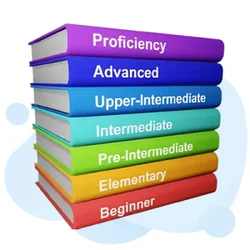
The Interagency Language Roundtable (ILR) scale is the framework used to describe language ability across the US government and military. The scale runs from Level 0 (no practical proficiency) to Level 5 (functionally equivalent to an educated native speaker). The DLPT reliably measures performance across Levels 1 through 3+.
Level 1 represents survival-level proficiency — the ability to satisfy basic needs and minimum courtesy requirements. Level 2 is the social proficiency level, sufficient for routine social demands and limited work requirements. Level 3 represents professional working proficiency, the ability to discuss any topic with precision and to read complex texts with full comprehension. Most military linguist specialties require a minimum of 2/2, while intelligence and analytic positions often require 3/3 or higher.
Half-point increments (called "plus" levels, e.g., 2+) indicate ability that consistently exceeds the base level but does not fully meet the next level. These plus scores are significant because they affect pay tiers and assignment competitiveness.
DLPT Scoring and the SLP/DLAB Relationship
The Defense Language Aptitude Battery (DLAB) is the test taken before language training to predict a candidate's language learning aptitude — it does not measure proficiency in any specific language. The Survival Level Proficiency (SLP) test is a simpler assessment used when a full DLPT is not available or when only basic proficiency certification is needed. The DLPT itself is the gold standard for certifying operational language proficiency and is required for Foreign Language Proficiency Bonus eligibility.
Foreign Language Proficiency Bonus (FLPB)
Military members who achieve qualifying DLPT scores in designated languages receive monthly Foreign Language Proficiency Bonus pay. Bonus amounts vary by language category (based on strategic importance and scarcity) and by your proficiency level in both reading and listening. Category IV languages such as Arabic, Chinese, Korean, and Farsi carry the highest bonuses — up to several hundred dollars per month — while Category I and II languages carry lower rates. Maintaining your FLPB requires periodic retesting, typically every two to three years, and your score must remain at or above the required threshold.
Common DLPT Languages and Testing Availability
The DLPT is available in over 80 languages, though not all versions are available at every testing site. The most commonly administered DLPT versions include Modern Standard Arabic, Egyptian Colloquial Arabic, Levantine Arabic, Mandarin Chinese, Russian, Korean, Farsi/Persian, Spanish, French, German, and Portuguese. Languages of high strategic value — particularly Middle Eastern and East Asian languages — are tested more frequently and are subject to stricter score maintenance requirements.
Maintenance vs. Initial DLPT Testing
Service members who trained at DLIFLC or received language training elsewhere take an initial DLPT to certify their baseline proficiency upon completion of training. Once certified, they are subject to maintenance testing on a periodic schedule to verify that proficiency has been retained. Scores can decline without regular use, and a drop below the required threshold can result in loss of FLPB and may affect assignment eligibility. Consistent daily engagement with authentic target-language materials is the most effective way to maintain your scores over time.
- ✓Confirm the ILR score requirements for your MOS, rating, or civilian position
- ✓Identify your target language and find the most current DLPT version guide from DLIFLC
- ✓Practice reading authentic texts daily: news websites, government publications in your target language
- ✓Practice listening with native-speaker audio: radio broadcasts, podcasts, news programs
- ✓Answer comprehension questions in English immediately after reading or listening to reinforce retention
- ✓Take at least 3 timed DLPT practice sessions under realistic conditions before your test date
- ✓Review vocabulary at the 2+ and 3 ILR level in your language specialty areas
- ✓Verify your FLPB documentation and retest eligibility window with your unit language manager
- ✓Schedule your DLPT appointment well in advance through your installation testing office
- ✓Track your score trends across practice sessions to identify listening vs. reading weaknesses
Free DLPT Practice Tests Online
Looking for more preparation beyond the PDF? Our full DLPT practice test library includes interactive questions with instant scoring, answer explanations, and performance breakdowns by ILR level — all free, no account required.
- +Validates your knowledge and skills objectively
- +Increases job market competitiveness
- +Provides structured learning goals
- +Networking opportunities with other certified professionals
- −Study materials can be expensive
- −Exam anxiety can affect performance
- −Requires dedicated preparation time
- −Retake fees apply if you don't pass
Pros and Cons at a Glance
| Pros | Cons |
|---|---|
| Validates your knowledge and skills objectively | Study materials can be expensive |
| Increases job market competitiveness | Exam anxiety can affect performance |
| Provides structured learning goals | Requires dedicated preparation time |
| Networking opportunities with other certified professionals | Retake fees apply if you don't pass |
Sample DLPT - Defense Language Proficiency Test Practice Questions
Try these questions from our free DLPT - Defense Language Proficiency Test practice tests. The correct answer and an explanation follow each question.
Which organization administers the Defense Language Proficiency Test (DLPT)?
- A. Defense Intelligence Agency
- B. Defense Language Institute Foreign Language Center
- C. National Security Agency
- D. Joint Chiefs of Staff Language Office
Answer: B. Defense Language Institute Foreign Language Center
The Defense Language Institute Foreign Language Center (DLIFLC) develops and administers the DLPT for the U.S. military.
Which language category classification by the Foreign Service Institute (FSI) indicates a language that requires the MOST study hours for English speakers to achieve proficiency?
- A. Category I
- B. Category II
- C. Category III
- D. Category IV
Answer: D. Category IV
FSI Category IV languages (e.g., Arabic, Chinese, Japanese, Korean) require approximately 2,200 class hours, the most of any category.
How does the DLPT assess language proficiency compared to a conversational oral interview?
- A. DLPT tests speaking and writing only
- B. DLPT is a listening and reading comprehension test, not a speaking test
- C. DLPT and oral interviews are identical in format
- D. DLPT only evaluates grammar knowledge
Answer: B. DLPT is a listening and reading comprehension test, not a speaking test
The DLPT measures listening and reading comprehension through recorded passages and texts, while the Oral Proficiency Interview (OPI) separately evaluates speaking.
What scoring scale does the DLPT use to rate language proficiency?
- A. ILR (Interagency Language Roundtable) scale
- B. CEFR (Common European Framework)
- C. ACTFL scale
- D. NATO STANAG scale
Answer: A. ILR (Interagency Language Roundtable) scale
The DLPT uses the ILR scale, which rates proficiency from level 0 (no proficiency) to level 5 (native proficiency).
Take the full DLPT - Defense Language Proficiency Test practice test
Join the Discussion
Connect with other students preparing for this exam. Share tips, ask questions, and get advice from people who have been there.
View discussion (8 replies)