
Ohio Permit Practice Test 2026 September — Driver Knowledge Guide
💯 Boost your Ohio Permit exam score with practice questions and detailed answer explanations. Track progress with instant feedback.

Ohio BMV Permit Test Overview
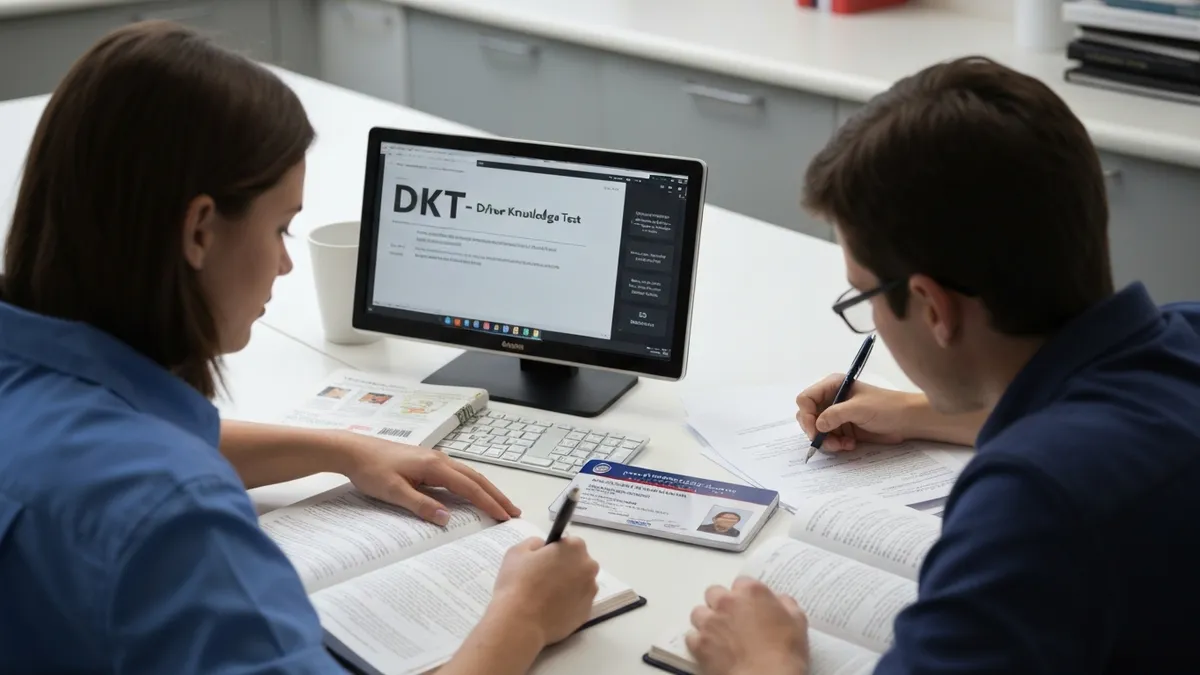
The Ohio Bureau of Motor Vehicles administers a computerized, multiple-choice knowledge test at BMV deputy registrar locations across the state. The exam contains 40 questions drawn from the Ohio Driver's Manual, and applicants must answer a minimum of 30 questions correctly to achieve the required 75% passing score. There is no time limit on the test, so you can read each question carefully before answering. The test is delivered on a computer terminal at the BMV office; no paper version is offered. If you do not pass on your first attempt, Ohio allows you to retake the test, though a waiting period and additional fees may apply. Preparing thoroughly before your appointment saves time and reduces the stress of a repeat visit.

Who Must Take the Ohio Permit Test
Ohio law requires the driver knowledge test in several situations. First-time drivers age 15½ or older must pass before receiving a temporary instruction permit (TIP). Applicants younger than 18 must be accompanied by a parent or legal guardian when applying. Out-of-state drivers who hold a valid license from another U.S. state are generally exempt from the knowledge test when exchanging for an Ohio license, but those whose licenses have been expired for more than six months must test again. License reinstatement cases — such as drivers whose licenses were suspended or revoked — may also be required to retake the knowledge test as a condition of reinstatement. If you are unsure whether your situation requires the test, contact your local BMV or check the bmv.ohio.gov website for the most current requirements.
What the Ohio Permit Test Covers
The 40-question test is drawn from three primary content areas, each weighted differently:
- Road Signs — approximately 20% (8 questions): You must recognize regulatory signs, warning signs, guide signs, and construction zone signs. Questions test both the meaning of a sign and the appropriate driver response.
- Ohio Traffic Laws — approximately 40% (16 questions): This section covers right-of-way rules, speed limits, passing laws, lane usage, DUI statutes, school zone regulations, and Ohio-specific laws such as the hands-free distracted driving law.
- Safe Driving Practices — approximately 40% (16 questions): Topics include following distance, merging, sharing the road with pedestrians and cyclists, adverse weather driving, seat belt and child restraint laws, and railroad crossing procedures.
All content is sourced from the official Ohio Driver's Manual, available as a free PDF at bmv.ohio.gov. Reading the manual from cover to cover remains the single most reliable preparation strategy.
- ✓Review the official DKT exam content outline
- ✓Take a diagnostic practice test to identify weak areas
- ✓Create a study schedule (4-8 weeks recommended)
- ✓Focus on your weakest domains first
- ✓Complete at least 3 full-length practice exams
- ✓Review all incorrect answers with detailed explanations
- ✓Take a final practice test 1 week before exam day
Ohio Graduated Driver Licensing System and Common Mistakes
Step-by-Step: From Permit to Full License
Ohio uses a Graduated Driver Licensing (GDL) system designed to introduce new drivers to increasingly complex driving situations over time:
- Temporary Instruction Permit (TIP): Obtained after passing the knowledge test at age 15½. Valid for two years. All driving must be supervised by a licensed adult age 21 or older seated in the front passenger seat.
- Probationary License: Available at age 16 after holding the TIP for at least six months, completing 50 hours of supervised driving (10 at night), and passing the maneuverability and road skills tests. Curfew: no driving between midnight and 6 AM. Passenger restriction: no more than one non-family member under 18 for the first 12 months.
- Full License: Available at age 17 if all probationary conditions are met without violations, or automatically at age 18.
Common Mistakes on the Ohio Permit Test
Right-of-way at four-way stops trips up many test-takers. The rule is: first to stop, first to go; if two vehicles stop simultaneously, the vehicle on the right has the right of way; if directly across, the vehicle going straight has priority over the one turning left. School zone speed limits are 20 mph only when a school flasher is operating or children are visibly present — not simply because you are near a school building. Merging rules on expressways require the merging driver to yield to traffic already on the highway, not the other way around.
What to Bring to the BMV Office
Gather these documents before your appointment: proof of identity (certified birth certificate or U.S. passport), Social Security card or proof of SSN, two documents proving Ohio residency (utility bill, bank statement), and $9.75 for the permit fee. Minors must bring a parent or guardian with valid ID who will sign the application. Arrive early — walk-in wait times at busy BMV offices can exceed an hour.
- +Industry-recognized credential boosts your resume
- +Higher earning potential (10-20% salary increase on average)
- +Demonstrates commitment to professional development
- +Opens doors to advanced career opportunities
- −Exam preparation requires significant time investment (4-8 weeks)
- −Certification fees can be $100-$400+
- −May require continuing education to maintain
- −Some employers may not require certification
Ohio Permit Test Questions and Answers
Join the Discussion
Connect with other students preparing for this exam. Share tips, ask questions, and get advice from people who have been there.
View discussion (8 replies)