
CQE Primer: The Complete Study Materials Guide for 2026 October
CQE primer review, official ASQ resources, practice tests, study schedules, and proven prep strategies to pass the Certified Quality Engineer exam. 🏆
The CQE primer from the Quality Council of Indiana has been the gold-standard reference for Certified Quality Engineer candidates for more than three decades, and in 2026 it remains the single most-cited study resource for the ASQ exam. Walk into any quality department in the United States and you will see a dog-eared copy on someone's shelf, marked with sticky notes covering everything from sampling plans to design of experiments. Pairing the primer with disciplined practice is still the most reliable path to a first-attempt pass.
This guide walks through every category of study material you will need, how to sequence them, and where each one fits into a realistic 12 to 16 week preparation plan. We cover the official ASQ Certified Quality Engineer Handbook, the QCI primer and solutions text, supplementary statistics references, video courses, mobile apps, and timed practice exams. By the end you will have a clear shopping list and a defensible study schedule that matches your background.
If you are new to the exam, start by understanding the Body of Knowledge. The CQE BoK covers seven major areas: management and leadership, the quality system, product and process design, product and process control, continuous improvement, quantitative methods and tools, and risk management. Roughly 40 percent of the 175 questions test quantitative methods, which is why statistics-heavy resources dominate any serious study stack.
Returning candidates who failed on a previous sitting almost always say the same thing: they read the primer cover to cover but never timed themselves under exam conditions. Reading is necessary but not sufficient. The CQE asks you to apply formulas, interpret control charts, and calculate confidence intervals in roughly 100 seconds per question. That speed only comes from rehearsing under pressure with high-quality question banks.
Cost is another factor worth planning for up front. A complete study package, the ASQ exam fee, and one retake buffer can run between $900 and $1,800 depending on whether your employer reimburses materials. We break down the true cost in the dedicated section below, including which free resources can substitute for paid ones without sacrificing pass rate.
One more honest warning before we dive in. The CQE has historically been one of the harder ASQ certifications, with first-time pass rates hovering in the 50 to 60 percent range. Candidates who treat it like a memorization exercise tend to fail. Candidates who treat it like an open-book engineering problem, with the primer indexed and tabbed for fast lookup, tend to pass. The materials you choose should reinforce that lookup-and-apply mindset from day one.
Throughout this guide we will reference specific page ranges, problem types, and time allocations so you can audit your own prep against a concrete benchmark. If you want to skip ahead and start drilling questions immediately, our practice tests covers timing strategy and recommended question volumes in detail.
CQE Study Materials by the Numbers

12-Week CQE Study Schedule
- ▸Read QCI Primer Section I
- ▸Skim ASQ Handbook Chapter 1-3
- ▸Build a tabbed index of key terms
- ▸Study ISO 9001 structure
- ▸Practice audit terminology
- ▸Complete 30 BoK II questions
- ▸Review DFM/DFA concepts
- ▸Study FMEA and reliability basics
- ▸Drill 40 design questions
- ▸Master MSA studies
- ▸Practice gauge R&R calculations
- ▸Review inspection methods
- ▸Study root cause tools
- ▸Review Six Sigma DMAIC
- ▸Complete 40 improvement questions
- ▸Probability distributions deep dive
- ▸Hypothesis testing practice
- ▸Memorize key formulas
- ▸Practice X-bar R, p, c, u charts
- ▸Calculate Cp, Cpk, Pp, Ppk
- ▸Drill 50 SPC questions
- ▸Study ANSI Z1.4 and Z1.9
- ▸Practice OC curve interpretation
- ▸Review AQL and LTPD
- ▸Full factorial setup
- ▸Fractional factorial designs
- ▸Practice ANOVA interpretation
- ▸Weibull analysis
- ▸MTBF and MTTR calculations
- ▸FMEA scoring practice
- ▸Take two timed 175-question exams
- ▸Score and review every miss
- ▸Rebuild weak-area notes
- ▸Tab primer for fast lookup
- ▸Memorize critical formulas
- ▸Light review only on exam day minus one
The Quality Council of Indiana CQE primer was originally written by Bill Wortman and his team to mirror the ASQ Body of Knowledge section by section. Each chapter opens with a list of the BoK objectives it covers, presents the theory with worked examples, and finishes with practice questions whose answers appear in the companion solutions text. That structure is exactly why it works: you can read a chapter, attempt the questions, check your work, and immediately know which sub-topics need rereading.
The 2024 edition runs roughly 1,100 pages plus a solutions volume of similar length. Do not be intimidated by the page count. Roughly 60 percent of the bulk consists of tables, charts, worked examples, and white space, which means actual reading time is closer to a standard 600-page technical book. Most candidates move through the primer in five to seven weeks while simultaneously drilling practice questions on the chapters they have already covered.
One of the primer's quiet strengths is its statistical reference appendix. Z-tables, t-tables, F-tables, chi-square tables, and binomial probability tables are all printed in the back, which matters because ASQ allows you to bring the primer into the exam room as a reference. Knowing the page number of each table by exam day saves precious seconds on every quantitative question, and seconds add up across 175 items.
Critics of the primer point to occasional typos and a writing style that can feel dense in the statistics chapters. Both criticisms are fair, and both are addressed by pairing the primer with the ASQ Certified Quality Engineer Handbook by Connie Borror. The handbook explains the same concepts in a more narrative style, while the primer provides the worked problems and exam-style drills. Using both is redundant on purpose, and most successful candidates report the redundancy was worth it.
If you are budget conscious, the primer alone is sufficient to pass. The handbook is a nice-to-have rather than a must-have, particularly if you already work in a quality role and encounter many of these concepts at your job. The non-negotiable pairing is the primer plus a large bank of timed practice questions, ideally 800 or more, because question exposure is what builds the recall speed the exam demands.
For digital learners, QCI also sells the primer as a PDF and recently released a searchable web version. Searchability is a genuine productivity boost during study, although the printed copy remains essential for exam day since electronic devices are not permitted. Plan to buy both formats if your budget allows, or borrow a printed copy from your local ASQ section library if cost is a barrier.
For a deeper look at how the primer fits into the broader certification path, including eligibility, fees, and the exam-day experience, our certification guide walks through every step from application to results day.
CQE Practice Test Questions
Prepare for the CQE - Certified Quality Engineer exam with our free practice test modules. Each quiz covers key topics to help you pass on your first try.
CQE Inspection and Testing Methods
CQE Exam Questions covering Inspection and Testing Methods. Master CQE Test concepts for certification prep.
CQE Quality Auditing
Free CQE Practice Test featuring Quality Auditing. Improve your CQE Exam score with mock test prep.
CQE Quality Management Systems
CQE Mock Exam on Quality Management Systems. CQE Study Guide questions to pass on your first try.
CQE Reliability and Risk Management
CQE Test Prep for Reliability and Risk Management. Practice CQE Quiz questions and boost your score.
CQE Statistical Process Control
CQE Questions and Answers on Statistical Process Control. Free CQE practice for exam readiness.
CQE Certified Quality Engineer (CQE) Course
CQE Mock Test covering Certified Quality Engineer (CQE) Course. Online CQE Test practice with instant feedback.
Comparing the Top CQE Study Materials
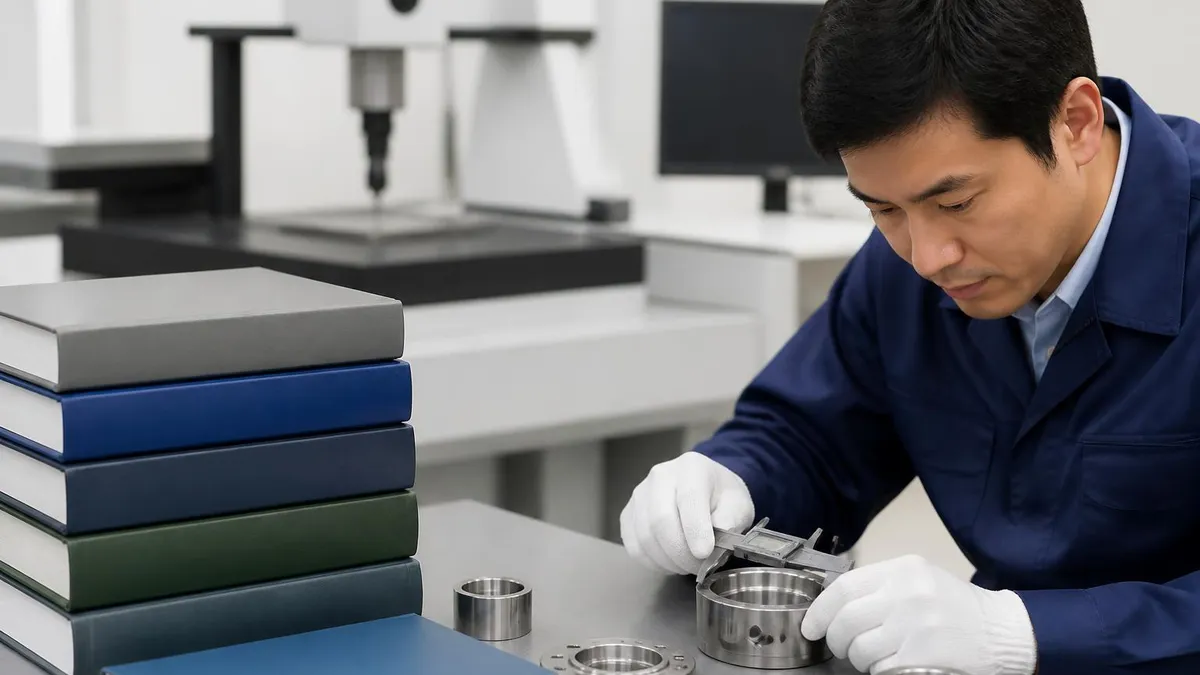
The Quality Council of Indiana primer is the most widely used CQE study book in the United States, written specifically to mirror the ASQ Body of Knowledge. It includes roughly 1,100 pages of theory, worked examples, and practice problems, plus a separate solutions text that walks through every answer in detail. Most successful candidates use it as the spine of their preparation.
The primer is permitted as a reference in the exam room, which dramatically changes how you study. Instead of memorizing every formula, you learn to navigate the book quickly. Tab the statistical tables, the Cp and Cpk formulas, the sampling plans, and the FMEA scoring rubrics. Practice looking things up under time pressure so the lookup itself never costs you more than 15 seconds during the actual exam.
Is the QCI CQE Primer Worth It?
- +Mirrors the ASQ Body of Knowledge section by section
- +Permitted as a reference in the exam room
- +Includes a full solutions text with worked answers
- +Statistical tables printed in the back save lookup time
- +Used by an estimated 70 percent of US candidates
- +Available in print and searchable PDF formats
- +Pays for itself if it prevents a single $500 retake
- −Cost of $400 to $600 for the full primer plus solutions
- −Dense writing style in the statistics chapters
- −Occasional typos in older editions
- −Heavy to carry to the exam room
- −Requires pairing with timed practice questions
- −Updates lag behind ASQ BoK revisions by 6 to 12 months
Pros and Cons at a Glance
| Pros | Cons |
|---|---|
| Mirrors the ASQ Body of Knowledge section by section | Dense writing style in the statistics chapters |
| Permitted as a reference in the exam room | Occasional typos in older editions |
| Includes a full solutions text with worked answers | Heavy to carry to the exam room |
| Statistical tables printed in the back save lookup time | Requires pairing with timed practice questions |
Your CQE Primer Pre-Exam Checklist
- ✓Purchase the current edition of the QCI primer and solutions text
- ✓Tab the statistical tables in the back with color-coded sticky tabs
- ✓Mark every formula page for Cp, Cpk, Pp, Ppk, and process capability
- ✓Tag the sampling plan tables for ANSI Z1.4 and Z1.9
- ✓Write a one-page formula cheat sheet inside the front cover
- ✓Complete every end-of-chapter practice question at least once
- ✓Take two full-length 175-question timed practice exams
- ✓Score below 80 percent triggers a targeted re-study of that BoK area
- ✓Practice navigating the primer in under 15 seconds for any topic
- ✓Bring two pencils, an approved calculator, and ID to the exam
- ✓Sleep eight hours the night before the exam, no late cramming
- ✓Eat a moderate breakfast with protein two hours before exam start

Tab your primer like a tax accountant
Candidates who pass the CQE on the first attempt almost universally report the same trick: they invested two full hours the week before the exam adding color-coded tabs to every statistical table, formula page, and sampling plan in the primer. During the exam, this lets you locate any reference in under 15 seconds, which can save 20 to 30 minutes across 175 questions, the difference between finishing and running out of time.
A realistic CQE preparation budget runs between $700 and $1,500 depending on whether your employer reimburses materials and exam fees. The largest line item is the ASQ exam fee itself, currently $533 for members and $633 for non-members in 2026. ASQ membership runs $159 per year and includes a discount that nearly pays for itself if you take the exam plus one related certification within the same membership cycle.
The QCI primer and solutions text together typically cost between $400 and $600 new, with used copies of the previous edition available for $150 to $250 on secondary markets. Buying one edition behind the current release is generally safe because the Body of Knowledge changes only modestly between revisions, and the underlying statistics never change at all. Just verify which BoK edition your exam will use before committing to an older book.
The optional ASQ handbook adds another $120 to $180 if purchased new. Many candidates borrow it from their local ASQ section library or from a colleague who has already passed, which keeps the budget lean. Online practice question banks range from free to about $200 for premium subscriptions, and a free trial of any reputable bank should be enough to evaluate whether the question quality matches the actual exam style.
Video courses are the most variable expense. Self-paced video packages from major training providers run $400 to $900, while live virtual bootcamps can reach $1,800 or more. Video instruction is genuinely valuable for visual learners and for anyone who has been out of school for more than a decade, but it is not strictly necessary. Many candidates pass using only the primer, the solutions text, and a strong question bank.
Hidden costs to plan for include a scientific calculator that meets ASQ rules, a comfortable backpack to carry your reference books, transportation or hotel for an in-person test center, and the cost of a retake if the first attempt does not succeed. A retake at the member rate is currently $333, so it is worth budgeting for one as an insurance line item rather than assuming a first-attempt pass.
Employer reimbursement is more common than candidates realize. Many quality and manufacturing employers will fully reimburse exam fees, study materials, and even a portion of paid study time, especially if the certification is tied to a job description or a promotion. Ask your manager before purchasing anything, and document the request in writing so the reimbursement claim is easy to file later.
If cost remains the binding constraint, a minimum viable study stack is the QCI primer, one large online question bank, and a free copy of the ASQ Body of Knowledge PDF downloaded directly from asq.org. That combination has produced thousands of successful candidates and keeps total out-of-pocket cost under $700 including the exam fee.
ASQ updates the CQE Body of Knowledge every five to seven years, and study materials sometimes lag the update by several months. Before purchasing any primer, handbook, or question bank, verify on asq.org which BoK edition your exam window uses, then confirm the publisher's product page lists that same edition. Studying from an outdated BoK can mean missing entire topic areas worth 8 to 12 percent of the exam.
The most effective CQE study strategy is what cognitive scientists call interleaved practice. Instead of spending three straight weeks on statistics and then three straight weeks on the quality system, mix topics within each study session. Read 30 pages of SPC, work 10 sampling plan problems, then review three FMEA case studies. Interleaving feels harder day to day, but recall accuracy on mixed-topic exams improves by 30 to 50 percent compared to blocked practice.
Spaced repetition is the second pillar. Build an Anki deck or a simple flash card stack for every formula, every distribution, and every acronym in the BoK. Review the deck for 15 minutes every morning, including weekends. The cumulative effect over 12 weeks is dramatic: by exam day you will recall Cpk versus Ppk, AQL versus LTPD, and Type I versus Type II error without conscious effort, which frees your working memory for the harder application questions.
Active problem solving beats passive reading by a wide margin. After reading any chapter, close the book and try to recreate a worked example on a blank sheet of paper. If you cannot reproduce it from memory, reread the section and try again. This single habit, which adds maybe 20 percent to your study time, can double your retention of quantitative material.
Form a study group of two to four candidates if you can find one, ideally through your local ASQ section. Group members take turns teaching a BoK sub-topic each week. Teaching forces a level of understanding that solo reading rarely produces, and the social accountability keeps everyone on schedule. Virtual study groups over Zoom work nearly as well as in-person ones, and several ASQ sections list active CQE study groups on their websites.
For practice exams, simulate the real conditions as closely as possible. Sit at a table with only the primer, the handbook if you own it, a permitted calculator, and a printed scratch sheet. Time yourself for the full 5 hours and 18 minutes, take a single short break around the 90-question mark, and do not look at your phone. The fatigue you experience in hour four is exactly what you will feel on exam day, and rehearsing it is the only way to prepare for it.
Finally, do not neglect rest in the final week. Counterintuitive as it sounds, candidates who taper their study load in the seven days before the exam consistently outperform candidates who cram. Drop to 90 minutes of light review per day starting at exam minus seven, sleep at least eight hours nightly, and stop studying entirely by 8 pm the night before. Your brain consolidates everything you have learned during sleep, and showing up rested is worth more than another 20 hours of frantic last-minute reading.
For candidates who want a printable resource to drill questions away from a screen, our practice test bundles 50 BoK-aligned questions in a format you can print and complete with a timer.
With four weeks left before exam day, your study should pivot from learning new material to consolidating what you already know. Stop reading new chapters and start working full-length timed exams. The goal of the final month is not to expand your knowledge base but to convert the knowledge you have into reliable, fast recall under fatigue. Two timed exams per week, with a full review day after each, is the standard cadence successful candidates report.
Build a personal error log starting today. Every question you miss in practice gets one line in a spreadsheet: the topic, the type of mistake (calculation error, misread question, knowledge gap), and the page in the primer where the correct concept lives. Review the error log every Sunday for 30 minutes. Patterns will emerge quickly, and patterns are the cheapest path to improvement because fixing one root cause often eliminates five future mistakes.
Calculator fluency is undervalued and easily fixable. ASQ permits non-programmable scientific calculators only, with a small approved list. Buy your exam calculator at least four weeks early and use it for every single practice problem. Knowing where the square root, exponent, and statistics keys live without looking saves several seconds per calculation, which compounds to many minutes across 70 quantitative questions.
Read each exam question twice before looking at the answer choices. The CQE is notorious for distractor answers that are correct in isolation but wrong for the specific scenario described. Underline the keywords in the question stem on your scratch paper if needed: words like always, never, primary, first, and most likely fundamentally change which answer is correct. Slowing down by five seconds per question often raises accuracy by 10 percentage points.
If you find yourself stuck on a question for more than 90 seconds, mark it and move on. The exam software lets you flag questions for review, and your job in the first pass is to bank every question you can answer confidently. On the second pass you will have a clearer head and often more relevant context from later questions that triggers recall on the ones you skipped. Time pressure causes more wrong answers than knowledge gaps do.
Manage your physical state on exam day. Arrive at the test center 30 minutes early to handle check-in without rushing. Bring water, a light snack, and earplugs if your center allows them. Use the single 10-minute break that ASQ provides to stand up, stretch, eat a small protein snack, and reset your focus. The exam is a marathon, and treating it like one is what separates pass from fail in close cases.
One last tip from candidates who passed on the first attempt: trust your preparation. If you have followed a 12-week plan, completed 800 or more practice questions, tabbed your primer, and taken two full-length simulations, you are ready. Second-guessing answers during the exam is the single most common cause of avoidable mistakes. Your first instinct, backed by months of study, is almost always correct.
Sample CQE - Certified Quality Engineer Practice Questions
Try these questions from our free CQE - Certified Quality Engineer practice tests. The correct answer and an explanation follow each question.
In a Gauge R&R study, 'repeatability' refers to variation caused by:
- A. Different operators using the same measurement system on the same part
- B. The same operator using the same measurement system repeatedly on the same part
- C. Differences between multiple measurement instruments in a facility
- D. Environmental factors such as temperature and humidity changes
Answer: B. The same operator using the same measurement system repeatedly on the same part
Repeatability (equipment variation) is the variation that occurs when one operator uses the same gauge to measure the same part multiple times under identical conditions.
In a gage R&R study, 'repeatability' measures variation due to:
- A. Different operators using the same gage
- B. The same operator measuring the same part multiple times with the same gage
- C. Part-to-part variation in the sample
- D. Environmental conditions during measurement
Answer: B. The same operator measuring the same part multiple times with the same gage
Repeatability (Equipment Variation) is the variation observed when one operator repeatedly measures the same part with the same gauge under identical conditions, reflecting the gauge's inherent measurement uncertainty.
What strategy is BEST for developing training materials on performance gaps?
- A. Examine an activity log
- B. Hire a workshop instructor
- C. Set aside staff members for training
- D. Construct a single-case study
Answer: A. Examine an activity log
Examining an activity log is one of the best approaches for creating training materials on performance gaps. An activity log provides a detailed record of an individual's activities and tasks performed over a specific period. By analyzing the activity log, it becomes possible to identify areas where performance gaps exist.
When parts are destroyed during the measurement process, the appropriate MSA study design is:
- A. A standard crossed Gauge R&R study with a larger sample size
- B. A nested (destructive) Gauge R&R study where parts are nested within operators
- C. A bias and linearity study using a certified reference standard
- D. A stability study conducted over multiple production shifts
Answer: B. A nested (destructive) Gauge R&R study where parts are nested within operators
A nested (destructive) Gauge R&R is used when parts cannot be re-measured; different but similar parts are assigned to each operator so repeatability and reproducibility can still be estimated.
Take the full CQE - Certified Quality Engineer practice test
CQE Questions and Answers

About the Author

Manufacturing Engineer & Quality Certification Expert
Purdue University School of Industrial EngineeringDr. James Park is a licensed Professional Engineer and Six Sigma Black Belt with a Master of Science in Industrial Engineering from Purdue University. He has 17 years of manufacturing operations and quality management experience across automotive and aerospace industries. Dr. Park coaches manufacturing professionals through Six Sigma, Lean Manufacturing, CPIM, and quality engineering certification exams.