
CPR First Aid AED Certification Online OSHA Approved: Everything You Need to Know
Get CPR first aid AED certification online OSHA approved. Compare top providers, understand workplace rules, and prep with free practice tests. ✅

Getting your CPR first aid AED certification online OSHA approved has never been more accessible, but navigating the landscape of providers, accreditation standards, and workplace compliance requirements can feel overwhelming. Whether you are a healthcare worker, a teacher, a construction crew supervisor, or simply someone who wants to be prepared in an emergency, understanding what makes a certification legally valid and professionally recognized is the critical first step. The right online certification gives you the confidence and legal standing to respond to cardiac emergencies, control bleeding, manage choking, and operate an automated external defibrillator in real-world settings.
OSHA — the Occupational Safety and Health Administration — does not issue CPR or first aid certifications directly, but it does require employers in many industries to ensure their workers are trained to respond to medical emergencies.
When a certification course is described as OSHA approved or OSHA compliant, it typically means the curriculum aligns with OSHA's first aid training standards found in 29 CFR 1910.151 for general industry and 29 CFR 1926.50 for construction. Courses built around guidelines from the American Heart Association (AHA) or the American Red Cross generally satisfy these requirements, provided hands-on skill verification is also completed.
Online CPR and first aid training has expanded dramatically since the pandemic accelerated remote learning across every professional sector. Blended learning models — where you complete the knowledge portion online and then attend a brief in-person skills session — are now widely accepted by employers and accrediting bodies alike. These blended formats typically cost less than traditional classroom-only courses and allow you to study at your own pace before the hands-on component, which means you walk in prepared and the skills session moves faster. Many providers offer certification cards within 24 hours of completing both components.
The combination of CPR, first aid, and AED training in a single certification bundle is the most efficient route for most adults in workplace settings. CPR covers chest compressions and rescue breathing for adults, children, and infants. First aid addresses a broader range of emergencies including severe allergic reactions, fractures, burns, stroke recognition, and diabetic emergencies. AED training teaches you to recognize a shockable rhythm situation, safely apply electrode pads, follow device prompts, and continue CPR between shocks. Together, these three competencies form the backbone of lay rescuer emergency response that OSHA envisions for most workplace first aid programs.
Certification validity periods vary by provider and employer. Most AHA-aligned and Red Cross certifications are valid for two years before renewal is required. OSHA does not specify a universal renewal interval, but recommends retraining when medical guidelines change — which is why certifications tied to organizations that update their guidelines regularly (typically every five years following systematic evidence reviews) carry more credibility with employers and regulators. Some healthcare employers require annual renewal or additional CPR skills audits beyond the standard biennial schedule.
When selecting an online provider, look for accreditation from a recognized national body such as the American Heart Association, American Red Cross, National Safety Council, or ASHI (American Safety and Health Institute). Avoid providers that offer certification with no skills verification component, as these are not accepted in most professional or clinical settings. You can use our free cpr first aid aed certification online resources to test your knowledge before sitting for your actual skills evaluation.
Cost is often a deciding factor. Online blended CPR, first aid, and AED certification courses typically range from $15 to $90 for the online portion, with in-person skills sessions adding another $20 to $50 depending on the training center. Group rates for employers buying bulk certifications can drop the per-person cost significantly. OSHA also notes that employers are responsible for providing first aid training at no cost to employees when it is required as a condition of employment, so check whether your workplace will cover the fee before purchasing a course independently.
CPR First Aid AED Certification by the Numbers

CPR First Aid AED Certification Formats: Which One Is Right for You?
Completes all knowledge content digitally with no in-person requirement. Accepted for low-risk workplaces and personal awareness. Not accepted for healthcare roles or most OSHA-regulated industries that require demonstrated hands-on skills.
Online knowledge portion combined with a short in-person skills check at a training center. Widely accepted by employers, hospitals, and OSHA-regulated workplaces. Typically 2–3 hours online plus a 1–2 hour in-person session with a certified instructor.
Full instruction delivered by a certified instructor in a classroom with mannequins and AED trainers. Highest acceptance rate across all settings. Best for first-time learners who benefit from live demonstration and immediate skill feedback.
On-site training arranged by the employer for multiple employees at once. Often the most cost-effective option for teams of five or more. Instructor comes to your facility and tailors scenarios to your specific workplace environment and hazard profile.
Choosing the right CPR first aid AED certification provider requires more than a quick Google search and clicking the cheapest link. The credibility of your certification depends entirely on the accrediting organization behind the course, the currency of the clinical guidelines it teaches, and whether the provider's certificates are recognized by your specific employer or licensing board. Start by checking what your employer explicitly accepts — many hospitals and healthcare systems will only recognize AHA or Red Cross cards, while construction sites and general industry employers have broader flexibility under OSHA's framework.
The American Heart Association's Heartsaver CPR AED and Heartsaver First Aid CPR AED courses are among the most universally accepted options in non-clinical workplaces. These courses are built on the AHA's evidence-based Guidelines for CPR and Emergency Cardiovascular Care, which are updated every five years through a rigorous systematic review process. The 2020 guidelines (the most current at the time of writing) introduced updated compression depth targets, simplified rescue breathing ratios, and refined AED pad placement guidance. Any course you take should reflect these current guidelines, not a previous edition.
The American Red Cross offers comparable courses through its First Aid/CPR/AED program, which is accepted across a similarly broad range of employers. One advantage of Red Cross courses is their widespread network of training partners and the availability of their online Simulation Learning platform, which uses scenario-based video training to reinforce decision-making skills before the in-person component. The Red Cross also maintains relationships with many municipal and county emergency management agencies, which can make their certificates particularly relevant for community response roles.
The National Safety Council's First Aid, CPR and AED certification is another excellent option, particularly for industrial and construction workplaces. NSC's curriculum places heavy emphasis on hazard recognition, workplace-specific injury scenarios, and the legal responsibilities of designated first aid responders. For employers trying to document OSHA 1910.151 compliance, NSC's training records and certificate format are well-recognized during regulatory inspections. ASHI (American Safety and Health Institute) and Medic First Aid are also widely accepted alternatives with similar blended course formats.
Be cautious of providers offering instant certification with no skills verification. OSHA's position, reinforced by guidance documents and citation history, is that first aid training must include demonstrated competency in physical skills — not just a multiple-choice test. A certificate that does not require hands-on practice is unlikely to hold up during an OSHA inspection or when responding to an actual workplace injury. Some providers will even state prominently that their courses do not meet workplace OSHA requirements; take that disclaimer seriously.
Cost comparison is worthwhile, but the cheapest option often becomes the most expensive when your employer rejects the certificate and you have to retrain. Prices for a full Heartsaver First Aid CPR AED blended course range from roughly $50 to $120 total depending on region and training center. Group corporate rates, especially for teams of ten or more, can bring the per-person cost under $40. If your employer is required under OSHA to provide training, the full cost — including time away from your work duties — must be covered by the employer, not the employee.
Reading course reviews and checking provider accreditation status through the AHA's or Red Cross's official training center locators is the safest verification method. Avoid any provider that does not list its accrediting organization prominently, cannot provide a sample certificate for review, or promises certification without any skills component. The time you spend verifying a provider's legitimacy upfront is far less than the time wasted if you need to repeat the training.
What Does a CPR First Aid AED Certification Course Cover?
A CPR module in any accredited course covers adult, child, and infant chest compression technique, including correct hand placement, compression depth (at least 2 inches for adults, 2 inches for children, 1.5 inches for infants), rate (100–120 compressions per minute), and full chest recoil between compressions. Students learn single-rescuer and two-rescuer CPR protocols, the 30:2 compression-to-ventilation ratio for lay rescuers, and how to minimize interruptions to chest compressions while switching rescuers or analyzing heart rhythm with an AED.
Rescue breathing instruction covers head-tilt-chin-lift technique, jaw-thrust maneuver for suspected spinal injuries, mouth-to-mouth ventilation, and proper use of a barrier device such as a pocket mask or face shield. Modern guidelines emphasize that compression-only CPR is better than no CPR at all for adult witnessed sudden cardiac arrest, but full CPR with ventilations remains the standard for children, infants, drowning victims, and prolonged cardiac arrest scenarios where oxygen depletion becomes a limiting factor.

Online vs. In-Person CPR First Aid AED Certification: Pros and Cons
- +Study at your own pace — complete the knowledge portion anytime, anywhere on any device
- +Lower overall cost in many cases, especially blended courses compared to full classroom options
- +Immediate access to course materials and the ability to replay video modules as many times as needed
- +Skills session is shorter and more focused because you arrive already knowing the theory
- +Certificate often issued within 24 hours of completing both the online and in-person components
- +Broader provider selection means you can find a training center near you more easily
- −Cognitive-only online courses are NOT accepted for most professional, clinical, or OSHA-regulated workplace roles
- −Requires self-discipline to complete online modules without instructor-led pacing or accountability
- −In-person skills session still requires traveling to a training center on a scheduled date
- −Quality varies significantly between providers — no universal quality standard for online content
- −Some employers have not updated their policies and still require fully in-person classroom courses
- −Technical issues (slow internet, device compatibility) can disrupt the online portion and delay certification
CPR First Aid AED Certification Exam and Skills Checklist
- ✓Confirm your chosen provider is accredited by AHA, Red Cross, NSC, or ASHI before enrolling
- ✓Complete all online modules and pass the knowledge assessment with the required minimum score (usually 70–80%)
- ✓Schedule your in-person skills session within the provider's required window after finishing online content
- ✓Practice adult CPR compressions at home using a firm pillow to build correct depth and rate muscle memory
- ✓Review the steps for using an AED device — power on, pad placement, clear command, shock, resume CPR
- ✓Study first aid scenarios for bleeding control, stroke recognition, choking, and anaphylaxis
- ✓Bring a valid photo ID to your skills session and any required course completion documentation
- ✓Confirm your employer accepts the specific certification format and provider before scheduling
- ✓Ask whether your employer covers the course cost under OSHA-required first aid training provisions
- ✓After certification, register your AED (if applicable at your workplace) with local emergency services
What OSHA Approval Actually Means
No CPR or first aid course is formally certified by OSHA itself — OSHA sets performance-based standards, not approved course lists. A course is considered OSHA-compliant when its content meets the requirements in 29 CFR 1910.151 (general industry) or 29 CFR 1926.50 (construction), which means it covers the right topics, uses current guidelines, and includes demonstrated skills. When providers advertise courses as OSHA approved, they mean their content satisfies these regulatory standards — always verify this claim matches your specific industry's requirements.
OSHA's first aid regulations apply broadly across American workplaces, but the specific requirements vary depending on your industry, the size of your workforce, and how far your worksite is from the nearest emergency medical facility.
Under 29 CFR 1910.151(b), when a medical facility is not reasonably accessible for treatment of injured workers, employers must designate trained personnel to provide first aid — and those personnel must be adequately trained, which OSHA interprets as including CPR and AED skills in most circumstances. This is why having at least one CPR-certified employee per shift in many workplaces is both a best practice and, in some cases, a regulatory obligation.
The construction industry has its own parallel regulation at 29 CFR 1926.50, which specifies that in the absence of an infirmary, clinic, hospital, or physician reasonably accessible for the treatment of injured employees, a person qualified to render first aid must be available at the worksite.
OSHA has consistently interpreted this to mean that the qualified person must hold a current first aid certificate from a recognized organization and that the certificate must include CPR. Many state OSHA plans (Cal/OSHA, Washington WISHA, Michigan MIOSHA, etc.) have their own amplified requirements that exceed the federal baseline, so verify your state's specific standards as well.
Healthcare settings have their own certification expectations that go beyond general industry OSHA requirements. Hospitals, nursing homes, dialysis centers, and outpatient surgical centers typically require clinical staff to hold Basic Life Support (BLS) Provider certification from the American Heart Association rather than the lay rescuer-focused Heartsaver courses. BLS Provider includes the same CPR and AED content but adds two-rescuer CPR with continuous compressions, advanced airway management, team dynamics, and the full resuscitation algorithm used in clinical settings. If you work in healthcare, always verify whether your employer requires BLS rather than Heartsaver before enrolling in a course.
Schools and childcare facilities face a distinct set of regulatory requirements. Many states mandate that teachers, childcare workers, and school nurses hold current CPR and first aid certification as a condition of licensing, and some states specify which providers are acceptable. California, for example, requires childcare licensees to hold certification from an approved organization and specifies that the certification must include infant and child CPR — not just adult. Check your state's Department of Health, Department of Education, or childcare licensing authority for the specific requirements in your jurisdiction before selecting a provider.
For fitness professionals, personal trainers, group exercise instructors, and aquatics staff, certifying bodies such as NASM, ACE, ACSM, and the ARC/AHA all require current CPR/AED certification as a condition of maintaining professional credentials. Most of these organizations accept either AHA or Red Cross certification, but some specifically require BLS Provider for aquatics or clinical exercise roles. Fitness facilities in many states are also required under automated external defibrillator laws to maintain AED devices on-site and to have trained staff present — so your AED certification may be legally required independent of any employer preference.
Childcare workers in most states must renew their CPR certification more frequently than the standard two-year cycle — some state licensing boards require annual renewal or renewal every year for infant and pediatric CPR specifically. Teachers in K–12 settings typically face a two-year renewal requirement aligned with AHA/Red Cross standard card validity. First responders — police officers, firefighters, EMTs, and paramedics — have their own recertification requirements through their professional licensing boards that may include annual skills verification and written testing beyond what a standard Heartsaver or BLS course provides.
Employers who fail to maintain adequate first aid coverage can face OSHA citations under 29 CFR 1910.151 or 1926.50, with penalties currently ranging from a few thousand dollars for a serious violation to over $15,000 for willful or repeat violations. Beyond the regulatory risk, an untrained workforce represents significant liability exposure in the event of a workplace injury where a trained responder could have prevented harm. The cost of certification — even for an entire workforce — is trivial compared to even a single OSHA citation, let alone the human cost of a preventable death.

Some online providers offer CPR and first aid awareness courses that are explicitly labeled as not meeting OSHA or professional licensing requirements. These courses may still appear in search results alongside fully accredited options. Before purchasing, look for explicit statements that the course includes a skills verification component and that the resulting certificate is accepted for OSHA compliance in your industry. If the certificate is digital-only with no in-person component, confirm with your employer that it will be accepted before completing the course.
Renewal and recertification are as important as initial certification, yet many certificate holders let their cards lapse — sometimes without realizing it until an employer asks for updated documentation. A lapsed CPR or first aid certification can create compliance gaps for your employer, disqualify you from certain job roles during the renewal period, and in some states, trigger licensing consequences for regulated professions such as nursing, physical therapy, or emergency medical services. Mark your card's expiration date in your calendar at least 90 days before it lapses and begin the renewal process well in advance.
Recertification courses are typically shorter than initial certification courses because participants already have foundational knowledge and basic skills. AHA Heartsaver recertification, for example, can often be completed in a half-day format compared to the full-day initial course. Some providers offer renewal-only online modules that let you complete the knowledge refresher at home before a brief 30–45 minute in-person skills renewal session. This makes recertification far less disruptive to work schedules and is one reason why more employees actually stay current once employers establish a structured renewal tracking system.
Guideline changes can affect what you need to know at renewal time. The AHA revises its CPR and Emergency Cardiovascular Care guidelines on a five-year cycle (most recently in 2020, with the next update expected around 2025–2026). When new guidelines are published, they may change compression rates, ventilation ratios, medication protocols, or the sequence of the resuscitation algorithm. Renewal courses incorporate these updates, which is one reason why continuing to use an outdated certification is problematic — not just from a compliance standpoint but from a clinical effectiveness standpoint as well.
Many employers and training centers now offer digital certificate tracking platforms that automatically notify both the employee and their supervisor when a certification is approaching expiration. The AHA's Training Network and the Red Cross's LMS (Learning Management System) both support employer group accounts where HR teams can monitor the certification status of every enrolled employee in real time. This administrative infrastructure is particularly valuable for large organizations with hundreds of certified employees across multiple locations, where manual tracking is impractical.
If you move to a new state or change employers, your certification remains valid for its stated validity period regardless of geography — AHA and Red Cross certifications are nationally recognized and not state-specific. However, your new employer's specific requirements may differ from your previous employer's. Healthcare systems in particular often require credentialing staff to re-verify certification regardless of how recently it was issued, and some require that the certification was obtained through an approved training center rather than through a non-affiliated online provider. Always proactively share your certificate with HR when starting a new role to avoid delays.
Group renewal events are an efficient strategy for employers who need to recertify large numbers of employees simultaneously. Scheduling a certified instructor to come on-site for a renewal day — typically 2–3 hours for a streamlined renewal session — can recertify an entire department at once. When combined with the online pre-work component available through blended providers, the in-person skills renewal session can be compressed significantly, allowing more employees to complete renewal in a single scheduled block. This approach also reinforces team-based resuscitation skills that individuals practicing alone cannot replicate.
For those who want to build on their initial CPR first aid AED certification, advanced training options include Pediatric Advanced Life Support (PALS), Advanced Cardiac Life Support (ACLS), Wilderness First Responder, Stop the Bleed, and Mental Health First Aid. Each of these programs addresses scenarios and skill sets beyond the scope of a standard lay rescuer course and is designed for professionals who may encounter those specific situations in their work.
Completing advanced certifications alongside your foundational CPR first aid AED certification demonstrates a genuine commitment to emergency preparedness and is often a meaningful differentiator in competitive job applications in healthcare, education, and public safety sectors.
Practical preparation for your CPR first aid AED certification exam starts well before you sit down in the skills session. The most common mistakes students make during the in-person component are not compressing deeply enough, not allowing full chest recoil between compressions, and hesitating too long before beginning compressions after confirming unresponsiveness.
All three of these errors stem from the same root cause: insufficient muscle memory practice before the session. Use a firm cushion or a commercially available CPR feedback device at home to rehearse the correct depth and rate for adult compressions — aim for at least 20 minutes of practice distributed across several sessions before your skills check.
Timed practice is equally important. The AHA's high-quality CPR criteria include a compression rate of 100–120 per minute, which is faster than most untrained rescuers initially assume. A rate of 100 compressions per minute feels almost uncomfortably fast at first. A practical trick is to perform compressions to the beat of the song Stayin' Alive by the Bee Gees, which runs at approximately 103 beats per minute — nearly identical to the minimum recommended compression rate. This memory anchor is taught in many instructor-led courses precisely because it transfers well to real emergencies where counting compressions precisely becomes cognitively difficult.
For first aid scenarios, practice thinking through the primary assessment sequence — scene safety, responsiveness check, activating EMS, airway, breathing, circulation, and severe bleeding control — before moving to specific injury management. Many students perform individual skills well but struggle with the sequence under simulated pressure. Running through mental scenarios aloud, or with a practice partner, builds the decision-making fluency that makes the difference between an effective and an ineffective emergency response. Your skills evaluator is assessing both technical execution and appropriate sequencing, so both matter for passing.
AED practice is often the component students feel least prepared for, simply because few people have handled an AED device before their certification course. If your workplace or gym has an AED on site, ask your manager whether you can open the cabinet and examine the device (without activating it). Familiarizing yourself with the physical device — how heavy it is, how the pad cables connect, where the power button is — reduces cognitive load during the skills evaluation.
Most AED trainers used in courses are modeled closely after common commercial devices such as the Philips HeartStart, ZOLL AED Plus, or Defibtech Lifeline, so any familiarity with real devices transfers directly.
Time management during the written or online knowledge assessment deserves attention as well. Most accredited providers set the passing threshold at 70–80% correct, and the questions test recognition-level knowledge of signs and symptoms, correct technique parameters, and the appropriate sequence of actions.
Focus your study on the AHA's Heartsaver Student Workbook or the Red Cross's First Aid/CPR/AED Participant's Manual — both are widely available — and pay particular attention to tables summarizing compression rates, depths, and ratios for adults, children, and infants, as these are frequently tested. The differences between adult and pediatric protocols are a consistent source of errors on knowledge assessments.
On the day of your skills session, arrive a few minutes early, wear comfortable clothing that allows you to kneel and perform compressions without restriction, and eat a light meal beforehand — skills sessions can run longer than expected when class sizes are larger, and performing compressions on an empty stomach is uncomfortable.
Bring your photo ID, your online course completion certificate or enrollment confirmation, and any payment or employer authorization required by the training center. Ask the instructor at the start of the session whether there are specific evaluation criteria you should be aware of — most instructors are transparent about exactly what they are looking for and will give you a chance to repeat any skill that does not meet the standard on the first attempt.
After completing your certification, the real preparation work begins. Review your first aid pocket guide or AHA reference card periodically so the information stays accessible. Take time to locate the AEDs in every building where you spend significant time — workplaces, gyms, schools, places of worship — and note how to reach them quickly.
Mental rehearsal of responding to a cardiac arrest in your specific environment (the break room at work, the gymnasium, the parking lot) significantly increases the likelihood that you will act quickly and effectively if a real emergency occurs. Certification gives you the knowledge; regular mental rehearsal builds the readiness to use it.
CPR Questions and Answers

CPR First Aid AED Practice Test: Complete Study Guide for Your CPR Final Exam

CPR Practice Test PDF (Free Printable 2026)
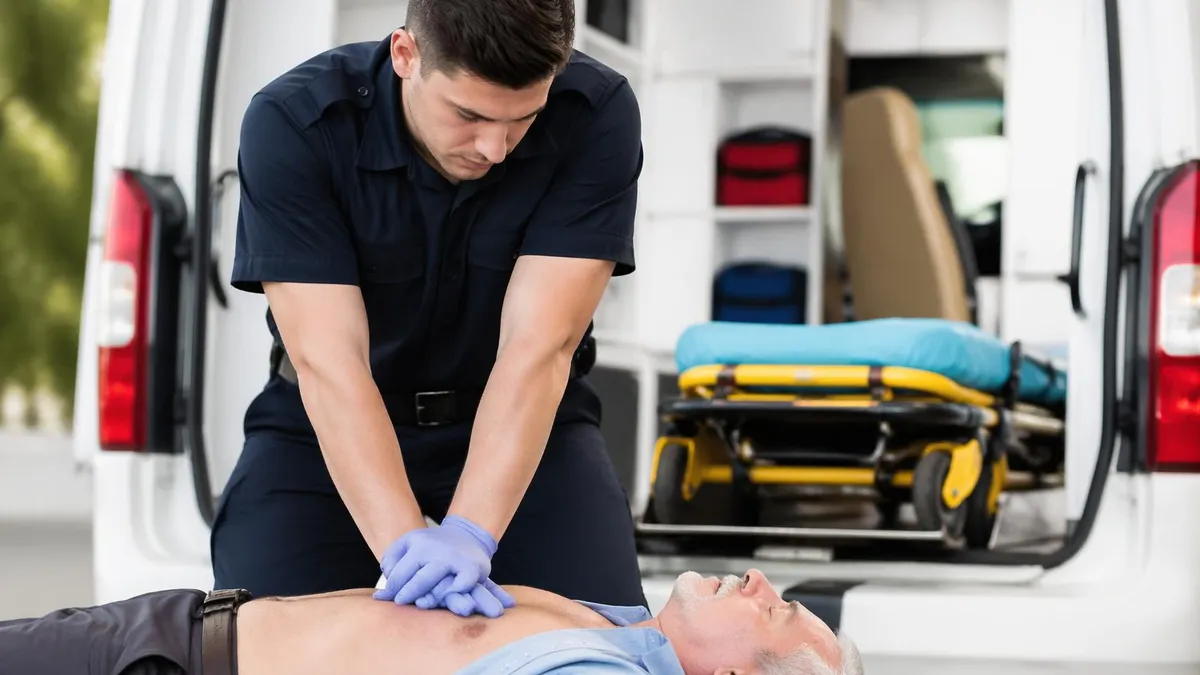
CPR Certification Guide 2026: How to Get Certified and Stay Current
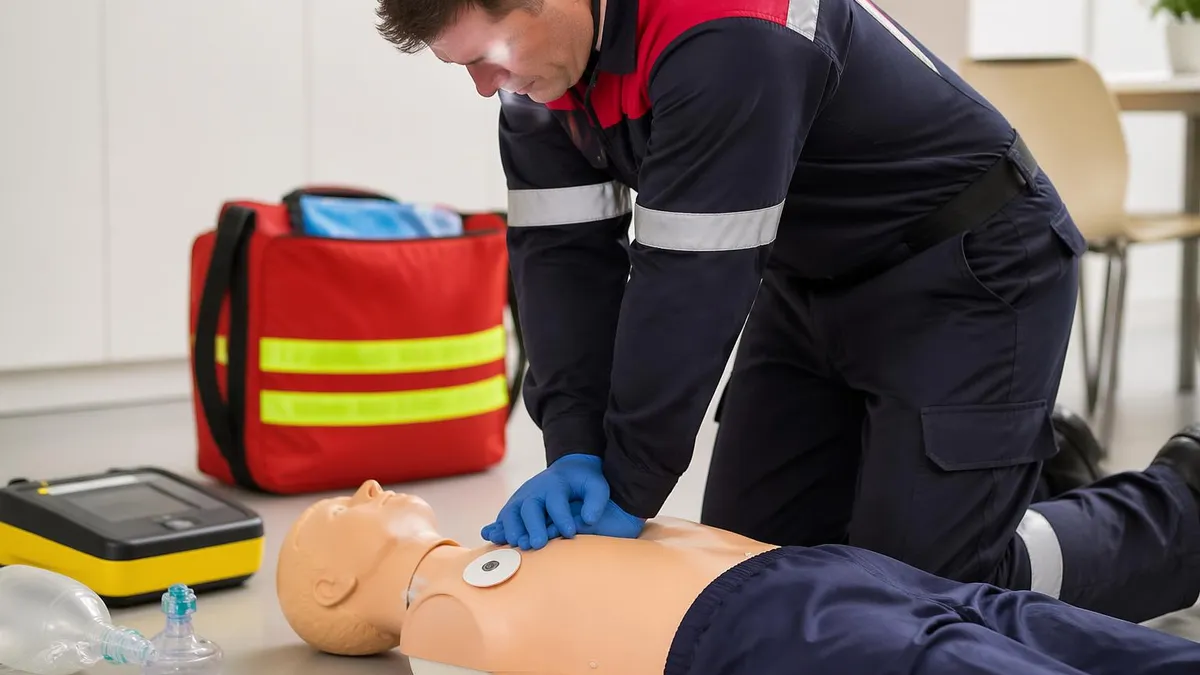
CPR Certification 2026: How to Get Certified and Stay Current
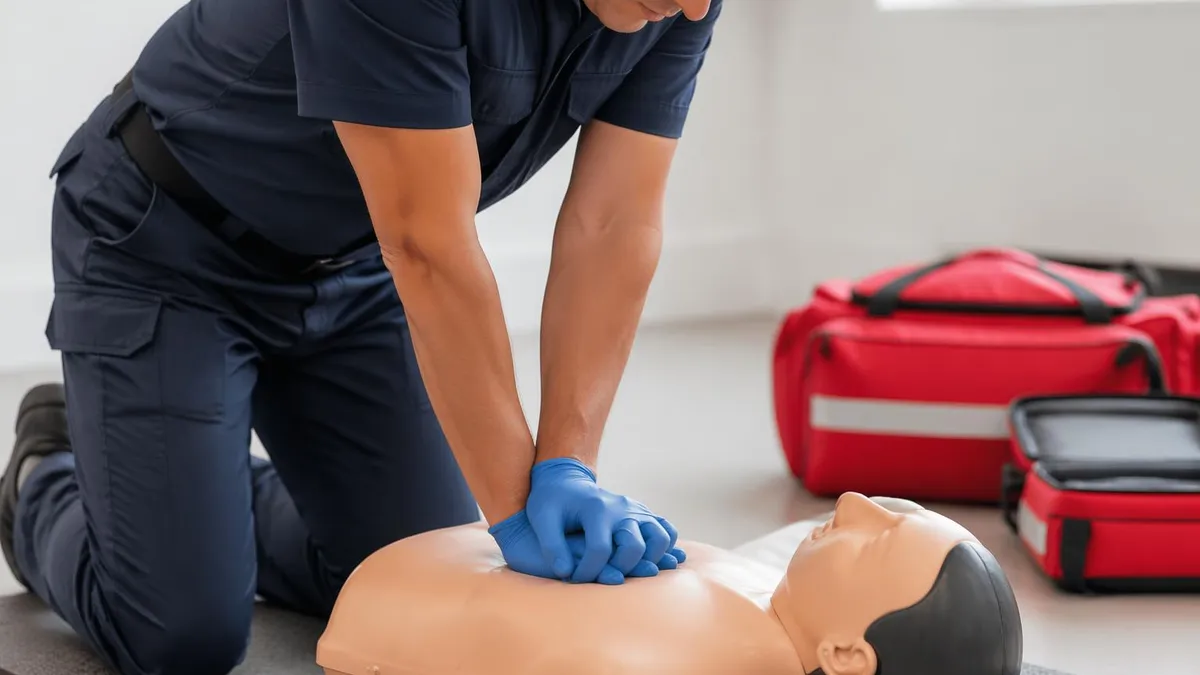
CPR Certification Online 2026: What's Accepted and What's Not
About the Author

Registered Nurse & Healthcare Educator
Johns Hopkins University School of NursingDr. Sarah Mitchell is a board-certified registered nurse with over 15 years of clinical and academic experience. She completed her PhD in Nursing Science at Johns Hopkins University and has taught NCLEX preparation and clinical skills courses for nursing students across the United States. Her research focuses on evidence-based exam preparation strategies for healthcare certification candidates.
Join the Discussion
Connect with other students preparing for this exam. Share tips, ask questions, and get advice from people who have been there.
View discussion (9 replies)