
Cosmetology Jobs Near Me — Complete Guide (2026 September)
Find cosmetology jobs near you in 2026 September. Salon, spa, makeup, and freelance roles. Real pay ranges, licensing rules, and job board tips that work. 💡
Where Most Cosmetology Jobs Live in 2026
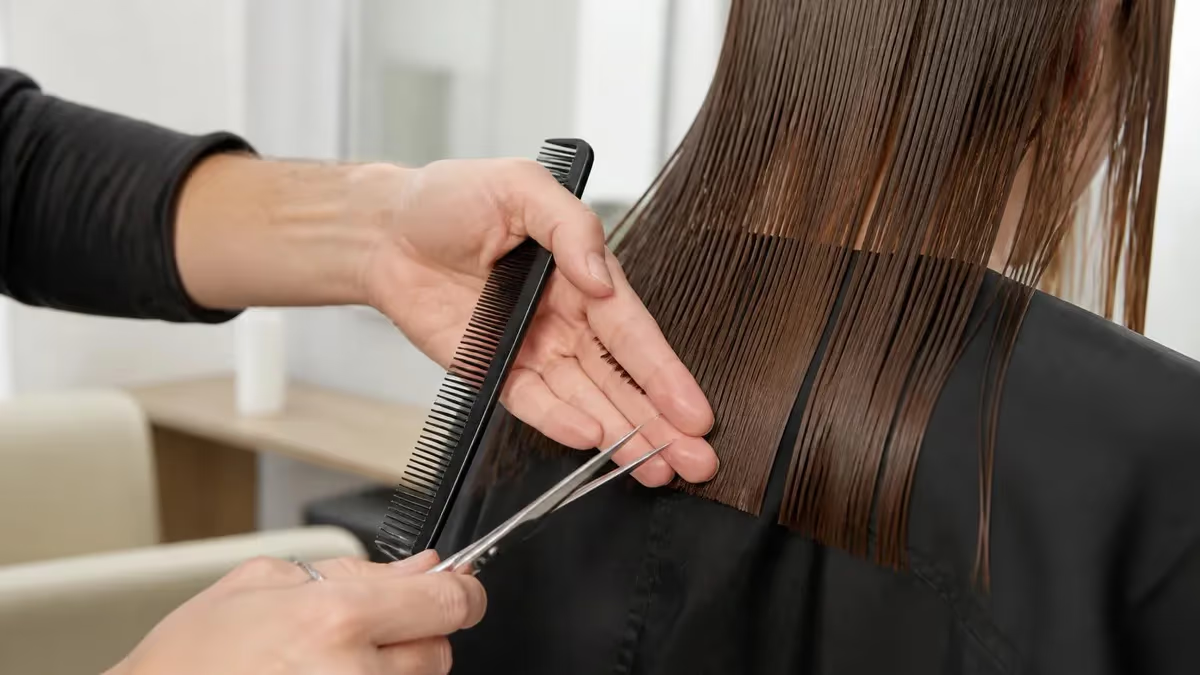
Most local cosmetology hires happen at three places: chain salons (Great Clips, Supercuts, Sport Clips), independent salons posting on Instagram, and Indeed listings filtered to within 10 miles. Beauty supply retail, spa esthetics, and mobile freelance round out the rest. Pay ranges from minimum wage plus tips at chains to $65K-plus for stylists with a real book — and that gap is mostly about clientele, not skill.
Cosmetology Jobs Near Me — Complete Guide (2026)
Search "cosmetology jobs near me" and you'll hit hundreds of listings within a 25-mile radius of almost any U.S. city. The hard part isn't finding openings. It's figuring out which ones pay, which ones build your book, and which ones quietly burn you out in six months.
Here's the honest answer up front. The job market for licensed cosmetologists is strong — the Bureau of Labor Statistics projects 8% growth through 2032, which is faster than average for all occupations. But the gap between a $25K-a-year chain stylist and a $70K commission stylist at a high-end salon comes down to two things: where you work, and how hard you push to retain clients. School teaches you to cut and color. Nobody teaches you the business side until you're already in it.
This guide covers what actually matters when you're job-hunting locally. Where to look. Which boards beat Indeed. What roles open up beyond "hair stylist." Real pay ranges by setting. How to spot a salon that will help you grow versus one that'll grind you into the chair. And what licensing rules trip up new grads every single time.
If you're still in school, bookmark this and come back near graduation. If you're licensed and stuck, the chain-versus-independent breakdown alone will save you months of frustration. And if you're considering the field, start with our cosmetology colleges guide to see what training looks like before you commit.
One more thing. Pass your state board first. Without a license, none of this matters — most legitimate listings won't even interview you. If you're prepping now, the cosmetology school guide walks through what to expect on exam day.

Where The Jobs Actually Are
- Best for: New grads, fast hiring
- Pay model: Hourly + commission + tips
- Reality: Chains hire weekly; indies wait for fit
- Best for: Estheticians, nail techs
- Pay model: Hourly + service commission
- Reality: Steady traffic, lower tips than salons
- Best for: License + sales skills
- Pay model: Hourly + bonus
- Reality: Sally Beauty, CosmoProf hire often
- Best for: Makeup artists, hair on set
- Pay model: Day rate $200-$800
- Reality: Freelance, IATSE union helps
- Best for: Travel, no rent
- Pay model: Commission + tips, room/board free
- Reality: 6-9 month contracts; Steiner is biggest
- Best for: Medical aesthetics, oncology
- Pay model: Hourly $20-$35
- Reality: Look for Patient Coordinator roles
- Best for: Experienced stylists
- Pay model: Salary $35K-$55K
- Reality: Instructor license required (most states)
- Best for: Weddings, events
- Pay model: $300-$1,500 per event
- Reality: Insurance + business license needed
Roles You Can Apply For With a Cosmetology License
A cosmetology license isn't just for cutting hair. In most states it covers hair, skin, and nails — three separate revenue streams under one credential. That matters when you're job hunting, because limiting your search to "hair stylist" cuts your options by maybe 60%.
Hair Stylist (Most Common)
Cuts, colors, perms, blowouts, extensions. Entry-level chain pay starts around $13-$18/hour plus tips. Mid-career stylists with a steady book pull $40K-$65K. Top commission stylists in major metros clear $80K+ — but those chairs are rare and competitive.
Nail Technician
Manicures, pedicures, gel, acrylic, dip powder. Salons hire nail-only roles constantly because the work is faster turnover than hair. Pay is similar to stylist starter but ramps slower. Tip-heavy. Some states require a separate nail tech license — check before you apply.
Esthetician
Facials, waxing, brow shaping, chemical peels (with advanced cert), microdermabrasion. Spa esthetician hourly is usually $15-$22 plus service commission. Medical spas pay more — $25-$35/hour — but expect to upsell injectable consultations.
Makeup Artist
Bridal, event, retail counter (MAC, Sephora, Ulta), film, theater. Retail makeup is a steady paycheck. Bridal and film are gig work with higher ceilings. Ulta Beauty hires constantly for both stylist and makeup artist spots — they post on their careers page weekly.
Salon Manager
Runs scheduling, inventory, hiring, retail sales. Usually requires 3-5 years on the floor first. Pay is $40K-$70K depending on salon size. Less time behind the chair, more time on payroll software and conflict resolution.
Master Barber
Many states now offer a master barber path that overlaps with cosmetology — includes straight razor work and beard services that pure cosmetology licenses can't legally do. If you want barbershop jobs, check your state's cosmetology license rules — barber and cosmetology are separate in some states, dual in others.
Best Job Boards for Cosmetology
The default starting point. Filter "cosmetology" + your zip + 10-mile radius. Set up a daily email alert. Indeed surfaces chain listings (Great Clips, Sport Clips, Hair Cuttery) within hours of posting. The downside: high competition, lots of recycled listings, and chain managers ghost more than indies.
Pro tip: Filter by "posted in last 24 hours" — listings older than a week are usually filled or low quality.
Top Chain Employers Hiring Now
Chain salons get a bad rap among industry pros — and some of that's earned. But for new grads, chains solve a real problem: walk-in traffic. You don't need clientele on day one. The salon brings the bodies; you do the cuts. That's worth a lot when you're 22, fresh out of school, and your only "client" is your roommate.
Great Clips
Largest hair salon chain in North America. 4,400+ locations. Hires year-round. Pay structure: hourly base ($13-$17 most markets) plus productivity bonus plus tips. Most stylists report $18-$25/hour total. Great Clips offers paid training, benefits at corporate-owned stores, and the franchise system means you can transfer easily.
Supercuts and SmartStyle
Both owned by Regis Corporation. Smaller footprint than Great Clips. Similar pay structure. SmartStyle is inside Walmart locations — steady walk-in traffic from foot traffic alone.
Sport Clips
Men's-and-boys' focused chain. 1,800+ locations. Slightly higher pay than mixed-gender chains because of the speed factor — most cuts run 15-20 minutes. Stylists report $22-$30/hour with tips. Heavy emphasis on the "MVP Experience" (hot towel, scalp massage, neck shave).
Hair Cuttery and JC Penney Salon
Hair Cuttery is similar to Supercuts. JC Penney Salons are inside department stores — older clientele, more color and perms, often higher tickets. JCP Salon stylists can clear $50K with a steady book.
Ulta Beauty and Sephora
Ulta runs full salons inside their stores plus a separate "Pro Beauty" makeup counter. Pay is hourly plus service commission plus retail commission — stack three streams. Sephora hires color experts and makeup artists for their Beauty Studio service; no haircuts but big tips on bridal trials.
Aveda Institute and Aveda Salons
If you graduated from an Aveda-affiliated school, the corporate salon network is your fast path. Higher base pay, education stipend, brand training built in. They look for stylists who care about ingredient sourcing and sustainable products.
BeautyBrands
Midwest-focused chain, growing in Texas and the Southeast. Salon + beauty supply retail in one location. Stylists report decent training and competitive commission tiers — 35-50% depending on tenure. Worth a look if you're in Kansas City, Dallas, or Oklahoma City.
Starting Pay and Real Earnings
Licensing, Hours and State Rules
Every legitimate cosmetology job in the U.S. requires a state-issued license. No exceptions. Don't apply to anywhere that says "we'll train you on-the-job" — that's either an apprenticeship (formal program, paid) or a scam. Working unlicensed is a misdemeanor in most states and gets the salon shut down.
Hours Required Vary Wildly by State
The range is real: 1,000 hours minimum in states like Massachusetts and New York, up to 1,600 hours in states like Texas and Florida. Most settle around 1,500 hours. That translates to roughly 9-12 months full-time or 18-24 months part-time. If you're considering school, check your state's hour requirement first — moving cross-state after graduating means filling in the gap before you can test.
The State Board Exam
Two parts in most states: written theory (multiple choice, 100-150 questions) and a practical exam (live demonstration of haircut, color, perm, sanitation, etc.). Pass rates are around 70-80% nationally for first-time test-takers from accredited schools. Prep with the state board of cosmetology rules for your specific state — the practical varies meaningfully across boards.
Apprentice Pathways
Several states (Florida, Virginia, Iowa, Washington) let you skip school entirely if you complete a registered apprenticeship — usually 3,000+ hours under a licensed cosmetologist. You earn while you learn. The catch: it takes longer than school (2-3 years versus 9-12 months), and finding a willing mentor is hard. Most working stylists don't want the legal liability of supervising an apprentice.
Reciprocity Between States
Moving states? Some boards accept your existing license outright. Others require additional hours, a state-specific exam, or both. California, New York, and Texas are the strictest. North Carolina, Ohio, and most Sunbelt states have easier reciprocity. Always check the destination state's reciprocity rules before you list your house.
License Renewal and CE Hours
Every 1-2 years depending on state. Renewal fees run $50-$120. Most states require continuing education credits (4-16 hours) covering sanitation, blood-borne pathogens, and updated chemistry. Online CE is widely accepted. See our cosmetology license renewal guide for state-by-state deadlines.
Booth Rental vs Commission vs Hourly
- +Booth rental: keep 100% of service revenue minus rent ($150-$400/week)
- +Booth rental: set your own hours, products, and pricing
- +Commission salon: no overhead, salon supplies products and clientele
- +Commission salon: 40-60% split typical, easier W-2 tax filing
- +Hourly chain: predictable paycheck, no client-acquisition pressure
- +Hourly chain: paid training, benefits, easier first job for new grads
- −Booth rental: you're a 1099 contractor — quarterly taxes, no benefits, buy your own insurance
- −Booth rental: slow weeks still cost rent; bad month = real loss
- −Commission salon: salon takes 50-60% off the top, you do not own clients
- −Commission salon: leaving a commission salon often means starting over
- −Hourly chain: pay caps around $25-$30/hour even with high tips
- −Hourly chain: no client ownership, productivity quotas, corporate scripts
Cosmetology Jobs by the Numbers
Build a Clientele Without Burning Out
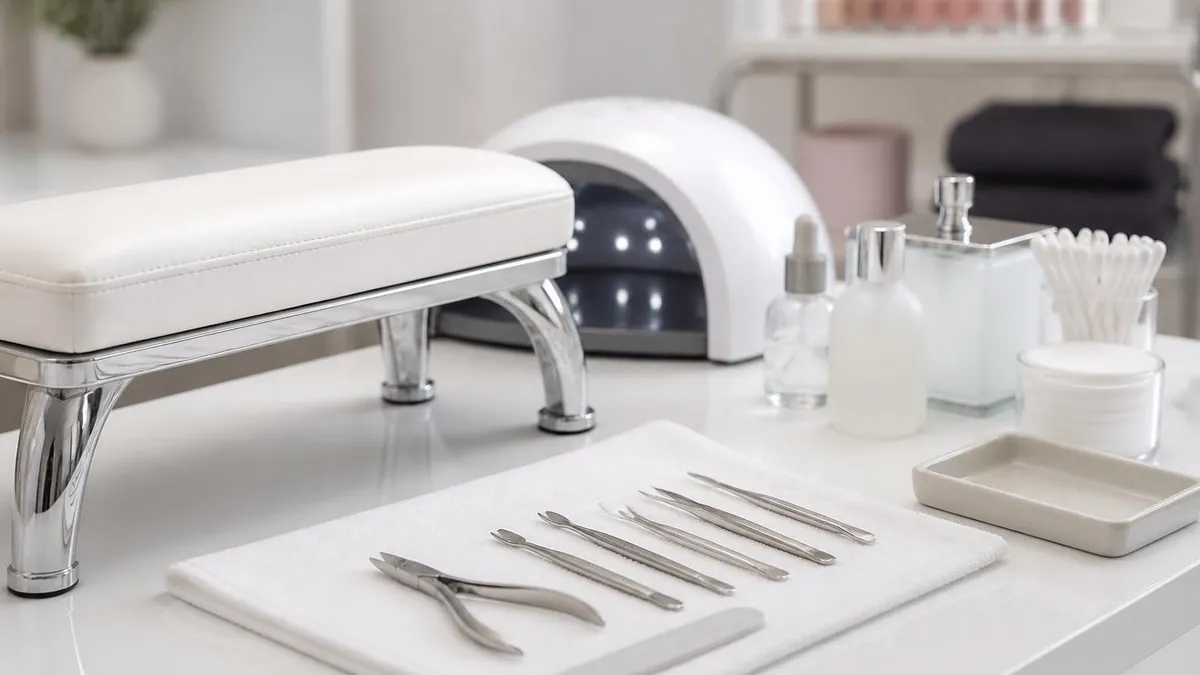
Here's what nobody tells you in school. The first two years after graduation are 90% client acquisition and 10% technical work. Your cuts will be fine. Your color will be solid. But if your chair is empty 4 hours a day, you're not earning. Everything in the industry — pay, schedule freedom, where you work, whether you can take Mondays off — flows from one number: how many regulars rebook with you.
The 100-Client Threshold
Most working stylists agree that 100 regular clients (people who return at least 3 times per year) is the threshold where you stop worrying about income. Below that, you're still scrambling. Above it, you can negotiate. The fastest path to 100 is a chain for 12-18 months, then a move to a commission salon where you take your book with you.
Rebooking Beats New Bookings
The single highest-leverage skill in cosmetology is asking every client at checkout, "Want me to lock you in for your next color in 6 weeks?" Industry average rebook rate is around 30%. Top stylists are at 60-70%. Practice the script until it's automatic.
Social Media — Pick One, Do It Daily
Instagram for hair transformations. TikTok for technique videos. You don't need both. Pick one. Post 4-5 times per week. Include before/afters, your zip code in the bio, and a booking link. Local hashtags (#chicagohairstylist, #dallasbalayage) outperform generic ones every time. Stylists who consistently post for a year almost always fill their books.
The First-Six-Months Plan
Take any chain job that hires you. Cut hair for 6 months. Build muscle memory on consultations, timing, sanitation, and product retail. Save tips. Start an Instagram. Don't quit on day 90 because the GM is annoying — push to month 12. After a year, you have references, a portfolio, and bargaining power. That's when you negotiate up.
What to Avoid
Salons that require you to buy your own backbar (color, developer, shampoo) on day one. That's a red flag — established salons supply these for commission stylists. Booth rental as your first chair, before you have any clients. Owners who pay "under the table" — illegal, untaxed, no Social Security credit. Test pioneers using you on free practice color models indefinitely without payment. If something feels off, leave. The industry has too many openings to tolerate exploitation.
For deeper guidance on the licensing path itself, the cosmetology colleges guide breaks down accredited schools by state, cost, and graduation rates.
Networking Beats Cold Applications
Some of the best chairs never get advertised. They get filled through stylist-to-stylist referrals. Show up to industry events, brand classes (Redken, Wella, Aveda all run them), and trade shows. Tell every working stylist you meet that you're looking. The salon owner trying to fill a chair next month will ask their senior stylist first — "know anyone good?" Be the person whose name comes up.
The Side Hustle Stack
Don't rely on one income stream. Top-earning cosmetologists usually run three or four parallel revenue lines at once. Main chair income covers fixed costs. Wedding and event freelance brings extra cash on weekends. Teaching a monthly Saturday class at a local school adds steady part-time pay. Retail commission and Instagram product affiliate links chip in another few hundred a month. When one stream dips — a slow January, a wedding cancellation — the others keep the lights on. Stylists who only have salon income are the ones who panic when a regular client moves away.
Know When to Walk
Track your numbers. If after 18 months your hourly average is still below $20 including tips, the salon isn't growing you. Leave. The industry is short-handed in most markets — there are openings. Moving salons is normal and expected. The stylists who stay too long in a bad fit are the ones who burn out and leave the industry entirely.
Apply for Your First Cosmetology Job — Step by Step
- ✓Confirm your state license is active and not pending renewal
- ✓Build a 6-12 photo portfolio on Instagram — cuts, color, finished looks
- ✓Write a one-page resume; include hours completed and any retail experience
- ✓Set Indeed alerts for cosmetology + nail tech + makeup artist within 10 miles
- ✓Follow 30+ local salons on Instagram — watch for hiring stories
- ✓Apply to 3 chain salons first for fast interviews (Great Clips, Sport Clips, Supercuts)
- ✓Apply to 5 independent salons via Instagram DM with your portfolio link
- ✓Prep for working interview — bring shears, blow dryer, comb set
- ✓Ask every interviewer: commission split, retail bonus, training pay, schedule flexibility
- ✓Negotiate signing terms before accepting — never accept first offer verbally
Cosmetology Salary by Setting — Real Numbers
The pay range inside cosmetology is wider than almost any other licensed trade. Two stylists with identical training can earn $25K and $95K in the same city, working the same hours, doing the same services. The difference is almost entirely about where they work and how aggressively they protect their client list.
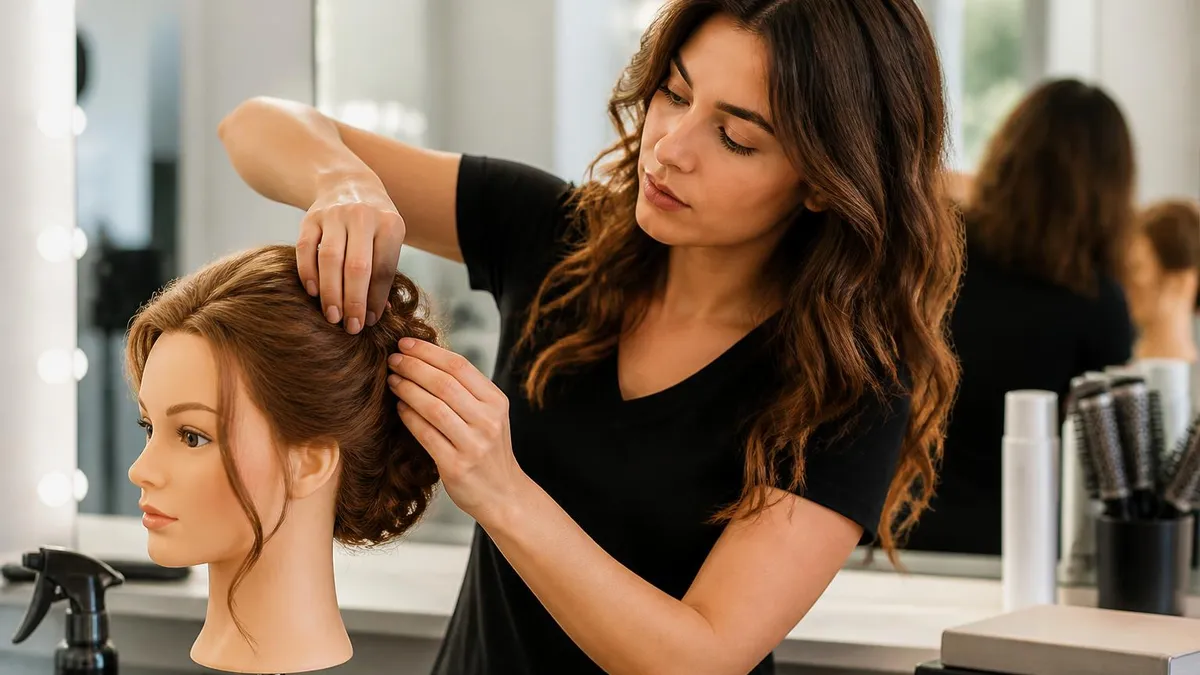
Chain salon year-one stylists at Great Clips, Supercuts, or Sport Clips typically earn $25K-$32K. That number includes hourly base plus tips. It does not include retail commission because chain retail kickbacks are usually small. By year three at the same chain, you'd hope to be at $35K-$45K, but realistically — most stylists who stay at a chain past 18 months are stuck. The faster path is to use the chain as 12 months of paid training and then move.
Independent salon commission stylists with 2-5 years of experience hit $35K-$65K. The split is usually 40-50% to you, 50-60% to the salon, plus tips kept 100% by you. Retail commission tacks on another $2K-$8K per year if the salon trains you to recommend products at checkout.
Established booth renters with full books pull $50K-$95K. Top performers in major metros (NYC, LA, Chicago, Miami, Dallas) clear $100K+, but that's after 5-plus years of book-building and usually with a specialty — balayage, color correction, extensions, or lash work. Booth rent runs $150-$400/week. You're a 1099 contractor, so set aside 25-30% for taxes.
Nail techs earn $22K-$45K — pay ramps slower than hair because individual services are cheaper, but turnover is faster so you see more clients per day. Spa estheticians clear $32K-$48K. MedSpa estheticians who learn to upsell injectable consultations earn $45K-$70K. Retail makeup artists at MAC, Sephora, and Ulta earn $28K-$42K with commission. Salon managers earn $40K-$70K depending on size. Cosmetology instructors at accredited schools earn $35K-$55K. Mobile bridal and event freelancers can build a $15K-$60K business on the side, charging $300-$1,500 per event for 20-40 events per year.
Cosmetology Questions and Answers
Related Cosmetology Guides
Cosmetology Practice Test: 350+ Free Questions and Answers
Cosmetology Career Paths, Pay, and Apprenticeships in 2026
Cosmetology School Cost: Tuition, Fees, and Financial Aid 2026
State Boards of Cosmetology: A Practical State-by-State Guide
Cosmetology License Verification: How to Check Any State Lookup in 2026
About the Author
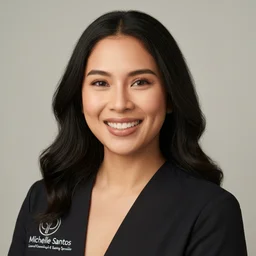
Licensed Cosmetologist & Beauty Licensing Exam Specialist
Paul Mitchell SchoolsMichelle Santos is a licensed cosmetologist with a Bachelor of Science in Esthetics and Salon Management from Paul Mitchell School. She has 16 years of salon industry experience and 8 years preparing students for state cosmetology board exams in theory, practical skills, and sanitation. She specializes in licensure preparation for cosmetologists, estheticians, and nail technicians.