
Cosmetology General Knowledge: Complete 2026 October Guide to Careers, Licensing, and Exam Prep
Cosmetology school near me guide covering cosmetologa en ingles, 💯 licensing, costs, exam prep, and career paths for aspiring 2026 October cosmetologists.
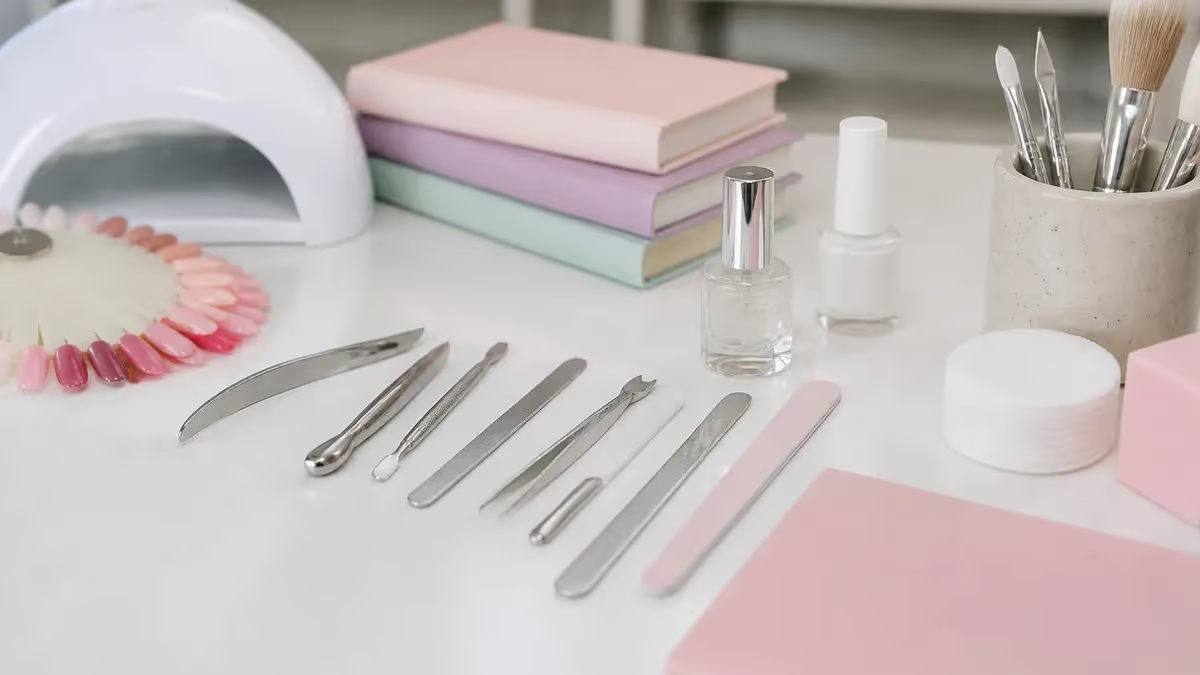
If you have ever searched for a cosmetology school near me or wondered how to translate cosmetologa en ingles, you are entering one of the largest and most regulated beauty industries in the United States. Cosmetology covers haircutting, color, chemical texture services, skin care basics, nail care, scalp treatments, and the science behind every service you perform on a paying client. This general knowledge guide walks beginners and license candidates through the core vocabulary, training expectations, state board structure, and exam topics shared across all fifty states.
The word cosmetologa is simply the Spanish feminine form of cosmetologist, and learning the bilingual vocabulary is increasingly important because nearly one in four licensed professionals in major US markets speaks Spanish as a first language. Understanding both languages helps you communicate with clients, read state-issued bulletins, and pass written exams that sometimes offer Spanish translations. State boards in California, Texas, Florida, and Arizona routinely publish dual-language study guides and rule books for candidates.
Before you book a tour with any program, you should understand what cosmetology actually covers under state law. A licensed cosmetologist can typically perform hair, skin, and nail services, but limits on injectables, lasers, microblading, and advanced esthetics vary widely. Reading your state practice act tells you exactly which services your license authorizes and which require a separate certification or medical supervision. That single document prevents most rookie violations during your first two years on the floor.
The path from student to working professional usually spans nine to twenty-four months depending on the state hour requirement, your enrollment status, and how quickly you complete clinical service tickets. After graduating you sit for a written theory exam plus a hands-on practical exam administered by a third-party testing vendor such as PSI or D.L. Roope. Passing both unlocks your initial license, which you must renew on a fixed cycle while completing continuing education hours specific to your jurisdiction.
Cosmetology is also a real business education. Booth rental, commission splits, retail percentages, tax classification, and client retention math are all tested on most state board theory exams and reinforced during your cosmetology cosmetologist licensing review. Treat the financial chapters with the same focus you give to sanitation and chemistry, because they decide whether your career produces a livable income within the first three years.
Throughout this guide we cover the largest knowledge gaps reported by first-time test takers: terminology, school selection, costs, licensing logistics, exam structure, and career planning. Each section pairs plain-English explanations with specific dollar amounts, hour requirements, and links to the practice quizzes that mirror the actual exam item bank. By the end you will know exactly which schools to research, which questions to ask admissions, and which study tools deliver the highest score gain per hour invested.
Use this article as a roadmap rather than a one-time read. Bookmark the section headings, take the embedded practice quizzes between paragraphs, and revisit the FAQ when your renewal deadline approaches. Cosmetology rewards consistent, repeatable habits both in the classroom and behind the chair, and the same discipline applies to mastering the foundational knowledge that licensing examiners expect from every candidate.
Cosmetology in the United States by the Numbers
Cosmetology Training Timeline From Enrollment to License
Research and Apply
Enrollment and Funding
Core Theory Phase
Clinic Floor Practice
Mock Boards
Licensing Exam
What is cosmetology in the modern beauty industry? At its core, cosmetology is the licensed practice of beautifying hair, skin, and nails using both manual technique and chemical products that alter the physical properties of those tissues. The definition matters because it draws a regulatory line between cosmetology and adjacent licenses like esthetics, nail technology, barbering, and natural hair braiding. Each license has its own hour requirement, scope, and exam, and a single state often offers four or five separate credentials.
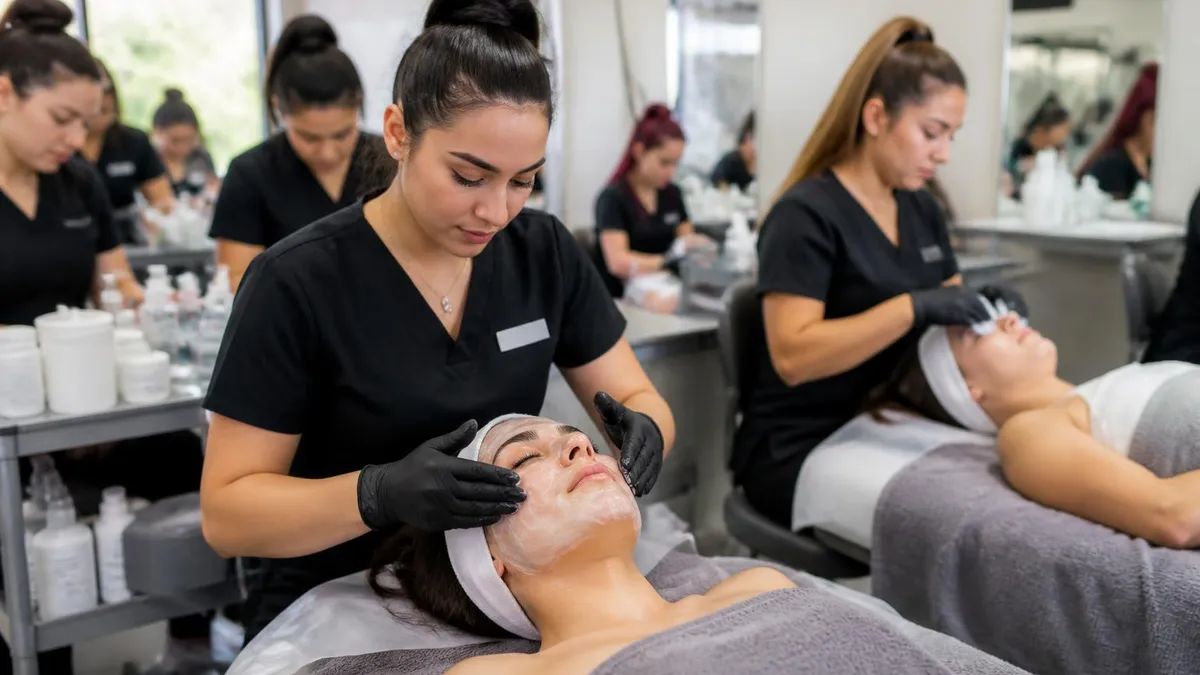
Cosmetology school curriculum is built around five major content areas. Hair services dominate, covering cutting, styling, chemical texture, and color. Skin care covers facials, makeup, hair removal, and basic anatomy. Nail care includes manicures, pedicures, and artificial enhancements. Sanitation and safety run through every chapter because state inspectors fine salons for violations more often than for any technical mistake. Finally, business management teaches retail math, scheduling, and the legal differences between employees, booth renters, and independent contractors.
The cosmetology profession is older than most people realize. Modern licensing began in the 1930s when state legislatures responded to public health concerns about unsterilized tools and untrained operators using strong chemicals like early lye relaxers and ammonia-based dyes. Today every US state, the District of Columbia, and Puerto Rico license cosmetologists, although exact hour totals and exam vendors differ. Connecticut is currently the only state with no statewide license, although municipal rules still apply in major cities.
Reciprocity is one of the most misunderstood topics in cosmetology general knowledge. Moving from one state to another almost always requires a license transfer application, proof of training hours, and sometimes additional testing if your origin state has lower hour requirements. Texas, Florida, and California are strict and may require supplemental hours. Knowing how long is cosmetology school in both your origin and destination states prevents painful surprises when you relocate for a job offer or family move.
The earnings range in cosmetology is wider than national averages suggest. Entry-level stylists in low cost-of-living markets earn $24,000 to $32,000 in their first year, while booth renters in major metro salons clear six figures within three to five years if they build a solid client retention rate above 65 percent. Specialty technicians in color correction, hair extensions, or bridal styling can charge premium rates that average $150 to $400 per service after building reputation through portfolio work and continuing education.
Cosmetology also serves as a stepping stone into adjacent careers that pay even more. Many licensees become salon owners, platform educators for major product brands, school instructors, state board examiners, or product development consultants for cosmetic chemistry companies. Each of these paths requires the same foundational license plus additional credentials such as an instructor license, a small business permit, or a manufacturing safety certification depending on the role you target.
Understanding the breadth of cosmetology helps you make smarter education decisions. If you only want to do nails, a nail technician program of 300 to 600 hours is cheaper and faster than a full cosmetology license. If you eventually want to teach or own a salon, the full cosmetology credential plus business courses creates more flexibility. Mapping your five-year goal before enrollment saves thousands of dollars in tuition and prevents you from re-training later in a different specialty.
Cosmetology Practice Test Questions
Prepare for the Cosmetology Test exam with our free practice test modules. Each quiz covers key topics to help you pass on your first try.
Cosmetology Test Anatomy and Physiology
Cosmetology Exam Questions covering Test Anatomy and Physiology. Master Cosmetology Test concepts for certification prep.
Cosmetology Test Business and Career Manag...
Free Cosmetology Practice Test featuring Test Business and Career Management. Improve your Cosmetology Exam score with mock test prep.
Cosmetology Test Chemical Texture Services
Cosmetology Mock Exam on Test Chemical Texture Services. Cosmetology Study Guide questions to pass on your first try.
Cosmetology Test Haircolor and Lightening
Cosmetology Test Prep for Test Haircolor and Lightening. Practice Cosmetology Quiz questions and boost your score.
Cosmetology Test Haircutting and Styling
Cosmetology Questions and Answers on Test Haircutting and Styling. Free Cosmetology practice for exam readiness.
Cosmetology Test Infection Control and Safety
Cosmetology Mock Test covering Test Infection Control and Safety. Online Cosmetology Test practice with instant feedback.
Cosmetology Test Nail Care and Procedures
Free Cosmetology Quiz on Test Nail Care and Procedures. Cosmetology Exam prep questions with detailed explanations.
Cosmetology Test Nail Care and Services
Cosmetology Practice Questions for Test Nail Care and Services. Build confidence for your Cosmetology certification exam.
Cosmetology Test Principles of Skin Care
Cosmetology Test Online for Test Principles of Skin Care. Free practice with instant results and feedback.
Cosmetology Test Scientific Concepts
Cosmetology Study Material on Test Scientific Concepts. Prepare effectively with real exam-style questions.
Cosmetology Test Skincare and Services
Free Cosmetology Test covering Test Skincare and Services. Practice and track your Cosmetology exam readiness.
Cosmetology Test Wigs, Hair Extensions, an...
Cosmetology Exam Questions covering Test Wigs, Hair Extensions, and Hair Additions. Master Cosmetology Test concepts for certification prep.
Cosmetology Administrative Rules
Free Cosmetology Practice Test featuring Administrative Rules. Improve your Cosmetology Exam score with mock test prep.
Cosmetology On Hair & Scalp Properties
Cosmetology Mock Exam on On Hair & Scalp Properties. Cosmetology Study Guide questions to pass on your first try.
Cosmetology
Cosmetology Test Prep for Cosmetology. Practice Cosmetology Quiz questions and boost your score.
Cosmetology Colleges, Schools, and Program Types
Private cosmetology schools are the most common option, including national chains like Paul Mitchell, Aveda Institute, Empire Beauty, and Tricoci University. They offer fast enrollment, frequent start dates, and brand-aligned curriculum that teaches you a specific company's product lines and technique systems. Tuition is typically higher, ranging from $14,000 to $22,000, but most accept federal financial aid and offer in-house payment plans for the remaining balance after grants and loans.
Private schools shine when you want speed, modern facilities, and strong placement networks. They often partner directly with salons and spas for graduate hiring events. The downside is that brand-focused curriculum may underprepare you for state board questions written from generic textbooks like Milady. Always confirm the school uses a board-aligned theory program in addition to its proprietary technique training before signing your enrollment agreement.
Is Becoming a Licensed Cosmetologist Worth It?
- +Strong nationwide demand with shortages in mid-size cities
- +Flexible scheduling once you build a personal client base
- +Multiple career paths including teaching, ownership, and platform artistry
- +Earning ceiling above $100,000 in major metros for specialists
- +Portable skill that transfers across states with paperwork
- +Creative work that combines artistry and chemistry daily
- +Strong tipping culture adds 15 to 25 percent over base wages
- −Physical strain on back, wrists, and feet from standing
- −Income depends heavily on client retention and rebooking
- −Booth rental introduces self-employment tax responsibilities
- −Continuing education and renewal fees recur every cycle
- −Inconsistent income during slow seasons like January
- −Chemical exposure requires strict PPE and ventilation habits
- −Difficult schedule covering nights, weekends, and holidays
Pros and Cons at a Glance
| Pros | Cons |
|---|---|
| Strong nationwide demand with shortages in mid-size cities | Physical strain on back, wrists, and feet from standing |
| Flexible scheduling once you build a personal client base | Income depends heavily on client retention and rebooking |
| Multiple career paths including teaching, ownership, and platform artistry | Booth rental introduces self-employment tax responsibilities |
| Portable skill that transfers across states with paperwork | Continuing education and renewal fees recur every cycle |
| Creative work that combines artistry and chemistry daily | Inconsistent income during slow seasons like January |

Cosmetology License Renewal Checklist
- ✓Verify your renewal due date through the state board online portal at least sixty days early
- ✓Confirm continuing education hour requirement for your specific license type
- ✓Complete CE courses from board-approved providers only and save certificates
- ✓Check whether your state requires HIV/AIDS or human trafficking awareness training
- ✓Update your home and work mailing addresses on file with the board
- ✓Pay renewal fees online before the postmark deadline to avoid late penalties
- ✓Print your renewed wall license and post it visibly at every workstation
- ✓Carry pocket license identification any time you work outside your primary salon
- ✓Document any name changes with certified copies of legal paperwork
- ✓Save digital copies of CE certificates for at least four years after submission
Failing the written exam is almost always a study scheduling problem, not an intelligence problem.
Candidates who study in 45-minute blocks five days per week for eight weeks pass the written portion at roughly double the rate of candidates who cram in the final two weeks. Build a calendar early, use spaced-repetition flashcards on sanitation and chemistry, and treat every mock quiz score below 80 percent as a signal to revisit that chapter before sitting for the real exam.
Cosmetology school tuition is one of the most variable expenses in vocational education. The same 1,500-hour program might cost $5,500 at a community college and $22,000 at a private brand-affiliated institute in the same city. Knowing how much is cosmetology school in your local market protects you from sticker shock and reveals where federal financial aid actually moves the needle on out-of-pocket cost. Always request a published Net Price Calculator from any school under consideration.
Beyond tuition you should budget for the kit, books, uniforms, lab fees, and exam costs. Kits run $1,200 to $2,800 depending on whether the school includes premium shears, blow dryers, and color brushes. Books typically add $400 to $700, and uniform requirements vary from $100 for a single smock to $400 for branded scrub sets. Add another $250 to $400 for combined state board application and exam fees once you graduate.
Financial aid is genuinely available for accredited cosmetology programs. The FAFSA unlocks Pell Grants up to $7,395 per year for eligible students, plus subsidized and unsubsidized Stafford loans. Many schools also stack institutional scholarships, manufacturer-sponsored awards, and state workforce development grants. Veterans should ask about GI Bill approval because many cosmetology schools accept Chapter 33 benefits that cover both tuition and a monthly housing stipend during enrollment.
Hidden costs often catch students off guard. Re-takes of practical evaluations, mannequin head replacements, late tuition fees, and lost-license replacement fees can add several hundred dollars per semester. Some schools charge a graduation fee, a transcript fee, and a record retention fee on top of tuition. Read your enrollment agreement carefully and ask the bursar to list every fee in writing before you sign anything that carries a refund penalty clause.
Time itself is a major cost. Full-time students give up roughly thirty-five hours per week to school for nine to twelve months, meaning forgone income of $12,000 to $20,000 even at minimum wage. Part-time enrollment cuts the weekly burden but extends total program length to two years or more. Calculate your full opportunity cost before choosing a schedule, because two extra months of training rarely justifies skipping a faster full-time option for most candidates under thirty.
Return on investment in cosmetology is strong when measured against four-year degrees in many fields. A typical cosmetologist earning $40,000 annually with $15,000 in education debt pays off training within three to five years. Compare that to liberal arts graduates carrying $30,000 in debt against similar early-career wages. The math favors cosmetology especially in metropolitan markets where commission and tip income push annual totals above $55,000 within the first three years of practice.
Cost should never be the only factor though. A cheap school with low pass rates and weak placement support can cost you far more in lost income and retake fees than a more expensive program with a 90 percent first-time pass rate and an established hiring pipeline. Ask every school for their last three years of pass rate data, graduation rate, and median graduate starting wage before comparing tuition numbers head to head.
The US Department of Education has fined several large cosmetology school chains for inflating job placement statistics and misrepresenting graduate wages. Before enrolling, verify the school's NACCAS accreditation status, request the published gainful employment disclosure, and search the institution name on the Federal Student Aid school search tool. Walk away from any school that pressures you to sign before you receive these documents in writing.
Every state has a regulatory body that writes the rules, sets exam standards, and disciplines licensees for violations. The ohio state board of cosmetology, the Texas Department of Licensing and Regulation, the California Board of Barbering and Cosmetology, and similar agencies in every state together form the network of authorities you will deal with from your first application onward. Knowing your state board website by heart saves hours of confusion during renewal and incident reporting.
State boards do more than process licenses. They conduct surprise inspections in salons, issue fines for sanitation violations, investigate consumer complaints, and revoke licenses for serious infractions. Common citation reasons include working with an expired license, using unsanitized tools, performing services outside your scope, and failing to display required signage. Most fines start around $100 per violation but can escalate quickly when multiple workstations or repeat offenses are involved during a single inspection visit.
The Arizona State Board of Cosmetology is one of the more active boards in the country, publishing detailed inspection scorecards online and updating its administrative code frequently. The Arizona Board of Cosmetology requires 1,000 hours for cosmetologists, slightly lower than the national median, but applies strict sanitation enforcement. Florida, Texas, Ohio, and California maintain similar online lookup tools where consumers can verify any licensee in seconds, making personal compliance even more important for working professionals.
License reciprocity rules vary widely. Some states offer endorsement applications where your existing license transfers with minimal extra steps. Others require additional hours, examination, or even a fresh state-specific theory test. Always contact the new state board before relocating, and request a written list of transfer requirements. Allow at least sixty days between application and your planned start date because background checks and education verification can stall transfers significantly during board meeting cycles.
Continuing education requirements differ across jurisdictions. Texas requires four hours per renewal, Florida requires sixteen, Ohio requires eight, and several states require zero CE hours but mandate periodic exams instead. Failing to complete CE on time can trigger administrative penalties even if you renew on time. Keep digital copies of every CE certificate for at least four years because boards conduct random audits and may demand documentation months after a renewal cycle closes.
Disciplinary action stays on your public record. Boards publish disciplinary actions in monthly bulletins and on their websites. A single fine for an expired license rarely impacts your career, but multiple sanitation violations or scope-of-practice infractions can permanently affect your ability to work in regulated industries. Salon owners review board records when hiring, and clients increasingly search license lookup tools before booking premium services with new providers in unfamiliar towns or salon brands.
Building a positive relationship with your state board pays dividends. Subscribe to email newsletters, attend public meetings, read newly proposed rule changes during open comment periods, and consider applying for an examiner or advisory committee role after five years of clean licensure. Being known as a compliant, engaged licensee makes inspection visits smoother and positions you for leadership opportunities like instructor licensing, board appointments, or industry association leadership roles down the line.
Final preparation for the cosmetology written and practical exam comes down to repetition, kit organization, and stress management. Most candidates who fail describe the failure not as lack of knowledge but as panic during timed stations or a sanitation deduction that snowballed into more penalties. Building exam-day habits during the last 200 hours of school turns abstract knowledge into reliable muscle memory that performs under examiner observation and the bright lights of an unfamiliar testing center.
Start by mastering the exam blueprint published by your state board or testing vendor. PSI, D.L. Roope, and individual state agencies all publish content outlines that show exactly how many questions each topic carries. Sanitation, infection control, and safety usually account for 20 to 25 percent of the written exam, far more than most students expect. Allocating study time proportionally to weight delivers higher scores than reviewing every chapter equally with no priority adjustment.
For the practical exam, build a kit checklist printed on laminated card and run through it before bed each night during the final two weeks. Mannequin heads must be cleaned, capes folded uniformly, implements labeled, and disinfectant solutions mixed to the correct concentration. Examiners can deduct points for cluttered stations, mislabeled containers, and missing required items even when your technique is flawless. Treat the kit as one third of your practical score from day one.
Sleep, nutrition, and travel logistics on exam day matter more than late-night cramming. Visit the testing center the day before to confirm parking and check-in procedures. Eat a familiar breakfast, arrive thirty minutes early, and bring valid government identification plus your authorization to test letter. Forgetting an identification card causes more same-day cancellations than any other administrative issue and forces you to pay rescheduling fees and wait weeks for the next available slot.
During the written exam, read every question twice before selecting an answer. Cosmetology questions frequently use double negatives, qualifier words like always or never, and tricky scope-of-practice scenarios designed to catch impulsive readers. Skip and mark difficult items rather than burning time, return to them after answering everything you know with confidence. Most candidates lose 15 to 20 points to careless reading errors that a slower second pass would have caught.
If you fail on the first attempt, retake protocols are forgiving in most states. You typically wait thirty to ninety days, pay a smaller retake fee, and only repeat the section you failed. Use the gap productively by enrolling in a targeted exam prep boot camp or working through chapter-specific question banks rather than rereading the entire textbook from cover to cover. Focused review on weak topics raises scores faster than broad rereading without analysis.
Once licensed, the learning never truly stops. The most successful cosmetologists treat their license as the beginning of education rather than the end. Attend hair shows, follow educators who specialize in your favorite service category, and budget for at least two paid continuing education classes per year beyond the state minimum. Continuous learning protects your income against industry trend shifts and keeps you eligible for premium positions in luxury salons, education companies, and platform artist contracts with major manufacturers.
Sample Cosmetology Test Practice Questions
Try these questions from our free Cosmetology Test practice tests. The correct answer and an explanation follow each question.
A candidate passes the practical exam but fails the written exam on their first attempt. What typically happens next?
- A. They must retake both exams
- B. They only need to retake the written exam
- C. They lose all exam credits after 30 days
- D. They must complete additional school hours
Answer: B. They only need to retake the written exam
In most states, passing components are retained for a set period (often one to two years), so only the failed portion needs to be retaken.
Which organization administers the National Interstate Council (NIC) cosmetology written exam used by many states?
- A. American Board of Cosmetology
- B. PSI Services LLC
- C. Prometric
- D. NIC through approved testing vendors
Answer: D. NIC through approved testing vendors
The NIC develops and owns the exam, which is then administered through approved testing vendors contracted by each state.
During the state board practical exam, which of the following actions would most likely result in automatic failure?
- A. Using a slightly different technique than taught
- B. Performing a service on a mannequin instead of a live model when required
- C. Taking an extra minute on a timed section
- D. Asking an examiner for clarification
Answer: B. Performing a service on a mannequin instead of a live model when required
Using a mannequin when a live model is specifically required violates exam rules and typically results in disqualification.
Under cosmetology administrative rules, a 'booth rental' arrangement means the cosmetologist:
- A. Is employed by the salon owner with full benefits
- B. Rents space and operates as an independent contractor
- C. Is a student completing apprenticeship hours
- D. Works under a temporary permit issued by the board
Answer: B. Rents space and operates as an independent contractor
Booth renters lease space within a salon and operate independently, responsible for their own taxes, supplies, and client management.
Cosmetology Questions and Answers

Board of Barbering and Cosmetology: What State Boards Do
Cosmetology State Board Exam: Complete 2026 Study Guide and Certification Prep

Cosmetology Programs: Hours, Curriculum, Cost and Accreditation
Cosmetology License Verification: How to Check Any State Lookup in 2026
Escuelas de Cosmetología: Guía Completa para Hispanohablantes 2026
About the Author
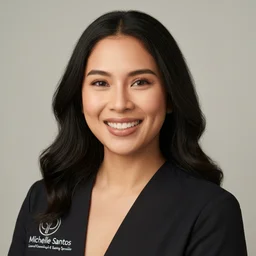
Licensed Cosmetologist & Beauty Licensing Exam Specialist
Paul Mitchell SchoolsMichelle Santos is a licensed cosmetologist with a Bachelor of Science in Esthetics and Salon Management from Paul Mitchell School. She has 16 years of salon industry experience and 8 years preparing students for state cosmetology board exams in theory, practical skills, and sanitation. She specializes in licensure preparation for cosmetologists, estheticians, and nail technicians.
Join the Discussion
Connect with other students preparing for this exam. Share tips, ask questions, and get advice from people who have been there.
View discussion (6 replies)