
Ways to Improve Your Communication Skills: A Complete Practical Guide 2026
Discover proven ways to improve your communication skills at work and in life. 🎯 Practical tips, strategies, and exercises for every skill level.

Understanding the most effective ways to improve your communication skills is one of the highest-use investments you can make in your personal and professional life. Research from LinkedIn's Global Talent Trends report consistently identifies communication as the number-one soft skill employers seek, yet surveys show that more than 70 percent of employees feel their organizations communicate ineffectively. Bridging that gap starts with individual commitment to deliberate practice and self-awareness about how your words, tone, and body language land with others. Practice with the free Communication Skills practice test on PracticeTestGeeks (25 questions with answer explanations).
Communication is not a single ability but a constellation of interconnected skills — verbal clarity, active listening, nonverbal cues, written precision, and emotional regulation all feed into how well your messages are received and understood. Most people never formally study communication after grade school, which means the habits formed by chance in childhood and adolescence often drive workplace interactions decades later. Identifying and replacing those unconscious habits with intentional techniques is the foundation of meaningful improvement.
The good news is that communication skills are highly trainable. Unlike certain cognitive abilities that appear relatively fixed, research in neuroplasticity demonstrates that the neural pathways supporting language processing, empathy, and social reasoning remain plastic throughout adulthood. This means a 45-year-old professional can achieve dramatic gains in articulation, listening depth, and persuasive impact through structured practice — gains that show up measurably in performance reviews, relationship quality, and leadership effectiveness.
Many people mistakenly believe that strong communicators are simply naturally extroverted or inherently charismatic. In reality, some of history's most compelling speakers and writers describe themselves as introverts who developed their skills through painstaking preparation and reflection. The variable that predicts communication growth is not personality type but rather the willingness to seek honest feedback, tolerate the discomfort of experimentation, and iterate on what works. Anyone willing to do those three things will improve significantly over time.
This guide covers the full spectrum of communication improvement: from in-the-moment listening techniques and nonverbal awareness to long-term habits like journaling, reading widely, and deliberate public speaking practice. Whether you are a new graduate preparing for your first professional role, a mid-career manager trying to lead more effectively, or a seasoned executive looking to refine executive presence, the strategies in these pages are grounded in evidence and immediately actionable. You can also explore targeted ways to improve your communication skills in context-specific settings for deeper application.
Throughout this guide, you will find concrete exercises rather than vague advice. Each section builds on the previous one, moving from awareness to action to habit formation. By the time you finish reading, you will have a personalized roadmap for becoming a more confident, clear, and compelling communicator in every area of your life — and a set of practice tools to accelerate that journey.
Free Communication Skills Study Tools
Interactive Communication Skills resources on PracticeTestGeeks, free to start:
- Communication Skills Practice Test — 25 questions with instant scoring and answer explanations
- Communication Skills flashcards — review key terms and concepts card by card
- Communication Skills study guide — topic-by-topic overview of what the exam covers
- Communication Skills cheat sheet — one-page printable summary for last-minute review
Communication Skills by the Numbers

A Step-by-Step Framework for Improving Communication
Assess Your Current Communication Baseline
Identify Your Specific Skill Gaps
Choose Deliberate Daily Practice Activities
Seek Specific, Structured Feedback
Iterate and Track Progress Monthly
Active listening is widely cited as the single most impactful communication skill to develop, yet it is also one of the most consistently misunderstood. Most people confuse passive hearing — the biological processing of sound — with active listening, which is a cognitively demanding, intentional practice of absorbing, interpreting, and responding to another person's full message. True active listening requires you to suspend your internal monologue, resist the urge to formulate your reply while the other person is still speaking, and attend simultaneously to words, tone, and body language.
One powerful technique is reflective listening, where you paraphrase what you just heard before offering your own response. A phrase like "So what I'm hearing is that you felt overlooked in that meeting — is that right?" accomplishes several things at once: it confirms your understanding, signals genuine attention to the speaker, and invites them to clarify if your interpretation missed the mark. Research in couples therapy, hostage negotiation, and high-stakes sales consistently shows that reflective listening dramatically increases trust and reduces misunderstanding compared to conventional back-and-forth dialogue.
Another listening lever is managing environmental and internal distractions. Environmental distractions — phone notifications, open-office noise, background meetings — are well-documented attention thieves. Putting your phone face-down and closing unnecessary browser tabs before an important conversation can raise the quality of your listening by 30 to 40 percent almost instantly. Internal distractions are trickier: anxiety about your own performance, judgments about the speaker, or mental to-do lists that intrude during conversation. Mindfulness training, even as little as 10 minutes per day, measurably reduces internal distraction during listening tasks.
Asking high-quality questions is both a listening tool and a communication skill in its own right. Open-ended questions beginning with "what," "how," or "tell me more about" invite expansive responses and signal that you value the other person's perspective. Closed questions — those answerable with yes or no — have their place in clarifying specific facts, but overreliance on them truncates conversation and can make the other party feel interrogated rather than engaged. Skilled communicators typically use a ratio of roughly three open questions for every one closed question in exploratory conversations.
Empathic listening adds an emotional layer on top of reflective listening. It involves naming the feeling you perceive behind the other person's words, not just the factual content. "It sounds like this project has been genuinely exhausting for you" invites the speaker to feel seen at a human level, not just processed informationally. In professional settings, many people are conditioned to suppress emotional acknowledgment in favor of problem-solving, but this often backfires — people who feel unheard emotionally are far less receptive to practical solutions, no matter how sound those solutions are.
Silence is perhaps the most underused listening tool in American professional culture. The instinct to fill every pause with words is strong, but a two- to three-second silence after someone finishes speaking often prompts them to add their most important or most honest thought — the one they were slightly hesitant to share. Leaders who cultivate comfort with silence report dramatically richer information flow in one-on-one meetings and team discussions. Practice letting silences breathe rather than rushing to fill them, and watch how conversations deepen as a result.
Finally, close the feedback loop at the end of every significant conversation. A brief summary — "Before we wrap up, let me make sure I've captured the key points" — gives the other person one final opportunity to correct misunderstandings and reinforces to them that you took the discussion seriously. This habit alone can eliminate most of the "I thought we agreed on X" confusion that derails projects and damages workplace relationships. Consistent use of end-of-conversation summaries marks you as a highly reliable communicator in the minds of everyone you work with.
Verbal, Nonverbal, and Written Communication Skills
Verbal communication effectiveness depends on four core variables: word choice, sentence structure, vocal delivery, and pacing. Strong verbal communicators choose concrete, specific words over vague abstractions — "we missed the deadline by three days" is clearer than "things were a bit late." They also vary sentence length intentionally, mixing short punchy statements with longer explanatory ones to maintain listener engagement and prevent monotony during extended conversations or presentations.
Pacing and vocal variety are equally critical. Speaking at around 130 to 150 words per minute in conversational settings allows listeners to process your message without feeling rushed. Pausing before key points creates emphasis that written formatting cannot replicate. Volume modulation — dropping slightly quieter to signal importance or raising energy to convey enthusiasm — keeps audiences alert. Recording a two-minute audio clip of yourself explaining something complex is one of the fastest ways to identify habits like upspeak, excessive filler words, or flat delivery that you can then consciously work to correct.

Benefits and Challenges of Actively Improving Your Communication Skills
- +Accelerates career advancement — strong communicators are promoted faster and trusted with higher-visibility projects
- +Strengthens personal relationships through deeper understanding and reduced misunderstanding
- +Reduces workplace conflict by addressing issues directly and clearly before they escalate
- +Increases confidence in high-stakes situations like presentations, negotiations, and difficult conversations
- +Builds leadership credibility and executive presence that compounds over decades of a career
- +Improves mental health outcomes by enabling more authentic, honest expression of needs and feelings
- −Improvement requires sustained effort and willingness to endure the discomfort of honest self-assessment
- −Seeking feedback exposes ego to criticism, which many people find emotionally challenging at first
- −Progress is rarely linear — long plateaus can be discouraging without a structured accountability system
- −Old habits are deeply ingrained and reappear under stress, requiring continuous vigilance and practice
- −Becoming a better listener can surface uncomfortable truths from colleagues that were previously unvoiced
- −Time investment in deliberate practice competes with other professional and personal priorities
Pros and Cons at a Glance
| Pros | Cons |
|---|---|
| Accelerates career advancement — strong communicators are promoted faster and trusted with higher-visibility projects | Improvement requires sustained effort and willingness to endure the discomfort of honest self-assessment |
| Strengthens personal relationships through deeper understanding and reduced misunderstanding | Seeking feedback exposes ego to criticism, which many people find emotionally challenging at first |
| Reduces workplace conflict by addressing issues directly and clearly before they escalate | Progress is rarely linear — long plateaus can be discouraging without a structured accountability system |
| Increases confidence in high-stakes situations like presentations, negotiations, and difficult conversations | Old habits are deeply ingrained and reappear under stress, requiring continuous vigilance and practice |
| Builds leadership credibility and executive presence that compounds over decades of a career | Becoming a better listener can surface uncomfortable truths from colleagues that were previously unvoiced |
| Improves mental health outcomes by enabling more authentic, honest expression of needs and feelings | Time investment in deliberate practice competes with other professional and personal priorities |
Daily Communication Skills Practice Checklist
- ✓Record a 2-minute voice memo explaining a complex topic and listen back for clarity and filler words.
- ✓Practice reflective listening in at least one conversation by paraphrasing before responding.
- ✓Write one professional email using the BLUF (Bottom Line Up Front) structure.
- ✓Ask one specific, targeted feedback question after an important meeting or presentation.
- ✓Spend 10 minutes reading aloud from a book or article to train pacing and vocal variety.
- ✓Identify and eliminate one repeated filler phrase ("like," "um," "you know") from today's conversations.
- ✓Make deliberate eye contact for 60–70 percent of a one-on-one conversation today.
- ✓Let at least two silences of 2–3 seconds occur naturally in conversations without rushing to fill them.
- ✓Write a brief journal entry identifying one communication win and one thing you would do differently.
- ✓Watch a 5-minute clip of an effective speaker and note two specific techniques you can borrow.
The 48-Hour Feedback Rule
The most effective communicators seek specific, structured feedback within 48 hours of any significant conversation or presentation — while impressions are still fresh in both their own minds and their audience's. Waiting longer allows memory to fade and prevents the precise, actionable insights that drive the fastest skill gains. Build this habit into every high-stakes communication situation you navigate.
Workplace communication operates under a set of unwritten rules that differ substantially from social communication, and understanding those rules accelerates professional growth. The most fundamental is audience awareness: every message you send must be calibrated to the specific knowledge level, priorities, and communication preferences of its recipient. A technical briefing for a software engineer requires different vocabulary and structure than the same information presented to a C-suite executive focused on business impact. Skilled workplace communicators switch registers fluidly across these contexts without being asked.
Meeting communication is a particularly high-use arena because most professionals spend 30 to 50 percent of their working hours in meetings yet receive almost no formal training in meeting communication skills. Research by organizational behaviorists at Harvard Business School found that the single most predictive factor in meeting effectiveness is whether participants do three things: come with a written agenda, assign action items with owners and due dates during the meeting, and circulate a written summary within 24 hours. Professionals who consistently do all three are perceived as dramatically more competent and reliable than those who do not.
Conflict communication deserves special attention because it is the domain where even experienced communicators most frequently revert to unhelpful patterns. The Thomas-Kilmann Conflict Mode Instrument identifies five conflict styles: competing, accommodating, avoiding, compromising, and collaborating. Most people default to one or two styles regardless of context, which leads to predictable failure modes — an accommodator avoids needed confrontation while resentment builds, while a competitor wins arguments but damages relationships. Learning to consciously choose the appropriate conflict style for each situation is a significant communication upgrade available to almost every professional.
Email communication efficiency is an increasingly urgent skill as inboxes grow to hundreds of messages per day. The BLUF (Bottom Line Up Front) principle from military communication is directly applicable: state your most important request or conclusion in the first one or two sentences, then provide supporting context for those who need it. Studies at Stanford's communication lab found that emails following BLUF structure receive responses 40 percent faster and with fewer clarifying questions than emails that build to the main point in the traditional academic style most people learned in school.
Cross-cultural communication competence is no longer optional in a globalized workforce. Dimensions identified by researcher Geert Hofstede — power distance, individualism versus collectivism, uncertainty avoidance, and long-term orientation — vary enormously across cultures and directly affect communication norms. High power distance cultures, for example, expect communication to flow through established hierarchies, while low power distance cultures reward directness regardless of rank. Developing even basic literacy in these dimensions prevents costly misunderstandings when working with international colleagues, clients, or stakeholders.
Presentation skills remain among the most valued and most anxiety-producing communication contexts for professionals at every level. Public speaking anxiety affects up to 75 percent of Americans, but research shows it responds extremely well to systematic exposure therapy — meaning that structured practice with increasing audience sizes consistently reduces anxiety while building competence.
Organizations like Toastmasters International provide exactly this kind of scaffolded practice environment, which is why their members report measurable improvement in both skill and confidence within 90 days of regular participation. The investment of two to three hours per week at a Toastmasters chapter pays professional dividends for decades.
Persuasive communication — the ability to move others toward a desired action or belief — sits at the intersection of all other communication skills. Robert Cialdini's seminal research on influence identified six principles — reciprocity, commitment, social proof, authority, liking, and scarcity — that underlie most successful persuasion. Understanding these principles helps you both craft more compelling proposals and recognize when these levers are being used on you. Ethical application of persuasion principles, grounded in genuine value for your audience rather than manipulation, is a hallmark of the most respected and effective communicators in any field.
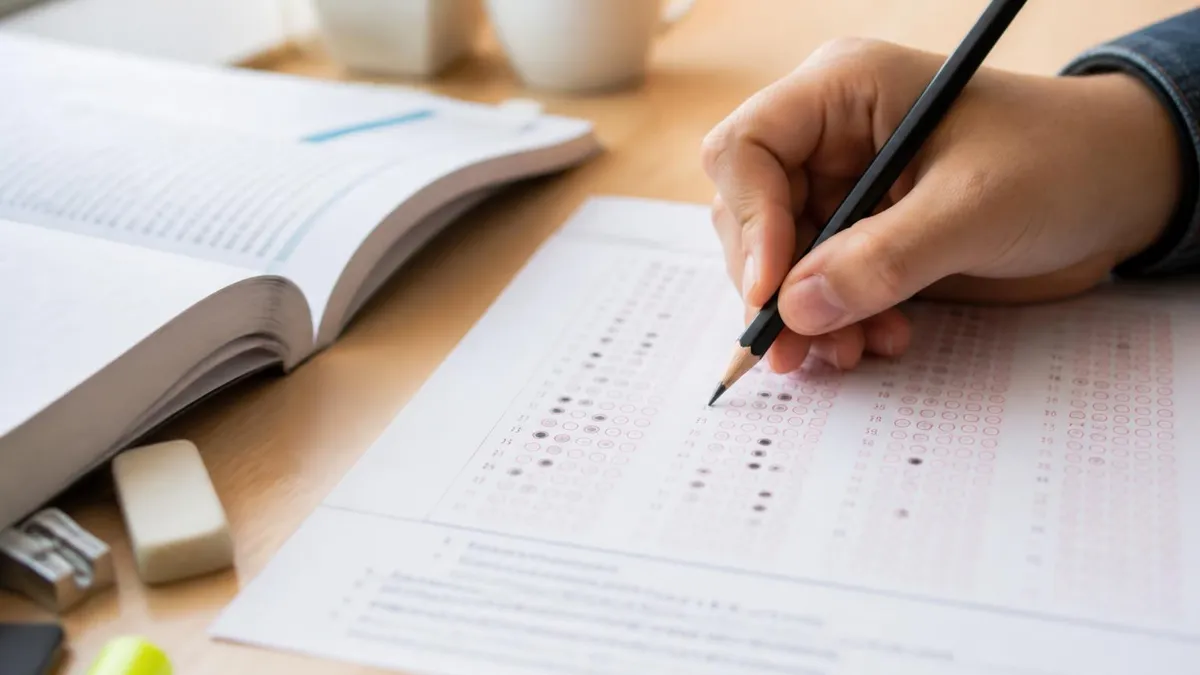
No single communication style works in every context. The most effective communicators are not those who have perfected one approach but those who have developed a wide repertoire and the situational awareness to choose the right style for each conversation. Flexibility — not flawlessness — is the north star of communication development.
Building long-term communication habits requires moving beyond episodic improvement efforts into the area of consistent daily practice embedded in your existing routines. The same principles that govern physical fitness apply here: a 30-minute daily practice over a year will produce vastly more improvement than an intensive weekend workshop, no matter how excellent that workshop is. The challenge is designing practices that are sustainable, measurable, and genuinely challenging enough to produce growth rather than mere repetition of existing habits.
Reading widely and voraciously is one of the highest-return communication habits available. Reading exposes you to diverse vocabularies, argument structures, rhetorical styles, and cultural perspectives that expand your expressive range far beyond what everyday conversation provides. The most articulate speakers and writers almost universally cite extensive reading as the foundation of their ability. Aim for at least 20 pages per day across a mix of genres — business nonfiction for professional vocabulary, literary fiction for empathy and narrative sense, and journalism for clarity and concision in presenting complex information.
Writing regularly, even informally, accelerates verbal clarity. The discipline of translating complex thoughts into precise written sentences trains your mind to organize ideas more clearly before expressing them, which then shows up in sharper verbal communication. Keep a communication journal where you reflect daily on conversations that went well, interactions that felt off, feedback you received, and specific language choices you want to try. This reflective practice converts experience into insight at a much faster rate than simply moving from one conversation to the next without reflection.
Public speaking practice should be a deliberate and recurring commitment, not a one-off event triggered by a specific presentation deadline. Join a speaking club, volunteer to present at team meetings even when you could defer to others, and seek out opportunities to explain your work to audiences with varying levels of familiarity with your subject matter. Each of these contexts forces slightly different calibrations of vocabulary, structure, and pacing, building the flexible range that defines truly excellent communicators.
Mentorship, in both directions, is an underutilized communication development tool. Seeking a mentor who is a notably strong communicator gives you a model to emulate and a source of personalized feedback. Serving as a mentor to others develops your ability to explain concepts clearly, ask probing questions, and communicate with patience and precision — skills that transfer directly to every other communication context. Many of the most articulate executives report that their communication improved most dramatically during periods when they were actively teaching and mentoring others.
Technology offers a growing array of tools for communication development that were simply unavailable a decade ago. AI-powered speech analysis tools can identify filler word frequency, speaking rate, and vocal variety patterns from recorded audio in seconds. Video conferencing recordings allow you to review your own camera presence and listen for verbal tics. Writing improvement tools like the Hemingway Editor provide instant readability feedback. Using these tools in combination with human feedback creates a rich, multi-channel learning environment that accelerates growth well beyond what either human or technological feedback alone can provide.
Finally, recognize that communication development is a lifelong journey rather than a destination. Even the world's most celebrated orators and writers continue to refine their craft throughout their careers. Approaching your own development with that same growth mindset — treating every conversation as both a performance and a learning opportunity — ensures that your communication skills continue compounding in value for as long as you practice them. The professionals who build this mindset early consistently end up among the most influential and effective people in their fields, regardless of the technical domain they work in.
Translating communication knowledge into behavioral change requires bridging the knowing-doing gap — one of the most well-documented challenges in adult learning. Most people who study communication improvement can articulate the principles clearly but fail to implement them consistently under pressure, reverting to default habits when stakes are high or time is short. The solution is not more information but better implementation infrastructure: environmental cues, accountability systems, and practice routines that make the desired behaviors easier than the habitual ones.
One practical implementation strategy is the pre-conversation brief. Before any significant conversation — a performance review, a client call, a difficult feedback session — take 90 seconds to answer three questions in writing: What outcome do I want from this conversation? What does the other person need from it? What is the one communication habit I want to practice deliberately today? This brief ritual activates intentional thinking before the conversation begins, dramatically improving the quality of communication compared to walking in unprepared and relying on autopilot.
Post-conversation reflection is the equally important partner to pre-conversation briefing. Within 30 minutes of an important interaction, jot down three observations: what went well, what you would change, and what the other person's primary concern or priority seemed to be. This practice builds pattern recognition over time, helping you identify recurring blind spots in your communication that single-instance reflection would never surface. Professionals who do this consistently report that their situational awareness in conversations improves rapidly within the first month of practice.
Accountability partnerships accelerate communication development more than solitary practice. Find a colleague or friend who is also committed to communication improvement and agree to debrief with each other weekly. Share a specific communication challenge from the past week, describe what you tried, and ask for the other person's observations if they witnessed the interaction. This structure provides both social accountability and a perspective that is impossible to generate through self-reflection alone, since our own blind spots are by definition invisible to us without external mirrors.
Consider creating specific communication experiments — structured trials of a new technique in a defined context over a set time period. For example: "For the next two weeks, I will practice BLUF structure in every email I write and track whether response times improve." Or: "In every team meeting this month, I will let at least one two-second silence occur before responding to any question." Experiments make improvement measurable and time-bound, which satisfies the human need for feedback and progress markers that open-ended improvement goals rarely provide.
Stress is the great revealer of communication skill gaps. Under conditions of high stakes, time pressure, or emotional intensity, most people's communication regresses toward their least sophisticated defaults. This is actually useful diagnostic information — noticing which habits emerge under stress tells you exactly which skills need the most deliberate reinforcement. Many communication coaches recommend specifically practicing your target skills in mild-stress simulations: timed debates, impromptu speaking exercises, or role-plays of difficult conversations. Training under moderate pressure builds the muscle memory needed to maintain skill when real pressure arrives.
The final piece of the long-term development puzzle is celebrating incremental progress. Communication growth tends to happen in small, hard-to-notice increments that only become visible in retrospect. Reviewing a video of yourself from six months ago, re-reading emails from a year ago, or comparing feedback from a current mentor to feedback you received in your first job often reveals dramatic improvement that felt invisible in the moment. Building these retrospective review practices into your routine provides the motivational fuel to sustain long-term effort through the inevitable plateaus and temporary regressions that are part of every genuine skill development journey.
Sample Communication Skills Practice Questions
Try these questions from our free Communication Skills practice tests. The correct answer and an explanation follow each question.
What is the purpose of regular risk reviews in Communication Skills practice?
- A. To generate reports
- B. To identify new risks, evaluate control effectiveness, and update mitigation strategies
- C. To satisfy auditors only
- D. To reduce workload
Answer: B. To identify new risks, evaluate control effectiveness, and update mitigation strategies
This is fundamental to Communication Skills practice. To identify new risks, evaluate control effectiveness, and update mitigation strategies represents the professional standard for risk management in the Communication Skills certification framework.
Why is documentation important in Communication Skills risk management?
- A. It is optional paperwork
- B. It creates an audit trail, supports decision-making, and demonstrates due diligence
- C. It only benefits legal teams
- D. It slows down operations
Answer: B. It creates an audit trail, supports decision-making, and demonstrates due diligence
This is fundamental to Communication Skills practice. It creates an audit trail, supports decision-making, and demonstrates due diligence represents the professional standard for risk management in the Communication Skills certification framework.
How do Communication Skills professionals contribute to advancing their field?
- A. By maintaining current practices
- B. By conducting research, sharing outcomes, mentoring others, and participating in professional forums
- C. Individual contribution is not possible
- D. By competing with colleagues
Answer: B. By conducting research, sharing outcomes, mentoring others, and participating in professional forums
This is fundamental to Communication Skills practice. By conducting research, sharing outcomes, mentoring others, and participating in professional forums represents the professional standard for research in the Communication Skills certification framework.
What is the benefit of standardized digital reporting in Communication Skills practice?
- A. It limits creativity
- B. It ensures consistency, enables comparison, and facilitates regulatory compliance
- C. It is only needed for government work
- D. It replaces professional communication
Answer: B. It ensures consistency, enables comparison, and facilitates regulatory compliance
This is fundamental to Communication Skills practice. It ensures consistency, enables comparison, and facilitates regulatory compliance represents the professional standard for technology in the Communication Skills certification framework.
Communication Skills Questions and Answers

Communication Skills for Women: How to Speak with Confidence, Authority, and Impact

What Is Communication as a Skill? A Complete Guide to Understanding and Developing It

How to Improve Verbal Communication Skills: A Complete Guide to Speaking with Clarity and Confidence

How to Work on Communication Skills: A Complete Guide to Becoming a Stronger Communicator

Communication Skills for Children: How to Build Strong Communicators from the Start
How this page was made: written with AI tools and published by Nathan Beja, founder of Practice Test Geeks, who is responsible for its content. We have not yet matched this exam's facts to an official source, so confirm fees, dates and rules with the exam body. Not reviewed by a subject-matter expert. Editorial policy