
Mobile CNG Stations: How Compressed Natural Gas Fueling Works on the Go
Learn how mobile CNG stations work, who uses them, costs, and benefits. Complete US guide to mobile compressed natural gas fueling. 🎯

Mobile CNG fueling solutions are rapidly transforming how fleets, construction crews, and remote operations access compressed natural gas across the United States. Unlike fixed infrastructure that requires costly permitting, excavation, and utility connections, a mobile cng station brings high-pressure fueling directly to wherever vehicles operate — whether that is a remote highway project, an event venue, an airport tarmac, or a temporary job site with dozens of heavy-duty trucks needing fuel every shift.
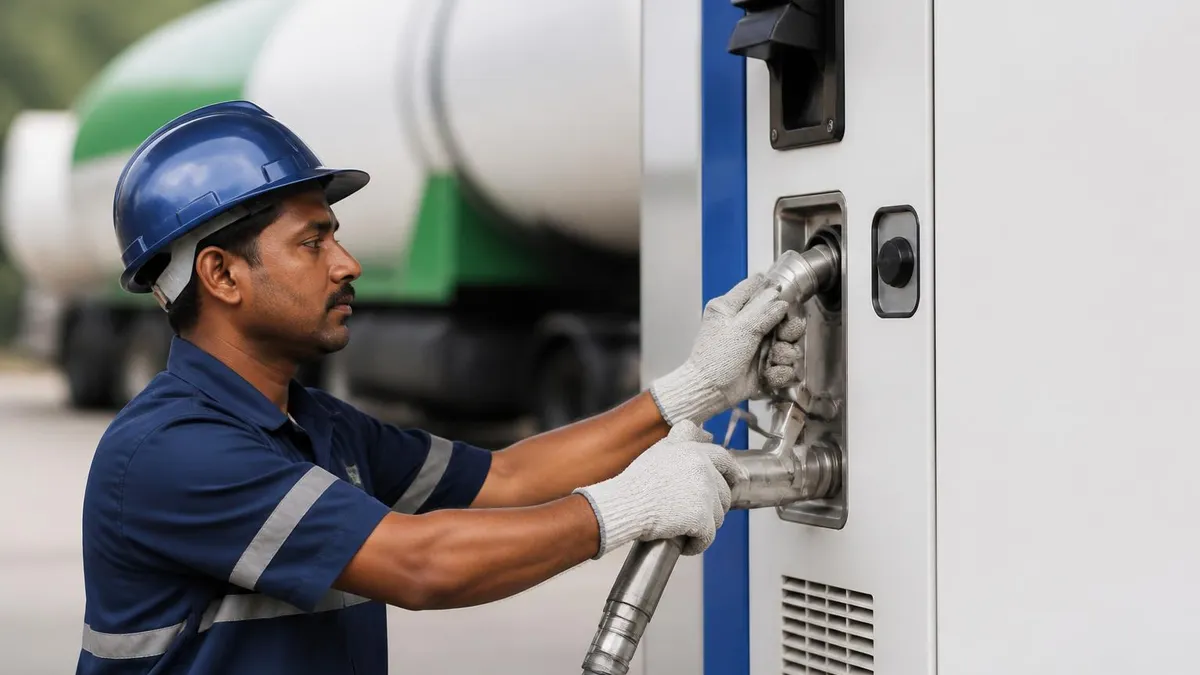
The core concept is straightforward: natural gas is compressed to 3,600 psi using specialized compressors, stored in high-pressure tube trailers or cascades, and then dispensed into CNG vehicles just as a conventional pump would dispense diesel. The difference is that the entire fueling system mounts on a trailer or skid that can be hauled by a standard semi truck, repositioned overnight, and operational again before the morning shift begins. This agility makes mobile CNG an exceptionally attractive option for fleet managers who need fuel flexibility without long-term infrastructure commitments.
Demand for mobile natural gas fueling has grown substantially over the past decade as more municipalities, refuse haulers, transit agencies, and long-haul carriers convert their fleets to CNG. When a new fleet makes the switch, there is often a gap of several months between ordering vehicles and completing a permanent fueling station. Mobile units bridge that gap, keeping operations running smoothly and on schedule during the critical transition period without forcing operators to detour to public CNG stations miles away from their depots.
Beyond fleet transitions, mobile CNG stations are indispensable for emergency response and disaster recovery. When hurricanes or wildfires knock out electricity and disrupt diesel supply chains, a mobile CNG system powered by an independent compressor can maintain fueling operations for emergency vehicles, generators, and support equipment. Because natural gas pipelines are generally more resilient than surface fuel distribution networks, mobile units that tap local gas lines or use stored tube trailer gas can continue operating even when traditional fuel infrastructure is compromised.
The economics of mobile CNG fueling are compelling. Natural gas typically costs 30 to 50 percent less per equivalent gallon than diesel on an energy-equivalent basis in the US market. Even after accounting for the rental or lease costs of a mobile fueling system, many fleet operators report payback periods of under two years on their CNG investments. For seasonal operations or temporary construction projects lasting six to eighteen months, mobile CNG eliminates the capital expenditure of building a permanent station entirely.
Safety is a critical concern in any compressed gas environment, and mobile CNG systems are engineered to rigorous standards set by organizations including NFPA 52, CSA America, and the US Department of Transportation. Pressure relief devices, automated shutoffs, continuous leak detection, and intrinsically safe electrical components are all standard features. Operators must hold appropriate hazmat certifications, and mobile units undergo regular third-party inspections to maintain compliance with state and federal regulations governing high-pressure gas storage and dispensing.
Understanding how mobile CNG fueling integrates with broader fleet management strategies, environmental goals, and regulatory frameworks is essential for anyone involved in transportation, logistics, or energy procurement. This guide walks through everything you need to know — from equipment types and operational best practices to cost analysis, safety protocols, and the future of mobile natural gas infrastructure across America.
Mobile CNG Fueling by the Numbers

Types of Mobile CNG Fueling Equipment
Large semi-trailers carrying multiple high-pressure cylinders storing pre-compressed CNG at 3,600 psi. Ideal for high-volume fleet fueling at remote sites. Trailers are swapped out once depleted, eliminating onsite compression requirements and making setup fast.
Self-contained compressors mounted on trailers that tap a nearby natural gas pipeline or liquid natural gas supply and compress on demand. Best for long-term temporary deployments where gas supply infrastructure is accessible within reasonable distance.
Combination units that receive gas from a mother station, compress it further, and dispense at full pressure. Common in utility and transit fleet applications where a central facility can pre-fill mobile units that then distribute fuel to satellite locations.
Mobile systems that vaporize liquefied natural gas and compress the resulting gas for CNG dispensing. Effective in areas without pipeline access, enabling truly off-grid fueling for remote mining, forestry, or disaster response operations.
The economics of deploying a mobile CNG station versus building permanent infrastructure deserve careful analysis before any fleet operator commits to either path. A permanent CNG fueling station typically costs between $500,000 and $2 million to construct, depending on compressor capacity, number of dispensers, storage volume, civil work, and local permitting requirements. That capital outlay makes sense for fleets of 50 or more vehicles with a long-term operational commitment at a fixed location, but it is prohibitive for smaller operations or projects with defined end dates.
Mobile CNG fueling systems are typically available through rental agreements ranging from $3,000 to $15,000 per month, depending on capacity, features, and rental duration. Lease-to-own programs allow fleet operators to apply a portion of monthly payments toward eventual ownership, which can be attractive for organizations that anticipate long-term but uncertain infrastructure needs. Purchase prices for new mobile CNG trailers and skid-mounted systems range from $150,000 to $800,000, representing a significant but manageable capital investment compared to fixed station construction.
Fuel cost savings are the primary economic driver. At a time when diesel prices regularly exceed $4.00 per gallon in many US markets, CNG equivalent pricing at $2.00 to $2.80 per gasoline gallon equivalent (GGE) creates substantial per-mile savings for heavy-duty fleets. A single Class 8 truck consuming 20,000 GGE per year saves between $24,000 and $40,000 annually on fuel alone. Multiply that across a 50-truck fleet and the aggregate savings easily justify mobile station costs within the first year of operation for many high-mileage applications.
Federal and state incentive programs further improve the economics. The Alternative Fuel Infrastructure Tax Credit allows businesses to claim up to 30 percent of the cost of alternative fuel equipment, including mobile CNG systems, up to $100,000 per property. Many states layer additional incentives on top of federal programs: California's Low Carbon Fuel Standard generates tradable credits for CNG dispensed, Texas offers franchise tax credits for alternative fuel infrastructure, and Colorado provides grants through its FASTER program for fleet electrification and CNG conversion projects.
Operational costs beyond equipment rental or ownership include natural gas commodity pricing, maintenance of compressors and dispensers, labor for certified operators, transportation of tube trailers, and insurance. Most operators find that total delivered cost per GGE via mobile systems runs 10 to 20 percent higher than fixed station costs due to the logistics overhead, but this premium is more than offset by the elimination of infrastructure capital costs for short to medium term deployments lasting two years or less.
Return on investment calculations should also account for reduced vehicle maintenance costs. CNG engines have longer oil change intervals, produce cleaner combustion that extends engine life, and generate fewer particulate deposits that degrade exhaust after-treatment systems. Over the life of a heavy-duty truck, CNG operators frequently report 15 to 25 percent lower total maintenance costs compared to diesel equivalents, adding another layer of financial justification for the fuel switch and the mobile infrastructure investment that enables it.
Risk management also enters the economic picture. Diesel prices are highly volatile, swinging dramatically with global crude oil markets, geopolitical events, and refinery disruptions. Natural gas prices have historically been less volatile and are increasingly tied to domestic production, giving US fleet operators greater pricing predictability and insulation from international supply disruptions. That price stability has real financial value for budgeting and long-term fleet planning, particularly for municipalities and public agencies operating under fixed-budget constraints.
Key Use Cases for Mobile CNG Stations
When a refuse hauler, transit agency, or delivery fleet converts from diesel to CNG, permanent fueling infrastructure often lags vehicle delivery by six to twelve months. Mobile CNG stations bridge this critical gap, enabling fleets to begin realizing fuel savings and emissions reductions immediately upon taking delivery of new CNG vehicles. Operators simply schedule mobile unit deliveries to coincide with vehicle arrival dates, ensuring seamless fueling from day one without requiring staff to navigate public CNG networks.
Fleet transition deployments typically involve tube trailer swaps on a scheduled rotation — often every two to three days for large fleets — until the permanent station is commissioned and operational. This approach has been successfully used by school districts, municipalities, and regional refuse haulers across California, Texas, and the Midwest, with mobile units often remaining on standby even after permanent stations open to handle peak demand periods or during scheduled maintenance windows when fixed compressors are temporarily offline.

Mobile CNG Fueling: Advantages and Limitations
- +No permanent infrastructure capital expenditure required for short-term or transitional fueling needs
- +Operational within hours of arrival on site, dramatically faster than fixed station construction timelines
- +Repositionable as project locations or fleet operational centers change over time
- +Lower natural gas fuel costs versus diesel by 30 to 50 percent on an energy-equivalent basis
- +Eligible for federal Alternative Fuel Infrastructure Tax Credits up to $100,000 per unit
- +Reduces fleet greenhouse gas emissions by up to 23 percent compared to diesel on a lifecycle basis
- −Higher per-GGE fuel delivery cost compared to fixed station dispensing due to logistics overhead
- −Tube trailer capacity limits total fuel available between deliveries, which can create gaps for very large fleets
- −Requires certified operators with hazmat training and high-pressure gas system qualifications
- −Pipeline access or LNG supply logistics needed for mobile compression units in remote locations
- −Ongoing rental or lease costs can exceed fixed station amortized costs for deployments longer than three years
- −Cold weather can affect compressor efficiency and tube trailer pressure, requiring operational adjustments in northern climates
Mobile CNG Station Safety and Compliance Checklist
- ✓Verify the mobile unit holds current third-party inspection certification per NFPA 52 standards.
- ✓Confirm all high-pressure hose connections, fittings, and nozzles are rated for 3,600 psi service.
- ✓Check that automatic pressure relief valves are functional and set to correct activation thresholds.
- ✓Ensure continuous gas detection sensors are calibrated and operational before beginning fueling operations.
- ✓Confirm operator holds current DOT Hazardous Materials Employee Training certification.
- ✓Establish a 25-foot exclusion zone around the mobile unit during fueling operations.
- ✓Verify that the site has an emergency shutoff accessible within 20 feet of the dispensing area.
- ✓Check that all electrical components in the fueling zone are rated intrinsically safe or explosion-proof.
- ✓Confirm fuel storage tube trailer is properly chocked, stabilized, and secured against unintended movement.
- ✓Review and post emergency response procedures and local emergency contact numbers at the fueling station.
Mobile CNG Can Pay Back in Under 12 Months for High-Mileage Fleets
A fleet of just 20 Class 8 trucks averaging 100,000 miles per year can generate over $400,000 in annual fuel savings by switching from diesel to CNG at current market prices. Even after mobile CNG rental costs of $8,000 per month, the net savings in the first year alone exceed $300,000 — making mobile fueling not just a transitional tool, but a financially viable long-term strategy for mid-size operations without the capital to build permanent infrastructure.
The environmental case for mobile CNG fueling is one of the most compelling arguments for adoption, particularly as US fleet operators face increasing pressure from regulators, investors, and communities to reduce transportation-related emissions. Compressed natural gas produces approximately 23 percent fewer greenhouse gas emissions than diesel on a lifecycle basis, accounting for natural gas extraction, processing, compression, and combustion.
When renewable natural gas (RNG) derived from landfills, wastewater treatment plants, or agricultural waste is used as the fuel source, lifecycle emissions can fall by 70 to 100 percent compared to diesel, making CNG vehicles effectively carbon-neutral or even carbon-negative on a well-to-wheel basis.
Criteria pollutant reductions from CNG are equally impressive and often more immediately impactful for communities living near freight corridors, ports, and distribution centers. Particulate matter emissions from CNG engines are up to 90 percent lower than diesel equivalents, dramatically reducing the ultra-fine particle pollution most strongly associated with respiratory disease, cardiovascular harm, and premature mortality in communities near major truck routes. Nitrogen oxide emissions, which contribute to smog formation and ground-level ozone, are typically 50 to 70 percent lower from CNG engines compared to current diesel technology.
Mobile CNG stations play a specific and underappreciated role in accelerating these environmental gains by removing the infrastructure barrier that has historically prevented smaller or geographically dispersed fleets from accessing natural gas fuel. A refuse hauler serving a rural county seat that cannot justify a $1.5 million permanent station can still convert its fleet to CNG and begin delivering environmental benefits to its community by partnering with a mobile fueling provider. This democratization of clean fuel access is particularly valuable in smaller municipalities and rural areas where air quality improvements are needed but infrastructure investment capacity is limited.
The renewable natural gas opportunity amplifies the environmental value of mobile CNG infrastructure substantially. Dozens of landfill gas-to-RNG projects and dairy farm digesters across the US now produce pipeline-quality renewable natural gas that is indistinguishable from conventional fossil natural gas in terms of fueling compatibility. Mobile CNG systems that dispense RNG allow fleet operators to achieve low-carbon fuel standard credits, Renewable Identification Numbers (RINs) under the federal Renewable Fuel Standard, and potentially carbon offset certificates that generate additional revenue streams alongside the direct fuel cost savings.
Water consumption is another environmental dimension where natural gas vehicles outperform diesel. Diesel refining is a water-intensive process, consuming several gallons of water per gallon of fuel produced. Natural gas processing and compression requires significantly less water, reducing the freshwater footprint of transportation fuel across the supply chain. In western states facing chronic water scarcity, this dimension of CNG's environmental profile increasingly resonates with water district managers, agricultural operators, and state environmental agencies evaluating fleet fuel choices against broader resource conservation goals.
Noise pollution reduction is a less frequently discussed but operationally significant environmental benefit of CNG engines. Natural gas combustion is inherently smoother and quieter than diesel, reducing engine noise by 2 to 5 decibels — a meaningful difference in urban and suburban environments where refuse trucks, delivery vehicles, and transit buses operate during early morning and late evening hours when noise ordinances are most restrictive. Mobile CNG fueling infrastructure thus contributes to community quality of life improvements that extend well beyond air quality metrics to encompass the full spectrum of transportation-related environmental impacts.
As the US works toward its nationally determined climate commitments under the Paris Agreement and the Biden-era greenhouse gas reduction targets, transportation electrification and alternative fuel adoption will both play essential roles. Mobile CNG infrastructure bridges the critical gap between current diesel dependence and future zero-emission technologies, providing immediate, measurable environmental gains for fleets that cannot yet transition to battery electric or hydrogen vehicles due to range limitations, charging infrastructure gaps, or payload constraints that current electric truck technology cannot fully address.

Mobile CNG operations are subject to a patchwork of state and local regulations that can vary significantly from one jurisdiction to another. California, for example, requires mobile CNG units to obtain a separate permit from the State Fire Marshal in addition to local fire department approvals. Texas and several other states have different inspection intervals and operator certification requirements. Always verify applicable regulations with your state fire marshal's office and local authority having jurisdiction before deploying a mobile CNG unit.
Selecting the right mobile CNG provider is one of the most consequential decisions a fleet manager or project operator will make in the fueling transition process, and the choice deserves systematic evaluation across multiple dimensions. The US mobile CNG market includes national providers with coast-to-coast equipment fleets and service networks as well as regional specialists with deep knowledge of local regulations, gas utilities, and permitting requirements. Understanding where your operation falls on the spectrum of scale, duration, and complexity will guide you toward the provider best positioned to serve your specific needs.
Equipment quality and maintenance history should be the first evaluation criterion. Request documentation of each unit's last third-party inspection, pressure test records, compressor service logs, and any incident history. Reputable providers maintain careful maintenance records and will readily share this information with prospective customers. Units that are poorly maintained create safety risks, experience higher downtime rates, and can leave your fleet stranded without fuel at critical operational moments. Ask specifically about average uptime percentages across their fleet and what guaranteed response time looks like if a unit experiences a mechanical failure on your site.
Gas supply logistics is the second critical dimension to evaluate. Mobile compression units require access to a natural gas pipeline or LNG supply within a practical distance of your site. If your project location is remote, the provider must either have access to LNG trucking supply chains or be willing to install temporary pipeline connections that can cost tens of thousands of dollars in materials and labor.
Tube trailer systems eliminate the gas supply logistics challenge but require a reliable trailer swap schedule that the provider must demonstrate they can maintain consistently, particularly during periods of high regional demand when trailer availability can tighten.
Operator training and support services differentiate providers significantly. The best mobile CNG operators offer on-site training for your fleet personnel, 24/7 emergency support lines, and dedicated account managers who proactively monitor fuel inventory levels and schedule trailer swaps before your site runs low. Some providers integrate telemetry systems into their mobile units that transmit real-time pressure and inventory data to both the provider's operations center and your fleet management platform, enabling predictive replenishment scheduling that eliminates the risk of fuel shortages during peak operational periods.
Contract terms require careful review before signing any mobile CNG services agreement. Key provisions to scrutinize include minimum commitment periods, fuel pricing mechanisms (fixed versus index-linked), liability allocation for equipment damage, insurance requirements, and provisions governing what happens if the provider's equipment fails and your fleet cannot fuel. Some providers offer guaranteed uptime agreements with financial penalties if they fail to meet service levels — these provisions provide meaningful protection for operations where fueling downtime has direct revenue or service delivery consequences.
Geographic coverage matters for operations with multiple sites or with sites that may relocate during the contract term. National providers like Clean Energy Fuels, Agility Fuel Solutions, and AmeriGas have mobile CNG capabilities in most major US markets, while regional specialists in states like California, Texas, Colorado, and Pennsylvania may offer superior local expertise and faster response times within their coverage areas. For fleets operating across multiple states, a national provider's ability to coordinate equipment across regions can be a decisive advantage that justifies modestly higher rates compared to regional alternatives.
Reference checks with existing customers operating in similar applications to yours are perhaps the most valuable diligence step of all. Ask the provider for three to five customer references with operations of comparable scale and complexity, contact them directly, and ask pointed questions about delivery reliability, equipment quality, billing accuracy, and responsiveness to problems. A provider that hesitates to provide references or provides only references from much larger or smaller operations than yours is sending a signal that warrants scrutiny before you commit your fleet's fueling reliability to their hands.
Finally, evaluate each provider's ability to support your long-term fueling strategy beyond the immediate mobile deployment. If you anticipate eventually building a permanent CNG station, some mobile providers also offer permanent infrastructure design, construction management, and financing services that allow you to maintain a single vendor relationship throughout your fueling transition journey. This continuity can simplify vendor management, accelerate the permitting and design process by using a provider who already knows your operational profile, and potentially generate favorable pricing on permanent infrastructure through a long-term customer relationship that rewards your loyalty.
Practical preparation for working with mobile CNG systems — whether as a fleet manager, site supervisor, or equipment operator — begins with understanding the fueling process from end to end. The sequence starts well before the mobile unit arrives on your site. You need to identify a suitable staging location with adequate clearance from buildings, ignition sources, and public areas; confirm that local fire codes permit temporary CNG fueling at your specific location; and notify your insurance carrier about the fueling operation to ensure your coverage is appropriate for compressed gas handling activities.
When the mobile unit arrives, a qualified technician should conduct a site walkthrough with your designated safety officer to confirm the placement meets all setback requirements, verify that fire extinguishers appropriate for gas fires are accessible throughout the fueling zone, and establish clear traffic control measures that prevent vehicles from driving over high-pressure hoses or approaching dispensers at angles that could stress connections. This walkthrough should be documented with photos and a signed safety checklist that both the provider's technician and your site safety officer retain for their records.
Driver training is essential before any fleet personnel begin self-fueling at a mobile CNG station. Even drivers who have used fixed CNG stations may be unfamiliar with the slightly different nozzle types, pressure equalization procedures, or emergency shutoff locations on mobile units compared to the permanent stations they are accustomed to.
Budget at least two hours for an initial driver orientation session covering nozzle connection and disconnection procedures, proper hose handling to avoid kinking or dragging, what to do if they smell gas or see a pressure gauge reading that seems abnormal, and how to activate the emergency shutoff if needed.
Monitoring fuel inventory levels is a continuous operational responsibility. Tube trailer systems have finite capacity, and running a trailer to empty during a shift can leave vehicles stranded mid-route. Establish a protocol for checking trailer pressure gauges at the beginning of each shift and reporting readings below a predetermined threshold to the fuel provider immediately so trailer swaps can be scheduled before inventory becomes critical. Many experienced fleet operators maintain a safety stock equivalent to one additional shift's fuel consumption as their trigger for ordering the next trailer delivery.
Cold weather operations require special attention and preparation. In temperatures below 20 degrees Fahrenheit, CNG dispensing rates can slow due to pressure effects, and compressor startup procedures may require additional warm-up time. Providers operating in northern states typically offer winterization kits for their mobile units, including insulated compressor enclosures, block heaters, and cold-weather lubricants. Request these options in advance if your deployment spans winter months, and confirm with your provider that their equipment is rated for the minimum ambient temperatures expected at your location during the operational period.
Record keeping for mobile CNG fueling is important both for operational management and for capturing tax credits and incentive program payments. Maintain logs of every fueling transaction including vehicle identification, gallons dispensed, date and time, and fuel cost. These records support your Alternative Fuel Infrastructure Tax Credit claim, state incentive program applications, and fleet fuel efficiency reporting. If you are using renewable natural gas, additional chain-of-custody documentation is required to substantiate RIN generation under the federal Renewable Fuel Standard program — work with your gas supplier to establish these documentation flows before your first RNG dispensing event.
Looking ahead, the mobile CNG market is evolving rapidly. Advances in composite pressure vessel technology are increasing tube trailer storage capacity while reducing trailer weight, allowing more fuel per delivery and improving the economics of remote or high-volume deployments. Digital monitoring platforms are making real-time inventory tracking and predictive maintenance standard features rather than premium add-ons. And the growth of the renewable natural gas supply chain is expanding the range of sites where truly carbon-neutral fueling is achievable through mobile infrastructure, positioning mobile CNG not just as a transitional technology but as a durable component of America's clean transportation future.
CNG Questions and Answers

What Is CNG Gas? A Complete Guide to Compressed Natural Gas for US Drivers and Fleets

CNG Jobs: Careers in the Compressed Natural Gas Industry
CNG Trucks for Sale: Complete Buyer's Guide to New and Used Compressed Natural Gas Vehicles

CNG Auctions: How to Find, Bid On, and Buy Compressed Natural Gas Vehicles at Auction

CNG Map: How to Find CNG Stations Across the USA
About the Author

Educational Psychologist & Academic Test Preparation Expert
Columbia University Teachers CollegeDr. Lisa Patel holds a Doctorate in Education from Columbia University Teachers College and has spent 17 years researching standardized test design and academic assessment. She has developed preparation programs for SAT, ACT, GRE, LSAT, UCAT, and numerous professional licensing exams, helping students of all backgrounds achieve their target scores.
Join the Discussion
Connect with other students preparing for this exam. Share tips, ask questions, and get advice from people who have been there.
View discussion (8 replies)