
CNG vs LPG: Complete Guide to Compressed Natural Gas and Liquefied Petroleum Gas
✅ CNG LPG gas comparison: differences in composition, pressure, cost, safety, vehicles, and applications. Complete guide for drivers and fleet operators.

When drivers, fleet managers, and homeowners compare alternative fuels, the conversation almost always lands on cng lpg gas options because these two represent the most accessible cleaner-burning fuels in North America today. Compressed Natural Gas (CNG) and Liquefied Petroleum Gas (LPG, often called propane or autogas) sound similar on the surface, but they differ in chemistry, storage pressure, energy density, vehicle compatibility, refueling infrastructure, and operating economics. Understanding those differences is the foundation for any smart fuel decision in 2026.
CNG is primarily methane (CH4) sourced from natural gas pipelines and compressed to roughly 3,000-3,600 psi to fit in onboard cylinders. LPG is a byproduct of crude oil refining and natural gas processing, made up mostly of propane (C3H8) and butane (C4H10), and stored as a liquid under modest pressure of about 100-200 psi. That single distinction — gaseous storage at very high pressure versus liquid storage at low pressure — drives almost every other practical difference between the two fuels.
For fleet operators in the United States, CNG dominates heavy-duty applications like refuse trucks, transit buses, and regional delivery because tanks can be sized for long routes and refueling happens at fixed depots. LPG, by contrast, has historically powered forklifts, shuttle vans, school buses, and light commercial vehicles where its lower-pressure tanks and broad rural availability fit the duty cycle better. Both fuels emit fewer pollutants than diesel or gasoline, but the carbon footprint, NOx output, and particulate signature each one leaves behind differ in meaningful ways.
Cost economics are another major decision point. CNG is typically priced per gasoline gallon equivalent (GGE) and has run between $1.80 and $2.60 GGE in most US markets through 2025, often 30-50% cheaper than diesel. LPG autogas usually sits between $2.20 and $3.20 per gallon, sometimes cheaper than CNG in rural areas without pipeline access. However, LPG contains only about 73% of gasoline's energy per gallon, while CNG-GGE pricing already accounts for energy parity, making side-by-side cost comparisons tricky without normalization.
Safety profiles also differ in ways that matter to operators. CNG is lighter than air, so leaks disperse upward and dissipate quickly, lowering ignition risk in open environments. LPG is heavier than air, so leaks pool in low spots like garage floors, basements, and trench pits, creating a more serious fire and asphyxiation hazard if ventilation is poor. Both fuels have strong safety records when handled correctly, but the engineering controls, training requirements, and station design differ substantially.
This guide walks through every angle of the CNG versus LPG decision: chemistry, pressure, energy density, fuel economy, vehicle conversions, refueling networks, emissions, total cost of ownership, regulatory treatment, and practical fit by use case.
Whether you are evaluating a single bi-fuel sedan, a propane forklift fleet, or a 200-truck CNG conversion, the goal here is to give you a clear, jargon-free reference you can act on. By the end, you should know exactly which fuel — or which combination — fits your application, climate, and capital budget. If you want a foundational refresher first, our CNG basics guide covers the upstream chemistry in more depth.
One last framing note: this is not a winner-take-all comparison. CNG and LPG each have strong applications where one clearly outperforms the other, and several use cases where either works well. The smart move is to match the fuel to the duty cycle, geography, refueling access, and total cost of ownership for your specific situation rather than picking sides based on headlines or marketing claims from either industry association.
CNG vs LPG by the Numbers
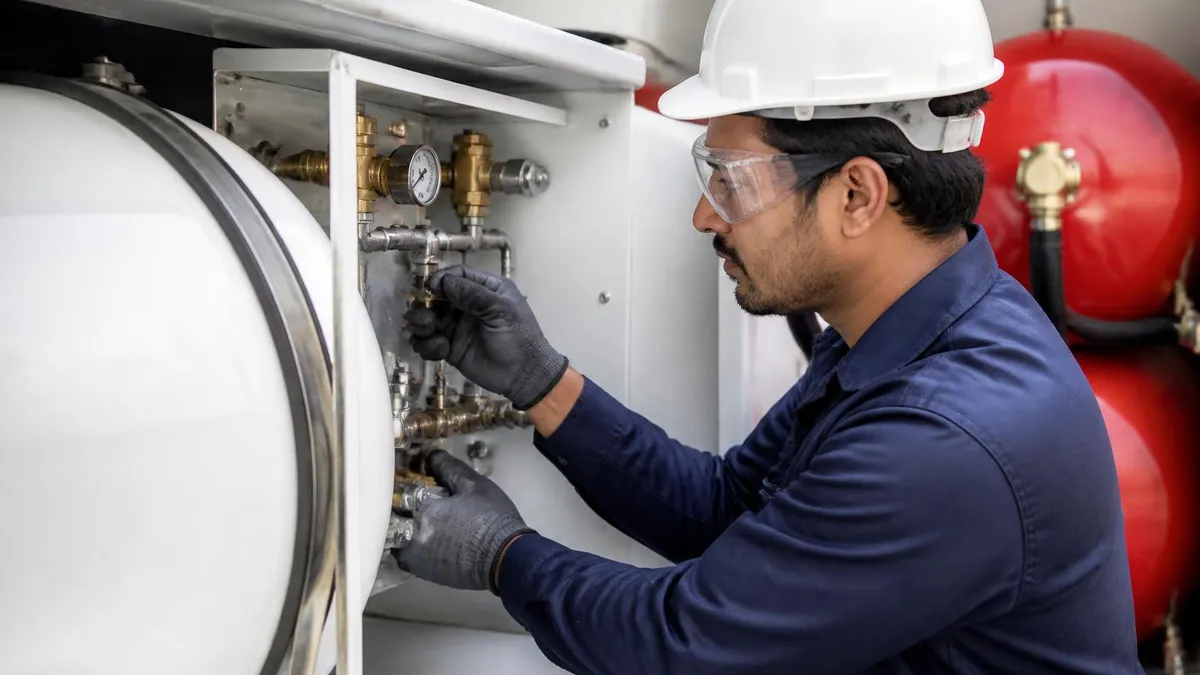
CNG vs LPG: Side-by-Side Comparison
CNG is 87-97% methane drawn from natural gas pipelines. LPG is a propane and butane blend produced as a refinery byproduct. The molecular weight gap drives every downstream difference in storage and combustion.
CNG is compressed to 3,000-3,600 psi and remains gaseous in heavy steel or composite cylinders. LPG is liquefied at just 100-200 psi in lighter tanks, making LPG vessels cheaper and more compact for the same energy.
LPG packs roughly 2.5 times the energy per unit volume of CNG at the same pressure. That gives LPG vehicles longer range per tank size, but CNG's lower per-unit cost often closes the gap on total energy delivered per dollar.
CNG refueling depends on pipeline access and on-site compression. LPG distributes by truck, train, and barge, reaching remote locations CNG cannot serve economically. Both networks are expanding, with LPG ahead on raw station count nationwide.
CNG wins on heavy-duty fleets running fixed urban routes near pipelines. LPG wins on forklifts, shuttles, school buses, rural fleets, and small-volume operations where the lower tank pressure and broader distribution outweigh CNG's fuel cost advantage.
The chemistry of CNG and LPG explains virtually every operational difference operators encounter in the field. CNG is essentially methane — a single carbon atom bonded to four hydrogens — making it the simplest hydrocarbon and the cleanest-burning fossil fuel by mass. Because methane stays gaseous at any temperature you would encounter in normal vehicle operation, the only way to store enough of it onboard is to compress it to extreme pressure. Modern CNG cylinders typically run at 3,000 psi (older) or 3,600 psi (current standard), and some heavy-duty applications push to 5,000 psi.
LPG sits a few rungs higher on the hydrocarbon ladder. Propane has three carbons and eight hydrogens, butane has four carbons and ten hydrogens, and both molecules liquefy at modest pressures. At normal ambient temperature, propane liquefies around 100-150 psi and butane around 30-50 psi. That means LPG tanks can be made from much thinner steel or aluminum, weigh roughly half as much per gallon of capacity, and cost a fraction of an equivalent CNG cylinder. The lower pressure also means simpler regulators, lighter fittings, and quieter refueling.
This pressure gap drives the second-order economics of each fuel. A CNG fast-fill station requires a multi-stage compressor, gas dryers, heat exchangers, dispenser cooling, and significant electrical service — capital costs often exceeding $1.5 million for a public-access site. An LPG dispenser is essentially a pump, a meter, and a hose; a typical retail propane site costs well under $100,000 to install. That capital differential shapes where each fuel can economically reach drivers, and it is the single biggest reason LPG has more total US dispensing locations than CNG despite CNG's lower per-gallon cost.
Energy density tells the other half of the story. CNG at 3,600 psi contains roughly 8,000 BTU per cubic foot in tank conditions, while liquid LPG holds approximately 91,000 BTU per gallon. Translated to vehicle range, an LPG tank delivers 2.5 to 3 times the energy of a same-volume CNG tank. That is why an LPG sedan can match a gasoline sedan's range with a modest under-trunk tank, while a comparable CNG sedan needs much larger cylinders or sacrifices cargo space significantly to come close.
Combustion characteristics also diverge. CNG has an octane rating around 130, well above premium gasoline's 91-93, allowing engineers to design higher compression ratios that recover some efficiency lost to the lower energy density. LPG octane sits around 104-112, still well above pump gasoline. Both fuels burn cleaner than diesel or gasoline, producing fewer particulates, less sulfur, and lower carbon monoxide. CNG burns the cleanest of the three on a CO2 basis because methane's carbon-to-hydrogen ratio is the lowest of any common hydrocarbon fuel.
Cold-weather behavior is another distinguishing factor. CNG performs identically from -40°F to 100°F because methane remains gaseous across the full range.
LPG, being a liquid stored close to its boiling point, can struggle in extreme cold — pure butane essentially stops vaporizing below 32°F, which is why US autogas blends are heavy on propane (boiling point -44°F). Operators in northern climates need to verify their LPG supplier provides HD-5 propane rather than a butane-rich winter blend that may not vaporize adequately. For a fuller picture of how CNG is moved from pipeline to tank, our cng stations walks through every step of the refueling chain.
The bottom line on chemistry and storage: CNG and LPG are not interchangeable. They require different tanks, different fuel lines, different injectors, and different engine calibration. A vehicle designed for one cannot run on the other without significant retrofitting. That hard distinction means your fuel choice is essentially locked in once you commission the vehicle, so the upfront analysis matters more than for any drop-in alternative fuel.
CNG Practice Test Questions
Prepare for the CNG - Compressed Natural Gas exam with our free practice test modules. Each quiz covers key topics to help you pass on your first try.
CNG Environmental and Economic Benefits
CNG Exam Questions covering CNG Environmental and Economic Benefits. Master CNG Test concepts for certification prep.
CNG Fleet Management and Driver Operations
Free CNG Practice Test featuring CNG Fleet Management and Driver Operations. Improve your CNG Exam score with mock test prep.
CNG - Compressed Natural Gas CNG Propertie...
CNG Mock Exam on - Compressed Natural Gas CNG Properties and Safety. CNG Study Guide questions to pass on your first try.
CNG - Compressed Natural Gas Codes, Standa...
CNG Test Prep for - Compressed Natural Gas Codes, Standards, and Compliance. Practice CNG Quiz questions and boost your score.
CNG - Compressed Natural Gas Cylinder Insp...
CNG Questions and Answers on - Compressed Natural Gas Cylinder Inspection and Regulations. Free CNG practice for exam readiness.
CNG - Compressed Natural Gas Emergency Pro...
CNG Mock Test covering - Compressed Natural Gas Emergency Procedures and Response. Online CNG Test practice with instant feedback.
CNG - Compressed Natural Gas Facility and ...
Free CNG Quiz on - Compressed Natural Gas Facility and Ventilation Requirements. CNG Exam prep questions with detailed explanations.
CNG - Compressed Natural Gas Fueling Stati...
CNG Practice Questions for - Compressed Natural Gas Fueling Station Operations. Build confidence for your CNG certification exam.
CNG - Compressed Natural Gas Fuel System C...
CNG Test Online for - Compressed Natural Gas Fuel System Components. Free practice with instant results and feedback.
CNG - Compressed Natural Gas Maintenance a...
CNG Study Material on - Compressed Natural Gas Maintenance and Troubleshooting. Prepare effectively with real exam-style questions.
CNG - Compressed Natural Gas System Diagno...
Free CNG Test covering - Compressed Natural Gas System Diagnostics and Repair. Practice and track your CNG exam readiness.
CNG - Compressed Natural Gas Vehicle Conve...
CNG Exam Questions covering - Compressed Natural Gas Vehicle Conversion and Installation. Master CNG Test concepts for certification prep.
Vehicle Applications: Where CNG LPG Gas Shines
Bi-fuel sedans, vans, and pickups dominate the light-duty alt-fuel market. Honda's Civic GX (now discontinued in the US) was the original CNG passenger benchmark, while Ford, GM, and Ram all offer factory-prepped CNG and LPG variants of half-ton pickups through gaseous prep packages. Conversions add a second tank under the trunk or bed.
For private drivers, LPG generally wins on practicality. The tanks are cheaper, the range penalty is smaller, and refueling reaches more rural locations. CNG makes sense mainly for high-mileage commuters with workplace or home refueling access who can amortize the higher cylinder cost across hundreds of thousands of miles.

CNG vs LPG: Pros and Cons Honest Breakdown
- +CNG burns cleanest of any common transport fuel with the lowest CO2 per BTU
- +CNG fuel costs typically run 30-50% below diesel on a GGE basis
- +CNG is lighter than air, dispersing safely upward in the event of a leak
- +LPG offers 2.5x the energy density of CNG, enabling smaller tanks and longer range
- +LPG infrastructure is cheaper to build and reaches rural areas CNG cannot economically serve
- +LPG vehicles cost less to convert and maintain because of lower system pressures
- −CNG requires expensive high-pressure tanks that reduce cargo space and add 200-400 pounds
- −CNG public refueling networks remain limited to under 1,000 truly public US stations
- −LPG is heavier than air, creating pooling and ignition risks in enclosed low areas
- −LPG fuel prices fluctuate seasonally with home-heating demand, especially in winter
- −LPG emissions are higher than CNG on a lifecycle CO2 basis though still below diesel
- −Both fuels lock you into single-fuel infrastructure with no easy switching between them
Choosing Between CNG LPG Gas — Decision Checklist
- ✓Map your daily route distance and confirm refueling access within range on both fuels
- ✓Compare local per-GGE prices for CNG against per-gallon LPG autogas pricing
- ✓Audit garage and parking ventilation requirements for LPG heavier-than-air leaks
- ✓Verify pipeline natural gas availability at depot for CNG time-fill economics
- ✓Calculate total tank weight impact on payload for your vehicle class
- ✓Review state and federal incentives that may favor one fuel in your jurisdiction
- ✓Check local mechanic and service-technician availability for each fuel system
- ✓Estimate cold-weather performance needs against LPG propane blend specifications
- ✓Quantify expected annual mileage to amortize conversion or premium-vehicle cost
- ✓Confirm cylinder inspection and recertification schedules with your insurance carrier
The Fuel Choice Locks In Your Infrastructure for a Decade
CNG and LPG vehicles cannot share refueling equipment, fuel lines, or onboard storage. Whichever fuel you choose for your first vehicle becomes the default for every subsequent unit because the depot infrastructure cost dominates the decision after year one. Plan the fleet trajectory before committing to the first conversion or factory order.
The financial case for CNG versus LPG depends almost entirely on how you load the calculation. Pure pump prices tell a simple story: CNG averaged $2.10 per GGE in 2025 while LPG autogas averaged $2.65 per gallon, both well below diesel at $3.85 and gasoline at $3.25. On a raw price basis, CNG looks like the clear winner. But pump price alone misses the full picture by ignoring tank cost, vehicle conversion premium, refueling infrastructure investment, range penalty, and maintenance differences that can swing total cost of ownership in either direction.
Vehicle acquisition cost is where the gap opens up. A factory-prep CNG package on a half-ton pickup adds $9,000-$13,000 to the sticker price for cylinder, regulator, fuel rail, and gaseous-prep engine internals. The same vehicle with an LPG conversion runs $4,500-$7,500 installed. For a high-mileage fleet running 30,000 miles per year, the CNG fuel-cost advantage closes that gap in roughly three years; for a personal driver at 12,000 miles annually, the payback stretches past seven years.
Infrastructure cost is the bigger swing factor for fleet operators. A modest fleet-only CNG time-fill station with 10 hoses runs $400,000-$700,000 installed including the compressor, dryer, electrical service upgrade, and dispenser controllers. An equivalent LPG dispensing setup for 10 vehicles runs $80,000-$140,000. Public-access CNG fast-fill stations cost $1.5-$2.5 million. These capital costs need to amortize across enough vehicle-miles to be defensible, which is why fleets under 30 vehicles often choose LPG even when CNG fuel prices are lower.
Maintenance economics favor LPG slightly. Lower system pressure means cheaper fittings, simpler injectors, and longer service intervals between cylinder inspections. CNG cylinders require visual inspection every three years and full recertification every five years, with eventual mandatory retirement at 15-20 years depending on cylinder type. LPG tanks have similar inspection requirements but the components themselves cost less to replace, and field repairs are simpler. Oil-change intervals tend to extend on both fuels because gaseous combustion produces less crankcase contamination than liquid fuels.
Fuel economy comparisons require careful unit normalization. CNG is sold in GGE — one gasoline-gallon-equivalent of CNG delivers the same BTUs as one gallon of regular gasoline, so MPG-equivalent numbers translate directly. LPG is sold by the physical gallon, but each LPG gallon contains only 73% of a gasoline gallon's energy. A vehicle achieving 22 MPG on gasoline will typically deliver around 22 MPGe on CNG but only about 16 actual miles per LPG gallon, even though the cost per mile may still be competitive at LPG's lower price.
Incentive programs further tilt the math. The federal Alternative Fuel Tax Credit historically reimbursed 50 cents per GGE of CNG and per gallon of LPG when used as motor fuel, though Congressional renewals have been intermittent. State-level programs in California, Colorado, Pennsylvania, Texas, and Oklahoma add another 20-50 cents per gallon equivalent in many cases. Utility-rate special tariffs for CNG fleet customers can reduce delivered gas costs another 10-15%, an advantage LPG cannot match because propane is not a regulated utility commodity.
Total cost of ownership over a 10-year, 250,000-mile life cycle for a Class 4 delivery van typically lands around $0.32-$0.38 per mile for CNG and $0.36-$0.42 per mile for LPG, both well below diesel's $0.48-$0.55 per mile range. The CNG advantage holds for fleets large enough to justify their own time-fill infrastructure; below that scale, LPG often wins on TCO because public CNG refueling premiums and depot capital wipe out fuel-price gains.
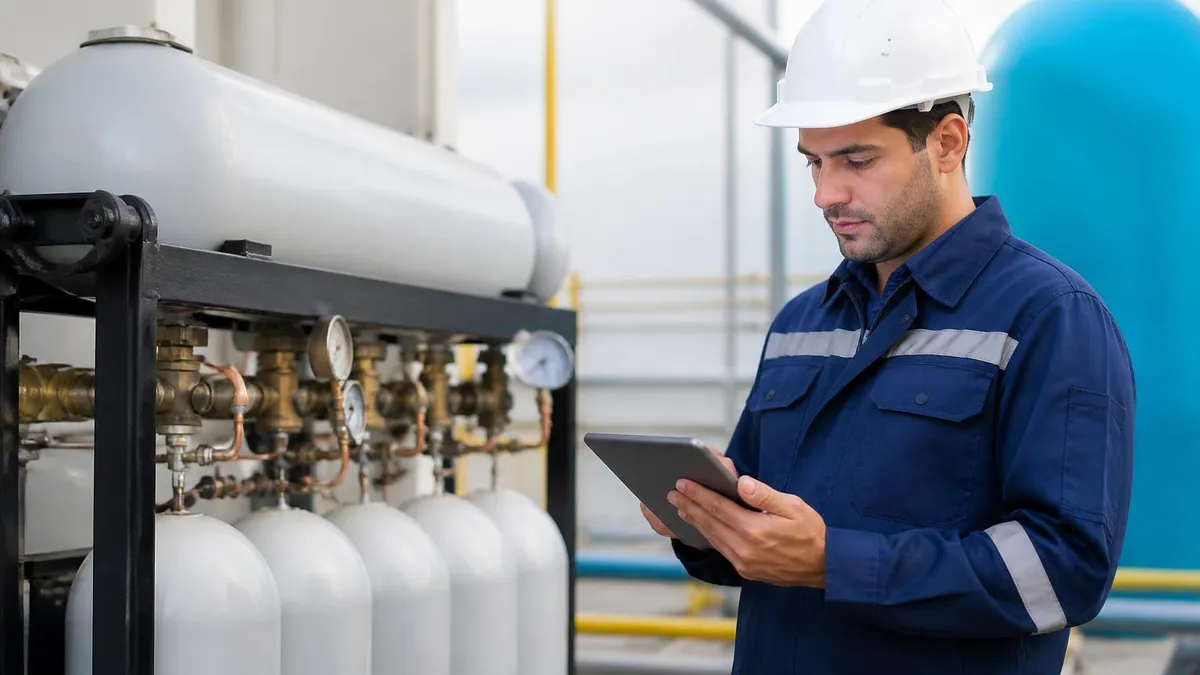
Both CNG and LPG cylinders are pressure vessels regulated by DOT and NFPA. Missing a required visual inspection, hydrostatic test, or recertification can void insurance coverage, generate federal fines, and create a serious safety hazard. Build inspection tracking into your fleet maintenance management system on day one, not after the first compliance audit catches a lapse.
Safety engineering for CNG and LPG diverges because of their fundamentally different physical behaviors. CNG, being lighter than air at standard conditions with a vapor density of about 0.55, rises and disperses rapidly when released. A leak in an open garage or outdoor environment becomes diluted below the lower flammable limit within seconds, which is why CNG vehicles can park in standard commercial garages without specialized ventilation in most jurisdictions. The challenge is the inverse problem in enclosed elevated spaces like upper repair bays where methane can accumulate at the ceiling and trigger overhead detection systems.
LPG behaves in the opposite manner. With a vapor density around 1.5-2.0, propane and butane settle into low-lying areas — basements, service pits, drainage trenches, elevator shafts — where they can build to dangerous concentrations before any odorant warning reaches workers above. Indoor LPG vehicle storage typically requires sealed or vented pits, gas detection at floor level, and prohibition of ignition sources at low elevation. For more detail on how vehicles themselves are engineered around these requirements, our cng vehicles covers tank design and crash protection in depth.
Both fuels have outstanding leak-detection profiles thanks to mandated odorants. CNG carries mercaptan injection at the utility, with a sulfur-skunk smell that humans detect at concentrations roughly 1/200th of the lower flammable limit. LPG uses ethyl mercaptan as well, providing detectable warning long before any combustible mix forms. The odorant systems are robust but not infallible — odor fade in long-storage propane cylinders is a known issue, which is why fixed propane installations should include electronic methane and propane detectors as primary protection rather than relying solely on smell.
Crash safety has been studied extensively for both fuels. CNG cylinders constructed to ANSI NGV2 and DOT FMVSS 304 standards have proven extraordinarily robust in severe collisions, often surviving impacts that destroy the surrounding vehicle structure. LPG tanks built to ASME or DOT specifications perform similarly well. Both fuels reach release-and-burn outcomes — rather than tank rupture — under worst-case conditions, with pressure-relief valves designed to vent contents through a controlled flare rather than catastrophic explosion.
Emissions profiles favor CNG slightly on greenhouse gas terms. Tailpipe CO2 emissions per BTU are about 22% lower for CNG than gasoline and 19% lower than diesel, compared with 13% lower CO2 for LPG. However, lifecycle analysis including methane leakage from natural gas extraction and pipeline distribution can erode CNG's well-to-wheel advantage if leak rates exceed roughly 2.7%. LPG, being a refining byproduct with no significant methane slip in its supply chain, has a more stable lifecycle carbon score even though combustion emissions are slightly higher.
NOx and particulate emissions are dramatically lower for both fuels than for diesel. EPA-certified CNG and LPG engines emit 50-90% less NOx than equivalent diesel engines and produce essentially zero diesel-style particulate matter. That makes both fuels attractive in air-quality nonattainment zones like Los Angeles, Houston, and the Northeast corridor where local NOx regulations are tightening faster than federal standards. School districts choosing between propane and diesel buses cite tailpipe emissions next to children as a primary driver of LPG adoption.
Regulatory treatment varies. CNG benefits from utility-style regulation with stable pricing in most states. LPG is treated as a commodity with weekly price variation tied to crude markets, home-heating demand, and crop-drying cycles. Both fuels qualify for federal Alternative Fuel Vehicle treatment, expedited HOV access in several states, and reduced highway-use taxes in some jurisdictions. Operators should review state DOT, EPA, and OSHA requirements specific to their jurisdiction before commissioning any new gaseous-fuel vehicle or station, because permit timelines can run 6-12 months in conservative jurisdictions.
Putting the CNG versus LPG decision into practical operating terms, the first question to answer is geography. If you operate from a depot or terminal within a few hundred feet of a utility natural-gas main rated for 60+ psi service, CNG becomes economically attractive because the time-fill infrastructure investment can deliver fuel at well under $1.50 per GGE for fleet-only use. If your depot is rural, served only by propane delivery trucks, or located far from main-line natural gas, LPG is almost certainly the more practical choice regardless of per-gallon pump prices in the broader market.
The second question is vehicle class and duty cycle. Heavy-duty trucks running 70,000-100,000 miles per year through urban routes typically lean CNG because the high mileage amortizes the conversion premium quickly and the centralized depot refueling matches CNG's operational profile. Forklifts, shuttle vans, school buses, and light commercial vehicles running 15,000-40,000 miles per year tend to favor LPG because the lower acquisition cost, smaller tank footprint, and broader refueling access fit the duty cycle better.
Third, consider your existing maintenance and technician resources. CNG systems require technicians trained in high-pressure gas handling, cylinder inspection protocols, and regulator service. Certifications through the Natural Gas Vehicle Institute, CSA Group, or equivalent bodies typically run $2,500-$4,500 per technician with annual recertification. LPG technician training is more widely available through community-college certification programs and propane industry credentials at lower cost, and the lower system pressure makes field repair more accessible to mechanics with general automotive backgrounds.
Fourth, think hard about the future of the fleet. If your organization expects to transition toward battery-electric vehicles within five to seven years, the lower upfront investment of LPG conversions makes more sense than the higher CNG conversion premium that may not fully amortize before EV displacement. Conversely, if you operate heavy-duty applications where battery-electric remains immature — long-haul trucking, refuse collection, transit — CNG's deeper future market presence and renewable natural gas (RNG) compatibility provide longer-term value.
Fifth, factor in renewable fuel options. Renewable natural gas, produced from landfill gas, wastewater digesters, and agricultural waste, is pipeline-compatible with conventional CNG and delivers a carbon intensity score that can run negative under California's Low Carbon Fuel Standard accounting. Renewable propane, produced from waste fats and oils through hydroprocessing, has emerged as a commercial LPG alternative with similar lifecycle benefits. Both renewable pathways are scaling rapidly, and operators choosing either fuel today can transition toward renewable supply contracts to deepen emissions reductions without changing vehicles.
Sixth, build a 10-year financial model before committing. Spreadsheet the full lifecycle including vehicle acquisition, infrastructure capital, financed depreciation, maintenance contracts, fuel costs at three price scenarios, federal and state incentives, residual value at fleet rotation, and labor cost differences for technicians.
Many fleets that intuitively expected CNG to win discover that LPG delivers lower 10-year TCO at their actual mileage and depot configuration. The opposite also happens — large urban fleets near pipeline gas almost always confirm CNG as the right choice once the model is built. The point is to run the model, not guess. Our cng car includes a sample TCO worksheet useful as a starting framework.
Finally, talk to operators running each fuel before signing any commitment. Industry peer references at fleet conferences, NGVAmerica events, Propane Education and Research Council outreach, and Clean Cities Coalition meetings provide candid feedback about the day-to-day realities of each fuel that no vendor will share. Operators are usually generous with lessons learned, and an afternoon spent visiting one CNG fleet and one LPG fleet will sharpen your evaluation more than weeks of vendor presentations.
CNG Questions and Answers

What Is CNG? A Plain-English Guide to Compressed Natural Gas

CNG Stations: How to Find, Use & What to Expect

CNG Vehicles: Complete Guide to Compressed Natural Gas Cars and Trucks
CNG Car: How Compressed Natural Gas Vehicles Work, Benefits, Costs, Available Models, and Safety
CNG Practice Test Video Answers
About the Author

Educational Psychologist & Academic Test Preparation Expert
Columbia University Teachers CollegeDr. Lisa Patel holds a Doctorate in Education from Columbia University Teachers College and has spent 17 years researching standardized test design and academic assessment. She has developed preparation programs for SAT, ACT, GRE, LSAT, UCAT, and numerous professional licensing exams, helping students of all backgrounds achieve their target scores.
Join the Discussion
Connect with other students preparing for this exam. Share tips, ask questions, and get advice from people who have been there.
View discussion (8 replies)