
CNA Training in New York: NYC and Upstate Programs Guide 2026
CNA training in Manhattan, NYC boroughs, and upstate New York — ⏳ approved programs, costs, paid options, NY 130-hour requirement, exam prep.
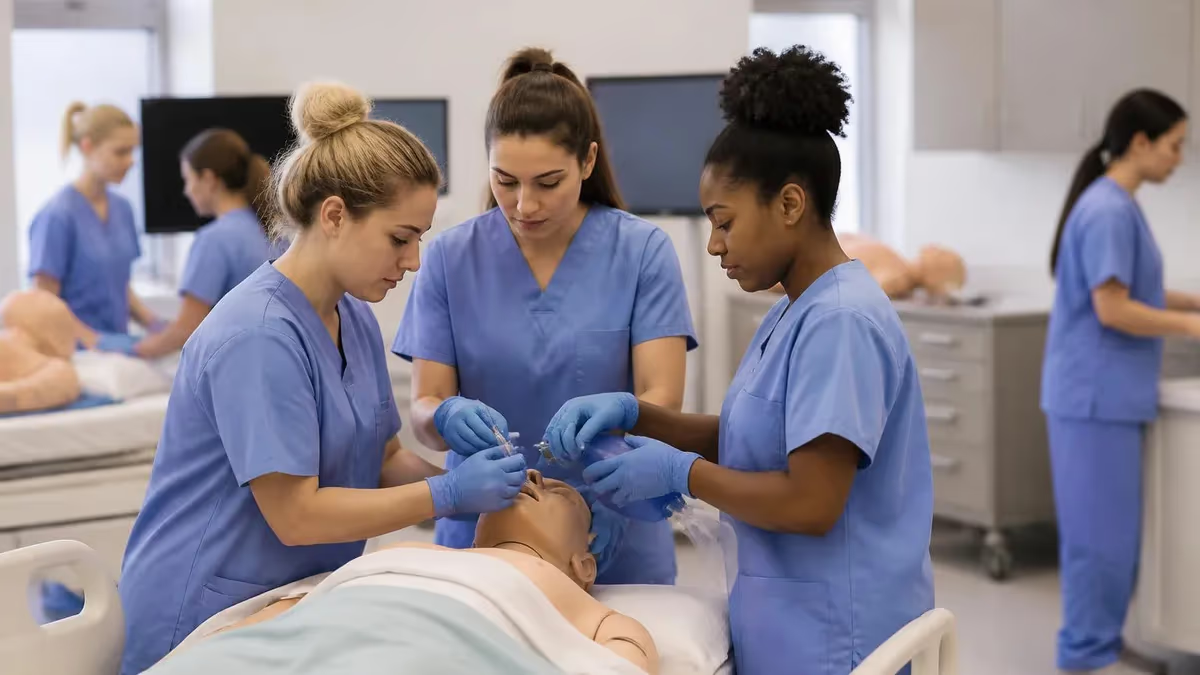
CNA Training in New York: A Complete Guide
New York State certifies more than 100,000 active Certified Nursing Assistants, and the regulatory framework here differs from most other states. Every program candidate must complete a state-approved training course of at least 100 classroom hours plus 30 supervised clinical hours, then pass the New York Nurse Aide Competency Examination administered by Prometric. That 130-hour total sits above the federal minimum of 75 hours and shapes how programs are priced, scheduled, and delivered across the state. Practice with the free CNA practice test on PracticeTestGeeks (3,000+ questions with answer explanations).
This guide covers approved CNA training in Manhattan, all five NYC boroughs, Long Island, and upstate hubs including Buffalo, Rochester, Syracuse, Albany, Binghamton, and Schenectady. Locations vary in cost, schedule density, and paid-training availability. The CNA practice test works for prep regardless of which city you train in, and the CNA meaning guide walks through the role itself before you commit to a program.
CNA: upcoming dates and official changes
- Aug 1, 2026: Connecticut (Prometric) implements new exam pricing: $48 for written only, $48 for oral only, $125 for bundled written and clinical skills, effective August 1, 2026.[5]
- Jul 1, 2026: Idaho (Prometric) raises CNA exam fees to $34 each for written and oral exams, plus test site fees, effective July 1, 2026.[6]
- Passing score (written or oral): Set per state; no national percentage published.[1]
- Retake policy: Minimum 3 attempts required; aides must be told which areas they failed before each retake.[1]
- Validity: 2 years from issuance in most states.[2]
- Renewal: State-specific; typically 2-year cycles with continuing education requirements (12–24 hours per year) and paid-work requirements.[3]
- Delivery (in-person): In-person written or oral exam plus in-person skills demonstration at approved test centers.[1]
- Eligibility (training): Minimum 75 clock hours approved training (federal requirement); at least 16 hours supervised practical training.[1]
- Score release: Days to weeks; varies by state and vendor (no national standard).[4]
Numbers in brackets link to the official sources listed under Sources & last verified. Dates that have passed are removed automatically.
CNA Exam at a Glance
| Item | Detail | Source · Verified |
|---|---|---|
| Passing score (written or oral) | Set per state; no national percentage published[1] | Centers for Medicare & Medicaid Services · Oct 14, 2026 |
| Retake policy | Minimum 3 attempts required; aides must be told which areas they failed before each retake[1] | Centers for Medicare & Medicaid Services · Oct 14, 2026 |
| Validity | 2 years from issuance in most states[2] | archive.regulations.delaware.gov · Oct 14, 2026 |
| Renewal | State-specific; typically 2-year cycles with continuing education requirements (12–24 hours per year) and paid-work requirements[3] | cdph.ca.gov · Oct 14, 2026 |
| Delivery (in-person) | In-person written or oral exam plus in-person skills demonstration at approved test centers[1] | Centers for Medicare & Medicaid Services · Oct 14, 2026 |
| Eligibility (training) | Minimum 75 clock hours approved training (federal requirement); at least 16 hours supervised practical training[1] | Centers for Medicare & Medicaid Services · Oct 14, 2026 |
| Score release | Days to weeks; varies by state and vendor (no national standard)[4] | floridasnursing.gov · Oct 14, 2026 |
Free CNA Study Tools
Interactive CNA resources on PracticeTestGeeks, free to start:
- CNA practice test — 3,000+ questions with instant scoring and answer explanations
- CNA flashcards — review key terms and concepts card by card
- CNA study guide — topic-by-topic overview of what the exam covers
- CNA cheat sheet — one-page printable summary for last-minute review
Quick Facts for New York CNA Training
New York requires 100 classroom hours plus 30 supervised clinical hours (130 total). The Prometric NY Nurse Aide Competency Exam has written and skills portions. Tuition ranges from $0 (paid nursing-home programs) to $1,800 at private schools. Most NYC programs run 4-8 weeks full-time. Upstate programs are often shorter and cheaper. Anyone over 17 with a high school diploma or GED can apply; some programs accept 16-year-olds with parental consent.
New York's 130-Hour Training Requirement
New York is one of the stricter states for CNA training hour minimums. The 100 classroom hours cover anatomy and physiology basics, infection control, body mechanics, communication, resident rights, mental health and social service needs, basic nursing skills, personal care skills, and care of the cognitively impaired resident. The 30 clinical hours must happen in a licensed long-term care facility or hospital under registered-nurse supervision, with direct patient contact. Both portions are required before you can sit for the state competency exam.
What this means practically: a full-time 4-week program in New York runs roughly 32-35 hours per week of program work, which is intense but doable. Many NYC and upstate programs split the calendar into 6-8 weeks at a less brutal pace, giving more time for skill repetition before the exam. Part-time evening or weekend programs typically run 10-16 weeks. Always confirm the program is on the New York State Department of Health's approved list before paying tuition — unapproved programs leave you ineligible for the Prometric exam and the New York Nurse Aide Registry.
Where CNAs Train Across New York
Highest density of programs in the state. Hospital-affiliated schools, community college tracks, private nursing schools, and paid nursing-home programs. Tuition trends higher ($900-$1,800) but free paid-training options exist through major nursing home networks.
Several state-approved schools centered in Flatbush, Sunset Park, and downtown Brooklyn. Mix of community-based private schools and nursing-home sponsored tracks. Tuition typically $700-$1,500; paid training widely available through Brooklyn nursing homes.
Programs in Jamaica, Flushing, Long Island City, and Far Rockaway. Strong multilingual options reflecting the borough's demographics. Tuition $600-$1,400. Many programs serve evening and weekend cohorts for working students.
Programs concentrated near the Hub, Fordham, and Pelham. Bronx Community College runs an established CNA track. Several nursing-home sponsored paid programs operate through the borough's many long-term care facilities.
Fewer programs than the other boroughs, but several reliable options through the Richmond County educational consortium and Staten Island nursing homes. Easier admission than crowded Manhattan and Brooklyn programs.
Many programs running through community colleges (Suffolk County Community College, Nassau Community College) plus private schools. Tuition $700-$1,500 with strong state approval rates and clinical placement reliability.
CNA Training in Manhattan
Manhattan offers the largest selection of CNA programs in the state and the widest tuition spread. Three program types dominate. First, nursing-home sponsored paid training programs operate through facilities like Isabella Geriatric Center, Cabrini, Amsterdam Nursing Home, and the Hebrew Home network. These programs pay you while you train (typically $13-$16 per hour) in exchange for an employment commitment of 6-12 months post-certification. Tuition is effectively $0 — the most affordable path to a CNA credential in NYC.
Second, private nursing schools like Manhattan Institute for Career Studies, Allen School of Health Sciences (Brooklyn-based but serves Manhattan students), and Mandl School of Allied Health Education run 4-8 week tracks at $1,000-$1,800. Reputation varies; check recent student reviews and Prometric pass rates before paying tuition. Third, community-based programs run through CUNY's continuing education arms (Hunter, Borough of Manhattan Community College) at $700-$1,200 with state-approved curriculum and stronger institutional accountability.
Major NYC Program Types
Several large NYC nursing-home networks run their own state-approved CNA training in exchange for employment commitments. You earn an hourly wage during training (typically $13-$16/hour) and start as a CNA immediately after passing the Prometric exam. Total cost: $0 or a small refundable deposit. Commitment: 6-12 months post-certification at the sponsoring facility. Best for candidates without savings who need income during training. Search 'paid CNA training NYC' for current openings.
Outer Boroughs and Long Island CNA Training
Brooklyn, Queens, the Bronx, and Staten Island each have a developed CNA training ecosystem. Brooklyn programs cluster around major nursing homes like Menorah Center for Rehabilitation, Cobble Hill Health Center, and Coney Island Hospital. Many Brooklyn programs offer Russian, Spanish, Yiddish, and Haitian Creole language support reflecting the borough's diverse student base.
Queens programs run through Jamaica, Flushing, and Long Island City. The borough's nursing homes (Parker Jewish Institute, Margaret Tietz, Silvercrest Center) sponsor paid training, and CUNY's LaGuardia and Queensborough Community Colleges run state-approved tracks. The Bronx hosts Bronx Community College's CNA program along with several nursing-home sponsored options near Co-op City and Fordham. Staten Island programs concentrate at Staten Island University Hospital affiliates and the Richmond Center for Rehabilitation.
Long Island (Nassau and Suffolk Counties) hosts a distinct CNA ecosystem. Suffolk County Community College and Nassau Community College run state-approved tracks at $700-$1,200. Most Long Island programs target a 6-8 week timeline with weekend and evening cohorts available. Wages run $17-$22 per hour at Long Island nursing homes, $19-$25 at hospital systems, with lower cost of living than NYC. For residents, training locally often beats commuting into the city — same credential, easier daily logistics. The CNA role overview applies identically across all NY regions.
The New York State Department of Health maintains the official list of approved CNA training programs. Before paying tuition to any school, verify it appears on the current NYSDOH approved list. Unapproved programs issue completion certificates that Prometric will not accept for the New York Nurse Aide Competency Examination, leaving you with a worthless credential and lost tuition. This 5-minute verification step is the single most important safeguard against scams in the New York CNA training market.
CNA Training Upstate: Buffalo, Rochester, Syracuse, Albany
Outside the New York metro area, CNA training is generally cheaper, faster to enter, and easier to schedule. Buffalo hosts programs through Erie Community College, Trocaire College, and several nursing-home sponsored tracks at facilities like Elderwood and McAuley Residence. Tuition $400-$1,200, with paid training widely available through Western New York nursing homes facing staff shortages.
Rochester anchors central New York's CNA pipeline through Monroe Community College, Isaac Gordon Nursing Home programs, and several private schools. St. Ann's Community in Rochester runs a long-standing paid training program. Syracuse, Albany, Binghamton, and Schenectady follow similar patterns: community college tracks at $400-$900, plus nursing-home sponsored paid programs that effectively cost $0. Utica, Niagara Falls, and Middletown round out the upstate ecosystem with smaller-volume programs.
Geography matters more than candidates often realize. The cheapest program isn't always the best choice if the commute eats into clinical practice time or conflicts with childcare. Candidates planning to work at a specific facility should investigate whether it sponsors paid training or partners with specific schools — training at a school that places clinical students at your target employer is the fastest path to your preferred job. Conversely, candidates with geographic flexibility can train in a lower-cost upstate market and then move to NYC for the $5-$8 per hour wage premium, paid off within a few months of employment.
New York CNA Training by the Numbers
Paid CNA Training in New York
New York's nursing-home staffing shortage drives significant demand for paid CNA training. Paid programs work simply: a nursing home or hospital sponsors your training, pays you an hourly wage during the program (typically $13-$16 per hour in NYC, $11-$14 upstate), and hires you as a CNA immediately after you pass the Prometric exam. In exchange, you commit to working at the sponsoring facility for a defined period — usually 6-12 months — after certification. If you leave early, some programs require partial tuition repayment; others simply prefer the goodwill arrangement.
Paid training is widely available in NYC through networks like Hebrew Home, Centers Health Care, and Atria. Upstate, paid programs run through facilities like Elderwood (Western NY), St. Ann's Community (Rochester), and many independent nursing homes facing staff shortages. Best places to find paid programs: Indeed, ZipRecruiter, the New York Department of Labor career portal, and direct outreach to nursing-home HR departments. Searches like 'paid CNA training Brooklyn,' 'paid CNA training Buffalo,' or 'CNA apprenticeship New York' surface current openings. Apprenticeship-registered programs may also offer wage progression and tuition assistance for further nursing education.
How to Choose a New York CNA Program
- ✓Verify state approval through NYSDOH approved-programs list
- ✓Confirm program covers full 130-hour New York requirement
- ✓Check Prometric exam pass rate — ask for the program's most recent figure and compare it with other local programs
- ✓Identify the named clinical-rotation facility before paying tuition
- ✓Compare total cost: tuition + exam fees + uniforms + background check
- ✓Investigate paid options through nursing-home sponsored programs
- ✓Read recent student reviews on Indeed, Yelp, and Google
- ✓Confirm class schedule (day, evening, weekend) matches your availability
- ✓Ask about financial aid, payment plans, and Workforce Development assistance
- ✓Match program length to your learning style — 4 weeks intense versus 8-12 weeks paced
The New York Nurse Aide Competency Exam
After completing a state-approved program, candidates schedule the New York Nurse Aide Competency Examination through Prometric. The exam has two portions: a written multiple-choice section (typically 60 questions, 80 percent passing) and a skills demonstration section (5 randomly assigned skills performed in front of a Prometric evaluator, with critical-action steps required to pass each). Exam fee is around $115 for the combined written and skills test.
NYC candidates typically test at the Manhattan center near Penn Station, the Brooklyn center in Downtown Brooklyn, the Queens center in Long Island City, or the Bronx center near Yankee Stadium. Upstate candidates use centers in Albany, Buffalo, Rochester, Syracuse, Binghamton, Plattsburgh, and Watertown depending on geography. Both portions can be taken the same day in most NY testing centers.
Plan to arrive 30 minutes early on test day. Bring two forms of identification (one government-issued photo ID like a driver's license or passport, one secondary like a Social Security card or birth certificate). Wear professional scrubs and closed-toe shoes for the skills portion. Skills tests use a volunteer or test-administrator standing in as the simulated resident. The Prometric evaluator scores critical-action steps without explanation during the test.
After passing both portions, your test results transmit electronically to the New York Nurse Aide Registry within 5-10 business days. Your training program submits final paperwork; once everything is processed, you appear on the active registry and can begin certified work. Some employers pre-hire conditional on registry verification, allowing immediate employment the day your name appears in the system. Most New York CNAs find their first job within 2-4 weeks of registry approval. Keep your registry record current — address updates, renewals, and employment verifications all happen through the Health Commerce System portal.
Common Skills Tested on the NY Prometric Exam
Wash hands using proper technique with timing, friction, and full coverage. Tested on virtually every candidate as a foundational infection-control skill. Critical actions include adequate water flow, soap application, 20-second friction, and proper drying.
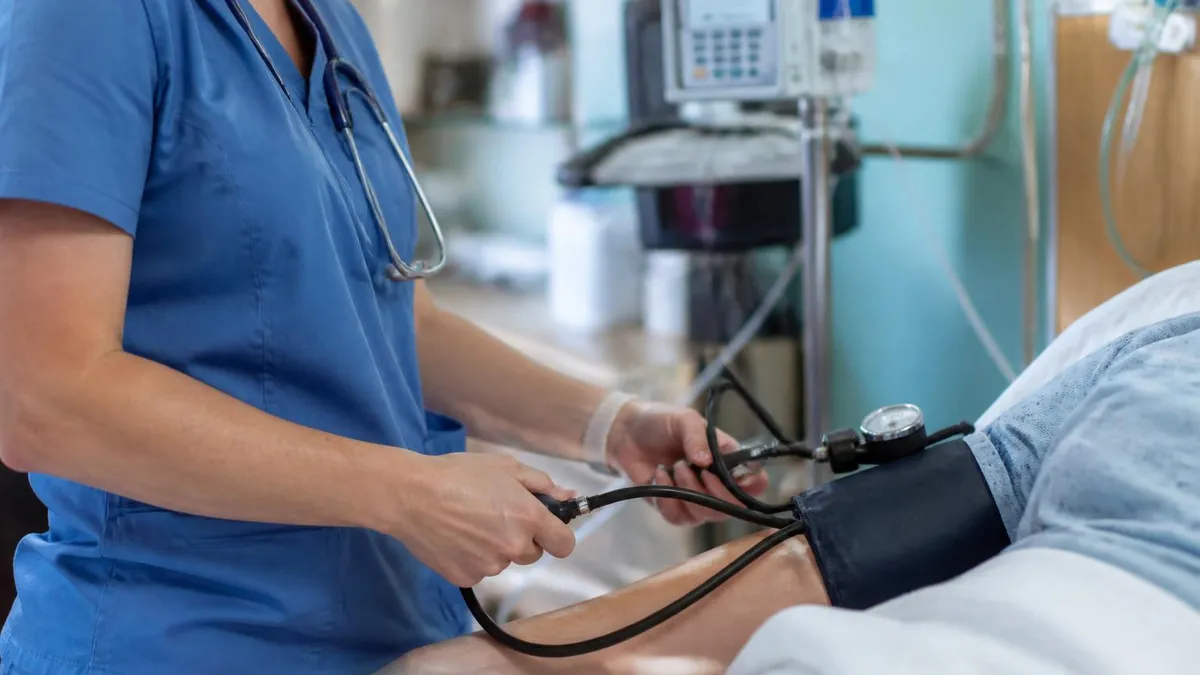
Measure pulse, respirations, and blood pressure (or temperature, depending on assignment). Documentation accuracy matters as much as technique. Verify equipment, position the resident, and record results immediately.
Transfer a resident from bed to wheelchair using gait belt and proper body mechanics, or assist with ambulation. Lock wheels, use gait belt correctly, follow safety positioning, and reassure the resident throughout.
Perineal care, mouth care, denture care, partial bath, or dressing a resident with a weak side. Critical actions include privacy, communication, and protecting the resident's dignity.
Perform passive range of motion on shoulder, elbow, knee, or other joint as assigned. Slow, gentle movement; explain each step; respect the resident's comfort level.
Empty a urinary catheter drainage bag, measure and record output, or measure intake. Universal precautions, accurate measurement, proper documentation.
Costs Beyond Tuition
The sticker price of a CNA program is only part of the total cost. Even free or paid-training programs come with ancillary expenses. Plan for: $115 for the Prometric exam fee, $25-$50 for the New York Nurse Aide Registry application, $40-$100 for background check and fingerprinting (mandatory in New York), $50-$100 for scrubs and a stethoscope, $30-$60 for a basic two-piece uniform plus shoes if not provided, $20-$40 for textbooks if not included in tuition, and $50-$150 for the required physical exam, immunization documentation, and TB screening before clinicals start.
Total out-of-pocket beyond tuition typically runs $300-$600. Some employers and paid programs cover all of these costs as part of the package; others pass them to the student. Before committing, ask the program for an itemized list of all expected costs from enrollment through registry. A program quoted at $700 that adds $500 in unlisted fees ultimately costs $1,200 — significantly more than a $900 program that includes everything. The CNA pay rate guide shows what these upfront costs produce in starting wages.
NYC versus Upstate CNA Training
- +NYC: higher starting wages ($18-$24/hr) post-certification
- +NYC: more program options across all five boroughs
- +NYC: paid training widely available through major nursing-home networks
- +NYC: stronger hospital-based PCT pathways
- +NYC: clinical exposure to diverse patient populations
- +NYC: more rapid promotion paths into LPN and RN bridge programs
- −NYC: significantly higher cost of living offsets wage advantages
- −NYC: longer commutes between class, clinical, and home
- −NYC: more crowded programs with longer waitlists
- −Upstate: lower wages but lower cost of living means similar net buying power
- −Upstate: fewer program options outside major metros
- −Upstate: less specialization variety (hospital, hospice, home health, dementia)
Pros and Cons at a Glance
| Pros | Cons |
|---|---|
| NYC: more program options across all five boroughs | NYC: significantly higher cost of living offsets wage advantages |
| NYC: paid training widely available through major nursing-home networks | NYC: longer commutes between class, clinical, and home |
| NYC: stronger hospital-based PCT pathways | NYC: more crowded programs with longer waitlists |
| NYC: clinical exposure to diverse patient populations | Upstate: lower wages but lower cost of living means similar net buying power |
| NYC: more rapid promotion paths into LPN and RN bridge programs | Upstate: fewer program options outside major metros |
Eligibility Requirements Across New York
To enroll in a state-approved CNA program in New York, candidates must generally meet a short list of requirements. Be at least 17 years old (some programs accept 16 with parental consent; most prefer 18 plus). Hold a high school diploma or GED, or be enrolled in a program leading to one.
Pass a criminal background check — certain felony convictions disqualify candidates from working in long-term care settings under New York law. Complete a TB test and submit immunization records (MMR, hepatitis B, varicella, influenza for the season). Pass a physical exam confirming ability to perform the physical demands of CNA work.
Some programs also require an English-language proficiency screening (TABE, basic reading and math assessments) since the Prometric exam is delivered in English. Several NYC programs accommodate Spanish-, Russian-, Mandarin-, Cantonese-, Korean-, Bengali-, and Haitian-Creole-speaking students with bilingual instructors during the classroom portion. The state competency exam itself remains in English. Plan accordingly if English is a second language — additional study time for medical terminology pays off significantly on test day.
New York Public Health Law restricts certain criminal convictions from CNA certification, particularly violent crimes, sex offenses, felony drug convictions, theft from vulnerable adults, and Medicaid fraud. Some misdemeanors may be reviewed case-by-case through the New York Office of the Professions. If you have any criminal record, request a clearance review through your program or directly with NYSDOH before paying tuition. Spending $1,500 only to be denied registry approval is among the most painful avoidable mistakes in the New York CNA pipeline.
What Comes After Certification
A New York CNA certification opens immediate employment in long-term care facilities, hospitals, home-health agencies, assisted-living communities, hospice services, and adult day programs. Starting wages in NYC range from $18 to $24 per hour for nursing-home CNAs, $20 to $28 for hospital PCTs, and $16 to $22 for home-health aides. Upstate wages are 15-25 percent lower in nominal terms but cost of living typically offsets most of that gap.
Many CNAs use the credential as a stepping-stone to LPN or RN programs through hospital tuition-reimbursement tracks at NYC Health and Hospitals, Northwell, and Mount Sinai. New York's registered apprenticeship system through the Department of Labor offers another pathway: paired classroom training with paid on-the-job learning under a journey-level mentor, typically 12-18 months long. Apprentices earn progressively higher wages as they complete milestones. The 1199SEIU Training and Employment Funds anchor the union-affiliated apprenticeship offerings.
The advantage of apprenticeship: guaranteed employment, wage progression, and often automatic enrollment in tuition-assistance pathways toward LPN or RN. The disadvantage: longer total time commitment than a 4-8 week standalone program. For candidates with a long-term healthcare career trajectory, apprenticeship is often the strongest path. Schedule formats vary across programs — full-time day, accelerated 4-week, evening (8-12 weeks), weekend (10-16 weeks), and hybrid online-plus-in-person all coexist across the state.
Brooklyn and Queens schools commonly offer bilingual classroom support in Spanish, Russian, Mandarin, Cantonese, Korean, Bengali, Haitian Creole, and other languages, though the Prometric exam is delivered only in English. The CNA renewal process keeps your certification active long-term, and the CNA practice test works for apprentices and standalone-program students alike.
NYC nursing-home CNA starting wages: $18-$24 per hour. NYC hospital PCT starting wages: $20-$28 per hour. Upstate nursing-home CNA: $14-$18 per hour. Long Island: $17-$22 per hour. Home-health aides with CNA credentials: $16-$22. Apprenticeship wages start lower but scale through structured milestones. Most CNAs find their first job within 2-4 weeks of registry approval.
Financial Aid and Workforce Development Funding
Multiple funding streams help New York students pay for CNA training. Federal Pell Grants cover community-college tuition for candidates pursuing CNA certification as part of a longer educational pathway. New York's Tuition Assistance Program (TAP) covers some training programs that meet state criteria. The Department of Labor's workforce development funds, distributed through local workforce investment boards, can cover full tuition plus exam fees for unemployed and underemployed candidates entering high-demand healthcare fields.
Properly stacking these sources often reduces a $1,500 program to $0 out-of-pocket for qualifying students. Start the funding application process 4-6 weeks before your intended program start date — workforce development applications and Pell Grant verification each take 2-4 weeks. Bring documentation of income, residency, and employment history to any funding interview. Some sources require enrollment in a specific approved program; verify your target school's funding eligibility before committing.
Funding Sources for NY CNA Training
Federal Pell Grants cover community-college tuition for eligible candidates with demonstrated financial need. Apply via FAFSA at studentaid.gov. Best for candidates pursuing CNA certification through a CUNY or SUNY community college program, especially when CNA training is part of a longer healthcare pathway like LPN or RN.
Retakes, Re-Certification, and Maintenance
Candidates who fail one or both portions of the New York Nurse Aide Competency Examination can retake the failed portion. Most candidates pass on the first or second attempt. After three failed attempts, you must complete a state-approved remediation program before testing again.
Pass rates on second attempts are typically higher than first attempts because the diagnostic information from the first attempt helps candidates focus on weak areas. Use the score report to identify which skill domains need extra practice and which written-exam categories tripped you up. Most candidates who fail the first time pass within 6 weeks of additional focused practice.
Once certified, New York CNAs must work at least 8 hours of paid patient care during the 24 months before their certification anniversary to maintain registry status. CNAs who let certification lapse must complete a new state-approved training program plus re-take the Prometric exam. Continuous employment in long-term care, hospital, or home-health settings automatically satisfies the work-hour requirement. The CNA renewal guide walks through the full maintenance process.
Sample CNA Practice Questions
Try these questions from our free CNA practice tests. The correct answer and an explanation follow each question.
When using a gait belt to ambulate a resident, where should the CNA position themselves?
- A. Directly in front of the resident
- B. Behind and slightly to the side of the resident
- C. To the resident's stronger side and slightly behind
- D. To the resident's weaker side and slightly behind
Answer: D. To the resident's weaker side and slightly behind
Standing on the weaker side positions the CNA to provide support where the resident is most likely to lose balance.
What water temperature is generally considered safe for bathing an adult resident?
- A. 115°F (46°C)
- B. 110°F (43°C)
- C. 105°F (41°C)
- D. 100–105°F (38–41°C)
Answer: D. 100–105°F (38–41°C)
Water between 100–105°F is comfortably warm and safe, reducing the risk of scalding, especially in elderly patients with reduced sensation.
A resident with a history of alcohol use disorder is admitted to a long-term care facility. The CNA notices the resident is sweating, trembling, and appears anxious on day two. The CNA should:
- A. Offer the resident a warm drink to calm their nerves
- B. Assume the resident is nervous about the new environment
- C. Report these symptoms to the nurse immediately as they may indicate withdrawal
- D. Encourage the resident to exercise to reduce anxiety
Answer: C. Report these symptoms to the nurse immediately as they may indicate withdrawal
Sweating, trembling, and anxiety in a resident with alcohol use disorder may indicate alcohol withdrawal, which is a medical emergency requiring prompt nursing assessment.
A CNA is asked by the facility's activities director to apply a complex, sterile dressing to a small abrasion on a resident's arm before an outdoor event. The supervising nurse is busy in another wing. The CNA should:
- A. Apply a simple adhesive bandage instead of the complex dressing.
- B. Refuse the task, stating it is outside the CNA's scope of practice, and inform the activities director to find the nurse.
- C. Attempt to apply the sterile dressing carefully as requested.
- D. Apply a non-sterile gauze pad and report it to the nurse later.
Answer: B. Refuse the task, stating it is outside the CNA's scope of practice, and inform the activities director to find the nurse.
Applying a sterile dressing is a nursing task that falls outside the CNA's scope of practice. [9, 10, 18] It requires sterile technique and wound assessment skills. The correct action is to recognize this boundary, refuse to perform the task, and ensure the person who made the request understands they need to find a licensed nurse to perform it. Applying any other dressing would be inappropriate and documentation alone is not sufficient.
Take the full CNA practice test
Many readers pair this guide with the point of care for cna to check their readiness before exam day.
Many readers pair this guide with the cna school near me to check their readiness before exam day.
Many readers pair this guide with the cna program near me to check their readiness before exam day.
CNA Questions and Answers
Sources & last verified
- Centers for Medicare & Medicaid Services — passing score, retake policy, delivery, eligibility (official source). “The State shall establish the passing standard for the written or oral examination and for the skills demonstration.” Verified Oct 14, 2026.
- archive.regulations.delaware.gov — validity (official source). “CNA certification shall be effective for 2 years following the date of issue and shall expire 2 years following such date” Verified Oct 14, 2026.
- cdph.ca.gov — renewal (official source). “Certificates are renewed every two years, and the required training is 48 hours of in-service training or continuing education” Verified Oct 14, 2026.
- floridasnursing.gov — score release (official source). “After you pass both components and your application is fully processed, the Board adds you to the Registry and mails your certificate. The process can…” Verified Oct 14, 2026.
- prometric.com — other (official source). “Effective August 1, 2026, the following exam pricing will be implemented” Verified Oct 14, 2026.
- prometric.com — other (official source). “Effective July 1, 2026, the following exam pricing will be implemented: $34 written, $34 oral, plus test site fees” Verified Oct 14, 2026.
How we verify: editorial & fact-checking policy. Report an error: contact us.
Sources & references
Prepared by the Practice Test Geeks editorial team using AI-assisted drafting; exam facts are checked against the official sources below. Editorial policy
- floridasnursing.gov — Eligibility, exam format · verified Oct 2026
- law.cornell.edu — Eligibility · verified Oct 2026
- law.cornell.edu — Test delivery · verified Oct 2026
- prometric.com — Exam information · verified Oct 2026