
CNA in VA: How to Become a Certified Nursing Assistant in Virginia 2026
🎓 A CNA in VA is certified by the Virginia Board of Nursing after approved training and a state exam. See steps, jobs, pay and exam tips.
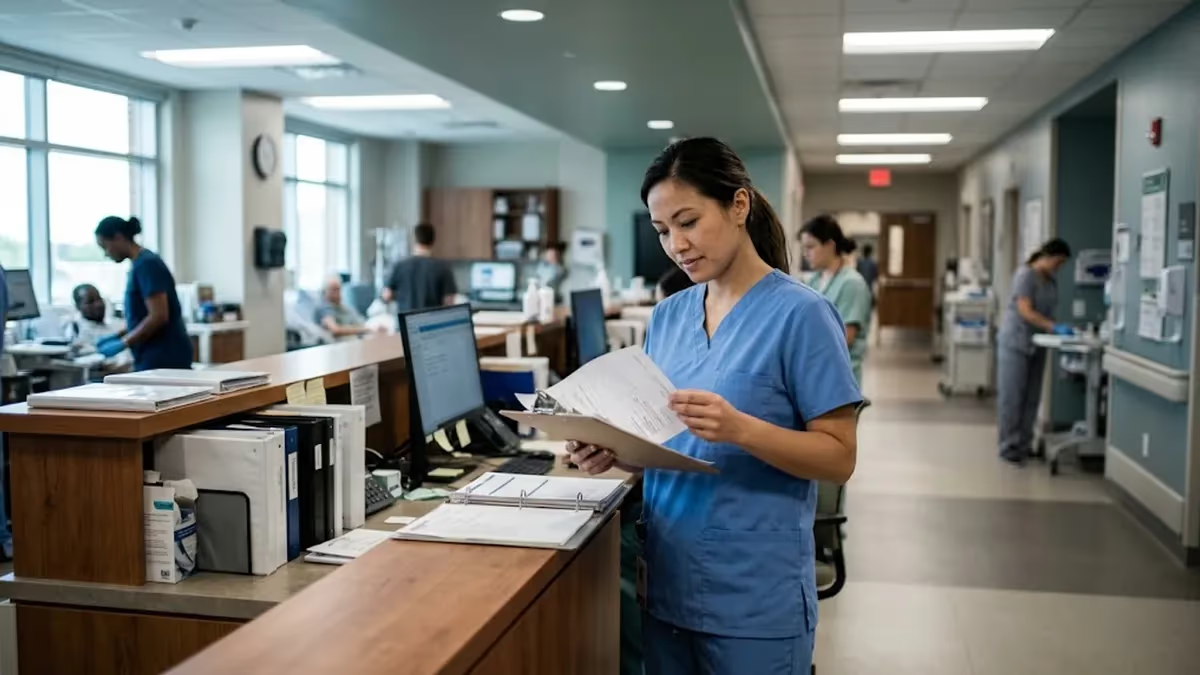
A CNA in VA is a certified nursing assistant listed on the Virginia nurse aide registry after completing a state-approved training program and passing the competency exam. Training must meet the federal 75-hour minimum, including at least 16 supervised practical hours. Certification is issued by the Virginia Board of Nursing and generally lasts two years before renewal.
Cna in Va: Key Facts (Updated October 2026)
| Fact | Details | Source |
|---|---|---|
| Minimum training | 75 clock hours under federal rules, with at least 16 hours of supervised practical training. State-approved programs can require more. | 42 CFR 483.154 (Cornell LII) |
| Exam format | Written or oral exam plus an in-person skills demonstration at approved test centers | 42 CFR 483.154 (Cornell LII) |
| Passing score | Set by each state; no national percentage is published | Virginia Board of Nursing |
| Retake policy | Candidates get a minimum of 3 attempts and must be told which areas they failed before each retake | 42 CFR 483.154 (Cornell LII) |
| Score release | Days to weeks, depending on the state and testing vendor | Virginia Board of Nursing |
| Certification validity | About 2 years in most states, with renewal tied to paid nursing-related work | Virginia Board of Nursing |
Many Virginia candidates warm up with the national-style question bank behind the michigan cna practice test hub, because core nursing assistant content repeats from state to state. Handwashing, infection control, resident rights, vital signs and safe transfers appear on nearly every exam. Practicing early shows you which topics need work before you pay for a test attempt or schedule your skills evaluation.
The phrase cna in va covers several different searches: people who want training, people who want a job, and people who already hold a certificate and need to renew it. This guide handles all three in order. You will see the certification steps, what the job involves day to day, where to look for cna jobs near me, how electronic charting works, and how to prepare so you pass on the first attempt.
Virginia has a steady demand for nursing assistants because its population is aging and long-term care facilities run on tight staffing ratios. Nursing homes, assisted living communities, hospitals, rehabilitation centers and home health agencies all hire certified aides. Many employers advertise sign-on bonuses and tuition help. That makes certification one of the faster routes into healthcare, often taking only a few weeks of full-time study before you can start working.
Certification is not the same as completing a class. A training certificate shows you finished coursework, but you only become a CNA in Virginia once you pass the competency evaluation and the Board of Nursing places you on the registry. Employers verify that listing before they hire you. Anyone claiming to be a CNA without an active registry entry cannot legally work in most nursing home and Medicare-funded roles.
Readers who are comparing job markets across the country sometimes start with CNA Jobs in Las Vegas and then look closer to home. Wages, shift lengths and certification rules differ by state, but the underlying job is the same. Learning the national basics first makes it easier to judge any Virginia offer, and it helps if you ever move and need to transfer your certification.
Costs and timelines vary by program, so verify current figures with the Virginia Board of Nursing before you enroll. Community colleges, career schools, high school programs, the Red Cross and some employers all offer approved courses. Some nursing homes pay for training in exchange for a work commitment. Ask every program whether tuition includes the exam fee, scrubs, background check and textbooks, because those extras can add up quickly.
This article is educational and does not replace guidance from the Board of Nursing, which sets the rules you must follow. Requirements change, and fees at testing vendors are updated periodically, as other states have shown in 2026. Use the key facts above as a starting map, confirm details on official sites, and then use the sections below to plan each step with confidence.
CNA in VA by the Numbers
How Do You Become a CNA in VA?
Confirm You Meet Basic Requirements
Choose a State-Approved Program
Complete Classroom and Clinical Hours
Pass the Competency Exam
Get Listed and Start Working
What Does a CNA in VA Do With PointClickCare?
A CNA in Virginia handles the daily personal care that keeps residents and patients safe and comfortable. That includes bathing, grooming, dressing, toileting, feeding, repositioning, helping with walking, and measuring vital signs. You are the person who spends the most time at the bedside, so you often notice changes first, such as a new bruise, reduced appetite or unusual confusion, and report them to the nurse.
Most Virginia nursing homes document that care electronically, and PointClickCare is one of the most widely used systems. Searches like pointclickcare cna, point click care cna and point of care cna all describe the same thing: the CNA module where aides record tasks during or right after each shift. It replaces paper flow sheets and lets supervisors confirm care was actually delivered.
The point of care screen typically shows a list of tasks for each resident, such as meals eaten, fluids offered, repositioning, bathing, bowel and bladder output, and mobility. You tap the correct response and save. Accuracy matters because nurses, dietitians and therapists use those entries to make decisions. If you chart that a resident ate 75 percent of lunch when they ate far less, a real problem could go unnoticed.
People often search for the pointclickcare cna login or the pointcare click cna page, but there is no public sign-up. Your employer creates your account, assigns your username and gives you the facility web address or app link. Never share your password, never chart under another aide's name, and always log out on shared kiosks. Misuse of credentials can lead to disciplinary action and may be reportable to the Board.
If your login fails, do not keep guessing. Repeated bad attempts can lock the account. Contact your unit manager or the facility's IT contact to reset it, and check that you are using the correct facility link, since each organization has its own address. Many facilities offer training during orientation, and most new aides become comfortable with the screens within a week or two of regular use.
Documentation skills are also testable knowledge. The Virginia exam and most training programs stress that you must record only what you personally did or observed, in objective terms, and report anything unusual right away. Writing resident refused breakfast is better than writing resident was being difficult. Practicing neutral, factual wording now builds a habit that protects residents, nurses and you.
Beyond charting, expect to follow strict rules on resident rights, privacy, abuse prevention and mandatory reporting. You must report suspected abuse, neglect or exploitation immediately. You will also work as part of a team, answering call lights, assisting during emergencies and communicating clearly at shift change. If you want a comparison with another state, read the georgia cna registry guide to see how registry rules and duties line up.
Where Can You Find CNA Jobs Near Me in Virginia?
Skilled nursing and long-term care facilities are the largest employers of aides, so they dominate any search for cna jobs near me. You will find openings in every region, from Northern Virginia and Richmond to Hampton Roads and the Shenandoah Valley. Shifts are often eight or twelve hours, and weekends and nights usually pay a differential on top of the base wage.
These jobs are also the best place to learn. You will care for many residents each shift, practice transfers and feeding daily, and use electronic charting such as PointClickCare. Ask about staffing ratios, orientation length and whether the facility pays for continuing education. A short, structured orientation with a preceptor is a good sign that the employer invests in new aides.
Is Working as a CNA in VA Worth It?
- +You can enter healthcare in a matter of weeks instead of years
- +Demand from nursing homes, hospitals and home health stays strong
- +Many employers offer sign-on bonuses or tuition assistance
- +The job builds clinical experience for future nursing programs
- +Shift choices include days, nights, weekends and part-time schedules
- +Certification is portable to other states through reciprocity processes
- −The work is physically demanding, with lifting and long periods standing
- −Starting pay can be modest compared with the workload
- −Short staffing can lead to heavy resident assignments
- −Emotional stress is common when caring for seriously ill residents
- −Weekend, holiday and night shifts are often required
- −Renewal depends on documented paid work, so gaps can cause problems
What Is the CNA Certification Checklist for Virginia?
- ✓Confirm age and education requirements with your chosen program.
- ✓Choose a program approved by the Virginia Board of Nursing.
- ✓Ask whether tuition covers the exam fee and supplies.
- ✓Gather immunization and TB test records before class starts.
- ✓Complete the criminal background check on time.
- ✓Attend every classroom session and all supervised clinical hours.
- ✓Practice each skill aloud until you can state every step.
- ✓Register with the approved testing vendor as soon as you are eligible.
- ✓Bring valid photo identification on exam day.
- ✓Save your registry number and certificate for employers.
Master the skills, not just the questions
Many candidates pass the written portion but fail the skills demonstration over missed critical steps such as handwashing, privacy or call light placement. Practice every skill from start to finish, out loud, until the routine is automatic.
What Are the Best CNA Programs in VA?
The best program is the one that is state-approved, fits your schedule and gets you to the exam quickly. Community colleges tend to offer structured semesters and credit that can transfer toward nursing degrees. Private career schools often run accelerated schedules of three to six weeks. Some nursing homes run their own courses, sometimes free, in return for a work commitment, which can be an excellent route for someone short on cash.
When you search for cna classes near me, begin with the Virginia Board of Nursing list of approved programs rather than an ad. Approval matters because only graduates of approved programs can sit for the competency exam. Call the school and ask about the next start date, class size, instructor-to-student ratio, clinical placements and what percentage of graduates pass on the first try.
Ask exactly what is included in the price. Tuition might cover textbooks, a uniform, a stethoscope, a blood pressure cuff and a gait belt, or all of those might be extra. Background checks, drug screens, immunizations and CPR cards frequently cost more. Also ask whether the exam fee is paid by the school, because testing fees can run well over one hundred dollars in some states and keep changing.
Consider your schedule honestly. Evening and weekend programs let you keep a day job but stretch the calendar, while full-time daytime programs finish faster but require you to stop working temporarily. Find out the attendance policy, because most programs require nearly perfect attendance and will not let you skip clinical hours. Missing the required hours can mean repeating the entire course.
Clinical sites matter too. A program that places you in a busy long-term care facility will expose you to the realistic pace of the job, including residents with dementia, mobility limits and complex hygiene needs. Ask whether instructors stay with students during clinical days, and whether you will practice on skills that appear on the exam. Good instructors give detailed feedback and let you repeat skills until you feel ready.
Use outside practice while you study. Free question banks and study guides help you retain terminology and see how scenarios are framed. Reviewing the cna practice test mn style questions is useful even in Virginia, since many exams draw on the same national content outline. Reading explanations for wrong answers teaches more than simply seeing a score.
Finally, think about what comes after the class. Ask whether the school offers job placement help, resume workshops or relationships with local employers. Some programs host hiring events for graduates. If you plan to continue to an LPN or RN program, ask whether your credits will transfer. A good program treats the CNA certificate as a launch point, not a dead end.
Testing vendors change exam fees and scheduling rules from time to time, as several states did in 2026. Always confirm current costs, accepted programs and ID requirements on the Virginia Board of Nursing site before paying any third party.
How Does CNA Certification Renewal Work in VA?
Your Virginia certification does not last forever. In most states, including Virginia, a CNA credential is valid for about two years, after which you must renew. Federal rules require that you have worked for pay as a nurse aide during that period, so renewal is largely about proving recent employment. Check the Board of Nursing for the exact hours, forms and fees that apply today.
Keep your own paperwork. Save pay stubs, an employment letter signed by a supervisor, and the dates you worked, because the Board may ask for proof. If you change employers, request written verification before you leave. Missing documentation is one of the most common reasons a renewal gets delayed, and delays can leave you unable to work until the record is corrected.
Continuing education is also expected in many states, often twelve to twenty-four hours per year, and employers commonly provide it in-house. Topics include dementia care, infection control, resident rights and abuse prevention. Track every in-service you attend, including the date and the number of hours. If your employer gives you a certificate, scan it and store it somewhere safe so you can find it years later.
What happens if your certification lapses because you did not work for pay? You may have to retrain or retake the competency exam, depending on how long the gap lasts. Do not wait until the last month to find out. Set a calendar reminder at least ninety days before your expiration date, and contact the Board right away if you think you may fall short of the work requirement.
Renewal is also the right time to review your career path. Many CNAs use their experience as a stepping stone toward practical nursing, registered nursing, respiratory therapy or other roles. Some employers offer tuition reimbursement, and the hands-on hours you log strengthen nursing school applications. Others specialize in dementia care, restorative care or phlebotomy through add-on training that increases pay and makes you more competitive.
If you want more flexibility after you are certified, an agency can offer higher hourly pay and control over your schedule. Compare benefits carefully, since agencies may not provide health insurance, paid time off or guaranteed hours. The cna agency guide explains how placement, pay and shift assignments typically work, which can help you decide whether staff or agency work fits your life right now.
Keep your contact information current with the Board so you receive renewal notices. A moved address or an old email is an avoidable reason to miss a deadline. Report name changes promptly, and keep a copy of your certificate number in your phone. Treat your registry listing as a professional asset, because every employer will check it and any lapse could cost you a job offer.
How Should You Prepare for the Virginia CNA Exam?
Start preparing the day class begins, not the week before your test. Review your notes after each session, and turn each skill into a short checklist you can recite. Most candidates who struggle did not fail from lack of ability but from waiting too long to practice. A steady routine of thirty to forty-five minutes a day beats a single long cram session the night before.
For the knowledge portion, focus on high-yield topics: infection control, safety and fall prevention, resident rights, communication, basic anatomy, vital signs, nutrition and hydration, and reporting. Take timed practice quizzes to get comfortable with the multiple-choice format. When you miss a question, write down why the right answer is right. Repeating that habit steadily closes your weak spots before the real exam.
For the skills portion, practice with a partner who plays the evaluator. Cover the full sequence: greet the person, explain the task, wash hands, provide privacy, perform the skill safely, then wash hands, leave the call light within reach and document. Evaluators score critical steps strictly, so a skipped handwash or forgotten brake can cost you the skill even if everything else was perfect.
Plan the logistics ahead. Know exactly where the test center is, drive there once if you can, and arrive early. Bring valid photo ID that matches the name on your registration, and follow the dress code, which usually means closed shoes and comfortable clothing. Sleep well the night before, eat a real breakfast and silence your phone. Small mistakes in logistics can cause stress that hurts your performance.
If you do not pass, remember that you are entitled to at least three attempts and should be told which areas you missed. Use that feedback to focus your practice instead of starting from scratch. Schedule the retake quickly while skills are fresh, and consider asking your instructor for a short refresher. Many successful nurse aides needed more than one try, and it does not affect your long-term career.
Once you pass, prepare for hiring. Update your resume with your training, clinical hours and any customer service experience. Practice answers to common interview questions about teamwork, difficult residents, and how you handle stress. Ask each employer about orientation, staffing, shift choices, benefits and their charting system. Showing that you already understand terms like point of care cna charting makes you look prepared.
Finally, protect your wellbeing. Caregiving is rewarding but physically and emotionally demanding. Use proper body mechanics, ask for help with heavy lifts, wear supportive shoes and take your breaks. Build relationships with nurses and fellow aides who can mentor you. The first few months are the hardest, and aides who find a supportive team early are far more likely to stay in the field and grow.
CNA Questions and Answers

Free CNA Practice Test 2026 - CNA Exam Questions

CNA in Georgia: State Requirements, Training Programs & Salary Guide

Free Prometric CNA Practice Test with Answers: 2026 Guide

CNA Agency Near Me: Finding High-Paying Agency Work
What Is a CNA? Definition, Duties, and How to Become One

CNA - Certified Nursing Assistant Training Near Me (2026)
Tracheostomy & Ventilator Support CNA Practice Test Video Answers
About the Author

Registered Nurse & Healthcare Educator
Johns Hopkins University School of NursingDr. Sarah Mitchell is a board-certified registered nurse with over 15 years of clinical and academic experience. She completed her PhD in Nursing Science at Johns Hopkins University and has taught NCLEX preparation and clinical skills courses for nursing students across the United States. Her research focuses on evidence-based exam preparation strategies for healthcare certification candidates.