
American Red Cross CNA Exam: What It Covers, Where You Test and What It Costs
🎯 The American Red Cross CNA exam is a course final plus a state test with written/oral and skills parts. See format, 2026 fees, retakes and prep.
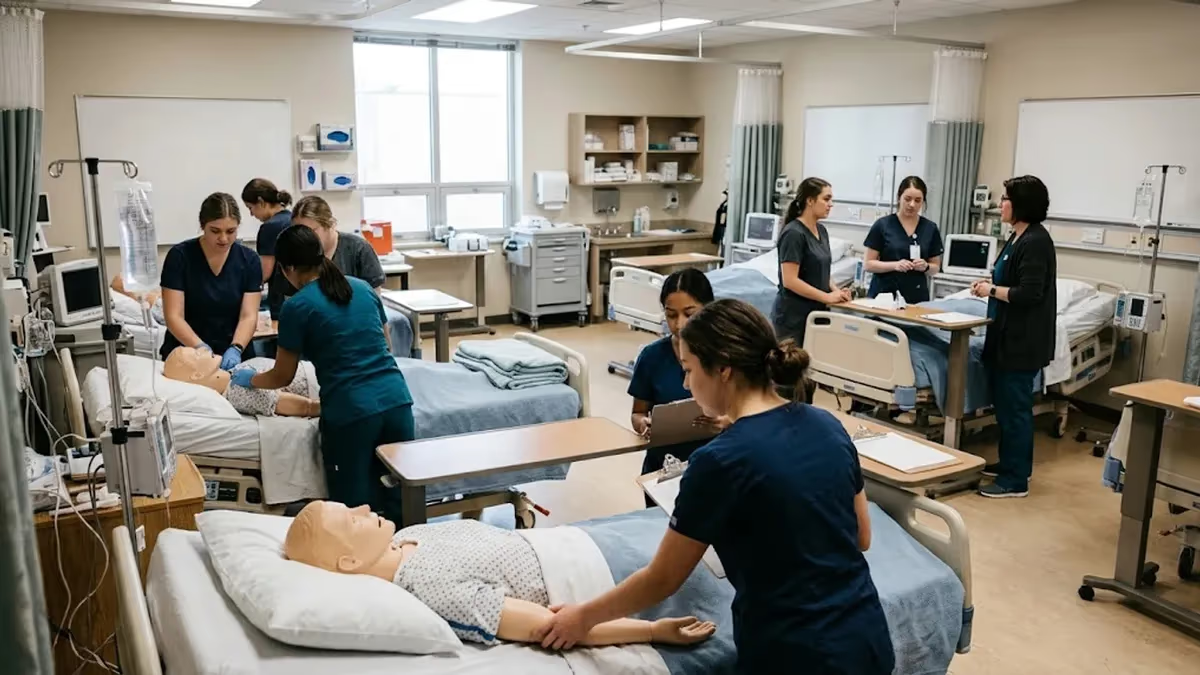
The American Red Cross CNA exam is not a single test: Red Cross nurse assistant training ends with a course final, while state certification requires a separate competency exam with a written or oral part and a skills demonstration. Your state registry's approved vendor, not the Red Cross, administers that exam.
American Red Cross Cna Exam: Key Facts (Updated October 2026)
| Fact | Details | Source |
|---|---|---|
| Who gives the state exam | Each state approves its own testing vendor (for example, Prometric in Connecticut and Idaho). Red Cross courses prepare you; they do not replace the state exam. | State nurse aide registry |
| Exam parts | A written or oral exam, chosen by the aide, plus a skills demonstration | 42 CFR 483.154 |
| Retake rule | Candidates must have at least three opportunities to take the competency evaluation | 42 CFR 483.154 |
| Florida written test | 60 multiple-choice questions in 90 minutes | Florida Board of Nursing |
| Florida skills test | Five randomly selected nursing assistant skills | Florida Board of Nursing |
| Florida retake limit | After three failed attempts, an approved training program must be completed before retesting | Florida Board of Nursing |
| Connecticut fees (from Aug. 1, 2026) | $125 for both parts, $77 for skills only, $48 for written or oral only | Prometric Connecticut |
| Idaho fee (from July 1, 2026) | $34 for the written or oral exam, plus testing site fees | Prometric Idaho |
Most people searching for the american red cross cna exam want to know one thing: will the Red Cross give me the test that makes me a certified nurse aide? Usually the answer is no. The Red Cross has offered nurse assistant training in many areas, but your state registry decides who tests you and where. Understanding that split saves you from paying twice or showing up at the wrong site. Start by reading your state's nurse aide registry page.
Federal law frames everything. Under 42 CFR 483.154, a nurse aide must pass a competency evaluation that includes a skills demonstration and either a written or oral exam, and candidates get at least three tries. States add details such as fees, vendors, and question counts. That is why a Florida candidate sees a 60-question written test while a Connecticut candidate pays through Prometric. Whatever course you take, the state rules in force on your test date are the ones that count.
Red Cross training itself ends with its own checks: quizzes, a course final, and skills sign-offs by an instructor. Passing them proves you completed the program, which most states require before you may sit for the state exam. Think of the course as the preparation and the state exam as the credential. Always confirm that the specific class you enroll in is approved by your state, because an unapproved course may not make you eligible to test.
For practice, a cna practice test exam helps you find weak spots in infection control, resident rights, and daily living care before you pay a testing fee. Many learners take a practice test in week one of class and again a week before the real exam, then compare scores. That simple routine shows whether you are improving or just rereading notes, and it keeps your study time focused on the areas that matter most.
Once you have a sense of the format, work through the free cna credential practice exams and note which topics cost you points. Questions on safety, communication, and basic nursing skills show up on nearly every state test. Spending thirty minutes a day on timed sets beats a weekend cram session. Track your score by topic so that your final week of review targets only the areas that still need work.
Passing the exam is also the doorway to work. Facilities post cna jobs near me style listings daily, and most require an active registry listing before your first shift. Once hired, you will likely chart in software such as PointClickCare, so expect training on that system during orientation. Employers care that your certificate is current and in good standing, so track your renewal dates from the first day you are listed.
This guide walks through the format, locations, costs, skills, and study plan, so you can move from enrollment to your first paycheck without surprises. Each section answers one real question people type into Bing, such as where Red Cross CNA testing happens and what the skills test includes. Read the sections in order the first time, then jump back to the ones you need as your test date gets closer.
How Does the American Red Cross CNA Exam Look by the Numbers?
What Is on the Red Cross CNA Exam?
| Section | Questions | Time | Weight | Notes |
|---|---|---|---|---|
| Written or Oral Exam (Florida example) | 60 | 90 min | Pass/fail | Federal rules let the aide choose written or oral |
| Skills Demonstration (Florida example) | 5 | Varies by state | Pass/fail | Five randomly selected skills; critical steps must be performed |
| Total | 60 | 90 min written plus skills | 100% |
How Does Red Cross CNA Testing Work?
Red Cross CNA testing works in two stages: complete an approved training program, then register with your state's testing vendor for the competency exam. The Red Cross handles the first stage in areas where it runs nurse assistant classes. The second stage is run by a third party under contract with your state, which schedules you, verifies your identity, and reports your results to the registry. Mixing those stages up is the most common reason candidates miss their first test date.
Federal rules require at least 75 hours of training, including 16 hours of supervised practical work, before a nurse aide can work for pay in a nursing home. Many states require more. Your course must be state approved, and the instructor must be a qualified registered nurse. Ask for the approval number or a letter from the state board before paying a deposit, and keep your attendance records, because the testing vendor may ask for proof of completion.
After class, you apply to the state registry or testing vendor, pay the fee, and choose a date. Some states let the training program submit your paperwork directly. Others make you apply on your own. Either way, expect to provide a government-issued photo ID with a name that matches your application exactly. A mismatch as small as a missing middle name can delay your test, so check every field carefully before you submit your application online.
Pay is the natural next question, and the salary guide for the Red Cross CNA Exam career path shows how wages differ by state and work setting. Hospitals, nursing homes, and home health agencies all hire aides, and pay differentials for nights and weekends can add up quickly. A realistic salary picture helps you decide whether to take the first offer, add specialty training, or hold out for a facility with better benefits.
Timing matters too. If you are wondering how long does it take to become a cna, the answer is often four to twelve weeks of training plus a few weeks to schedule and pass the exam. Full-time programs finish faster than evening classes. Build in a buffer for waiting lists, background checks, and fingerprinting, since those steps can take longer than the class itself in some states.
Red Cross CNA testing locations depend on your state vendor. Sites are usually computer testing centers, community colleges, or care facilities approved by the state, and you are assigned or may choose one based on your zip code and availability. Seats can fill weeks ahead near graduation season, so register early. If travel is a problem, ask the vendor whether other approved sites are closer before you settle for a long drive.
On test day, arrive early, bring valid ID, and wear scrubs or comfortable clothing with closed-toe shoes and a watch with a second hand. Leave phones and bags outside the testing room. The written or oral portion and the skills demonstration may be on the same day or separate days, depending on your state. Results are typically reported to the registry afterward, and your name appears there once every part has been passed.
How Does PointClickCare CNA Charting Work on the Job?
PointClickCare is an electronic health record platform used in many nursing homes and long-term care facilities, and its point-of-care tools are built for aides. You might see it searched as pointclickcare cna, pointclick care cna, or cna point click care, but it is the same system. Aides record tasks such as bathing, meals, toileting, and repositioning on a tablet, kiosk, or workstation during or right after care.
Accurate charting protects residents and your license. The nurse reviews your entries to spot changes in intake, mobility, mood, or skin condition. If a task is not documented, it legally did not happen, so chart promptly and honestly. Never copy a prior shift's entries, and report anything unusual to the nurse verbally as well as in the record, rather than relying on the software to carry the message.
Is a Red Cross CNA Course Worth It Compared With Other Training Routes?
- +The Red Cross is a widely recognized, trusted name that employers know
- +Structured classroom and hands-on instruction led by qualified instructors
- +Skills practice that mirrors what evaluators look for on the state skills test
- +Training can satisfy the state requirement to become eligible for the exam
- +Course checkpoints help you find weak spots before the paid state exam
- +Completion can strengthen your resume when applying for cna hiring near me listings
- −Class availability varies by chapter and state, so a nearby class may not exist
- −Tuition can be higher than employer-paid or community programs
- −The course does not replace the separate state competency exam and its fees
- −Schedules may be fixed, which is hard for people working another job
- −You must still verify the course is approved in your state before enrolling
- −Passing the course final does not guarantee a pass on the state skills test
How Do You Get Ready for Red Cross CNA Testing and CNA Hiring Near Me?
- ✓Confirm your training program is approved by your state registry.
- ✓Read your state's candidate handbook and skills checklist.
- ✓Register with the state testing vendor and note your test date.
- ✓Match the name on your application to your photo ID exactly.
- ✓Take a full practice test to establish your baseline score.
- ✓Practice every listed skill out loud with a partner.
- ✓Memorize the critical steps for each skill.
- ✓Search cna job near me listings and shortlist three facilities.
- ✓Ask employers about orientation and charting training.
- ✓Verify your name on the registry after passing.
Course final is not the state exam
A Red Cross course final proves you completed training. The state competency exam, with its written or oral part and skills demonstration, is run by your state's approved vendor. Check your registry page for the exact steps and fees.
What Is on the Red Cross CNA Skills Test?
The Red Cross CNA skills test asks you to perform nursing assistant tasks on a mock resident while an evaluator watches. Federal rules say the tasks are randomly selected from a pool of skills aides generally perform. In Florida, for example, candidates perform five randomly selected skills. Because you cannot predict which tasks you draw, you need to be comfortable with every skill on your state's candidate handbook, not just the ones you like best.
Common skills include handwashing, measuring and recording blood pressure, taking a pulse and respirations, transferring a resident from bed to wheelchair, and assisting with feeding. Others cover perineal care, range-of-motion exercises, and making an occupied bed. Each skill is broken into scored steps, and certain steps are marked critical. Missing a critical step, such as skipping handwashing or failing to lock the wheelchair brakes, can fail the whole task even if everything else looks perfect.
Practice with a partner who reads the step list aloud while you perform each one. Say the steps out loud as you go, because evaluators cannot give credit for steps they cannot see or hear. Explain what you are about to do to the resident, provide privacy, and wash your hands at the start and finish. These habits are scored on nearly every task, so they are the cheapest points on the whole test.
Time yourself during practice. Most states give a set number of minutes for the skills portion, and nervous candidates often rush and skip safety steps. A calm, steady pace beats speed. If you realize you forgot a step, say so and correct it, because many evaluators allow self-correction before you move on. Never leave the resident unsafe, such as with the bed raised or the call light out of reach.
The written and oral exams cover the knowledge side: resident rights, communication, infection control, safety, basic nursing skills, and recognizing changes in a resident's condition. Candidates who struggle with reading in English may choose the oral version, which federal rules let the aide select. In some states the oral exam is read aloud through headphones and includes a short reading section. Ask about it during registration, not on test day.
Strong skills scores open more doors than you might expect. Once you have experience, you can look at a travel cna assignment, where agencies place aides in short-term contracts at facilities with staffing gaps. Those roles reward reliability and a clean skills record, and they often include housing stipends. Most require several months of on-the-job experience first, so treat your first facility as an apprenticeship and learn every routine well.
Finally, protect your knowledge of abuse and neglect, which appears on the written exam and in daily practice. Mandatory reporting rules require you to report suspected abuse to your supervisor and, in many states, to the proper authority. Know the signs of physical, emotional, and financial abuse, and know that retaliation against people who report is prohibited. The practice quizzes on this page are a quick way to check your readiness.
Fees, vendors, question counts, and retake limits change by state and by year. Florida, for example, requires approved retraining after three failed attempts. Confirm current details on your state registry or testing vendor page before booking.
How Much Does Red Cross CNA Testing Cost?
Testing costs vary by state and vendor, so check your registry page before you budget. Verified 2026 examples: in Connecticut, the combined written or oral and skills exams cost $125 through Prometric, the skills exam alone costs $77, and the written or oral exam alone costs $48, effective August 1, 2026. In Idaho, the written or oral exam costs $34 plus testing site fees, effective July 1, 2026. Your state may be higher or lower.
Training tuition is a separate cost. Red Cross class prices differ by chapter and state and may include textbooks, scrubs, a background check, and the first testing attempt, or they may not. Ask for a written list of what is and is not included. Hidden extras such as CPR certification, a TB test, or uniform patches can add up, and you should know about them before you sign an enrollment agreement or hand over a deposit.
If the price is a barrier, look at free cna classes near me options. Many nursing homes pay for your training and testing in exchange for a work commitment, often several months. Community programs and workforce boards sometimes cover costs for eligible students too. Read any employer agreement carefully, including what happens if you leave early, since some require repayment of tuition. Compare the total value of each offer, including paid training hours and guaranteed job placement.
Plan for the possibility of a retake. Federal rules guarantee at least three opportunities to take the competency evaluation, but each attempt usually costs a fee, and you may only need to repeat the part you failed. In Florida, an applicant who fails in three attempts must complete an approved training program again before retesting. Use each attempt wisely and review your score report closely so the next attempt targets the exact weak spots.
Beyond fees, think about indirect costs: unpaid time off work, childcare during class, transportation to the testing site, and parking. If you work another job, check whether your schedule allows both clinical hours and exam days. A realistic budget that covers everything from enrollment to your first paycheck keeps you from running out of money midway and abandoning the program just before the finish line, which is a surprisingly common outcome.
Once certified, your earning potential recovers these costs quickly. Facilities that post cna hiring near me ads often offer sign-on bonuses, tuition reimbursement, and shift differentials. Compare offers on total compensation, benefits, and staffing ratios rather than hourly wage alone. A slightly lower wage at a well-staffed facility can mean less burnout and more learning, which pays off during your first year of work and shapes how long you stay in the field.
Keep receipts for training, testing, and uniforms. Some costs may be tax deductible or reimbursable through employer or workforce programs, and a tax professional can tell you what applies in your situation. Also confirm whether your certification renews on a schedule, since renewal may require proof of paid work hours in a set period. Staying on top of paperwork protects the investment you made to earn the credential.
How Do You Prepare for American Red Cross Testing for CNA?
Build a four-week plan around your test date. In week one, take a full practice test to find your baseline and read your state candidate handbook cover to cover. Weeks two and three should alternate knowledge review with hands-on skills drills. Use week four for timed practice and light review. Short daily sessions of 45 to 60 minutes work better than marathon weekends, because repeated recall is what moves facts into long-term memory.
Study by category instead of reading straight through. Resident rights, infection control, safety and emergencies, communication, and activities of daily living each deserve their own review block. After each block, answer 20 practice questions and read every explanation, including the ones you got right. Keep an error log listing the concept behind each miss. Patterns appear quickly, and fixing three recurring errors raises your score more than rereading everything.
Rehearse skills until the steps feel automatic. Gather simple supplies: a blood pressure cuff, a gait belt, a towel, and a chair standing in for a wheelchair. Practice with a friend as the resident, narrating each step. Film yourself if possible and compare the video against the handbook checklist. Pay special attention to the critical steps, because they are the usual cause of failed tasks, even among otherwise strong candidates.
Manage test anxiety deliberately. Visit the testing site beforehand if you can, so the route and parking are not surprises. Sleep a full night before the exam, eat a real breakfast, and arrive thirty minutes early. During the written section, read every question twice, eliminate clearly wrong choices, and flag hard items to revisit. Answer from the standpoint of safe, resident-centered care, not from shortcuts you may have seen at work.
Start learning the job tools before your first shift. Most facilities use electronic charting, and PointClickCare is among the most common. Ask your employer during interviews whether you will receive a pointclickcare cna login and paid training time. Practicing typing, reading a task list, and documenting accurately will make your first weeks easier. Remember that charting is legal documentation: if it was not charted, it was not done.
Begin your job search before you pass. Search cna jobs near me and cna job near me listings, bookmark facilities you like, and ask about orientation and mentoring. Many employers hire candidates who have finished training and are waiting for results, with start dates tied to registry listing. Prepare a short resume highlighting clinical hours, CPR certification, and reliability, and bring references from your instructor or clinical site supervisor.
After you pass, verify that your name appears on the state registry and save a printout or screenshot. Some states have moved away from paper certificates; New York stopped issuing paper CNA certificates on August 1, 2026, and facilities verify status through the registry. Learn what is expected of a cna on the job: shift routines, reporting chain, and documentation. Keep asking questions and keep your registry listing current.
CNA Questions and Answers

Free CNA Practice Test 2026 - CNA Exam Questions
How Long Does It Take to Become a CNA? Complete Timeline Guide

Travel CNA Career Guide: Assignments, Pay, Agencies & Housing

Free CNA Classes: How to Find Training Near You and Online

CNA Classes

Certified Nursing Assistant Salary: An Overview

CNA Requirements: What You Need to Start Your Career

CNA Training in Massachusetts: Schools, Programs, Pay & Registry Guide
CNA Practice Test 2026 - Certified Nursing Assistant Training
How this page was made: written with AI tools and published by Nathan Beja, founder of Practice Test Geeks, who is responsible for its content. Exam facts are checked against the official sources listed below. Not reviewed by a subject-matter expert. Editorial policy
Sources & references
Exam facts on this page (fees, format, dates, passing scores) are checked against these official sources; the date is our last check. Editorial policy
- floridasnursing.gov — Test delivery, exam format, retake policy, time limit · verified Oct 2026
- law.cornell.edu — Test delivery, retake policy · verified Oct 2026
- prometric.com — Fees, exam information · verified Oct 2026