
CMRT vs EMRT: Which Maintenance & Reliability Certification Is Right for Your Career?
CMRT and EMRT compared side by side — duties, salary, exam requirements & career paths. ✅ Find out which cert fits your goals.

If you work in industrial maintenance or reliability engineering, you have probably heard the terms CMRT and EMRT used interchangeably — but these two credentials are not the same thing, and choosing the wrong one could mean investing time and money in a certification that does not align with your actual job role or long-term career goals.
The cmrt — Certified Maintenance and Reliability Technician — is awarded by SMRP (Society for Maintenance and Reliability Professionals) and targets hands-on technicians who perform day-to-day maintenance tasks on industrial equipment, rotating machinery, and plant systems. Understanding the distinction between these two certifications is the first step toward building a focused professional development plan.
The EMRT, or Electro-Mechanical Reliability Technician credential, takes a somewhat different approach by emphasizing the electrical and electromechanical systems that are increasingly central to modern automated plants. Where the CMRT broadly covers mechanical systems, lubrication, corrective maintenance, and predictive techniques, the EMRT digs deeper into motor controls, variable frequency drives, programmable logic controllers, and instrumentation. Both certifications recognize skilled technicians who keep industrial operations running safely and efficiently, but the specific knowledge domains, exam content, and ideal candidates differ in ways that matter significantly when you are mapping out a multi-year career trajectory in the reliability field.
Choosing between these credentials is not purely an academic exercise. Employers in the oil and gas, chemical processing, food manufacturing, power generation, and automotive sectors actively look for certified professionals when filling senior technician and reliability coordinator roles.
A well-chosen certification signals to hiring managers that you have validated expertise in a specific domain, which translates directly into stronger job offers, faster promotions, and higher baseline salaries. In industries where unplanned downtime costs can exceed $260,000 per hour, companies are willing to pay a meaningful premium for technicians who carry recognized third-party credentials that prove their competency beyond a supervisor's word-of-mouth endorsement.
The SMRP Body of Knowledge that underpins the CMRT covers five primary domains: equipment, machinery, and systems installation; preventive and predictive maintenance; corrective maintenance; supporting operations; and business and management. Each domain carries a specific exam weighting, and your existing work experience will naturally align more strongly with some domains than others.
Before committing to either the CMRT or the EMRT pathway, it is worth auditing your current skill set against each credential's published competency framework and honestly assessing where your knowledge gaps are largest — because those gaps represent the amount of study time you will need to invest before sitting the exam.
Salary data consistently shows that certified maintenance professionals earn measurably more than their non-certified peers in equivalent roles. According to SMRP's workforce surveys, CMRT holders report median annual compensation roughly 12 to 18 percent higher than technicians performing identical job duties without certification.
The EMRT pathway tends to attract professionals working in more heavily automated environments where electrical and controls expertise commands a premium, and salary outcomes in those niche sectors can be even more favorable. However, raw earning potential is only one piece of the equation — you also need to consider exam availability, recertification requirements, and the specific industries where each credential carries the most weight.
This article walks you through every major dimension of the CMRT versus EMRT comparison so you can make an informed decision. We cover the core competency differences, the exam formats and difficulty levels, salary and career path implications, and the practical steps you need to take to earn and maintain either credential. We also address some frequently confused search terms that pull people into this comparison — including references to CMRT software tools used in motorsport simulation — so you can cut through the noise and focus on what actually matters for your professional development in the industrial maintenance field.
Whether you are a journeyman technician looking to formalize your expertise, a maintenance supervisor evaluating credential requirements for your team, or an apprentice just entering the reliability field, this guide gives you the concrete information you need to choose the right certification path and start preparing effectively for whichever exam fits your goals best.
CMRT and EMRT Certification by the Numbers

CMRT vs EMRT: Core Competency Differences at a Glance
Covers rotating equipment, lubrication systems, alignment, corrective and preventive maintenance, and reliability-centered practices. Best suited for technicians who work primarily on mechanical plant assets across diverse industries.
Emphasizes motor controls, variable frequency drives, PLCs, instrumentation, and electrical safety. Designed for technicians whose daily work involves both electrical and mechanical systems in highly automated production environments.
Both credentials share roots in SMRP's reliability body of knowledge. Core concepts like failure analysis, condition monitoring, maintenance planning, and safety compliance appear in both credential frameworks and exam content areas.
CMRT is most prevalent in oil and gas, pulp and paper, and heavy manufacturing. EMRT commands stronger recognition in semiconductor fabrication, food processing automation, and facilities with heavy PLC-controlled assembly lines.
The cmrt certification is administered by SMRP and has clear eligibility requirements that every candidate must satisfy before applying to sit the exam. You need a minimum of three years of full-time work experience in maintenance and reliability — specifically, hands-on experience performing or supervising maintenance activities on industrial equipment. There is no strict educational prerequisite, which makes the CMRT accessible to experienced technicians who came up through apprenticeship programs, vocational training, or on-the-job learning rather than traditional four-year engineering degree pathways. This accessibility is one of the certification's most appealing features for the existing maintenance workforce.
The EMRT credential, by contrast, is administered by a different issuing body and typically requires candidates to demonstrate specific competency in both electrical and mechanical systems. The application process for the EMRT generally asks for evidence of training in electrical theory, motor control centers, and instrumentation — not just mechanical maintenance hours.
This means that a purely mechanical technician with no electrical training will need to fill significant knowledge gaps before becoming eligible for the EMRT, whereas the same technician might be ready to sit the CMRT exam with relatively modest focused preparation on the less familiar reliability theory portions of the body of knowledge.
Understanding the recertification requirements is just as important as understanding the initial eligibility criteria, because certifications that are expensive or burdensome to maintain can create long-term costs that outweigh their initial benefits. The CMRT requires 30 Professional Development Hours (PDHs) over a three-year recertification cycle, or you can choose to retest. PDHs can be earned through SMRP conferences, approved training courses, webinars, teaching or presenting technical content, and certain volunteer activities within SMRP. This is a manageable ongoing commitment that most active professionals can satisfy through training activities they would pursue anyway as part of normal professional development.
The exam itself for the CMRT consists of 170 multiple-choice questions delivered at Pearson VUE testing centers across the United States and internationally. The three-hour time limit works out to just over one minute per question, which is sufficient for most well-prepared candidates but does not leave much room for extended deliberation on any single item.
The five content domains — equipment and systems installation, preventive and predictive maintenance, corrective maintenance procedures, supporting operations, and business and management — are not weighted equally. Corrective maintenance and predictive maintenance together account for the largest share of exam questions, which means your preparation time should be distributed accordingly rather than spread evenly across all five domains.
Application for the CMRT is submitted through the SMRP website and requires documentation of your work experience, a completed application form, and the exam fee. SMRP periodically adjusts its fee structure, so always check the current SMRP website for the most up-to-date pricing before budgeting for your exam.
Many employers will reimburse certification exam fees as part of professional development benefits, especially in larger industrial organizations that have formal reliability programs — so check with your HR department before paying out of pocket. Getting employer buy-in early can also help you secure dedicated study time, access to training materials, and a study group of colleagues also pursuing certification.
Preparation resources for the CMRT exam are more abundant and better developed than those for the EMRT, largely because SMRP has been actively supporting the CMRT credential for more years and has built a larger ecosystem of study guides, practice exams, and preparatory workshops around it.
SMRP offers its own Body of Knowledge document that serves as the definitive study framework, and numerous third-party providers have developed practice question banks and instructor-led review courses aligned to the CMRT exam blueprint. Taking advantage of these resources — especially timed practice exams that mirror the actual test format — is one of the most effective strategies for building the exam-day confidence that translates into passing scores.
One area where candidates sometimes underestimate the CMRT exam is the business and management domain, which covers reliability metrics, maintenance cost analysis, work order systems, and performance benchmarking. Technicians who are highly skilled on the shop floor but have limited exposure to reliability KPIs, overall equipment effectiveness (OEE) calculations, or maintenance planning software may find this domain unexpectedly challenging. Building competency in this area not only helps you pass the exam but also positions you for advancement into maintenance supervisor and reliability coordinator roles where these analytical skills are used daily.
CMRT Certification Exam: Domains, Study Tips & Predictive Techniques
The CMRT exam is divided into five content domains, each testing a distinct area of maintenance and reliability knowledge. Domain 1 (Equipment and Systems Installation) covers alignment, installation procedures, and commissioning. Domain 2 (Preventive and Predictive Maintenance) includes condition monitoring technologies like vibration analysis, thermography, and ultrasound. Domain 3 (Corrective Maintenance) focuses on troubleshooting, root cause analysis, and repair execution — and carries significant exam weight.
Domain 4 (Supporting Operations) addresses topics like production coordination, work order management, and safety compliance, while Domain 5 (Business and Management) tests knowledge of reliability metrics, maintenance cost tracking, and performance benchmarking. Candidates should weight their study time toward Domains 2 and 3, which together represent the largest share of the 170-question exam. Review the SMRP Body of Knowledge document to confirm current domain weightings before finalizing your study schedule.

CMRT Certification: Pros and Cons for Maintenance Professionals
- +Widely recognized across oil and gas, manufacturing, utilities, and chemical processing industries nationwide
- +No college degree required — three years of hands-on maintenance work experience qualifies you to apply
- +Median salary premium of 12 to 18 percent over non-certified peers in comparable roles
- +Strong SMRP support ecosystem including study guides, local chapters, and annual conference workshops
- +Recertification via PDHs is manageable and aligns with normal professional development activities
- +Demonstrates validated competency to hiring managers beyond supervisor recommendations or informal reputation
- −Exam fee plus study materials represents a significant upfront investment before any salary benefit is realized
- −170-question exam covering five domains requires substantial preparation — typically 60 to 100 hours of dedicated study
- −Three-year minimum work experience requirement excludes early-career technicians and recent vocational graduates
- −Business and management domain can be challenging for shop-floor technicians with no exposure to reliability metrics
- −Recertification requires 30 PDHs every three years, creating an ongoing time and cost commitment
- −Less recognized outside of North America compared to international reliability frameworks and certifications
Pros and Cons at a Glance
| Pros | Cons |
|---|---|
| Widely recognized across oil and gas, manufacturing, utilities, and chemical processing industries nationwide | Exam fee plus study materials represents a significant upfront investment before any salary benefit is realized |
| No college degree required — three years of hands-on maintenance work experience qualifies you to apply | Three-year minimum work experience requirement excludes early-career technicians and recent vocational graduates |
| Strong SMRP support ecosystem including study guides, local chapters, and annual conference workshops | Business and management domain can be challenging for shop-floor technicians with no exposure to reliability metrics |
| Recertification via PDHs is manageable and aligns with normal professional development activities | Less recognized outside of North America compared to international reliability frameworks and certifications |
CMRT Certification Preparation Checklist: 10 Steps to Exam Readiness
- ✓Confirm you meet the three-year hands-on maintenance and reliability work experience requirement before applying
- ✓Download and thoroughly read the current SMRP CMRT Body of Knowledge document from the official SMRP website
- ✓Create a personalized study plan that weights Domains 2 and 3 (predictive and corrective maintenance) most heavily
- ✓Register for the exam through Pearson VUE and select a test center date at least eight to ten weeks out
- ✓Complete at least three full-length timed practice exams under realistic testing conditions before exam day
- ✓Review all incorrect practice answers in detail to identify and close specific knowledge gaps in each domain
- ✓Join a local SMRP chapter or online study community for peer accountability and shared study resources
- ✓Ask your employer about professional development reimbursement to offset exam fees and study material costs
- ✓Build a reference sheet covering key lubrication, alignment, and vibration analysis formulas for final review
- ✓Plan your exam-day logistics including test center location, arrival time, and acceptable identification documents
Corrective Maintenance Is the Highest-Weight Domain — Study It First
SMRP's exam blueprint consistently places corrective maintenance procedures among the highest-weighted domains on the CMRT exam. Candidates who allocate study time proportionally to domain weight — rather than spreading effort evenly across all five areas — consistently report higher confidence on exam day and better first-attempt pass rates. Build your corrective maintenance knowledge early and reinforce it throughout your preparation cycle.
The salary and career advancement implications of earning a maintenance and reliability certification are substantial and well-documented across multiple industry surveys. According to data compiled by SMRP and corroborated by compensation analysts at organizations like PayScale and the Bureau of Labor Statistics, CMRT-certified technicians earn a consistent median premium over non-certified peers performing equivalent roles in industrial maintenance environments.
This premium typically ranges from $6,000 to $12,000 in additional annual compensation, depending on industry sector, geographic region, company size, and years of experience. In high-cost-of-living industrial markets like the Gulf Coast, Pacific Northwest, and Great Lakes manufacturing corridor, the premium can be even larger.
Beyond base salary, certification status affects career advancement velocity in meaningful ways. Maintenance supervisors and reliability coordinators tasked with building out their teams consistently report that CMRT certification is a differentiating factor when evaluating candidates for senior technician and team lead roles.
When a position generates dozens of qualified applications from experienced technicians, having a recognized third-party credential is often what separates candidates who receive phone screens from those whose resumes are set aside. For technicians who aspire to move into maintenance planning, reliability engineering, or asset management roles, the CMRT also demonstrates the foundational reliability knowledge that engineering departments expect from their technical support staff.
The EMRT credential, while less widely issued than the CMRT, commands strong recognition in specific niche sectors where electromechanical expertise is at a premium. Semiconductor fabrication plants, automated food processing facilities, and high-tech assembly operations often specifically value the combination of electrical theory and mechanical maintenance knowledge that the EMRT validates.
In these environments, EMRT holders may find that their credential carries more direct salary negotiating power than a CMRT would, because the specific competency domains align more tightly with the day-to-day technical demands of those facilities. Evaluating where you work — or where you want to work — is therefore essential context for comparing the two credentials' career ROI.
One often-overlooked dimension of the CMRT versus EMRT career comparison involves long-term credential stacking and professional development pathways. Many maintenance professionals eventually pursue both credentials, starting with whichever aligns more closely with their current job function and then adding the complementary credential as their career evolves.
Others use the CMRT as a stepping stone toward SMRP's higher-level credential, the CMRP (Certified Maintenance and Reliability Professional), which targets experienced reliability engineers and maintenance managers rather than technicians. Understanding how each credential fits into your complete career development arc — not just your immediate job situation — can help you sequence your certifications strategically over a ten to fifteen year horizon.
Geographic considerations also play a role in the CMRT versus EMRT value calculation. The CMRT's larger issuer network and broader industry recognition make it the stronger credential choice in most US markets, particularly outside of major tech-heavy metropolitan areas where electromechanical automation is less prevalent in the manufacturing base.
In Texas, Louisiana, and the broader Gulf Coast region — where petrochemical plants, refineries, and LNG facilities employ large maintenance workforces — the CMRT is particularly well-recognized and specifically requested in job postings from major operators. If you are geographically anchored to one of these markets, the CMRT's local recognition advantage is a significant practical factor in your decision.
For maintenance professionals working in unionized environments, certification credentials interact with collective bargaining agreements in ways that vary by contract. Some union agreements tie specific wage classifications or advancement opportunities to certification status, while others are neutral on third-party credentials and base progression entirely on seniority and job performance evaluations.
If you work in a union environment, review your current CBA and speak with your shop steward before investing significant time and money in a certification pathway — you want to confirm that certification will actually translate into the tangible career benefits you are expecting within your specific employment structure and agreement terms.
The return on investment for either certification is ultimately strongest when you combine the credential with active participation in the broader reliability community. Attending SMRP's annual conference, contributing to local chapter events, presenting technical papers, or mentoring junior technicians builds the professional network and industry visibility that amplifies the value of any credential. The certification opens doors; your professional engagement determines how far those doors lead in terms of new opportunities, salary growth, and leadership recognition within the maintenance and reliability field over the course of your career.

Some searches for "cmrt" or "cmrt assetto corsa" refer to a heads-up display (HUD) mod used in the racing simulation game Assetto Corsa — not the professional maintenance certification. If you arrived here looking for the cmrt assetto corsa HUD tool, that is a separate product with no connection to the SMRP certification discussed throughout this article. This page focuses exclusively on the Certified Maintenance and Reliability Technician credential for industrial maintenance professionals.
Deciding which certification to pursue first — or whether to pursue both over time — comes down to an honest assessment of three factors: your current job function, the industries you want to work in, and the specific knowledge gaps you most need to close to advance your career. For the majority of maintenance technicians working in mechanical-intensive environments like refineries, power plants, paper mills, and general manufacturing, the CMRT is the right first credential.
Its broad coverage of mechanical systems, lubrication, alignment, predictive maintenance, and corrective maintenance procedures maps directly onto the day-to-day work of technicians in these environments, making the study process feel reinforcing rather than foreign.
If your work is heavily focused on electrical systems, motor controls, instrumentation, and automated production lines, the EMRT may offer a more precise fit for your existing expertise and immediately recognized value within your current employer's technical structure. However, for most US-based industrial maintenance professionals, the CMRT's deeper study resource ecosystem, broader industry recognition, and well-established SMRP support network make it the lower-risk, higher-return first choice. You can always add the EMRT later as a complementary credential once the CMRT is secured and your career has evolved toward roles that require deeper electromechanical expertise.
The question of timing is also worth considering carefully. The three-year work experience requirement means that apprentice and early-career technicians need to be strategic about when they start their application.
Many professionals find it productive to begin studying the CMRT Body of Knowledge in year two of their work experience, using that preparation period to build conceptual depth before they are eligible to actually apply and schedule the exam. This approach means you arrive at year three with your study largely complete and can apply and sit the exam quickly rather than starting your preparation from scratch at the eligibility threshold.
Employer support for certification can make a significant practical difference in your preparation experience. Organizations with formal reliability programs often have internal subject matter experts who can serve as mentors, study materials purchased at the organizational level that individual employees can access, and peer groups of colleagues also working toward certification.
If your employer does not currently support certification programs, making the business case for reimbursement is often straightforward — you can point to industry data showing that certified technicians reduce unplanned downtime, perform higher-quality maintenance work, and stay longer with organizations that invest in their professional development, all of which have quantifiable financial value.
For professionals who are weighing the certified maintenance & reliability technician cmrt certification against the EMRT purely based on exam difficulty, it is important to note that both credentials require serious preparation — neither is a casual credentialing exercise.
The CMRT's 170-question exam over three hours demands genuine competency across five knowledge domains, and the first-time pass rate hovers around 54 percent, meaning that nearly half of first-time candidates do not pass on their initial attempt. Respect the difficulty of the exam, invest in quality preparation resources, and plan for six to twelve weeks of focused study before your test date regardless of which credential you choose to pursue.
Cost planning is also a practical consideration that candidates sometimes underestimate. Beyond the exam fee itself — which varies but is typically in the $300 to $450 range for SMRP members and slightly higher for non-members — you should budget for study materials, any preparatory courses or workshops you attend, travel to a Pearson VUE testing center if one is not locally available, and potential retesting if you do not pass on the first attempt.
Building a realistic total cost estimate and securing employer reimbursement before you begin the process removes financial stress from the preparation period and lets you focus your energy on learning the material rather than managing the economics of the credential pursuit.
Ultimately, both the CMRT and the EMRT represent meaningful investments in your professional future as a maintenance and reliability technician. The field as a whole is experiencing growing demand for certified professionals as aging industrial infrastructure requires more sophisticated maintenance strategies and as reliability engineering principles become embedded in more organizations' operational culture. Whether you choose the CMRT's mechanical reliability focus or the EMRT's electromechanical specialization, earning a recognized third-party credential puts you ahead of the large majority of the maintenance workforce and positions you for the salary growth, advancement opportunities, and professional recognition that your skills and expertise deserve.
Practical preparation for the CMRT exam benefits enormously from understanding the types of questions the exam actually asks. Rather than purely definitional questions testing whether you can recite textbook definitions, the CMRT exam is scenario-driven — you are presented with a specific maintenance situation and asked what the most appropriate action, tool, or procedure would be based on reliability best practices.
This means your preparation should emphasize applied understanding over rote memorization. Work through case studies, think through real equipment problems you have encountered on the job, and practice explaining the reasoning behind maintenance decisions rather than just cataloging the decisions themselves.
Lubrication and tribology is one area where many CMRT candidates underestimate the depth of knowledge tested on the exam. The lubrication domain covers oil viscosity selection, contamination control, grease compatibility, lubricant application intervals, oil analysis interpretation, and the fundamentals of bearing wear mechanisms — all of which require genuine technical understanding rather than surface familiarity. Spend meaningful time on lubrication principles during your preparation, use practice tests specifically focused on this domain, and review actual oil analysis reports and bearing failure case studies if you can access them through your workplace or professional network resources.
Alignment and mechanical systems knowledge is another area where exam questions test practical application. Understanding the difference between angular and offset misalignment, interpreting dial indicator readings, performing thermal growth compensation calculations, and troubleshooting soft foot conditions are all topics that appear on the CMRT exam in scenario format. If you do not regularly perform precision alignment work in your current role, seek opportunities to work alongside your organization's alignment specialists, attend a short alignment training course, or at minimum work through detailed practice problems using the calculation methods covered in SMRP's study materials before your exam date.
Vibration analysis and other predictive maintenance technologies represent a significant portion of Domain 2 and appear throughout the exam in various question formats. You do not need to be a certified vibration analyst to pass the CMRT, but you do need to understand the fundamental principles of how vibration monitoring detects developing failures, what different vibration signatures indicate about equipment health, how to interpret basic vibration spectrum plots, and when to escalate findings to a higher-level analyst.
Similarly, understand the basics of thermographic inspection, ultrasound testing, motor current signature analysis, and oil analysis so you can answer scenario questions about when and why each technology is deployed in a comprehensive predictive maintenance program.
Time management during the actual CMRT exam is a skill you should practice deliberately during your preparation. With 170 questions and 180 minutes, you have an average of 63 seconds per question — enough time for most questions, but not enough to agonize over difficult items.
Practice the technique of answering confidently, marking uncertain questions for review, and returning to them only after you have worked through all items where you have high confidence. This approach ensures you do not leave easy points on the table while spending too much time on a few difficult questions, which is a pattern that has cost many well-prepared candidates passing scores on timed professional certification exams.
In the final week before your exam, shift from active learning to consolidation and confidence-building. Review your summary sheets and formula cards, run through a final timed practice exam, and get your logistics completely organized — test center address, parking, required identification documents, arrival time.
Avoid attempting to cram new material in the final 48 hours before the exam; instead, focus on light review and ensuring you are well-rested, well-fed, and mentally calm going into test day. Most CMRT candidates who fail their first attempt cite inadequate preparation time rather than inherent difficulty of the material, so giving yourself enough runway in your study schedule is the single most important practical decision you will make in your certification journey.
After you earn the CMRT, actively use it. Update your LinkedIn profile immediately, add it to your professional email signature, and inform your supervisor and HR department so it is documented in your personnel file. Seek out assignments that allow you to apply and deepen the competencies the credential validates — reliability improvement projects, predictive maintenance program development, root cause analysis facilitation.
The credential is a starting point, not a finishing line, and the professionals who extract the most career value from CMRT certification are those who use it as a catalyst for taking on more challenging, higher-visibility reliability work that compounds their professional growth over time.
Sample Certified Maintenance and Reliability Technician Practice Questions
Try these questions from our free Certified Maintenance and Reliability Technician practice tests. The correct answer and an explanation follow each question.
Schedule compliance (also called schedule adherence) is a KPI that measures which of the following?
- A. The percentage of work orders completed on the day they were scheduled
- B. The total number of work orders closed in a given month
- C. The ratio of preventive to corrective maintenance work orders
- D. The average cost of scheduled maintenance jobs versus actual cost
Answer: A. The percentage of work orders completed on the day they were scheduled
Schedule compliance measures the percentage of scheduled work orders that were completed on the planned date, indicating how well the maintenance organization follows its plans.
Resonance in a mechanical structure is most likely to occur when:
- A. Operating speed exceeds the critical speed by more than 20%
- B. A forcing frequency coincides with the structure's natural frequency
- C. Bearing clearance exceeds manufacturer tolerances
- D. Lubricant viscosity drops below the recommended range
Answer: B. A forcing frequency coincides with the structure's natural frequency
Resonance is a condition where an external forcing frequency matches the natural (resonant) frequency of the structure, causing amplified vibration response.
A technician notices a motor running hotter than normal after completing a corrective bearing replacement. The MOST likely cause is:
- A. The motor has too many poles
- B. Over-greasing the bearing, which causes churning and excessive heat
- C. The supply voltage is too low by exactly 1 volt
- D. The motor frame is painted the wrong color
Answer: B. Over-greasing the bearing, which causes churning and excessive heat
Over-greasing is one of the most common causes of premature bearing failure and motor heat; excess grease churning increases friction and temperature.
A maintenance team is implementing a predictive maintenance program for a critical gearbox. Which of the following techniques would be most effective for detecting wear particles from gears and bearings, as well as assessing the health of the lubricant itself?
- A. Vibration Analysis
- B. Oil Analysis
- C. Ultrasonic Testing
- D. Motor Circuit Analysis
Answer: B. Oil Analysis
Oil analysis is the most suitable technique for this purpose. It directly assesses the condition of the lubricant (e.g., viscosity, contamination) and can identify the type and quantity of wear particles, providing specific insights into the health of internal components like gears and bearings.
Take the full Certified Maintenance and Reliability Technician practice test
CMRT Questions and Answers

Boost Your Career with the Maintenance & Reliability Technician Certification
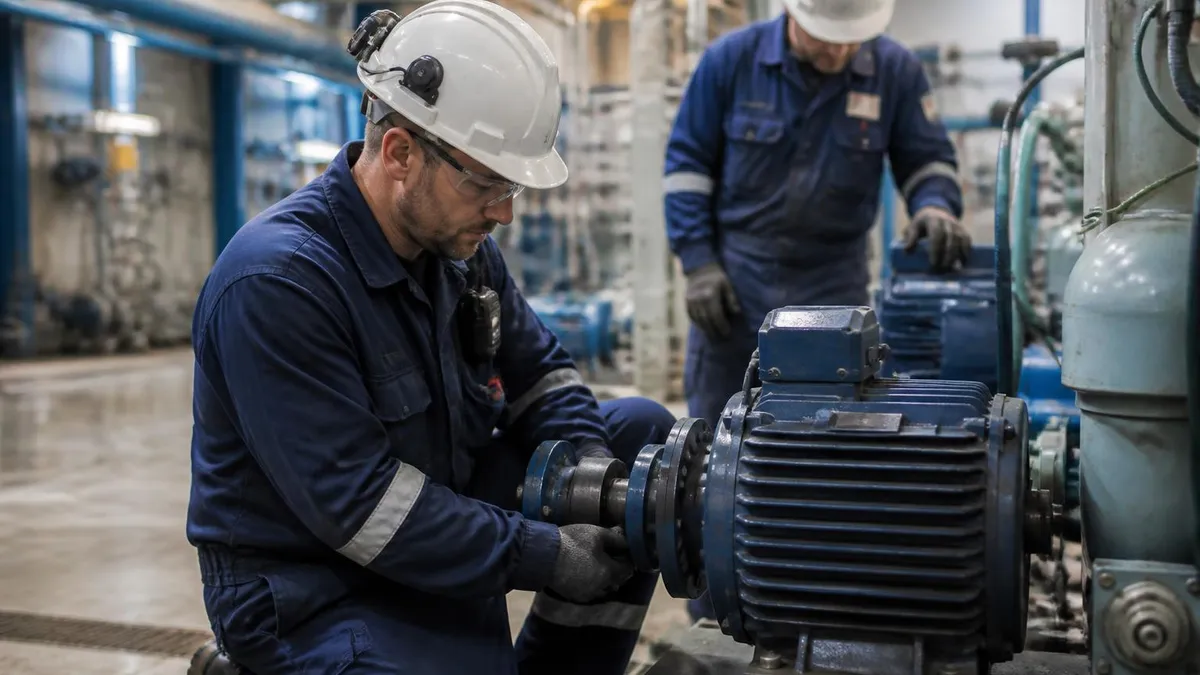
CMRT Certification: The Complete 2026 Guide to Earning the Certified Maintenance & Reliability Technician Credential
CMRT Practice Test

What Is CMRT Certification? The Complete Guide to the Certified Maintenance & Reliability Technician Credential

CMRT Exam: Complete Guide to the Certified Maintenance & Reliability Technician Test
About the Author

Educational Psychologist & Academic Test Preparation Expert
Columbia University Teachers CollegeDr. Lisa Patel holds a Doctorate in Education from Columbia University Teachers College and has spent 17 years researching standardized test design and academic assessment. She has developed preparation programs for SAT, ACT, GRE, LSAT, UCAT, and numerous professional licensing exams, helping students of all backgrounds achieve their target scores.
Join the Discussion
Connect with other students preparing for this exam. Share tips, ask questions, and get advice from people who have been there.
View discussion (9 replies)