
Bowen CIH Prep: Complete Study Guide for the Certified Industrial Hygienist Exam
Master the CIH certification exam with our complete Bowen CIH prep guide. Practice tests, study schedules & tips. 🎯 Start free today!

If you are serious about earning your CIH certification, a structured Bowen CIH prep strategy is the most reliable path to passing on your first attempt. The Certified Industrial Hygienist credential is administered by the American Board of Industrial Hygiene (ABIH) and is widely recognized as the gold standard in occupational health and safety. Candidates who go into the exam without a deliberate, domain-by-domain study plan consistently underperform compared to those who follow proven preparation frameworks that mirror the actual exam blueprint.
The CIH exam covers ten broad competency domains, including chemical hazards, physical agents, biological hazards, ergonomics, engineering controls, program management, and law and ethics. Each domain carries its own weighting on the 170-question exam, which means blanket studying is rarely efficient. Effective bowen cih prep involves diagnosing your weakest areas first through diagnostic practice tests, then allocating study hours proportionally to each domain's exam weight so you maximize your score per hour of preparation invested.
Understanding why the gay and ciha keyword cluster appears alongside industrial hygiene content is straightforward: search engines often surface location-specific funeral home searches alongside professional certification queries that share similar phonetic patterns. Our focus here is entirely on the CIH exam, cih certification pathways, and helping professionals like you achieve the certified industrial hygienist credential that opens career doors across manufacturing, construction, healthcare, government, and consulting sectors throughout the United States.
One of the most common mistakes CIH candidates make is treating all study materials equally. Not all review books, courses, or practice question banks are calibrated to the current ABIH exam matrix. The ABIH updates its content specifications periodically, and study materials that lag behind those updates can leave candidates unprepared for newly emphasized competency areas. This is why pairing a current textbook like DiNardi's The Occupational Environment with targeted bowen cih prep practice questions gives you the best coverage of real exam content.
Eligibility for the CIH exam is itself a structured process. Candidates must hold a bachelor's degree in a science or engineering field and accumulate a minimum number of professional practice hours in industrial hygiene — typically 180 quarter-hours of work experience across at least three of the ten competency domains. Applications are submitted through the ABIH portal, and the review process can take several weeks, so planning your eligibility verification timeline well in advance of your target exam date is critical for avoiding unnecessary delays in your certification journey.
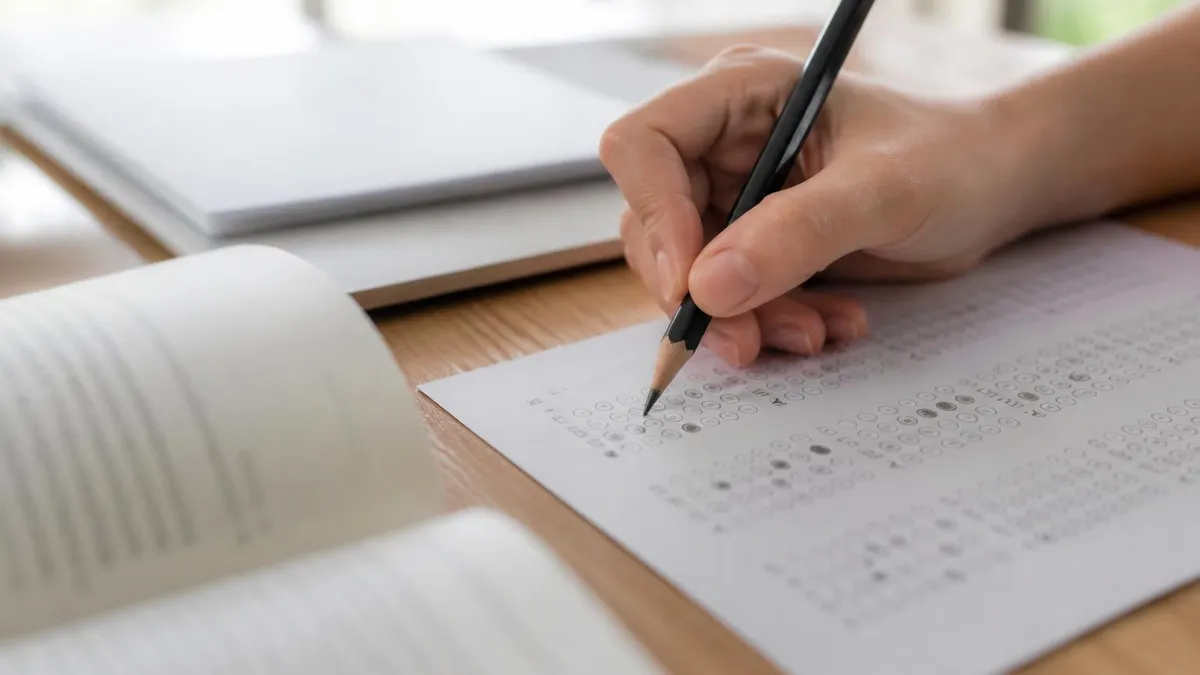
The pass rate for the CIH exam historically hovers around 54 percent for first-time test takers, which underscores the rigor of the examination. This figure is not meant to discourage you — it is meant to calibrate your expectations and reinforce the value of thorough preparation. Candidates who complete at least 500 practice questions across all ten competency domains before their exam date consistently report higher confidence levels and better score outcomes than those who rely solely on reading reference materials without applying their knowledge through simulated exam conditions.
This guide consolidates everything you need: a detailed study schedule, domain breakdowns, exam format analysis, study strategy tips, and free practice questions across every major CIH content area. Whether you are starting your preparation twelve weeks out or trying to sharpen your readiness in the final two weeks before exam day, the frameworks presented here are designed to maximize your efficiency and your probability of walking out of the testing center with a passing score.
CIH Certification by the Numbers
Key Facts at a Glance
| Item | Value | Details |
|---|---|---|
| Total Exam Questions | 170 | Multiple choice format |
| Exam Time Allowed | 5 hrs | Full testing session |
| Competency Domains | 10 | All tested on exam |
| Exam Application Fee | $475 | ABIH members pay less |

12-Week CIH Exam Study Schedule
- ▸Download ABIH exam content outline
- ▸Take a 50-question diagnostic practice test
- ▸Identify your three weakest domains
- ▸Gather study materials: DiNardi, ACGIH TLVs, OSHA standards
- ▸Review toxicokinetics and dose-response relationships
- ▸Study OSHA PELs, ACGIH TLVs, and NIOSH RELs
- ▸Complete 40 toxicology practice questions
- ▸Memorize key carcinogen categories and routes of entry
- ▸Study sampling pump calibration methods
- ▸Review filter media and collection efficiency
- ▸Practice air monitoring calculations
- ▸Complete 40 air sampling practice questions
- ▸Study general dilution vs. local exhaust ventilation
- ▸Review hood entry loss and duct velocity calculations
- ▸Practice ventilation design problems
- ▸Complete 40 ventilation practice questions
- ▸Review noise dosimetry and TWA calculations
- ▸Study ionizing and non-ionizing radiation hazards
- ▸Review thermal stress indices (WBGT, heat index)
- ▸Complete 40 physical agents questions
- ▸Study cumulative trauma disorders and risk factors
- ▸Review NIOSH Lifting Equation and RULA/REBA tools
- ▸Study office ergonomics and vibration exposure
- ▸Complete 35 ergonomics practice questions
- ▸Review bloodborne pathogens and OSHA 1910.1030
- ▸Study bioaerosol sampling and assessment methods
- ▸Review IH program elements and hazard communication
- ▸Complete 40 practice questions across both domains
- ▸Study OSHA enforcement structure and inspection process
- ▸Review ABIH code of ethics and professional conduct
- ▸Study EPA regulations relevant to industrial hygiene
- ▸Complete 35 law and ethics practice questions
- ▸Review HAZWOPER training requirements
- ▸Study ICS structure and incident command roles
- ▸Review community right-to-know regulations
- ▸Complete 30 emergency response questions
- ▸Retake diagnostic test and compare to week 1 scores
- ▸Focus 60% of time on two lowest-scoring domains
- ▸Complete two full 170-question simulated exams
- ▸Review all incorrect answers with rationale explanations
- ▸Complete three full-length timed practice exams
- ▸Aim for 75%+ accuracy before exam day
- ▸Review ACGIH TLV booklet for quick-reference values
- ▸Practice unit conversions and calculation shortcuts
- ▸Light review of formula sheets and key values
- ▸No new topics — consolidate what you know
- ▸Confirm exam location, ID requirements, and arrival time
- ▸Rest adequately the two nights before exam day
Understanding the domain weighting of the CIH exam is foundational to an efficient study strategy. The ABIH publishes an official practice analysis that assigns percentage weights to each competency area. Chemical hazards and toxicology typically account for the largest single share of exam questions, often representing 15 to 20 percent of the total exam. This means that a candidate who masters toxicokinetics, exposure limits, and chemical hazard assessment frameworks gains a significant scoring advantage simply by dominating this one domain — before even touching the other nine areas.
Engineering controls and ventilation is another high-yield domain that rewards candidates who invest time in calculation-based practice. Ventilation problems on the CIH exam frequently require you to apply the industrial ventilation manual concepts from the ACGIH Ventilation Manual — including hood entry loss coefficients, transport velocity requirements for different contaminant types, and dilution ventilation rate calculations. Many candidates who struggle with this domain do so not because they lack conceptual understanding, but because they have not practiced working through the mathematics under timed conditions. Setting aside dedicated calculation practice sessions each week pays dividends on exam day.
Air sampling and instrumentation is deceptively challenging because it tests both conceptual knowledge and quantitative reasoning simultaneously. You must understand the principles behind different sampling methods — area vs. personal sampling, integrated vs. real-time methods, the selection criteria for different filter media and sorbent tubes — while also being able to interpret sampling data, calculate time-weighted averages, and compare results to appropriate exposure limits. The formula for calculating a TWA from multiple short-term samples is one of the most frequently tested quantitative skills in this domain, and getting comfortable with it early in your prep saves time under exam pressure.
Physical agents including noise and radiation represent another domain where calculation fluency is essential. Noise dosimetry problems require you to calculate combined noise exposures using the OSHA formula for partial shifts, apply the 5 dB exchange rate versus the NIOSH 3 dB exchange rate in the appropriate regulatory context, and determine whether hearing conservation program requirements are triggered. Radiation problems test your understanding of inverse square law relationships, shielding requirements for different radiation types, and the distinction between occupational and general population dose limits under NRC and EPA frameworks.
Ergonomics and biomechanics is a domain where many candidates underestimate the depth of testing. The NIOSH Lifting Equation, with its composite recommended weight limit calculation incorporating horizontal distance, vertical height, asymmetry, coupling, and frequency multipliers, is a staple of CIH ergonomics questions. You should be able to walk through an RWL calculation from memory and interpret the resulting lifting index to determine appropriate intervention thresholds. Additionally, the exam tests knowledge of office ergonomics, vibration exposure limits, and the recognition of cumulative trauma disorder risk factors in both manufacturing and office environments.
IH program management is a domain that tests your ability to think like a practitioner, not just a technician. Questions in this domain cover the hierarchy of controls, the IH anticipation-recognition-evaluation-control-confirmation framework, risk communication principles, industrial hygiene sampling strategy design, and the elements of a complete written IH program. Reviewing real-world case studies and understanding how OSHA's consultation versus enforcement programs work helps candidates connect regulatory knowledge to practical program management skills that the exam is designed to assess.
Law, regulations, and ethics rounds out the competency landscape with questions on OSHA standards, EPA regulations with IH implications, ABIH code of ethics provisions, and legal responsibilities of certified practitioners. The ethics component is particularly important because the ABIH has specific conduct standards that differ in nuance from general professional ethics principles. Candidates who review the ABIH code of ethics document directly — rather than relying on generic professional ethics summaries — are better prepared for the scenario-based ethics questions that appear on the exam.
CIH Certification Study Methods Compared
Self-study for the CIH exam works best when candidates combine a primary reference textbook — typically DiNardi's The Occupational Environment or Plog and Quinlan's Fundamentals of Industrial Hygiene — with a structured practice question bank. The key to making self-study effective is replicating the conditions of the actual exam: timed sessions, no reference materials during practice questions, and systematic review of every incorrect answer using authoritative rationale explanations rather than simply re-reading the question.
The biggest risk of pure self-study is confirmation bias — spending most of your time reviewing material you already know well while avoiding the domains that feel uncomfortable. Building a weekly study log that tracks your practice question accuracy by domain forces you to confront your actual weak areas objectively. Candidates who track their performance data and shift study time toward low-scoring domains consistently improve their overall simulated exam scores faster than those who study by intuition alone.
Is the CIH Certification Worth Pursuing?
- +Significant salary premium — CIH holders earn 20-35% more than non-certified IH professionals on average
- +Opens doors to senior-level positions in government agencies, consulting firms, and Fortune 500 corporations
- +Recognized across all major US industries including manufacturing, construction, healthcare, and military
- +Demonstrates mastery of all ten IH competency domains to employers and clients
- +Required or strongly preferred qualification for many federal contractor and government IH roles
- +Strengthens professional credibility in expert witness and litigation support contexts
- −High first-time pass rate failure means many candidates must budget for a second attempt
- −Significant upfront time investment — most candidates study 150 to 250 hours before exam day
- −Eligibility requirements can be complex for candidates with non-traditional IH career paths
- −Total cost including application, exam, study materials, and possible review course can exceed $3,000
- −Requires ongoing continuing education and recertification every five years to maintain active status
- −Exam covers domains outside many practitioners' daily work, requiring deliberate cross-domain study
CIH Exam Readiness Checklist
- ✓Verify your ABIH application has been approved and your exam authorization letter is in hand.
- ✓Confirm your Pearson VUE testing center appointment, location, and check-in time at least two weeks before your exam.
- ✓Complete at least three full-length 170-question simulated exams under timed conditions.
- ✓Achieve 75% or higher accuracy on practice tests across all ten competency domains before exam day.
- ✓Review the current ACGIH TLV and BEI booklet values for the most commonly tested substances.
- ✓Memorize the OSHA noise dosimetry formula and practice applying the 5 dB and 3 dB exchange rates.
- ✓Review all key ventilation calculation formulas: hood entry loss, transport velocity, and dilution rate equations.
- ✓Study the NIOSH Lifting Equation multipliers and practice calculating the recommended weight limit step by step.
- ✓Read the ABIH Code of Ethics document directly and understand each provision with scenario-based examples.
- ✓Prepare your exam-day kit: two valid government-issued IDs, confirmation email, and Pearson VUE policies review.

The 75% Practice Test Threshold
Candidates who consistently score 75% or higher on full-length CIH practice exams before their scheduled exam date pass the actual ABIH exam at a substantially higher rate than those who test below that threshold. If your practice scores are below 70%, consider postponing your exam date rather than taking the exam unprepared — a failed attempt requires a 90-day waiting period and a full re-application fee.
The CIH exam pass rate of approximately 54 percent for first-time candidates reflects both the breadth of the exam and the rigorous standard ABIH sets for certification. This pass rate has remained relatively stable over the past decade, which tells us something important: the exam is not getting harder or easier year to year — it is consistently testing a well-defined body of knowledge at a consistent level of rigor. What changes is how well-prepared individual cohorts of candidates are, and that variable is entirely within your control as a test-taker.
Exam difficulty is distributed unevenly across the ten competency domains. Most candidates who debrief after taking the exam report that the quantitative calculation questions — particularly in ventilation, air sampling, and noise dosimetry — are the most time-consuming and the most prone to error. These questions require multiple computational steps, and a single arithmetic mistake early in the calculation chain propagates through to a wrong final answer. Building the habit of checking your work on calculation questions and writing out every intermediate step explicitly — rather than relying on mental math — reduces careless errors significantly.
The five-hour total exam duration is another factor that distinguishes CIH exam difficulty from shorter certification tests. Cognitive fatigue begins to affect test performance for most people after two to three hours of sustained high-concentration effort. Candidates who have not trained their stamina through full-length practice exams often find their accuracy dropping noticeably in the final hour of the real exam. Simulating the full five-hour testing environment at least twice during your preparation period is one of the most effective and most frequently overlooked aspects of CIH exam readiness.
Score reporting for the CIH exam follows a scaled scoring model. ABIH does not report a raw percentage score — instead, your performance is converted to a scaled score on a standardized scale, and you receive a pass/fail determination along with domain-level performance feedback. This feedback is invaluable if you need to retake the exam, as it tells you precisely which competency areas were below the passing standard so you can target your remediation study effort efficiently in the 90-day window before your next attempt.
Recertification requirements are an important part of the long-term CIH commitment that candidates should understand before pursuing the credential. The ABIH requires active CIH holders to complete continuing industrial hygiene education (CIHE) points on a five-year cycle. The total requirement is 180 CIHE points per recertification period, with specific minimums in professional practice, ethics, and IH technical content categories. Maintaining your CIH status requires consistent engagement with the field through conference attendance, peer-reviewed learning, and professional development activities throughout your career.
The career outcomes associated with achieving cih certification are well-documented in AIHA salary survey data. The median salary for CIH holders in the United States consistently runs 20 to 35 percent above the median for non-certified industrial hygienists with equivalent years of experience. In federal government roles, the CIH is often the explicit qualification threshold for GS-12 and above industrial hygienist positions. In private consulting, the CIH designation is frequently a billing multiplier — certified hygienists command higher hourly rates for expert services, which benefits both the practitioner and the firm.
Internationally, the CIH credential is recognized in numerous countries and is often the preferred qualification for multinational corporations managing global health and safety programs. While country-specific regulatory knowledge differs from what the ABIH exam tests, the core technical competencies the CIH certifies — hazard recognition, exposure assessment, control selection, and risk communication — are universal to industrial hygiene practice. Certified professionals who work in global roles often find that the CIH credential provides immediate credibility with international colleagues and clients in ways that no other IH certification matches.
The ABIH reviews CIH applications on a rolling basis, but processing can take four to six weeks — and incomplete applications are returned, resetting your timeline entirely. Verify that all your professional practice documentation is complete, accurately categorized across the ten competency domains, and signed by a qualified supervisor before submitting. Submitting an incomplete application within 90 days of your target exam date risks missing your intended testing window.
Developing a personal study system — not just following a generic prep schedule — is what separates candidates who maximize their preparation efficiency from those who put in equal hours but see uneven results.
A personal study system has four components: a weekly schedule with fixed study blocks, a performance tracking spreadsheet organized by domain, a spaced repetition review system for high-priority facts and formulas, and a weekly calibration step where you review your practice test data and adjust your upcoming week's study allocation accordingly. This iterative, data-driven approach mirrors what high-stakes exam coaching programs teach professional students in law, medicine, and engineering certification contexts.
Reference materials selection matters more than most candidates realize. The ABIH does not publish an official reading list, but the exam is clearly aligned with several authoritative sources. The ACGIH Industrial Ventilation Manual (the "Green Book") is essential for ventilation domain questions. The ACGIH TLV and BEI booklet is indispensable for chemical hazard exposure limit questions.
DiNardi's The Occupational Environment covers the broadest range of competency areas in a single volume. For noise and radiation, the NIOSH criteria documents and OSHA technical standards are the authoritative references. Accessing these primary sources — rather than secondhand summaries — ensures you are learning from the same frameworks the exam question writers use.
Calculation fluency is a separate skill from conceptual understanding, and it requires deliberate practice distinct from reading-based study. Create a formula sheet that consolidates every calculation you need for the exam: TWA formulas, hood entry loss equations, noise dosimetry formulas, NIOSH Lifting Equation multipliers, dilution ventilation rate formulas, and radiation inverse square law applications. Practice each formula type with at least ten worked examples before the exam, varying the given values and the unknown variable so you can approach problems from any direction regardless of which quantity the exam question asks you to solve for.
Study groups can be a powerful supplement to individual preparation, particularly for candidates who benefit from verbal explanation and discussion. Explaining a concept to a peer — the "teach-back" method — is one of the most effective strategies for identifying gaps in your own understanding. When you cannot explain the reasoning behind a concept clearly in plain language, that is a signal that your understanding is shallower than it needs to be for exam success. Study groups also provide accountability, motivation, and the opportunity to encounter questions and perspectives that your individual study might not surface.
Managing exam anxiety is an underappreciated component of CIH exam preparation. The five-hour duration, the high stakes of the credential, and the statistical reality of a 54 percent first-time pass rate combine to create significant pressure. Evidence-based anxiety management strategies — including pre-exam physical activity, structured breathing exercises, adequate sleep in the week before the exam, and positive visualization of exam-day performance — have measurable effects on cognitive performance and test scores. Treating exam-day readiness as a physical and mental preparation challenge, not just an intellectual one, gives you a meaningful edge.
For candidates using PracticeTestGeeks to supplement their CIH preparation, the platform's domain-specific question banks allow you to target exactly the competency areas where you need the most work. Each practice set is built around the ABIH exam content outline, ensuring that the question categories you practice reflect the actual distribution of topics on the real exam. Reviewing the detailed rationale explanations for every question — including the ones you answer correctly — reinforces not just the right answer but the reasoning framework needed to handle novel question variations you have not seen before.
The final two weeks before your CIH exam should shift from learning new content to consolidating and retrieving what you already know. New information introduced close to the exam is poorly retained compared to information that has been reviewed multiple times over the preceding weeks.
Use the final two weeks for light review of your formula sheet, two to three additional full-length practice exams, and targeted review of your lowest-scoring domains based on your practice test data. On the day before the exam, do nothing more strenuous than a one-hour light review — your goal is to arrive at the testing center rested, confident, and ready to demonstrate the knowledge you have spent weeks building.
With exam day approaching, the most practical thing you can do is ensure that your test-taking mechanics are as sharp as your content knowledge. Time management is critical on the CIH exam because five hours across 170 questions gives you an average of approximately 1 minute and 45 seconds per question.
Some questions — particularly straightforward recall items — will take 30 seconds. Calculation questions may take three to four minutes. Developing an instinct for when to commit to an answer versus when to flag and return is a skill that comes from repeated full-length timed practice, not from reading advice articles alone.
The process of elimination is your most powerful tool on multiple-choice questions where you are uncertain of the correct answer. The CIH exam uses four-option multiple choice questions, and on most questions where you do not immediately know the answer, you can eliminate one or two clearly incorrect options using basic knowledge. Reducing a four-option question to a two-option decision raises your probability of a correct guess from 25 percent to 50 percent — a meaningful difference when accumulated across many uncertain questions over the course of a five-hour exam session.
Content areas that trip up even well-prepared candidates include the nuances of biological exposure indices versus air sampling comparison, the specific OSHA standards that apply to hearing conservation program elements, and the distinction between OSHA permissible exposure limits, ACGIH threshold limit values, and NIOSH recommended exposure limits in terms of their legal status and the context in which each should be applied.
Understanding not just the numerical values but the regulatory authority behind each type of exposure limit is a level of depth that separates candidates who score comfortably above the passing threshold from those who cluster right around the cut score.
One of the most overlooked study resources for CIH preparation is the ABIH's own candidate handbook and the publicly available practice analysis document. The practice analysis is the result of a systematic survey of practicing CIHs that validates the content and weighting of the exam.
Reading this document tells you exactly what working industrial hygienists have confirmed as the most critical knowledge and skill areas in the profession — which is precisely what the exam is designed to test. Aligning your study priorities with the practice analysis data is as close as you can get to studying from the exam blueprint itself.
Nutrition and sleep in the days leading up to your exam have well-documented effects on cognitive performance. Sleep deprivation impairs working memory, executive function, and processing speed — exactly the cognitive capabilities you need for a complex, multi-domain, calculation-intensive exam. Aim for seven to nine hours of sleep for the three nights before your exam. Avoid alcohol in the 48 hours before the exam, as even moderate consumption impairs next-day cognitive performance at a measurable level. Eat a balanced meal before the exam that includes complex carbohydrates and protein to sustain steady energy and concentration across the five-hour testing session.
After the exam, regardless of outcome, take time to document your experience while it is fresh. Write down the topic areas that felt most difficult, the question types that took the most time, and the content areas where you felt most confident. This debrief is valuable both if you need to retake the exam and as a professional development reflection. If you pass — congratulations. Your next step is understanding the ABIH recertification requirements and beginning to accumulate CIHE points systematically so that recertification five years from now is a manageable, ongoing process rather than a last-minute scramble.
The CIH credential is not the end of your industrial hygiene education — it is the beginning of a lifelong professional identity as a certified expert in worker health protection. The field continues to evolve with new chemical substances, emerging physical hazards, changing regulatory frameworks, and advancing exposure assessment technologies. Staying current through AIHA membership, conference participation, and continuing education not only satisfies your recertification requirements but keeps you at the leading edge of a profession that directly protects the health and lives of workers across every sector of the American economy.
CIH Questions and Answers


About the Author

Educational Psychologist & Academic Test Preparation Expert
Columbia University Teachers CollegeDr. Lisa Patel holds a Doctorate in Education from Columbia University Teachers College and has spent 17 years researching standardized test design and academic assessment. She has developed preparation programs for SAT, ACT, GRE, LSAT, UCAT, and numerous professional licensing exams, helping students of all backgrounds achieve their target scores.
Join the Discussion
Connect with other students preparing for this exam. Share tips, ask questions, and get advice from people who have been there.
View discussion (7 replies)