
CIH: Certified Industrial Hygienist Complete Career Guide
Complete CIH guide: ABIH eligibility, 15 exam rubrics, $385 fee, 180 questions, salary $80-$135k, recertification, and CSP vs CHMM comparison.
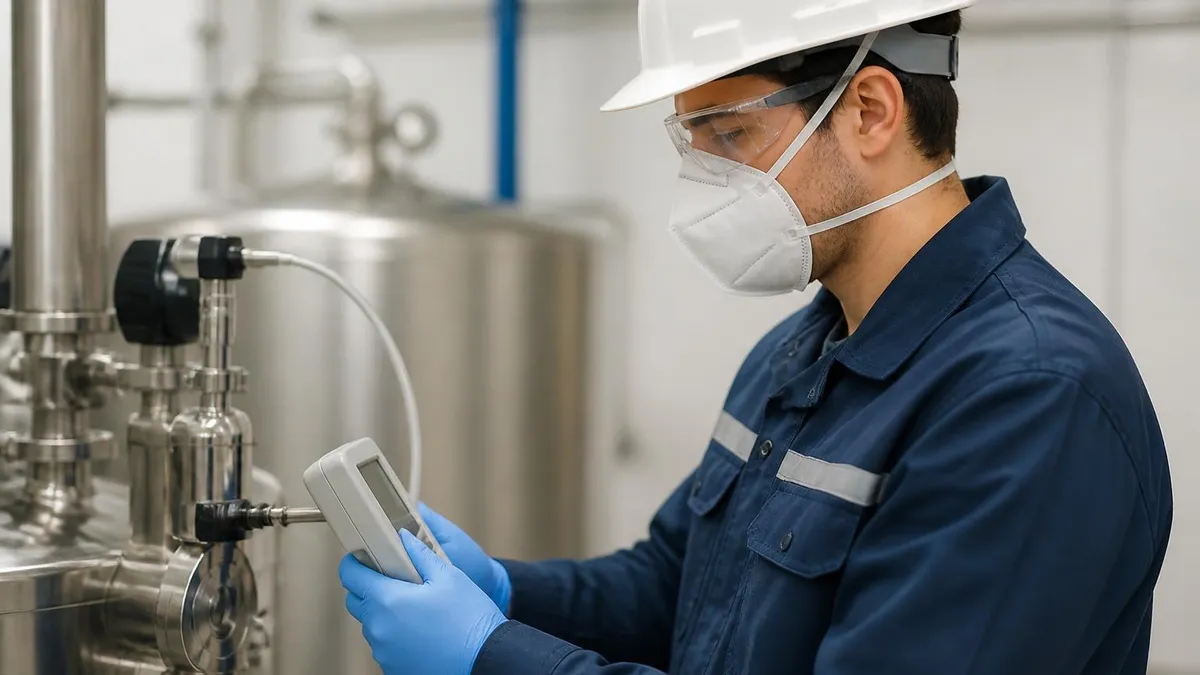
The Certified Industrial Hygienist (CIH) credential is the gold standard for professionals who protect workers from chemical, physical, biological, and ergonomic hazards on the job. Awarded by the American Board of Industrial Hygiene (ABIH), this certification signals deep technical competence — and it carries serious weight with employers, regulators, and insurers across every industry where safety matters.
So is it worth chasing? Short answer: yes, if industrial hygiene is your long game. CIHs typically earn between $80,000 and $135,000, with senior roles in oil and gas, pharma, or government pushing well past $150k. But the path isn't easy. You'll need a STEM bachelor's degree, four years of professional experience, and you'll have to pass a brutal 180-question exam covering 15 technical rubrics.
This guide walks you through everything — eligibility, application costs, study tactics, exam-day logistics, salary expectations, recertification, and how the CIH stacks up against related credentials like the CSP, CHMM, and CHST. By the end, you'll know exactly whether to pursue it and how to set yourself up to pass on the first try.
Quick context for anyone new to the field: industrial hygiene isn't safety. The two disciplines overlap, but they're distinct. Safety professionals focus on preventing acute injuries — falls, machine guarding, lockout-tagout. Industrial hygienists focus on preventing chronic illness from sub-lethal exposures over months and years. You won't see the harm today, but a worker exposed to silica dust at 0.05 mg/m³ for fifteen years has a measurable risk of silicosis or lung cancer. That's the CIH's job — quantifying invisible exposure and engineering it out before workers develop disease.
CIH Exam at a Glance
Let's start with the credential itself. The CIH is administered by ABIH, a non-profit board founded in 1960 that operates independently from professional associations. That independence matters — it means the certification is purely competency-based, not membership-driven. When you see "CIH" after someone's name, you know they've earned it through verified education, experience, and a passing exam score.
Industrial hygiene as a discipline sits at the intersection of public health, engineering, chemistry, and occupational medicine. The job is to anticipate, recognize, evaluate, and control workplace hazards before they hurt people. That covers everything from welding fume exposure on a shipyard to bloodborne pathogens in a hospital to noise levels on a runway. CIHs work in manufacturing, government agencies like OSHA and NIOSH, consulting firms, the military, universities, and Fortune 500 corporate safety teams.
The pay scale reflects that breadth. Entry-level industrial hygienists with bachelor's degrees but no certification typically start around $58,000 to $68,000. Once you earn the CIH, that floor jumps meaningfully — $80k becomes the baseline rather than the ceiling. And the credential opens doors that aren't on the published salary scales: expert witness work for litigation, federal consulting under GSA schedules, and senior corporate roles where the CIH is a hard hiring requirement.
Demand keeps growing, too. The Bureau of Labor Statistics projects faster-than-average growth for occupational health and safety specialists through 2032, driven by aging workforce safety expectations and emerging chemicals like PFAS that need exposure characterization.
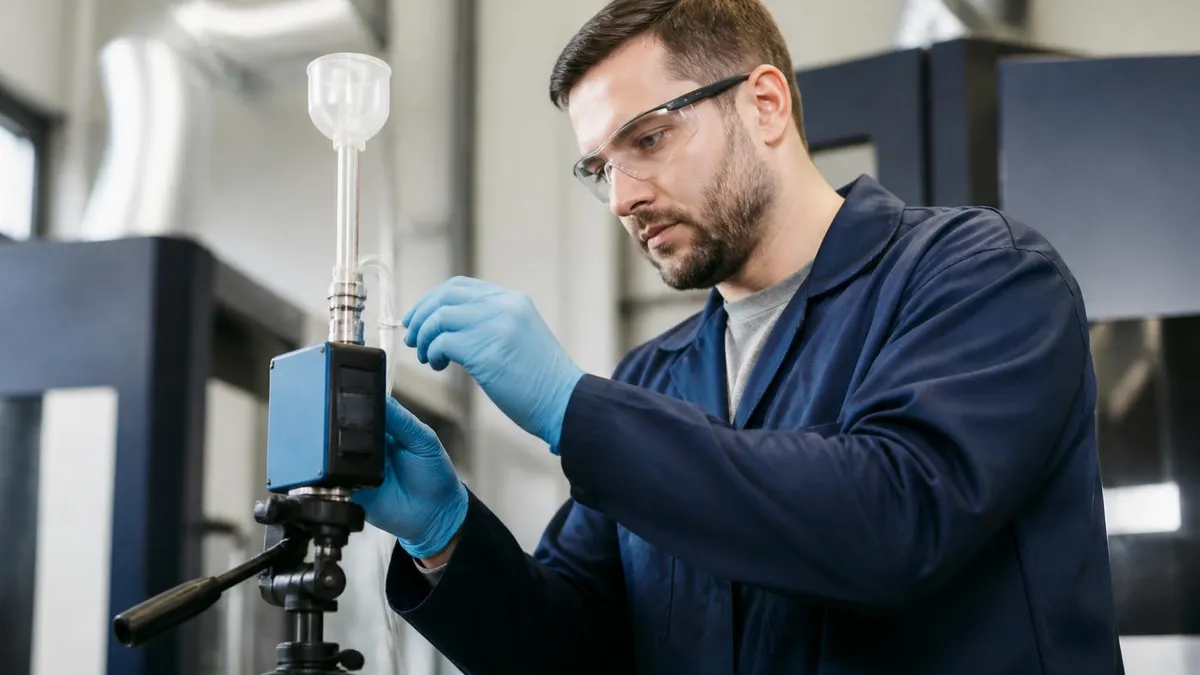
The CIH is one of only a handful of certifications accredited by the ANSI National Accreditation Board (ANAB) under ISO/IEC 17024. That accreditation puts it in the same regulatory tier as the CSP and CHMM, which is why federal contracts, large insurance carriers, and Fortune 100 safety programs routinely list it as a hiring requirement. Roughly 6,800 active CIHs practice worldwide — a small enough pool that the credential still moves the needle on your resume.
Before you start studying, you need to qualify. ABIH eligibility has three components: a degree, work experience, and a professional reference. Miss any one of these and your application gets rejected — so let's walk through each carefully.
The educational requirement is a bachelor's degree in a STEM field — typically industrial hygiene, occupational health, chemistry, biology, physics, engineering, or environmental science. ABIH also accepts degrees in safety, health, or industrial hygiene at the graduate level. If your degree is in a non-STEM area, you'll need to demonstrate equivalent coursework in math (algebra plus statistics), basic science (chemistry, physics, biology), and at least one upper-division technical course tied to industrial hygiene practice.
The experience requirement is four years of full-time professional industrial hygiene practice with a bachelor's, or three years with a master's, or two years with a doctorate. The work has to be substantive — at least 50% of your job duties must involve anticipating, recognizing, evaluating, or controlling occupational hazards. Pure safety officer roles don't count unless they include meaningful IH components like exposure monitoring, ventilation assessment, or chemical risk evaluation. ABIH requires a signed reference from a current CIH who can verify your experience.
One nuance that trips people up: ABIH counts experience by calendar years, not by hours logged. If you worked part-time on IH tasks while spending the rest of your time on general safety duties, you can't combine fractional years to hit the four-year mark. Either your role qualifies as primarily IH or it doesn't. Borderline cases — environmental engineers, occupational health nurses, ergonomists in non-IH departments — should email ABIH a job description before applying. The board responds to pre-qualification questions within about two weeks and will tell you whether your background counts.
The 15 Rubrics Tested on the CIH Exam
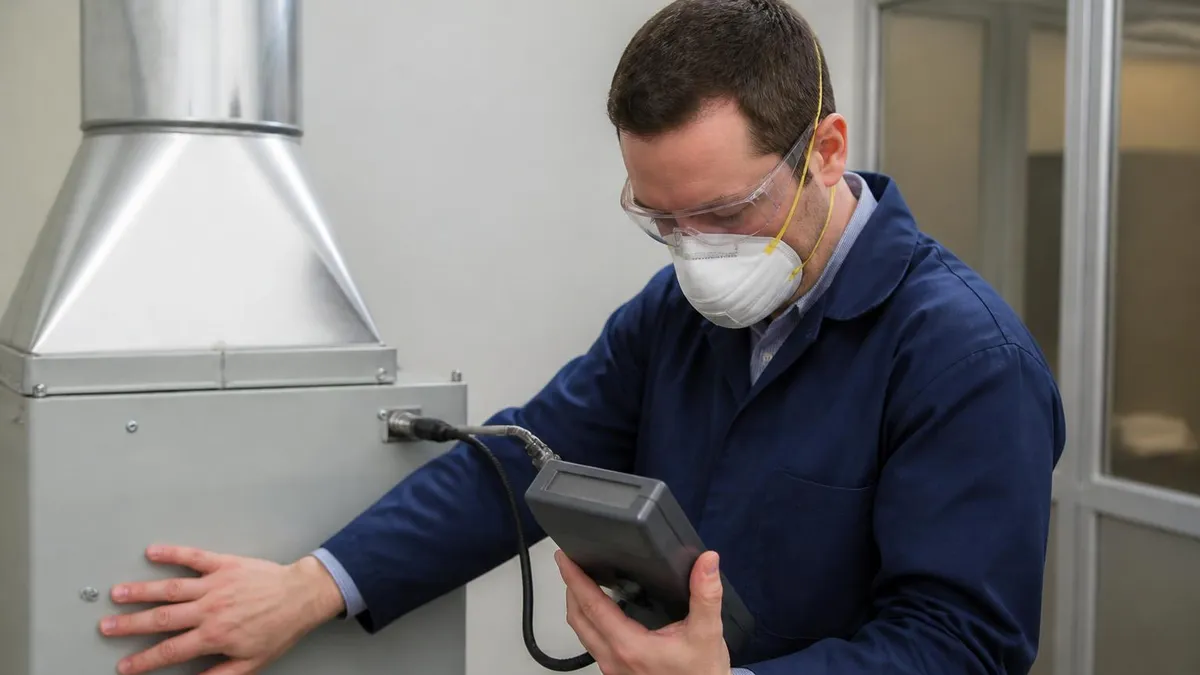
Calibration, sampling pumps, detector tubes, real-time direct-reading instruments, sample collection strategies.
Lab methods, NIOSH/OSHA analytical procedures, gas chromatography, mass spectrometry, quality assurance.
Chemistry, physics, biology fundamentals as they apply to occupational exposure assessment.
Bloodborne pathogens, biosafety levels, mold, Legionella, infectious disease control, BSL-1 through BSL-4 labs.
Distributions, confidence intervals, exposure variability, dose-response, study design.
Air pollution, fenceline monitoring, EPA standards, exposure to non-occupational populations.
Local exhaust, general dilution, hood design, duct velocity, fan curves, ACGIH ventilation manual content.
NIOSH lifting equation, repetitive motion, anthropometry, workstation design, MSD prevention.
History of IH, professional ethics, regulatory framework, OSHA/NIOSH/EPA roles.
Risk assessment, GHS labels, SDS, training programs, communication of exposure risks.
Program design, budgeting, ROI, audits, recordkeeping, integration with EHS systems.
Alpha/beta/gamma, X-ray, RF/microwave, UV, lasers, shielding calculations, dosimetry.
Sound level measurement, octave bands, OSHA action levels, hearing conservation programs, audiometry.
Heat stress, WBGT, cold stress, acclimatization, work-rest cycles, ACGIH TLVs.
Routes of exposure, metabolism, target organs, carcinogens, reproductive toxins, NOAEL/LOAEL.
Notice anything? That's a massive scope. The CIH exam doesn't reward narrow specialists — it rewards generalists who can move fluidly between toxicology, engineering, statistics, and program management. Most candidates have deep expertise in three or four rubrics from their day jobs and need serious review on the rest. Plan your study time accordingly.
ABIH publishes a detailed body of knowledge document (the "BoK") that lists every sub-topic under each rubric. Download it. Print it. Use it as your study checklist. Candidates who skip the BoK and rely on generic IH textbooks routinely discover they've under-prepared in obscure but tested areas like community exposure assessment or specialized analytical methods.
One more thing about exam coverage: the weighting isn't uniform. Rubrics like toxicology, air sampling, and engineering controls each contribute roughly 10 to 12% of the questions. Smaller rubrics like community exposure or basic science might only contribute 3 to 5%. ABIH publishes the exact percentage weights in the BoK — use them to allocate your study time proportionally. Spending 40 hours on community exposure when it's only 3% of the test is a poor use of your prep window, but ignoring it entirely costs you easy points you should have banked.

Application Timeline & Costs
Submit your online application through ABIH's portal. You'll upload transcripts, a detailed work history, and your professional reference form. Processing takes 6 to 8 weeks, sometimes longer during peak windows. Don't book your exam until you receive your approval-to-test (ATT) letter.
If ABIH requests additional documentation — extra transcripts, clarification on job duties, a second reference — respond fast. Slow responses can push you past application cycle deadlines. Most rejections happen because applicants underestimate the detail ABIH expects in the work history section. Each role you list should describe specific IH tasks with measurable outputs — samples taken, surveys completed, exposure assessments authored, ventilation systems evaluated. Generic language gets flagged for follow-up review and adds weeks to your timeline. Build out each role with concrete examples before you submit.
Now let's talk strategy. With 15 rubrics, six hours of testing, and a pass rate below 65%, you can't wing this exam. Most successful candidates report 250 to 400 hours of focused prep spread over four to six months. That's not study advice — that's the floor. If you're working full-time, expect to give up most evenings and weekends.
The smartest sequence: start with the rubrics you know least about. If you're a manufacturing IH, you probably have noise, ventilation, and chemical hazards down cold. Spend the first two months on radiation, biostatistics, biohazards, and community exposure. Save your strong rubrics for later review — those topics will stick because you use them daily.
What kills candidates more than anything is the math. Roughly 30 to 40 questions on the exam are calculation-heavy: ventilation flow rates from hood entry coefficients, sound pressure level addition, lognormal sampling statistics, radiation dose attenuation through shielding, and dilution ventilation requirements for solvent vapors.
You need to be able to set up these calculations cold, without notes, and with only the on-screen Pearson VUE calculator. Practice them until they're reflexive. The AIHA Mathematical Models for Estimating Occupational Exposure to Chemicals and the ACGIH Industrial Ventilation manual are your two essential math references — work through every example problem in both.
ABIH rejects applications for predictable reasons. Avoid these pitfalls: (1) Vague job descriptions — don't write "safety duties" — write "conducted 40 personal monitoring samples for hexavalent chromium, calculated 8-hour TWAs, and recommended LEV upgrades." (2) Under-quantified experience — ABIH wants percentages of time spent on IH tasks. (3) Non-CIH reference — your reference must be an active CIH in good standing, verifiable through the ABIH roster. (4) Missing transcripts — order officials directly from the registrar, not copies you scanned.
One more practical note on study materials before we move on: don't overspend. A common mistake is buying every book, course, and question bank on the market — only to skim each one without mastering any. Pick one primary review course, one reference set (AIHA White Book plus ACGIH ventilation manual), and one or two large practice question banks. That's enough. The extra $1,000 you'd spend on duplicates is better invested in time off work to study during your final two weeks.
Once you have your study plan, build a weekly cadence. The candidates who pass first time treat prep like a graduate course: assigned readings, weekly practice tests, error logs, and dedicated office hours with study partners. The ones who fail treat it like a hobby they fit in between Netflix episodes.
Active recall beats passive reading every time. Don't just re-read the AIHA White Book — close it and force yourself to derive ventilation flow calculations from scratch, or recite the toxicology routes of exposure, or sketch a sampling train. If you can't reproduce the content without the textbook, you don't actually know it yet. A good rule: for every hour you spend reading, spend at least 90 minutes on practice problems and self-testing. Flip the ratio if you're naturally a strong reader but weak on application.
CIH Study Plan Checklist
- ✓Download the ABIH Body of Knowledge document and use it as your master checklist
- ✓Order the AIHA White Book (Industrial Hygiene Reference Manual) — it's the most cited source on the exam
- ✓Enroll in a structured review course (AIHA, Bowen EHS, or a university-based program)
- ✓Build a 16-week study calendar with weekly rubric targets
- ✓Complete at least 1,500 practice questions across all 15 rubrics before exam day
- ✓Take three full-length 180-question timed practice exams in the final month
- ✓Maintain an error log — categorize every wrong answer by rubric and sub-topic
- ✓Join a CIH study group (LinkedIn, Reddit r/IndustrialHygiene, or AIHA local sections)
- ✓Schedule your Pearson VUE exam 6 weeks before your target date to lock in your slot
- ✓Plan a final review week — no new material, only practice tests and weak-rubric review
Now the bigger question: how does the CIH compare to other credentials in the occupational health and safety space? It's not always the right credential for every career path, and stacking the wrong combination wastes money and study time. Here's the honest comparison.
The Certified Safety Professional (CSP) from BCSP is the CIH's closest sibling. Both are ANAB-accredited, both require a STEM degree plus experience, and both signal senior-level competence. The difference: CSP is broader (covers safety management, ergonomics, fire, construction, transportation) while CIH is deeper on chemical, physical, and biological exposures. Many senior practitioners hold both. If you spend most of your time managing safety programs and writing JHAs, lean CSP. If you spend most of your time doing exposure assessments and ventilation evaluations, lean CIH.
Salary differences between the two are smaller than people assume. Both credentials sit in the same $90k to $130k median range, with senior consulting and corporate roles paying more in either lane. The bigger differentiator is the type of work. CIHs spend more time with sampling pumps, lab data, and engineering calculations. CSPs spend more time with audits, training programs, incident investigations, and management systems. Choose the credential that matches the work you actually want to do day-to-day, not the one with a marginally higher reported median on the AIHA or ASSP salary survey.
Is the CIH Right for You?
- +Highest-paying core occupational health certification — median around $108k, top end $150k+
- +ANAB-accredited and recognized by OSHA, DOD, EPA, and Fortune 500 employers
- +Opens doors to senior consulting roles, expert witness work, and federal positions requiring CIH
- +Strong global recognition — accepted in Canada, UK, Middle East, and most international markets
- +Active alumni network through AIHA with 8,500+ members and 80+ local sections
- −Long path to eligibility — four years of experience minimum, on top of a STEM degree
- −Brutal exam scope across 15 rubrics — pass rate 55 to 65% means real risk of failure
- −Total cost from application to passing: $1,500 to $2,500 plus 250+ study hours
- −Recertification is ongoing — 40 Certification Maintenance points every 5 years
- −Narrower scope than CSP — pure construction safety or fire protection roles may prefer CSP
Two more comparisons worth understanding. The Certified Hazardous Materials Manager (CHMM) from IHMM focuses on hazardous waste, transportation, RCRA, and emergency response. It's narrower than the CIH and tends to pay less, but it's the right credential if you work in environmental compliance, hazmat transport, or remediation. The Construction Health and Safety Technician (CHST), also from BCSP, is an entry-level credential focused on construction-site safety — far below the CIH in scope and salary. Don't pursue the CHST if you're targeting senior IH roles; it won't move your career forward at that level.
For most readers serious about industrial hygiene as a career, the optimal stack is CIH first, CSP added later for management roles. CHMM only if your work pulls you toward environmental compliance. CHST only as a stepping stone if you're early career on a construction site and want to prove technical competence before pursuing the bigger credentials.
One more thing to plan for: recertification. ABIH requires 40 Certification Maintenance (CM) points every 5 years. You earn CMs through continuing education, professional service, publications, mentoring, and active practice. The maintenance fee is $200 per year (billed annually). Miss your CM cycle and you lose the credential — there's a one-year grace period to remediate, but after that you'd have to retake the exam. Most CIHs find the 40-CM target easy to hit through their normal conference attendance and AIHA local section involvement, but plan ahead. Don't wait until year 4 to start gathering documentation.
So where does that leave you? If you've made it this far, you're probably already committed to the path — or seriously considering it. Either way, the CIH is one of the few certifications that genuinely transforms careers. Practitioners report measurable salary jumps within 12 months of passing, faster promotion to senior IH or principal consultant roles, and access to federal positions and large-account consulting work that simply isn't available without the credential.
The work itself is meaningful, too. You're not pushing paper — you're protecting people from exposures that can shorten their lives. CIHs played central roles in the response to 9/11 air quality assessments, the Deepwater Horizon cleanup, the COVID-19 indoor air policy reset, and ongoing legacy issues like PFAS, silica, and heat stress. If protecting workers is the kind of impact you want from a career, this is the credential that opens those doors.
A few final tactical notes before you start. First, don't rely on a single review course. Combine an instructor-led course (AIHA, Bowen, or a university-based program) with self-study using the AIHA White Book, the ACGIH ventilation manual, and at least two practice exam banks. Different sources phrase questions differently, and you want exposure to ABIH's question style — which leans toward applied calculations and scenario-based reasoning rather than rote definitions.
Second, treat the practice exams seriously. Take them under timed conditions, with no notes, in a quiet room. Don't pause to look up the answer when you're stuck — note the question, move on, and review afterward. The real exam is six hours and mentally exhausting; you need stamina, not just knowledge.
Third, plan for the day before and morning of. Sleep matters more than last-minute cramming. Don't open a textbook the night before — go for a walk, eat a normal dinner, sleep eight hours. The morning of, eat a real breakfast with protein, get to the Pearson VUE center 30 minutes early, and use the 30-minute optional break. Walking around for ten minutes mid-exam reliably improves accuracy on the second half of the test.
Build a realistic timeline, commit to the study hours, and pick an exam date that gives you 4 to 6 months of focused prep. Start with the rubrics you know least, use practice tests aggressively, and join a study group early. The candidates who treat this seriously pass it.
The credential — and the career it unlocks — is genuinely worth the work. Industrial hygiene is one of the few fields where you can build a six-figure career protecting workers from harm they'd otherwise never see coming. The CIH is the credential that proves you can do that work at the highest level. Start your application today.
CIH Questions and Answers
About the Author
Attorney & Bar Exam Preparation Specialist
Yale Law SchoolJames R. Hargrove is a practicing attorney and legal educator with a Juris Doctor from Yale Law School and an LLM in Constitutional Law. With over a decade of experience coaching bar exam candidates across multiple jurisdictions, he specializes in MBE strategy, state-specific essay preparation, and multistate performance test techniques.