
CST Exam Requirements: Can You Test Without School? 2026 October
✅ Pass the CST exam with confidence. Practice questions with detailed explanations and instant feedback on every answer.

Can You Take the CST Exam Without Going to School?
It's one of the most common questions about surgical tech certification: can you take the CST exam without going to school? Short answer — it depends on which pathway you qualify for, and the requirements have changed significantly in recent years. Let's get into the details.
The CST (Certified Surgical Technologist) credential is issued by the National Board of Surgical Technology and Surgical Assisting (NBSTSA). Historically, NBSTSA offered a work experience pathway that allowed people working in surgical technology without formal education to qualify for the exam. That pathway closed to new applicants. If you're researching this now, you're largely looking at formal education as your route in.
Current CST Exam Eligibility Requirements
NBSTSA requires one of the following to apply for the CST exam:
- Graduation from a CAAHEP-accredited surgical technology program — This is the primary pathway. The Commission on Accreditation of Allied Health Education Programs (CAAHEP) accredits surgical technology programs at community colleges, technical schools, and universities. Completing one of these programs makes you eligible to sit for the CST.
- Graduation from a ABHES-accredited allied health program — ABHES (Accrediting Bureau of Health Education Schools) accreditation is the other accepted accrediting body.
- Military training pathway — If you completed surgical technologist training through military service (specifically the MOS/AFSC designations recognized by NBSTSA), you may qualify. Check NBSTSA's current military pathway requirements directly — they differ from civilian requirements.
The informal "on-the-job" experience pathway that some older CSTs used is no longer available for new applicants. If you don't have one of the above credentials, you need to complete an accredited surgical technology program before you're eligible to test.
How Long Does a CST Program Take?
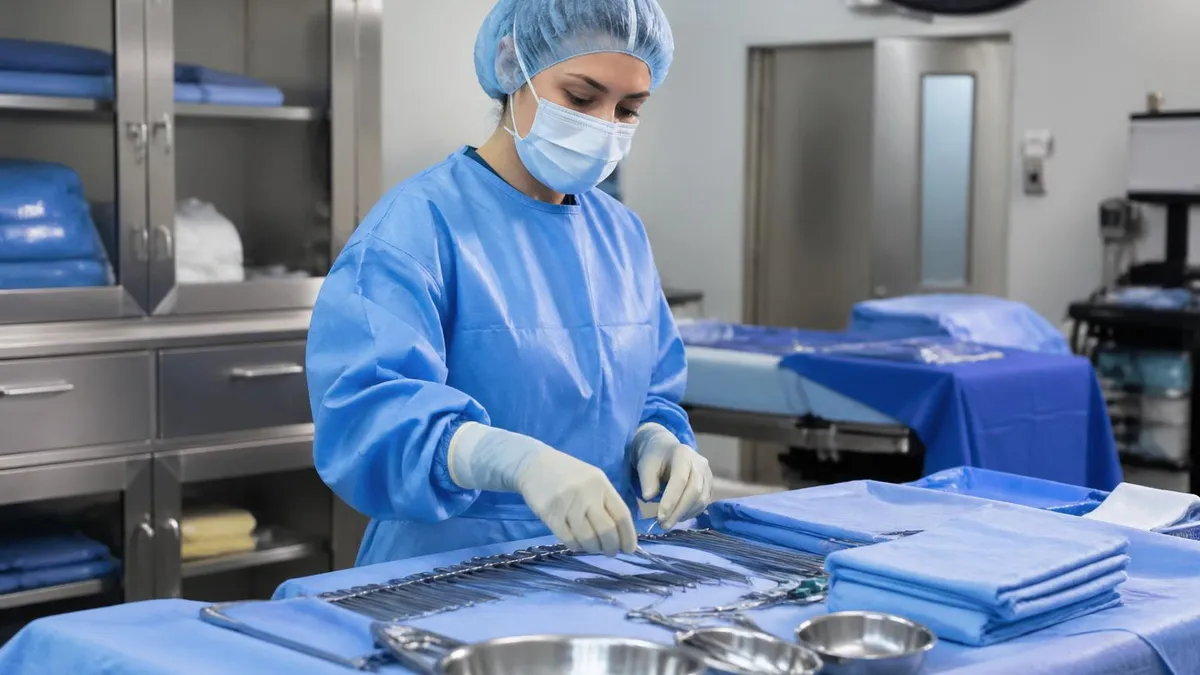
Most CAAHEP-accredited surgical technology programs are 18–24 months. Community college associate degree programs tend to run 2 years; certificate/diploma programs at technical schools can be shorter at 12–18 months. All accredited programs include both didactic (classroom/online) coursework and a mandatory clinical practicum where you actually work in a surgical suite.
That clinical component is non-negotiable. You can't substitute online learning for surgical scrubbing experience — hospitals and credentialing bodies won't accept it. You'll need to complete your clinical hours in an actual operating room under supervision.
The number of required surgical cases varies by program. CAAHEP standards require students to participate in at least 120 surgical procedures during their clinical rotation.
Pro Tip: Focus your Certified Surgical Technologist study time on areas where you score lowest. Most exam questions test application of knowledge, not memorization.
The CST Exam Format
Once you're eligible, here's what the exam looks like. The CST exam is a 175-question computer-based test, with 150 scored items and 25 unscored pilot questions you can't identify. You have 3 hours to complete it.
Content domains on the CST exam include:
- Perioperative Care — Pre-op, intra-op, and post-op patient management, sterile technique, surgical positions
- Basic Science — Anatomy, physiology, microbiology, pharmacology fundamentals
- Surgical Procedures — Instrumentation, specific surgical specialties (general, ortho, OB/GYN, cardiothoracic, neurosurgery, etc.)
Perioperative care and surgical procedures together make up the bulk of the exam. Surgical procedures knowledge — knowing your instruments, your specialty-specific needs, and standard surgical setups — is where a lot of candidates struggle if their clinical experience was narrow.
What's the CST Passing Score?
The CST exam uses a scaled scoring system. NBSTSA sets the passing score periodically and it can change. As of recent administrations, the passing standard is a scaled score of 700 out of a possible 700 — but that's a scaled score, not a raw percentage. The actual cut score in terms of correct questions is determined through a standard-setting process.
NBSTSA reports your score and whether you passed immediately after the exam. If you don't pass, your score report shows your performance by content domain, which tells you where to focus for a retake.
Maintaining CST Certification
Passing the exam is just the beginning. The CST credential requires renewal every four years. To renew, you need to accumulate 60 continuing education credits (CECs) during that four-year period. CECs can be earned through:
- NBSTSA-approved CE courses
- Attending surgical technology conferences (AST offers the IFUSE conference)
- Online CE modules through AST and other providers
- Retaking the CST exam (if you prefer to test instead of accumulate CE)
One option for renewal is the online pathway — most of your 60 CECs can be earned through online courses. That makes maintenance more manageable than it sounds.
How to Prepare for the CST Exam
Your surgical technology program should have given you a solid foundation, but additional exam prep is worth it. Here's where to focus:
Surgical instrument knowledge is a consistent weak point for many candidates. If your clinical rotations were concentrated in one or two specialties, you may have gaps in specialty-specific instrumentation. Study sets for ortho, neuro, cardiothoracic, and other specialties you didn't do as much of clinically.
Sterile technique and perioperative care questions are highly testable because they're precise — there are right and wrong answers, and NBSTSA expects you to know them cold. Don't rely on what was casually done in your clinical rotation; know the textbook standards.
Anatomy comes up more than people expect. You'll be asked about anatomy in the context of surgical procedures — knowing which structures are at risk during certain procedures, for example. A quick anatomy review is time well spent.
The certified surgical technologist exam guide covers the full exam structure, domain weights, and registration process in more detail. Start there if you want a complete picture before diving into content review.

Certified Surgical Technologist: Pros and Cons
- +cst time now — certified Surgical Technologist certification validates expertise recognized by employers nationwide
- +Certified professionals typically earn 15-20% higher salaries
- +Opens doors to advanced positions and leadership roles
- +Demonstrates commitment to professional standards and ethics
- +Builds a strong professional network through certification communities
- −Exam preparation typically requires 2-4 months of dedicated study
- −Certification and exam fees can range from $150-$500+
- −Must complete continuing education to maintain active certification
- −Pass rates vary — thorough preparation is essential for success
- −Some certifications require prerequisite experience or education




Practice for the CST Exam Now
The CST exam tests your ability to apply surgical technology knowledge — not just recall it. That means practice questions that walk you through scenarios are more valuable than flashcards alone.
Our free CST practice tests cover perioperative care, basic science, and surgical procedures across multiple specialties. Each question includes an explanation so you're learning from every answer, not just checking a score.
Start with patient safety and surgical counts — it's one of the highest-stakes areas on the exam and one where precise knowledge matters most. See how you do, then identify which specialty areas or content domains need more focused review before your test date.
About the Author

Educational Psychologist & Academic Test Preparation Expert
Columbia University Teachers CollegeDr. Lisa Patel holds a Doctorate in Education from Columbia University Teachers College and has spent 17 years researching standardized test design and academic assessment. She has developed preparation programs for SAT, ACT, GRE, LSAT, UCAT, and numerous professional licensing exams, helping students of all backgrounds achieve their target scores.