

CDM Practice Test
Updated October 2026Doughnuts are a beloved treat enjoyed by people worldwide, with a rich history rooted in diverse culinary traditions. Behind every perfectly crafted doughnut lies the expertise, passion, and skill of a professional doughnut maker. The Certified Doughnut Maker (CDM) certification is a specialized credential designed to recognize and validate mastery in doughnut preparation, baking techniques, creativity, and food safety. Practice with the free Certified Doughnut Maker practice test on PracticeTestGeeks (9 questions with answer explanations).
This certification is ideal for bakers, pastry chefs, and food entrepreneurs who seek to improve their craft, ensure product consistency, and enhance career opportunities within the baking industry. The CDM credential highlights a professional’s dedication to quality, hygiene, and innovation in doughnut making, offering a competitive advantage in an increasingly crowded market. This article explores the importance of the Certified Doughnut Maker certification, the process to obtain it, its benefits, and the role it plays in promoting excellence in doughnut production.
Key Takeaways
Certified Doughnut Maker (CDM) certification validates expertise in doughnut production, including dough preparation, frying, glazing, and decoration.
The certification process includes training on baking techniques, ingredient selection, equipment operation, and food safety standards.
CDM professionals demonstrate proficiency in both traditional and innovative doughnut recipes and styles.
Certification enhances career opportunities in bakeries, specialty shops, food service, and entrepreneurial ventures.
Maintaining certification requires adherence to food safety regulations and ongoing skill development.
Understanding the Role of a Certified Doughnut Maker
A Certified Doughnut Maker is responsible for producing high-quality doughnuts that meet taste, texture, and appearance standards while ensuring food safety. Their duties encompass:
Dough Preparation: Mastering the mixing of ingredients to create consistent dough textures suitable for different doughnut styles, including yeast-raised and cake doughnuts.
Frying Techniques: Operating fryers to achieve the perfect golden crust without compromising texture or oil absorption.
Glazing and Decoration: Applying glazes, icings, and toppings with skill and creativity to enhance flavor and visual appeal.
Quality Control: Monitoring doughnut size, shape, and doneness to maintain consistency and customer satisfaction.
Food Safety Compliance: Following hygiene practices and local health regulations to ensure product safety.
Innovation: Experimenting with new flavors, fillings, and presentation styles to meet evolving consumer preferences.
Certified Doughnut Makers blend culinary artistry with technical proficiency to deliver a product that delights consumers and upholds bakery standards.
Free Certified Doughnut Maker Study Tools
Interactive Certified Doughnut Maker resources on PracticeTestGeeks, free to start:
- CDM Dough Preparation & Ingredient Handling — 9 questions with answer explanations
- Certified Doughnut Maker flashcards — review key terms and concepts card by card
- Certified Doughnut Maker study guide — topic-by-topic overview of what the exam covers
- Certified Doughnut Maker cheat sheet — one-page printable summary for last-minute review
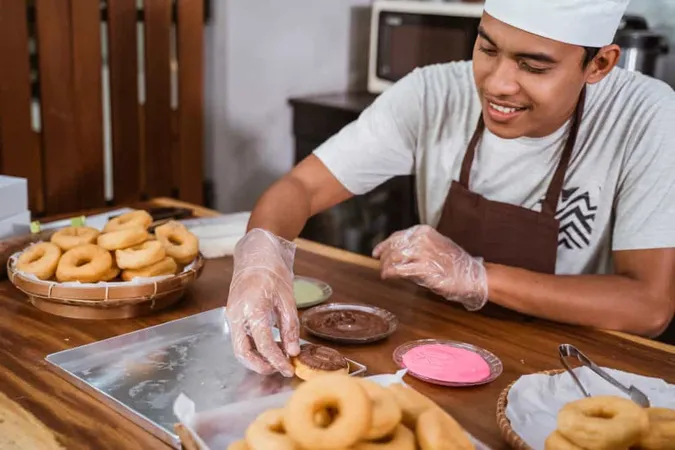
CDM Practice Test Questions
Prepare for the CDM - Certified Doughnut Maker exam with our free practice test modules. Each quiz covers key topics to help you pass on your first try.
CDM Baking Techniques & Equipment Operation
CDM Exam Questions covering Baking Techniques & Equipment Operation. Master CDM Test concepts for certification prep.
CDM Glazes, Fillings & Toppings
Free CDM Practice Test featuring CDM Glazes, Fillings & Toppings. Improve your CDM Exam score with mock test prep.
CDM Inventory, Costing & Business Operations
CDM Mock Exam on CDM Inventory, Costing & Business Operations. CDM Study Guide questions to pass on your first try.
CDM Cooking Methods & Techniques
CDM Test Prep for Cooking Methods & Techniques. Practice CDM Quiz questions and boost your score.
CDM Dough Preparation & Ingredient Handling
CDM Questions and Answers on Dough Preparation & Ingredient Handling. Free CDM practice for exam readiness.
CDM Food Safety & Sanitation
CDM Mock Test covering Food Safety & Sanitation. Online CDM Test practice with instant feedback.
CDM Fryer Operation & Oil Management
Free CDM Quiz on Fryer Operation & Oil Management. CDM Exam prep questions with detailed explanations.
CDM Kitchen Management & Operations
CDM Practice Questions for Kitchen Management & Operations. Build confidence for your CDM certification exam.
CDM Menu Planning & Nutrition
CDM Test Online for Menu Planning & Nutrition. Free practice with instant results and feedback.
Eligibility and Prerequisites
How to Obtain Certified Doughnut Maker (CDM) Certification
Candidates for CDM certification usually require:
Basic culinary or baking experience, particularly in pastry or doughnut preparation.
Knowledge of baking ingredients, kitchen equipment, and food safety principles.
A passion for baking and a commitment to craftsmanship.
Certification Process
Training:
Candidates enroll in specialized doughnut-making courses, which may be offered by culinary schools, baking associations, or professional institutes. Training covers dough preparation, frying methods, glazing techniques, and food safety regulations.Practical Assessment:
Candidates demonstrate their skills through hands-on practical examinations where they prepare, cook, glaze, and present doughnuts to meet established quality standards.Written Examination:
The certification exam assesses knowledge of ingredient functions, baking chemistry, fryer safety, hygiene practices, and troubleshooting common doughnut-making issues.
Certification Award:
Successful candidates receive the Certified Doughnut Maker (CDM) credential, signaling their expertise and professionalism.
Continuing Education:
To maintain certification, CDMs must engage in ongoing education, keeping up with new techniques, trends, and food safety updates.
Benefits of CDM Certification
Professional Recognition: The CDM credential highlights mastery and dedication to the craft of doughnut making.
Career Opportunities: Certified makers can advance to lead baker roles, open specialty doughnut shops, or work in food production companies.
Quality Assurance: Certification assures customers and employers of consistent product quality and food safety compliance.
Skill Development: Training and certification improve technical skills, creativity, and efficiency in doughnut production.
Networking: Certified professionals gain access to baking communities, resources, and industry events.
Challenges in Doughnut Making and How CDM Certification Helps
Doughnut making involves several challenges, including:
Achieving Consistency: Balancing ingredient ratios and cooking times to produce uniform doughnuts.
Oil Management: Maintaining frying oil quality to ensure taste and safety.
Adapting to Dietary Trends: Creating doughnuts that cater to gluten-free, vegan, or low-sugar preferences.
Innovating While Preserving Tradition: Introducing new flavors and designs without compromising classic appeal.
Meeting Health Standards: Complying with rigorous food safety laws and regulations.
The CDM certification equips professionals with the knowledge and techniques to navigate these challenges effectively.
- ✓Confirm your exam appointment and location
- ✓Bring required identification documents
- ✓Arrive 30 minutes early to check in
- ✓Read each question carefully before answering
- ✓Flag difficult questions and return to them later
- ✓Manage your time — don't spend too long on one question
- ✓Review flagged questions before submitting
CDM: Pros and Cons
- +CDM certification validates expertise recognized by employers nationwide
- +Certified professionals typically earn 15-20% higher salaries
- +Opens doors to advanced positions and leadership roles
- +Demonstrates commitment to professional standards and ethics
- +Builds a strong professional network through certification communities
- −Exam preparation typically requires 2-4 months of dedicated study
- −Certification and exam fees can range from $150-$500+
- −Must complete continuing education to maintain active certification
- −Pass rates vary — thorough preparation is essential for success
- −Some certifications require prerequisite experience or education
Pros and Cons at a Glance
| Pros | Cons |
|---|---|
| CDM certification validates expertise recognized by employers nationwide | Must complete continuing education to maintain active certification |
| Opens doors to advanced positions and leadership roles | Pass rates vary — thorough preparation is essential for success |
| Demonstrates commitment to professional standards and ethics | Some certifications require prerequisite experience or education |
Sample Certified Doughnut Maker Practice Questions
Try these questions from our free Certified Doughnut Maker practice tests. The correct answer and an explanation follow each question.
When a customer declines a recommendation, what is the most professional response?
- A. Respect their choice, thank them, and assist with their actual selection
- B. Continue to push the recommendation because you believe it is better
- C. Ask why they do not want your suggestion
- D. Express visible disappointment to signal you think they are making a mistake
Answer: A. Respect their choice, thank them, and assist with their actual selection
Respecting customer decisions without persistence or judgment is fundamental to positive service interactions.
A doughnut develops a white powdery surface coating after one day at room temperature. This is MOST likely caused by:
- A. Mold growth beginning on the surface
- B. Sugar bloom from high moisture migration
- C. Fat bloom due to temperature cycling
- D. Excess yeast activity after frying
Answer: B. Sugar bloom from high moisture migration
Sugar bloom occurs when moisture on the doughnut surface dissolves and recrystallizes sugar, creating a white, powdery appearance.
How often should hands be washed during doughnut preparation?
- A. Only at the start of the shift.
- B. After handling raw materials and frequently
- C. Never.
- D. Only after breaks.
Answer: B. After handling raw materials and frequently
Hands should be washed frequently and thoroughly during doughnut preparation, especially after handling raw ingredients like eggs or flour, and after any activity that could contaminate hands (e.g., touching face, using the restroom). This practice is crucial for preventing the spread of bacteria and ensuring food safety. Regular handwashing is a fundamental personal hygiene practice in any food handling environment.
What is the main safety hazard of allowing water or ice to contact hot frying oil in a commercial fryer?
- A. It permanently lowers the oil below the safe frying temperature
- B. It causes violent spattering due to instantaneous steam expansion
- C. It raises the oil's smoke point unpredictably
- D. It adds mineral deposits that clog the heating element
Answer: B. It causes violent spattering due to instantaneous steam expansion
Water instantly vaporizes when it contacts oil at frying temperatures, causing violent steam explosions that spray extremely hot oil and can cause severe burns.
Take the full Certified Doughnut Maker practice test

How this page was made: written with AI tools and published by Nathan Beja, founder of Practice Test Geeks, who is responsible for its content. We have not yet matched this exam's facts to an official source, so confirm fees, dates and rules with the exam body. Not reviewed by a subject-matter expert. Editorial policy