
CDL Stats: Trucking Industry Numbers You Should Know 2026 October
🧠 CDL stats covering active holders, pass rates, salaries, top states, driver shortage, and ELDT impact — the numbers behind a CDL career.
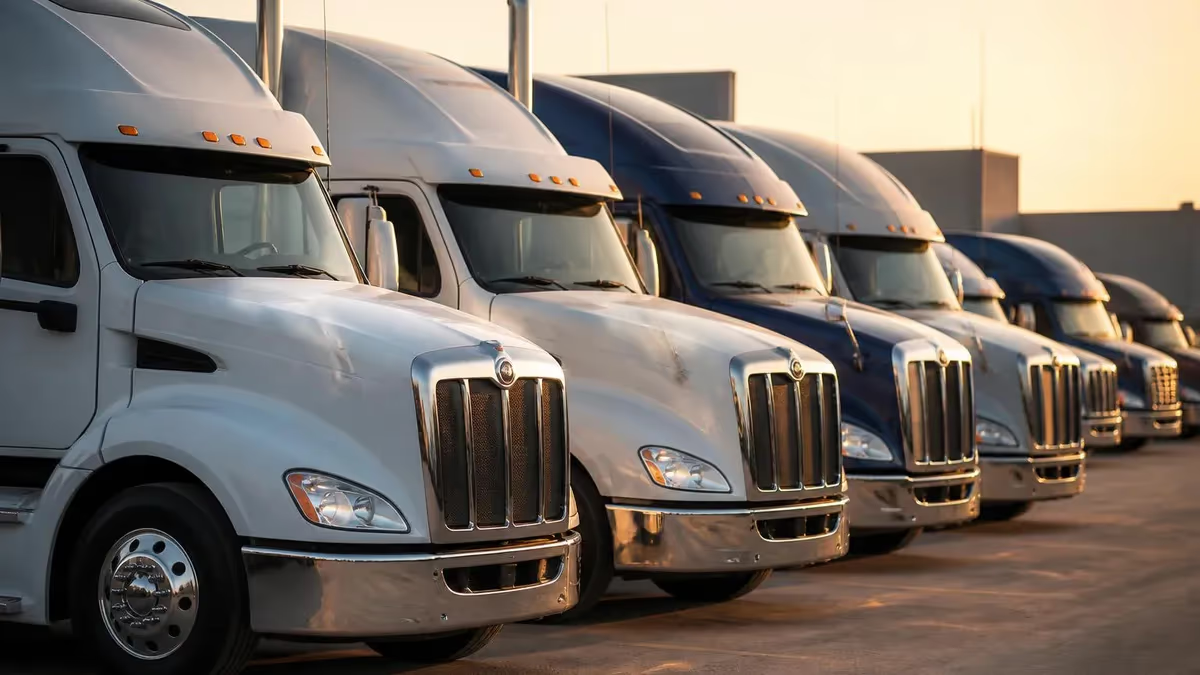
Ever wonder how big the trucking world really is? The numbers are bigger than most people guess — and they shift the way you should think about getting your Commercial Driver's License. Approximately 3.5 million people in the United States hold an active CDL. That's roughly one in every 95 working-age adults. Trucks move close to 72% of all freight tonnage in the country, so when you picture a supply chain, you're really picturing CDL holders doing the actual hauling.
Here's the thing. The CDL workforce isn't standing still. It's aging. It's shifting. And demand keeps climbing while training requirements get tougher with every passing year. Whether you're studying for your permit, weighing a career change, or just curious about the industry — these CDL stats give you the lay of the land. We pulled together approximate, evergreen figures from BLS reports, FMCSA data, ATA driver shortage studies, and state DMV pass-rate disclosures. Let's dig in and see what the numbers actually say.
One quick framing note before we get into the figures. CDL stats move slowly. Demographics shift by maybe a percentage point per year. Salaries creep up with inflation. The total holder count drifts gradually as new entrants and retirees roughly balance out. So when you see a number here, treat it as a steady-state approximation rather than a precise live count — these are the figures you can quote confidently in a job interview, a school essay, or a planning conversation about your own career path.
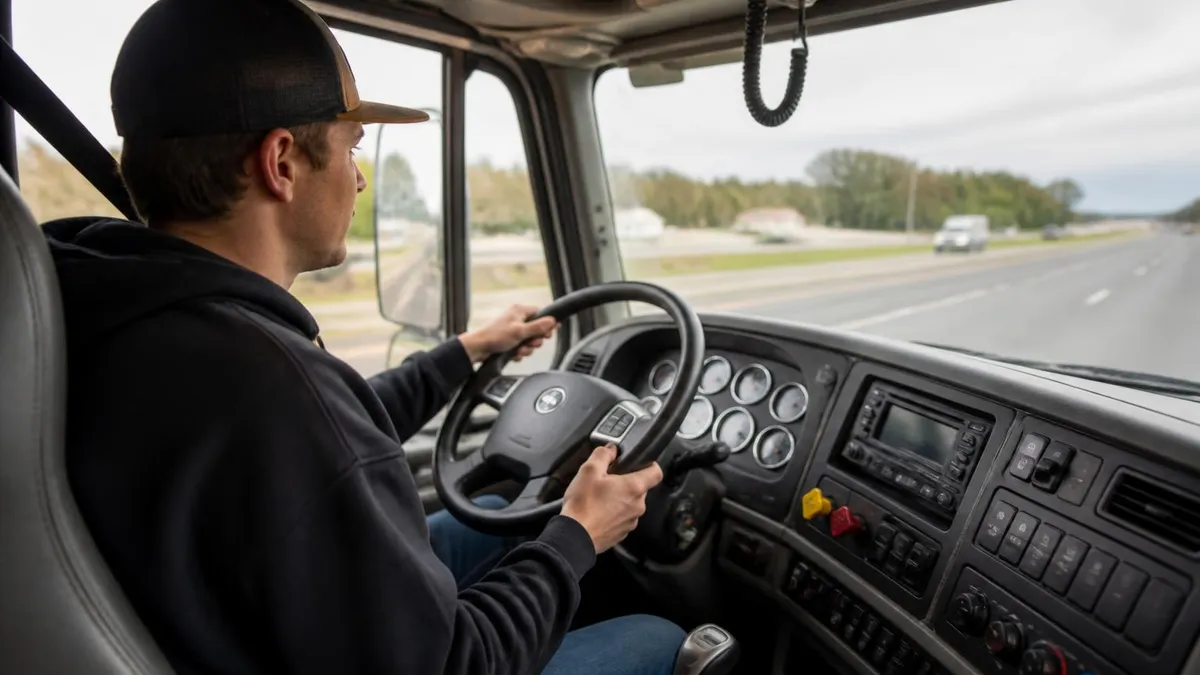
CDL Industry at a Glance
Those four numbers tell a story on their own — but they don't tell the whole story. Let's break each one down. The 3.5 million figure covers Class A, Class B, and Class C CDL holders combined. Class A makes up the lion's share because it lets you drive combination vehicles, which is where most over-the-road freight work lives. Class B and Class C round out the rest with straight trucks, buses, and passenger or hazmat work that doesn't require the heavier combination rating.
The pass rate? That 75% is a national approximation. State-by-state, it swings widely — some states clear 80% on the skills test, while others sit in the high 60s. The CDL general knowledge written test tends to run a bit higher, often around 80% on first attempt. Combination and air brakes endorsements drag the average down a little because they add complexity. If you're studying right now, knowing the realistic pass rate should push you to over-prepare, not under-prepare. You don't want to be the one in four who has to come back.
The driver shortage is more nuanced than headlines suggest. The 80,000 figure from the American Trucking Associations measures the gap between freight demand and qualified, willing drivers — not just empty seats. It's the reason recruiters call you back fast, the reason sign-on bonuses keep climbing, and the reason carriers will train you from zero if you bring a clean record and a real attitude. Salary, finally, is the headline number that misleads most. The $54,000 median hides huge variance, which we'll get to in a minute.
The Aging Workforce Reality
The average age of a US truck driver hovers around 47 years old — roughly seven years older than the average American worker. Roughly one in four current CDL holders is expected to retire within the next decade. That's a massive gap to fill, and it's exactly why entry-level driver demand stays so persistent year after year, regardless of broader economic conditions. Industry analysts point to this single demographic fact more often than any other when explaining why training programs continue to expand even during freight downturns.
That demographic gap matters more than people realize. When a quarter of an industry's workforce heads for retirement, replacement isn't optional — it's existential. The ATA has flagged this for years. Their driver shortage estimate of around 80,000 has actually held remarkably steady, even though carriers keep hiring. Why? Because retirements, washouts, and lateral exits keep balancing out the new entrants. The treadmill never stops moving, and the industry needs you running on it just to stay even.
Demographics break down in some interesting ways too. Women make up roughly 8-10% of CDL holders — a figure that's been climbing slowly but steadily over the last decade. Industry recruiting campaigns have explicitly targeted women drivers, and several large carriers report female new-hire percentages closer to 15%. Veterans are another major source of new CDL talent — military experience with heavy vehicles translates directly, and several federal programs help vets convert military driving records into civilian CDLs faster than the standard track.
The Under-21 Pilot Program is also drawing younger entrants into interstate work, opening up a demographic that was previously locked into intrastate routes only.
Race and ethnicity breakdowns show the industry has historically been more diverse than the average US workforce. Black and Hispanic drivers each make up substantially larger shares than they do in the broader labor market. That diversity has shaped everything from carrier culture to the truck stop economy itself. Newer entrants from immigrant communities continue to widen the mix — Punjabi, Somali, and Eastern European drivers form notable clusters in specific freight lanes, with their own dispatch networks, language services, and informal mentorship pipelines.
CDL Classes by the Numbers
Roughly 2.2 million holders. Required for combination vehicles over 26,001 lbs with a towed unit over 10,000 lbs. This is the over-the-road, long-haul, and heavy-haul license most people picture when they hear 'truck driver.' Most national-fleet driving jobs require Class A, and it remains the gateway license for the highest-paying specialty work in the industry.
About 800,000 holders. Covers single vehicles over 26,001 lbs — straight trucks, dump trucks, large buses, and box trucks. Common in local delivery, construction, and municipal work. Many drivers start with Class B because the training is shorter and home-time is built in, then upgrade to Class A later when they want more route options or higher earnings.
Around 500,000 holders. Used for vehicles carrying 16+ passengers or placarded hazardous materials that don't meet Class A or B weight thresholds. Smaller pool, but specialized and steady. School bus, shuttle, and certain hazmat van roles fall under Class C, and these jobs often offer the most predictable schedules of any commercial driving work.
Hazmat (H), Tanker (N), Doubles/Triples (T), Passenger (P), and School Bus (S) ride on top of your base CDL. Roughly 40% of Class A holders carry at least one endorsement — and endorsed drivers earn measurably more. Hazmat in particular requires a TSA background check and biennial renewal, which keeps the qualified pool tight and the per-mile premiums healthy.
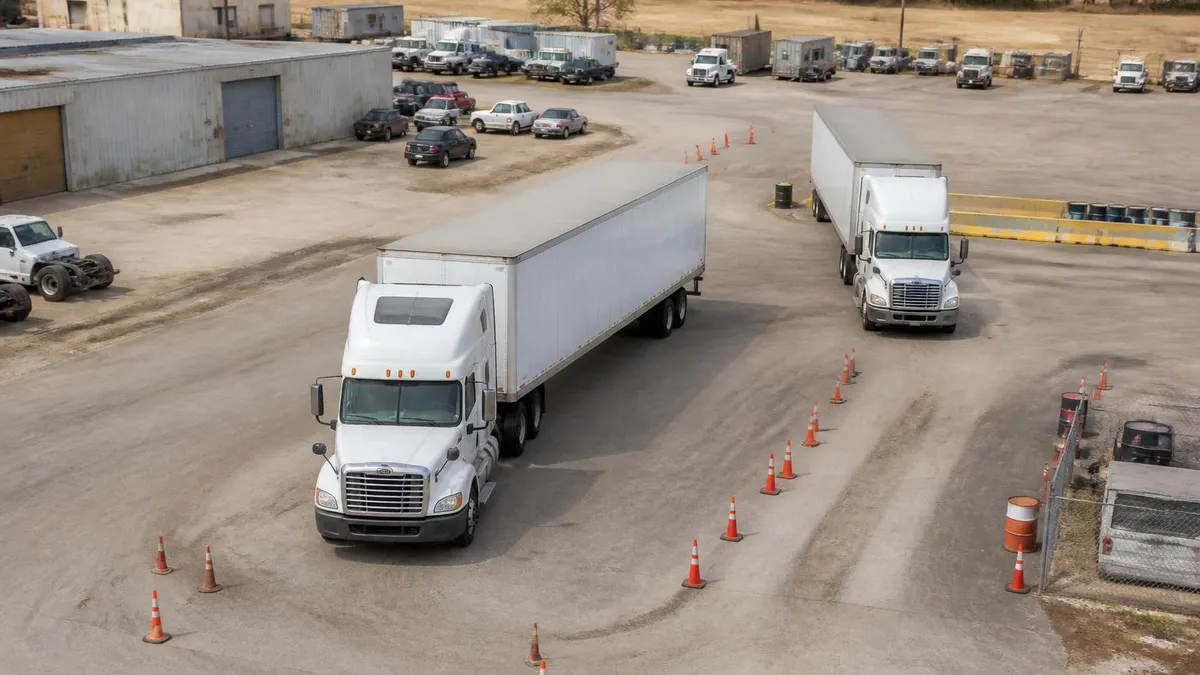
Look at where CDL holders actually live and the geography starts to make sense. Texas leads the country with roughly 300,000 active CDL holders. California follows close behind. Florida, Pennsylvania, Ohio, and Illinois fill out the top tier. These aren't surprising — they're the population centers, freight corridors, and port-heavy states where trucking infrastructure has built up over decades. The Port of Long Beach, the Houston petrochemical complex, and the I-80 corridor through Ohio all anchor enormous CDL ecosystems.
On a per-capita basis, the picture flips. States like North Dakota, Wyoming, and Montana have outsized shares of CDL holders relative to population. That's energy work, agriculture, and the sheer distance between things in the Mountain West. When you're hauling crude or grain across 400 miles of two-lane road, every operation runs on CDLs. Alaska deserves its own footnote — winter ice roads, mine support, and remote village resupply create CDL jobs that don't really exist anywhere else in the country.
Urban-versus-rural splits matter too. About 40% of CDL holders live in metro areas of one million or more, which makes sense given that freight terminates where people are. But the highest concentration of long-haul drivers actually lives in smaller cities and exurbs along major interstates — places like Joplin, Missouri, or Laredo, Texas, where home base is cheap and the on-ramp to the national network is close. If you're picking somewhere to settle as a new CDL holder, this geography matters more than most career guides admit.
Top States for CDL Holders
Texas leads with around 300,000 active CDL holders. California follows with about 270,000. Florida sits near 210,000. Pennsylvania holds roughly 180,000. Ohio, Illinois, and New York each carry between 150,000 and 170,000. These seven states alone account for nearly 40% of active US CDL holders. Population density, port activity, and the geography of major interstate corridors all combine to concentrate CDL workforces in these traditional freight hubs.
Salary is where things get interesting — because the headline number doesn't tell you much. The Bureau of Labor Statistics pegs the median annual wage for heavy and tractor-trailer drivers at roughly $54,000. That's the median. The reality is bimodal. New OTR drivers in their first year often earn closer to $45,000-$50,000, while experienced specialists — tanker, hazmat, oversized loads, owner-operators — regularly clear $80,000 to well over $100,000. The spread is wider than in almost any other blue-collar trade.
Local and regional Class B drivers tend to earn less per mile but get home daily, which most drivers value heavily. School bus drivers (Class B or C with P and S endorsements) average closer to $40,000, with the trade-off of summers off and consistent schedules.
Hazmat-endorsed tanker drivers in the Bakken or Permian basins have been known to push past $120,000 in good years. The point is — the CDL itself is a pay floor, not a pay ceiling. Where you take it from there depends on endorsements, willingness to specialize, and how strategic you are about which carrier you grow with.
Pay structure matters as much as the headline number. Most OTR drivers earn per-mile cents-per-mile (CPM) rates ranging from around 45 cents to 75 cents per mile depending on experience. Local drivers often work hourly — typically $22 to $30 per hour with overtime opportunities. Owner-operators run on percentage-of-load or flat per-mile contracts, with much higher gross earnings but real expense exposure. Detention pay, layover pay, accessorial pay, and quarterly safety bonuses can add several thousand dollars per year on top of the base rate if you pick a carrier that pays them honestly.
Since February 2022, the federal Entry-Level Driver Training (ELDT) rule has required all new Class A and Class B applicants to complete training through a registered provider before taking the skills test. The CDL theory portion alone runs around 30+ hours of mandatory curriculum. Skills training adds more on top. This raised the bar — and the upfront cost — for getting into the industry.
ELDT's impact on the stats is real and ongoing. Pre-ELDT, you could theoretically self-study, show up at the DMV, and test out. Pass rates were lower because preparation was inconsistent — but barriers to entry were also lower. Post-ELDT, the upfront investment runs $3,000 to $7,000 at most accredited schools. Some carriers offer paid training that recoups the cost in exchange for a 12-month contract. Either way, you're committing before you ever sit behind the wheel for the skills test.
Here's what to expect if you're starting fresh today. Most candidates spend 4 to 8 weeks in training before they're skills-test ready. That's full-time training. Part-time programs stretch to 3-6 months. After ELDT theory completion, you take the written exams and earn your Commercial Learner's Permit (CLP), then spend the required minimum 14 days holding the CLP before the skills test. Some states require more. Skills test failure rates on the first attempt vary, but the alley dock and offset back are the two maneuvers that send the most candidates back for another try.
Background and medical requirements catch some candidates off guard. The DOT medical card requires a physical from a certified examiner, and conditions like uncontrolled diabetes, severe sleep apnea, or certain heart issues can disqualify or require waivers. The FMCSA Drug & Alcohol Clearinghouse now records every positive test and every refusal — meaning one bad call follows you across carriers for years.
Roughly 3% of pre-employment drug screens return positive in the trucking workforce, which is actually lower than the broader US labor market average. The screening rigor is part of why insurance rates for carriers remain manageable despite the inherent risks of the work.
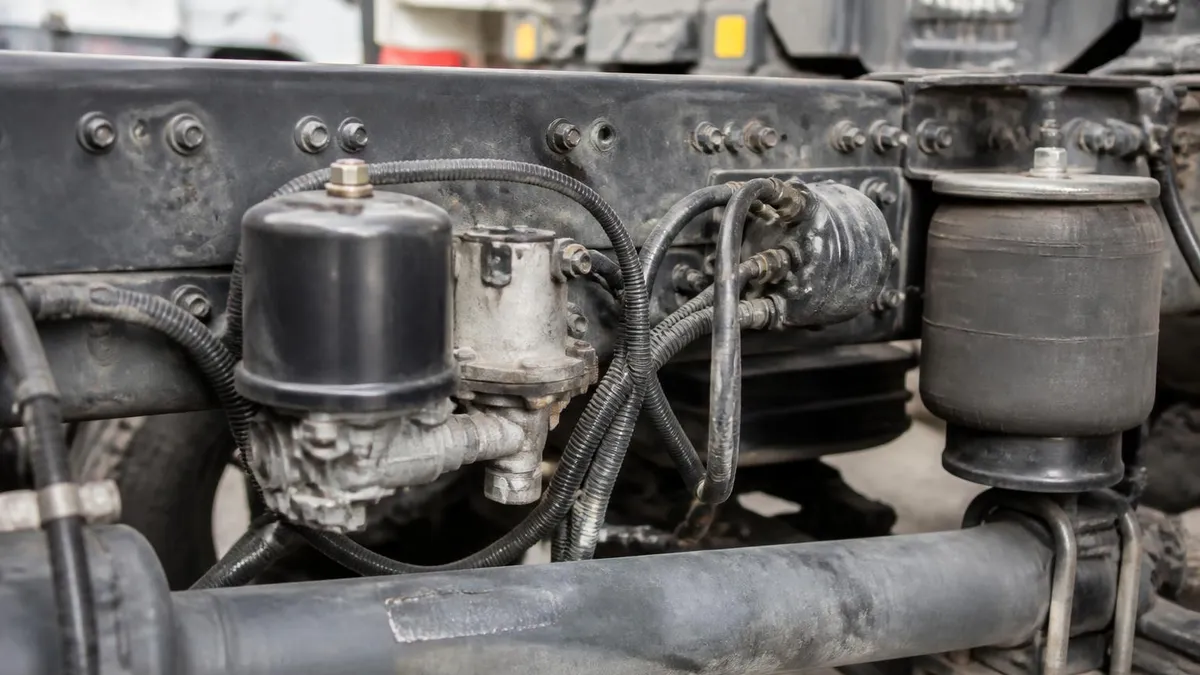
CDL Stats You Should Remember
- ✓Roughly 3.5 million active CDL holders nationwide across Class A, B, and C licenses combined
- ✓Average driver age sits near 47 years old — about seven years above the general US workforce average
- ✓Approximately 75% pass rate on the CDL skills test nationally, with wide state-by-state variance
- ✓Industry shortage estimated near 80,000 drivers, projected to widen as retirements outpace new entries
- ✓Median annual pay near $54,000 with significant upside for endorsed and specialized routes
- ✓ELDT requirements add $3,000 to $7,000 in upfront training costs since the February 2022 mandate
- ✓Texas, California, and Florida together hold over 750,000 CDLs — roughly 22% of the US total
Safety stats matter just as much as workforce stats. Large truck crashes account for roughly 3% of all traffic crashes annually, but they're involved in around 9-10% of fatal traffic incidents because of the obvious mass differential. The good news? Per-mile crash rates for commercial vehicles have trended downward over the long term thanks to electronic logging devices, automatic emergency braking adoption, and improved CDL training standards. The ELD mandate alone — fully effective since 2019 — has measurably reduced hours-of-service violations across the industry.
FMCSA roadside inspection data shows around 20% of trucks inspected each year receive at least one out-of-service violation — most commonly related to brakes, lights, or hours-of-service logging. That figure has been remarkably stable, which suggests it's more a function of inspection thoroughness than carrier neglect. Driver out-of-service rates run lower, usually around 5-6%, and most of those tie back to hours-of-service or medical certification gaps rather than impairment. International Roadcheck week — typically in May — is when inspection volume spikes dramatically and rookie drivers learn very quickly how thorough a Level 1 inspection actually is.
The fatal accident causation data tells its own story. FMCSA studies consistently show that in roughly 80% of fatal truck-passenger vehicle crashes, the passenger vehicle is the party that made the critical error — improper lane change, sudden brake, tailgating, or distracted driving in a no-zone. CDL holders absorb the blame in public perception, but the data does not really support that framing. That's worth knowing both for your own confidence and for how you carry yourself on the road.
CDL Career Pros and Cons
- +Strong, steady demand across the country — the persistent driver shortage means qualified candidates rarely wait long for offers
- +No college degree required, and most training programs take weeks rather than years to complete from start to finish
- +Median pay sits above the US national median wage, with realistic six-figure potential for endorsed specialists and owner-operators
- +Endorsements like hazmat, tanker, and doubles/triples unlock measurably higher pay and open routes most drivers cannot bid on
- +Multiple lane options — OTR, regional, local, dedicated, and drayage — match very different lifestyles and home-time preferences
- −ELDT raised upfront training cost to roughly $3,000 to $7,000 for new entrants, which is real money before you earn your first paycheck
- −First-year OTR pay often runs modest while you build seniority, a clean MVR, and the carrier relationships that unlock better runs
- −Time away from home for long-haul work is the single most-cited reason drivers exit the industry within their first two years
- −DOT medical certification, random drug and alcohol screening, and FMCSA Clearinghouse reporting add ongoing compliance burden
- −Sedentary driving combined with irregular sleep schedules makes proactive health management genuinely important for long careers
Pros and Cons at a Glance
| Pros | Cons |
|---|---|
| Strong, steady demand across the country — the persistent driver shortage means qualified candidates rarely wait long for offers | First-year OTR pay often runs modest while you build seniority, a clean MVR, and the carrier relationships that unlock better runs |
| No college degree required, and most training programs take weeks rather than years to complete from start to finish | Time away from home for long-haul work is the single most-cited reason drivers exit the industry within their first two years |
| Median pay sits above the US national median wage, with realistic six-figure potential for endorsed specialists and owner-operators | DOT medical certification, random drug and alcohol screening, and FMCSA Clearinghouse reporting add ongoing compliance burden |
| Endorsements like hazmat, tanker, and doubles/triples unlock measurably higher pay and open routes most drivers cannot bid on | Sedentary driving combined with irregular sleep schedules makes proactive health management genuinely important for long careers |
Let's talk projections. BLS forecasts heavy and tractor-trailer cdl dr to grow by around 4% over the next decade — roughly in line with average occupational growth. That sounds modest, but it masks real volume. Even slow percentage growth on a base of 2+ million Class A jobs means tens of thousands of net new openings each year. Add retirements and turnover and the actual annual hiring number lands closer to 200,000 drivers. That's the number to remember when someone tells you trucking is dying — it isn't, and the math doesn't really support that narrative.
Driver turnover is its own statistic worth understanding. Large for-hire carriers historically report turnover rates of 80-90% annually — sometimes higher. Smaller and private fleets run dramatically lower, often under 20%. The takeaway? Where you work matters enormously for your day-to-day experience. The CDL itself is portable. Carriers are not interchangeable, and the difference between a good fleet and a bad fleet is measured in home time, equipment quality, dispatcher attitude, and pay consistency more than in the headline CPM rate.
Autonomy and electrification add wild cards to long-term projections. Pilot deployments of autonomous trucks on specific freight corridors continue to expand, but the consensus from carrier executives is that human CDL drivers remain essential for first-mile, last-mile, urban, and complex-environment work for the foreseeable future. Electric Class 8 trucks are scaling fastest in port drayage and short-haul regional work where battery range matches the route profile. Neither technology eliminates the CDL career — both reshape the mix of jobs available within it.
So what should you actually do with all these CDL stats? A few things. First, don't let the headline shortage numbers convince you the industry is desperate enough to take anyone — the bar has gone up, not down, since ELDT. Solid training and good test prep matter. Second, plan your endorsements early. A clean hazmat or tanker endorsement adds thousands to your annual earnings ceiling and opens doors that base-CDL holders can't walk through. Third, pick your starting carrier carefully. The first 12 months shape your record, your habits, and your earning trajectory for years afterward.
The CDL industry isn't glamorous, but it's foundational. Every product on every store shelf got there because a CDL holder moved it. The numbers behind the workforce — aging, shifting, undersupplied but raising its standards — should reassure anyone considering the career. There's room. There's pay. There's a clear path from zero to licensed in a matter of weeks. The work is real, and so is the demand. Now go pass that test, claim your seat in those 3.5 million, and start building the kind of record that turns base CDL pay into specialist pay within a few years.
One last thought. Stats give you the map, but they don't drive the truck. You do. Whatever the national pass rate is, your pass rate is binary — you either pass or you don't. Whatever the average salary is, your salary depends on how you negotiate, what endorsements you carry, and which carriers you pick. Treat the numbers here as context, not as destiny. The drivers earning six figures today started in the same chair you're sitting in. The difference was preparation, persistence, and a few smart choices along the way. Go make those choices.
Sample CDL Practice Questions
Try these questions from our free CDL practice tests. The correct answer and an explanation follow each question.
Vehicles should be equipped with emergency equipment. This equipment should be ______.
- A. Spare electrical fuses.
- B. Fire extinguisher.
- C. All of the listed answers.
- D. Warning devices for parked vehicles.
Answer: C. All of the listed answers.
Commercial motor vehicles are legally required to carry specific emergency equipment to ensure safety in case of a breakdown or accident. This includes a properly charged fire extinguisher, spare electrical fuses (if the vehicle uses them), and warning devices like reflective triangles or flares for parked vehicles. Having all these items readily available is crucial for driver and public safety.
Generally, how many tiedowns should you aim to have for each 10 ft. of cargo?
- A. 3
- B. 4
- C. 5
- D. 1
Answer: D. 1
Federal regulations for cargo securement specify minimum requirements for tiedowns to prevent cargo from shifting. Generally, you should aim to have at least one tiedown for every 10 feet of cargo length. This ensures adequate restraint, though additional tiedowns may be necessary depending on the cargo's weight, shape, and type to prevent movement in all directions.
You are asked to transport a package that is properly marked and has a signed shipper's certification, but you notice the package is leaking. You should
- A. Accept the shipment and report it to your dispatcher
- B. Refuse the shipment
- C. Repackage the material to contain the leak
- D. Accept the shipment only if it is a Class 2 material
Answer: B. Refuse the shipment
A driver must always refuse to transport any hazardous material shipment that is leaking, even if it is otherwise properly marked and certified. A leaking package indicates a failure in containment and poses an immediate safety risk to the driver, other road users, and the environment. Accepting such a shipment would violate safety regulations and endanger lives.
CDL Questions and Answers
About the Author

Licensed Driving Instructor & DMV Test Specialist
Penn State UniversityRobert J. Williams graduated from Penn State University with a degree in Transportation Management and has spent 20 years as a certified driving instructor and DMV examiner consultant. He has personally coached thousands of applicants through written knowledge tests, skills assessments, and commercial driver licensing programs across more than 30 states.
Join the Discussion
Connect with other students preparing for this exam. Share tips, ask questions, and get advice from people who have been there.
View discussion (7 replies)