
CDL Requirements: How to Get Your Truck Driver License in 2026
Learn CDL requirements for your truck driver license including age limits, DOT physical, written and skills tests, ELDT training, and state-by-state rules.
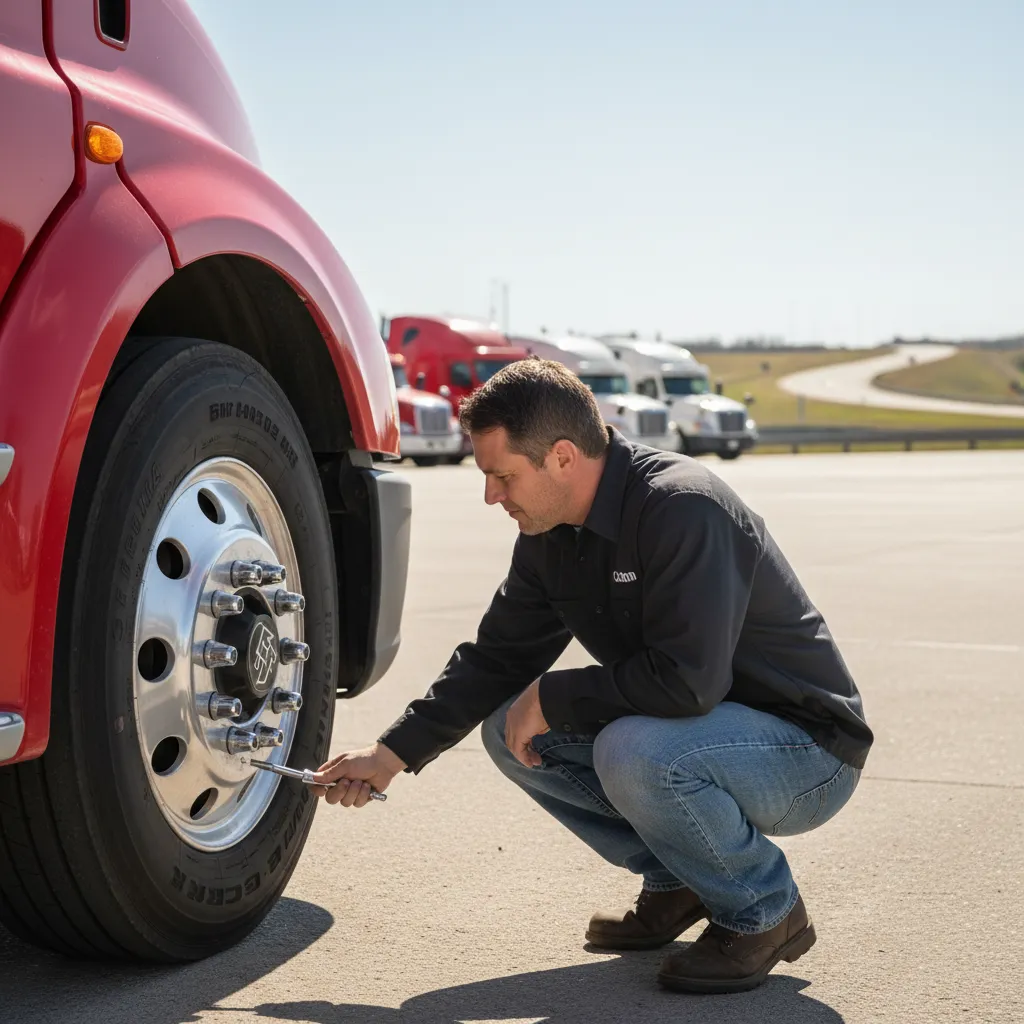
Getting a commercial driver's license isn't something you stumble into. It takes paperwork, training hours, road tests, and a DOT-approved physical exam before you ever touch the steering wheel of a semi. But here's the thing — the CDL requirements for a truck driver license aren't as overwhelming as they look on paper, especially once you break them into steps. Most people can knock out the entire process in 8 to 12 weeks if they stay focused.
The federal government sets the baseline through the FMCSA, but your state's DMV adds its own twist. Age matters — you can haul intrastate loads at 18 in most states, but interstate freight demands you be at least 21. That age split catches a lot of new drivers off guard. There's also the driver license renewal angle: your CDL isn't permanent, and renewal windows vary from 4 to 8 years depending on where you live. Miss a renewal deadline and your commercial driving privileges lapse instantly.
Whether you're switching careers at 35 or a truck driver straight out of high school, you'll face the same core steps: a DOT physical, written knowledge tests, behind-the-wheel skills testing, and — since February 2022 — mandatory Entry-Level Driver Training through an FMCSA-registered program. Skip any one of those and the process stalls.
This page walks through every CDL requirement by category, breaks down costs and timelines, and highlights the state-by-state differences that trip people up. You'll also find practice tests and quiz links so you can start preparing right now.
CDL at a Glance
The age requirement is the very first gate. Federal rules split commercial driving into two buckets: intrastate (within your state's borders) and interstate (crossing state lines). At 18, you can legally drive a commercial vehicle within your home state — but only if your state allows it. Some states set 19 or even 21 as their intrastate minimum. For interstate hauling, the magic number is 21 across the board. No exceptions.
Beyond age, the cdl requirements include holding a valid non-commercial driver's license, passing a DOT physical exam (Form MCSA-5875), and clearing a background check that screens for disqualifying offenses. DUI convictions, certain felonies, and a history of license suspensions can block your application outright. The DOT physical is valid for up to 24 months, though some medical conditions shorten that to 12 months with annual recertification.
Driver license renewal for your CDL follows a separate schedule from your regular license. Most states issue CDLs on 4-, 5-, or 8-year cycles. When renewal time comes, you'll need a current DOT medical card on file — let that lapse and your CDL downgrades to a regular license automatically. The commercial driver's license renewal process itself usually involves a vision screening and updated paperwork, though some states now require a refresher knowledge test after a certain number of renewals.
One detail that surprises applicants: you can only hold a CDL in one state at a time. If you move, you must transfer your CDL to the new state within 30 days. Holding CDLs in two states simultaneously is a federal violation that can result in fines and disqualification.
So how much do truck drivers make? That's the question driving most people toward a CDL in the first place. The short answer: it depends on what you haul, where you drive, and how many years you've been at it. Entry-level local delivery drivers might start around $40,000, while experienced OTR (over-the-road) drivers pulling specialized freight regularly clear $75,000 to $90,000. Some owner-operators gross over $200,000 — though expenses eat a big chunk of that.
The truck driver salary landscape has shifted dramatically since 2020. A nationwide driver shortage pushed carriers to raise pay, offer sign-on bonuses, and sweeten benefits packages. The Bureau of Labor Statistics pegs the median annual wage for heavy and tractor-trailer truck drivers at roughly $54,320 as of 2024. But that median hides a wide range. Hazmat endorsements, tanker certifications, and doubles/triples qualifications all bump your earning potential by 10–25%. Regional carriers in the Northeast and West Coast tend to pay more than companies based in the Southeast — cost of living plays a role there.
If you're weighing cdl driver jobs against other blue-collar careers, the math often favors trucking. No college debt, paid training at many carriers, and earning potential that scales with endorsements and experience. That said, the lifestyle trade-offs — time away from home, irregular schedules, physical demands — aren't for everyone. That's a calculation only you can make.
Freight type matters enormously. Flatbed drivers typically out-earn dry van drivers. Refrigerated (reefer) loads pay a premium because of the added responsibility. And dedicated routes — where you run the same lane repeatedly — offer more predictable schedules even if the per-mile rate is slightly lower.
CDL License Classes Explained
Class A CDL covers combination vehicles with a gross combination weight rating (GCWR) of 26,001 pounds or more — provided the towed vehicle weighs over 10,000 pounds. This is what you need for tractor-trailers, truck and trailer combos, tanker vehicles, livestock carriers, and flatbeds. Class A is the most versatile license because it also lets you drive Class B and Class C vehicles. Most OTR trucking jobs require Class A.
Training time: 160–200 hours at an ELDT-registered school. Cost runs $3,000–$7,000 depending on region. Many carriers offer tuition reimbursement or sponsored training programs that cover the full cost in exchange for a 1-year employment commitment.
What does a truck truck driver actually need to do before sitting for the CDL skills test? More than most people expect. The FMCSA's Entry-Level Driver Training (ELDT) rule — effective since February 7, 2022 — requires all first-time CDL applicants and anyone upgrading their CDL class to complete training at a school listed on the Training Provider Registry (TPR). No shortcuts. No grandfather clauses.
ELDT covers two phases: theory instruction (classroom or online) and behind-the-wheel (BTW) training with a qualified instructor. The theory portion covers vehicle inspection, basic control maneuvers, and road driving. BTW training requires a minimum number of proficiency demonstrations — not just hours logged. Your instructor has to certify that you can actually perform each maneuver competently before signing off. That distinction matters: some schools rush students through by logging seat time rather than verifying skill. If your school does that, you'll feel it on test day.
How much do truckers make after completing training? The first-year numbers are typically lower — $35,000 to $50,000 — because new drivers start with less desirable routes and lower per-mile rates. But earnings ramp quickly. By year two or three, most drivers who stick with it see $55,000 to $70,000. Drivers who add endorsements, build clean safety records, and switch to specialized freight can push past $80,000 within five years.
The written knowledge tests happen at your state DMV or an authorized testing location. You'll take a General Knowledge test (required for all CDL classes) plus additional tests based on your vehicle class and endorsements. Class A applicants take the Combination Vehicles test. Hazmat endorsement requires a separate written exam plus a TSA background check. Air brakes, tanker, doubles/triples, passenger, and school bus endorsements each have their own written test.
CDL Training Steps
Pass the written knowledge test at your state DMV to receive a Commercial Learner's Permit. You must hold the CLP for at least 14 days before taking the skills test.
Enroll in an FMCSA-registered training program. Complete both theory instruction and behind-the-wheel training with certified proficiency demonstrations.
Visit a certified medical examiner for the FMCSA physical. You'll need to meet vision, hearing, blood pressure, and overall health standards.
Demonstrate vehicle inspection, basic control maneuvers (straight-line backing, offset backing, parallel parking), and on-road driving to a state examiner.
Truck driver earning potential is one of the biggest draws to the industry — and it's not just base salary. Per diem pay, detention pay, layover pay, stop pay, and accessorial charges all add to the total compensation package. Some carriers pay by the mile (averaging $0.45–$0.65 per mile for company drivers), while others pay hourly or by the load. The structure affects your take-home pay more than you'd think. A driver averaging 2,500 miles per week at $0.55/mile grosses $71,500 annually before bonuses — solid middle-class income without a degree.
The cdl requirements don't end once you pass your skills test. New CDL holders face a restriction period: you can't operate a commercial motor vehicle (CMV) carrying passengers for hire without a Passenger endorsement, and you can't haul hazardous materials without a Hazmat endorsement plus TSA clearance. Each endorsement requires additional written testing and, in some cases, additional behind-the-wheel assessment. Endorsements aren't optional extras — they're often the difference between a $45,000 job and a $75,000 job.
The skills test itself has three parts. First, a pre-trip vehicle inspection where you walk around the truck and trailer identifying components and explaining what you're checking. Second, basic control maneuvers in a closed course — straight-line backing, offset backing (left and right), and either parallel parking or alley docking. Third, an on-road driving test covering right and left turns, lane changes, interstate driving, railroad crossings, and general traffic navigation. Fail any section and you retake that section, not the entire test.
Most states charge $50–$150 for the skills test. Some allow unlimited retakes; others cap you at three attempts before requiring additional training hours. The pass rate for first-time CDL skills tests hovers around 60–70% nationally — decent odds if you've actually trained, but a clear signal that practice matters.
CDL Career: Pros and Cons
- +No college degree required — training takes 8–12 weeks, not 4 years
- +Strong job demand: over 80,000 driver positions unfilled nationally
- +Earning potential scales with endorsements, experience, and freight type
- +Many carriers offer paid training programs with zero upfront tuition cost
- +Owner-operator path allows building an independent trucking business
- +Benefits packages at major carriers include health insurance and 401(k) matching
- −Extended time away from home on OTR routes — sometimes weeks at a stretch
- −Sedentary work contributes to health issues without deliberate counterbalancing
- −Insurance, fuel, and maintenance costs are significant for owner-operators
- −Hours-of-service regulations limit earning potential during high-demand periods
- −DOT physical requirements can disqualify drivers with certain medical conditions
- −Irregular sleep schedules and truck stop meals make healthy habits difficult
The market for cdl driver jobs has been red-hot for years, and the numbers back it up. The American Trucking Associations estimates the industry needs roughly 160,000 new drivers annually just to keep pace with retirements and freight growth. That shortage has real consequences: sign-on bonuses of $5,000 to $15,000 are common at major carriers, and some regional companies guarantee minimum weekly pay regardless of miles driven. Pay for truck driver positions varies wildly by segment — local P&D (pickup and delivery) drivers earn differently than long-haul OTR drivers, and both earn differently than LTL (less-than-truckload) linehaul drivers.
State-by-state CDL variations add another layer of complexity. Texas doesn't require a state-specific driving course beyond ELDT, while California mandates additional behind-the-wheel hours through its own SPAB (School Pupil Activity Bus) certification for certain endorsements. New York charges higher testing fees. Florida offers a farm vehicle exemption that some other states don't recognize. If you plan to drive interstate, the federal ELDT standard applies everywhere — but intrastate rules can differ significantly.
The DOT physical is often the step that blinds people. It's not just a quick check-up. The certified medical examiner tests your vision (at least 20/40 in each eye with or without correction), hearing (forced whisper test at 5 feet), blood pressure (must be below 140/90 for a 2-year card), and overall physical capability. Diabetes requiring insulin was an automatic disqualification until 2018 — now there's a federal exemption program, but it requires additional documentation and monitoring. Sleep apnea screening is increasingly common, and a positive screening triggers a requirement for treatment compliance documentation before your medical card is issued.
Bottom line: the pay for truck driver roles justifies the upfront investment for most people. A $5,000 CDL school investment that leads to a $55,000 first-year salary is an ROI that few career paths can match — especially without student debt.
CDL Application Checklist
The immigrant commercial driver's license lawsuit that made headlines in 2023 highlighted a real issue: some states were imposing documentation requirements on legal immigrants that went beyond federal standards, effectively blocking qualified drivers from obtaining CDLs. Court rulings in several states forced DMVs to accept federally recognized work authorization documents for CDL applications. If you're a lawful permanent resident or hold a valid work visa, you're eligible for a CDL — the FMCSA doesn't restrict based on citizenship status, only on legal work authorization.
Understanding the distinction between a class c driver license (commercial) and a regular Class C license trips up a surprising number of applicants. In most states, your standard car license is a Class C or Class D non-commercial license. A Class C CDL is a completely different credential — it requires endorsement testing and covers vehicles transporting 16+ passengers or hazardous materials. Don't confuse the two when researching requirements or filling out applications. The wrong checkbox on a form can delay your entire process by weeks.
For aspiring drivers who are undocumented, the situation is more restrictive. Federal law requires a Social Security number for CDL issuance, and the REAL ID Act imposes additional identity verification requirements. However, some states issue standard (non-REAL-ID) driver's licenses to undocumented residents — these are regular driving privileges only, not CDLs. The legal landscape here continues to evolve through legislation and court decisions.
Self-certification is another requirement that confuses people. Every CDL holder must self-certify their type of driving operation: interstate excepted, interstate non-excepted, intrastate excepted, or intrastate non-excepted. Your self-certification determines which medical card requirements apply. Get it wrong and your CDL can be downgraded without warning.
Key Facts Every CDL Applicant Should Know
Age: 18 for intrastate, 21 for interstate — no federal exceptions. DOT Physical: Valid 24 months (12 months for certain conditions). ELDT: Mandatory since February 2022 — must use an FMCSA-registered training provider. CLP Hold: You must hold your Commercial Learner's Permit for at least 14 days before attempting the skills test. Skills Test: Three parts — pre-trip inspection, basic control maneuvers, on-road driving. Endorsements: Hazmat requires TSA background check (takes 30–60 days). Renewal: CDL renewal cycles range from 4 to 8 years by state — DOT medical card must stay current throughout.
What is a commercial driver's license, exactly? At its core, it's a credential issued by your state's DMV that authorizes you to operate commercial motor vehicles (CMVs) as defined by federal regulation. The definition hinges on vehicle weight, passenger capacity, and cargo type — not on whether you're getting paid. Drive a church bus that seats 20 people? You need a CDL with a Passenger endorsement even if you're a volunteer. Operate a vehicle carrying any amount of hazardous material requiring placards? CDL with Hazmat endorsement. The vehicle defines the requirement, not the employment arrangement.
If you're studying for the written exams, a class a drivers license practice test is your best preparation tool. The general knowledge test covers roughly 50 questions drawn from topics including vehicle inspection procedures, basic control of your vehicle, shifting and space management, hazard awareness, emergency maneuvers, and federal regulations. You'll need to score at least 80% to pass in most states. The combination vehicles test adds another 20 questions focused on coupling and uncoupling procedures, inspecting combination vehicles, and rollover prevention. Air brakes — which almost every Class A vehicle uses — adds another 25 questions.
Study strategies that work: read the CDL manual cover to cover once, then hammer practice tests until you're consistently scoring 90% or above. The questions on the actual test are drawn from the same pool your state publishes in its CDL handbook. There's no trick content. If you know the material, you pass. If you've only skimmed it, you probably won't. Most test centers let you retake a failed written test the next business day with no additional fee, though some states charge a small retake fee ($5–$15).
One more thing — the written tests are available in Spanish in most states, and several states offer them in additional languages. If English isn't your first language, check with your local DMV about available accommodations before test day.
As of February 7, 2022, all first-time CDL applicants must complete Entry-Level Driver Training (ELDT) through a provider listed on the FMCSA's Training Provider Registry. This applies to new Class A, Class B, and Class C CDL applicants, as well as anyone upgrading their CDL class or adding a Hazmat, Passenger, or School Bus endorsement. Training completed before this date at non-registered schools does not count. Verify your school's TPR listing at tpr.fmcsa.dot.gov before enrolling.
California driver license holders looking to upgrade to a CDL face some of the nation's strictest requirements. California's DMV requires applicants to complete ELDT at a state-approved school (most FMCSA-registered schools in California qualify, but verify), pass a more comprehensive vehicle inspection knowledge test, and — for certain endorsements — complete additional state-mandated training hours beyond the federal minimum. The state also has stricter medical card reciprocity rules, meaning a DOT physical performed in another state may not be accepted without additional verification.
How much does a truck driver make in high-cost states like California, New York, or Washington? Generally 15–30% more than the national average, though higher fuel costs, tolls, and cost of living offset some of that premium. California-based OTR drivers with two years of experience typically earn $65,000–$85,000 at major carriers. New York pays similarly. The Pacific Northwest has seen particularly strong wage growth due to port-related freight demand. But if you're comparing pure take-home purchasing power, states like Texas, Indiana, and Ohio often deliver more value — lower cost of living with only slightly lower trucking wages.
The skills test is where preparation either pays off or doesn't. Most CDL schools include at least 40 hours of behind-the-wheel training, but the quality varies enormously. Look for schools that offer practice on the exact test course your state uses. Some states publish the test route; others keep it confidential. Either way, practice your maneuvers until they're muscle memory. Offset backing is the maneuver most test-takers fail — practice it more than you think you need to.
For drivers planning to specialize, endorsement stacking is the fastest path to higher pay. Start with your base CDL, add Hazmat and Tanker (often combined as a "Hazmat/Tank" or "H/N" endorsement), and your job options — and pay — expand significantly. The TSA background check for Hazmat takes 30 to 60 days, so apply early. Don't wait until after you pass the skills test to start that process.
The financial picture for someone earning a class a commercial driver's license is worth laying out clearly. Training costs: $3,000–$7,000 for a reputable ELDT-registered program (community colleges tend to be cheaper, private schools faster). Testing fees: $50–$150 for the skills test, $10–$30 per written test, $30–$86 for Hazmat TSA fingerprinting. DOT physical: $75–$150 out of pocket (most trucking employers reimburse this). Total startup cost: roughly $3,500–$8,000 if you pay out of pocket. But many large carriers — Schneider, Werner, Swift, CRST, KLLM — offer company-sponsored training programs where you pay nothing upfront in exchange for a 1-year employment commitment.
Trucker salary growth over a career follows a fairly predictable curve. Year one: $38,000–$50,000. Year two to three: $50,000–$65,000. Year five: $65,000–$80,000 with endorsements. Year ten plus with specialization: $80,000–$100,000+. Owner-operators who manage their business well can gross $200,000–$300,000, though net income after fuel, insurance, maintenance, and taxes typically lands between $80,000 and $150,000. The trucker salary ceiling is higher than most people realize — but reaching it requires deliberate career management, not just logging miles.
CDL holders who maintain clean CSA (Compliance, Safety, Accountability) scores and build relationships with dispatchers get the best freight assignments. Safety record isn't just about avoiding accidents — it's about inspections too. Every roadside inspection result goes on your PSP (Pre-Employment Screening Program) report, which future employers review. A pattern of violations — even minor ones — can cost you job offers and higher-paying positions. Drive clean from day one.
The trucking industry is also evolving technologically. Electronic logging devices (ELDs) are now mandatory, automated manual transmissions are increasingly standard in new trucks, and advanced driver-assistance systems (ADAS) like lane departure warnings and automatic emergency braking are common. None of this replaces the need for a skilled driver. But it does mean the CDL training you receive today includes technology operation that didn't exist a decade ago.
CDL Questions and Answers
About the Author
Licensed Driving Instructor & DMV Test Specialist
Penn State UniversityRobert J. Williams graduated from Penn State University with a degree in Transportation Management and has spent 20 years as a certified driving instructor and DMV examiner consultant. He has personally coached thousands of applicants through written knowledge tests, skills assessments, and commercial driver licensing programs across more than 30 states.
Join the Discussion
Connect with other students preparing for this exam. Share tips, ask questions, and get advice from people who have been there.
View discussion (2 replies)