
Sign Up for Class A, B, and C CDL Classes Today
Sign up for class A B and C CDL classes today. Compare costs, find cdl classes near me, and learn what each class license covers before you enroll.
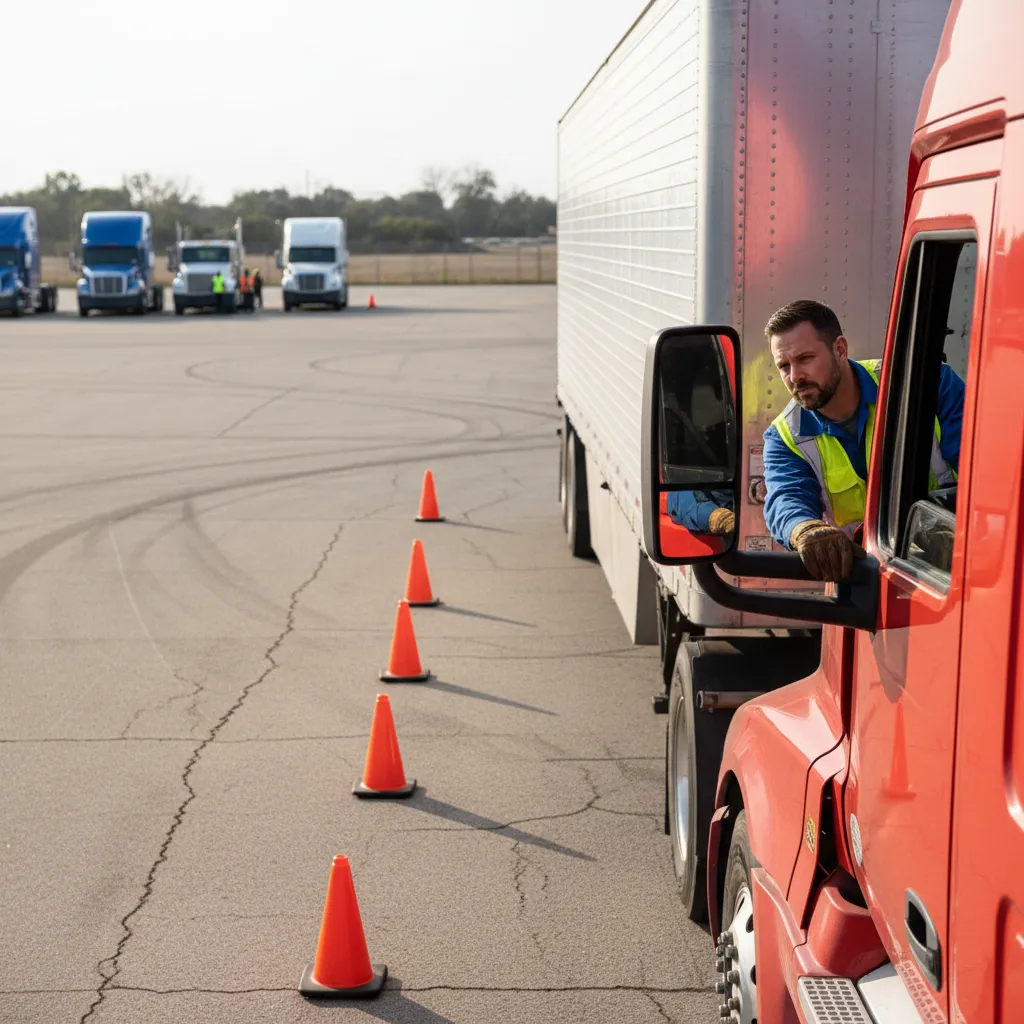
Getting behind the wheel of a commercial vehicle starts with one decision — picking the right CDL class. Whether you're eyeing an 18-wheeler, a city bus, or a delivery van, you'll need to sign up for class A B and C CDL classes today if you want to start earning sooner rather than later. The demand for commercial drivers hasn't slowed down. It's actually gotten worse for employers, which means better opportunities for you.
A class a cdl opens every door in trucking — tractor-trailers, tankers, flatbeds, the works. A class B CDL covers straight trucks, large buses, and segmented buses. And a class C license? That one handles smaller passenger vehicles and hazmat loads under 26,001 pounds. Each class builds on the last, so your choice depends on what you actually want to drive and how much you want to earn.
Here's the thing: CDL training programs vary wildly in price, duration, and quality. Some community colleges run 8-week programs for under $5,000. Private schools charge $8,000 or more but finish in 3 to 4 weeks. Company-sponsored training costs you nothing upfront — but you're locked into a contract. Before you pick a program, you need to understand exactly what each license class covers, what the training involves, and what it'll cost you out of pocket. That's what this page breaks down.
Most states require you to be at least 18 for intrastate driving and 21 for interstate routes. You'll need a valid driver's license, pass a DOT physical, and clear a background check. Some programs handle the paperwork for you. Others expect you to show up with your Commercial Learner's Permit already in hand. Don't assume — call ahead and ask what's included before you write a check.
CDL Training at a Glance
So what separates a class C license from a class D license? More than most people realize. A class D license is your standard passenger car license — the one sitting in your wallet right now. It doesn't authorize commercial driving at all. A class C license, on the other hand, covers commercial vehicles under 26,001 pounds that carry 16 or more passengers or transport hazardous materials. Think airport shuttles, small tour buses, and certain delivery vehicles hauling regulated cargo.
The jump from class D to class C isn't enormous, but it does require separate testing. You'll take a knowledge exam covering vehicle inspection, air brakes (if applicable), and whatever endorsement your job requires. The skills test is shorter than what class A and B candidates face — no backing a 53-foot trailer into a dock — but you still need to demonstrate vehicle control, turning, and safe driving habits on a road course.
Class b cdl jobs pay well in metro areas where transit systems need bus drivers. School districts across the country are short on bus operators too. If you already hold a class D license and want to move up without committing to long-haul trucking, the class B or C route makes financial sense. Training is shorter, costs less, and local driving means you're home every night.
One thing worth knowing — some states bundle class C endorsements differently. In California, a non-CDL class C is just the standard license. In Texas, it's a different story. Always check your state's DMV website for the exact classification before you sign up for a program. Getting the wrong class wastes your time and money.
Finding CDL classes near me used to mean flipping through a phone book or asking around at truck stops. Not anymore. Every state's workforce development office maintains a searchable database of approved training providers, and sites like the FMCSA Training Provider Registry let you compare schools by location, pass rates, and program length. You can narrow results by license class — so if you only need a non CDL class C, you won't waste time looking at full tractor-trailer programs.
A non CDL class C vehicle is one that doesn't meet CDL weight or passenger thresholds but still requires special handling. Think about a 15-passenger church van or a small utility vehicle with a hazmat placard. Some employers train you on the job for these. Others want to see a certificate from a recognized program. Either way, it's a foot in the door — and it's far cheaper and faster than a full CDL program.
When you search for cdl classes near me, pay attention to three things: accreditation, job placement rates, and whether the school provides the truck for your skills test. Some programs charge extra for test-day vehicle rental. Others include it in tuition. That difference can run $200 to $500 depending on your area. Ask about it upfront.
Community colleges tend to offer the best value. They're accredited, financial aid eligible, and many have partnerships with local trucking companies that hire graduates directly. Private schools move faster but cost more. Company-sponsored programs are free but come with strings — usually a one-year driving commitment at a set pay rate. Pick what fits your timeline and budget.
CDL Classes Compared: A vs B vs C
Covers any combination vehicle with a GCWR of 26,001+ pounds, where the towed unit exceeds 10,000 pounds. This includes tractor-trailers, tanker trucks, livestock carriers, and flatbeds. Class A is the most versatile license — it also authorizes you to drive class B and C vehicles. Training runs 3 to 8 weeks depending on the program. Expect 160+ hours of combined classroom and behind-the-wheel instruction. You'll learn pre-trip inspections, coupling/uncoupling, backing maneuvers, and highway driving. Most programs include air brake training since nearly all class A vehicles use air brake systems.
Different classes on driving licence systems around the world follow similar logic — heavier vehicle, higher class — but the U.S. system is unique in how it ties endorsements to base classes. Your class A license is just the starting point. Want to haul doubles and triples? That's a T endorsement. Tankers? N endorsement. Hazardous materials? H endorsement, plus a TSA background check that takes 30 to 60 days. Stack them up, and a fully endorsed class A license makes you eligible for virtually any driving job in the country.
A class A license alone — no endorsements — qualifies you for dry van and flatbed work, which represents the bulk of trucking jobs. Most new drivers start here. The pay range sits between $45,000 and $65,000 in your first year, depending on the carrier and the routes you run. Regional drivers earn more per mile than local drivers but spend 2 to 3 nights per week on the road. Over-the-road drivers pull the highest miles but sacrifice home time.
If you're weighing class A against class B, think about lifestyle first. Class B driving is almost always local — home every evening, weekends off, predictable hours. Class A opens long-haul options that pay more but demand more. Neither is objectively better. It depends entirely on what you want your daily life to look like. Some drivers start with class B and upgrade to A after a year when they're ready for higher pay and longer runs.
Here's something most training programs won't tell you: your CDL class determines your insurance costs too. Class A drivers pay higher premiums because the vehicles are larger and the cargo is more valuable. Some owner-operators pay $12,000 to $18,000 per year in liability coverage alone. Class B and C drivers see significantly lower premiums — often half that amount. Factor insurance into your earnings calculation before you commit to a class.
What Each CDL Class Lets You Drive
Tractor-trailers, tankers, flatbeds, livestock carriers, and any combination vehicle over 26,001 lbs GCWR with a towed unit above 10,000 lbs. The most in-demand class for long-haul and regional trucking.
Straight trucks, city buses, school buses, dump trucks, concrete mixers, and box trucks. Single vehicles over 26,001 lbs GVWR. Perfect for local delivery and transit work.
Passenger vans carrying 16+ people, small HazMat vehicles, and certain emergency vehicles. Vehicles that don't meet A or B weight thresholds but require commercial licensing.
Add-ons to any CDL class: T (doubles/triples), N (tanker), H (hazmat), P (passenger), S (school bus), X (tanker + hazmat combo). Each requires a separate knowledge test.
The cost of CDL classes varies more than you'd expect. Community college programs charge $3,000 to $7,000 for class A training and $2,000 to $4,000 for class B. Private trucking schools run $5,000 to $10,000 — sometimes higher in major metro areas. A class B CDL program tends to cost 30% to 50% less than class A because the training hours are shorter and the equipment is less expensive to operate and maintain.
Company-sponsored CDL training is the budget option. Carriers like Werner, CRST, Swift, and Schneider offer free training in exchange for a 12-month driving commitment. You earn a modest wage during training — usually $500 to $700 per week — and start earning full pay after graduation. The catch? If you leave before your contract expires, you owe the full training cost. Read the fine print carefully before signing.
Financial aid covers CDL classes at many community colleges. Pell Grants, WIOA funding, and VA benefits all apply to approved programs. Some states offer workforce development grants specifically for commercial driving. In Texas, TWC covers up to $5,000 in CDL training costs for qualifying applicants. In Ohio, the TechCred program reimburses employers who sponsor employee CDL training. Don't pay out of pocket if you don't have to.
One more cost most people overlook — the CDL permit and testing fees. Your Commercial Learner's Permit runs $10 to $100 depending on the state. The skills test fee adds another $50 to $250. Endorsement tests are usually $5 to $15 each. Medical exam for the DOT physical? $75 to $150 out of pocket since most insurance doesn't cover it. Budget an extra $200 to $500 on top of tuition for these incidentals. They add up fast.
Pros and Cons of Getting Your CDL
- +High demand means job offers often come before you even finish training
- +No four-year degree required — you can be earning in 3 to 8 weeks
- +Class A CDL holders average $54,000+ per year with experienced drivers earning $70K+
- +Company-sponsored training means zero upfront cost if you commit to a contract
- +CDL skills transfer across all 50 states with no additional testing
- +Multiple career paths: long-haul, local delivery, transit, construction, hazmat
- −Training costs $3,000 to $10,000 out of pocket without financial aid or sponsorship
- −DOT physicals and drug testing are mandatory and ongoing — not just at hire
- −Long-haul class A driving keeps you away from home for days or weeks at a time
- −Insurance premiums for owner-operators can exceed $15,000 annually
- −Physical demands: loading, unloading, vehicle inspections in all weather conditions
- −Company-sponsored contracts lock you in — leaving early means repaying full tuition
Once you've picked your class, the enrollment process is straightforward. For a CDL class A program, you'll need your Commercial Learner's Permit first. That means passing the general knowledge written test at your local DMV — plus any endorsement knowledge tests you want on your permit. Study materials are free online, and most people pass on the first try with a week of preparation. Don't overthink it.
Class b cdl jobs near me searches spike every spring because that's when transit agencies and school districts ramp up hiring. If you're timing your training, starting a class B program in January or February puts you at graduation right when employers are most desperate. Summer is peak hiring season for school bus drivers. Fall is peak for delivery companies gearing up for holiday season. Timing matters more than most people realize.
The skills test is where most candidates get nervous — and where about 30% fail on their first attempt. The three sections are pre-trip vehicle inspection, basic vehicle control (backing, parking, docking), and the road test. Pre-trip is memorization. Basic control takes practice. The road test is just driving — following instructions, obeying traffic laws, and demonstrating safe habits. Your training school should give you enough behind-the-wheel hours to pass comfortably. If they don't? That's a red flag.
After you pass, your state issues a full CDL within 5 to 10 business days. Some states offer same-day issuance at the testing site. From there, you're legal to drive commercially. Most training schools have employer partners who interview graduates on-site during the final week of training. Some carriers extend offers before you even take the skills test. The job market is that tight right now.
CDL Enrollment Checklist
A class C driver license opens doors that many people overlook entirely. You don't need to drive an 80,000-pound rig to earn a living behind the wheel. HazMat transport companies need class C holders for smaller loads. Airport shuttle services, medical transport companies, and tour operators all require drivers with a class C CDL and a passenger endorsement. The pay isn't class A money — typically $35,000 to $48,000 — but the lifestyle is predictable and the training investment is minimal.
The difference between a non-cdl class C vehicle and a CDL class C vehicle trips people up constantly. A non-CDL class C is your everyday car or light truck — anything under 26,001 lbs that doesn't carry 16+ passengers or hazmat. A CDL class C vehicle is under that same weight threshold but does carry passengers or hazmat. The vehicle weight is the same. The cargo or passenger count is what triggers the CDL requirement. If you're hauling a small load of propane in a pickup truck with a placard? That's CDL class C territory.
Some states add their own wrinkles. California's non-CDL class C is the basic license everyone gets — equivalent to class D in most other states. New York calls it class D. Florida calls it class E. The naming conventions are inconsistent across state lines, which is why the federal CDL classification system exists in the first place. When you cross state lines commercially, your CDL class is what matters. Not the state-specific label.
Bottom line: if your job involves driving anything bigger, heavier, or more regulated than a standard passenger car, you probably need some form of commercial licensing. Start by identifying exactly what you'll be driving, then match it to the right CDL class. Don't overbuy training you won't use — but don't undershoot and find out on the job that you need a higher class.
Company-Sponsored Training Can Save You Thousands
Major carriers like Werner, Swift, Schneider, and CRST offer free CDL training programs. You'll earn $500–$700 per week during training and start full pay after graduation. The trade-off is a 12-month driving commitment — leave early and you owe the full training cost, usually $4,000–$7,000. If you're committed to driving long-term, this is the smartest financial move. If you're not sure trucking is for you, pay for a shorter program at a community college so you're not locked in.
Holding a class A commercial driver's license puts you at the top of the hiring food chain. Every carrier in the country needs class A drivers, and the shortage has pushed starting pay above $50,000 at most major companies. Experienced class A drivers — two or more years on the road — regularly earn $65,000 to $85,000. Specialized haulers (oversized loads, tankers, hazmat) break six figures. That's not a recruiter pitch. It's Bureau of Labor Statistics data.
If you're searching for class b cdl jobs near me, look at three sectors: transit, schools, and construction. Municipal bus drivers earn $40,000 to $58,000 depending on the city. School bus drivers pull $30,000 to $42,000 for a split-shift schedule — mornings and afternoons — with summers off. Construction dump truck operators earn $45,000 to $60,000 and usually work steady overtime during building season. Each of these jobs is local, predictable, and rarely requires overnight travel.
The career trajectory for CDL holders goes beyond just driving. After 2 to 3 years on the road, you can move into dispatching, fleet management, safety coordination, or training. Some drivers transition to owner-operator status and run their own authority — essentially becoming small business owners. Others use their CDL as a foundation for careers in logistics, freight brokering, or transportation management. The license is a starting point, not a ceiling.
One path that's gained traction in recent years: military veterans using VA benefits for CDL training. The GI Bill covers approved CDL programs at community colleges, and some states offer additional veteran-specific grants. If you served, you've already demonstrated the discipline and work ethic carriers look for. CDL training is shorter than most other career transitions, and the job market is practically guaranteed. Check with your local VA office about approved training providers in your area.
Every CDL holder is subject to DOT drug and alcohol testing — pre-employment, random, post-accident, and reasonable suspicion. Marijuana remains federally illegal for CDL holders even in states where it's legal recreationally. A failed test means immediate removal from safety-sensitive duties and enrollment in a Substance Abuse Professional (SAP) program before you can drive commercially again. This applies to all CDL classes: A, B, and C.
Class B CDL training programs are the sweet spot for drivers who want commercial credentials without the long-haul commitment. Most class B programs run 2 to 4 weeks and cover straight truck operation, pre-trip inspections, basic maneuvers, and a road driving component. You'll learn vehicle systems — air brakes, hydraulics, electrical — and practice enough behind the wheel to pass the skills test confidently. Some programs guarantee a passing score or offer free retesting.
Class B CDL certification requires the same general knowledge test as class A. The difference shows up in the skills test — you're maneuvering a shorter, non-articulated vehicle, which most people find easier than handling a tractor-trailer combination. Backing is simpler because there's no trailer pivot point to manage. The pre-trip inspection covers fewer components. And the road test is typically shorter in duration. That's why class B programs cost less and finish faster.
For class A CDL training, expect 160 or more hours of instruction across classroom and driving time. The FMCSA's Entry-Level Driver Training rule (effective February 2022) sets minimum standards: theory instruction covering vehicle systems, driving conditions, and trip planning, plus behind-the-wheel training on a range and on public roads. Every training provider must be listed on the FMCSA's Training Provider Registry. If a school isn't on that list? Walk away. Your CDL test results won't be accepted.
A class A drivers license practice test is the single best way to prepare for the written exam. These tests mirror the actual DMV questions — vehicle inspection procedures, air brake systems, combination vehicle handling, and general knowledge of federal regulations. Take three or four practice tests, identify your weak areas, and study those topics specifically. Most people who fail the written test skipped the practice step entirely. Fifteen minutes of practice testing can save you a $25 retest fee and a trip back to the DMV.
Class A CDL training is the most intensive option — and for good reason. You're learning to control a vehicle that can weigh up to 80,000 pounds fully loaded. The stakes are higher, the equipment is more complex, and the skills take genuine practice to develop. Backing a 53-foot trailer into a dock space without hitting anything takes most students 20 to 30 attempts before it clicks. That's normal. Don't get discouraged if the first week feels overwhelming.
The best class A CDL training programs include dedicated range time — not just shared lot time with other students. You want at least 40 hours behind the wheel before your skills test, though 60 to 80 hours is better. Programs that rush you through with 20 hours of drive time are cutting corners. You might pass the test, but you won't be prepared for your first day on the job. And your first day on the job is when the real learning starts.
If you hold a class A drivers license practice test score above 85% on multiple attempts, you're ready for the written exam. The actual test is 50 questions in most states, with a passing score of 80%. Air brakes adds another 25 questions. Combination vehicles adds 20 more. Budget 60 to 90 minutes for all three tests combined. Bring two forms of ID and your medical certificate. Arrive early — DMV wait times for CDL testing can stretch to two hours on busy days.
What nobody tells you about CDL training: the classroom portion matters more than you think. Pre-trip inspection alone accounts for 30% of the skills test score. If you can't name every component under the hood, on the frame, and around the exterior — in order — you'll fail before you even start the engine. Memorize the inspection sequence. Practice it out loud. Walk around the truck and touch each item as you name it. That muscle memory is what gets you through test day without blanking.
CDL Questions and Answers
About the Author
Licensed Driving Instructor & DMV Test Specialist
Penn State UniversityRobert J. Williams graduated from Penn State University with a degree in Transportation Management and has spent 20 years as a certified driving instructor and DMV examiner consultant. He has personally coached thousands of applicants through written knowledge tests, skills assessments, and commercial driver licensing programs across more than 30 states.
Join the Discussion
Connect with other students preparing for this exam. Share tips, ask questions, and get advice from people who have been there.
View discussion (2 replies)