
CDL Manual: Your Free State-by-State Study Guide for Written Tests
Download your free CDL manual from any state DMV. Covers general knowledge, air brakes, and combination vehicles. Study tips and state-specific links inside.
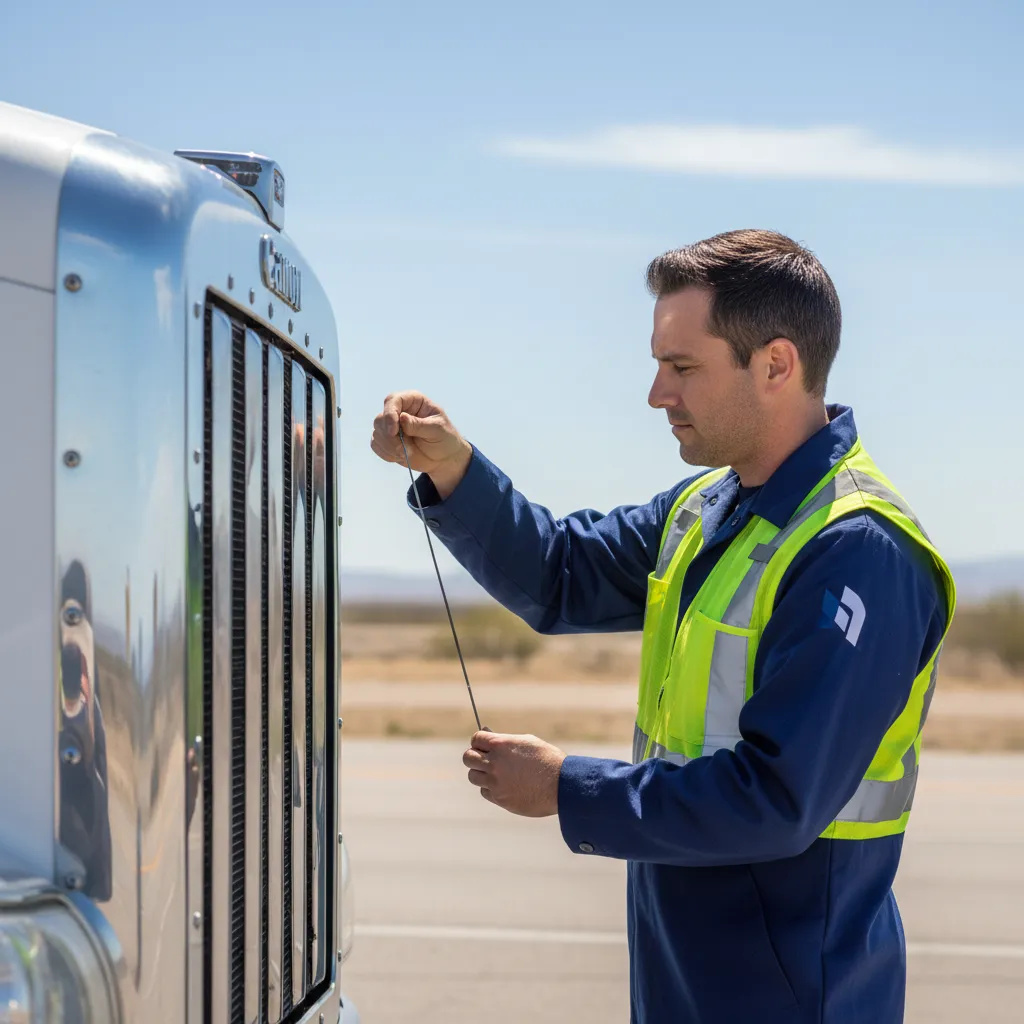
The CDL manual is the single most important resource you'll use when preparing for your commercial driver's license written tests. Every state publishes one — it's free, it's official, and it covers everything the exam will ask. If you haven't grabbed yours yet, you're studying blind. There's no reason to skip it when it costs nothing and covers everything.
Most CDL manuals run between 100 and 200 pages. They're dense, sure, but they're organized by endorsement area: general knowledge, air brakes, combination vehicles, hazmat, tanker, and more. You don't need to memorize every page. You need to know where to find answers and which sections matter most for your specific test.
Whether you're looking for the PA CDL manual or any other state's version, the process is the same. Head to your state's DMV website, find the commercial driver section, and download the PDF. Some states mail physical copies if you request one at a local office. The content follows federal FMCSA guidelines, so about 80% of what you'll read is identical across states — the remaining 20% covers state-specific rules, fees, and endorsement requirements.
This guide breaks down how to actually use your CDL manual instead of just collecting dust on your desk. We'll cover what each section contains, which chapters to prioritize, and how to pair the manual with practice tests for the fastest path to passing. Think of this as your roadmap to the roadmap — because the manual itself can feel overwhelming without a plan for tackling it.
CDL Manual Stats at a Glance
Getting the right manual for your state matters more than you'd think. The PA CDL manual — officially titled the "Pennsylvania Commercial Driver's Manual" — runs about 170 pages and includes Pennsylvania-specific requirements for medical cards, age restrictions, and CDL classes. PennDOT updates it annually, so make sure you're working from the current edition.
The Georgia CDL manual is another popular download. Georgia's DDS publishes theirs with detailed sections on school bus endorsement requirements and the state's specific road test expectations. It's one of the longer manuals at around 190 pages, but the extra detail actually helps — Georgia tends to pull tricky questions from less-studied sections like pre-trip inspection procedures.
No matter which state you're in, the core structure stays consistent. Federal regulations set the baseline. Your state manual adds local wrinkles — things like where to take your skills test, what medical forms you need, and how endorsement fees break down. Always check the publication date on the cover page. If it's more than two years old, search for a newer version. Some states also post revision notes listing what changed between editions — scan those if you studied from an older copy and want to know what's new.
Pro tip: download your state's manual to your phone. Having it accessible during lunch breaks or commute downtime turns dead hours into study sessions. Most state PDFs work fine on mobile, and you can use your phone's built-in search function to quickly find specific topics.
If you're studying in North Carolina, the NC CDL manual is available through the NCDMV website. It follows the standard FMCSA template but adds a section on North Carolina's specific weight limits and bridge formula requirements. NC drivers should pay extra attention to the hazmat routing section — the state has unique restrictions around military installations.
The Michigan CDL manual is published by the Secretary of State's office. Michigan's version stands out because it includes detailed diagrams for the vehicle inspection test. Those diagrams alone save hours of confusion. Michigan also requires a separate study section for passenger endorsement that other states fold into the general knowledge chapter.
Both states — and really all states — organize their manuals around the same core endorsement areas. General knowledge comes first and covers the broadest material. Air brakes and combination vehicles follow. Specialty endorsements like tanker, double/triple trailers, and hazmat each get their own chapter. Start with general knowledge. It's the foundation everything else builds on. Once you're confident on the general section, layer in endorsement chapters one at a time rather than jumping around randomly.
Key Sections of the CDL Manual
The general knowledge section is the longest and most tested part of your CDL manual. It covers vehicle operation basics — shifting, backing, turning, braking distances, and night driving. You'll also find cargo securement rules, accident procedures, and hazard perception. Most states pull 50 questions from this section alone. Focus on stopping distances (they love those), railroad crossing rules, and the definitions of different CDL classes. Read this section twice before touching practice tests.
Over in the Midwest, the Wisconsin CDL manual comes from WisDOT and includes a helpful quick-reference chart for endorsement combinations. Wisconsin drivers appreciate the manual's clear layout — it uses bold callout boxes for "test tip" items that frequently appear on the written exam. Don't skip those boxes.
The Texas CDL manual is one of the most downloaded in the country, which makes sense given that Texas has more CDL holders than any other state. The Texas DPS version runs about 150 pages and includes a detailed section on intrastate vs. interstate commerce — a distinction that trips up a lot of test-takers. Texas also provides separate study guides for each endorsement, which you can download individually if you don't want the full manual.
When you're working through any state's manual, use the table of contents aggressively. Don't start on page one and read straight through. Jump to the endorsement sections you're testing on first. Mark pages with sticky notes or digital bookmarks. The manual isn't a novel — it's a reference tool, and treating it like one makes your study time dramatically more efficient. Highlight key numbers and regulations as you go so you can flip back to them during review sessions without rereading entire chapters. Color-coding works well — use one color for numbers, another for procedures, and a third for definitions.
How to Study the CDL Manual Effectively
Highlight key terms, underline numbers (stopping distances, PSI values), and write margin notes. Passive reading wastes time — active reading cuts your study hours by 30% or more.
After finishing each manual chapter, immediately take a practice test covering that section. This locks the material into memory while it's fresh, instead of waiting until you've read everything.
Air brake system diagrams, coupling/uncoupling sequences, and stopping distance charts appear repeatedly on exams. Redraw them from memory to test yourself — if you can sketch it, you know it.
Track which practice test questions you miss. Return to those exact manual sections and reread them. Two targeted passes through weak areas beats five passes through content you already know.
The NYS CDL manual — New York State's version — is published by the NY DMV and available as a free PDF download. New York's manual is notably thorough on the pre-trip vehicle inspection section, which makes sense because NY's road test emphasizes the walk-around inspection more heavily than some other states. If you're testing in New York, spend extra time on that chapter.
Looking for a CDL license manual that covers the basics without state-specific details? The FMCSA publishes a model CDL manual that many states use as their starting template. It won't include your state's fees or testing locations, but it's an excellent general-purpose reference — especially if you're studying for the knowledge test while waiting for your state's specific edition to arrive.
One mistake people make: they download the regular driver's manual instead of the commercial version. These are completely different documents. The standard manual covers Class D passenger vehicles. The CDL manual covers Classes A, B, and C commercial vehicles. Double-check that your download says "commercial" on the cover before you invest hours studying the wrong book.
Pros and Cons of Using the CDL Manual
- +It's the official source — every test question traces back to the manual content
- +Completely free from all 50 state DMV websites, no purchase required
- +Organized by endorsement section, so you can study only what you're testing on
- +Updated regularly to reflect current federal and state regulations
- +Diagrams and charts provide visual learning that practice tests alone can't offer
- +Available as PDF for mobile study — read it anywhere without carrying a book
- −Dense technical writing that can be hard to absorb in long sessions
- −No practice questions built in — you need separate resources for testing yourself
- −State-specific sections may not apply if you're transferring a CDL from another state
- −Some states lag on updates, so you might study outdated material if you don't check the edition date
- −Doesn't teach driving skills — the manual covers written tests only, not road test preparation
- −Lengthy (100–200 pages) can feel overwhelming without a structured study plan
The TN CDL manual is available from Tennessee's Department of Safety and Homeland Security. Tennessee's manual includes a useful section on mountain driving — relevant given the state's terrain through the Smoky Mountains and Cumberland Plateau. The stopping distance formulas get extra emphasis here because downhill braking is a significant real-world concern for Tennessee CDL drivers.
Ohio's version — the Ohio CDL manual — comes from the BMV and runs about 160 pages. Ohio structures its manual differently from most states by placing the air brakes section before general knowledge. Don't let this throw you off. The content is the same; only the order changes. Ohio also includes a particularly detailed glossary at the back that's worth reviewing before test day.
Both Tennessee and Ohio update their manuals every one to two years. Bookmark the download page rather than saving a specific PDF link — that way you'll always grab the latest edition when you return to study. Old manuals aren't useless, but regulation changes can mean a few questions on your test reference rules that weren't in last year's edition.
Entry-level driver training rules changed significantly in recent years, and those updates only appear in current manual versions. The ELDT requirements that took effect in 2022 changed how new CDL applicants must prepare, and your manual needs to reflect those changes for your study to be accurate.
CDL Manual Study Checklist
For drivers in Minnesota, the MN CDL manual is published by the Minnesota DVS. Minnesota's edition is well-regarded for its clarity — the writing is more accessible than many state versions, with shorter paragraphs and more bullet-point summaries. If you find your own state's manual hard to follow, reading Minnesota's version alongside it can help clarify confusing concepts.
The Indiana CDL manual comes from the Indiana BMV and follows the standard FMCSA template closely. Indiana's version includes a useful appendix with sample test questions at the end of each chapter — one of the few state manuals that does this. If your state's manual doesn't include practice questions, downloading Indiana's version as a supplement is a smart move.
Here's a study strategy that works across all states: read one chapter per day, then immediately take a practice test covering that chapter's material. Don't marathon the entire manual in a weekend. Spacing your study over 7–10 days produces better retention than cramming. The research on this is clear — distributed practice outperforms massed practice for technical material every time. Set a daily schedule, stick to it, and you'll walk into the testing center feeling prepared rather than panicked.
Key Numbers from the CDL Manual
Air brake cut-out pressure: approximately 125 PSI. Cut-in pressure: approximately 100 PSI. Low-pressure warning: activates at 60 PSI. Brake lag distance: at 55 mph, air brakes add about 32 feet of lag compared to hydraulic brakes. Total stopping distance at 55 mph: roughly 450 feet (perception + reaction + braking). Following distance: one second for every 10 feet of vehicle length, plus one second if traveling over 40 mph. These numbers appear on nearly every CDL written test — commit them to memory.
The NJ CDL manual from New Jersey's MVC is another solid resource. New Jersey adds detail around the state's specific toll road regulations and turnpike restrictions for commercial vehicles. NJ also has unique requirements for the passenger endorsement — their manual covers ADA accessibility rules for commercial passenger vehicles more thoroughly than most states.
Missouri's version — the Missouri CDL manual — comes from the DOR and is available online. Missouri's manual stands out for its coverage of farm vehicle exemptions, which matter in a state with significant agricultural CDL usage. If you're getting a CDL for farm equipment operation, Missouri's exemption section is worth reading even if you don't live there, since most states have similar rules they just don't explain as clearly.
Both New Jersey and Missouri follow the standard federal structure, so the core study material — general knowledge, air brakes, combination vehicles — remains consistent. The state-specific sections add 15–30 pages on top of the federal baseline. Read those state sections carefully. The written test will include at least a few questions drawn from your state's unique requirements. Skipping the state-specific material is a gamble that doesn't pay off — those are often the questions that separate passing from failing scores.
CDL regulations change regularly. The FMCSA updates entry-level driver training requirements, medical card rules, and endorsement standards every few years. If your CDL manual's publication date is more than 2 years old, download a fresh copy from your state DMV before test day. Studying outdated material can mean missing questions about current regulations — questions that weren't in older editions.
The Illinois CDL manual from the Secretary of State's office is one of the more comprehensive editions available. Illinois includes extra material on railroad crossing procedures and emergency vehicle encounters — topics that show up more frequently on Illinois CDL tests than in other states. The manual also has a dedicated section on the state's graduated CDL restrictions for drivers under 21.
If you need the CDL driver's manual PA — that's just another way people search for Pennsylvania's commercial driver guide — it's the same document mentioned earlier. PennDOT publishes one unified CDL manual covering all endorsement areas. Some states split their manuals into separate booklets by endorsement, but Pennsylvania keeps everything in a single download. This makes it convenient but also means the document runs longer than average.
A practical tip for any state manual: use the glossary. Most CDL manuals include one, and it's genuinely helpful. Terms like "bobtailing," "off-tracking," "converter dolly," and "glad hands" have specific definitions that the test expects you to know precisely. Don't assume you know what a term means from context — check the glossary definition and make sure it matches your understanding. Getting a term wrong because you assumed its meaning instead of verifying it is one of the most common reasons people miss otherwise easy questions.
For New York drivers, the CDL New York manual is sometimes referred to as the "CDL Study Guide" on the NY DMV website. Don't let the name difference confuse you — it's the same official document. New York updates their version more frequently than most states, typically annually, so the online version is almost always current. The NY manual also includes links to the state's online practice test portal, which is a useful companion resource.
The Arizona CDL manual from the ADOT MVD covers the standard federal sections plus Arizona's unique rules around commercial vehicle operation in extreme heat. Arizona includes a section on desert driving conditions that isn't found in most other state manuals — tire blowout procedures, engine cooling, and brake fade in high temperatures. If you drive commercially in hot climates, Arizona's manual offers genuinely practical advice beyond just test prep.
Regardless of which state you're in, the CDL manual is your primary study tool. Pair it with practice tests, track your weak areas, and revisit the specific manual sections where you're missing questions. That cycle — read, test, review, repeat — is how working drivers pass their CDL written exams efficiently.
The manual is free, it's authoritative, and it contains every answer the test will ask for. Use it. Don't overthink it, don't buy expensive courses before you've read through the free material, and don't walk into the testing center without having studied the manual cover to cover for your endorsement areas. Your CDL career starts with passing the written test, and the manual is how you make that happen on the first attempt.
CDL Questions and Answers
About the Author
Licensed Driving Instructor & DMV Test Specialist
Penn State UniversityRobert J. Williams graduated from Penn State University with a degree in Transportation Management and has spent 20 years as a certified driving instructor and DMV examiner consultant. He has personally coached thousands of applicants through written knowledge tests, skills assessments, and commercial driver licensing programs across more than 30 states.
Join the Discussion
Connect with other students preparing for this exam. Share tips, ask questions, and get advice from people who have been there.
View discussion (2 replies)