

CBP / BPA Practice Test
Updated November 2026Facts verified Nov 1, 2026 against U.S. Customs and Border Protection (CBP), U.S. Department of Homeland Security
BPA Typical Assignments:
What BPA do?
Agents of the Border Patrol don't just wear a badge; they live it. It's who they are, and it's ingrained in their blood. Wearing the badge entails being prepared for everything and ensuring that our country's borders are protected at all times. Border Patrol agents are on the job 24 hours a day, 7 days a week to keep our international land borders and coastal seas between ports of entry secure. They protect the American people against terrorists and their weapons, drug smugglers, and undocumented noncitizens entering the country illegally. They reflect the essential values of US Customs and Border Protection: integrity, vigilance, and dedication to the country. Practice with the free CBP / BPA practice test on PracticeTestGeeks (25 questions with answer explanations).
‥ Detecting, preventing, and apprehending undocumented noncitizens, smugglers of noncitizens, and illegal narcotics by maintaining surveillance from covert positions at or near the 6,000 miles of Mexican and Canadian international land borders and over 2,000 miles of coastal borders;
‥ Responding to electronic sensor alarms in remote areas;
‥ Interpreting and following tracks, marks, and other physical evidence of undocumented noncitizens and smugglers;
‥ Using cutting edge technology, such as infrared scopes during nighttime operations;
‥ Performing line-watch duties, traffic checkpoint operations, city patrols, transportation checks, and other law enforcement duties, as assigned; and
‥ Communicating and/or giving verbal commands in Spanish to Spanish-speaking undocumented noncitizens and smugglers.
- The CBP Border Patrol Agent Entrance Exam has two computer-based parts: an Experience Record and a Logical Reasoning Test, which is a computer-adaptive test (CAT). (U.S. Customs and Border Protection (CBP), U.S. Department of Homeland Security)
- Candidates who do not pass the CBP Border Patrol Agent Entrance Exam must wait 90 days before they can retest. (U.S. Customs and Border Protection (CBP), U.S. Department of Homeland Security)
- The Border Patrol Agent Entrance Exam's Candidate Experience Record is taken online, and the Logical Reasoning Test can be taken at a local testing center or online. (U.S. Customs and Border Protection (CBP), U.S. Department of Homeland Security)
- Applicants to U.S. Border Patrol Agent GL-5 or GL-7 job announcements must complete the CBP Border Patrol Agent Entrance Examination as part of the pre-employment process. (U.S. Customs and Border Protection (CBP), U.S. Department of Homeland Security)
- CBP emails Border Patrol Agent Entrance Exam results within about two weeks. (U.S. Customs and Border Protection (CBP), U.S. Department of Homeland Security)
Facts verified Nov 1, 2026 against U.S. Customs and Border Protection (CBP), U.S. Department of Homeland Security. Dates that have passed are removed automatically.
CBP / BPA Exam at a Glance
| Item | Detail | Official source |
|---|---|---|
| Number of questions | 2 parts: Experience Record + computer-adaptive Logical Reasoning Test | U.S. Customs and Border Protection (CBP), U.S. Department of Homeland Security |
| Retake policy | 90-day waiting period before retesting | U.S. Customs and Border Protection (CBP), U.S. Department of Homeland Security |
| Delivery | Online CER; LRT at a test center or online at home | U.S. Customs and Border Protection (CBP), U.S. Department of Homeland Security |
| Eligibility | Required for applicants to BPA GL-5 or GL-7 announcements | U.S. Customs and Border Protection (CBP), U.S. Department of Homeland Security |
| Score release | Emailed within about two weeks | U.S. Customs and Border Protection (CBP), U.S. Department of Homeland Security |
| Testing window | CER within 72 hours of the invitation; LRT within 14 days after the CER | U.S. Customs and Border Protection (CBP), U.S. Department of Homeland Security |
Facts verified Nov 1, 2026 against U.S. Customs and Border Protection (CBP), U.S. Department of Homeland Security. Dates that have passed are removed automatically.
Free CBP / BPA Study Tools
Interactive CBP / BPA resources on PracticeTestGeeks, free to start:
- Border Patrol Agent Practice Test 1 — 25 questions with instant scoring and answer explanations
- CBP / BPA flashcards — review key terms and concepts card by card
- CBP / BPA study guide — topic-by-topic overview of what the exam covers
- CBP / BPA cheat sheet — one-page printable summary for last-minute review
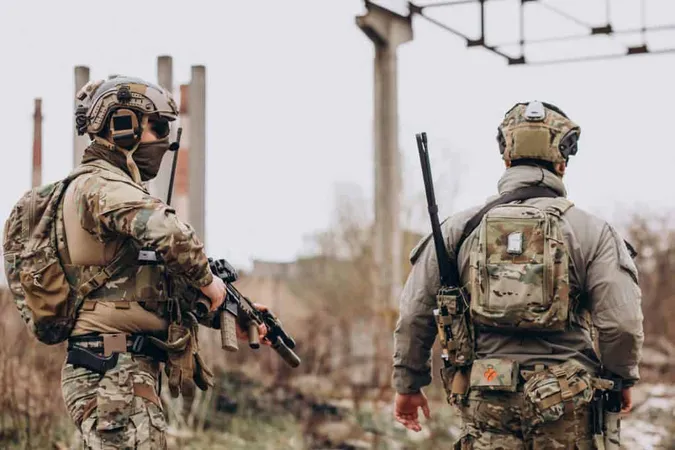
According to U.S. Customs and Border Protection (CBP), U.S. Department of Homeland Security, “The Entrance Examination consists of two parts: the Experience Record and the Logical Reasoning Test.”[1]
CBP / BPA content outline and where to practise each area
The content areas below are copied from the official CBP / BPA content outline published by U.S. Customs and Border Protection (CBP), U.S. Department of Homeland Security. The right-hand column shows which of our practice sets covers it.
| Official content area | Practice on this site |
|---|---|
| Experience Record[4] | Mixed practice tests above Read the official preparation guide and be ready to describe your own work and background accurately, since this part is about your experience rather than recall of facts. |
| Logical Reasoning Test[4] | CBP / BPA Border Patrol Agent Practice Test Practise drawing only what a passage or set of facts supports, and eliminating options that add information or flip the scope of a statement. |
CBP / BPA Practice Test Questions
Prepare for the CBP / BPA exam with our free practice test modules. Each quiz covers key topics to help you pass on your first try.
CBP / BPA Border Patrol Agent Practice Test
CBP / BPA Exam Questions covering Border Patrol Agent Practice Test. Master CBP / BPA Test concepts for certification prep.
CBP / BPA CBP Border Security & Customs En...
Free CBP / BPA Practice Test featuring CBP Border Security & Customs Enforcement. Improve your CBP / BPA Exam score with mock test prep.
CBP / BPA CBP Agriculture & Prohibited Items
CBP / BPA Test Prep for CBP Agriculture & Prohibited Items. Practice CBP / BPA Quiz questions and boost your score.
CBP / BPA CBP Drug Interdiction & Narcotics
CBP / BPA Mock Test covering CBP Drug Interdiction & Narcotics. Online CBP / BPA Test practice with instant feedback.
CBP / BPA CBP Officer Duties & Professiona...
CBP / BPA Test Online for CBP Officer Duties & Professional Ethics. Free practice with instant results and feedback.
CBP / BPA CBP Officer Firearms & Use of Force
CBP / BPA Study Material on CBP Officer Firearms & Use of Force. Prepare effectively with real exam-style questions.
Worked examples: how to reason through CBP / BPA questions
These are practice questions written for this site, not questions from the real exam. Each explanation shows why the right answer is right and why the others are wrong.
Example 1
Question: Logical reasoning: If a vehicle has fresh mud on its tires and there has been no rain in town for two weeks, the most reasonable inference is that the vehicle:
- Was just washed
- Traveled through an area with recent water or off-road terrain
- Has new tires
- Belongs to a local resident
Answer: B. Traveled through an area with recent water or off-road terrain
Explanation:
The correct answer is that the vehicle traveled through an area with recent water or off-road terrain. Fresh mud needs wet ground, and the stem tells you there has been no rain in town, so the most reasonable explanation is that the vehicle was somewhere else.
Option A is wrong because washing removes mud rather than leaving it. Option C is wrong because new tires do not explain why there is mud on them. Option D is wrong because being a local resident says nothing about where the vehicle has been, and a local would have seen the same dry weather.
The rule to remember: pick the inference that the given evidence points to most directly, and drop options that bring in unrelated facts or only restate who owns the vehicle.
Example 2
Question: Officer Daven is in charge of his sector's canine teams. In his sector, fifteen canine teams are stationed. The majority of the canine teams are stationed along the border. Several canine teams are stationed in large urban areas far from the border. All teams must be available to travel to any duty station in the sector.
- Only teams located along the border must be available to travel to any duty station within the sector.
- Most of the canine teams are located away from the border large urban areas.
- Few of the canine teams are located at stations along the border.
- teams in urban areas do not need to be available to travel to other duty stations within the sector.
- None of the teams are exempt from traveling to any duty location within the sector.
Answer: E. None of the teams are exempt from traveling to any duty location within the sector.
Explanation:
The correct answer is E, that none of the teams are exempt from traveling to any duty location in the sector. The passage says all teams must be available to travel to any duty station in the sector, and E says the same thing in other words.
Option A is wrong because it limits the requirement to border teams, while the passage says all teams. Option B is wrong because the passage says the majority are along the border, not in urban areas. Option C is wrong for the same reason: few along the border contradicts majority. Option D is wrong because it exempts urban teams, which the passage rules out.
The rule to remember: a valid conclusion must follow from the passage without adding anything. Watch small scope words such as only, none, few and most, because they often reverse the meaning.
Example 3
Question: What is the purpose of CBP's 'Schedule of Offenses and Penalties' for officer conduct?
- To define penalties for smuggling violations
- To establish disciplinary consequences for officer misconduct violations
- To set sentences for crimes committed at ports of entry
- To outline duty rates for specific tariff categories
Answer: B. To establish disciplinary consequences for officer misconduct violations
Explanation:
The correct answer is that the Schedule of Offenses and Penalties establishes disciplinary consequences for officer misconduct. It is a conduct document, so its job is to link kinds of misconduct to the discipline that follows, which keeps responses consistent.
Option A is wrong because penalties for smuggling are matters of criminal law, not of an internal conduct schedule. Option C is wrong because sentences for crimes are set through the courts and statutes, not by a disciplinary schedule. Option D is wrong because duty rates for tariff categories belong to trade and tariff rules.
The rule to remember: match each document to its purpose. If the title names officer conduct, the answer will be about discipline for officers, not about the public or about trade.
How to use these practice tests
Start with the official material. Read the current Border Patrol Agent Entrance Examination preparation guide and the applicant page on careers.cbp.gov, so you know the format, the timing windows and what each part asks of you. Write down the deadlines that apply to you, since the CER and the LRT both have to be finished within set periods after an invitation.
For the Experience Record, review your own work, training and background before you begin, so you can answer from accurate recall rather than guesswork.
For the Logical Reasoning Test, work through the Border Patrol Agent practice test in short sittings. After each question, read the explanation even when you were right, and say out loud why every wrong option fails. This builds the habit of eliminating options that add facts or change the scope of a statement.
Use the other topic sets, such as the main practice test, to practise reading carefully on CBP subject matter. Keep a short list of the mistakes you repeat and review it before each new session. In the days before test day, check your equipment and your testing arrangements, whether you chose a test center or an online session at home.
Competitive Pay
BPA Benefits
CBP benefit programs are meant to protect every member of the team's health, happiness, and peace of mind as they contribute their knowledge and skills to helping us achieve our objective.
For their time on the job, agents are compensated fairly. Agents may be eligible for locality pay, overtime pay, and other benefits in addition to base salary.
Health Insurance
CBP places a premium on employee well-being. Agents have a number of premium federal health insurance options to choose from. Programs available include:
Federal Employees Health Benefits (FEHB) Program
Federal Employees Dental and Vision Insurance Program (FEDVIP)
Federal Flexible Spending Account Program (FSAFEDS)
Federal Long Term Care Insurance Program (FLTCIP)
Paid Time Off
To reward and reinvest in its employees, CBP provides generous leave benefits and innovative training opportunities. Below is a summary of paid time off from the job:
13 to 26 days of annual leave accrued per year (variation based on years of Federal service)
10 Federal holidays per year
15 days of military reserve leave
13 days of sick leave accrued per year
Opportunities for paid training.
Life Insurance
One of the most important aspects of financial planning is ensuring that your family and loved ones are financially secure even after your death. CBP offers a variety of federal life insurance policies to assist you in reaching your financial goals. Federal Life Insurance Programs available to agents include:
Federal Employees Group Life Insurance (FEGLI)
Basic Employee Death Benefit (BEDB) for FERS Employees
Special Agents Mutual Benefit Association (SAMBA) Employee Benevolent Fund
Career Progression
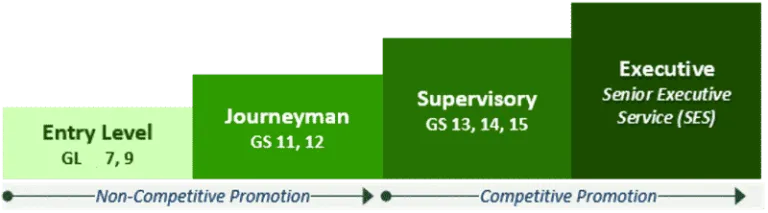
Being a CBP agent positions you for long-term career success and rapid advancement. Border Patrol Agent is a career ladder position with GL-7, GL-9, GS-11, and GS-12 grade levels. Border Patrol Agents who successfully complete one year in each grade level, with supervisor approval, are eligible for a non-competitive promotion to the next higher grade level (without reapplying).
Generous Retirement
Employees who retire from CBP can rely on the Federal Employees Retirement System (FERS) to help them enjoy life after they leave the agency. FERS includes the following three streams of income:
1. Thrift Savings Plan (TSP):
The Thrift Savings Plan (TSP), which is similar to a 401(k) plan, is a defined contribution plan designed to provide federal employees with the same retirement savings benefits as 401(k) plan participants in the private sector. Contributions to the plan are deducted automatically from each paycheck in the amount selected by employees, and they are transferrable if you change jobs. Employer matching contributions of up to 5% of your basic salary are another benefit of the TSP.
2. FERS Basic Annuity under special provisions:
Border Patrol agents with at least 20 years of law enforcement experience in the federal government are eligible for the substantial FERS basic annuity. This lifetime pension is calculated as a percentage of your highest average basic pay received during the previous three years of service.
3. Social Security:
You get social security retirement income, and the benefits are transferrable if you change jobs.

Conclusions
CBP Entrance Exam Study Guide PDF
The CBP Entrance Exam Study Preparation Guide covers all of the necessary information. The guide includes details on the exam's structure, sample questions, and advice on how to get the greatest score possible. If you're looking for a preparation manual for the CBP officer entrance examination PDF, a border patrol entrance exam study guide PDF, a border patrol handbook PDF, or a border patrol study guide PDF, you've come to the right place. Take this CBP BPA practice test to familiarize yourself with the test format and material, and to ensure that you do your best.
Becoming a CBP Officer is a prestigious and rewarding career path, playing a crucial role in safeguarding the nation’s borders. The CBP Officer Exam and subsequent certification process are the first steps toward this goal. By thoroughly preparing for the exam, understanding the certification process, and completing the necessary training, you can significantly improve your chances of success.
The path to becoming a CBP Officer requires focus, dedication, and a clear understanding of the requirements. But with the right preparation, you can navigate the process confidently and secure your place as a key player in border security.
CBP-BPA Questions and Answers
BPA defend our country by lowering the chances of dangerous people and weapons entering the country between ports of entry.
BPA stands for Border Patrol Agent.
The US Customs and Border Protection (CBP) program provides rapid customs clearance for pre-approved, low-risk travelers arriving in the United States.
The acronym CBP stands for “Customs and Border Protection “Protection.”
The Border Crossing Card (BCC) is a laminated card with enhanced graphics and technology, issued by the United States of America. Customs and Border Protection (CBP) uses to verify the traveler’s identification and citizenship. The card’s expiration date is printed on the front and is normally ten years after it was issued.
Officers are stationed at 328 international air, land, and sea ports of entry in the United States, as well as 15 airport preclearance facilities across the world, including Dulles International Airport.
You can expect the CBP to keep records for up to five years. It is possible to obtain information from them for free.
The officer examines the results of the first two scans—radiation and license plate—and then inquires about the traveler’s documents and the items they intend to bring across the border.
This agency was established to regulate the flow of people and goods across US borders.
The typical compensation for a CBP Officer ranges widely (up to $101,434), implying that there may be numerous prospects for growth and higher income dependent on skill level, location, and years of experience.
Is one of the world’s most powerful law enforcement agencies, tasked with keeping terrorists and their weapons out of the United States while facilitating legal foreign travel and trade.
The Customs and Border Patrol (CBP) Entrance Exam is divided into four sections: logical reasoning, arithmetic reasoning, writing abilities, and work style. It takes 4–6 hours to complete (personal assessment).
The Customs and Border Protection Agency (CBP) has the authority to inspect your phone, tablet, and/or laptop. Your electronic device’s information could be utilized to prevent you from entering the United States.
On and off duty, CBP officers have full law enforcement authority.
The program’s physical component is quite hard. Trainees must be able to accomplish the following physical standards at the conclusion of the 55 days: a 1.5-mile run in 13 minutes or less; a confidence course in 2 1/2 minutes or fewer; and a 220 yard dash in 46 seconds or less.
Might take up to 90 days to complete, but equally simple EPA and DOC requests could be completed in as little as 20 days.
You must be willing to take an entrance exam at your preferred location. The entrance exam assesses your mental ability to fulfill the duties of a CBP Officer.
You must successfully complete a background investigation before becoming a Customs and Border Protection (CBP) employee.
The Global Entry Program of US Customs and Border Protection (CBP) has now been extended to the opposite side of the globe. Despite the fact that Ireland is not currently a reciprocal GE partner, CBP’s Preclearance operations, which serve as U.S. ports of entry, allowed the program to spread to these airports.
If an applicant earns a PFT-1 Fail result, he or she can reapply and be given another chance to finish the PFT-1 if chosen.
The IRS business tax number provided to businesses is frequently the importer number (required on Customs and Border Protection (CBP) entry form). You can use your social security number in any paperwork that requires an importer number if you don’t have an IRS company tax number.
CBP Officer is a career ladder position with GS-5, GS-7, GS-9, GS-11, and GS-12 grade levels. After successfully completing one year in each grade level, CBP Officers are eligible for a non-competitive promotion to the next higher grade level (without reapplying) with supervisor permission.
The U.S. Border Patrol, now part of CBP under the Department of Homeland Security (DHS), is the country’s mobile, uniformed law enforcement arm along the border. The Border Patrol itself was established by a law Congress approved on May 28, 1924; CBP as an agency was formed later, in March 2003, when Border Patrol and other border agencies were consolidated under DHS.
Working as a CBP Officer will allow you to collaborate with a range of organizations, including private security firms, the military, other federal and local law enforcement agencies, and foreign governments.
Bring multiple vee neck white tee shirts . Bring the best running shoes you can buy, and bringing two pairs to alternate would be even better. At the academy, you’ll be given a backpack/camelbak combo to hold your belongings.
Because they are trying to be as cold, emotionally detached, and efficient as possible. They have a very vital task to do: make sure that nothing that shouldn’t be in the country they’re guarding gets in.
- +Validates your knowledge and skills objectively
- +Increases job market competitiveness
- +Provides structured learning goals
- +Networking opportunities with other certified professionals
- −Study materials can be expensive
- −Exam anxiety can affect performance
- −Requires dedicated preparation time
- −Retake fees apply if you don't pass
Pros and Cons at a Glance
| Pros | Cons |
|---|---|
| Validates your knowledge and skills objectively | Study materials can be expensive |
| Increases job market competitiveness | Exam anxiety can affect performance |
| Provides structured learning goals | Requires dedicated preparation time |
| Networking opportunities with other certified professionals | Retake fees apply if you don't pass |
Sample CBP / BPA Practice Questions
Try these questions from our free CBP / BPA practice tests. The correct answer and an explanation follow each question.
A field test of a suspected substance produces a positive result for cocaine. What is the evidentiary significance of this field test result?
- A. It is conclusive proof of the substance's identity and sufficient for prosecution
- B. It provides probable cause but laboratory confirmation is required for prosecution
- C. It has no legal value and cannot be used in any proceeding
- D. It replaces the need for a warrant to search additional areas
Answer: B. It provides probable cause but laboratory confirmation is required for prosecution
Field tests provide probable cause to support a seizure and arrest, but laboratory analysis by a certified forensic chemist is required to confirm the substance's identity for prosecution.
What is the term for the fraudulent practice of shipping goods through a third country to disguise their true country of origin and avoid higher tariffs?
- A. Tariff engineering
- B. Customs evasion
- C. Transshipment fraud
- D. Country of origin switching
Answer: C. Transshipment fraud
Transshipment fraud involves routing goods through an intermediate country to falsely represent origin and avoid applicable tariffs or trade restrictions.
Applicants who are not proficient in Spanish must demonstrate the ability to learn it during training. What does the BPA exam use to test this?
- A. Spanish essay writing
- B. The Artificial Language Test (ALT)
- C. A recorded oral interview in Spanish
- D. A grammar translation quiz
Answer: B. The Artificial Language Test (ALT)
The Artificial Language Test measures aptitude to learn Spanish using an invented language.
Which of the following drug types is most commonly encountered by CBP officers at Southwest border ports of entry?
- A. Heroin
- B. LSD
- C. Methamphetamine and fentanyl
- D. PCP
Answer: C. Methamphetamine and fentanyl
Methamphetamine and fentanyl are the most frequently seized drugs at Southwest border ports of entry, often smuggled by transnational criminal organizations.
Take the full CBP / BPA practice test

How this page was made: written with AI tools and published by Nathan Beja, founder of Practice Test Geeks, who is responsible for its content. Exam facts are checked against the official sources listed below. Not reviewed by a subject-matter expert. Editorial policy
Sources & references
Exam facts on this page (fees, format, dates, passing scores) are checked against these official sources; the date is our last check. Editorial policy
- cbp.gov — Score release, exam format, exam information · verified Nov 2026
- careers.cbp.gov — Test delivery, eligibility, retake policy, test dates · verified Oct 2026