
BSN to CRNA: How Long Is CRNA School After BSN, Requirements, Cost & Salary
BSN to CRNA guide: how long CRNA school takes after BSN, ICU experience required, CCRN, top programs, doctoral cost ($40K-$200K), and $180K-$250K salary. ✏️

If you are weighing a bsn to crna career path, you are looking at one of the most demanding and best-paid clinical jobs in American healthcare. A Certified Registered Nurse Anesthetist (CRNA) administers anesthesia, manages pain, and keeps patients alive during surgery — and they earn it.
Average pay sits between $180,000 and $250,000, with Texas, Wyoming, and California programs commonly producing CRNAs who clear $300,000 a year. That salary, though, comes after the hardest schooling in nursing.
Here's the short version. You finish a Bachelor of Science in Nursing. You pass the NCLEX-RN and become a licensed registered nurse. You spend at least one year — but realistically two or more — working bedside in a critical-care unit. You sit for the CCRN certification. You shadow a CRNA.
You apply, interview, and get into a doctoral nurse-anesthesia program. Then you study for 36 to 42 months straight, with no working most schools. At the end you sit the National Certification Examination, pass it (the first-time pass rate hovers around 95%), and you're a CRNA.
That is the path. It is not optional and it is not fast. As of 2025, every new entry-level program must award a doctoral degree — either a Doctor of Nursing Anesthesia Practice (DNAP) or a bsn to dnp route through a Doctor of Nursing Practice (DNP). The old master's-level programs are gone.
If you are reading this in 2026, you are committing to a doctorate, not a master's, and the timeline reflects that.
Why do people still do it? Autonomy and money, mostly. In CRNA-only practice states like New York and New Jersey, nurse anesthetists work independently without physician supervision, billing for their own services. Even in supervised states, a CRNA runs the anesthesia plan and rarely sees a physician in the room.
The pay is also the highest of any nursing specialty by a wide margin — a staff CRNA outearns most family-medicine physicians.
This guide walks you through everything: the prerequisite RN experience, what counts as critical-care, why CCRN is functionally required, how top schools (Wake Forest, Texas Wesleyan, Virginia Commonwealth, Rush, Drexel, Duke, Yale, Mary Hardin-Baylor, Albany Med) evaluate candidates, real tuition costs, and how the four-year recertification cycle works.
We'll also cover the alternative if anesthesia turns out to be too much — moving to a nurse practitioner track is a softer landing, and the bsn to np bridge is the most common pivot.
Read the whole thing before you apply. The information below is what an admissions panel at a top-10 program looks for in 2026, drawn from program handbooks and COA accreditation standards.
BSN to CRNA by the Numbers

How Long Is CRNA School After BSN: The Full Timeline
Finish Your BSN at an Accredited Program
Pass the NCLEX-RN and Get Licensed
Start an ICU Job (Not a Step-Down, Not a Med-Surg)
Earn Your CCRN Certification
Shadow CRNAs and Document Hours
Apply, Interview, and Start Doctoral School
Critical-care experience is the single biggest filter on CRNA admissions. Every accredited program requires it under COA standards, but how each school defines and counts it varies more than candidates realize. The line is between units where you titrate vasoactive drips, manage ventilators, run codes, and care for patients with two or more organ systems failing — versus units where you watch monitors and call rapid responses. Only the first counts.
The minimum on paper is one year of full-time RN experience in a critical-care setting. In practice, the median admitted candidate at a top program has 2 to 4 years, and applicants with only the bare 12 months are routinely rejected unless every other part of their application is exceptional.
Wake Forest, Virginia Commonwealth, and Duke admissions data suggest the modal admit has roughly 3 years of bedside ICU time when they start school.
What counts as critical-care is also more specific than "ICU." The strongest experience comes from cardiothoracic ICU (CTICU/CVICU), where you manage post-CABG, post-valve, and post-transplant patients on multiple drips, balloon pumps, Impellas, and ECMO.
Surgical ICU (SICU) is nearly as strong because you handle post-surgical airway, hemodynamics, and pain — the same skills CRNA school will deepen. Trauma ICU and neuro ICU rank similarly. Medical ICU (MICU) is fully accepted and common. Mixed ICU and "step-up" units at smaller hospitals are accepted but weaker.
Beyond which ICU you worked in, schools weigh the acuity you actually managed. Managing levophed, vasopressin, propofol, and CRRT on a vented multi-organ failure patient counts heavily. Routine DKA and overdose ICU experience is weaker even if the unit name says "ICU." Describe specific case acuity in essays and interviews.
Pediatric ICU (PICU) and neonatal ICU (NICU) are accepted at every school and are strong, especially for candidates targeting programs with pediatric anesthesia rotations. Emergency department (ED) experience is accepted at roughly half of programs and is usually weaker on its own — schools like ED+ICU combinations, not pure ED.
PACU (post-anesthesia care) and CCU (cardiac care, mostly non-vented) are not accepted as primary critical-care at most top programs.
Travel-nurse ICU experience counts but with caveats. The clinical exposure is real, the variety is excellent, but schools want a reference from a charge nurse or manager who has worked with you over months, not weeks. If you traveled, line up at least one staff position long enough (6+ months) to build a solid reference letter.
For the same reason, applicants moving from a strong bsn rn salary staff job into travel for 6 months pre-application are fine — what hurts is travel-only with no continuity.
One last warning: ICU experience does not pause your CCRN clock or your tuition clock. The longer you wait at the bedside trying to build the "perfect" application, the longer until you start school and earn CRNA money.
Two to three solid years in a strong ICU with CCRN done is the sweet spot for most candidates. Don't sit on five years of MICU thinking it'll make up for never sitting the CCRN. It won't.
BSN Practice Test Questions
Prepare for the BSN - Degree Bachelor of Science in Nursing exam with our free practice test modules. Each quiz covers key topics to help you pass on your first try.
BSN Community and Public Health Nursing
BSN Exam Questions covering Community and Public Health Nursing. Master BSN Test concepts for certification prep.
BSN Maternal-Newborn and Women's Health Nu...
Free BSN Practice Test featuring Maternal-Newborn and Women's Health Nursing. Improve your BSN Exam score with mock test prep.
BSN Medical-Surgical Nursing
BSN Mock Exam on Medical-Surgical Nursing. BSN Study Guide questions to pass on your first try.
BSN Mental Health and Psychiatric Nursing
BSN Test Prep for Mental Health and Psychiatric Nursing. Practice BSN Quiz questions and boost your score.
BSN Pharmacology and Medication Administra...
BSN Questions and Answers on Pharmacology and Medication Administration. Free BSN practice for exam readiness.
BSN BS-Nursing General
BSN Mock Test covering BS-Nursing General. Online BSN Test practice with instant feedback.
Top CRNA Schools, Cost, and Program Length
The top-tier programs in the U.S. by reputation, board pass-rates, and clinical hour density: Wake Forest School of Medicine (NC), Texas Wesleyan University (TX), Virginia Commonwealth University (VA), Rush University (IL), Drexel University (PA), Duke University (NC), Yale University (CT), University of Mary Hardin-Baylor (TX), and Albany Medical College (NY). These programs share a few things — admissions selectivity (often under 15%), heavy regional anesthesia and cardiac case volume in clinicals, and faculty who publish in mainstream anesthesia journals rather than only nursing journals.
Within this group, Wake Forest and Texas Wesleyan are often considered the most rigorous in didactic intensity, while Duke and Yale lean into academic-medical-center case mix. Virginia Commonwealth is known for graduating CRNAs comfortable with high-acuity transplant and cardiac cases. There are also strong second-tier programs (Northeastern, Case Western, Columbia, Georgetown, University of Pittsburgh) where you can get an equally good education with slightly less admissions pressure.
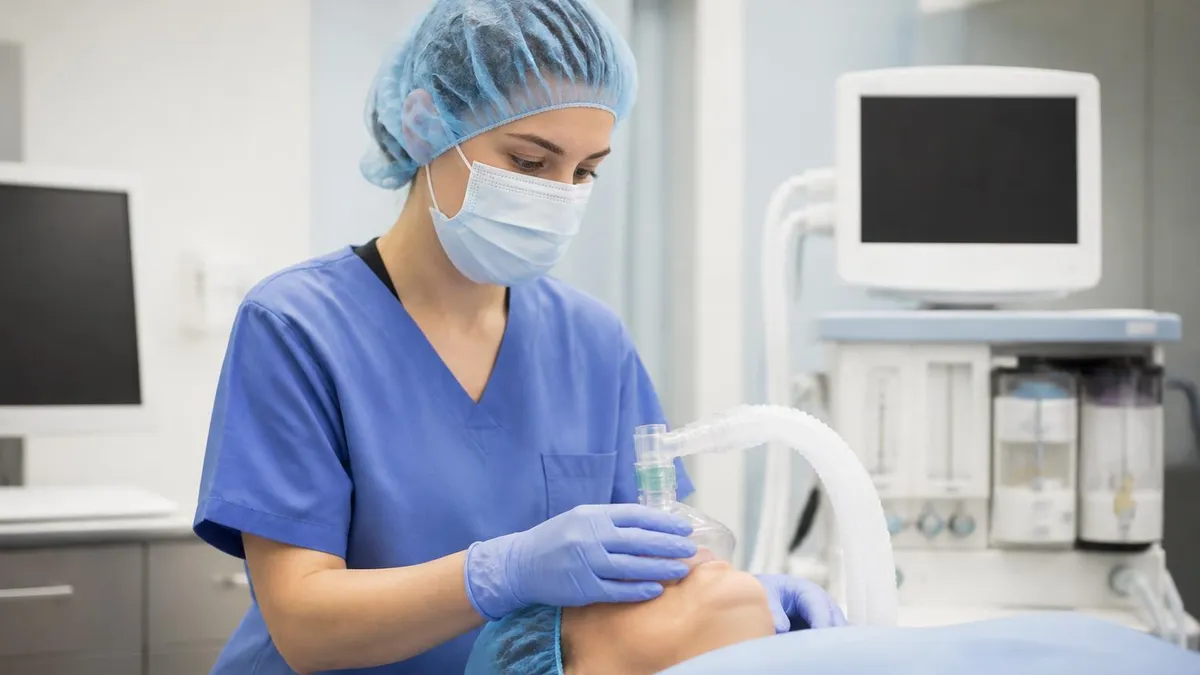
CRNA Pathway: 6 Building Blocks
Earn a 4-year BSN from a CCNE- or ACEN-accredited program. Target a 3.5+ GPA. Hard science electives (biochem, advanced patho) strengthen your application.
- ▸CCNE/ACEN accreditation required
- ▸3.5+ GPA strongly preferred
- ▸Take hard sciences
Pass the NCLEX-RN on the first attempt. Apply for state licensure within weeks of graduation. Consider compact-state licensure for flexibility later.
- ▸First-attempt NCLEX pass
- ▸Active license required
- ▸Compact license helpful
Work 1-2+ years in a true ICU. CTICU, SICU, MICU, neuro/trauma ICU, NICU, or PICU all count. Step-down and PACU do not at most programs.
- ▸2+ years preferred
- ▸True ICU only
- ▸Multi-organ vented patients
Sit the CCRN once you hit 1,750 ICU hours in 24 months. Pass first time. Functionally required at top programs even when listed as recommended.
- ▸1,750 ICU hours eligibility
- ▸First-attempt pass
- ▸Functionally required
Complete 8-40 documented shadow hours with working CRNAs. Get sign-off from each supervising CRNA. Schools verify hours and contact info.
- ▸8-40 documented hours
- ▸CRNA sign-off required
- ▸Schools verify
36-42 months full-time, no working at most schools. Doctoral degree (DNAP or DNP) required as of 2025. ~2,500 clinical hours plus didactic and capstone.
- ▸36-42 months full-time
- ▸DNAP or DNP
- ▸2,500 clinical hours
Is CRNA the Right Path for You?
- +Highest-paid nursing specialty — $180K–$250K average, $300K+ in TX/WY/CA markets
- +High clinical autonomy, especially in CRNA-only practice states like NY and NJ
- +First-time NCE pass rate is 95%+ across accredited programs
- +Strong job market — demand outstrips supply in most regions through 2030
- +Predictable case schedule at most jobs (vs ICU bedside, which is chaotic shifts)
- +Doctoral credential opens academic, leadership, and policy career pivots later
- +Sign-on bonuses of $20K–$50K and loan repayment widely available for new grads
- −36–42 months full-time, doctoral level, no working at most programs
- −Total cost $40K–$200K plus 3 years of lost RN salary — real out-of-pocket $250K+
- −Admissions are brutal — 10–15% acceptance at top programs even with strong stats
- −Anesthesia is life-and-death — every shift, every case, no exceptions
- −Recertification every 4 years (100 Class A credits) plus annual CPC modules
- −Supervised-practice states limit autonomy compared to CRNA-only states
- −Burnout rate is real — 24-hour call, OR politics, and physician-supervised dynamics
CRNA Admissions Checklist: What Top Schools Want
- ✓BSN from a CCNE- or ACEN-accredited program with a cumulative GPA of 3.5+ (3.0 absolute floor)
- ✓Active RN license in good standing, NCLEX-RN passed on first attempt
- ✓Minimum 1 year (most schools 2+) full-time RN experience in a true ICU — CTICU, SICU, MICU, neuro, trauma, NICU, or PICU
- ✓CCRN certification (Critical Care Registered Nurse) — "recommended" on paper, functionally required
- ✓GRE scores if the program requires them (increasingly waived — check each school)
- ✓Documented shadow hours with a working CRNA, usually 8–40 hours, signed off
- ✓Two to three strong reference letters, ideally one from a CRNA or anesthesiologist
- ✓Personal statement that names specific cases and explains the "why CRNA" credibly
- ✓Admission interview — technical questions, ethical scenarios, and stress-tolerance evaluation
- ✓BLS, ACLS, and PALS certifications all current at the time of application
Top programs reject applicants without CCRN before the interview round.
Almost every school's website lists CCRN as "recommended" or "strongly preferred." In practice, top-tier programs filter out CCRN-less applicants at the first review pass and never interview them. Sit the CCRN as soon as you hit 1,750 ICU hours in 24 months. Pass on the first try and it tells admissions you have ICU-level critical thinking already locked in.
CRNA salary in 2026 averages between $180,000 and $250,000 nationally, but the geographic variation is enormous. Texas, Wyoming, Montana, Alaska, and parts of California regularly post staff CRNA positions paying $280,000 to $320,000, especially in rural or hospital-employed settings without anesthesiologist supervision.
New York City and major urban centers in California pay strong base salaries ($220K–$260K) but with higher cost of living. The lowest CRNA salaries cluster in the Southeast at academic centers with anesthesiologist-heavy staffing models — still $160K–$190K, which beats almost every other nursing specialty.
Independent practice — billing your own cases without anesthesiologist supervision — is legal in roughly 25 states, where CRNAs work as primary anesthesia providers. The American Association of Nurse Anesthetists tracks the list, and it has grown steadily for two decades.
In supervised states, a CRNA still runs the anesthetic and rarely sees a physician in the room, but billing requires anesthesiologist sign-off. Pay does not differ much between independent and supervised states once you account for cost of living — the autonomy difference is bigger than the dollar difference.
The work itself is high-stress in the sense that every case has a death-risk component — even a routine knee scope can become an airway emergency. Most CRNAs describe the stress as different from ICU stress: ICU is chronic high-cognitive load over a 12-hour shift, while anesthesia is short bursts of intense focus separated by hours of monitoring stability.
Many former ICU nurses prefer it for exactly this reason. Burnout rates are lower than ICU bedside but higher than non-acute outpatient nursing.
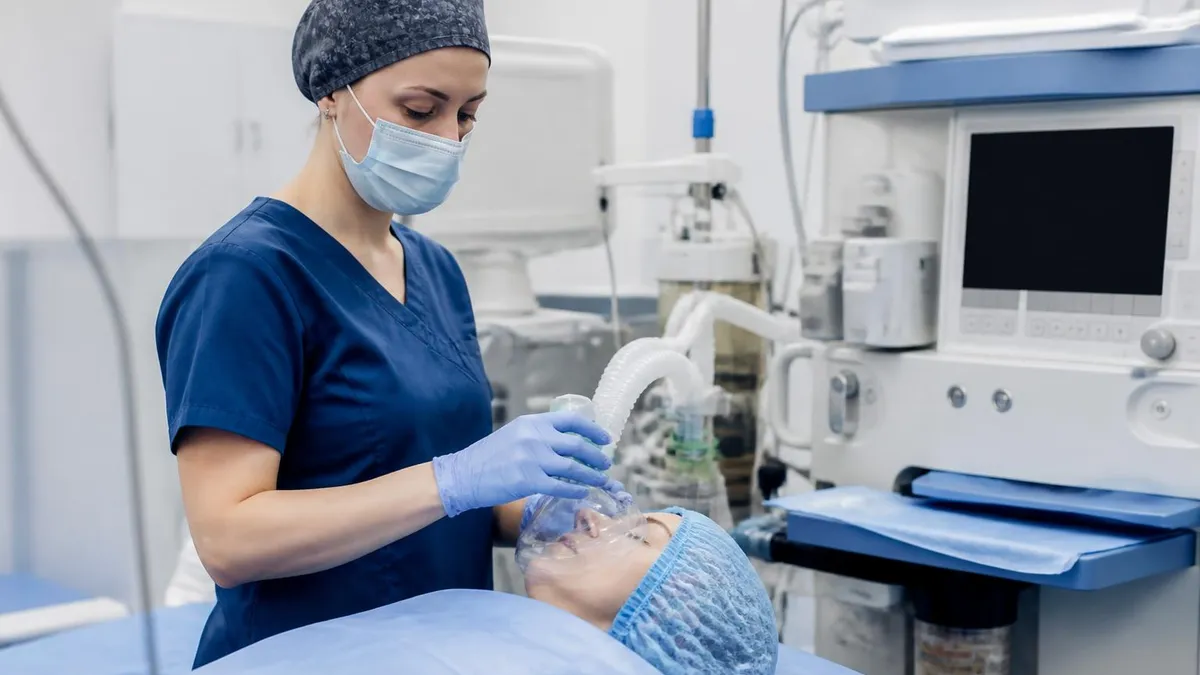
Recertification runs through NBCRNA's Continued Professional Certification (CPC) program. You need 100 Class A credits per four-year cycle, with 40 in four assessed core modules (pharmacology, physiology, anatomy, equipment). The eight-year exam covers updates in anesthesia practice. Workload is roughly 25 CE hours per year — manageable alongside full-time clinical work.
The National Certification Examination itself, taken at the end of school, is a 100–170 question computer-adaptive test covering basic and advanced anesthesia principles, pharmacology, equipment, and human physiology. First-time pass rate across accredited programs hovers between 84% and 99%, with most strong programs reporting 95% or higher.
Failed candidates retake in 60+ days; most pass on the second attempt. Programs publish their three-year average pass rate on their websites — under 85% is a red flag.
The career trajectory after entering practice splits three ways. Most CRNAs stay in clinical practice for the duration of their career — the pay is too good to leave. A smaller group moves into administrative roles (anesthesia department chief, chief CRNA at a hospital, anesthesia group partner) within 5–10 years, typically with a $20K–$50K bump.
A third path is academic and clinical-faculty work at CRNA programs themselves, which pays less ($150K–$190K) but offers tenure-track stability and the option to consult on the side.
One under-discussed reality: most CRNA jobs include call. A typical hospital-employed CRNA at a community medical center takes 24-hour call once or twice a week, working the cases that come in overnight (often an emergency C-section, an appendectomy, or a trauma case).
Some practices pay extra for call, some include it in base. If a 9-to-5 schedule matters more than pay, look at outpatient surgical centers, pain clinics, or office-based anesthesia — they pay $160K–$200K but rarely take call.
As of 2025, the Council on Accreditation of Nurse Anesthesia Educational Programs (COA) requires all new entry-level CRNA programs to award a doctoral degree — either a Doctor of Nursing Anesthesia Practice (DNAP) or a Doctor of Nursing Practice (DNP) with an anesthesia concentration. Master's-level CRNA programs no longer admit new students. If you are looking at older program info online, ignore anything that says "MSN in nurse anesthesia" — that pathway is closed for new entrants.
If CRNA turns out to be too much — the schooling, the cost, the stress, or simply the wait — there are legitimate alternative paths that build on the same BSN foundation. The most popular pivot is to a nurse practitioner role through an bsn to msn program.
The MSN-NP path takes about 24–36 months part-time while you keep working, costs $30,000–$60,000 total, and produces a clinician who earns $110,000–$140,000 in most specialties. It is shorter, cheaper, less stressful, and you can work through it — but the ceiling on pay is much lower than CRNA.
Within the NP world, certain specialties pay more than others. Psychiatric-mental-health NPs and acute-care NPs are usually the highest paid ($130K–$170K), followed by family NPs ($110K–$130K). None reach CRNA pay, but the lifestyle is meaningfully different — no OR call, no anesthesia-level liability, more outpatient and chronic-care work.
For nurses who like patient relationships and longitudinal care, NP work is often a better fit than CRNA's episodic, high-acuity model.
Another option is staying RN and moving up the bedside ladder into charge nurse, ICU nurse manager, or clinical nurse specialist roles. These usually cap at $110,000–$140,000 but require no further full-time schooling, and the day-to-day work is closer to what you already know.
Some nurses use a accelerated bsn programs background combined with leadership experience to pivot into hospital administration or clinical informatics, where pay is $130,000–$180,000 with normal business hours.
The AA pathway sometimes comes up as an alternative to CRNA. Be careful — AAs are not RNs, work in only 17 supervised-practice states, and the master's degree does not build on your BSN. AAs earn similar money ($160K–$220K) but have no independent practice anywhere and far less geographic flexibility than CRNAs.
For nurses set on advanced anesthesia but worried about CRNA program length, the Anesthesia Assistant (AA) pathway is sometimes considered — but be warned, AAs work only in 17 supervised-practice states and are not RNs. The role is a distinct master's degree, not a nursing advancement, so it doesn't build on your BSN.
AAs earn comparable money to CRNAs ($160K–$220K) but with less geographic flexibility and no independent practice rights anywhere.
Looking forward, the CRNA profession is on a slow but steady trajectory toward more independent practice. Five states have moved from supervised to opt-out independent practice in the past decade (most recently Wyoming and Montana fully). New York and New Jersey already operated under independent practice frameworks for CRNAs.
The American Society of Anesthesiologists (the physician body) continues to lobby for supervision requirements, but the trend, driven by rural-hospital staffing shortages, favors expanded CRNA autonomy.
Demand will outstrip supply through 2030 by every BLS and AANA projection. The CRNA workforce is aging — median age is mid-50s — and the schools cannot graduate enough new CRNAs to replace retirements plus growth.
This means strong job markets, rising signing bonuses, and probably some salary inflation. The risk on the other side is anesthesia-care-team models that pair one anesthesiologist with multiple CRNAs at lower individual CRNA pay, but the math hasn't shifted dramatically yet.
The honest summary: a BSN to CRNA path is a 7-to-8-year, $250,000-investment decision that pays back over 30 years of $200,000+ salary. It is the highest-paid nursing career and one of the highest-paid clinical jobs in healthcare, period.
It demands more academically and emotionally than any other nursing path. If you can manage critical-care nursing well, want clinical autonomy, can absorb 36 months of doctoral school, and want to make CRNA money, the path is worth it. If any of those four are wobbly, look at the NP route through a bsn nursing schools graduate program — you'll have a great career either way.
A few last practical notes for serious candidates. Track your ICU hours obsessively from day one — pull pay stubs, set up a simple spreadsheet, and add up hours each pay period. When you apply, schools will ask for a number, not a range, and most candidates undercount because they didn't track.
The CCRN application also requires precise hours, and being able to certify 1,750 hours in 24 months is the only way to sit the exam.
Build relationships with the CRNAs and anesthesiologists at your hospital from your first day on the unit. They write the strongest reference letters because they see you under pressure during codes, rapid responses, and procedural sedation.
A letter from a CRNA who knows your work for two years is worth ten letters from charge nurses you barely knew. If your hospital doesn't have CRNAs (small community settings), reach out to nearby tertiary centers and ask to shadow once a quarter — most CRNAs remember being applicants and will say yes.
Take graduate-level prerequisite coursework if your GPA needs help. Many candidates with sub-3.5 BSN GPAs take advanced patho, advanced pharm, or biochemistry at a local university and pull A's.
Schools will look at recent graduate-level work over a four-year-old BSN transcript and weight it appropriately. A 4.0 in three graduate-level science classes signals you can handle doctoral coursework today, regardless of what happened in your sophomore year.
Even strong candidates get rejected from individual schools for reasons unrelated to qualifications — class composition, geography, clinical site capacity. Apply to 8-12 schools across reach, match, and safer tiers. Total application cost of $1,000-$2,000 is trivial compared to a year of delay if you under-apply.
If you get rejected the first time, ask for feedback. Many programs will tell you what was missing — more ICU experience, CCRN, stronger essay, lower GPA red flags — and most candidates who reapply with that feedback get in the next cycle.
The acceptance rate for second-cycle applicants who addressed feedback is meaningfully higher than for first-cycle applicants because admissions committees see directed improvement.
Finally, do not let the cost scare you away if everything else fits. Federal Direct Unsubsidized loans cover up to about $20,500 a year for graduate students, Grad PLUS loans cover the rest at fixed rates, and most CRNAs refinance to private rates 6–12 months into their first job at 4–6% APR.
With $200,000-plus salaries, three-year payoffs are common. The net present value of CRNA over a 30-year career still beats almost any other clinical path. Run the numbers and decide on the work, not the loan balance.
Bottom line: bsn degree bachelor of science in nursing graduates entering a CRNA pipeline today are signing up for the most rigorous clinical training in nursing, the highest pay in nursing, and a career that retains broad demand through at least 2035.
It is hard, it is long, it is expensive, and for the candidates suited to it, it is one of the best decisions in American healthcare. Start ICU, get your CCRN, shadow, apply, and commit. The rest is execution.
BSN Questions and Answers

BSN to MSN: Programs, Length, Cost, Salary & Specialties Guide

BSN to DNP: Complete Path to Doctor of Nursing Practice in 2026
BSN to NP: Bachelor of Science in Nursing to Nurse Practitioner Career Path 2026

BSN RN Salary: 2026 Pay Guide for Bachelor's-Prepared Nurses

Accelerated BSN Programs: Requirements, Cost, and Timeline

BSN Nursing Schools: Top Programs, Admission Requirements, Cost, and How to Choose
About the Author

Registered Nurse & Healthcare Educator
Johns Hopkins University School of NursingDr. Sarah Mitchell is a board-certified registered nurse with over 15 years of clinical and academic experience. She completed her PhD in Nursing Science at Johns Hopkins University and has taught NCLEX preparation and clinical skills courses for nursing students across the United States. Her research focuses on evidence-based exam preparation strategies for healthcare certification candidates.