
BSN to NP: Bachelor of Science in Nursing to Nurse Practitioner Career Path 2026 October
Plan your BSN to NP path with bridge MSN and DNP routes, timelines, costs, certification exams, and licensure steps. Updated 2026 October guide for working nurses. 🎯
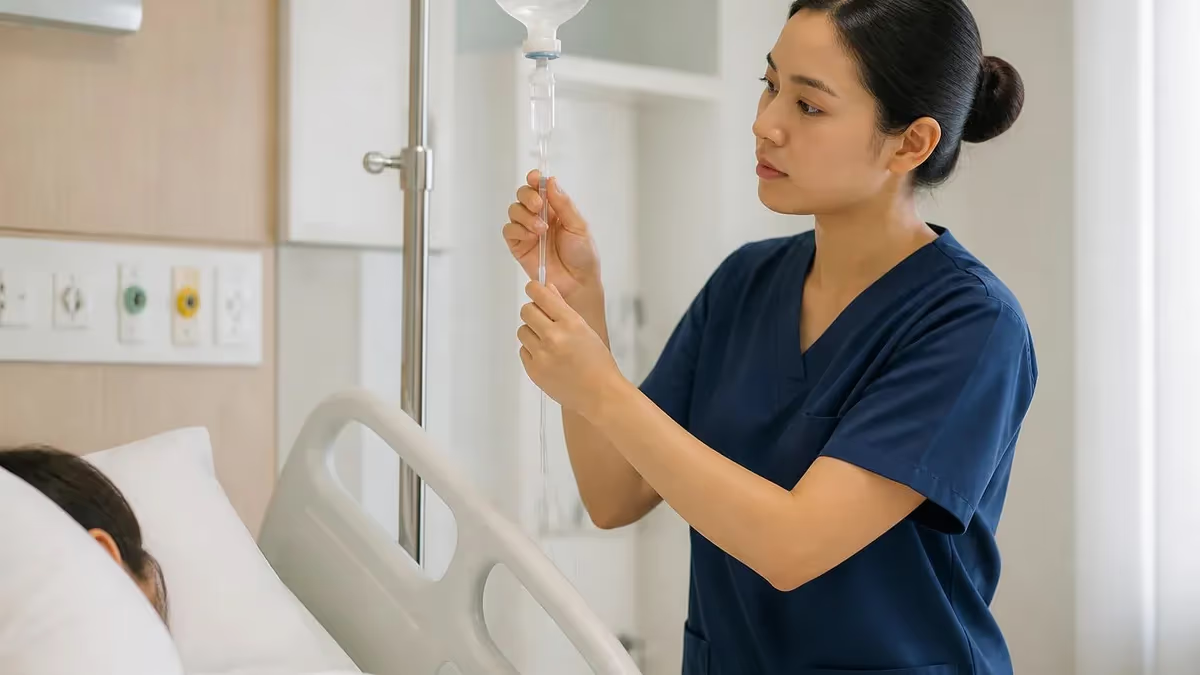
Moving from a Bachelor of Science in Nursing to a Nurse Practitioner role is one of the most common career jumps in American healthcare, and for good reason. You already hold a license, you have hands-on patient experience, and you understand how a hospital floor or clinic actually runs day to day.
What changes on the BSN to NP track is the depth of your clinical knowledge, the scope of your practice authority, and your earning power. This guide walks you through every realistic route, exam, and decision point so you can plan the next two to four years with clear eyes.
A Nurse Practitioner is a registered nurse who has completed an advanced graduate degree (MSN or DNP) and earned national certification in a specific population focus. With that credential and a state APRN license, you can diagnose conditions, order and interpret labs and imaging, prescribe medications, manage chronic disease, and in 27 full-practice-authority states, run an independent clinic without physician oversight.
Before you commit to a program, get clear on three things: which population focus matches the patients you actually want to care for, whether you prefer a master's or a doctoral pathway, and how much clinical autonomy you want once you graduate. Those three answers shape the next six to nine years of your career.
BSN to NP at a Glance
The BSN to MSN-NP path remains the quickest way for a bachelor's-prepared nurse to gain national NP certification and state APRN licensure. Full-time students complete coursework, 600+ clinical hours, and board certification in roughly 27 to 30 months. DNP candidates need an extra 12 to 18 months and roughly 400 more clinical hours, but they finish with the terminal nursing degree.
There are three legitimate ways to move from BSN to NP in 2026. The traditional route is a BSN to MSN program, taking two to three years full-time. The second is the BSN to DNP, which awards the terminal Doctor of Nursing Practice degree in three to four years. The third is a post-master's certificate route, which only applies if you already hold an MSN.
The BSN to MSN-NP route remains the most popular because it is the fastest and least expensive way to earn prescriptive authority. A full-time MSN-NP program runs 24 to 36 months and requires 600 to 800 supervised clinical hours. Tuition ranges from $25,000 at a public in-state school to over $90,000 at a private university.
The BSN to DNP route is becoming the default at many top-tier universities because the AACN has pushed the doctorate as the preferred entry credential since 2004. A BSN to DNP program runs three to four years full-time, requires 1,000 to 1,200 clinical hours, and includes a scholarly project. Cost runs $50,000 to $150,000.
Most working nurses choose hybrid online programs that allow them to keep working part-time during didactic semesters. Salary differences between MSN-NP and DNP-NP remain modest in clinical roles, so unless you want a faculty or leadership career, the MSN is usually the right call.

Three Pathways from BSN to NP
Two to three years full-time, 600 to 800 supervised clinical hours, $25k to $90k tuition. The most popular route for working nurses because it offers prescriptive authority in the shortest amount of time.
Three to four years full-time, 1,000 to 1,200 clinical hours plus a scholarly project, $50k to $150k tuition. Awards the terminal Doctor of Nursing Practice degree and opens academic and senior leadership roles.
Twelve to eighteen months. Designed for MSN holders adding a new population focus or switching from a non-NP role like nurse educator or CNS into an NP specialty.
Some schools offer accelerated BSN to NP tracks for second-degree applicants. These programs combine BSN completion with MSN coursework in four to five total years and require a non-nursing bachelor's plus prerequisites.
Your population focus determines which certification exam you take, which patients you can legally see, and which state license endorsements you qualify for. Family is the most flexible and the most commonly chosen, accounting for about 65% of all NPs, because it covers patients across the lifespan from newborn through geriatric.
If you are a med-surg nurse drawn to clinic work, FNP is almost always the right answer. If you work the ICU and want to manage critically ill adults, AGACNP gives you the procedures, ventilator management, and acute care scope you need. ED nurses often pick AGACNP plus a post-master's emergency NP certificate.
Behavioral health is the fastest-growing focus right now. PMHNP demand has jumped 40% since 2022 and starting salaries average $135,000 because of nationwide psychiatrist shortages. Choose based on the work you want to do, not on what your friends picked or what looks easiest on paper.
Switching foci after graduation is possible but expensive. You complete a post-master's certificate program, which adds 12 to 18 months and 500 to 800 additional clinical hours plus a second certification exam. The most common switch is FNP adding PMHNP because of the salary jump and remote-work flexibility psychiatric NPs now enjoy. Pick carefully the first time.
Choose Your NP Population Focus
Covers patients from newborn through geriatric. Accounts for roughly 65% of all NPs and is the most flexible certification. Best for primary care clinics, urgent care, community health, and most outpatient settings. Easiest to switch geographies because every state credentials FNPs.
Admission to a BSN to NP program is competitive but realistic for any nurse with reasonable grades and clinical experience. Standard requirements include a BSN from an accredited program, an unencumbered RN license, a minimum 3.0 cumulative GPA (top programs want 3.5+), one to two years of nursing experience, three professional references, a personal statement, and an interview.
The GRE was a barrier for years, but more than 90% of programs dropped it during the pandemic and never brought it back. Always check each program's current admissions page rather than relying on older rankings or guides that may show outdated requirements.
If your undergraduate GPA is below 3.0, you still have options. Take three to six graduate-level prerequisite courses (advanced pathophysiology, advanced pharmacology, or advanced health assessment) at a community college or through a non-degree graduate path and earn A's. Many programs admit conditionally if you demonstrate recent graduate-level success.
Working in a respected unit at a major teaching hospital also strengthens your application. A bedside RN with two years in a Level I trauma ICU and a 3.2 GPA will beat a 3.8 GPA applicant with six months of clinic experience almost every time. Sharpen your fundamentals with the BSN practice test hub before you start advanced coursework.
BSN to NP Application Checklist
- ✓Unencumbered, active RN license in your state
- ✓BSN earned from a CCNE or ACEN accredited program
- ✓Cumulative undergraduate GPA of 3.0 or higher (3.5+ for top programs)
- ✓One to two years of bedside nursing experience (ICU/ED required for acute care tracks)
- ✓Three professional references from clinical supervisors or faculty
- ✓Personal statement and goal essay describing your population focus
- ✓Up-to-date BLS and ACLS certifications
- ✓Background check and drug screen clearance
- ✓Resume documenting clinical specialties and any leadership roles
- ✓Application fee of $50 to $150 per school

Online and hybrid BSN to NP programs have become the dominant format. About 70% of new NP students enroll in some form of distance program now. The didactic portion is delivered asynchronously or via weekly live Zoom sessions, with everything from advanced pathophysiology to primary care management taught online.
The catch is clinical hours, which always happen in person at a preceptor's office near you. Reputable online programs help you find preceptors; less reputable ones leave you to cold-call physicians and NPs in your area, which is the single biggest reason students drop out.
Before you enroll in any online program, ask the admissions team three questions in writing. First, do you guarantee preceptor placement or does the student secure their own? Second, what is the program's accreditation status with CCNE or ACEN? Third, what percentage of last year's graduates passed their certification exam on the first attempt?
If the answer to the third question is below 85%, walk away. The Commission on Collegiate Nursing Education publishes pass rates publicly, so verify what admissions tells you against the official data. Compare program structures directly using the BSN to NP programs overview.
Only programs accredited by CCNE or ACEN qualify graduates for national certification exams. Confirm the program's accreditation status on the CCNE public directory before you pay any application fee. Programs without accreditation cannot place you for clinical hours that count toward APRN certification, and graduates cannot sit for AANP or ANCC exams.
Every accredited BSN to NP program covers the same core APRN competencies known as the Three P's: advanced pathophysiology, advanced pharmacology, and advanced health assessment. After those foundational courses you move into population-specific clinicals such as primary care of children, women's health, adult medicine, and behavioral health.
Most programs run a final integration practicum in your last two semesters where you carry your own panel of patients under preceptor supervision. Expect 12 to 18 hours of clinical per week during practicum semesters on top of your coursework, which is why most students cut their bedside RN hours significantly during the final year.
Clinical hour requirements are non-negotiable and set by accreditors. MSN programs require a minimum of 500 hours, but most exceed 600 to make graduates competitive. DNP programs require 1,000 hours plus a scholarly project that addresses a quality improvement question at your clinical site.
Hours must be supervised by a credentialed preceptor (typically an NP, physician, or PA) and documented in a clinical tracking system like Typhon or Exxat. If you miss hours, you do not graduate, period. Plan your work schedule and family calendar around clinical from day one of your program.
Core APRN Curriculum: The Three Ps
Cellular and systems-level disease mechanisms across the lifespan. Foundation for clinical reasoning and differential diagnosis. Typically a 3-credit course in semester one.
Pharmacokinetics, pharmacodynamics, drug classes, prescribing principles, and population-specific dosing. Required for state prescriptive authority in every state.
Head-to-toe diagnostic exam skills including otoscopy, fundoscopy, joint exam, neurological exam, and mental status. Includes in-person assessment intensive at most online programs.
Differential diagnosis, evidence-based lab and imaging ordering, and management plan development. Bridges classroom science into clinical practicum readiness.
Once you finish coursework and clinicals, you sit for your national board certification exam. FNPs choose between the AANP FNP exam ($315) and the ANCC FNP-BC exam ($395). Both are accepted by every state for licensure. AANPCB tends to be more clinically focused with case-based questions; ANCC includes more theory, research, and professional issues.
Pass rates run 85% to 92% on first attempts. For other foci, AGACNP, AGPCNP, PMHNP, PNP, WHNP, and NNP each have their own certifying body and exam, with similar fees and pass rates. Choose whichever certifying body aligns with your program's emphasis and your future workplace preferences.
The exam is computer-based, runs three to four hours, and contains 150 to 175 questions. Study time averages 200 to 300 hours over eight to twelve weeks. Most candidates use a combination of Fitzgerald Health, Hollier, Leik, or Barkley review courses plus a question bank like BoardVitals or APEA.
Take your exam within three months of graduation while didactic content is fresh. Schedule it before you finish school so the deadline keeps you accountable. After passing, your certifying body sends verification directly to your state board of nursing, which begins your APRN application review.
Most successful candidates schedule their AANP or ANCC certification exam four to six weeks before graduation. The deadline forces consistent study during the final semester, and you can sit for boards within days of receiving your final transcript. State APRN applications cannot move forward without your certification letter, so an extra month of delay costs roughly $10,000 in lost NP income.
Passing your certification exam does not let you practice. You must apply to each state's board of nursing for APRN licensure, which usually requires your certification verification, a graduate transcript, a controlled-substance registration, and a separate APRN application fee ranging from $100 to $400.
Processing time varies wildly between jurisdictions. California can take six months, Texas takes four to eight weeks, and Florida typically processes in three weeks. Apply the day you pass your boards. Many new NPs lose two to three months of income waiting on state paperwork that could have been started immediately.
Twenty-seven states plus DC grant full practice authority, meaning you can diagnose, treat, prescribe, and own your own clinic without any physician collaboration agreement. These include Arizona, Oregon, Washington, Colorado, Nevada, New Mexico, Minnesota, Iowa, Nebraska, Maine, New Hampshire, Vermont, Kansas, Utah, and New York.
Twelve states require reduced practice with a collaborative agreement for at least one area of practice. Eleven restricted-practice states (California, Texas, Florida, Georgia, North Carolina, Tennessee, South Carolina, Alabama, Michigan, Ohio, and Oklahoma) require physician supervision throughout your career, which affects salary negotiation and clinic ownership options.
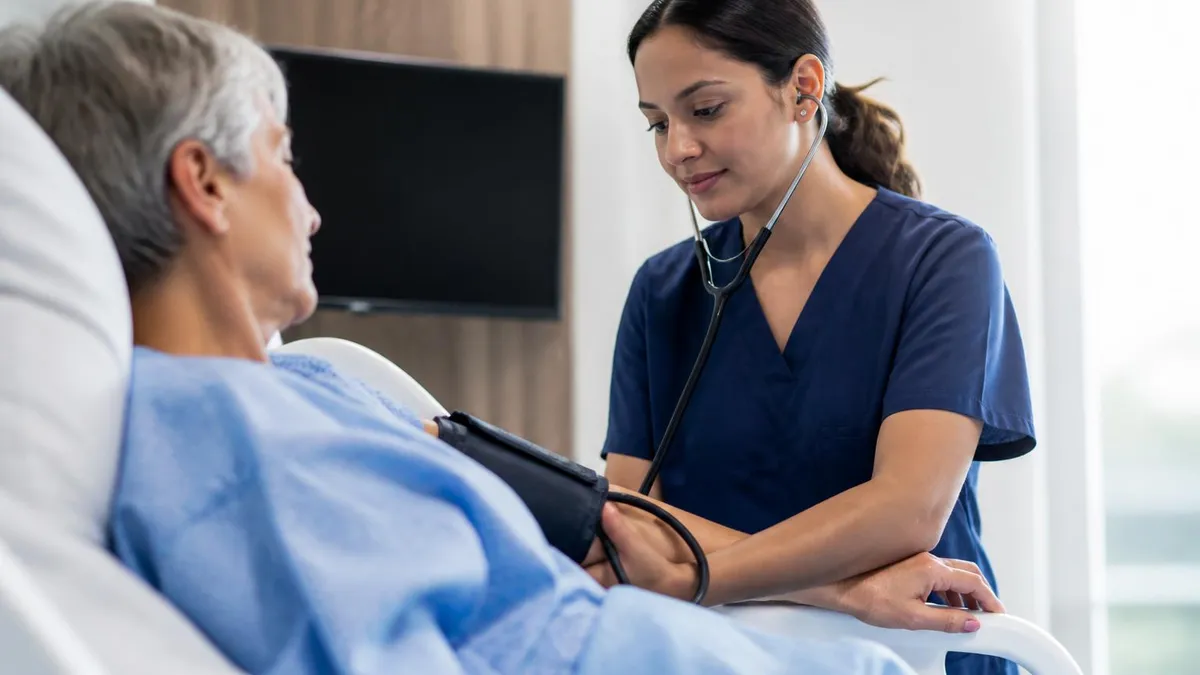
Pros and Cons of the BSN to NP Path
- +Earning power jumps 40 to 80% over staff RN salary
- +Prescriptive authority including controlled substances in most states
- +Schedule autonomy in 27 full-practice-authority states
- +Strong telehealth and remote-work options after two years experience
- +High job security; BLS projects 38% NP growth through 2032
- +Ability to open and own your own clinic in full-practice states
- −Tuition runs $35k to $200k depending on school and degree level
- −Clinical placement burden falls on students at many online programs
- −Restricted-practice states limit independent practice options
- −Liability and malpractice exposure increases significantly
- −Burnout risk in the final practicum semesters is high
- −First contract negotiation often leaves new NPs underpaid
Pros and Cons at a Glance
| Pros | Cons |
|---|---|
| Prescriptive authority including controlled substances in most states | Clinical placement burden falls on students at many online programs |
| Strong telehealth and remote-work options after two years experience | Restricted-practice states limit independent practice options |
| Ability to open and own your own clinic in full-practice states | Liability and malpractice exposure increases significantly |
Honest budgeting prevents the single biggest mistake new NP students make: dropping out in semester four because of money. Tuition is only part of the cost. Add textbooks ($800 to $1,500 per year), clinical liability insurance ($150 per year), background checks and drug screens for each clinical site, conference and stethoscope upgrades, exam prep courses, and the certification exam itself.
Total all-in cost runs $35,000 for the cheapest in-state public MSN to $200,000+ for a private DNP at a top-ranked university. Build at least a 15% buffer into whatever number your school publishes for tuition, because hidden fees, software subscriptions, and travel for in-person intensives always add up.
Federal Direct Unsubsidized Loans cap at $20,500 per year for graduate students, with Grad PLUS loans available to cover the rest. The Nurse Faculty Loan Program forgives 85% of your loans if you teach nursing for four years after graduation. The National Health Service Corps repays up to $50,000 of student loans for two years in an underserved area.
Many large hospital systems including HCA, Ascension, and CommonSpirit now offer $20,000 to $40,000 tuition reimbursement in exchange for two-year work commitments after graduation. Apply for everything; rejection rates are lower than nurses assume.
Realistic BSN to NP Budget
A realistic full-time BSN to NP timeline runs 27 to 36 months from your first didactic class to your first day as a practicing NP. Allow six months of application prep before that. Part-time students should expect 42 to 60 months. The BSN to DNP path adds another nine to fifteen months on top of any MSN timeline.
Pad your plans because life happens. Preceptors cancel, a clinical site closes mid-rotation, family emergencies pop up, and your dog still needs to go to the vet. Build at least one extra semester of cushion into your financial plan so a delayed semester does not turn into a dropout.
12-Month Pre-Application Action Plan
- ✓Month 1-2: Choose population focus and shortlist 5 to 8 accredited programs
- ✓Month 3-4: Request transcripts and gather references from clinical supervisors
- ✓Month 5-6: Draft personal statement and resume; verify GPA recalculation policies
- ✓Month 7-8: Take any missing prerequisites at a community college if GPA is borderline
- ✓Month 9: Submit applications and pay fees by listed deadlines
- ✓Month 10-11: Prepare for interviews; tour any in-person intensives nearby
- ✓Month 12: Accept offer, complete background check, secure clinical placements
The median NP salary in 2025 was $128,500, up from $118,000 in 2022. Top earners (especially PMHNPs in private practice and CRNAs in independent states) clear $250,000. Geographic variation is enormous: California, Washington, and New Jersey lead at $145,000 to $165,000 base, while Tennessee and Alabama sit closer to $105,000.
Specialty matters more than degree. A PMHNP with an MSN earns more than an FNP with a DNP in almost every market. Negotiate your first contract carefully; the first offer is rarely the best one available, and once you sign you typically wait 12 to 18 months for any meaningful raise.
Beyond salary, NPs gain scheduling autonomy, prescribing authority, and the ability to build a panel of patients you actually know. Many MSN-prepared NPs move into telehealth roles within five years, working three to four days per week from home at $90 to $130 per hour. Locum tenens NPs cover staffing gaps for $1,500 to $2,500 per day plus travel.
Three mistakes derail more BSN to NP students than any others. The first is picking a school based on convenience or marketing without verifying CCNE accreditation and first-attempt pass rates. The second is starting clinicals without locking in preceptors first; many students burn an entire semester scrambling.
The third is treating school as something to fit around full-time bedside hours. Plan to drop to 24 to 32 hours per week during practicum semesters. Burnout in the final year forces more dropouts than any academic obstacle. Pace yourself, schedule deliberate rest days, and accept that your social life will shrink temporarily.
If you treat the BSN to NP path as a serious two-to-four-year project with a clear study plan, a preceptor pipeline, and a written financial budget, your odds of finishing on time and passing boards on the first attempt are above 90%. Keep refreshing fundamentals with the BSN questions and answers practice quiz during your first two semesters.
The credentials, the prescriptive authority, and the lifelong increase in autonomy and income are worth every weekend of clinical paperwork. Start your application timeline 12 months before you want to begin, take the time to choose your population focus carefully, and verify everything an admissions office tells you against published accreditor data before you sign any enrollment agreement.
Sample BSN - Degree Bachelor of Science in Nursing Practice Questions
Try these questions from our free BSN - Degree Bachelor of Science in Nursing practice tests. The correct answer and an explanation follow each question.
A patient with borderline personality disorder engages in 'splitting' on the inpatient unit, telling one nurse that they are the 'best nurse' while stating another nurse is 'terrible.' The appropriate nursing response is to:
- A. Communicate consistently with the entire nursing team and maintain uniform boundaries
- B. Validate the patient's positive feedback and address the complaint about the other nurse
- C. Reassure the patient and try to improve the therapeutic relationship with the 'terrible' nurse
- D. Document the behavior and avoid further interaction to prevent escalation
Answer: A. Communicate consistently with the entire nursing team and maintain uniform boundaries
Splitting is managed by maintaining consistency across all staff through regular team communication and uniform limit-setting.
The pediatric unit's charge nurse is not present. The nursing supervisor made the decision to transfer the obstetrics unit's nurse to the pediatrics unit. What patients from the list below could the nurse manager trustfully provide the float nurse?
- A. A child diagnosed with Kawasaki disease and with cardiac complications
- B. A child who has had a nephrectomy for Wilm’s tumor
- C. A child receiving an IV chelating therapy for lead poisoning
- D. A child who had multiple injuries from a serious vehicle accident
Answer: B. A child who has had a nephrectomy for Wilm’s tumor
Because this nurse has previous experience caring for patients who have had cesarean births, she should be able to care for a client who needs significant abdominal surgery.
A freshly hired nurse with three months of experience on an adult medicine unit was asked to float to pediatrics. The nurse balks at performing pediatric skills and is given an engaging but intimidating assignment. The nurse needs to:
- A. Refuse the assignment and leave the unit requesting a vacation a day
- B. Resign on the spot from the nursing position and apply for a position that does not require floating
- C. Inform the nursing supervisor and the charge nurse on the pediatric floor about the nurse’s lack of skill and feelings of hesitations and request assistance
- D. Ask several other nurses how they feel about pediatrics and find someone else who is willing to accept the assignment
Answer: C. Inform the nursing supervisor and the charge nurse on the pediatric floor about the nurse’s lack of skill and feelings of hesitations and request assistance
The nurse has an ethical duty to disclose her level of expertise to the individual in charge of the assignment and the individual in charge of the unit. As a result, the nurse prevents leaving clients behind and putting them in danger.
A nurse notes that a patient's IV insertion site is pale, cool, swollen, and the infusion has slowed. The nurse recognizes this as:
- A. Phlebitis
- B. Infection
- C. Infiltration
- D. Air embolism
Answer: C. Infiltration
Infiltration occurs when IV fluid leaks into surrounding tissue, causing pallor, coolness, swelling, and slowed infusion rate.
Take the full BSN - Degree Bachelor of Science in Nursing practice test
BSN Questions and Answers
About the Author

Registered Nurse & Healthcare Educator
Johns Hopkins University School of NursingDr. Sarah Mitchell is a board-certified registered nurse with over 15 years of clinical and academic experience. She completed her PhD in Nursing Science at Johns Hopkins University and has taught NCLEX preparation and clinical skills courses for nursing students across the United States. Her research focuses on evidence-based exam preparation strategies for healthcare certification candidates.