
BS to BSN Programs: Complete Guide to Requirements, Pathways, and Career Outcomes
BS to BSN programs let non-nursing bachelor's grads earn a BSN fast. 🎯 Learn requirements, timelines, costs, and top program options.
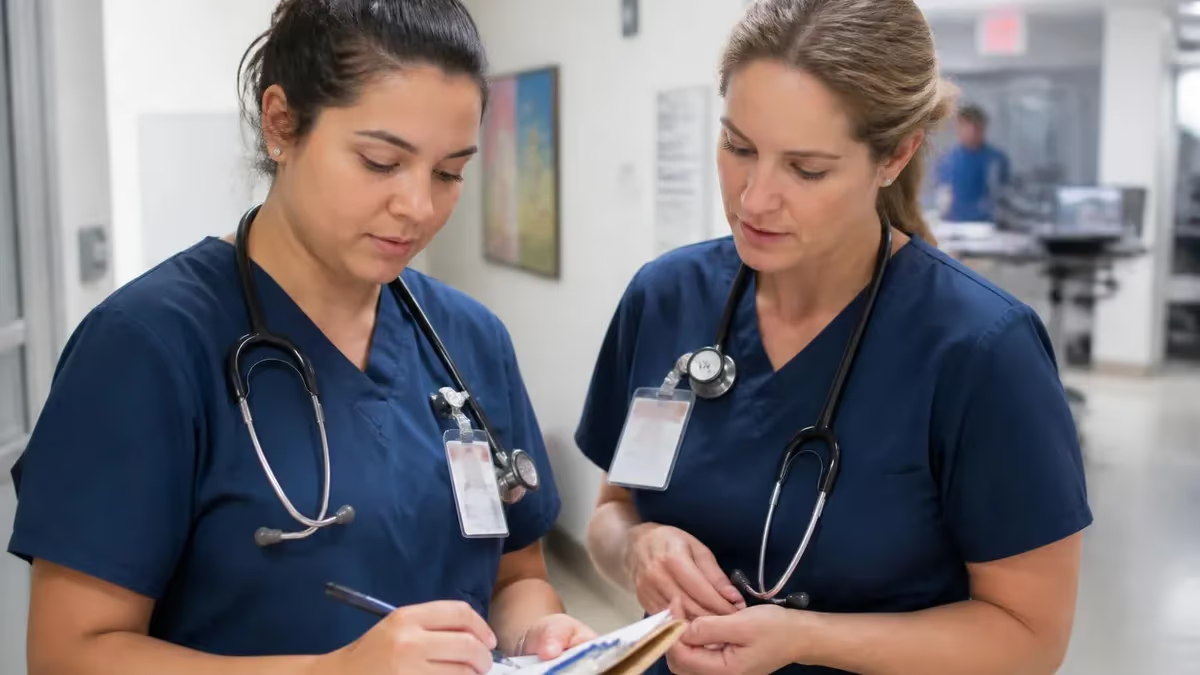
If you already hold a bachelor's degree in a field other than nursing and want to transition into the nursing profession, bs to bsn programs offer one of the most efficient pathways available. These specialized bridge programs are designed specifically for individuals who have already demonstrated academic achievement at the collegiate level and are now ready to pursue a career in healthcare. Rather than repeating general education coursework you have already completed, BS to BSN programs allow you to focus directly on nursing science, clinical practice, and patient care from the very start of your studies.
The appeal of these programs goes far beyond speed and convenience. Hospitals and healthcare systems across the United States are increasingly prioritizing BSN-prepared nurses due to evidence showing that higher nursing education levels are associated with better patient outcomes, lower mortality rates, and fewer medical errors. The American Nurses Credentialing Center's Magnet Recognition Program, which designates hospitals as elite nursing employers, requires that a significant percentage of their nursing staff hold BSN or higher degrees. This institutional pressure has made the BSN credential more valuable and, in many markets, essentially mandatory for long-term career advancement.
Understanding how BS to BSN programs differ from traditional BSN programs is essential before you begin the application process. Traditional BSN programs typically span four years and include two years of prerequisite general education coursework before students enter the clinical nursing curriculum. BS to BSN programs compress or eliminate that general education phase entirely, since applicants already hold a prior bachelor's degree. The result is a focused, intensive curriculum that typically runs between 12 and 24 months, depending on the institution and whether you attend full-time or part-time.
Admission requirements for BS to BSN programs are generally more rigorous than those for traditional BSN entry, which makes sense given the accelerated pace of the curriculum. Most programs require a cumulative undergraduate GPA of 3.0 or higher, though competitive programs at research universities often expect GPAs closer to 3.5. Additionally, applicants must complete a specific set of science prerequisites — commonly including anatomy, physiology, microbiology, chemistry, statistics, and nutrition — before they can be considered for admission. Some programs require that these prerequisites be completed within the past five to ten years to ensure scientific knowledge remains current.
The clinical training component of BS to BSN programs is just as comprehensive as what students receive in traditional four-year programs. Accreditation standards set by organizations such as the Commission on Collegiate Nursing Education (CCNE) and the Accreditation Commission for Education in Nursing (ACEN) require that students complete a minimum number of supervised clinical hours across a range of healthcare settings and patient populations. Most BS to BSN programs require between 600 and 800 clinical hours, covering areas such as medical-surgical nursing, pediatrics, obstetrics, mental health, and community health nursing.
Upon completing a BS to BSN program, graduates are eligible to sit for the NCLEX-RN licensure examination, the same exam taken by graduates of all other types of nursing programs. Passing the NCLEX-RN is the final step required to practice as a registered nurse in any U.S. state or territory. BSN graduates who pass the NCLEX-RN enter the workforce with credentials that open doors to hospital employment, specialty nursing roles, and eventually advanced practice pathways including nurse practitioner and nurse anesthesia programs.
Whether you are transitioning from a career in biology, psychology, business, or the humanities, a BS to BSN program can serve as your bridge into one of the most stable, meaningful, and well-compensated professions in the United States. The investment in time, tuition, and clinical training pays dividends in job security, salary growth, and the personal satisfaction of contributing to patient health and wellbeing every single day.
BS to BSN Programs by the Numbers
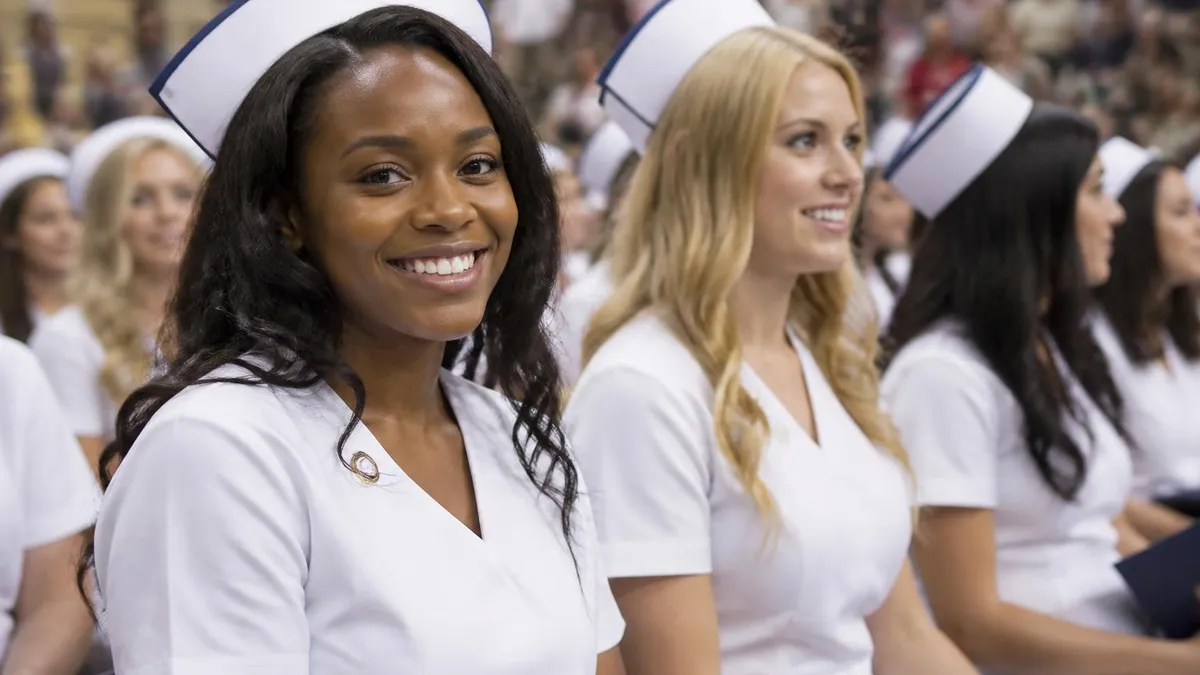
Program Formats and Structures
The most intensive format, typically completed in 12 to 18 months. Students attend lectures and clinical rotations on a fixed schedule. Best for career-changers who can commit fully and want to finish as quickly as possible.
Didactic coursework delivered online with in-person clinical placements arranged locally. Popular with working adults and parents. Programs typically run 18 to 24 months, offering greater scheduling flexibility without sacrificing clinical rigor.
Designed for students who need to maintain employment or family obligations during the program. Timelines extend to 24 to 36 months, but tuition costs per credit are generally identical to the full-time equivalent track.
Students are admitted as a cohort and progress through the curriculum together as a group. This model fosters strong peer networks and often includes built-in study groups, mentorship pairings, and shared clinical placement coordination.
Meeting the admission requirements for BS to BSN programs demands careful planning that ideally begins at least one year before your target enrollment date. The first and most critical step is completing all required science prerequisites with strong grades. Most programs mandate courses in human anatomy and physiology (often a two-semester sequence with lab), microbiology with a lab component, general chemistry, statistics, nutrition, and developmental psychology.
Some programs also require a course in pathophysiology or pharmacology. These prerequisites can be completed at community colleges, four-year universities, or through accredited online institutions, giving applicants significant flexibility in how they fulfill these requirements.
Beyond science coursework, most BS to BSN programs require documented healthcare experience before applicants are considered. This experience can take many forms — volunteer hours in a hospital or clinic, work as a certified nursing assistant (CNA), experience as a medical scribe, emergency medical technician (EMT) work, or employment in any direct patient care setting.
Programs typically require between 40 and 200 hours of verifiable healthcare experience. This requirement exists because nursing programs want to ensure that applicants have realistic exposure to the demands of clinical work before investing in their education. Discovering midway through a nursing program that the clinical environment is not a good fit is costly for both the student and the program.
Letters of recommendation are another essential component of the BS to BSN application package. Most programs request two to three letters, with a strong preference for at least one letter from a registered nurse or healthcare professional who can speak to your aptitude for clinical work, your interpersonal skills with patients, and your ability to perform under pressure. Academic letters from professors who taught your science prerequisite courses can complement these professional references by demonstrating your capacity for rigorous scientific study. Generic letters from employers outside of healthcare are unlikely to strengthen your application significantly.
Personal statements or essays are required by virtually all BS to BSN programs, and they represent one of the most important differentiators in a competitive applicant pool. Admissions committees are looking for clarity of purpose, evidence of genuine motivation for nursing as a second career rather than a fallback option, and thoughtful reflection on healthcare experiences you have already had.
The most effective personal statements draw specific connections between your prior education and career and the skills you will bring to nursing practice. A candidate with a psychology background might describe how their understanding of human behavior will enhance therapeutic communication with patients, while a candidate with a science background might highlight research skills relevant to evidence-based nursing practice.
Entrance exams are required by some but not all BS to BSN programs. The Test of Essential Academic Skills (TEAS) is the most commonly required nursing-specific entrance exam, assessing competency in reading, math, science, and English language use. Some programs accept GRE scores in lieu of or in addition to the TEAS.
If your target programs require the TEAS, you should plan to take it at least three to four months before your application deadline to allow time for retesting if necessary. TEAS preparation resources are widely available, and most test-takers who prepare systematically score well above the minimum thresholds set by most programs.
Background checks and drug screening are standard requirements that must be completed before students can participate in clinical placements. A felony conviction does not automatically disqualify an applicant from nursing school, but it may create barriers to NCLEX-RN licensure in certain states and restrict employment options after graduation. It is important to research the specific licensing requirements of the state in which you intend to practice and to disclose any criminal history honestly and transparently during the application process. Attempting to conceal prior convictions typically results in immediate disqualification or dismissal from the program.
Health requirements including up-to-date immunizations, tuberculosis testing, CPR certification, and health insurance coverage are universally required before clinical rotations begin. These requirements are set by clinical placement sites — hospitals and healthcare facilities have strict infection control protocols that all students must meet. Most programs provide a checklist of required immunizations and health documentation well in advance of the clinical start date, giving students adequate time to obtain any missing vaccinations or documentation from their healthcare providers.
Curriculum, Clinical Hours, and Specialties
The didactic curriculum in BS to BSN programs covers the full spectrum of nursing science that traditional four-year programs deliver, compressed into a shorter timeline. Core courses include fundamentals of nursing practice, health assessment, pathophysiology, pharmacology, medical-surgical nursing, pediatric nursing, obstetric and women's health nursing, psychiatric and mental health nursing, community health nursing, and nursing research and evidence-based practice. Leadership and nursing informatics are increasingly standard components as hospitals seek BSN graduates who can contribute to quality improvement initiatives and electronic health record management from their first day of employment.
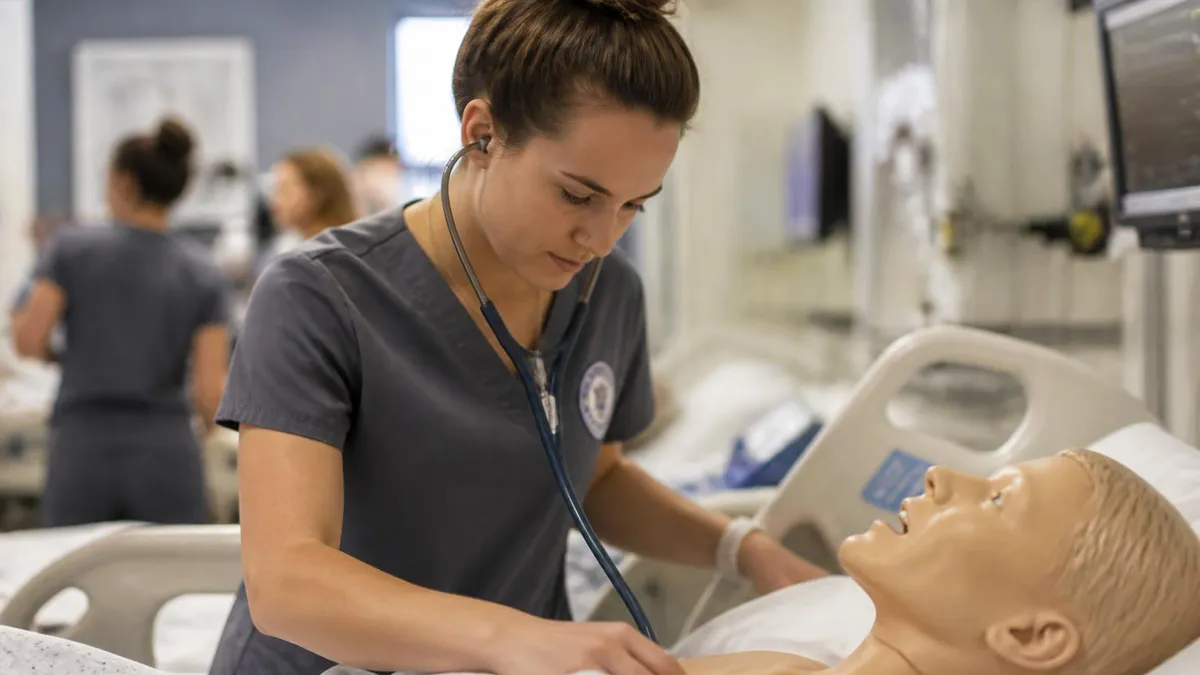
Simulation labs are a critical bridge between classroom learning and real clinical environments. Most programs invest heavily in high-fidelity mannequins, standardized patient actors, and immersive clinical scenarios that allow students to practice skills such as medication administration, IV insertion, wound care, and emergency response in a controlled setting. Research consistently shows that simulation-based training improves clinical competency and reduces errors when students transition to actual patient care. Programs accredited by the CCNE are required to ensure that simulation training meets established quality benchmarks.
Pros and Cons of BS to BSN Programs vs. Traditional BSN
- +Significantly shorter time to graduation — 12 to 24 months versus four years for traditional BSN
- +General education requirements are waived, allowing immediate focus on nursing coursework
- +Prior bachelor's degree adds professional maturity and career-change credibility valued by employers
- +Access to the same NCLEX-RN exam and licensure pathways as all other nursing graduates
- +Opens doors to Magnet-designated hospital employment that strongly prefers BSN nurses
- +Prior academic and life experience often enhances critical thinking in clinical settings
- −Highly competitive admissions due to limited seat availability in most programs
- −Demanding full-time schedules that can be difficult to balance with existing employment
- −Prerequisite science courses add time and cost before the program itself begins
- −Some employers may incorrectly assume non-traditional graduates lack nursing experience depth
- −Tuition costs for private BS to BSN programs can exceed $60,000 in total
- −Limited time for elective coursework or professional development activities during the program
Application Checklist for BS to BSN Programs
- ✓Verify all required science prerequisites are completed within the program's recency window (typically 5–10 years).
- ✓Request official transcripts from every college or university you have attended.
- ✓Accumulate at least 40–200 hours of documented direct patient care or healthcare experience.
- ✓Secure two to three letters of recommendation, including at least one from a registered nurse or healthcare provider.
- ✓Draft a compelling personal statement that connects your prior degree and career to nursing goals.
- ✓Register for and complete the TEAS exam if required, aiming for a score of 70 or higher.
- ✓Obtain current CPR/BLS certification from an AHA-approved provider.
- ✓Ensure immunizations are up to date, including hepatitis B, MMR, varicella, Tdap, and annual flu shot.
- ✓Complete a tuberculosis (TB) skin test or IGRA blood test within the program's required timeframe.
- ✓Research financial aid options including federal student loans, employer tuition reimbursement, and nursing scholarships.
CCNE Accreditation Is Non-Negotiable
Only attend a BS to BSN program accredited by the CCNE or ACEN. Non-accredited programs may not qualify graduates for federal student loans, may be ineligible for certain employer tuition reimbursement programs, and could jeopardize eligibility for graduate nursing programs later. Always verify accreditation status directly on the CCNE or ACEN website before applying.
Understanding the full cost of a BS to BSN program requires looking beyond published tuition figures to account for prerequisites, fees, supplies, and the opportunity cost of reduced or eliminated income during training. Tuition for BS to BSN programs varies enormously depending on whether you attend a public or private institution.
Public university programs in your state of residency typically range from $15,000 to $35,000 in total tuition for the nursing-specific portion of the curriculum. Private university programs and many online programs charge between $40,000 and $65,000 in total tuition. Out-of-state tuition at public universities can be comparable to or even exceed private program costs, so residency status is a significant factor in program selection for many students.
In addition to tuition, students should budget for prerequisite coursework taken at community colleges or online, which typically costs $150 to $400 per credit hour. Science prerequisites with lab components often require four to five credits per course, meaning a student who needs to complete anatomy, physiology, microbiology, and chemistry from scratch could spend $5,000 to $12,000 on prerequisites alone before even applying to a nursing program. Building these prerequisite courses into your overall financial planning is important, as many students underestimate this front-end cost when comparing total program expenses.
Federal financial aid is available to students enrolled in CCNE or ACEN-accredited programs, and the majority of BS to BSN students qualify for unsubsidized federal student loans. The Free Application for Federal Student Aid (FAFSA) is the gateway to all federal aid, including Stafford Loans, and should be completed as early as possible in the academic year.
Graduate-level nursing students may also be eligible for federal PLUS loans, though these carry higher interest rates than subsidized or unsubsidized Stafford Loans. Financial aid offices at nursing schools can help students navigate the full range of federal, state, and institutional aid available to them.
Scholarships represent one of the most underutilized sources of funding for BS to BSN students. The American Association of Colleges of Nursing (AACN), state nurses associations, hospital foundations, and private foundations all offer scholarships specifically targeted at students pursuing nursing degrees as second careers.
The Nurse Corps Scholarship Program, administered by the Health Resources and Services Administration (HRSA), offers funding in exchange for a commitment to practice at a critical shortage facility after graduation. Many hospital systems also offer direct tuition assistance or loan forgiveness programs tied to employment commitments, which can dramatically reduce the net cost of a BS to BSN program for students willing to make a multi-year practice commitment.
The return on investment for a BS to BSN degree is among the strongest available in healthcare education. The U.S. Bureau of Labor Statistics projects a 6 percent growth rate for registered nurses through 2033, adding more than 193,000 new nursing jobs to an already large workforce.
Entry-level BSN nurses in hospital settings typically earn between $58,000 and $72,000 annually in most U.S. markets, with significantly higher salaries in high-cost metropolitan areas such as San Francisco, New York City, and Boston. With experience, BSN nurses in specialty areas such as critical care, perioperative nursing, and oncology routinely earn $85,000 to $110,000 annually, and those who go on to earn master's or doctoral degrees can earn substantially more.
Employer tuition reimbursement programs are worth investigating before selecting a program. Many large hospital systems offer tuition reimbursement of $3,000 to $7,500 per year for employees pursuing relevant degrees. If you can arrange clinical placements at your future employer's facilities while completing your BS to BSN program, you may be able to begin drawing tuition reimbursement benefits even before you formally accept an RN position.
Some hospital systems have formalized this arrangement through nurse residency programs that begin concurrent with the final semester of a nursing program, providing both pay and educational support during the transition from student to licensed nurse.
Living expenses during a BS to BSN program represent a significant hidden cost, particularly for full-time students who must reduce or eliminate outside employment to meet program demands. Creating a detailed monthly budget that accounts for housing, food, transportation, childcare, insurance, and personal expenses — in addition to tuition and fees — is essential for financial planning.
Students who attempt to work full-time while attending a full-time accelerated BS to BSN program typically report extremely high stress levels and an elevated risk of academic difficulty. If reducing work hours is not financially feasible, pursuing a part-time or hybrid program format is a more sustainable strategy for long-term success.
BS to BSN programs at major universities routinely receive three to ten applications for every available seat. Many competitive programs have application deadlines six to nine months before the cohort start date. Missing a deadline by even one day typically means waiting an entire year for the next admission cycle. Set calendar reminders and submit all application materials at least two weeks before published deadlines.
The career outcomes available to BS to BSN graduates are broad, diverse, and remarkably stable. Nursing is unique among healthcare professions in that BSN-prepared nurses are employable in virtually every healthcare setting imaginable — from intensive care units and emergency departments at Level I trauma centers to rural critical access hospitals, community health clinics, school nursing programs, correctional facilities, cruise ships, military installations, and international humanitarian organizations.
This breadth of employment options provides a level of career flexibility that few other professions can match, and it is one of the most compelling reasons that professionals from other fields choose nursing as a second career.
Hospital-based nursing remains the dominant employment pathway for new BSN graduates, with approximately 60 percent of all registered nurses working in inpatient hospital settings according to Bureau of Labor Statistics data. Within hospitals, BSN graduates have access to a wide range of specialty areas.
Medical-surgical nursing serves as the foundation for most new graduate nursing careers, providing comprehensive exposure to a diverse patient mix and developing core assessment, prioritization, and delegation skills. Many nurses spend one to three years in medical-surgical nursing before transitioning to specialty units such as cardiac care, neurology, oncology, or orthopedics, where specialized certifications and higher salaries await.
Critical care nursing is a highly sought-after specialty for nurses who prefer fast-paced, high-acuity environments. BSN graduates who want to pursue critical care typically begin in step-down or progressive care units before advancing to the ICU, where they care for patients on mechanical ventilators, continuous IV infusions, and invasive monitoring equipment. The American Association of Critical-Care Nurses (AACN) offers the CCRN certification for critical care nurses with adequate clinical experience, and earning this credential significantly enhances employment prospects and earning potential. Critical care nurses in major metropolitan hospital systems often earn $90,000 or more annually with moderate experience.
Emergency nursing attracts BS to BSN graduates who thrive in unpredictable, fast-changing environments. Emergency departments (EDs) see patients across all age groups with conditions ranging from minor injuries to life-threatening emergencies, requiring nurses who can triage effectively, prioritize care under pressure, and work seamlessly with interdisciplinary teams including physicians, respiratory therapists, pharmacists, and social workers. The Board of Certification for Emergency Nursing (BCEN) offers the Certified Emergency Nurse (CEN) credential, which signals advanced competency in emergency care and is increasingly preferred by hiring managers at Level I and II trauma centers.
Nurse education and academic nursing represent another important pathway for BSN graduates who are passionate about teaching the next generation of nurses. Most faculty positions at nursing programs require a master's or doctoral degree, making the BSN a starting point rather than a terminal credential for those interested in academic careers. However, many hospitals and health systems employ BSN-prepared nurses as clinical educators responsible for onboarding new staff, delivering continuing education programs, and coordinating skills competency assessments. These positions combine clinical knowledge with teaching skills and can serve as a bridge for nurses who aspire to future academic faculty roles.
Advanced practice nursing offers the highest salaries and greatest clinical autonomy available to nurses with BSN-level preparation. Becoming a nurse practitioner (NP), certified registered nurse anesthetist (CRNA), certified nurse-midwife (CNM), or clinical nurse specialist (CNS) requires completion of a graduate-level nursing program — typically a Master of Science in Nursing (MSN) or Doctor of Nursing Practice (DNP). BSN-prepared nurses who demonstrate strong clinical performance and academic achievement are competitive applicants for these graduate programs. CRNAs in particular are among the highest-earning healthcare professionals in the United States, with median annual salaries exceeding $200,000 according to recent BLS data.
International nursing opportunities are available to BSN-prepared nurses with licensure and relevant clinical experience. Nonprofit organizations such as Doctors Without Borders, Partners in Health, and the International Medical Corps deploy experienced nurses to humanitarian missions around the world.
The U.S. military also offers commissioned officer positions for BSN-prepared nurses through the Army Nurse Corps, Navy Nurse Corps, and Air Force Nurse Corps, providing competitive salaries, comprehensive benefits, student loan repayment programs, and the opportunity to serve in diverse healthcare environments across the globe. Military nursing service can also accelerate career advancement and provide funding for graduate nursing education through service commitments.
Succeeding in a BS to BSN program requires strategic preparation that begins well before your first day of class. One of the most impactful things you can do in the months leading up to program start is to strengthen your science foundation by reviewing key concepts from anatomy, physiology, and pathophysiology.
Many students who struggled with science prerequisites find that targeted self-study using NCLEX-style review materials helps them arrive in the program with stronger conceptual frameworks for understanding disease processes and treatment rationales. Several publishers offer accelerated nursing review books specifically designed for students entering intensive BSN programs, and investing in one or two of these resources during your prerequisite phase is time well spent.
Time management is the most universally cited skill that distinguishes students who thrive in BS to BSN programs from those who struggle. Accelerated nursing curricula cover an extraordinary volume of content in a compressed timeframe — it is not uncommon for students to have major exams in multiple courses within the same week while simultaneously preparing for clinical rotations.
Developing a weekly study schedule before the program begins and maintaining it with discipline throughout the program is critical. Many successful students report studying a minimum of three to four hours for every hour of lecture content, which in a full-time program can mean 30 to 50 hours of independent study per week on top of scheduled class and clinical hours.
Building a strong peer support network within your cohort pays significant dividends throughout an accelerated BS to BSN program. Study groups that meet regularly to review lecture content, quiz each other on pharmacology and pathophysiology, and debrief after clinical rotations are among the most effective learning tools available.
The shared experience of navigating a demanding curriculum creates bonds that often last throughout nursing careers, and former cohort members frequently refer each other for job opportunities, share clinical resources, and provide moral support during challenging licensing exam preparation periods. Participating actively in your cohort rather than studying in isolation is one of the simplest and most effective strategies for academic success.
Self-care is a non-negotiable component of success in any accelerated healthcare education program. The demands of BS to BSN programs are significant, and students who neglect sleep, nutrition, exercise, and mental health routinely experience burnout, declining academic performance, and elevated clinical error rates. Most programs integrate content on nurse self-care and burnout prevention into their curriculum precisely because the evidence for its importance is so strong.
Prioritizing at least seven hours of sleep per night, maintaining a consistent exercise routine, eating nutritious meals rather than relying on convenience foods, and seeking counseling or peer support when stress levels become overwhelming are practices that support not just program success but long-term career sustainability in nursing.
Developing strong clinical communication skills is an area where students with prior non-healthcare professional backgrounds sometimes need focused effort. Nursing requires precise, efficient, and professional verbal and written communication — with patients, families, physicians, and interdisciplinary team members. The SBAR (Situation, Background, Assessment, Recommendation) communication framework is universally used in hospital settings, and practicing SBAR communication during simulations and clinical rotations until it becomes second nature is an important preparatory exercise. Students who can communicate clinical information clearly and confidently are more likely to receive strong preceptor evaluations and to be offered employment at their clinical sites.
Leveraging the career services and alumni networks available through your nursing program is a strategy that is often underutilized by students focused on surviving day-to-day coursework demands. Nursing school career offices can assist with resume writing, interview preparation, job fair participation, and connecting students with alumni working in specialty areas of interest.
Many large BS to BSN programs maintain active alumni networks that organize mentorship programs, continuing education events, and job referral circles. Taking an hour each week during the final semester of your program to attend networking events, connect with alumni on LinkedIn, and research potential employers positions you for a faster and more successful transition from student to employed nurse.
Finally, begin your NCLEX-RN preparation early — ideally during the final two semesters of your program rather than waiting until after graduation. Many BS to BSN graduates who struggle with the NCLEX report that they underestimated the exam's difficulty or waited too long to begin serious preparation.
Resources such as UWorld, Kaplan NCLEX review, and the Next Generation NCLEX (NGN) readiness tools offered by the National Council of State Boards of Nursing (NCSBN) provide realistic exam simulation and identify content areas requiring additional study. Consistent practice with NCLEX-style questions throughout your program, rather than cramming during the weeks before the exam, is the single most effective strategy for first-attempt NCLEX success.
BSN Questions and Answers


About the Author

Registered Nurse & Healthcare Educator
Johns Hopkins University School of NursingDr. Sarah Mitchell is a board-certified registered nurse with over 15 years of clinical and academic experience. She completed her PhD in Nursing Science at Johns Hopkins University and has taught NCLEX preparation and clinical skills courses for nursing students across the United States. Her research focuses on evidence-based exam preparation strategies for healthcare certification candidates.