
Border Patrol Agent Salary: Complete Pay & Benefits Guide 2026 October
Border patrol agent salary guide covering GL-5 to GS-13 pay, locality adjustments, overtime, benefits, and total compensation for CBP agents. 🟢

The border patrol agent salary is one of the most attractive aspects of joining U.S. Customs and Border Protection, and it is far more layered than a single base number suggests. New agents enter at GL-5, GL-7, or GL-9 depending on education and experience, but the total paycheck is built from federal base pay, locality adjustments, Border Patrol Agent Pay Reform Act (BPAPRA) overtime, premium differentials, and law enforcement availability multipliers. Together those layers can push first-year earnings well above the headline base figure most applicants see online.
For fiscal year 2026, the entry-level base salary at GL-5 begins near $52,000, GL-7 hovers around $58,000, and GL-9 starts close to $63,000 before any locality bump. Because most stations sit along the southern border in places like El Paso, Laredo, Yuma, and San Diego, locality pay ranges from roughly 17% to 33% on top of the base. Agents working in Rest of U.S. localities receive the standard floor, while those in higher-cost sectors collect noticeably more.
Beyond the chart, the real boost comes from scheduled overtime. Under BPAPRA, agents elect an annual rate of either 100, 90, or 80 hours every two weeks, and that election can add 12.5%, 25%, or 25% in supplemental compensation respectively. Translated into dollars, a GL-9 agent on the 100-hour level can earn close to $85,000 in their first year before night, Sunday, holiday, and hazard differentials are added. Few federal entry roles match this earning velocity.
Promotions then accelerate the curve. Agents typically advance from GL-7 to GL-9, then to GS-11 journeyman within about three years if performance is satisfactory. At journeyman GS-11 with locality and BPAPRA, total annual compensation in many sectors clears $100,000. Supervisory Border Patrol Agent roles at GS-12 and GS-13 push into the $120,000–$150,000 range, and senior leadership at GS-14 and above can exceed $170,000 in high-locality cities.
If you are weighing this career, you should also study the Border Patrol Agent Qualifications: Complete Requirements Guide because eligibility, education credits, and prior law enforcement experience directly determine which grade you start at. Choosing GL-7 over GL-5 can translate to thousands of dollars over the first 24 months, so the qualifications you bring to the application are part of your starting paycheck.
This guide breaks down every component of the border patrol agent salary in detail. You will see grade-by-grade pay tables, locality math, overtime calculations, the federal benefits package, retirement, hazard pay, recruitment incentives, and how agents actually budget around shift work. The goal is to give you a realistic, sector-by-sector picture so you can decide whether the financial side of the role matches your expectations.
We will also cover what is taxable versus reimbursable, how uniforms, weapons, vehicles, and training are paid for, and how relocation, recruitment, and retention bonuses up to 25% can be layered on top in hard-to-fill sectors. By the end, you should be able to estimate your own first-year, fifth-year, and twenty-year earnings with reasonable accuracy and decide whether the role aligns with your financial goals.
Border Patrol Agent Pay by the Numbers

Pay Grades and Starting Base Salary
For applicants with a high school diploma and no qualifying experience or education. Base salary starts near $52,000 before locality. Most candidates with only a GED enter at this grade and progress quickly with strong performance.
Requires a bachelor's degree, one year of specialized experience, or superior academic achievement. Base pay starts around $58,000. This is the most common entry point for college graduates and prior military with relevant skills.
Reserved for candidates with a master's degree, a J.D., or one year of specialized law enforcement experience at the GL-7 level. Base salary begins near $63,000 and offers the fastest path to journeyman GS-11.
Standard career level reached after roughly three years. Base pay ranges from approximately $68,000 to $88,000 depending on step, before locality and BPAPRA. This is where most non-supervisory agents spend the bulk of their career.
Supervisory Border Patrol Agents and senior field positions. Total compensation with locality regularly exceeds $120,000 and can reach $150,000 in high-cost sectors. Promotion is competitive and based on leadership performance.
Locality pay is the silent multiplier on every border patrol agent salary, and most candidates underestimate how much it matters. The Office of Personnel Management publishes annual locality tables that adjust federal base pay based on the cost of labor in each metropolitan area. For 2026, locality percentages range from a Rest of U.S. floor of about 17.06% to over 45% in San Francisco. Most Border Patrol stations fall between 17% and 33%, with San Diego, Tucson, and Houston-area sectors carrying higher rates.
To see this in action, take a GL-7 step 1 base of roughly $58,000. Add a 20% locality adjustment for a typical southwest sector and the adjusted base climbs to about $69,600. That figure is the number used to calculate retirement, leave accrual, and most importantly, BPAPRA overtime. Every percentage point of locality cascades through the rest of your pay stub, which is why agents pay close attention to which sector they are assigned to after the academy.
BPAPRA, signed into law in 2014, replaced the old Administratively Uncontrollable Overtime system with a predictable annual election. Each year, agents choose one of three levels: 100 hours of scheduled overtime per pay period adds 25% to base, 90 hours adds 12.5%, and the regular 80-hour schedule preserves base pay. Most line agents elect the 100-hour level because it provides predictable, pensionable compensation and aligns with the operational tempo of border enforcement.
Stacking these layers produces compensation that surprises applicants. A GL-9 step 1 agent in a 25% locality area earns roughly $79,000 in adjusted base, and the 25% BPAPRA boost lifts annual pay near $99,000 before any night differential, Sunday premium, or holiday pay. By contrast, an agent in a Rest of U.S. locality at the same grade earns closer to $93,000. The difference of about $6,000 per year is purely geographic.
Premium pay is where additional thousands accumulate. Night differential pays 10% extra for hours worked between 6 p.m. and 6 a.m., Sunday premium pays 25% for regularly scheduled Sunday hours, and holiday work pays double. Many sectors run rotating shifts that touch all three premiums in a single week. Agents who pick up additional unscheduled overtime under FLSA rules can add even more, although BPAPRA hours already cover most needs.
Before accepting an offer, it is worth reviewing the broader career picture in How to Become a Border Patrol Agent: Full Guide because grade selection, station preferences, and sector assignment are decisions you make at hire that lock in your pay for the next several years. A few well-informed choices during onboarding can change your first-year earnings by ten thousand dollars or more.
One often-missed lever is recruitment incentives. CBP regularly authorizes recruitment, relocation, and retention bonuses for hard-to-fill stations, sometimes up to 25% of annual base for service agreements of two to four years. These are taxable but pay out in lump sums or installments, and they stack on top of locality and BPAPRA. Always ask your recruiter which sectors currently carry active incentives before listing your station preferences.
BPA Practice Test Questions
Prepare for the BPA - Border Patrol Agent exam with our free practice test modules. Each quiz covers key topics to help you pass on your first try.
BPA Background Investigation and Interview...
BPA Exam Questions covering BPA Background Investigation and Interview Process. Master BPA Test concepts for certification prep.
BPA Immigration Law and Policy
Free BPA Practice Test featuring BPA Immigration Law and Policy. Improve your BPA Exam score with mock test prep.
BPA Logical Reasoning
BPA Mock Exam on BPA Logical Reasoning. BPA Study Guide questions to pass on your first try.
BPA Physical Fitness and Medical Standards
BPA Test Prep for BPA Physical Fitness and Medical Standards. Practice BPA Quiz questions and boost your score.
BPA Spanish Language Proficiency
BPA Questions and Answers on BPA Spanish Language Proficiency. Free BPA practice for exam readiness.
BPA Surveillance and Detection Techniques
BPA Mock Test covering BPA Surveillance and Detection Techniques. Online BPA Test practice with instant feedback.
Border Patrol Agent Salary by Career Stage
In year one, most agents are at GL-5 or GL-7 and spend the first five months earning a reduced training salary at the Border Patrol Academy in Artesia, New Mexico. Academy pay is still based on your grade but does not include BPAPRA, since trainees work scheduled academy hours. After graduation, full BPAPRA elections begin, and the paycheck visibly grows.
Realistic first-year gross earnings range from about $62,000 for a GL-5 in a low-locality area to roughly $90,000 for a GL-9 in a 30% locality sector. Sign-on incentives, holiday pay during the academy schedule, and uniform allowances can add a few thousand more. Most agents report that year one is financially comfortable once they reach the field and begin earning the full overtime supplement.

Is Border Patrol Agent Salary Worth the Trade-Offs?
- +Six-figure total compensation achievable within three years
- +Generous law enforcement FERS pension with 1.7% factor
- +BPAPRA overtime is pensionable and predictable
- +Locality pay boosts in most southwest sectors
- +Federal health, dental, vision, and life insurance
- +Recruitment and relocation bonuses up to 25% available
- +Retirement eligibility as early as age 50 with 20 years
- −Mandatory rotating shifts including nights, weekends, holidays
- −Many stations are in remote or high-cost-of-living areas
- −Mandatory retirement at age 57
- −Academy pay is lower for the first five months
- −Initial assignment may not match preferred location
- −Physical demands and risk premium are part of the job
- −Overtime is mandatory, not optional, in busy sectors
How to Maximize Your Border Patrol Agent Salary
- ✓Apply at the highest grade your education and experience allow before submitting USAJOBS package
- ✓Document prior law enforcement, military, or specialized experience to qualify for GL-9
- ✓Request high-locality sectors like San Diego, Tucson, or Houston when listing station preferences
- ✓Elect the 100-hour BPAPRA level as soon as you graduate the academy
- ✓Volunteer for night, Sunday, and holiday shifts to capture premium differentials
- ✓Pursue eligible recruitment, relocation, or retention bonus opportunities in hard-to-fill stations
- ✓Contribute at least 5% to TSP from day one to capture the full government match
- ✓Track your high-three average pay carefully as you approach promotion windows
- ✓Maintain physical fitness and clean record to remain eligible for promotion to GS-11 and GS-12
- ✓Plan retirement timing carefully to maximize the law enforcement 1.7% pension factor
Base pay is only about 60% of your real paycheck
When you add locality pay, BPAPRA overtime, night and Sunday differentials, holiday pay, uniform allowance, and recruitment incentives, the headline base salary typically represents only 55% to 65% of your true annual earnings. Always evaluate offers and offers using total compensation, not the GL or GS chart figure alone.
Career progression directly drives long-term border patrol agent salary growth, and understanding the promotion ladder is essential for financial planning. Newly hired agents serve a two-year probationary period during which annual within-grade step increases occur on schedule if performance is satisfactory. After completing the academy and field training, agents typically progress from GL-5 to GL-7 after one year, then from GL-7 to GL-9 after the second year, and finally from GL-9 to journeyman GS-11 by the end of year three.
The jump from GL-9 to GS-11 is the single biggest pay increase most agents will ever see in their career. Base salary climbs roughly 13% in one step, locality multiplies on the higher figure, and BPAPRA overtime grows proportionally. For an agent in a 25% locality area, this single promotion can add $14,000 to $18,000 in annual gross pay overnight. It is a defining moment in a Border Patrol career and the reason most agents push hard during their probation years.
Beyond GS-11, promotions become competitive rather than automatic. Selection for GS-12 Supervisory Border Patrol Agent requires applying through a structured merit promotion announcement, often accompanied by panel interviews, leadership assessments, and a strong evaluation history. Agents who pursue collateral duties such as field training officer, intelligence support, K-9 handler, or BORTAC tactical operator strengthen their promotion packages and often pick up additional special-duty pay along the way.
Specialty assignments influence total compensation in less obvious ways. BORTAC and BORSTAR operators receive premium tactical training, frequent deployments, and additional hazard considerations. Air and Marine Operations transfers, K-9 handlers, and intelligence agents may qualify for specialized pay categories or higher-locality reassignments. Lateral movement between sectors based on family needs, schools, or housing markets is also possible, although each move can reset locality calculations.
Geographic mobility is one of the most powerful tools an agent has for raising lifetime earnings. Voluntary reassignments to higher-locality sectors carry immediate pay increases without requiring a promotion. Conversely, agents nearing retirement sometimes shift to lower-cost sectors to stretch their pension. Because the FERS high-three calculation uses the highest consecutive three years of pay, strategic timing of geographic and grade moves can materially raise your eventual pension.
Education continues to matter throughout your career. Agents who complete bachelor's, master's, or law-related degrees during service open doors to assignments in headquarters, legal advisor roles, training cadre positions at the academy, and federal investigator roles within CBP and DHS. Many of these positions carry GS-13 or GS-14 base pay with lower physical demands, making them attractive as agents move into later career stages or transition out of front-line patrol work.
Finally, retirement timing is the capstone financial decision. Law enforcement officers under FERS can retire as early as age 50 with 20 years of covered service, or at any age with 25 years. Mandatory retirement is age 57, although waivers exist. Many agents target between 22 and 25 years to maximize the 1.7% pension factor on the first 20 years and the 1% factor thereafter, producing a pension that often replaces 40% to 50% of high-three earnings.
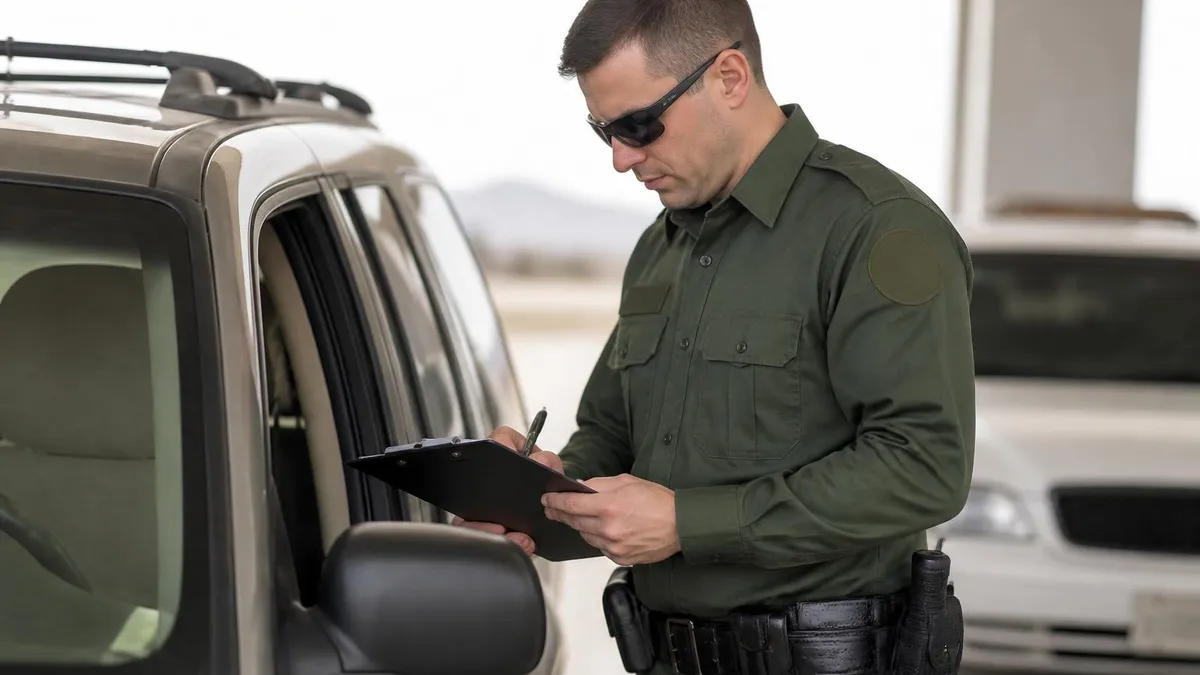
Border Patrol Agents fall under federal law enforcement mandatory retirement rules. You must separate by the last day of the month in which you turn 57, unless granted a rare waiver. Plan your career start age, education, and promotion timeline carefully so you reach 20 years of covered service before this deadline to secure full pension benefits.
Take-home pay is where the border patrol agent salary becomes tangible, and agents quickly learn that gross compensation and net deposit are very different numbers. Federal income tax, state tax in non-exempt states, FICA, Medicare, FERS retirement contributions, FEHB health premiums, and optional Thrift Savings Plan contributions all come out of every paycheck. A typical GS-11 agent grossing $115,000 annually will see roughly $75,000 to $82,000 land in their bank account, depending on filing status and state of residence.
State of residence matters more than many applicants expect. Texas, Florida, Nevada, Washington, and Wyoming have no state income tax, which is meaningful because several large Border Patrol sectors fall in Texas. Agents in California, New Mexico, and Arizona pay state income tax that can range from 3% to over 9% on higher brackets. Two agents earning the same GS-11 salary in El Paso versus San Diego will see noticeably different deposits despite identical gross pay.
Housing decisions also shape real disposable income. Many border stations sit in lower-cost markets where housing affordability is favorable, while sectors like San Diego have high housing costs that consume a larger share of the paycheck. Some agents pursue VA loans, USDA rural loans, or government-backed mortgage products. For benefits-related housing details and assistance options, the Do Border Patrol Agents Get Housing? Benefits Guide walks through what is and is not provided.
Uniforms, weapons, ammunition, vehicles, fuel, and most training are fully provided by CBP, so there is no out-of-pocket equipment cost. Agents receive an annual uniform replacement allowance and use government-issued vehicles for on-duty travel. This pushes effective take-home value above what a comparable private-sector salary would deliver because expenses that other professionals pay personally are absorbed by the agency.
Health, dental, vision, and life insurance through FEHB, FEDVIP, and FEGLI provide strong coverage with the government paying roughly 72% of health premiums. Family coverage premiums typically run $250 to $450 per pay period out-of-pocket. The Thrift Savings Plan offers traditional and Roth options with a 5% government match, and law enforcement agents can withdraw without penalty after retirement at any age once they meet the 20-year service threshold.
Smart financial planning starts during the academy. Agents who immediately max their TSP match, build a three-month emergency fund, and avoid lifestyle inflation during the first two years set themselves up for strong long-term outcomes. With BPAPRA overtime added on top of base, many agents reach a comfortable savings rate of 15% to 20% of gross income while still living well, particularly in low-cost border communities.
Finally, consider tax-advantaged moves unique to federal law enforcement. Special pay categories like night differential are taxable but pensionable. Recruitment bonuses are taxed in the year received but accelerate net worth growth. TSP catch-up contributions become available at age 50, and the law enforcement early retirement window provides a longer runway to draw down the TSP without penalty than most private retirees enjoy. Together, these features make the Border Patrol financial package among the strongest in federal service.
Practical financial preparation begins long before you sign your conditional offer letter. The hiring process for Border Patrol can take six to twelve months, during which you are unpaid by CBP, so a solid emergency fund is essential. Plan to cover at least four months of living expenses to bridge the gap between application, background investigation, polygraph, medical, fitness test, and the eventual academy start date. Many applicants underestimate this window and end up financially stressed during the final hiring steps.
Once you receive a firm offer, review every line of the offer letter. The grade, step, locality, recruitment incentive, relocation reimbursement, and service agreement details are all negotiable in some circumstances. If you qualify at GL-9 based on a master's degree or qualifying experience but the system defaulted to GL-7, you can request a re-evaluation. The difference is roughly $5,000 to $7,000 in first-year pay and locks in a higher base for every subsequent promotion calculation.
During the academy, focus on conserving cash. Lodging at Artesia is provided, meals are reasonable, and most expenses are minimal. Many recruits use the academy period to pay down high-interest debt with their reduced but still steady paycheck. Set up direct deposit, enroll in FEHB and TSP during your benefits election window, and choose a 5% TSP contribution rate at minimum to capture the full government match from your very first paycheck.
After graduation and arrival at your duty station, your full BPAPRA election begins. Most agents elect the 100-hour level for maximum predictable income, but the 90-hour option provides slightly better work-life balance with still meaningful supplemental pay. Track your overtime carefully and verify that your pay stub reflects the correct election. Pay system errors do occur, and catching a misclassified differential or missed Sunday premium can recover hundreds of dollars per pay period.
Build relationships with experienced agents who can mentor you on financial choices specific to the job. They can advise on which housing markets near your sector are most reasonable, which credit unions cater to federal law enforcement, and which insurance and legal defense coverages are worth purchasing. Federal Law Enforcement Officers Association membership is one common consideration that provides legal protection benefits at a modest annual cost.
Watch the calendar around within-grade increases. Step increases in the GL and GS systems occur on a fixed schedule, but agency error or supervisor inattention occasionally delays them. A delayed step increase compounds because it lowers your base for BPAPRA and locality calculations. Confirm with your timekeeper and supervisor that step adjustments are processed on the correct date and that your SF-50 personnel action reflects the new salary.
Finally, plan your career exit as deliberately as your career entry. The mandatory retirement age of 57 means most agents will retire at the peak of their earning power. Begin meeting with a federal retirement counselor at year 15 to model your high-three average, estimated FERS pension, Social Security supplement, and TSP withdrawal strategy. Agents who plan retirement carefully often leave Border Patrol with a six-figure annual income stream from pension plus TSP withdrawals alone.
BPA Questions and Answers

About the Author

Educational Psychologist & Academic Test Preparation Expert
Columbia University Teachers CollegeDr. Lisa Patel holds a Doctorate in Education from Columbia University Teachers College and has spent 17 years researching standardized test design and academic assessment. She has developed preparation programs for SAT, ACT, GRE, LSAT, UCAT, and numerous professional licensing exams, helping students of all backgrounds achieve their target scores.
Join the Discussion
Connect with other students preparing for this exam. Share tips, ask questions, and get advice from people who have been there.
View discussion (8 replies)