
How to Replace a Lost Boating License: State-by-State Guide for 2026 September
⏳ Learn how to replace a lost boating license in any state. Step-by-step guide for Florida, California, Alabama & more with costs, timelines, and tips.
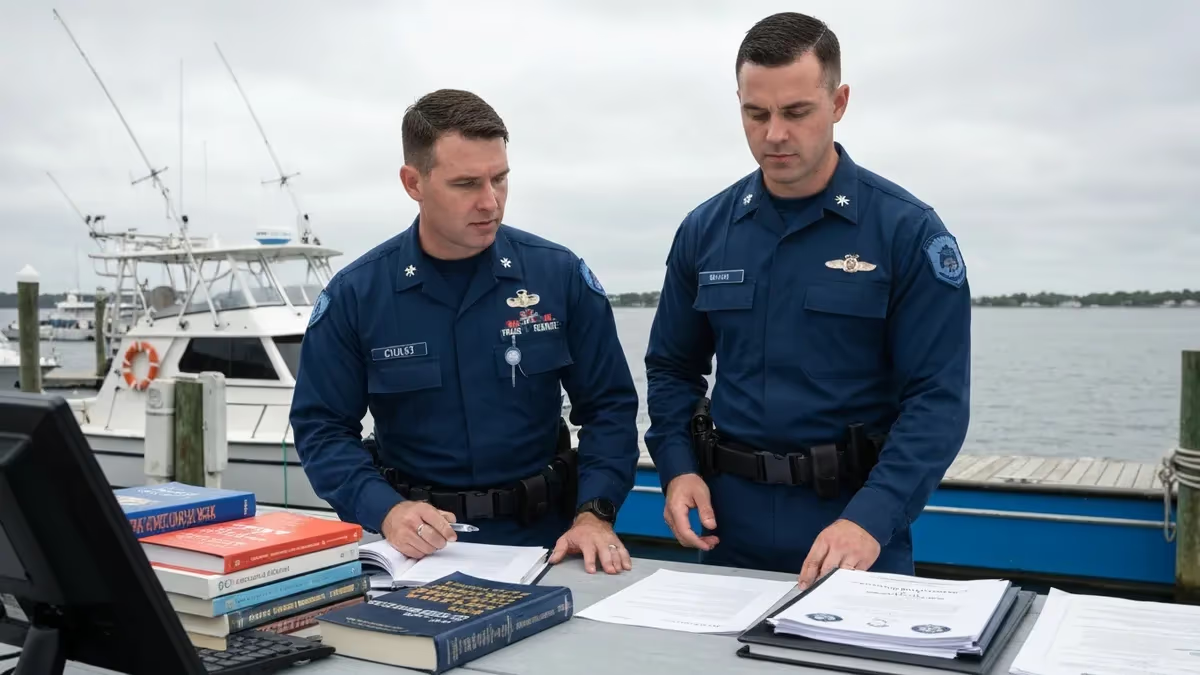
Losing your boating safety certificate can feel stressful, especially when you have a trip planned and the water is calling. Learning how to replace a lost boating license is simpler than most boaters expect, and in many states the process takes less than fifteen minutes online. Whether you misplaced your wallet, had your card damaged by water exposure, or simply cannot find the original document after moving to a new home, replacement options exist for every state that issues boater education credentials.
The first thing to understand is that most states do not issue a traditional license the way they do for automobiles. Instead, they provide a boater education card or safety certificate that proves you completed an approved course. If you hold a florida boating license card, for example, your completion record remains permanently on file with the issuing agency or course provider. This means a replacement card is simply a reprint of an existing record rather than a new examination or application.
Across the United States, approximately thirty-five states require some form of boater education before operating a vessel on public waterways. The replacement process varies depending on whether your state manages records through its fish and wildlife agency, a parks department, or a third-party education provider. States like California, Alabama, Tennessee, and Missouri each have their own portals and fee structures for obtaining duplicate certificates, which we will cover in detail throughout this guide.
Many boaters wonder do you need a license to drive a boat in the first place, which creates confusion about what exactly needs replacing. The answer depends on your state, your age, and the type of vessel you operate. Once you confirm that you do hold an active credential, the replacement process typically involves verifying your identity, confirming your original completion record, and paying a small reprint fee that ranges from free to twenty-five dollars depending on jurisdiction.
Digital options have transformed the replacement landscape significantly since 2020. Most approved course providers now maintain online portals where graduates can log in, verify their identity, and download a digital copy of their certificate immediately. Some states also offer mobile wallet integration, allowing you to store your boater education proof on your smartphone rather than carrying a physical card that could be lost or damaged again during boating activities.
Time sensitivity matters when you need a replacement. If your boating trip is days away, knowing whether your state offers instant digital downloads versus mailed physical cards will determine your best path forward. States with modern digital infrastructure can have you back on the water within minutes, while states that rely on mailed replacements may require seven to fourteen business days for processing and delivery to your address on file.
This comprehensive guide walks you through the exact steps for replacing your boating credentials in every major state, the costs involved, common pitfalls to avoid, and strategies for preventing future loss of your important boating documentation. We will also cover special circumstances like replacing credentials when you have moved between states or when the original course provider is no longer in business.
Boating License Replacement by the Numbers
Step-by-Step Process to Replace Your Boating License
Identify Your Issuing Authority
Verify Your Identity Online
Confirm Your Completion Record
Select Delivery Method
Pay the Replacement Fee
Store Your New Credential Safely
State-specific procedures for replacing a lost boating license vary considerably across the country. Understanding your particular state's process saves time and prevents frustration when you need your credentials quickly. The california boating license replacement process, for instance, routes through the California Division of Boating and Waterways, while other states handle replacements through fish and wildlife departments or parks and recreation agencies with different processing timelines.
In Florida, which has one of the largest boating populations in the nation, replacement cards are managed through the Florida Fish and Wildlife Conservation Commission. If you completed your course through an approved provider, you can often get a replacement directly from that provider's website without contacting the state agency. The boating license Florida system maintains permanent digital records of all course completions since the program's inception, meaning your record never expires regardless of when you took the original course.
Alabama boating license replacements follow a straightforward process through the Alabama Marine Police Division. Boaters who completed their course can request a duplicate certificate by contacting the Marine Police directly or by logging into their course provider's portal. Alabama does not charge a fee for digital replacement certificates, though physical card reprints may incur a small processing charge of approximately ten dollars depending on the fulfillment method selected.
The tennessee boating license replacement process operates through the Tennessee Wildlife Resources Agency. Tennessee boaters can access their records online through the TWRA website or contact the agency by phone during business hours. The state maintains completion records indefinitely, so even boaters who took their course decades ago can obtain replacement documentation. Processing times for Tennessee replacements typically range from immediate for digital copies to ten business days for physical cards.
Missouri boating license holders can obtain replacements through the Missouri State Highway Patrol, which oversees the state's boater education program. The missouri boating license system allows online duplicate requests for boaters who completed approved courses. Missouri charges a nominal fee for replacement certificates and offers both digital and physical delivery options. The state recently upgraded its online portal to provide faster processing and instant digital downloads for verified completions.
Minnesota boaters seeking their mn boat license replacement can access records through the Minnesota Department of Natural Resources. The DNR maintains an online verification system where boaters can confirm their certification status and request duplicate cards. Minnesota's system integrates with the state's electronic licensing platform, making the replacement process remarkably efficient for residents who maintain current contact information in the system.
Other states including New York, Texas, Michigan, and Ohio each maintain their own replacement procedures through various state agencies. The common thread across all states is that your original completion record remains permanently on file, meaning a replacement is always possible regardless of how long ago you completed your course or how many times you have previously lost your card. The key is knowing which agency or provider holds your specific record.
Boating License Practice Test Questions
Prepare for the Boating License Test exam with our free practice test modules. Each quiz covers key topics to help you pass on your first try.
Boating License American Boating License
Boating License Exam Questions covering American Boating License. Master Boating License Test concepts for certification prep.
Boating License Basic Boating License Prac...
Free Boating License Practice Test featuring Basic Boating License Practice. Improve your Boating License Exam score with mock test prep.
Boating License Test Boating License Test ...
Boating License Mock Exam on Test Boating License Test Emergency Procedures. Boating License Study Guide questions to pass on your first try.
Boating License Test Boating License Test ...
Boating License Test Prep for Test Boating License Test Life-Saving Equipment and PFDs. Practice Boating License Quiz questions and boost your score.
Boating License Test Boating License Test ...
Boating License Questions and Answers on Test Boating License Test Navigation Lights and Sound Signals. Free Boating License practice for exam readiness.
Boating License Test Boating License Test ...
Boating License Mock Test covering Test Boating License Test Vessel Registration and Legal Requirements. Online Boating License Test practice with instant feedback.
Boating License Test Boating Operations an...
Free Boating License Quiz on Test Boating Operations and Maintenance. Boating License Exam prep questions with detailed explanations.
Boating License Test Boating Safety and Na...
Boating License Practice Questions for Test Boating Safety and Navigation Rules. Build confidence for your Boating License certification exam.
Do You Need a License to Operate a Boat: Online vs. Mail Replacement Options
Online replacement is the fastest method available for recovering your lost boating credentials. Most approved course providers maintain secure portals where graduates can log in using their email address and verify their identity through security questions. Once verified, you can download a PDF copy of your certificate immediately, which is legally accepted in most states for on-water verification during routine safety checks by law enforcement officers.
The advantages of online replacement extend beyond speed. Digital certificates cannot be physically lost or damaged by water, sun exposure, or general wear. Many states now accept digital proof displayed on smartphones, and some providers offer integration with Apple Wallet or Google Pay for instant access. Online replacements typically cost between zero and fifteen dollars, making them the most affordable option for boaters needing quick credential recovery.
Do You Have to Have License to Drive a Boat: Digital vs. Physical Replacement
- +Instant access with digital downloads available in under five minutes
- +No risk of physical loss or water damage with stored digital copies
- +Lower cost with many providers offering free digital reprints
- +Easy backup through cloud storage and multiple device access
- +Accepted by law enforcement in most states during safety checks
- +Environmentally friendly with no plastic card production or shipping
- −Some states still require physical card presentation on the water
- −Digital access requires charged phone or device while boating
- −Older boaters may find digital systems confusing or difficult to navigate
- −Screen glare can make digital cards hard to read in bright sunlight
- −No internet connectivity in remote boating areas limits access
- −Physical cards feel more official and are universally recognized by officers
Required Documents for Boating License Replacement
- ✓Government-issued photo identification such as driver's license or passport
- ✓Full legal name matching your original course completion record
- ✓Date of birth for identity verification purposes
- ✓Original certificate number if available from any previous copies or records
- ✓Email address associated with your original course provider account
- ✓Current mailing address for physical card delivery if requesting mail replacement
- ✓Payment method for replacement fee if applicable in your state
- ✓Legal name change documentation if your name differs from original record
- ✓Approximate date of original course completion for record lookup
- ✓Contact phone number for verification callbacks from processing agencies
Your Record Never Expires
Unlike driver's licenses that require periodic renewal, boater education certificates in most states are lifetime credentials. Your completion record remains permanently on file regardless of when you took the course. Even if twenty years have passed, your state agency or course provider can still locate and reprint your certificate using basic identifying information.
Common mistakes during the boating license replacement process cause unnecessary delays and frustration for thousands of boaters each year. Understanding these pitfalls before you begin ensures a smooth experience and gets you back on the water as quickly as possible. The most frequent error involves contacting the wrong agency, which wastes valuable time when your boating trip deadline approaches and you need documentation urgently for legal compliance.
Many boaters mistakenly contact their state's Department of Motor Vehicles for boating credential replacements. Unlike automobile licenses, boating certificates are not managed by the DMV in any state. Instead, you need to contact either the fish and wildlife agency, marine police division, parks department, or the original third-party course provider. Calling the DMV will result in being redirected, adding unnecessary steps and delays to your replacement timeline that could have been avoided with proper research.
Another common mistake involves using outdated contact information. If you completed your boating course many years ago and have since changed your email address, phone number, or mailing address, the provider's system may not recognize your current information. Before initiating a replacement request, try to recall or recover the email address you used during original registration, as this is typically the primary identifier in course provider databases for record lookup.
Name changes represent a significant source of complications during the replacement process. Boaters who have married, divorced, or legally changed their names since completing their original course often discover that the system cannot match their current legal name to the historical completion record. Most agencies require legal documentation of the name change, such as a marriage certificate or court order, before issuing a replacement under a different name than the original record.
Attempting to replace credentials from a provider that has gone out of business creates unique challenges that require additional steps. Several smaller course providers have closed operations over the years, and their student records may have been transferred to the state agency or another approved provider. In these cases, contacting your state's boating education coordinator directly is the most efficient path to locating transferred records and obtaining replacement documentation.
Some boaters make the mistake of retaking the entire boater education course rather than simply requesting a replacement certificate. While retaking the course is certainly an option, it is completely unnecessary and represents a significant waste of time and money. Your original completion remains valid indefinitely, and a simple replacement request accomplishes the same outcome in minutes rather than the hours required to complete a full education course again from start to finish.
Finally, boaters sometimes delay requesting a replacement until the day before a planned trip, leaving insufficient time for processing if any complications arise. Best practice dictates requesting your replacement as soon as you discover the loss, even if you have no immediate boating plans. This proactive approach ensures you always have valid documentation ready and eliminates the stress of last-minute scrambling when boating opportunities present themselves unexpectedly.
Operating a vessel without carrying proof of your boater education certificate can result in citations ranging from twenty-five to five hundred dollars depending on your state. While officers can sometimes verify your credentials through their dispatch systems, this process takes considerable time and is not guaranteed. Always carry either your physical card or accessible digital proof when operating any vessel on public waterways to avoid fines and delays.
Preventing future loss of your boating credentials requires a multi-layered approach that combines physical protection with digital redundancy. Boaters who implement these strategies rarely face the inconvenience of needing replacements again, saving both time and money over their boating lifetime. The key principle is ensuring that no single point of failure can eliminate all access to your credential documentation simultaneously.
The most effective prevention strategy begins immediately upon receiving your original or replacement card. Take high-resolution photographs of both the front and back of your physical certificate using your smartphone camera. Store these images in at least two cloud-based services such as Google Drive, iCloud, or Dropbox. This ensures that even if your phone is lost or damaged, the images remain accessible from any device with internet connectivity for retrieval purposes.
Physical protection of your boating card deserves careful attention since water exposure is the leading cause of credential damage among active boaters. Invest in a waterproof card holder or dry bag specifically designed for important documents carried aboard vessels. Lamination provides another layer of protection, though some states advise against laminating if your card has security features that lamination might obscure during law enforcement verification checks at routine safety stops.
Creating a dedicated digital folder for all boating-related documents helps organize your credentials alongside other important papers. Include your boater education certificate, vessel registration, insurance documentation, and any fishing licenses in this folder. Having everything organized in one accessible location reduces the chance of misplacing individual documents and speeds up preparation when heading to the water for both planned trips and spontaneous outings.
For those who hold an alabama boating license or credentials from any other state, registering for online account access with your course provider creates a permanent backup path. Most providers allow graduates to create accounts that store completion records indefinitely. Even if you lose every physical copy, logging into your provider account gives you immediate access to digital reprints at any time without needing to contact customer support or wait for processing.
Consider adding your boating credentials to your smartphone's digital wallet if your state and provider support this feature. Apple Wallet and Google Pay integration means your proof of education lives alongside your other digital cards, making it immediately accessible without searching through folders or emails. This approach works particularly well for boaters who always carry their phones but frequently forget physical documents at home or in vehicles.
Email management also plays a role in credential protection. When you receive your original certificate or any replacement confirmation emails, star or flag these messages and create a dedicated label or folder in your email client. Many boaters can recover their credentials simply by searching their email history for the original completion confirmation, which typically contains either a direct download link or instructions for accessing the provider's reprint portal.
Practical tips for managing your boating credentials extend beyond simple replacement procedures into establishing habits that serve you throughout your entire boating career. Experienced boaters recommend treating your education certificate with the same importance as your driver's license, keeping it in a designated spot that becomes second nature to check before every trip to the water regardless of whether you expect to encounter any enforcement checkpoints.
One effective strategy involves keeping a laminated copy in your boat's documentation holder or glove compartment permanently. This dedicated vessel copy means you never need to remember to transfer documents from your car or home to your boat before departure. A second copy stays in your wallet or purse for situations where you might operate a rented or borrowed vessel that does not contain your permanent documentation during recreational outings with friends or family.
For households with multiple boaters, establishing a family documentation system prevents confusion about whose credentials are stored where. A shared digital folder accessible to all family members ensures that anyone heading to the water can quickly verify and access their specific certificate. This approach proves especially valuable for families who boat together frequently and need multiple credentials available simultaneously at departure time without last-minute scrambling.
Seasonal boaters should add a credential check to their spring commissioning routine alongside other boat preparation tasks. Before launching for the first time each season, verify that your physical card is still readable, your digital copies remain accessible, and your contact information with your course provider is current. This annual check takes less than five minutes but prevents unpleasant surprises when you are ready to enjoy the water after months away during winter storage.
If you hold a tennessee boating license or credentials from states that have transitioned to fully digital systems, familiarize yourself with the specific app or website used for verification. Download any required applications before your trip, test that your login works correctly, and ensure you can display your credential without needing cellular service. Many boating areas have limited connectivity, so offline access capabilities matter significantly for reliable on-water documentation display.
Travel boaters who operate vessels in multiple states should understand reciprocity agreements that determine whether their home state credentials are honored elsewhere. Most states recognize boater education certificates from other states through the National Association of State Boating Law Administrators mutual recognition program. However, carrying your physical card or having digital access ready simplifies interactions with law enforcement officers in unfamiliar jurisdictions who may not be immediately aware of reciprocity rules.
Finally, stay informed about changes to your state's boating education requirements by periodically checking your state agency's website or subscribing to their notification systems. While existing certificates remain valid even when requirements change, understanding current regulations helps you advise fellow boaters correctly and ensures you maintain compliance if additional endorsements or continuing education become required for specific vessel types or waterway access in your jurisdiction.
Boating License Questions and Answers

New Jersey Boating License: NJ Boat Safety Certificate Guide 2026
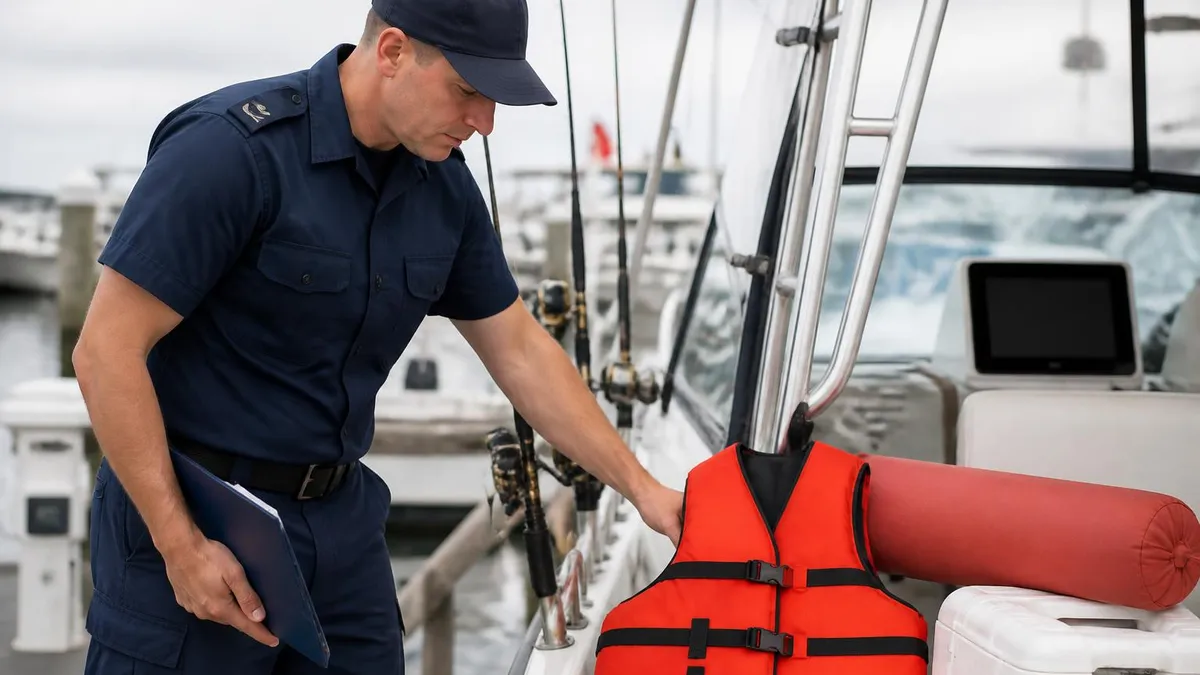
Boater Education Certificate: How to Get Your Boating Safety Card
Florida Boating License Requirements: How to Get Your FL Boating Safety Card
Do You Need a License to Drive a Boat? State-by-State Guide 2026
NYS Boating License 2026 — New York Requirements, Age & How to Get One
About the Author

Master Mariner & Maritime Certification Specialist
Massachusetts Maritime AcademyCaptain David Harrington is a US Coast Guard licensed Master Mariner with a Bachelor of Science in Marine Transportation from Massachusetts Maritime Academy. He has 22 years of deep-sea and coastal navigation experience aboard commercial vessels and specializes in preparing maritime candidates for USCG licensing exams, STCW certification, dynamic positioning (DPO), and officer-of-the-watch qualifications.
Join the Discussion
Connect with other students preparing for this exam. Share tips, ask questions, and get advice from people who have been there.
View discussion (6 replies)