
Connecticut Boating License 2026 September — Requirements, Age & How to Get Certified
💯 Connecticut boating license requirements, age rules, costs, and study tips. Plus how CT compares to florida boating license and other states.
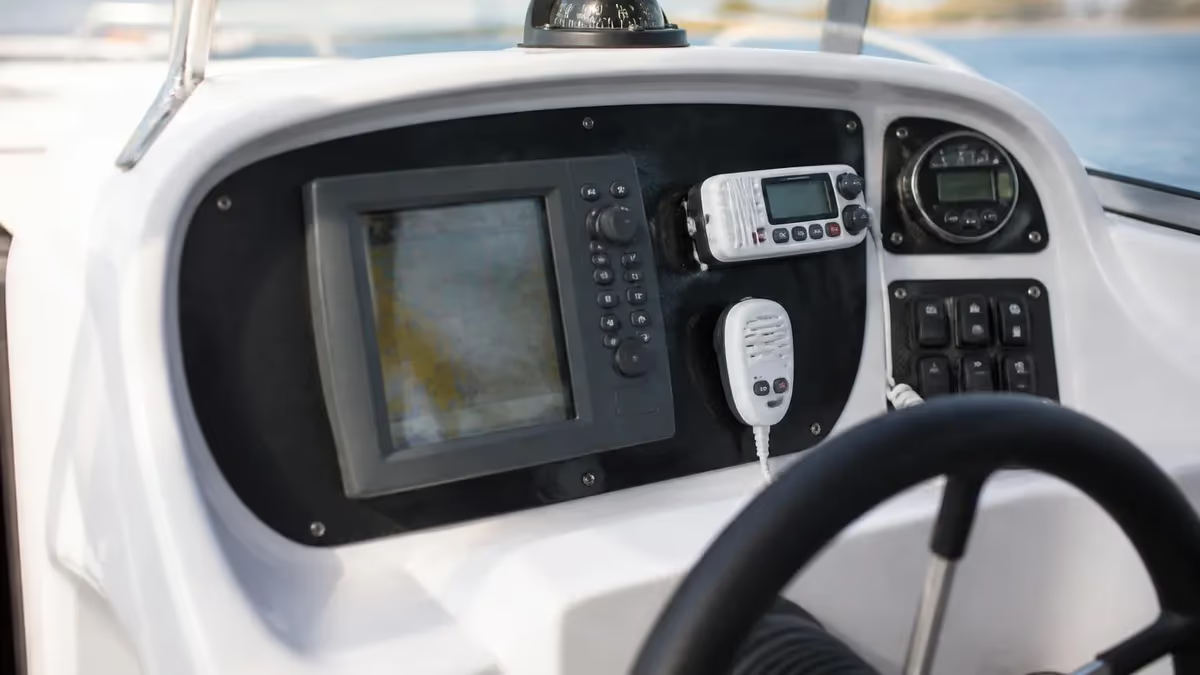
The Connecticut boating license — officially called a Boater Education Certificate — is required for anyone born on or after January 1, 1978, who operates a motorized vessel on Connecticut's waterways. Whether you're cruising Long Island Sound, navigating the Connecticut River, or exploring one of the state's dozens of inland lakes, the law is clear: you must carry proof of boater education any time you're at the helm. Just like the florida boating license rules that apply to millions of Sunshine State boaters, Connecticut enforces its requirement year-round, and fines for non-compliance can reach $100 or more per offense.
Completing the certificate is not as daunting as many first-time boaters fear. The state-approved boater education course covers navigation rules, right-of-way, buoy systems, emergency procedures, and state-specific regulations. You can take the course entirely online at your own pace, in a classroom setting, or through an on-the-water combination option. Most people finish the online version in eight to twelve hours spread over a few days, and the final exam is 60 questions with a passing score of 70 percent. Once you pass, the certificate is valid for life — no renewals required.
Connecticut's approach mirrors national trends toward mandatory boater education. States from do you have to have license to drive a boat searches that flood Google every spring reveal that millions of Americans are unsure about their specific state's rules. Connecticut is among the stricter states in that it has no age minimum for the education requirement — any person in the age-affected birth cohort must be certified regardless of whether they are 18 or 80. Younger operators under age 16 face additional restrictions: they may not operate a vessel of 10 horsepower or more without a certified adult aboard.
The good news is that the certificate is widely accepted across state lines. Connecticut recognizes NASBLA-approved certificates from all 50 states, and most other states reciprocate. That means if you already hold a boating safety card from Florida, California, or another state, you are generally legal to operate in Connecticut waters without retaking the course. This national portability makes investing in boater education even more valuable — complete it once and it follows you wherever the water takes you.
Cost is rarely a barrier. State-approved online courses typically run between $25 and $45. Classroom courses offered by the U.S. Coast Guard Auxiliary and U.S. Power Squadrons are frequently free or available for a small materials fee. After passing the final exam, you print a temporary certificate immediately, and Connecticut's Department of Energy and Environmental Protection (DEEP) mails the permanent wallet-sized card within four to six weeks. There is no separate state licensing fee layered on top of the course cost, which keeps the total out-of-pocket expense among the lowest of any regulated boating activity.
It is important to understand what the certificate covers and what it does not. The Boater Education Certificate is a safety credential, not a vessel registration document. You still need to register your boat separately with Connecticut DEEP, pay the applicable registration fees, and display current registration decals. The certificate verifies that you understand safe operation; registration verifies that your vessel is legally identified on state waters. Both documents should be aboard whenever you're underway, and a marine patrol officer can ask to see either or both during a routine safety check.
This article walks you through every step of obtaining your Connecticut Boater Education Certificate: eligibility rules, approved course options, exam format, costs, and the practical tips that help first-time test-takers pass on the first attempt. We also compare Connecticut's framework to requirements in other states — including the high-search-volume florida boating license system, California, Alabama, Tennessee, and Missouri — so you can understand where Connecticut sits in the national landscape and plan accordingly if you boat in multiple states.
Connecticut Boating License by the Numbers
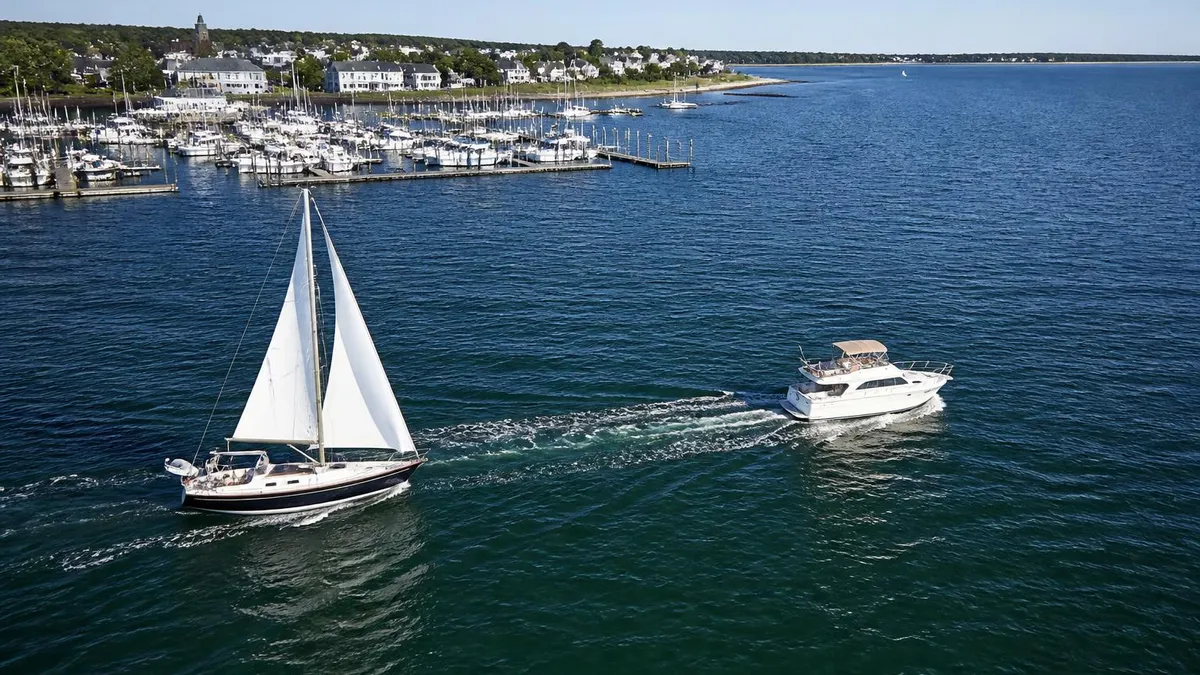
Connecticut Boating License Requirements at a Glance
Any person born on or after January 1, 1978 who operates a motorized vessel on Connecticut waters must hold a valid Boater Education Certificate. This applies to residents and non-residents alike whenever they are operating within state jurisdiction.
Operators under 16 years old may not operate a vessel with 10 horsepower or more unless a certified adult aged 18 or older is on board and able to take immediate control. There is no minimum age to operate vessels under 10 HP.
You must complete a NASBLA-approved boater safety course — either online, in a classroom, or a hybrid on-the-water option. The course must include all required content modules and a proctored or online final examination with a passing score of 70 percent or higher.
All motorized vessels and sailboats over 19.5 feet must be registered separately with Connecticut DEEP. The registration number and current decals must be visibly displayed. Registration is renewed every three years and is separate from boater education.
Operators must carry their Boater Education Certificate or temporary certificate at all times while underway. Vessel registration documents must also be aboard. Failing to present either document during a marine patrol inspection can result in citations and fines.
Getting your Connecticut Boater Education Certificate follows a straightforward four-step process, but understanding each phase helps you avoid the pitfalls that cause delays. The first step is choosing an approved course provider. Connecticut DEEP maintains a current list of NASBLA-approved providers on its official website. The most popular online options include BoatU.S. Foundation's free course, Boat-Ed.com's Connecticut-specific paid course, and NASBLA's own portal. Each covers identical required content — the difference lies in interface design, pacing tools, and the quality of practice questions embedded throughout the modules.
The curriculum itself is divided into several major topic areas: vessel types and equipment requirements, navigation rules and buoy systems, legal requirements specific to Connecticut, safe boat operation, weather and environmental awareness, emergency preparedness, and alcohol and boating laws. Connecticut takes the alcohol provisions seriously — operating under the influence of alcohol or drugs carries the same legal weight as OUI in a motor vehicle, including license suspension, fines up to $1,000, and potential imprisonment. The course devotes significant time to this topic, and exam questions about BAC limits and legal consequences appear frequently.
After completing all course modules, you must pass the final exam. Online courses administer the exam digitally; some providers require you to complete it in a single timed session while others allow you to save progress. The exam draws from the full curriculum, so time spent reviewing each module — not just skimming — is the best predictor of a first-attempt pass.
Most providers allow two or three retakes if you do not pass initially, sometimes with a waiting period between attempts. If you need to retake, focus your review on the topic areas flagged as missed in your score report.
Once you pass, you receive a temporary certificate immediately — either printed directly or emailed as a PDF. This temporary document is fully legal and accepted by Connecticut marine patrol officers during the weeks it takes for your permanent card to arrive. Keep it in a waterproof sleeve or protective bag aboard your vessel. The permanent wallet card arrives by mail within four to six weeks and is laminated for durability. Connecticut does not issue replacement cards through a simple online request; lost cards typically require contacting your original course provider to reissue documentation.
Classroom courses offered by the U.S. Coast Guard Auxiliary (USCGA) and U.S. Power Squadrons (USPS) are an excellent alternative to online study, particularly for people who learn better through structured instruction and hands-on demonstrations. These free or low-cost courses typically meet for two or three consecutive evenings or a full weekend. Instructors are experienced volunteers who supplement the standard curriculum with real-world scenarios from Connecticut waters — including advice about navigating Long Island Sound tides, reading local NOAA charts, and handling emergencies in areas with strong currents.
For boaters who want the most comprehensive preparation, the on-the-water courses combine classroom instruction with actual time on a boat under instructor supervision. These hybrid courses are offered by some USCGA flotillas and cost more than classroom-only options, but they provide a level of practical skill-building that neither online nor classroom-only formats can match. Students practice docking, anchoring, man-overboard recovery, and distress signaling under real conditions. If you are a first-time boater with no prior experience, this format is worth the additional investment in both safety and confidence.
Boaters who already hold a certificate from another state — including a california boating license or a certificate earned through another NASBLA-approved program — do not need to retake the Connecticut course. They simply need to carry their out-of-state certificate while operating on Connecticut waters. If you are unsure whether your existing certificate qualifies, contact Connecticut DEEP directly or check the NASBLA national database, which lists all recognized reciprocal programs by state and provider name.
Do You Need a License to Operate a Boat? State Comparisons
The florida boating license — technically a Boating Safety Education ID card — is required for anyone born on or after January 1, 1988, who operates a vessel with 10 horsepower or more. Florida has one of the largest recreational boating populations in the country, with over 900,000 registered vessels. The Florida Fish and Wildlife Conservation Commission (FWC) oversees the program, and approved courses are available online for approximately $29–$45. The state also requires all personal watercraft (PWC/jet ski) operators, regardless of birth year, to complete the course before renting or operating a PWC.
Florida's enforcement is aggressive due to the state's high boating accident rate — it has historically ranked first in the nation for boating fatalities and accidents. Marine law enforcement conducts random safety inspections, and failure to carry your Boating Safety Education ID results in a non-criminal citation. Florida also has specific idle-speed, slow-speed, and no-wake zones to protect manatees, and the boater education course dedicates substantial content to these wildlife protection rules. Boaters from Connecticut visiting Florida waters must carry their Connecticut certificate, which Florida recognizes under NASBLA reciprocity agreements.
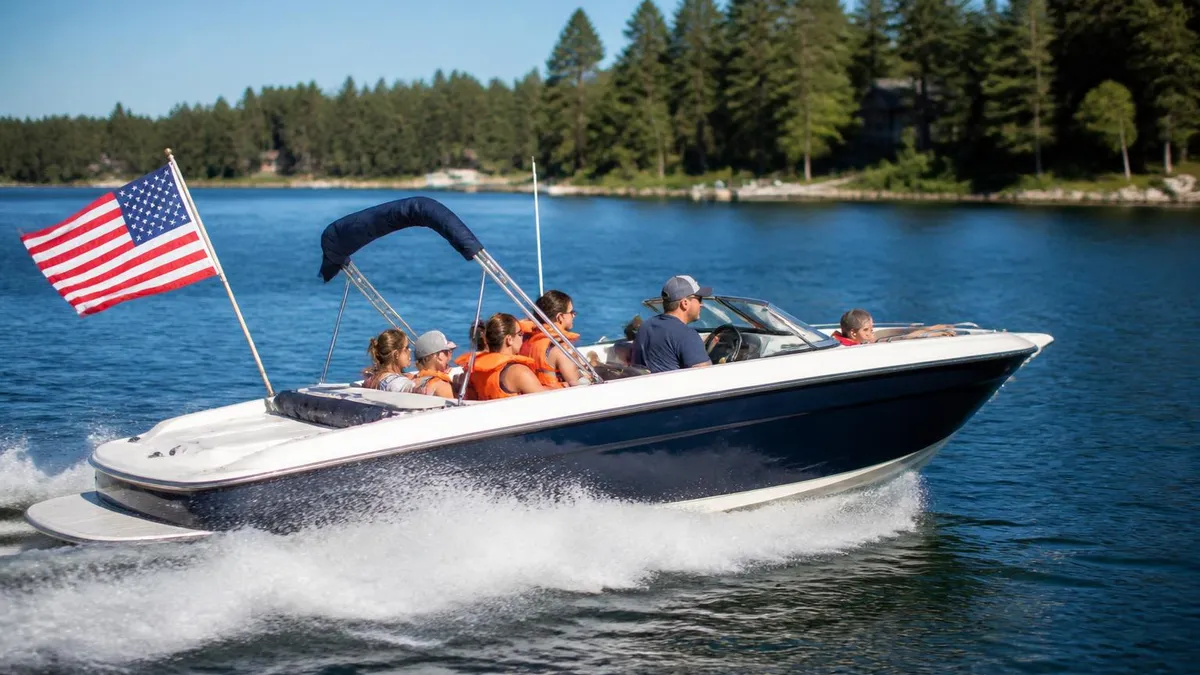
Online vs. Classroom Boater Education: Which Is Right for You?
- +Online courses let you study at your own pace and on your own schedule
- +Typically cost less than $45 and can be completed without leaving home
- +Immediate certificate upon passing — no waiting for a class date
- +Most platforms include unlimited module reviews before the final exam
- +Works well for visual learners who prefer reading and interactive graphics
- +Available 24/7 so you can study during evenings or weekends
- −No instructor to answer questions or clarify confusing regulations in real time
- −Lacks hands-on practical skill components like docking or anchoring
- −Self-discipline required — easy to rush through modules without absorbing material
- −Screen fatigue can reduce retention during long study sessions
- −On-water emergencies are harder to visualize without live demonstration
- −Some providers have cluttered interfaces or outdated practice questions
Connecticut Boating License Study Checklist
- ✓Confirm you meet the birth year requirement (born on or after January 1, 1978)
- ✓Choose a NASBLA-approved course provider from the Connecticut DEEP approved list
- ✓Complete all curriculum modules — do not skip or skim any topic area
- ✓Take the embedded module quizzes seriously, as they mirror final exam question styles
- ✓Review Connecticut-specific laws: OUI rules, idle-speed zones, and age restrictions
- ✓Study buoy color meanings, shapes, and the lateral system used on U.S. waterways
- ✓Learn all required safety equipment for your vessel's length and type of use
- ✓Practice reading nautical charts and understanding chart symbols before the exam
- ✓Take at least two full-length practice exams under timed conditions before testing
- ✓Print or save your temporary certificate immediately after passing the final exam
The 70% Rule: What It Means for Your Prep Strategy
Connecticut's boating exam requires a 70% passing score on 60 questions — meaning you can miss up to 18 questions and still pass. However, don't let that cushion encourage under-preparation: emergency procedures, alcohol laws, and navigation right-of-way rules are tested heavily, and these are the exact topics that most first-time test-takers underestimate. Focus 40% of your study time on those three areas alone and you'll dramatically improve your first-attempt pass rate.
Understanding the cost structure of Connecticut boater education helps you budget accurately and avoid surprise expenses. The primary cost is the course itself: online courses from providers like Boat-Ed.com or BoatU.S. Foundation range from free to $45 depending on the provider and whether you select any add-on materials like printed study guides or practice exam bundles.
Classroom courses through the U.S. Coast Guard Auxiliary and U.S. Power Squadrons are typically offered at no charge to participants, funded by volunteer organizations and sometimes supplemented by small donations. On-the-water combination courses cost more — typically $75 to $150 — but they include practical instruction that no screen-based course can replicate.
Beyond course costs, you should factor in vessel registration fees. In Connecticut, motorized vessel registration is tiered by vessel length. Boats under 16 feet pay approximately $19 for a three-year registration; boats 16 to under 26 feet pay around $30; and vessels 26 feet and over pay $44 for the same three-year period.
These fees are payable to Connecticut DEEP and must be renewed every three years. Registration stickers must be affixed within six inches of the registration number on each side of the bow. Failure to display current registration is a separate violation from failure to carry a boater education certificate.
Reciprocity is one of the most valuable features of the NASBLA boater education system, and Connecticut's participation benefits both residents and visitors. If you earned your certificate in any NASBLA-member state — which includes all 50 states and several U.S. territories — Connecticut will recognize it. Conversely, your Connecticut Boater Education Certificate is recognized when you boat in other member states. This is particularly important for boaters who own seasonal properties in multiple states, travel with their vessel by trailer, or participate in multi-state regattas and races. Always carry your certificate, because marine patrol in any state can request it.
One important cost consideration is the replacement certificate process. Unlike a driver's license that can be reprinted at a DMV, boater education certificates are issued by private course providers and voluntary organizations, not by a government agency that maintains a centralized registry.
If you lose your certificate, you need to contact the organization where you originally completed your course and request a replacement. Some providers charge a small fee (typically $5 to $20) for reprints; others maintain records indefinitely and can reissue at no cost. Keeping a scanned digital copy in your phone's photo library is a practical safeguard against loss.
There are no annual renewal fees for the Connecticut Boater Education Certificate — it is a lifetime credential. However, boating laws change periodically, and operating under outdated assumptions can create both safety and legal problems. Connecticut DEEP occasionally updates its regulations around speed zones, wildlife protection areas, and equipment requirements.
The most common updates involve no-wake zones near new construction or sensitive habitat areas, and changes to required safety equipment lists as new products gain USCG approval. Staying current doesn't require retaking the course; DEEP publishes annual regulation updates on its website, and the USCGA offers free seminars on regulatory changes.
For young boaters and families, Connecticut offers a Youth Boating Safety program through schools and youth organizations. These programs introduce children as young as 10 to basic water safety concepts, proper life jacket use, and distress signaling. While participation doesn't replace the formal boater education course, it builds a safety-conscious mindset early and makes the full course material easier to absorb when the time comes. Parents who complete the course alongside their children report higher retention and better on-water safety practices for the entire family unit, not just the certified operator.
Insurance is another financial dimension worth noting. Most homeowners' and renters' insurance policies provide minimal coverage for small watercraft. Separate boat insurance — covering liability, hull damage, medical payments, and uninsured boater coverage — typically costs $150 to $500 annually depending on vessel value and coverage limits.
Some insurers offer premium discounts of 5 to 15 percent for completing an approved boater safety course, effectively offsetting part of the course cost while also providing financial protection. If you are asking do you need a license to operate a boat in Connecticut, the answer for your birth cohort is yes — and your insurer will likely ask for proof of certification before binding coverage.
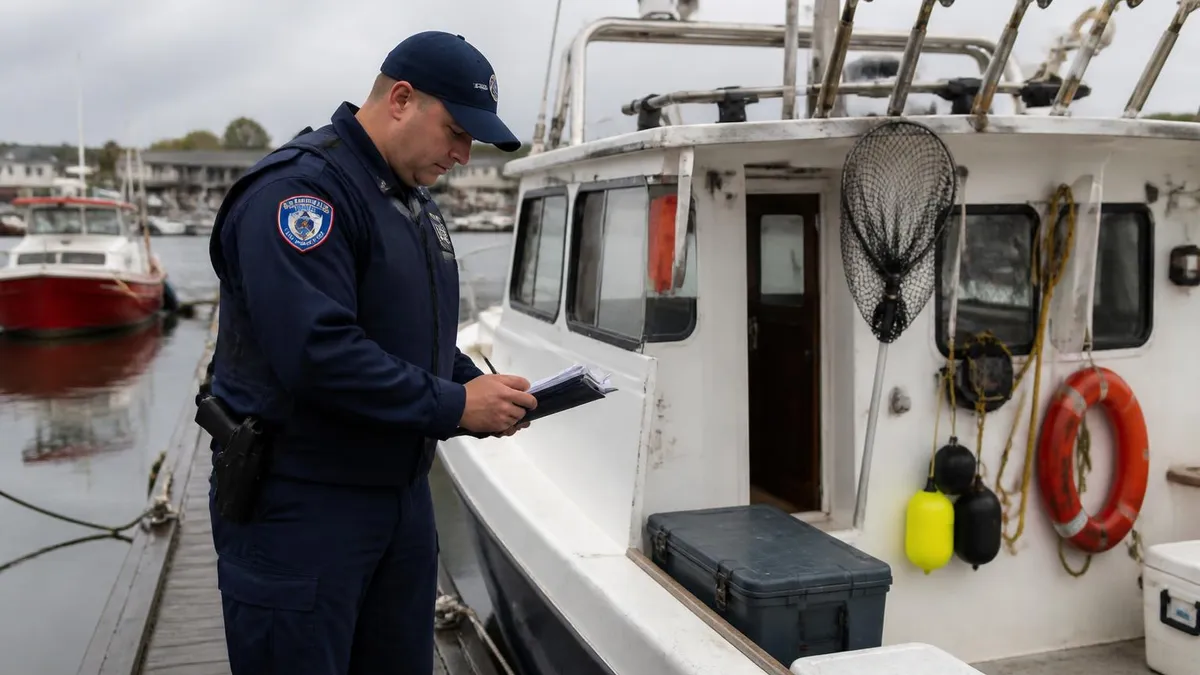
Connecticut marine patrol officers conduct random safety inspections and can request your Boater Education Certificate at any time while you are underway. Operating without your certificate — even if you completed the course — can result in a fine of up to $100 and a verbal or written warning entered into the DEEP enforcement database. A second violation within the same season may result in a higher fine. Always keep a waterproof copy of your certificate aboard, and consider storing a digital copy on your phone as a backup.
Avoiding common mistakes is just as important as studying the right material, and experienced boating instructors consistently point to the same error patterns in first-time test-takers. The most frequent mistake is treating the online course modules as a reading exercise to be completed as quickly as possible rather than as a structured learning sequence.
Students who race through the material, clicking through pages without engaging with the content, consistently perform worse on the final exam and are more likely to need multiple retakes. Slowing down and treating each module as a genuine study session — taking notes, pausing to visualize scenarios, and testing yourself with the embedded questions — correlates directly with first-attempt success.
A second common error is neglecting the navigation rules section. Many new boaters assume that navigation rules are common sense and require little study. In reality, the International and Inland Rules of the Road contain specific, sometimes counterintuitive requirements about vessel hierarchy, crossing situations, and sound signals that do not match everyday intuition. For example, a vessel engaged in fishing has right-of-way over a sailing vessel in certain situations, and a powerboat overtaking another vessel is always the give-way vessel regardless of relative size. These rules appear prominently on the exam and directly affect on-water safety.
Third, many candidates underestimate the alcohol-related content. Connecticut's OUI boating law mirrors its motor vehicle statute in severity, and the exam tests specific knowledge: the legal BAC limit is 0.08%, the same as for driving; the combination of sun, wind, and water accelerates alcohol's impairing effects compared to land-based consumption; and penalties for a first boating OUI conviction include fines up to $1,000, possible imprisonment, and suspension of boating privileges. Questions about alcohol appear in multiple sections of the exam, not just a single dedicated module, so this topic requires thorough preparation rather than a quick skim.
Equipment requirements are another trap for unprepared candidates. The Coast Guard mandates specific safety equipment based on vessel length and type of waterway — the list for a 17-foot motorboat on coastal waters differs from the list for the same boat on a sheltered lake.
Required items include Coast Guard-approved personal flotation devices (one per person, appropriately sized), fire extinguishers (for enclosed engine compartments), navigation lights (for operation after sunset or in reduced visibility), and a sound-producing device. Optional but strongly recommended equipment includes a VHF marine radio, anchor and rode, first aid kit, and visual distress signals. The exam tests both required and recommended equipment in multiple question formats.
Weather awareness is consistently underemphasized by self-study candidates but heavily tested on the exam. Connecticut's coastal location means boaters encounter rapidly changing weather, sea fog, and thunderstorms that can build with very little warning, especially during summer afternoons.
The exam tests knowledge of cloud types and what they indicate, how to read NOAA marine forecasts, when to seek shelter, and how to handle a vessel in rough water. Real-world boating on Long Island Sound demands this knowledge — the distance from shoreline shelter can increase rapidly as wind and wave conditions deteriorate, and knowing how to interpret a VHF weather broadcast could literally save your life.
Understanding what to do when something goes wrong is the practical foundation of the entire curriculum, and emergency procedures deserve extended study time. The exam covers fire aboard a vessel, flooding and sinking response, man-overboard recovery, distress signal procedures, and collision avoidance.
Each scenario has specific recommended actions that differ from instinctive responses — for example, the correct response to a fuel fire is to steer so the flames blow away from the rest of the vessel before attempting suppression, not to immediately grab the extinguisher. These counterintuitive correct answers appear specifically because they separate candidates who have genuinely internalized the material from those who are guessing based on general logic.
Finally, understanding how Connecticut's rules interact with federal regulations helps you answer the exam's trickier questions. Federal law governs navigation lights, sound signals, distress signals, and right-of-way rules on waters subject to federal jurisdiction — which includes Long Island Sound and the Connecticut River. State law governs registration, operator age restrictions, no-wake zones, and OUI provisions.
When a question asks about a specific scenario on a Connecticut waterway, the answer may draw from either body of law, and knowing the source helps you reason through ambiguous questions. For boaters who also visit other states, reviewing the do you have to have license to drive a boat rules for each destination state before departure is always a best practice.
Practical preparation strategies make the difference between a stressful exam experience and a confident first-attempt pass. Start your study at least two weeks before you plan to take the final exam — not because the material is overwhelming, but because spaced repetition dramatically improves long-term retention.
Completing one or two modules per day over ten days, then spending the final three days on review and practice exams, outperforms a weekend marathon study session even if the total hours are identical. Your brain consolidates new information during sleep, so giving yourself nights between study sessions is itself part of the preparation strategy.
Use the practice questions embedded in your course provider's platform aggressively. Don't just note whether you got a question right or wrong — read every explanation for every question, including the ones you answered correctly. Understanding why the correct answer is correct, and why the distractors are wrong, builds the deeper comprehension that helps you handle novel question phrasings on the actual exam. First-time test-takers who read all explanations (not just the ones for missed questions) consistently score higher than those who only review their errors.
Supplement your provider's practice questions with third-party practice exams. PracticeTestGeeks.com's boating license practice tests are particularly valuable because they present questions in varied formats and cover scenario-based situations that differ from the exact phrasing in your course materials. Exposure to different question styles prevents the false confidence that comes from memorizing specific question-answer pairs rather than genuinely understanding the underlying concepts. Aim to complete at least three to five full-length practice exams before sitting for the real test, tracking your score progression over time.
On exam day — or when you sit down to take the online final — create conditions that support focus. Close all browser tabs except the exam, put your phone on silent, and inform household members that you need uninterrupted time.
Even though most online courses allow you to pause and return, taking the exam in a single focused session mirrors the mental concentration you would need in a real test center and produces better performance. Have a glass of water nearby, take a few slow breaths before starting, and commit to reading each question fully before looking at the answer choices.
Flag questions you are uncertain about and return to them after completing the questions you know well. Most platforms allow this. The act of answering the questions you know confidently first serves two purposes: it banks guaranteed points and it sometimes triggers recall that helps you answer the uncertain questions on your return pass. Never leave a question blank if you are forced to submit without reviewing — even an educated guess carries better odds than a blank answer on a four-choice question.
After passing, spend your first few on-water experiences reinforcing the theoretical knowledge with real-world practice. Take a knowledgeable boater along for your first solo outings. Practice docking, anchoring, and man-overboard drills in calm conditions before you encounter them under pressure. Keep your course materials accessible (most providers give you six to twelve months of post-course access) so you can look up specific regulations when questions arise. The boater education certificate is the beginning of your safety education, not the end of it — experienced boaters continue learning throughout their time on the water.
Join a local boating club, USCGA flotilla, or USPS squadron after earning your certificate. These organizations offer continuing education seminars, on-water skills workshops, and community networks that make you a more capable and safer operator over time. Connecticut has an active community of recreational boaters across Long Island Sound, the Connecticut River, and its inland lakes, and connecting with that community accelerates the transition from certified beginner to confident, skilled mariner. The investment in your boating education pays dividends in safety, enjoyment, and the peace of mind that comes from knowing you are genuinely prepared for whatever the water brings.
Boating License Questions and Answers
Tennessee Boating License 2026 — Requirements, Age & How to Get One
PA Boating License: Requirements, Cost & How to Get Certified 2026
MN Boat License: Who Needs One & How to Get Certified
Do You Need a License to Drive a Boat? State-by-State Guide 2026
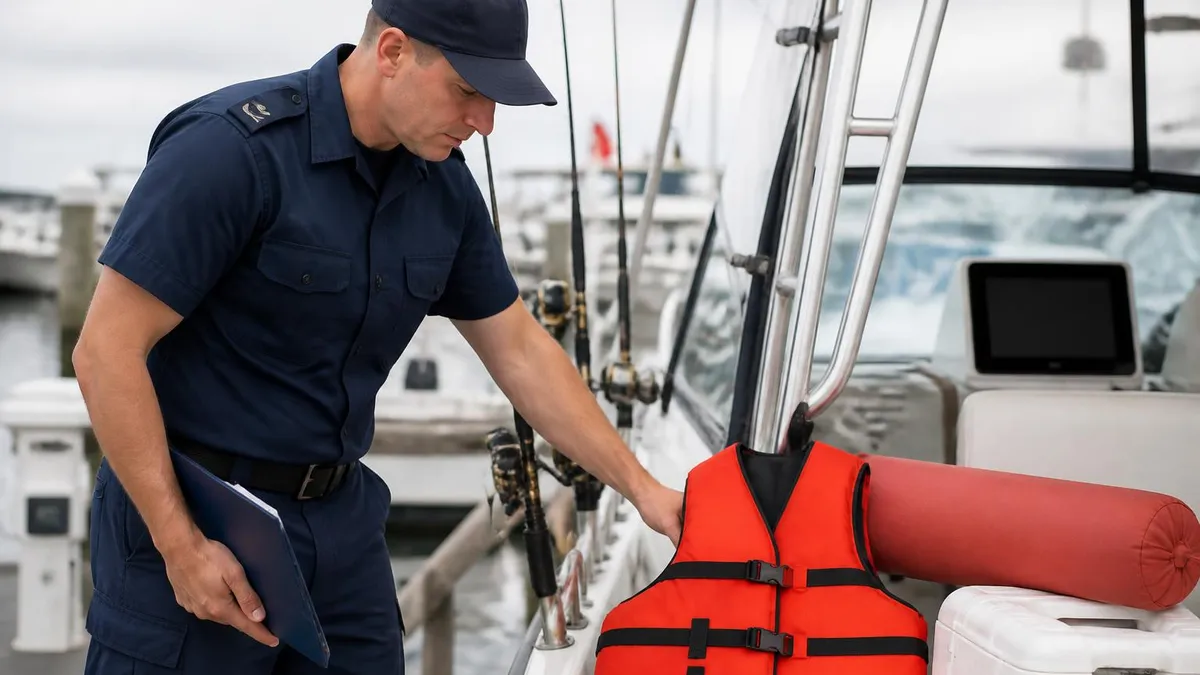
Boater Education Certificate: How to Get Your Boating Safety Card
About the Author

Master Mariner & Maritime Certification Specialist
Massachusetts Maritime AcademyCaptain David Harrington is a US Coast Guard licensed Master Mariner with a Bachelor of Science in Marine Transportation from Massachusetts Maritime Academy. He has 22 years of deep-sea and coastal navigation experience aboard commercial vessels and specializes in preparing maritime candidates for USCG licensing exams, STCW certification, dynamic positioning (DPO), and officer-of-the-watch qualifications.
Join the Discussion
Connect with other students preparing for this exam. Share tips, ask questions, and get advice from people who have been there.
View discussion (6 replies)