
Ohio BMV Fees for License Renewal: Complete Cost Guide and DMV Written Test Prep
Ohio BMV fees for license renewal explained: costs, requirements, and DMV written test prep tips. Everything you need in one guide. ✅

Understanding Ohio BMV fees for license renewal is essential for every driver in the state, whether you are renewing for the first time or have done it before. The costs associated with renewing your Ohio driver's license are set by the Ohio Bureau of Motor Vehicles and can vary depending on your license class, age, and renewal method. Knowing exactly what you will pay ahead of time prevents surprises at the counter and helps you budget appropriately for this routine but important requirement.
Many Ohio drivers are also surprised to discover that renewing your license may sometimes require passing a DMV written test, particularly if your license has been expired for an extended period or if you are upgrading to a different license class. The DMV written test covers essential topics including traffic laws, road signs and markings, and safe driving practices. Preparing thoroughly for this exam is just as important as understanding the fee structure, because failing it can delay your renewal and potentially cost you additional fees.
Ohio's standard non-commercial driver's license renewal fee is $26.00 for a four-year license. However, many Ohio drivers opt for the eight-year renewal, which costs $52.00. Senior drivers aged 65 and older pay a reduced fee of $11.00 for a four-year renewal. These base fees do not include any additional service charges that may apply when renewing online or through a third-party agent. Understanding the full cost picture means accounting for all applicable surcharges before you visit the BMV or log into the online portal.
Beyond the standard license renewal, Ohio drivers who need to reinstate a suspended license will encounter a separate reinstatement fee that typically ranges from $40 to $475 depending on the reason for suspension. Commercial driver's license holders face different fee schedules entirely, with CDL renewals costing more due to the additional endorsements and testing requirements involved. If you hold a motorcycle endorsement, there may be additional fees tied to that endorsement renewal as well, so always confirm the full scope of costs before your appointment.
One of the best ways to avoid any complications at the BMV is to prepare for the knowledge test well in advance. The driver license test covers Ohio-specific traffic laws, speed limits, right-of-way rules, and road signs and markings that you are expected to recognize instantly. Many drivers underestimate the difficulty of the DMV knowledge test, especially after years of not formally studying road rules. Using a driving knowledge test practice platform can significantly boost your confidence and accuracy on exam day.
Online resources have made it easier than ever to study for the DMV test online without leaving home. You can take a driving test online through practice platforms that simulate the actual BMV exam format, giving you timed questions drawn from the same topic areas covered on the real test. This kind of preparation not only helps you pass the knowledge component but also reinforces safe driving practices that make you a better and more responsible driver on Ohio roads every day.
This guide covers everything you need to know about Ohio BMV license renewal costs, what factors affect your fees, what to expect from the DMV written test if required, and how to prepare effectively. Whether you are a new driver, a seasoned motorist due for renewal, or someone working to reinstate driving privileges, the information here will help you navigate the process with clarity and confidence. For a deeper look at knowledge test preparation, our internal resource on ohio bmv license renewal fees provides comprehensive coverage of the exam material.
Ohio BMV License Renewal by the Numbers

Ohio BMV License Renewal Fee Breakdown
Several factors determine the exact amount you will pay when renewing your Ohio driver's license, and understanding each one helps you avoid confusion at the BMV counter or online checkout. The most significant variable is the license duration you select. Ohio offers both four-year and eight-year renewal terms for standard non-commercial licenses. While the four-year option costs $26, the eight-year option doubles the base fee to $52 but saves you time and effort over the long run by cutting the number of renewals in half over a sixteen-year period.
Age is another important factor. Ohio provides a meaningful discount for drivers aged 65 and older, reducing the four-year renewal fee to just $11. This senior discount applies automatically when you present valid identification showing your date of birth. Younger drivers between the ages of 18 and 64 pay the full standard rate. Drivers under 18 who hold a temporary instruction permit or probationary license face different fee schedules tied to their specific license class and any associated testing requirements for graduation to a full license.
The renewal method you choose also affects your total cost. Renewing in person at your local Ohio BMV office typically involves no additional service fees beyond the base license cost. Renewing online through the Ohio BMV website may add a small convenience fee, generally between five and ten dollars, depending on the payment processor used. Third-party agents and AAA locations may charge their own service fees on top of the state fee, so it is wise to confirm the total before proceeding through any non-BMV channel.
If your license has already expired, you may face complications beyond just the renewal fee. Ohio allows a grace period after expiration, but if your license has been expired for more than six months, you may be required to retake the DMV written test before your renewal is approved. This is an important distinction many drivers overlook. Failing to account for this possibility can turn a simple renewal visit into a multi-step process involving study time, scheduling, and potentially additional fees if you do not pass on the first attempt.
License class upgrades also affect the fees you pay. If you are moving from a standard non-commercial license to a commercial driver's license, the renewal fee structure changes significantly. CDL renewals in Ohio involve higher base fees plus testing fees for any endorsements you hold or are adding. Endorsements such as hazardous materials, passenger transport, or tank vehicle certification each carry their own testing and issuance fees. Always verify the full fee schedule for your specific license class with the Ohio BMV before your appointment.
For drivers with a motorcycle endorsement, the endorsement itself adds a small fee to the renewal cost. Ohio requires that motorcycle endorsements be renewed alongside the underlying driver's license, and the combined fee will be higher than a standard renewal. If you have not ridden your motorcycle in years and are unsure whether the endorsement is worth maintaining, it may be worth discussing with a BMV representative before your renewal date. Keeping unnecessary endorsements active costs money without benefit.
Finally, any outstanding fines or administrative holds on your record can prevent your renewal from processing until they are resolved. Ohio's BMV system checks for unpaid traffic fines, court judgments, and insurance lapses before approving a renewal. If any of these flags appear, you will need to clear them before the renewal can be completed, which may involve additional costs entirely separate from the standard renewal fee. Running a quick record check before your renewal appointment is a smart way to anticipate and resolve any such issues in advance.
DMV Knowledge Test Topics You Must Know
Ohio traffic laws form the backbone of the DMV written test, covering right-of-way rules, speed limits in school zones and residential areas, proper lane usage, and requirements for stopping at railroad crossings. You will need to know the legal blood alcohol content limits, cell phone use restrictions, and seatbelt laws for all passengers. These rules are tested directly with scenario-based questions that require you to identify the legally correct action in realistic driving situations.
Many drivers who fail the DMV knowledge test do so because they assumed their years of driving experience would carry them through without studying. In reality, the written exam specifically targets rules that experienced drivers often bend out of habit, such as rolling stops, following distance requirements, and the exact right-of-way protocol at four-way stops. Reviewing Ohio's official driver's manual and taking practice tests on platforms that mirror the real exam format is the most reliable way to close these knowledge gaps before your test day.

Online Renewal vs. In-Person Renewal: Pros and Cons
- +Renew from home without taking time off work or traveling to a BMV office
- +Online portal is available 24 hours a day, seven days a week, with no appointment required
- +Faster processing in many cases, with digital confirmation sent immediately by email
- +Eliminates waiting room time that can sometimes stretch to an hour or more at busy locations
- +Useful for drivers with transportation challenges or disabilities affecting mobility
- +Allows easy review of your current record and fee total before submitting payment
- −Online service fees of five to ten dollars increase your total renewal cost above the base rate
- −Not all drivers qualify for online renewal — expired licenses over a certain threshold require in-person visit
- −Photo updates and address corrections may require an in-person visit regardless of online eligibility
- −Technical issues or website downtime can delay processing and create deadline stress
- −Required DMV written test cannot be completed online — must be taken at a physical BMV location
- −In-person visits allow you to ask staff questions and resolve record issues in real time
Ohio BMV License Renewal Preparation Checklist
- ✓Confirm your current license expiration date and calculate how much time remains before it expires.
- ✓Check your Ohio BMV record online for any outstanding fines, holds, or insurance lapses that could block renewal.
- ✓Gather required documents: current license, proof of Social Security number, and proof of Ohio residency.
- ✓Determine whether you qualify for online renewal or need to schedule an in-person BMV appointment.
- ✓Calculate your total fee including base renewal cost, any endorsement fees, and applicable service charges.
- ✓Study Ohio traffic laws, road signs and markings, and safe driving practices using the official driver's manual.
- ✓Take at least three full-length DMV written test practice exams to benchmark your readiness before the real test.
- ✓Review areas where your practice test scores are weakest and focus additional study time on those topics.
- ✓Schedule your BMV appointment early enough to allow time for a retest if needed before your license expires.
- ✓Bring payment in an accepted form — Ohio BMV accepts cash, check, and most major debit and credit cards.
Expired More Than 6 Months? You May Need to Retest
Ohio drivers whose licenses have been expired for more than six months are typically required to retake the DMV written test as part of the renewal process. This requirement catches many drivers off guard, especially those who have simply been too busy to renew on time. Building in extra study time using Ohio-specific DMV practice tests before your appointment ensures you will not be turned away on the day you expected to complete your renewal.
Passing the DMV written test in Ohio requires a score of at least 75 percent, which means you can miss no more than ten questions on a standard forty-question exam. While 75 percent sounds achievable, the test is specifically designed to catch guesswork and superficial knowledge. Questions are written to distinguish between drivers who genuinely understand the rules and those who are simply familiar with them in a general way. This makes thorough, structured preparation far more valuable than casual review of the driver's manual the night before.
The driving knowledge test in Ohio draws from a large question pool, meaning no two exams are identical. You may encounter questions about specific speed limits in school zones, the exact protocol for responding to an emergency vehicle's lights and sirens, or the legal requirements for using your headlights in rain. Because the question pool is broad, using practice platforms that cover a wide variety of question types is more effective than simply memorizing a small set of sample questions. Aim to feel comfortable with every major topic area rather than just the most common ones.
One of the most effective strategies for passing the DMV written test on the first attempt is to treat each practice test as a diagnostic tool rather than just a score. When you get a question wrong on a practice exam, do not simply move on. Instead, read the explanation for the correct answer, find the relevant section of the Ohio driver's manual, and read it carefully. This active review process encodes the correct information far more durably than passive reading, and it directly targets your personal knowledge gaps rather than topics you already know well.
Time management during the actual test is also worth considering. Ohio does not impose a strict per-question time limit, but the overall exam has a time boundary. Most prepared drivers complete the test comfortably within the allotted time, but nervous or underprepared test-takers sometimes rush and make careless errors on questions they actually know. Taking timed practice exams in advance helps calibrate your natural pace so you feel relaxed and steady when the real exam clock is running.
Road signs and markings questions are particularly important to master because they are visual and require instant recognition rather than logical reasoning. On a practice test platform, you can drill sign recognition repeatedly until identification becomes automatic. This kind of repetitive visual practice is difficult to replicate through manual reading and is one of the strongest arguments for using an interactive digital practice tool rather than relying solely on the printed driver's handbook for your preparation.
For drivers who have not taken a formal driving test in many years, one surprising challenge is the shift from intuitive driving habits back to explicit rule recall. You may know how to drive safely every day but struggle to articulate the exact rule or number that underlies your behavior. For example, you know not to follow too closely, but do you know the specific following distance Ohio recommends at 55 miles per hour? Refreshing this explicit knowledge through focused study is what separates first-time passers from those who require a second attempt.
After passing the written test, Ohio drivers complete the renewal process by submitting the required documentation and paying the applicable Ohio BMV fees for license renewal. The BMV staff will verify your identity, update your photo if required, and issue either a temporary paper license or confirm that your new license will arrive by mail within seven to ten business days. Keeping your temporary license accessible until the permanent one arrives ensures you remain legally covered while the new card is in transit.

Ohio strongly recommends beginning the renewal process at least 90 days before your current license expires. Waiting until the last minute leaves no buffer if you need to retake the written test, resolve a record hold, or deal with a BMV appointment backlog. Driving with an expired license — even by one day — is a traffic violation in Ohio and can result in a fine, further complicating your renewal situation and adding unnecessary cost.
Building a structured study plan for the Ohio DMV written test does not need to be complicated, but it does need to be intentional. The most successful test-takers set aside dedicated study sessions of thirty to forty-five minutes spread across at least a week rather than cramming everything into one long night. This spaced repetition approach is well-supported by cognitive science research and leads to much better retention of the specific facts and numbers that appear on the knowledge test. Start your preparation at least ten to fourteen days before your scheduled BMV appointment to give yourself a realistic buffer.
Begin your study plan by reading through the Ohio Driver's Manual from start to finish, paying particular attention to chapters covering traffic laws, speed regulations, and road signs and markings. The manual is available as a free PDF on the Ohio BMV website and can be read on any device. As you read, highlight or take brief notes on specific facts — exact speed limits, distance measurements, and sign descriptions — that are difficult to remember without active reinforcement. These notes become your personal quick-reference guide for final review closer to your test date.
After completing your initial manual read, shift to active practice by taking full-length online dmv permit test simulations. Choose a platform that mirrors the Ohio BMV's question format and draws from the same topic categories as the real exam. Take your first practice test without reviewing any answers immediately after — treat it exactly like the real thing. Then review every incorrect answer in detail, tracing each back to the relevant manual section. This diagnostic approach gives you a clear picture of where your knowledge is strongest and where it needs the most attention before test day.
As your test date approaches, increase your practice frequency and focus specifically on your weakest areas. If road signs and markings are giving you trouble, spend an extra session doing nothing but sign identification drills. If Ohio's DUI laws and impaired driving penalties are unclear, work through several dedicated practice sets on that topic until you can answer those questions confidently and quickly. Targeted remediation of weak spots is far more efficient than general reviewing of material you already know well.
On the day before your exam, do a final light review rather than a heavy cramming session. Go through your personal quick-reference notes, take one more timed practice test, and then stop studying. Getting adequate sleep is genuinely important for test performance — fatigue impairs recall and increases the likelihood of careless errors on straightforward questions. Arrive at the BMV with your documents organized, your payment ready, and confidence built on the solid preparation you have completed throughout the week.
Many drivers find that safe driving practices questions are the most nuanced on the Ohio DMV written test because they require applying judgment rather than simply recalling a rule. Practice tests that include situational questions — where you must choose the safest action given a specific road scenario — are the best preparation for these items. Think through each scenario logically, considering what the Ohio driver's manual would say is the legally and physically safest choice, rather than relying on instinct shaped by years of informal driving habits that may not perfectly align with official rules.
Once you have passed your written test and completed your renewal, the knowledge you have refreshed will continue to benefit you on the road. Understanding current traffic laws, recognizing road signs and markings instantly, and applying safe driving practices consistently makes you a more competent and confident driver. The time you invest in preparation for the DMV written test pays dividends well beyond the exam room, contributing to safer driving outcomes for you, your passengers, and everyone else sharing Ohio's roads with you every day.
Practical preparation for the Ohio DMV written test is about more than reading a manual — it is about training your brain to retrieve the right information quickly under mild exam pressure. One of the most underrated preparation techniques is explaining rules out loud to yourself or to someone else. When you verbalize why a rule exists — for example, why Ohio requires a three-second following distance at highway speeds — you reinforce the underlying logic rather than just the surface fact, making it far easier to recall during the exam and apply correctly in real driving situations.
Another high-value technique is using the practice test platform's missed-question review feature aggressively. Every time you answer a question incorrectly, the correct answer and its explanation represent exactly the kind of knowledge the real test will probe. Building a personal list of every question you missed across multiple practice sessions creates a concentrated study guide tailored precisely to your individual gaps. Reviewing this list two days before your exam is a highly targeted and time-efficient final preparation step that no generic study guide can replicate.
Pay special attention to Ohio-specific rules that differ from what you might expect based on general driving knowledge or rules you have encountered in other states. For example, Ohio has specific laws about the use of turn signals in roundabouts, unique rules about yielding to streetcars in certain cities, and particular requirements around the use of hazard lights while driving that differ from other states.
These Ohio-specific details are exactly what the BMV knowledge test is designed to assess, and they are also the details most likely to catch out-of-state transplants who are renewing an Ohio license for the first time.
For parents accompanying teen drivers through the graduated license process, understanding the fee structure and test requirements serves double duty. You not only manage the financial planning for your teen's initial licensing costs but also model the kind of serious, prepared approach to the DMV process that instills good habits from the very beginning of a young driver's career. Encouraging your teen to take the driving knowledge test seriously — using practice platforms, reviewing the manual, and not rushing to the exam — sets a positive tone for responsible driving throughout their life.
If you are a driver who failed the Ohio DMV written test previously, do not be discouraged. Failure often reflects preparation gaps rather than inability, and a focused study plan addressing the specific topics you missed can turn a failure into a first-attempt pass on your next visit. Ohio allows you to retake the written test after a waiting period, so use that time wisely by working through structured practice and targeting every weak area systematically. Most drivers who fail once and study deliberately before their retake pass comfortably on the second attempt.
The driving test online practice ecosystem has made high-quality DMV preparation more accessible than ever. Free and low-cost platforms offer hundreds of Ohio BMV practice questions organized by topic, timed under real exam conditions, with detailed answer explanations. There is no excuse for arriving at the BMV unprepared when these resources are available at any time on any device. Committing even thirty minutes per day for one week to structured practice is enough for most drivers to achieve scores well above the 75 percent passing threshold on the actual Ohio DMV knowledge test.
Ultimately, the combination of knowing your Ohio BMV fees for license renewal, preparing all required documentation in advance, and investing genuine effort in DMV written test preparation ensures that your renewal experience is smooth, efficient, and stress-free. The BMV renewal process is one of those routine civic responsibilities that rewards preparation and punishes procrastination. By treating it with the seriousness it deserves — studying the rules, understanding the costs, and showing up ready — you turn a potentially stressful errand into a quick and straightforward transaction that keeps you legally and safely on Ohio's roads for years to come.
BMV Questions and Answers
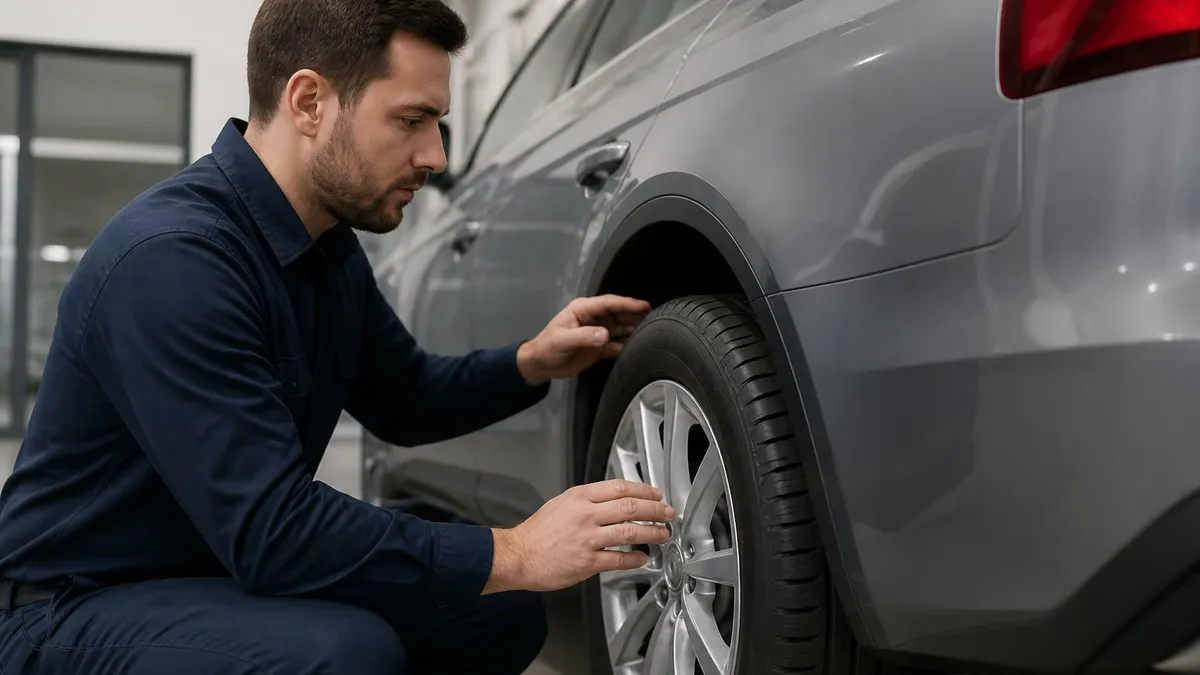
DMV Driver's License Written Test Questions: Complete Study Guide and Practice Strategy for 2026

BMV Hours of Operation: Everything You Need to Know Before Your DMV Written Test

Indiana BMV License Renewal Cost: Fees, Requirements, and How to Prepare for the DMV Written Test

BMV Driving Test Schedule: Everything You Need to Know About the DMV Written Test

Ohio BMV License Renewal: Online, In-Person, and Cost Guide
About the Author
Licensed Driving Instructor & DMV Test Specialist
Penn State UniversityRobert J. Williams graduated from Penn State University with a degree in Transportation Management and has spent 20 years as a certified driving instructor and DMV examiner consultant. He has personally coached thousands of applicants through written knowledge tests, skills assessments, and commercial driver licensing programs across more than 30 states.
Join the Discussion
Connect with other students preparing for this exam. Share tips, ask questions, and get advice from people who have been there.
View discussion (9 replies)