
BMV Driving Test Schedule: Everything You Need to Know About the DMV Written Test
Plan your BMV driving test schedule with confidence. 🎯 Master the DMV written test, knowledge test tips, traffic laws, and road signs to pass first try.

Understanding the bmv driving test schedule is the first and most important step toward getting your driver's license. Whether you're a first-time applicant or returning after a lapse, knowing exactly when and how to book your DMV written test removes unnecessary stress and helps you show up on test day fully prepared. Indiana's Bureau of Motor Vehicles operates dozens of branch locations statewide, each with its own scheduling calendar, so getting familiar with the booking process early gives you a real competitive advantage over other applicants who walk in unprepared.
The DMV knowledge test covers a wide range of driving topics, from basic vehicle operation to nuanced traffic laws that govern everything from school zone speeds to right-of-way rules at uncontrolled intersections. Many first-time test-takers underestimate the breadth of material and arrive underprepared, which is why the BMV reports that a significant percentage of applicants fail on their first attempt. Scheduling your test strategically — giving yourself enough lead time to study — is just as important as the preparation itself.
One of the most common questions applicants ask is whether they can take a DMV test online or if the knowledge portion must always be completed in person at a branch. The answer depends on your state and age category. Indiana currently requires in-person testing for most applicants obtaining an initial learner's permit, though online resources like driving test online practice tools are widely available and highly effective for building the knowledge base you need before your scheduled appointment.
Knowing what documents to bring to your appointment is equally critical. A missed appointment or an incomplete document packet can set your licensing timeline back by weeks, especially during peak periods like summer when teen applicants flood BMV offices. Planning your bmv driving test schedule also means understanding how far in advance appointments open, what cancellation policies apply, and whether walk-in slots are available at your nearest branch location.
The knowledge test itself is computer-based at most Indiana BMV locations, presented as a multiple-choice exam covering road signs and markings, speed limits, parking rules, right-of-way laws, and safe driving practices. You'll need to answer a minimum number of questions correctly to pass — the passing threshold is 80 percent in Indiana, meaning you can miss no more than eight questions on a standard 40-question test for a learner's permit. Knowing the format ahead of time eliminates surprises and lets you allocate your study time appropriately.
This guide walks you through every aspect of the BMV driving test process: how to schedule your appointment, what to study, how the scoring works, common pitfalls to avoid, and how to use online practice resources to dramatically improve your odds of passing on the first try. Whether you're in Indianapolis, Carmel, Fort Wayne, or any other Indiana city, the fundamentals of scheduling and preparing for your driving knowledge test are consistent, and this article will give you everything you need to succeed.
BMV Driving Test by the Numbers

BMV Knowledge Test Format & Structure
A 40-question multiple-choice exam covering road signs, traffic laws, and safe driving practices. You must score at least 80% (32 correct answers) to pass. The test is computer-based at all Indiana BMV branches and typically takes 20 to 30 minutes.
Roughly 25% of test questions focus specifically on road signs and markings. You'll need to identify signs by shape, color, and symbol — including regulatory, warning, and informational signs. Flashcard practice is especially effective for this category.
Questions covering speed limits, right-of-way, lane changes, passing rules, and school zone requirements. Indiana's driver's manual is the official source for all test content, and memorizing key numeric limits (speed, BAC thresholds) is essential.
Includes questions on defensive driving, night driving, adverse weather conditions, sharing the road with motorcycles and bicycles, and railroad crossing procedures. This section often trips up applicants who focus only on signs and basic rules.
Before the written test, the BMV conducts a vision screening. You must meet minimum acuity standards without corrective lenses (or with them, resulting in a restriction on your license). Failing the vision test means you cannot proceed to the written exam that day.
Scheduling your BMV driving test appointment in Indiana is a straightforward process, but it requires some advance planning. The official Indiana BMV website (in.gov/bmv) offers an online appointment scheduling system that allows applicants to browse available slots by branch location, date, and service type. Most branches open appointment slots two to four weeks in advance, and popular locations — especially those in suburban Indianapolis, Carmel, and Fort Wayne — tend to fill up quickly on weekday mornings. Checking the system regularly or setting reminders increases your chances of securing a preferred time slot.
To schedule online, you'll need to create or log into a myBMV account. This free account centralizes all your BMV transactions and stores your appointment history. During the scheduling process, you'll select the type of service (initial learner's permit, knowledge test retake, or driver's license test), choose your preferred branch, and pick an available date and time. The system will send you a confirmation email with your appointment details and a list of required documents to bring. If you need to reschedule, you can do so online up to 24 hours before your appointment without penalty.
Walk-in appointments are available at some Indiana BMV branches, but they are not guaranteed. High-traffic locations in urban areas often post signs indicating no walk-ins are accepted for knowledge tests on busy days. If you plan to walk in, arriving before the branch opens significantly improves your odds of being seen without an appointment. Rural and smaller-town branches tend to have more walk-in availability, but calling ahead to confirm is always worth the two-minute phone call before making the trip.
Understanding what the bmv driving test schedule looks like in terms of seasonal demand is valuable. The period between May and August is the busiest for Indiana BMV offices, driven primarily by high school students who complete driver's education in the spring and rush to test before summer activities begin. If you can schedule your test between September and February, you'll typically find shorter wait times for appointments and a less crowded testing environment. For residents near Indianapolis, checking the bmv driving test schedule at your specific branch can help you identify low-demand windows.
The BMV requires all applicants to present specific documents before taking any test. For a learner's permit, you'll need proof of legal presence (such as a birth certificate or passport), proof of Indiana residency (two documents showing your current address), and your Social Security number. If you're under 18, a parent or guardian must be present at the appointment to sign the application. Arriving with incomplete documentation means your test will be rescheduled, so double-checking your document packet the night before is a step you should never skip.
For applicants retaking the knowledge test after a failed attempt, Indiana BMV policy requires a 24-hour waiting period between attempts. After three failed attempts within a 12-month period, applicants must wait 12 months before testing again, though exceptions may apply. This policy underscores the importance of genuine preparation before your first attempt rather than banking on retakes. Most applicants who fail do so not from lack of intelligence but from insufficient exposure to the actual question formats and content areas covered in the official Indiana driver's manual.
Same-day appointment cancellations are handled through the myBMV portal or by calling the BMV customer service line. Failing to cancel or show up without notice may result in a no-show mark on your account, which can limit your ability to book certain appointment types online in the future. Always communicate cancellations in advance, and if an emergency prevents you from attending, contact the BMV as soon as possible to explain the situation and reschedule without penalty.
What to Study: Traffic Laws, Road Signs, and Safe Driving
Indiana's traffic laws form the backbone of the BMV knowledge test. Key topics include speed limits in various zones (25 mph in residential areas, 15 mph in school zones when children are present), right-of-way rules at four-way stops and uncontrolled intersections, lane discipline requirements, and passing restrictions on two-lane highways. Numeric values — like following distance requirements and minimum speeds on highways — appear frequently on the test and are best memorized through repeated exposure to practice questions.
The Indiana driver's manual dedicates entire chapters to laws governing emergency vehicles, funeral processions, and railroad crossings. These special-situation rules account for a surprising number of test questions that catch unprepared applicants off guard. For example, you must pull over and stop for any emergency vehicle with active lights and sirens, even if it is approaching from the opposite direction on a divided highway — a nuance many applicants miss. Reviewing these edge-case laws in the final days before your test can easily be the difference between passing and failing.
Online BMV Practice Tests vs. Reading the Manual Alone
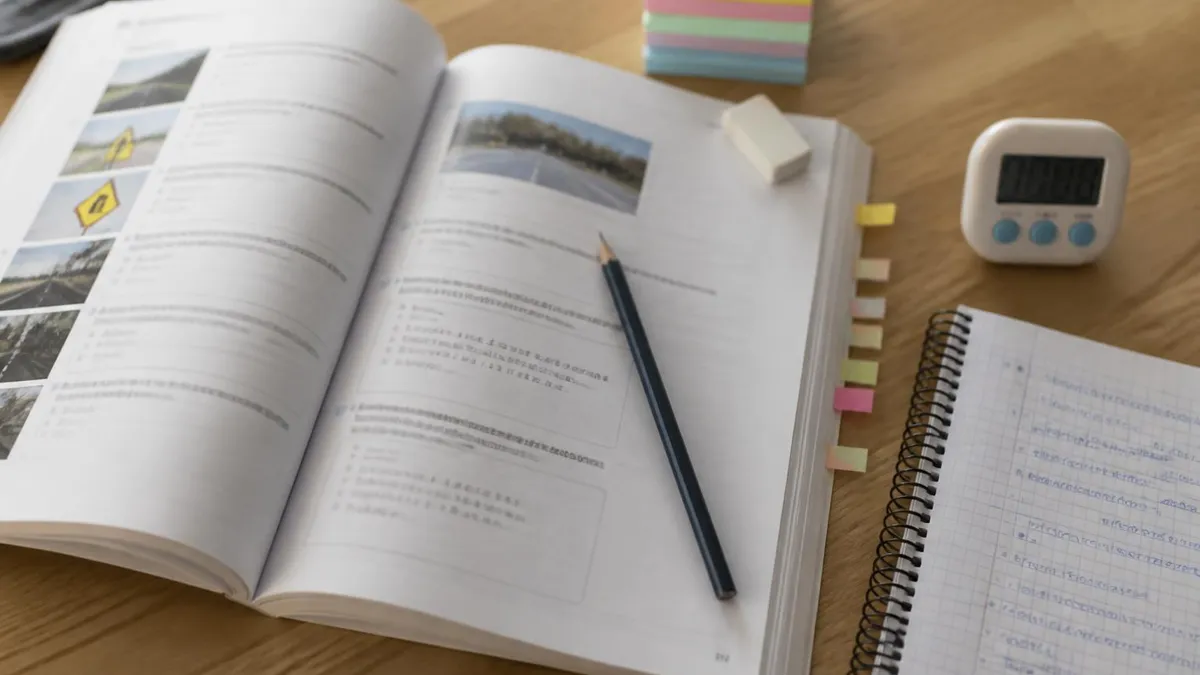
- +Simulates real test format so question types feel familiar on test day
- +Immediate feedback shows which topics need more study attention
- +Available 24/7 from any device, including smartphones and tablets
- +Tracks progress over multiple sessions to show improvement trends
- +Randomized question order prevents rote memorization of sequences
- +Covers all BMV topic categories including alcohol, signs, and traffic laws
- −Practice questions may not match exact wording used on the official test
- −Some free sites include outdated questions that reflect old law versions
- −Screen time fatigue can reduce retention if sessions are too long
- −Cannot replace hands-on experience understanding how laws feel in real traffic
- −May create false confidence if pass rates on practice tests seem too easy
- −Requires internet access, which may be limited for some applicants
BMV Test Day Checklist: What to Bring and Do
- ✓Bring your original birth certificate or valid U.S. passport as proof of identity and legal presence.
- ✓Pack two documents showing your current Indiana address (utility bills, bank statements, or lease agreements work).
- ✓Have your Social Security number ready — you may need the physical card or an official document showing the number.
- ✓Arrive at least 15 minutes before your scheduled appointment to complete check-in paperwork.
- ✓Bring your parent or guardian if you are under 18 — they must sign your application in person.
- ✓Confirm your appointment in the myBMV portal the night before and save the confirmation email.
- ✓Complete at least three full practice tests the evening before, focusing on your weakest topic areas.
- ✓Get a full night's sleep — cognitive performance on tests drops measurably after fewer than seven hours.
- ✓Eat a light meal before your appointment to maintain focus and avoid energy crashes during the test.
- ✓Leave your phone on silent during the exam — test administrators may ask you to leave if it rings or alerts.
80% Is the Magic Number — And It's Achievable With the Right Prep
Indiana's BMV requires an 80% passing score on the learner's permit knowledge test, meaning you can miss no more than eight of 40 questions. Applicants who complete five or more full practice tests before their appointment pass at a significantly higher rate than those who rely on the driver's manual alone. The combination of reading the manual AND taking timed practice tests is the single most effective preparation strategy documented by driving instructors across the state.
Improving your pass rate on the BMV knowledge test starts with understanding where most applicants lose points. Data from Indiana driving instructors and test prep providers consistently points to three main failure areas: alcohol and drug impairment laws, complex right-of-way scenarios, and less-common road signs like those used in construction zones or for hazardous materials vehicles. Targeting these specific weak points — rather than reviewing material you already know — is the most efficient use of your limited study time in the days before your test.
The online dmv permit test practice tools available at PracticeTestGeeks.com are specifically designed to mirror Indiana BMV question formats, difficulty levels, and content distribution. Unlike generic driving study apps that recycle questions from multiple states, state-specific practice tests ensure every question you answer is directly relevant to the exam you're about to take. Spending 30 to 45 minutes daily on targeted practice questions for five to seven days before your appointment produces dramatically better results than cramming the night before.
Understanding how the test is scored in real time can also reduce anxiety on test day. The computer-based BMV knowledge test in Indiana does not show you which questions you got wrong until after you've completed the entire exam. This means there's no benefit to second-guessing answers once you've moved forward — commit to each answer based on your best knowledge and keep moving. If you genuinely don't know an answer, use process of elimination to narrow your choices to two options, then select the one that aligns most closely with defensive driving principles.
Time management during the knowledge test is rarely an issue for well-prepared applicants — most people finish a 40-question test in under 20 minutes when they've studied adequately. However, if you find yourself stuck on a question, mark it and move on. The computer testing system at Indiana BMV branches allows you to flag questions for review and return to them before final submission. Use this feature strategically to maintain your pace and revisit any questions where you felt uncertain during the first pass through the exam.
One of the most underrated preparation strategies is reading the full Indiana driver's manual at least once in sequence before jumping into practice tests. The manual provides the legal context and reasoning behind traffic rules, which helps you answer nuanced questions that can't be answered by pure memorization. For example, knowing that headlights are required when wipers are in continuous use — not just when visibility drops below 500 feet — requires understanding the reasoning behind the law, not just a list of facts. This conceptual understanding helps you handle novel scenarios on the actual test.
Applicants who take a state-certified driver's education course before testing have consistently higher first-time pass rates. Indiana offers both classroom-based and online driver's education options for applicants under 18. These courses cover all BMV knowledge test content and include supervised practice driving hours, but the classroom knowledge component alone provides a significant advantage on the written exam. If you have time before your scheduled test date, enrolling in a driver's education course — even the online version — is well worth the investment of time and money.
For adult applicants (18 and older) who did not complete a formal driver's education course, the Indiana driver's manual and online practice tests are your primary study resources. Focus especially on the chapters covering alcohol and drug laws, since Indiana has specific provisions around implied consent, administrative license suspensions, and the consequences of refusing chemical testing that differ from common assumptions. These topics represent some of the most frequently missed questions on the BMV knowledge test, and mastering them can meaningfully boost your final score.

Questions about Indiana's implied consent law, legal BAC limits, and penalties for driving under the influence account for a significant portion of BMV knowledge test questions — and they are among the most frequently missed by first-time test takers. Indiana's legal BAC limit is 0.08% for adults, 0.02% for drivers under 21, and 0.04% for commercial vehicle operators. Failing to know these thresholds and the consequences of refusal can cost you several points on an otherwise strong test performance.
After passing the BMV knowledge test, you'll receive your learner's permit on the same day at most Indiana BMV branches. The permit authorizes you to practice driving on public roads under specific conditions: a licensed driver 25 years of age or older must be in the front passenger seat at all times, you may not drive between midnight and 5 a.m., and you may not use a mobile phone (even hands-free) while operating a vehicle. Understanding these restrictions is critical because violating them can result in fines and a delay in your progression toward a full driver's license.
The learner's permit is valid for 180 days in Indiana. During this period, you must log at least 50 hours of supervised driving practice, including at least 10 hours at night, before you can apply for the full operator's license. These hours must be documented on the Supervised Driving Log provided by the BMV, and the supervising adult must sign off on each session. Falsifying this log is illegal and can result in permit revocation, so maintain accurate records throughout your practice period.
Once you've held your learner's permit for at least 180 days and logged the required practice hours, you can schedule your behind-the-wheel driver's license test. This test evaluates your practical driving skills — lane changes, turning, parking, highway merging, and general vehicle control — and is conducted by a BMV examiner in your own vehicle or a rental vehicle. The scheduling process for the driving test mirrors the knowledge test process: book through the myBMV portal, select a branch, and choose an available time slot.
Indiana operates a Graduated Driver Licensing (GDL) system for applicants under 18. After passing the driving skills test, young drivers receive a Probationary License with restrictions on nighttime driving (prohibited between 11 p.m. and 5 a.m.) and passenger limits (no more than one unrelated passenger under 25 unless a parent or guardian is present). These restrictions remain in effect until the driver turns 18, at which point a full operator's license is issued. Understanding the GDL timeline helps young drivers and their families plan appropriately for each stage.
For applicants who are 18 or older obtaining their first Indiana license, the GDL restrictions do not apply. You'll receive a full operator's license upon passing both the knowledge and driving skills tests, provided you meet all other requirements (vision, documentation, fees). The standard operator's license is valid for six years in Indiana and must be renewed before expiration. Renewal can be completed online, by mail, or in person at any BMV branch, and does not typically require a retest unless your license has been expired for more than 180 days.
Indiana BMV also offers an Enhanced Driver's License (EDL) that serves as an acceptable Western Hemisphere Travel Initiative (WHTI) document, allowing holders to travel to Canada, Mexico, and some Caribbean nations without a passport. The EDL requires proof of U.S. citizenship and Indiana residency and costs slightly more than a standard license. If you travel internationally by land or sea, the EDL can save you the cost and complexity of obtaining or renewing a U.S. passport. Ask about this option when you visit the BMV after passing your tests.
Keeping track of your licensing milestones and important dates is easiest through the myBMV portal, which stores your permit issue date, driving log submission, and test appointment history. Many Indiana drivers also appreciate that the portal allows them to view their driving record, check the status of any violations or suspensions, and update their address online without visiting a branch. Taking a few minutes to set up your myBMV account before your first BMV visit streamlines every subsequent interaction and ensures you never miss an important deadline in your licensing journey.
Building an effective study plan for your BMV driving test starts with an honest assessment of how much time you have before your scheduled appointment. Applicants with two or more weeks to prepare should work through the full Indiana driver's manual, chapter by chapter, in the first week, then shift to intensive practice testing in the second week. Those with less than a week should prioritize high-frequency test topics — road signs, alcohol laws, right-of-way rules — and take as many full-length practice tests as possible while reviewing missed answers carefully after each session.
The quality of your review after each practice test matters more than the quantity of tests you take. When you miss a question, don't just note the correct answer — read the relevant section of the Indiana driver's manual to understand the rule in full context. This deeper engagement with the material creates stronger memory traces than simply seeing the right answer and moving on. Applicants who follow this read-practice-review cycle consistently outperform those who only take practice tests without reviewing their errors in the source material.
Setting up a study environment that minimizes distractions significantly improves retention during your preparation period. Turn off notifications, study in a quiet space, and use timed practice sessions (25 minutes of focused study followed by a 5-minute break) to maintain concentration. The driving test online resources available through this site are optimized for exactly this kind of structured session practice, with progress tracking that shows you which categories need the most attention based on your actual performance data.
On the day before your test, shift from intensive studying to light review. Take one or two practice tests to confirm your readiness, but avoid cramming new material. Your brain consolidates information during sleep, so going to bed at a normal hour the night before your test is actually one of the most effective things you can do for your performance. Applicants who stay up late reviewing material often perform worse than those who rest adequately, because fatigue impairs recall and increases error rates under pressure.
On test day, arrive at the BMV branch with your complete document packet, a calm mindset, and the knowledge that you have prepared thoroughly. Read each question carefully — some questions are intentionally worded to test whether you understand the nuance of a rule or the specific exception to a general principle. Take a breath before answering questions where you feel uncertain, and trust the preparation you've done. The vast majority of applicants who prepare diligently using both the official manual and quality practice tests pass on their first attempt.
After completing your test, the computer system at Indiana BMV branches displays your results immediately. If you pass, a BMV employee will process your learner's permit application and you'll leave with a temporary permit that day. If you need to retest, use the results screen (which shows your score by category) to identify exactly which areas to focus on before rescheduling. Most applicants who fail by a small margin can address their weak areas and pass their retest within a week of targeted review.
Long-term safe driving is the ultimate goal behind the entire BMV licensing process, and the knowledge you build preparing for the knowledge test stays relevant throughout your driving career. Understanding traffic laws, recognizing hazards early, respecting road signs, and practicing defensive driving aren't just test requirements — they're habits that protect you, your passengers, and everyone else sharing the road. Approach your BMV test preparation not as a hurdle to clear but as an investment in the knowledge that will make you a safer, more confident driver for life.
BMV Questions and Answers
BMV Carmel Indiana: Complete Guide to Passing Your DMV Written Test in 2026
Indianapolis BMV: Locations, Services, and What to Expect
DMV Driver's License Written Test Questions: Complete Study Guide and Practice Strategy for 2026

BMV Hours of Operation: Everything You Need to Know Before Your DMV Written Test

Ohio BMV License Renewal: Online, In-Person, and Cost Guide
About the Author
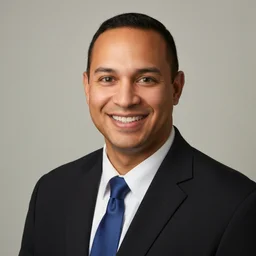
Licensed Driving Instructor & DMV Test Specialist
Penn State UniversityRobert J. Williams graduated from Penn State University with a degree in Transportation Management and has spent 20 years as a certified driving instructor and DMV examiner consultant. He has personally coached thousands of applicants through written knowledge tests, skills assessments, and commercial driver licensing programs across more than 30 states.
Join the Discussion
Connect with other students preparing for this exam. Share tips, ask questions, and get advice from people who have been there.
View discussion (9 replies)