
DMV Driver's License Written Test Questions: Complete Study Guide and Practice Strategy for 2026 October
✅ Master dmv driver's license written test questions with our complete 2026 October study guide covering topics, format, scoring, and proven prep strategies.
Preparing for dmv driver's license written test questions is the single most important step between you and a permit or driver's license, and the good news is that almost every first-time test taker can pass on attempt one with the right preparation. The written exam is designed to measure whether you understand traffic laws, road signs, right-of-way rules, and safe driving practices well enough to operate a motor vehicle responsibly on public roads. It is not a memory contest, it is a comprehension test, and that distinction changes how you should study.
Across the United States, the format is broadly similar even though every state runs its own Department of Motor Vehicles or Bureau of Motor Vehicles. You can expect between 20 and 50 multiple-choice questions, a passing score around 80 percent, and a time limit of roughly 30 to 60 minutes. Some states allow you to take the test in a language other than English, and many now offer at-home online testing for the knowledge portion. For a complete topic overview, our BMV Practice Test hub walks through everything new applicants need.
The questions themselves are pulled directly from your state's official driver handbook. That handbook is the gold standard, the verbatim source, and the only document the examiners care about when they write items. If a question asks how far you must park from a fire hydrant, the answer comes from the handbook, not from common sense or local custom. This is why drivers who rely solely on what they learned from a parent or sibling often fail. Habits drift, but the handbook does not.
What this guide does differently is connect the format of the test to the strategy you should use to study. We will walk through the actual subject areas, the most-missed question categories, real timing benchmarks, and a week-by-week prep plan. You will also find practice quizzes you can take right now to benchmark your current readiness before committing more study hours.
One thing to remember from the start: failing the written test is not the end of the world. Every state allows retakes, usually after a short waiting period of one to seven days. But each retake may cost a small fee, and more importantly, each failure delays your road test and your ability to drive legally. Putting in a focused 10 to 15 hours of study up front almost always saves you weeks of frustration later.
By the end of this guide, you will know exactly what topics dominate the exam, which questions trick most applicants, how to interpret unfamiliar road signs, and which study habits separate first-time passers from repeat testers. Bookmark this page, keep your state handbook open in another tab, and let's get you ready.
DMV Written Test by the Numbers
Key Facts at a Glance
| Item | Value | Details |
|---|---|---|
| Typical Test Duration | 30–60 min | Varies by state |
| Passing Score | 80% | Most states require 80%+ |
| Questions on Exam | 25–46 | Multiple choice format |

DMV Written Test Format and Structure
Most states issue between 25 and 46 multiple-choice questions per knowledge exam. California uses 36 questions, Texas uses 30, Florida uses 50 including signs, and Ohio uses 40. Always confirm the exact count with your local BMV before test day.
Expect 30 to 60 minutes to complete the exam. This works out to roughly 60 to 90 seconds per question. Time pressure is rarely the problem for prepared applicants since most candidates finish well before the limit.
A score of 80 percent correct is the standard threshold nationwide. That typically means missing no more than 4 to 8 questions depending on the total count. A few states use 70 or 85 percent, so verify your local rule.
Tests are administered on touchscreen computers at the DMV office or, in some states, via approved at-home online proctoring. Paper versions still exist in rural offices but are increasingly rare in 2026.
Fail and you can usually retest after a one to seven day waiting period. Some states charge a small retake fee. Three failed attempts may require an in-person tutoring session or extended waiting window before further tries.
The dmv driver's license written test questions you will face cover six broad categories, and understanding the weight of each one will shape how you allocate your study hours. The largest single category is traffic signs and signals, which makes up roughly 25 to 30 percent of most exams. This includes regulatory signs, warning signs, guide signs, pavement markings, and traffic signal interpretation. If you can recognize the shape, color, and meaning of every sign in your handbook, you are already ahead of half the applicants who fail.
Right-of-way rules form the second pillar and usually account for another 15 to 20 percent of questions. These are notoriously tricky because they often involve multi-vehicle scenarios at uncontrolled intersections, four-way stops, roundabouts, or merging situations. The wrong answer often feels intuitive, which is why so many drivers miss them. For broader test-day prep, our BMV Practice Test resource includes video walkthroughs of these exact scenarios.
Speed limits and following distance questions appear on every exam. You must know default speed limits in school zones, residential areas, business districts, rural roads, and highways for your state. You should also know the three-second rule for following distance, the adjustments needed in poor weather, and the maximum safe speed in adverse conditions like rain, snow, or fog.
Impaired driving and alcohol-related laws are guaranteed to appear. Expect at least three to five questions on blood alcohol concentration limits, implied consent laws, zero tolerance for drivers under 21, and the penalties for driving under the influence. These questions are often the easiest to ace if you simply memorize the numbers: .08 for adults, .02 or lower for under 21, and .04 for commercial drivers.
Parking rules, including distances from hydrants, crosswalks, intersections, and railroad tracks, generate another five to eight questions on most exams. Memorize the specific footage numbers your state uses, because they vary slightly between jurisdictions but cluster around 15 feet from a hydrant, 20 feet from a crosswalk, and 50 feet from a railroad crossing.
Finally, defensive driving and emergency procedures round out the exam. Topics include what to do if your brakes fail, how to handle a tire blowout, hydroplaning recovery, sharing the road with motorcycles and bicycles, school bus laws, and emergency vehicle protocols. These questions reward common sense paired with handbook-specific terminology, so read the handbook chapter rather than guessing.
Across all six categories, the questions test recognition and application rather than rote recall. You will rarely be asked to recite a law word for word. Instead, you will see a scenario and be asked which action is legally correct. Study with scenarios in mind, not flashcards alone.
BMV Practice Test Questions
Prepare for the BMV - Test exam with our free practice test modules. Each quiz covers key topics to help you pass on your first try.
BMV Basic BMV Practice
BMV Exam Questions covering Basic BMV Practice. Master BMV Test concepts for certification prep.
BMV Alcohol, Drugs, and Impaired Driving Laws
Free BMV Practice Test featuring Alcohol, Drugs, and Impaired Driving Laws. Improve your BMV Exam score with mock test prep.
BMV Licensing Requirements
BMV Mock Exam on BMV Licensing Requirements. BMV Study Guide questions to pass on your first try.
BMV Traffic Laws
BMV Test Prep for BMV Traffic Laws. Practice BMV Quiz questions and boost your score.
BMV Vehicle Operations
BMV Questions and Answers on BMV Vehicle Operations. Free BMV practice for exam readiness.
BMV Parking, Right-of-Way, and Intersections
BMV Mock Test covering Parking, Right-of-Way, and Intersections. Online BMV Test practice with instant feedback.
BMV Road Signs and Markings
Free BMV Quiz on Road Signs and Markings. BMV Exam prep questions with detailed explanations.
BMV Safe Driving and Hazard Awareness
BMV Practice Questions for Safe Driving and Hazard Awareness. Build confidence for your BMV certification exam.
DMV Written Test Questions: Format Breakdown
Every question on the written test is multiple choice, typically with four answer options labeled A through D. Three options are designed to be plausible distractors and one is correct based directly on the state driver handbook. There are no true-false questions and no fill-in-the-blank items on modern computerized exams, which means educated guessing always gives you a baseline 25 percent chance of being right.
The phrasing often includes qualifiers like always, never, must, may, and should. Pay close attention to these words because they completely change the correct answer. A question asking what you must do legally has a different answer than one asking what you should do for safety. Reading the question twice before scanning the options is the single best habit you can build for the exam.

Taking the DMV Written Test Online vs. In-Person
- +Online testing at home eliminates travel time and DMV waiting lines completely
- +You can schedule online proctored exams during evenings or weekends when DMV offices are closed
- +Familiar environment reduces test anxiety for many first-time applicants
- +Immediate digital results delivered seconds after submission with no waiting
- +Easier to retake quickly if you fail since rescheduling is fully online
- +Most online platforms offer a free practice run before the official attempt
- −Not every state offers at-home testing yet, so options remain limited in 2026
- −Strict webcam and ID verification requirements can be technically frustrating
- −You still must visit the DMV in person for the photo and road test
- −Some online platforms charge an additional proctoring fee on top of the test
- −No examiner present to clarify confusing question wording in real time
- −Cheating attempts are aggressively flagged and may result in a 6-month testing ban
DMV Written Test Day Checklist
- ✓Bring your state-issued identification or birth certificate as proof of identity
- ✓Bring proof of residency such as a utility bill or lease agreement dated within 60 days
- ✓Bring your Social Security card or an acceptable substitute document
- ✓If under 18, bring proof of completion of any required driver education course
- ✓Bring payment for the application fee in the accepted form (debit card, cash, or check)
- ✓Bring your signed parental consent form if you are a minor applicant
- ✓Arrive at least 30 minutes early to complete paperwork before testing begins
- ✓Eat a balanced meal 1–2 hours before the test to maintain focus and stable energy
- ✓Review high-frequency topics like sign meanings and right-of-way rules one final time
- ✓Get a full 7–8 hours of sleep the night before to maximize working memory
- ✓Leave your phone in the car or in a sealed pouch since devices are prohibited
- ✓Bring your eyeglasses or contacts if you need them for the vision screening portion
Focus on the topics that generate 80 percent of questions
Roughly 80 percent of dmv driver's license written test questions come from just four topic areas: traffic signs, right-of-way rules, speed and following distance, and impaired driving laws. If you master only those four chapters of your state handbook, you will reliably score 85 to 90 percent on the exam. Stop trying to memorize every footnote and focus your hours where the questions actually live.
Even well-prepared applicants stumble on a predictable set of questions, and knowing which ones trip people up gives you a head start. The single most-missed category involves right-of-way at uncontrolled intersections. When two vehicles arrive at an intersection without traffic signals or stop signs at the same time, the vehicle on the left must yield to the vehicle on the right. This rule sounds simple, but it is reversed from what many drivers intuitively think, and roughly 40 percent of test takers get the related questions wrong.
The second most-missed area is roundabout navigation. Roundabouts have proliferated in the United States over the past decade, and most state handbooks now dedicate a full page to them. The key rules are that you yield to traffic already in the circle, you travel counterclockwise, you do not stop inside the circle except to avoid a collision, and you signal only when exiting. Pedestrian crossings around the entry and exit points add another layer that handbook authors love to test.
School bus laws cause failures because the rules differ based on the road configuration. On a two-lane road or any undivided road, traffic in both directions must stop when a bus has its red lights flashing and stop arm extended. On a divided highway with a physical barrier or median, only traffic traveling in the same direction as the bus must stop. The exact median definition varies by state, and questions love to exploit that ambiguity.
Following distance questions confuse applicants because the three-second rule applies in ideal dry conditions only. In rain, snow, fog, or when towing a trailer, the rule extends to four, five, or six seconds depending on the handbook. Many test takers memorize three seconds and choose it for every scenario, missing the conditional questions entirely.
Blood alcohol concentration trivia generates surprising errors despite being pure memorization. The .08 limit applies to drivers 21 and older operating standard passenger vehicles. Drivers under 21 face a zero-tolerance threshold of .02 or even .00 in stricter states. Commercial driver's license holders are held to .04 while operating a commercial vehicle. Confusing these numbers is a common failure point.
Finally, parking distance questions create errors because the numbers feel arbitrary. Fifteen feet from a fire hydrant, twenty feet from a crosswalk or intersection, thirty feet from a stop sign or traffic signal, fifty feet from a railroad crossing, and never within an intersection or on a sidewalk. Print these numbers on an index card and review them twice a day for a week before your test.
If you can master just these five problem areas, your probability of passing on the first attempt jumps from the national average of 49 percent to well above 90 percent. The dmv driver's license written test questions are not designed to trick you. They are designed to confirm you read the handbook carefully.

Before you even sit down for the written exam, you must pass a vision screening, typically requiring 20/40 vision in at least one eye with or without corrective lenses. If you wear glasses or contacts, bring them. Failing the vision screen automatically disqualifies you from taking the written test that day, wasting your appointment slot and any test fee that was non-refundable.
A focused study plan beats unfocused cramming every time, and the most reliable approach to passing dmv driver's license written test questions on the first attempt is a structured two-week sprint. Week one is for handbook reading and concept building. Week two is for practice quizzes, weak-spot identification, and final review. Trying to compress this into a single weekend rarely works because the test rewards comprehension, and comprehension takes time to consolidate in long-term memory.
On day one, download the official driver handbook for your state from the DMV website. Do not use a third-party summary as your primary source because the handbook contains the verbatim language the test writers use. Skim the full document in one sitting to get a feel for chapter structure, then return to the chapters covering signs, right-of-way, and impaired driving for a deep first reading. For deeper road-test prep that complements written study, our DMV Road Test Practice Exam: Complete Guide to Passing Your Driving Test in 2026 guide covers what comes next.
On days two through four, take one full practice quiz per day without any study aids. Treat each quiz like the real exam: timed, no notes, no rechecking. After each quiz, write down every question you missed and look up the correct answer in the handbook. Do not just memorize the answer, understand why it is correct. This active retrieval and feedback loop is roughly three times more effective than passive rereading.
Days five and six are sign mastery days. Print or pull up every traffic sign chart in your handbook and quiz yourself with flashcards or a sign identification app. Cover the meaning, look at the sign, name it. Then reverse: cover the sign, read the meaning, sketch the shape. Repeat until you can identify every regulatory and warning sign without hesitation.
Day seven is a rest and review day. Skim your handbook notes and the list of questions you missed earlier in the week. Avoid taking another full quiz because diminishing returns set in fast when you study every day without breaks. Sleep well and let your brain consolidate the material.
Days eight through twelve are scenario practice and weak-spot drilling. Take two practice quizzes per day, alternating between general knowledge and topic-specific quizzes covering the areas where you struggled most. For most applicants, the weak spots are right-of-way, school bus laws, and parking distances.
Days thirteen and fourteen are final review and test-day prep. Take one full mock exam under realistic conditions on day thirteen. If you score 90 percent or higher, you are ready. On day fourteen, rest, review your test-day checklist, and avoid any new material that might create last-minute confusion. Trust your preparation and walk in confident.
On test day itself, the goal is to convert your preparation into a confident performance, and a handful of tactical habits separate first-time passers from repeat testers. Arrive at the DMV at least 30 minutes early, even if your appointment is scheduled for a specific time. Check-in lines move slower than expected, and arriving flustered eats into your mental bandwidth. Use that buffer time to silence your phone, hydrate, and breathe deeply for two minutes before the examiner calls your name.
Once you sit down at the testing terminal, read the on-screen instructions completely before clicking start. Different states have different navigation rules. Some allow you to skip questions and return later, others lock each question once you advance. Knowing the rules before the timer starts prevents costly mistakes from impulsive clicking. Take 30 seconds to familiarize yourself with the interface, the answer buttons, and the question counter.
For every question, read the entire prompt and all four answer choices before selecting anything. The DMV deliberately writes multiple choices that contain partial truths or correct ideas paired with wrong specifics. Picking the first option that looks right is the single biggest mistake test takers make. Slow down, evaluate every choice, and eliminate the obviously wrong options before deciding between the remaining two.
When you genuinely do not know an answer, use process of elimination rather than wild guessing. Cross out at least two clearly wrong options to improve your odds from 25 percent to 50 percent. If you have narrowed it to two and still cannot decide, lean toward the answer that is more conservative, more safety-focused, and more aligned with handbook language rather than common driving practice.
If you can mark questions for review and your state allows it, use that feature aggressively. Skip any question that takes longer than 90 seconds on the first pass. Return to flagged questions at the end with fresh eyes and the context of every other question you have already answered. Often, a later question will jog your memory about an earlier one.
Resist the urge to change answers without a clear reason. Research on multiple-choice testing consistently shows that your first instinct is correct roughly 75 percent of the time when you have studied the material. Only change an answer if you remember a specific handbook fact that contradicts your original choice, not because the second option suddenly feels better.
Finally, when you finish, take one minute to scan every answer before submitting. Confirm you have not accidentally left a question blank, since unanswered items count as wrong in nearly every state. Then submit, accept your result with a deep breath, and either celebrate the pass or schedule your retake immediately while the material is still fresh. Either way, you have one of the most reliable preparation paths in the country backing you up.
Sample BMV Practice Questions
Try these questions from our free BMV practice tests. The correct answer and an explanation follow each question.
Which of the following is required to obtain a compliant (federal) driver's license under REAL ID?
- A. Proof of full legal name and date of birth
- B. A high school diploma
- C. A vehicle registration
- D. A credit report
Answer: A. Proof of full legal name and date of birth
REAL ID requires documents proving full legal name and date of birth.
What documents are typically required to obtain a driver's license?
- A. Proof of identity, Social Security number, proof of residency, and passing knowledge and road tests
- B. Only a photo ID
- C. Just a Social Security card
- D. A letter from a parent or guardian only
Answer: A. Proof of identity, Social Security number, proof of residency, and passing knowledge and road tests
Most states require proof of identity (birth certificate/passport), Social Security number, proof of state residency (utility bill/bank statement), passing the written knowledge test, vision test, and road skills test.
A restriction code on a license indicating 'corrective lenses' means the driver must:
- A. Only drive during daylight
- B. Wear glasses or contacts while driving
- C. Have a passenger present
- D. Drive automatic vehicles only
Answer: B. Wear glasses or contacts while driving
The corrective lenses restriction requires glasses or contacts while driving.
How often must a driver's license be renewed?
- A. Every 4-8 years depending on the state, with possible online renewal options
- B. Every year
- C. Once and it never expires
- D. Every 20 years
Answer: A. Every 4-8 years depending on the state, with possible online renewal options
Driver's license renewal periods vary by state, typically ranging from 4 to 8 years. Many states offer online, mail, or in-person renewal options, with vision tests sometimes required at renewal.
BMV Questions and Answers
About the Author
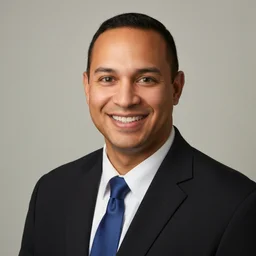
Licensed Driving Instructor & DMV Test Specialist
Penn State UniversityRobert J. Williams graduated from Penn State University with a degree in Transportation Management and has spent 20 years as a certified driving instructor and DMV examiner consultant. He has personally coached thousands of applicants through written knowledge tests, skills assessments, and commercial driver licensing programs across more than 30 states.
Join the Discussion
Connect with other students preparing for this exam. Share tips, ask questions, and get advice from people who have been there.
View discussion (9 replies)