
DMV Written Test Online: Complete Guide to Taking Your Knowledge Exam From Home in 2026
DMV written test online in 2026: ✅ which 12 states offer at-home testing, what's covered, passing scores, free practice tests, retake rules, ID needed.

Taking the dmv written test online is no longer a futuristic dream — as of January 2026, roughly 12 states across the country let you sit your knowledge exam from the kitchen table instead of standing in a fluorescent-lit DMV lobby. Practice with the free BMV practice test on PracticeTestGeeks (7 questions with answer explanations).
The catch is that the rollout has been uneven, the technology requirements are surprisingly specific, and the eligibility rules vary so much between Texas and Tennessee that a friend's story may not apply to you at all. This guide explains exactly where the online option exists, how the at-home process works step by step, what gets tested, and how to prepare so you pass on the first try.
The shift to online testing started during the pandemic and stuck around because it works. About 68% of first-time applicants who tested at home in 2024 passed on attempt one, slightly higher than the in-person pass rate of 63%. States that offer the option report shorter office wait times and fewer no-shows, which is why programs that started as pilots in Georgia, Texas and Florida have quietly become permanent.
Still, most states — including New York, California and Pennsylvania — continue to require you to show up in person for the knowledge test, mainly because of identity-verification rules tied to federal REAL ID compliance.
If you live in a state that does allow remote testing, the experience looks a lot like a college proctored exam. You schedule a time slot, log in 15 minutes early, point your webcam around the room, show two forms of ID, and answer between 25 and 50 multiple-choice questions on traffic laws, road signs, alcohol and drug limits, right-of-way rules and safe driving practices.
Most states give you 30 to 60 minutes and require a score of 80% to pass. You learn your result the instant you submit. A complete topic refresher is on our DMV written test page if you want the in-depth breakdown.
Even in states where the official road-rules exam is still in-person, almost every DMV now lets you complete the prep entirely online. That means free practice tests, the full driver handbook as a downloadable PDF, video lessons on common scenarios, and even appointment scheduling — all without leaving home. Treating those tools as a single workflow rather than scattered resources is what separates a one-attempt pass from a frustrating cycle of retakes. Many learners also brush up using a focused dmv mock test the day before testing.
One thing to clarify before we go deeper: "DMV" is the most common name for the licensing agency, but several states call it something different. Ohio, Indiana, Maine and a handful of others use "BMV" (Bureau of Motor Vehicles). Texas calls it the Department of Public Safety (DPS), Massachusetts uses the Registry of Motor Vehicles (RMV), and a few others have their own labels.
The test is functionally identical no matter what the office is called, so don't let the acronym throw you off if you're moving across state lines. The Ohio BMV uses the same testing standards as any DMV does.
This guide is built around the actual at-home testing process as it exists in early 2026. You will learn which states currently offer it, what hardware and software you need, how the live proctoring works, what to do if your internet drops mid-exam, the topics most heavily weighted on the test, and the proven study sequence that gets first-time test takers across the line. By the end, you will know whether the online route is open to you and exactly how to take advantage of it.
Free BMV Study Tools
Interactive BMV resources on PracticeTestGeeks, free to start:
- BMV flashcards — review key terms and concepts card by card
- BMV study guide — topic-by-topic overview of what the exam covers
- BMV cheat sheet — one-page printable summary for last-minute review
DMV Written Test Online by the Numbers
Key Facts at a Glance
| Item | Value | Details |
|---|---|---|
| Typical Passing Score | 80% | Some states require 85% |
| Multiple-Choice Questions | 25-50 | Varies by state |
| Minutes to Complete | 30-60 | Most states allow 45 |
| Test Fee Range | $0-50 | Many online versions are free |
States Offering the DMV Written Test Online in 2026
Florida's online learner's permit knowledge test is available to applicants under 18 through approved third-party providers. 50 questions, 80% pass mark, proctored via webcam. Around 220,000 teens used it in 2024.
Georgia offers the Class C knowledge exam online to first-time applicants who completed a driver-education course. ID verification through Knowto and ServiceArizona-style live proctoring. 40 questions, 75% pass.
Texas Department of Public Safety allows applicants under 25 to take the knowledge test online after finishing the impact-Texas course. 30 questions, 70% pass, must be completed in one sitting.
These states run smaller online pilot programs, mostly for teens and new residents transferring out-of-state licenses. Rules and providers vary; check your state DMV website for current eligibility.
Important — Check Your State First
Roughly 38 states still require the knowledge test be taken in person at a DMV office or contracted testing center. New York, California, Pennsylvania, Illinois, New Jersey, Michigan and Massachusetts have no remote testing option as of 2026 — they cite REAL ID identity-verification rules and concerns about cheating. Before booking anything, search "online knowledge test" on your official state DMV site. If nothing comes up, you will need to schedule an BMV appointment for an in-person visit.
The online testing experience follows a fairly consistent script no matter which state you live in. You start by registering on your DMV portal or the approved third-party site — common providers include Knowto, NIC, and IDEMIA. Registration asks for your driver's license or learner's permit number, your Social Security number, date of birth and a current address. After paying any required fee, you schedule a 60-minute testing window, typically available between 7 AM and 9 PM seven days a week. The system emails you a confirmation with a unique exam code and a link to the system check.
About 24 hours before your scheduled time, you run a mandatory tech check from the device you plan to use. This verifies your webcam captures a clear image, your microphone picks up audio, your browser is current (Chrome 110+ or Edge 110+), and your internet speed exceeds the 3 Mbps minimum.
The check also installs a secure browser extension that locks your screen during the test — you cannot open new tabs, run other applications, or even take screenshots. About 4% of would-be testers fail the tech check, almost always because of outdated browsers or wifi too weak to sustain video streaming.
On exam day, you log in 15 minutes early. A live proctor connects via webcam and walks you through identity verification. You will be asked to hold up two forms of ID — your learner's permit and a second item such as a school ID, passport, or birth certificate.
The proctor takes a screenshot, then asks you to slowly rotate your webcam 360 degrees so they can confirm the room is empty of other people, study materials, and electronic devices. They will check the area under your desk and behind your monitor. Phones must be visible but face-down on the desk, or in another room entirely.
The test itself starts the moment the proctor approves your room. Questions appear one at a time, with a navigation panel showing which you have answered. Most platforms let you flag questions for review and return to them before submitting. You cannot use scratch paper, calculators, or any reference material. If you look away from the screen for more than five seconds the proctor pauses the test and asks what you are doing — repeated infractions can void the entire attempt. Some learners practice with a focused driving knowledge test simulator beforehand to get used to on-screen pacing.
You learn your result the moment you submit. A passing score immediately generates a printable knowledge-test certificate that you take, along with your other documents, to the DMV office for a brief in-person visit — usually 15 minutes — to finalize your permit or license. A failing score gives you a topic breakdown showing which subject areas you missed most, which is genuinely useful for your retake study. Most states also email you a digital copy of both the score report and any next-step instructions within 30 minutes of completing the exam.
Comparing Online vs In-Person DMV Testing
The online version saves time and removes the stress of an unfamiliar testing room. You take the exam in your own space, on your own device, and learn results instantly without standing in line. Costs are usually lower because there's no facility overhead, and many states offer it free for first-time applicants.
Downsides include the strict tech-check requirements, the inability to step away even briefly, and the risk of internet hiccups voiding your attempt. The proctor watches you continuously through your webcam, which some people find more intimidating than a quiet testing booth.
What's Tested on the DMV Written Test Online
Approximately 20-25% of questions. Regulatory signs (stop, yield, speed limit), warning signs (school zone, curves), guide signs (interstate, exit), and pavement markings (yellow lines, white lines, crosswalks).
Around 25-30% of questions. Four-way stops, uncontrolled intersections, roundabouts, pedestrian right-of-way, emergency vehicles, school buses with red lights flashing.
About 15% of questions. Blood alcohol limits (0.08% for adults, 0.02% for under 21), zero-tolerance laws, implied consent, prescription drug warnings, and combined alcohol + drug effects.
Roughly 20% of questions. Following distances, speed for conditions, hazard awareness, defensive driving, distracted driving rules, seatbelt and child-restraint requirements.
About 10% of questions. Lane changes, parking (parallel, hill, downhill), signaling distances, headlight use, emergency stops, and equipment requirements like working brake lights.
DMV Written Test Online Costs by State
Going beyond hardware, there are a few practical environmental factors that catch people off guard during the dmv written test online experience. Lighting is one. The proctor needs to see your face clearly throughout the entire exam, which means a bright window behind you can cause your face to appear as a silhouette and trigger an identity-verification flag.
Sit facing a window rather than with your back to it, or use a desk lamp positioned to your front-left or front-right. Avoid overhead lighting that creates shadows under your eyes — that can also confuse the facial-recognition system used during room scans.
The tech requirements for the dmv written test online are stricter than people expect. You need a laptop or desktop with a working webcam, microphone and speakers — most states do not allow tablets or phones because the proctoring software cannot reliably lock those devices. Your operating system needs to be Windows 10, Windows 11, or macOS 12 or newer. Older Chromebooks often fail the tech check because they cannot install the required secure-browser extension. Linux is supported by only a handful of providers, so if that is your daily driver, double-check before booking.
Internet speed matters more than people realize. A 3 Mbps minimum is the published floor, but in practice anything under 10 Mbps download and 3 Mbps upload causes proctor video to lag, which the system interprets as suspicious behavior. Run a speedtest before booking. If your home wifi is shared with a household streaming Netflix or gaming, schedule your test for an off-peak hour or temporarily ask others to disconnect. A wired ethernet connection is the most reliable option if one is available.
Identity documents are non-negotiable. Every state requires two forms of ID — usually your existing learner's permit or state ID plus a secondary document like a passport, school ID, military ID, birth certificate, or Social Security card. Photocopies are not accepted; you must hold the original up to the webcam for the proctor to inspect. Out-of-state applicants who have just moved may need additional proof of residency such as a utility bill or lease agreement uploaded during registration. The learner's permit practice test requirements vary by state but documentation rules are nearly identical everywhere.
Room setup is the part most first-time online testers underprepare for. You need a private space — no roommates, family members, or pets in the room. The walls should be free of posters with text, calendars, or anything that could be interpreted as study material. Your desk must be clear of everything except your computer, mouse and one government ID. Books, notebooks, second monitors and unplugged keyboards must all be moved out of view. Some proctors will ask you to roll up your sleeves to show you have no notes written on your arm — yes, really.
Behavioral rules during the test are equally specific. You must remain in frame at all times. You cannot leave your seat, take a bathroom break, or even reach for a tissue without first notifying the proctor through chat. Talking to yourself, reading questions aloud, or humming will all trigger warnings. If your eyes drift off-screen repeatedly the proctor may pause the test to question you. Three confirmed violations typically void the attempt and require you to start over — usually at full cost — after a 24-72 hour waiting period.

Pre-Test Checklist for Your Online DMV Exam
- ✓Confirm your state offers online knowledge testing and you meet eligibility
- ✓Complete required driver-education hours if mandated (Texas, Georgia require this)
- ✓Register and schedule your test slot at least 48 hours in advance
- ✓Run the system tech check 24 hours before the exam
- ✓Update Chrome or Edge browser to the latest version
- ✓Test your webcam, microphone and internet speed (10+ Mbps recommended)
- ✓Gather your two forms of ID and place them within reach
- ✓Clear your desk of everything except your computer and IDs
- ✓Find a quiet room with no other people and minimal background noise
- ✓Log in 15 minutes early — late arrivals are automatically voided
Pros and Cons of Taking the DMV Written Test Online
- +Save 2-4 hours by skipping the DMV office trip and waiting room
- +Instant scoring — know if you passed the moment you submit
- +Test from a familiar, quiet environment that reduces anxiety
- +Available evenings and weekends in most participating states
- +Lower cost in many states (often free for first-time applicants)
- +Detailed topic breakdown of any missed questions helps retake prep
- −Strict tech requirements eliminate older devices and weak wifi
- −Live proctoring feels intrusive for some test takers
- −Internet drops or webcam glitches can void your attempt
- −Not available in 38+ states including California, NY and PA
- −Cannot use bathroom or step away during the exam
- −Some states limit eligibility to teens, new residents or specific demographics
BMV Practice Test Questions
Prepare for the BMV - Test exam with our free practice test modules. Each quiz covers key topics to help you pass on your first try.
BMV Basic BMV Practice
BMV Exam Questions covering Basic BMV Practice. Master BMV Test concepts for certification prep.
BMV Alcohol, Drugs, and Impaired Driving Laws
Free BMV Practice Test featuring Alcohol, Drugs, and Impaired Driving Laws. Improve your BMV Exam score with mock test prep.
BMV Licensing Requirements
BMV Mock Exam on BMV Licensing Requirements. BMV Study Guide questions to pass on your first try.
BMV Traffic Laws
BMV Test Prep for BMV Traffic Laws. Practice BMV Quiz questions and boost your score.
BMV Vehicle Operations
BMV Questions and Answers on BMV Vehicle Operations. Free BMV practice for exam readiness.
BMV Parking, Right-of-Way, and Intersections
BMV Mock Test covering Parking, Right-of-Way, and Intersections. Online BMV Test practice with instant feedback.
BMV Road Signs and Markings
Free BMV Quiz on Road Signs and Markings. BMV Exam prep questions with detailed explanations.
BMV Safe Driving and Hazard Awareness
BMV Practice Questions for Safe Driving and Hazard Awareness. Build confidence for your BMV certification exam.
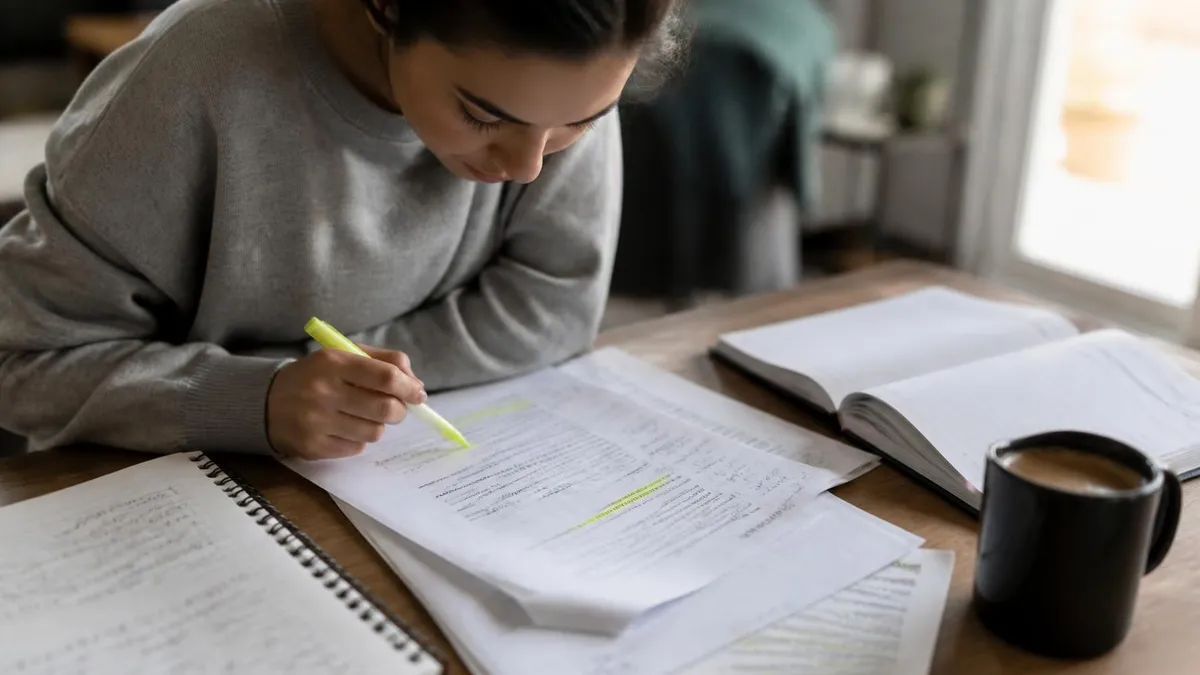
Preparation for the online knowledge exam looks identical to in-person prep, with one important addition — you also need to get comfortable with the on-screen interface and the feeling of being watched. Start with your state's driver handbook. Every question on the test comes word-for-word from this document, which is free to download from the DMV website and usually 80-150 pages long. Read it once cover to cover over three or four sittings, highlighting the numbers — speed limits, blood alcohol thresholds, following distances, fines. Numbers are where most multiple-choice questions hide their trickery.
Next, take three to five untimed practice tests using a quality online prep tool. The point of untimed practice is to think through every wrong answer until you understand why it is wrong, not to drill speed. After each test, write down every question you missed and the correct answer with a one-sentence explanation. Aim to build a stack of 30-40 of these notecards. They will be your night-before-the-exam review material. A focused DMV permit test study guide approach works far better than reading the handbook front to back in one sitting.
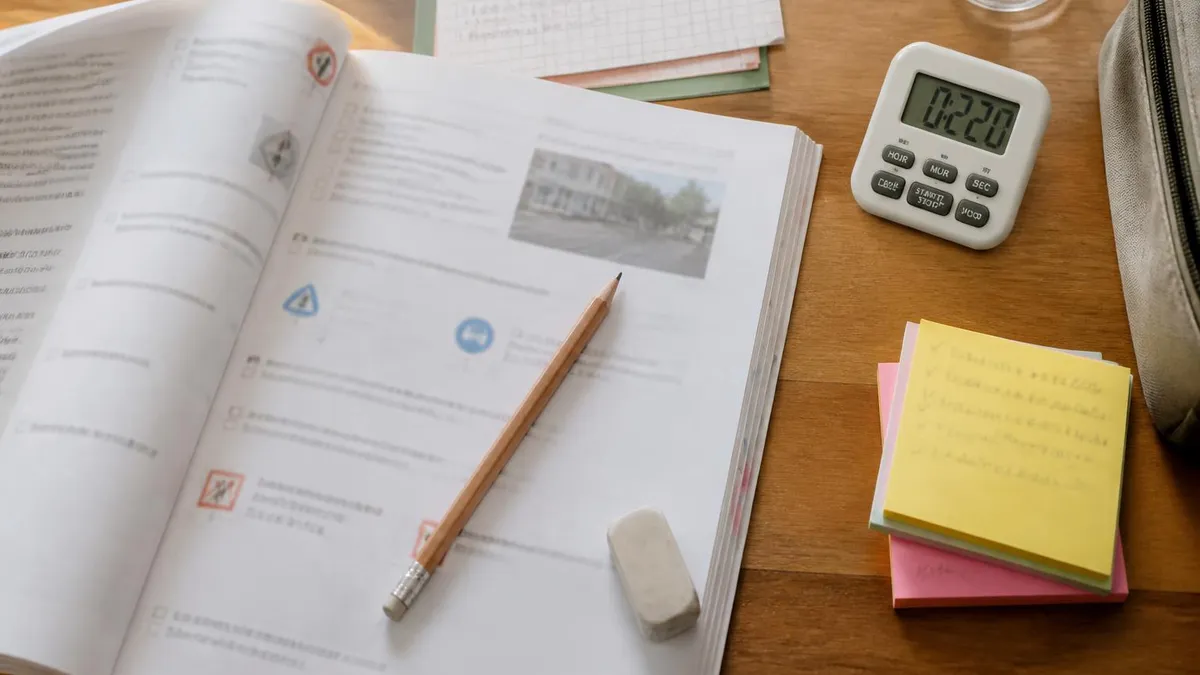
Once you can score 90%+ on practice tests untimed, switch to timed simulations that match your state's actual format. If your state gives you 45 minutes for 40 questions, set a timer for 45 minutes and answer 40 questions without pausing. The point is to make the timing pressure feel routine before exam day. Most learners are surprised by how much faster they can answer when they have practiced under time constraints — the actual test usually feels easier than the simulations.
The day before your test, do three things. First, scan your notecards once. Second, take one final timed practice test and confirm you score above your state's passing threshold. Third, run your system tech check one more time even if you did it earlier in the week — wifi, browsers and operating systems sometimes update silently. Get to bed at a reasonable hour. Caffeine is fine the morning of, but heavy meals two hours before the test can cause concentration issues. Many examinees report that an dmv knowledge test simulator session the morning of helps warm up their pattern recognition.
On test day, log in 15 minutes early to give yourself a buffer for any last-minute tech issues. Have your IDs visible on the desk, your phone in another room, and your room scanned and prepped. When the proctor connects, breathe slowly and speak clearly — yes-or-no answers and direct eye contact with the camera. Once the test starts, read each question twice before clicking an answer. The most common cause of failure is not knowledge gaps but misreading questions in a hurry. You typically have 60-90 seconds per question — more than enough to slow down.
If you fail, don't panic. Almost half of all first-time learners need at least two attempts, and your detailed score report is gold for the retake. Spend 4-7 days re-studying the specific topics you missed, then book another attempt. Most states allow up to three attempts within a year before requiring additional driver education, so you have room to learn from mistakes.
Many examinees who failed their first attempt by 2-3 questions pass comfortably on attempt two after just a weekend of targeted review. Pair handbook study with a targeted driving test online simulator to get used to on-screen pacing before exam day.
Practice tests are excellent for benchmarking and pattern recognition, but they cannot replace your state's official driver handbook. Apps and websites paraphrase questions, and sometimes wording differences cost you a point. The DMV writes questions from their own handbook verbatim. Spending 4-6 hours reading the actual document, paying close attention to numbers and exceptions, will catch the 5-10 questions that practice apps tend to miss. Pair the handbook with practice tests, never use one alone.
Retake rules for the dmv written test online vary widely between states, and knowing them in advance reduces panic if your first attempt goes sideways. Most states require a waiting period — usually 1 to 7 days — before you can sit the exam again. Florida and Georgia allow a same-day retake but charge the full fee each time. Texas requires a 24-hour wait. Tennessee mandates a 7-day cool-off after two consecutive failures. Always check your state's specific policy on its DMV portal before booking, because rules updated quietly during 2024-2025 in several states.
The number of allowed retakes is also worth knowing. Most states give you three attempts within a 12-month window. Failing three times generally forces you to either wait six months to a year before trying again, or complete a state-approved driver-education course (often 4-8 hours, $40-$120). California, while not offering the online option, is unusual in allowing unlimited retakes without additional coursework. Some states also reset their counter at the start of each calendar year, but this is rare — assume your attempts compound across the year unless your state specifically says otherwise.
Fees on retakes can add up quickly. While the initial online exam fee may be $0-$16 in many states, retake fees often jump to $20-$50 per attempt, especially through third-party providers. Some states waive the fee for the first retake if you complete an additional online safety course between attempts. This is genuinely useful if you failed because you ran out of time or had a tech issue — the course doubles as test prep. Always check whether your state offers this waiver before paying again.
If you genuinely cannot pass after several attempts, the issue is almost never the knowledge — it is usually nerves, misreading questions in a hurry, or weak preparation in one specific subject. Pull your score reports together and look for patterns. If you consistently miss alcohol-and-drugs questions, spend a full evening only on that chapter and a focused DMV sign test session for the signs section.
Targeted study beats broad re-reading every time, especially after attempt two when general fatigue with the material sets in. Many examinees who passed on attempt three did so because they finally stopped re-reading the whole handbook and focused only on the topics their score reports flagged.
One last consideration — your knowledge-test score is valid only for a limited period in most states. Pass and you typically have 90 days to a year to complete the road test and finalize your license. Let the certificate expire and you have to retake the written exam.
This matters mostly for teens who pass the knowledge test but then defer the road test for behind-the-wheel practice. Set a calendar reminder on your phone for 60 days after you pass the online exam so you can schedule the road test before the certificate window closes. The DMV road test is the next step once your written passes.
Sample BMV Practice Questions
Try these questions from our free BMV practice tests. The correct answer and an explanation follow each question.
You may park your car parallel to the curb on a one-way street, no closer than __________ from either the left or right curb.
- A. 12 inches.
- B. 18 inches
- C. 24 inches
- D. 6 inches
Answer: B. 18 inches
When parallel parking, Ohio law requires that your vehicle be no more than 18 inches from the curb. This distance ensures that your vehicle is not obstructing the flow of traffic while also being safely positioned off the main roadway. Adhering to this rule is crucial for both traffic safety and avoiding parking violations.
When parallel parking, how far should your vehicle be from the curb?
- A. Within 12 inches (1 foot) of the curb
- B. Within 3 feet of the curb
- C. Touching the curb
- D. At least 2 feet from the curb
Answer: A. Within 12 inches (1 foot) of the curb
When parallel parking, position your vehicle within 12 inches of the curb, parallel to the road edge, with wheels turned appropriately if on a hill.
When parallel parking, how far from the curb should your tires be after you finish?
- A. Within 12 inches
- B. Within 3 feet
- C. Exactly 2 feet
- D. Touching the curb firmly
Answer: A. Within 12 inches
Your tires should be within about 12 inches of the curb when parallel parking is complete.
What should you do when you hear a siren from an emergency vehicle behind you?
- A. Speed up to get out of the way
- B. Stop immediately in your lane
- C. Pull over to the right and stop
- D. Ignore it if you are in a hurry
Answer: C. Pull over to the right and stop
You must pull over to the right edge of the road and stop until the emergency vehicle passes.
DMV Written Test Online — Questions and Answers
Related Reading
DMV Driver's License Written Test Questions: Complete Study Guide and Practice Strategy for 2026

Is the Knowledge Test Different on Computer? Complete BMV/DMV Guide to Digital vs Paper Testing
DMV Permit Test Study Guide
BMV Appointment Guide: How to Schedule, Prepare, and Pass Your Visit on the First Try
DMV Mock Test
About the Author

Registered Nurse & Healthcare Educator
Johns Hopkins University School of NursingDr. Sarah Mitchell is a board-certified registered nurse with over 15 years of clinical and academic experience. She completed her PhD in Nursing Science at Johns Hopkins University and has taught NCLEX preparation and clinical skills courses for nursing students across the United States. Her research focuses on evidence-based exam preparation strategies for healthcare certification candidates.
Join the Discussion
Connect with other students preparing for this exam. Share tips, ask questions, and get advice from people who have been there.
View discussion (9 replies)