
Will You Be Disqualified From DMV Testing Area for Cheating? Complete Guide to BMV Test Integrity Rules
Will you disqualified from dmv testing area for cheating? Yes. Learn penalties, banned items, and how to legally pass your BMV driver test the first time. ✅
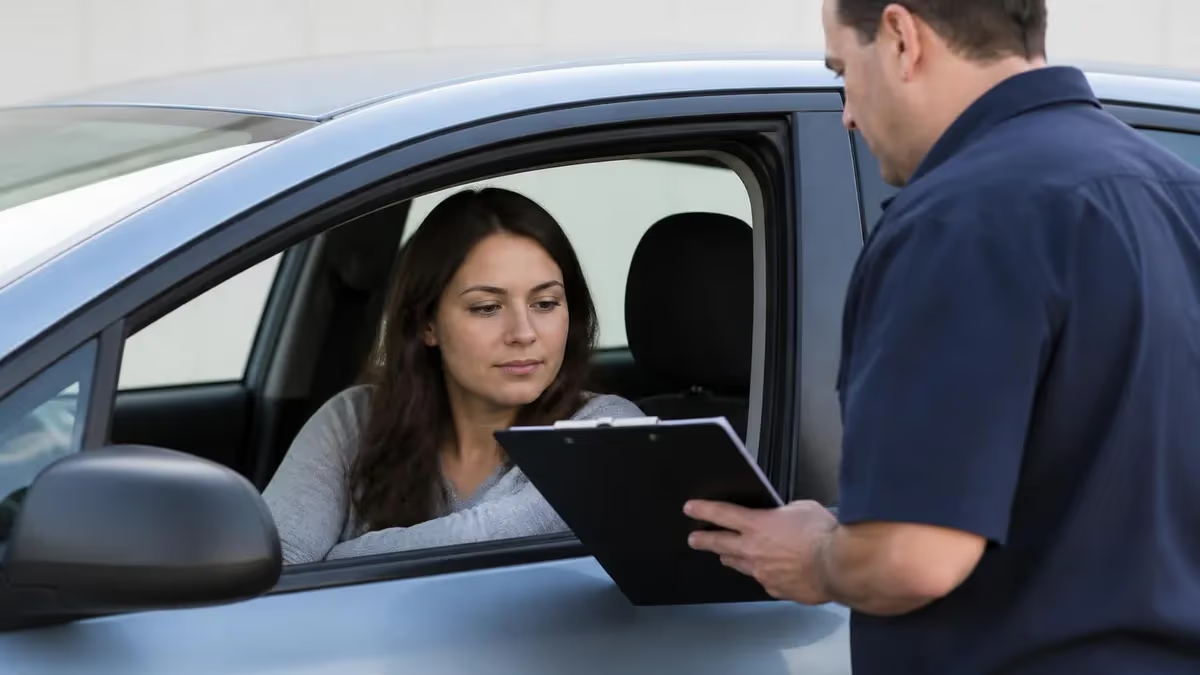
Will you disqualified from dmv testing area for cheating? The short answer is an emphatic yes, and the consequences extend far beyond simply failing the exam that day. Every state Bureau of Motor Vehicles and Department of Motor Vehicles operates under strict integrity protocols designed to ensure that licensed drivers actually possess the knowledge required to operate a vehicle safely on public roads. Cheating violates both the testing center rules and, in many states, criminal statutes related to fraud.
When examiners catch a candidate cheating during the knowledge or road test, they are authorized to immediately void the exam, confiscate any prohibited materials, and document the incident in the applicant's permanent driving record. Depending on the state, this documentation can trigger a waiting period of 30 days to one full year before you can retest. In severe cases involving forged documents or impersonation, prosecutors can pursue misdemeanor or felony charges carrying fines and jail time.
The most common forms of cheating examiners encounter include using a hidden phone or smartwatch to look up answers, writing notes on hands or arms, bringing study sheets into the booth, glancing at neighboring screens, having someone whisper answers through an earpiece, and paying an imposter to take the test under a false identity. Modern testing centers use camera surveillance, randomized question pools, and biometric ID verification specifically to detect these schemes.
Even unintentional violations can be classified as cheating. Forgetting to silence a smartwatch, leaving a translation app open, or asking a neighbor a clarifying question can all trigger disqualification. Examiners are not required to give warnings, and they rarely do. The presumption in most BMV testing centers is that adult applicants understand basic rules, and that any deviation from posted policy reflects intent rather than confusion.
This complete guide explains exactly what counts as cheating, what penalties you face if caught, which items are banned from the testing area, and the legal study methods that actually work better than any shortcut. We'll also cover what to do if you are wrongly accused, how appeals work, and the surprising number of legitimate accommodations available for applicants with disabilities, language barriers, or testing anxiety. Treat this article as your roadmap to passing the right way.
Before we dive deeper, understand one foundational principle: the BMV does not care whether you intended to cheat. They care whether you violated procedure. The burden of proof for disqualification is far lower than in a criminal court, often requiring only the examiner's good-faith observation. That means your best defense is prevention, not argument. Read every rule, follow every instruction, and leave anything questionable in your car.
Finally, remember that the system genuinely wants you to succeed. Practice tests are free or low-cost, manuals are downloadable, and many states allow unlimited retakes after a brief cooling-off period. The fastest, cheapest, and safest path to a license is preparation, not deception.
DMV Cheating Penalties by the Numbers

What Happens When You're Caught Cheating
Immediate Test Termination
Incident Documentation
Retest Waiting Period
Possible Criminal Referral
License Hold or Revocation
Cheating at a BMV testing area takes many forms, and the definitions are broader than most applicants realize. The most obvious violation is bringing unauthorized study materials into the test area, whether printed cheat sheets, notebook pages, or handwritten notes on body parts or clothing. Examiners routinely ask applicants to roll up sleeves, show palms, and empty pockets before being seated. Anything resembling a study reference will be confiscated and the test voided immediately.
Electronic device violations make up the largest category of disqualifications nationwide. Smartphones, smartwatches, fitness trackers, Bluetooth earbuds, hidden cameras, and even calculators with text storage capabilities are universally banned. Some states require devices to be powered off and stored in a provided locker, while others mandate complete removal from the building. A phone that vibrates audibly during the test, even inside a bag, can be grounds for disqualification depending on the examiner's discretion and posted rules.
Communication-based cheating is treated most severely. This includes whispering to or signaling another test-taker, having an accomplice outside the room transmit answers through hidden earpieces, photographing the screen to send questions to a remote helper, or using sign language across the room. Modern testing facilities use overlapping camera angles and audio monitoring specifically to detect these schemes. When detected, both parties face disqualification and potential criminal charges.
Identity fraud is the most serious cheating category. Paying or persuading someone else to take the knowledge test or road test in your place constitutes felony fraud in most states. Testing centers now verify identity through photo ID, signature comparison, biometric fingerprints, and sometimes live video matching. The imposter faces charges, the actual applicant loses license eligibility for years, and the case is referred for criminal prosecution by the state attorney general's office.
Looking at another test-taker's screen, even briefly, is considered cheating regardless of whether you actually used the information. Computer testing stations are deliberately spaced or partitioned to prevent line-of-sight cheating, and proctors watch eye movement carefully. If you simply need to rest your eyes, look down at the keyboard or close them briefly rather than scanning the room. Honest behavior must look honest to avoid suspicion.
Bathroom breaks during the test are another common cheating vector. Many testing centers prohibit breaks entirely once the test begins, while others require a proctor escort to and from the restroom. Leaving the test room without authorization, taking unusually long breaks, or returning with suspicious bulges in pockets all trigger investigation. Some applicants have been caught reviewing notes hidden behind toilets, an old trick that examiners now actively check for in many jurisdictions.
Finally, soft cheating like asking the examiner to clarify a question by hinting at the answer, requesting that confusing words be defined beyond simple translation, or claiming a screen malfunction to get a question replaced can all count as integrity violations. Examiners are trained to recognize manipulation attempts and respond by terminating the exam. The safest approach is to read each question carefully, choose your best answer, and move on without negotiation.
BMV Practice Test Questions
Prepare for the BMV - Test exam with our free practice test modules. Each quiz covers key topics to help you pass on your first try.
BMV Basic BMV Practice
BMV Exam Questions covering Basic BMV Practice. Master BMV Test concepts for certification prep.
BMV Alcohol, Drugs, and Impaired Driving Laws
Free BMV Practice Test featuring Alcohol, Drugs, and Impaired Driving Laws. Improve your BMV Exam score with mock test prep.
BMV Licensing Requirements
BMV Mock Exam on BMV Licensing Requirements. BMV Study Guide questions to pass on your first try.
BMV Traffic Laws
BMV Test Prep for BMV Traffic Laws. Practice BMV Quiz questions and boost your score.
BMV Vehicle Operations
BMV Questions and Answers on BMV Vehicle Operations. Free BMV practice for exam readiness.
BMV Parking, Right-of-Way, and Intersections
BMV Mock Test covering Parking, Right-of-Way, and Intersections. Online BMV Test practice with instant feedback.
BMV Road Signs and Markings
Free BMV Quiz on Road Signs and Markings. BMV Exam prep questions with detailed explanations.
BMV Safe Driving and Hazard Awareness
BMV Practice Questions for Safe Driving and Hazard Awareness. Build confidence for your BMV certification exam.
Items Banned From the DMV Testing Area
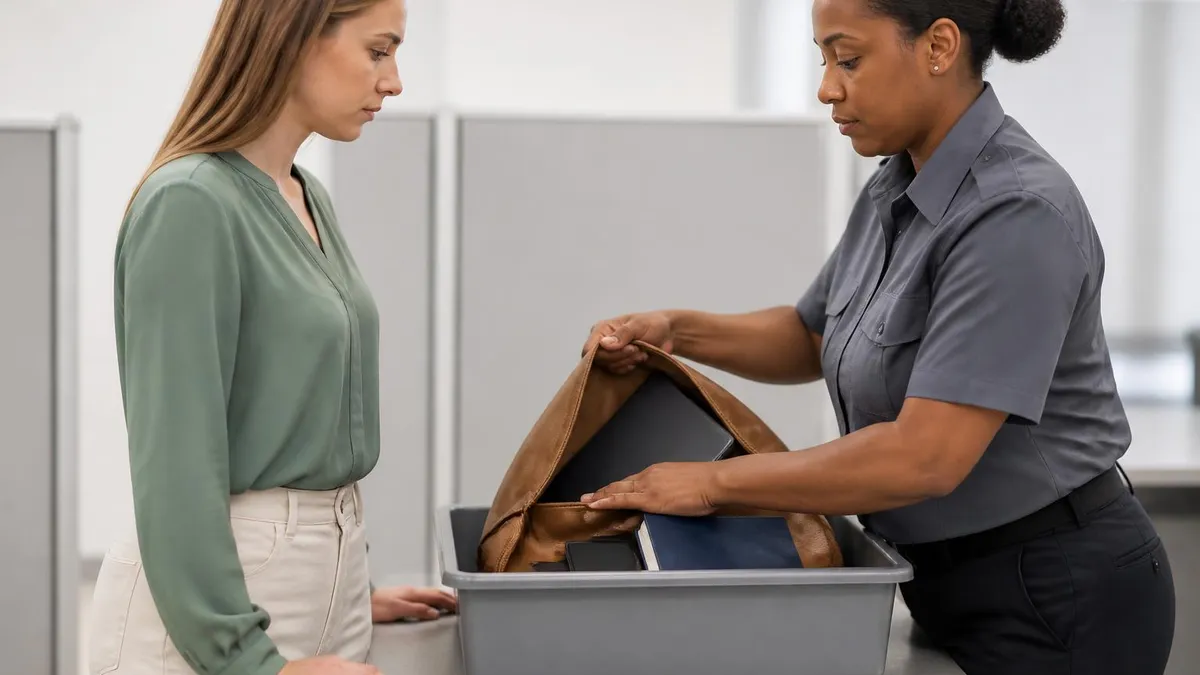
All electronic devices are prohibited inside the active testing zone. This includes smartphones, smartwatches, Bluetooth headsets, wireless earbuds, fitness trackers with displays, tablets, laptops, and digital cameras. Even calculators with memory functions or programmable features are barred unless specifically authorized for a CDL math section, which is rare and pre-arranged. Testing centers typically provide a small locker or sealed bag where you can store electronics during your visit.
Some BMV branches now use signal detection equipment to identify hidden earpieces and active Bluetooth connections from the test booth area. If detected, you face immediate disqualification regardless of whether you actively used the device. Power down everything completely before entering the testing room. Airplane mode is not sufficient in many jurisdictions because connections can resume automatically. Leave devices in your car when possible to eliminate any ambiguity.
Cheating vs. Studying: Why Honest Prep Wins
- +Free official practice tests cover the exact same question pool examiners use
- +Studying builds real driving knowledge that prevents accidents and tickets later
- +Honest passing means your license cannot be retroactively revoked for fraud
- +Most states allow unlimited retakes, so failing once costs only time
- +Practice apps and quizzes work on phones, making study time flexible and easy
- +Confidence from genuine preparation reduces test anxiety significantly
- +Insurance companies do not penalize honest first-attempt failures
- −Cheating risks a permanent fraud record visible to employers and insurers
- −Disqualification can delay your license by months or even years
- −Criminal charges are possible for forgery, impersonation, or paid imposters
- −CDL applicants caught cheating may lose federal driving privileges permanently
- −Family members who help cheat can face accomplice charges
- −Some employers automatically disqualify candidates with BMV fraud history
- −You still won't actually know how to drive safely without studying
Pros and Cons at a Glance
| Pros | Cons |
|---|---|
| Free official practice tests cover the exact same question pool examiners use | Cheating risks a permanent fraud record visible to employers and insurers |
| Studying builds real driving knowledge that prevents accidents and tickets later | Disqualification can delay your license by months or even years |
| Honest passing means your license cannot be retroactively revoked for fraud | Criminal charges are possible for forgery, impersonation, or paid imposters |
| Most states allow unlimited retakes, so failing once costs only time | CDL applicants caught cheating may lose federal driving privileges permanently |
| Practice apps and quizzes work on phones, making study time flexible and easy | Family members who help cheat can face accomplice charges |
| Confidence from genuine preparation reduces test anxiety significantly | Some employers automatically disqualify candidates with BMV fraud history |
Pre-Test Compliance Checklist to Avoid Disqualification
- ✓Leave your phone, smartwatch, and earbuds locked inside your vehicle before entering
- ✓Empty all pockets and confirm there are no notes, receipts, or papers with writing
- ✓Remove hats, sunglasses, hoodies, and anything covering your ears or hands
- ✓Roll up sleeves to show forearms are clear of handwritten notes or tattoos resembling text
- ✓Bring only your ID, application paperwork, and required medical documents
- ✓Use the restroom before the test begins to avoid mid-exam break complications
- ✓Sign in with the receptionist and listen carefully to all posted rules
- ✓Sit only in the assigned seat and never glance toward neighboring screens
- ✓Ask any clarifying questions before the test starts, not during it
- ✓Notify staff in advance of any disability accommodations or medical devices
Examiners Do Not Need Proof of Intent
BMV examiners have wide latitude to disqualify any applicant who appears to violate testing rules, even without direct evidence of cheating. A glance toward another screen, a vibrating pocket, or an unusual hand movement can all trigger termination. The decision is not appealable on the spot, so prevention through strict rule-following is your only reliable defense.
If you are accused of cheating and disqualified, you do have appeal rights, though the process varies by state and is generally weighted in the BMV's favor. The first step is requesting a written copy of the examiner's incident report, which most states are required to provide within 30 days of a formal request. Review this report carefully for factual errors, missing context, or procedural violations by the examiner that might support your case during the appeal.
Formal appeals typically go to a BMV hearing officer rather than a court. You may attend in person or by phone in most states, and you can bring a witness or attorney. The hearing officer reviews the examiner's report, any video footage from the testing center, your testimony, and any documents you submit. Hearings usually take less than 30 minutes, and decisions are issued within two to four weeks. The standard of proof is preponderance of evidence, meaning more likely than not, which is a low bar for the BMV to clear.
If the hearing officer upholds the disqualification, you can usually appeal further to a state administrative court or, in rare cases, civil court. These appeals are expensive and slow, often taking six to twelve months and requiring legal representation. Most applicants find it faster and cheaper to accept the waiting period, study thoroughly, and retest honestly than to pursue extended litigation. The exception is when criminal charges accompany the disqualification, in which case immediate legal counsel is essential.
Reinstatement after a disqualification typically requires completing the mandatory waiting period, paying any outstanding fees including a possible reinstatement surcharge, and sometimes attending a remedial driver education course. Some states require a written acknowledgment that you understand the testing rules before you can schedule a new appointment. Repeat offenders may face increasingly long waiting periods, with second offenses commonly drawing one-year bans and third offenses resulting in permanent denial of self-administered testing.
If you believe you were wrongly accused, document everything immediately. Write down the examiner's name, the time, the exact words exchanged, and any witnesses present. Photograph any evidence you can legally access, such as receipts showing you arrived without prohibited items. Request the security camera footage in writing before it is overwritten, which often happens within 30 days at smaller branches. Without prompt evidence preservation, your appeal will rely solely on your word against the examiner's.
Some applicants successfully appeal by proving procedural errors. For example, if the examiner did not post the rules visibly, did not verbally warn you of the prohibition, or applied rules inconsistently to other applicants in the room, you may have grounds. Translation issues are another common appeal basis. If the rules were given only in English and you genuinely did not understand, you may be entitled to a retest with proper language support. Document language barriers immediately when they arise.
Finally, recognize that cooperation during the incident strengthens your appeal. If you argue, refuse to leave, or become hostile when accused, the examiner will document those reactions, and they hurt your credibility at the hearing. Comply calmly, gather information, and fight the case through proper channels. Many successful appeals share one common factor: the applicant remained polite and respectful even while being wrongly accused.
Commercial driver license applicants face additional federal consequences under FMCSA rules. A cheating disqualification reported to the federal Clearinghouse can end your trucking career permanently, even if the state-level penalty is short. Employers searching the database before hiring will see the violation for years, making honest preparation essential for professional drivers.
The reliable path to passing your BMV driver test without any risk of disqualification begins with the official state driver's manual. Every state publishes this document free online and in print at BMV branches. The manual contains every fact, rule, and scenario that can appear on the knowledge test. Read it cover to cover at least twice, taking notes on signs, right-of-way rules, alcohol limits, and special situations like school buses, construction zones, and emergency vehicles. Manual mastery alone passes about 60 percent of applicants.
Practice tests are the second pillar of legitimate preparation. Free online practice tests draw from the same general question pool as the official exam, and repeated drilling reveals your weak areas quickly. Aim for at least 90 percent accuracy across three consecutive practice tests before scheduling your real exam. If you consistently miss questions about a particular topic, return to the manual and reread that section before attempting more practice. This focused review is more efficient than rereading the entire manual.
Behind-the-wheel preparation requires actual driving hours. Most states require 30 to 50 supervised hours for new drivers, including 10 hours at night. Use this time deliberately. Practice parallel parking, three-point turns, lane changes with proper mirror checks, and merging onto highways. Drive in varied conditions including rain, dusk, and unfamiliar neighborhoods. The road test examiner evaluates real driving competence, and shortcuts in this phase show up immediately during the maneuvers section.
Sleep, nutrition, and mental state on test day matter more than applicants realize. Arrive at the testing center 20 minutes early to avoid stress. Eat a normal breakfast or lunch that you have eaten many times before. Hydrate but avoid excessive caffeine. Wear comfortable clothing appropriate for the weather, since you may need to operate a vehicle outdoors. A calm, well-rested test-taker outperforms an anxious cram-studier on identical material almost every time.
If English is not your first language, request the test in your preferred language well in advance. Most states offer the knowledge test in 10 to 30 languages, with the most common being Spanish, Mandarin, Vietnamese, Korean, Russian, and Arabic. Translation is provided through official BMV systems, not through your phone or a friend. Using unauthorized translation during the test counts as cheating. Browse the related guides on dmv test to understand exactly how language support is delivered legitimately.
Disability accommodations are also widely available. Applicants with documented learning disabilities, ADHD, anxiety disorders, hearing impairments, or visual limitations can request extended time, oral exams, large-print materials, sign language interpreters, or separate testing rooms. These accommodations require documentation submitted in advance, usually two to four weeks before your appointment. Same-day requests are sometimes denied for lack of preparation time, so plan early. Legitimate accommodations carry zero stigma and do not appear on your driving record.
Finally, take advantage of community resources. Many high schools, community colleges, and AAA chapters offer affordable driver education courses that combine classroom theory with behind-the-wheel practice. These courses often include built-in practice tests, professional instruction, and sometimes lower insurance rates after completion. The cost is typically $200 to $500, far less than the cumulative cost of failed attempts, retest fees, and lost time from poor preparation.
On test day, your routine matters as much as your study habits. Plan to arrive at the BMV testing center at least 20 to 30 minutes before your appointment. Build in buffer time for parking, traffic, and the initial check-in line, which can stretch unpredictably even with appointments. Late arrivals are often rescheduled with a forfeited fee, and rushed applicants make careless mistakes during the test. A calm walk into the building beats a sprint from the parking lot every time.
Bring exactly the documents required and nothing extra. Standard requirements include a primary photo ID such as a passport or expired license, proof of residency like a utility bill or lease, proof of legal presence such as a birth certificate or green card, and your social security number documentation. Check your state BMV website for the exact list, because missing one document forces you to reschedule. Photocopies are generally not accepted, so bring originals in a clean folder.
Once inside the testing booth, take a deep breath and read each question completely before looking at the answer choices. Many wrong answers stem from skimming. Watch for negative phrasing like which of the following is NOT permitted, and for absolute words like always, never, only, and must. These often signal trick questions where one extreme answer is wrong even when the underlying concept is familiar. Slow down on every question that contains these markers.
If you do not know an answer, eliminate the obviously wrong choices first, then guess strategically among the remaining options. Most BMV knowledge tests do not penalize guessing beyond the loss of that single point, so leaving questions blank is worse than an educated guess. Never spend more than two minutes on a single question. Mark it for review if your test platform allows, move on, and return at the end if time permits. Pacing yourself prevents panic.
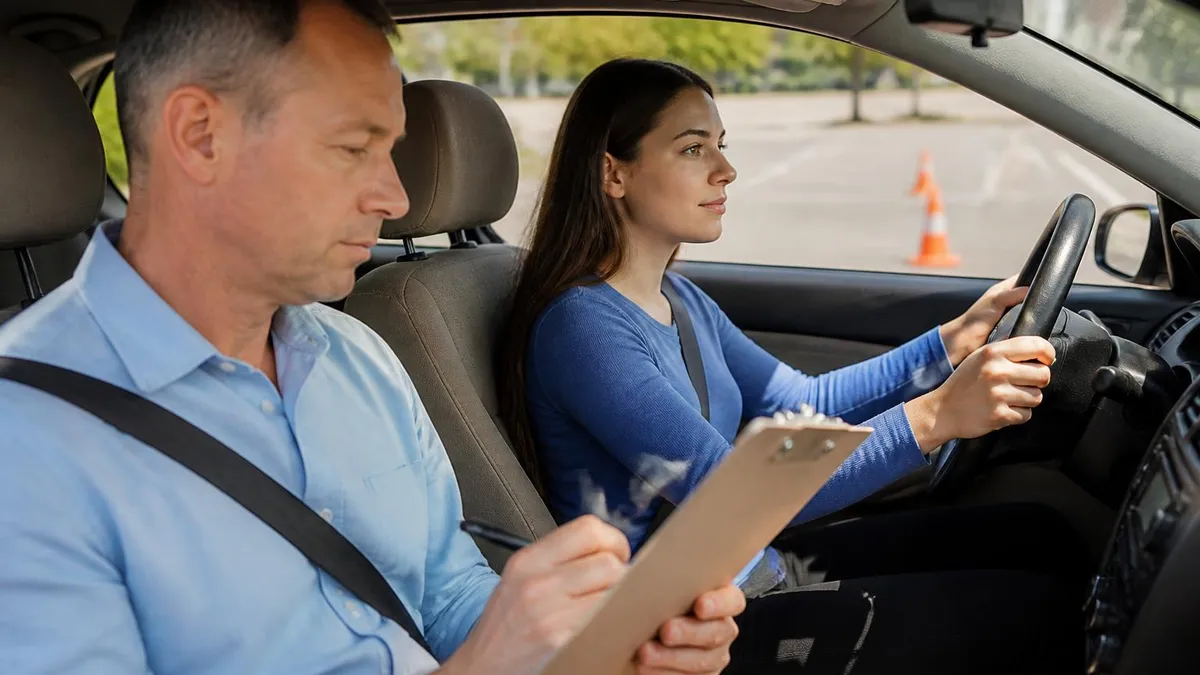
For the road test, treat the examiner as a passenger you respect but do not chat with excessively. Greet them politely, confirm your name and license number, and then focus entirely on driving. Verbalize your safety checks if you want, since narrating mirror checks and shoulder glances helps the examiner see that you are doing them. Drive slightly more conservatively than usual, signal earlier, and come to complete stops at every stop sign rather than rolling through.
Common road test failures include rolling stops at stop signs, failing to check blind spots during lane changes, hitting curbs during parallel parking, exceeding the speed limit even slightly, and forgetting to use turn signals when pulling away from a curb. None of these requires advanced skill, only attention. Practice each of them deliberately in the days before your test, and ask whoever supervises your practice to grade you strictly so weaknesses surface before the official examiner finds them.
After the test, whether you pass or fail, request a printed copy of your results. If you passed, verify the spelling of your name, your address, and your photo before leaving the counter, because corrections are much harder later. If you failed, review the specific items the examiner marked, schedule your retest after the required waiting period, and target your studying at the exact weaknesses identified. Honest preparation, applied consistently, almost always succeeds within two or three attempts.
Sample BMV Practice Questions
Try these questions from our free BMV practice tests. The correct answer and an explanation follow each question.
A driver is traveling at 30 mph. Approximately how many feet will the vehicle travel during the driver's average reaction time of 1.5 seconds before braking begins?
- A. 22 feet
- B. 33 feet
- C. 66 feet
- D. 88 feet
Answer: C. 66 feet
At 30 mph (44 ft/sec), in 1.5 seconds the car travels about 66 feet before the brakes are even applied.
What is the minimum distance you must park from a marked or unmarked crosswalk in most jurisdictions?
- A. 5 feet
- B. 10 feet
- C. 20 feet
- D. 30 feet
Answer: C. 20 feet
You must not park within 20 feet of a crosswalk at an intersection to ensure pedestrian visibility and driver sightlines.
What should you do when an emergency vehicle with sirens approaches from behind?
- A. Speed up to clear the area
- B. Pull to the right and stop
- C. Stop immediately in your lane
- D. Move to the left lane
Answer: B. Pull to the right and stop
Pull over to the right edge of the road and stop until the vehicle passes.
When parallel parking, how far from the curb should your tires be after you finish?
- A. Within 12 inches
- B. Within 3 feet
- C. Exactly 2 feet
- D. Touching the curb firmly
Answer: A. Within 12 inches
Your tires should be within about 12 inches of the curb when parallel parking is complete.
BMV Questions and Answers
Driver Test Car Rental in Gastonia, NC: Complete BMV Road Test Vehicle Guide
Ohio BMV Driving Test: Maneuverability, Road and Pass Tips
DMV Testing Area No Cell Phones Allowed: Complete Rules Guide for Your Driving Exam
Hours of Ohio BMV: Complete Guide to Office Hours, Locations, and Visit Planning

Is the Knowledge Test Different on Computer? Complete BMV/DMV Guide to Digital vs Paper Testing
About the Author
Licensed Driving Instructor & DMV Test Specialist
Penn State UniversityRobert J. Williams graduated from Penn State University with a degree in Transportation Management and has spent 20 years as a certified driving instructor and DMV examiner consultant. He has personally coached thousands of applicants through written knowledge tests, skills assessments, and commercial driver licensing programs across more than 30 states.
Join the Discussion
Connect with other students preparing for this exam. Share tips, ask questions, and get advice from people who have been there.
View discussion (9 replies)