
CPR BLS AED Certification: Complete Study Guide for Healthcare Providers
What is a BLS certification? Learn CPR BLS AED certification requirements, AHA exam tips, and renewal steps. ✅ Free practice tests inside.

Understanding what is a BLS certification is the first step for any healthcare provider, first responder, or medical student entering a clinical environment. CPR BLS AED certification is a credential that validates your ability to recognize and respond to life-threatening emergencies — including cardiac arrest, respiratory failure, and choking — using a structured, evidence-based approach. Whether you are pursuing your first certification or refreshing your knowledge before a renewal class, this guide covers everything you need to know about the BLS exam, course structure, and preparation strategies.
BLS stands for Basic Life Support, and the certification is widely required across hospitals, clinics, dental offices, and emergency medical services. Most employers in the US healthcare sector mandate that staff hold a current cpr bls aed certification from an accredited organization such as the American Heart Association (AHA) or the American Red Cross. The credential typically expires after two years, after which providers must complete a basic life support renewal class to maintain their standing with their employer and licensing boards.
One of the most common questions new learners ask is whether BLS and CPR are the same thing. While CPR (cardiopulmonary resuscitation) is a core skill within BLS training, the two terms are not interchangeable. BLS encompasses a broader skill set that includes high-quality chest compressions, rescue breathing, AED operation, team dynamics, and management of special patient populations including infants, children, and pregnant individuals. CPR is one technique; BLS is the full framework that surrounds and governs its correct application.
The AHA Basic Life Support exam — sometimes searched as the aha basic life support exam or the basic life support exam american heart association — consists of a written skills assessment combined with hands-on psychomotor testing. The cognitive exam typically contains 25 multiple-choice questions drawn from the AHA's Heartsaver and BLS for Healthcare Providers curricula. Passing requires a minimum score of 84 percent, meaning you can miss no more than four questions on the standard form. Understanding the format well in advance dramatically increases your chance of passing on the first attempt.
This guide is structured as a complete certification prep hub. You will find an overview of the BLS skill domains, a breakdown of how CPR, BLS, and AED functions relate to each other, the key differences between AHA and Red Cross pathways, a targeted study schedule, and a curated checklist of must-know facts. Embedded throughout are free practice quizzes that mirror the style and difficulty of the actual BLS written exam, giving you immediate feedback on your readiness before test day.
Whether you are a nursing student preparing for clinical rotations, a physician assistant completing continuing education, or an EMT approaching your two-year renewal window, the information in this article will help you study smarter. The sections ahead address the most searched questions in BLS preparation, from exam logistics and provider eligibility to the specific compression rates, depths, and ventilation ratios the AHA tests most frequently. Read through each section, take the practice quizzes, and arrive at your BLS class fully prepared.
BLS Certification by the Numbers
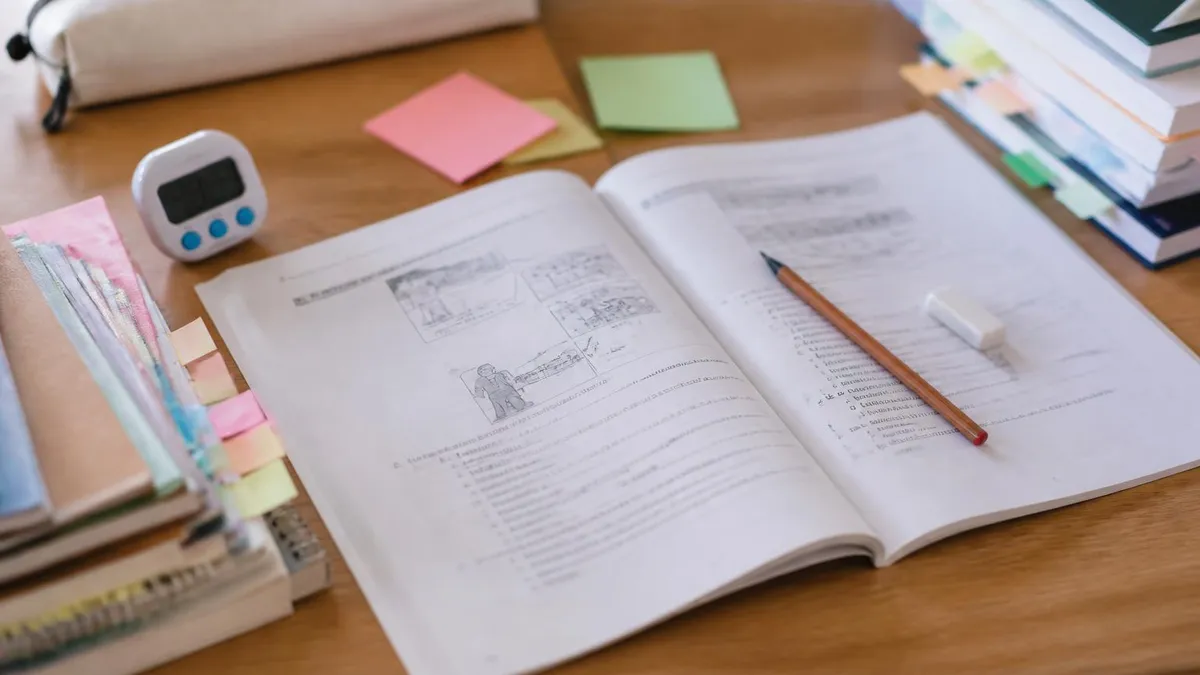
BLS Certification Study Schedule
- ▸Read the AHA BLS Provider Manual chapters 1–3
- ▸Learn adult CPR compression rate (100–120/min) and depth (2–2.4 inches)
- ▸Memorize the Chain of Survival steps for in-hospital and out-of-hospital cardiac arrest
- ▸Complete BLS High-Quality CPR Practice Test 1
- ▸Study infant compression depth (1.5 inches) and 2-finger technique
- ▸Review child CPR ratios: 30:2 single rescuer, 15:2 two-rescuer
- ▸Practice AED steps: power on, attach pads, analyze, clear, shock
- ▸Complete BLS Special Situations & Scenarios Practice Test
- ▸Study choking management for adults, children, and infants
- ▸Review BLS for pregnant patients and opioid-associated emergencies
- ▸Practice closed-loop communication and team leader/member roles
- ▸Take a full timed 25-question mock exam and review all missed answers
When it comes to choosing a BLS pathway, most healthcare providers in the United States face a decision between two primary certifying bodies: the American Heart Association and the American Red Cross. Both organizations produce evidence-based curricula aligned with the latest International Liaison Committee on Resuscitation (ILCOR) guidelines, but there are meaningful differences in course structure, pricing, and employer acceptance that are worth understanding before you register. Knowing which pathway your employer or clinical program accepts will save you time and money.
The AHA Basic Life Support for Healthcare Providers course is the most widely required credential in US hospital systems, nursing schools, and residency programs. It is offered in two formats: a fully in-person classroom course and a blended learning option that pairs an online HeartCode component with a brief in-person skills session.
The classroom version typically runs four to five hours and covers adult, child, and infant CPR, two-rescuer CPR, bag-mask ventilation, AED use, and relief of foreign body airway obstruction. The blended version lets you complete the cognitive portion at your own pace before arriving for skills testing, which many busy clinicians prefer.
The American Red Cross Basic Life Support course is an alternative accepted by many employers, particularly in outpatient, dental, and community healthcare settings. The red cross basic life support course follows the same ILCOR evidence base and covers the same core skills, though its instructor materials, video scenarios, and testing formats differ stylistically from the AHA version.
If your employer specifically mandates AHA, a Red Cross card will not satisfy that requirement — always verify before enrolling. However, for facilities that accept either organization, the Red Cross pathway may be more accessible in certain geographic regions or available at a lower cost.
Regardless of which organization issues your card, the underlying science is the same. Both programs test your knowledge of high-quality CPR parameters — the 100-to-120 compressions-per-minute rate, the 2-to-2.4-inch compression depth for adults, the importance of full chest recoil between compressions, and the 10-breaths-per-minute ventilation rate during CPR with an advanced airway in place.
These numbers appear on virtually every BLS written exam from both the AHA and the Red Cross, so memorizing them cold is non-negotiable. You can also check the basic life support certification cost for your region before registering, as prices vary by training site and course format.
One important logistical detail: neither the AHA nor the Red Cross offers a fully online BLS certification for healthcare providers that is accepted by Joint Commission-accredited hospitals. You will always need to demonstrate hands-on skills with a certified instructor. Online-only courses that claim to provide a healthcare-provider BLS card are generally not recognized by hospital credentialing departments or state nursing boards. This distinction matters enormously if you are pursuing certification for professional purposes rather than lay bystander training.
Renewal timing is another area where providers sometimes get caught off guard. Both the AHA and the Red Cross BLS certifications are valid for exactly two years from the date of issuance. Your employer's credentialing office will typically flag your expiration date 60 to 90 days in advance, but it is your responsibility to complete a basic life support renewal class before your card expires. Letting a BLS card lapse — even by a single day — can result in removal from clinical duties until recertification is complete, which can create significant scheduling problems in busy clinical environments.
Renewal classes are shorter than initial certification courses because they assume baseline knowledge. AHA BLS renewal (sometimes called a BLS HeartCode renewal or BLS update) generally runs two to three hours in a blended format. The skills stations focus on high-quality CPR performance, team dynamics, and any protocol updates that have occurred since the previous ILCOR guidelines revision.
The AHA updates its guidelines every five years, with the most recent comprehensive update published in 2020, so renewal classes post-2020 incorporate the latest evidence on compression fraction targets, vasopressin removal from the ACLS algorithm, and expanded guidance on bystander CPR in opioid emergencies.
Is BLS the Same as CPR? Understanding CPR, BLS, and AED
A very common question among new healthcare students is whether BLS and CPR are the same thing. The short answer is no — CPR is a specific technique within the broader BLS framework. CPR refers to the physical act of delivering chest compressions and rescue breaths to a person in cardiac arrest. BLS, or Basic Life Support, is the full system of skills, protocols, and decision-making that surrounds CPR, including recognition of cardiac arrest, activation of the emergency response system, AED use, airway management, and team coordination. You cannot be BLS-certified without being competent in CPR, but knowing CPR alone does not constitute BLS certification.
For healthcare providers, the distinction matters because employers and licensing boards specifically require BLS certification — not just CPR training. A community CPR course teaches chest compressions for bystander use, but it does not cover the two-rescuer techniques, bag-mask ventilation, or infant protocols that BLS for Healthcare Providers requires. If your clinical program, hospital credential, or state licensure mandates BLS, you must complete a full BLS for Healthcare Providers course from an AHA- or Red Cross-authorized training center, not a lay responder CPR class.

BLS Certification: Benefits and Limitations to Know Before You Enroll
- +Universally required by US hospitals, clinics, and medical training programs
- +Builds genuine life-saving confidence in cardiac and respiratory emergencies
- +Covers adult, child, and infant protocols in a single certification
- +Blended learning options allow flexible self-paced cognitive study
- +AHA certification is recognized by Joint Commission-accredited facilities nationwide
- +Renewal classes are shorter (2–3 hrs) than initial certification courses
- −Certification expires every two years, requiring ongoing renewal commitment
- −Fully online BLS cards are not accepted by most hospital credentialing departments
- −Course costs can range from $40 to $120+ depending on training site and format
- −AHA and Red Cross cards are not always interchangeable — always verify employer acceptance
- −Skills sessions require in-person attendance even in blended learning formats
- −Does not replace ACLS or PALS for providers who manage advanced resuscitation cases
BLS Exam Prep Checklist: 10 Things to Know Before Test Day
- ✓Memorize adult CPR compression rate: 100–120 compressions per minute
- ✓Know adult compression depth: at least 2 inches (5 cm), no more than 2.4 inches
- ✓Remember infant compression depth: approximately 1.5 inches (4 cm)
- ✓Recall single-rescuer CPR ratio: 30 compressions to 2 breaths for all ages
- ✓Know two-rescuer pediatric ratio: 15 compressions to 2 breaths
- ✓Memorize ventilation rate with advanced airway: 1 breath every 6 seconds (10/min)
- ✓Understand the 4 universal AED steps: on, pads, analyze, clear and shock
- ✓Review infant choking: 5 back blows followed by 5 chest thrusts (not abdominal)
- ✓Know the Chain of Survival steps for both in-hospital and out-of-hospital arrest
- ✓Practice closed-loop communication: confirm orders, state completion, use names

The 84% Passing Threshold: What It Really Means
On the AHA BLS written exam, you need to answer at least 21 out of 25 questions correctly to pass. That means you have a margin of only 4 incorrect answers. Focus your study time on compression parameters, ventilation ratios, and AED steps — these three topic areas account for the majority of exam questions and are the most commonly missed by first-time test takers who memorize procedures without understanding the reasoning behind each number.
High-quality CPR is the single most important concept on the BLS written and skills exams, and understanding what makes CPR truly high-quality — rather than just technically performed — is where many providers fall short. The AHA defines high-quality CPR through five measurable components: rate, depth, full recoil, minimal interruptions, and avoiding excessive ventilation. Each component is independently important, and deficiency in any one of them measurably worsens neurological outcomes after cardiac arrest. The exam tests all five, often through scenario-based questions that ask you to identify which component is being violated in a described scenario.
Compression rate is perhaps the most frequently tested parameter. The target range is 100 to 120 compressions per minute. Compressions delivered slower than 100 per minute are associated with insufficient coronary and cerebral perfusion pressure. Compressions delivered faster than 120 per minute reduce the time available for full chest recoil and may decrease stroke volume per compression. The AHA developed the well-known mnemonic using the beat of the song "Stayin' Alive" (approximately 104 BPM) as a mental metronome for providers to anchor their compression rate, though electronic CPR feedback devices are now preferred in clinical environments.
Compression depth for an adult is at least 2 inches but no more than 2.4 inches. This range was refined in the 2015 AHA Guidelines after evidence emerged that excessive depth (greater than 2.4 inches) was associated with increased injury without additional survival benefit.
For children (approximately 1 to 8 years old), the target depth is approximately 2 inches, or roughly one-third of the anteroposterior chest diameter. For infants (under 1 year old), the target is 1.5 inches, delivered using two fingers placed on the center of the chest just below the nipple line during single-rescuer infant CPR, or two thumb-encircling hands technique during two-rescuer infant CPR.
Full chest recoil between compressions is a component that providers frequently underperform during psychomotor skills testing. Leaning on the chest between compressions prevents the heart from refilling with blood, which negates much of the benefit of the compression itself. BLS instructors specifically watch for this error during skills stations. When practicing on a manikin, consciously lift your hands or fingers to allow the chest to fully rise after each compression. CPR feedback devices used in hospital resuscitation events monitor recoil in real time and can flag leaning automatically.
Minimizing interruptions to chest compressions is another area the exam emphasizes strongly. The AHA recommends a chest compression fraction (CCF) of at least 60 percent — meaning compressions should be occurring for at least 60 percent of any resuscitation event's duration. Pauses for pulse checks, rhythm analysis, intubation, and defibrillation should each be kept under 10 seconds whenever possible. The two-minute CPR cycle before each AED re-analysis is designed specifically to keep compression fraction high while still allowing regular rhythm assessment.
Ventilation during BLS follows specific rules depending on whether an advanced airway is in place. Without an advanced airway (endotracheal tube or supraglottic device), providers deliver 30 compressions followed by 2 breaths in a synchronized cycle, pausing compressions for no more than 10 seconds per ventilation set. Once an advanced airway is in place, compressions and ventilations are delivered asynchronously: continuous compressions at 100 to 120 per minute with one breath delivered every 6 seconds (10 breaths per minute). Over-ventilation is explicitly discouraged because excessive intrathoracic pressure impedes venous return and reduces cardiac output during CPR.
Finally, avoiding over-ventilation also means each breath should be delivered over approximately one second, producing visible chest rise without forcing large tidal volumes. During bag-mask ventilation — a skill tested in the BLS skills station — providers squeeze the bag with one hand using a technique that delivers roughly 500 to 600 mL of air for an average adult. Excessive bag squeezes that deliver large volumes increase gastric insufflation risk, which can cause vomiting and aspiration, particularly in an unconscious patient without an advanced airway. Mastering bag-mask ventilation technique is one of the most valuable hands-on skills BLS training provides.
Most US hospitals and clinical training programs require an active BLS card at all times. Even a single day of lapsed certification can result in suspension from clinical duties until you complete a renewal class and receive a new card. Mark your expiration date on your calendar and register for a basic life support renewal class at least 30 days before your current card expires to avoid scheduling conflicts during high-demand renewal periods.
Preparing effectively for BLS certification requires more than passively reading a manual. The providers who pass on the first attempt consistently share one practice habit: they simulate the test environment before they walk into it. This means using practice questions that mirror the format and difficulty of the actual AHA written exam, identifying their weak areas early, and repeatedly drilling those areas until the correct answers feel automatic. Free practice tests are one of the highest-leverage tools available for BLS exam preparation, and they cost nothing to use.
One of the most productive ways to approach BLS study is to organize your review around the AHA's own content domains. The written exam draws questions from four primary areas: adult CPR and AED, pediatric and infant CPR, two-rescuer and team-based resuscitation, and special circumstances including choking, pregnancy, and opioid-associated emergencies. Allocating roughly equal study time across all four domains — rather than spending most of your time on adult CPR and treating pediatric content as an afterthought — is a strategy that consistently separates first-attempt passers from those who need a retake.
Many BLS candidates underestimate the pediatric section of the exam. Questions about infant compression technique, the two-thumb encircling method during two-rescuer infant CPR, the correct sequence for infant choking (back blows before chest thrusts, never abdominal thrusts), and the appropriate AED pad placement and energy adjustments for pediatric patients are all fair game on the written test. The AHA specifically tests these pediatric nuances because mistakes in pediatric resuscitation are disproportionately harmful — a healthcare provider who freezes or applies adult-only technique to a pediatric patient in cardiac arrest can significantly worsen outcomes.
Team dynamics content is another area that surprises unprepared candidates. The AHA's BLS curriculum dedicates substantial attention to effective resuscitation team behavior, including the roles of team leader and team member, the practice of closed-loop communication (where the team leader states an order, the member repeats it back, performs the task, and verbally confirms completion), and the importance of mutual respect, clear role assignments, and real-time debriefing. Written exam questions on team dynamics often present short scenarios and ask you to identify the communication error or the most appropriate team leader intervention.
For providers who want to confirm whether their existing certification satisfies their employer's requirements, checking the is bls certification the same as cpr resource can clarify common credential confusion before you register for a course. Many facilities distinguish between BLS for Healthcare Providers (the full clinical credential) and Heartsaver CPR AED (a lay-responder course) — and only the former satisfies healthcare employment credentialing requirements. Registering for the wrong course level is a surprisingly common and entirely avoidable mistake.
Practice question sessions work best when you treat each incorrect answer as a learning event, not just a score penalty. After completing a practice quiz, review every question you missed — not just to find the right answer, but to understand why each distractor was wrong. AHA exam questions are carefully written to test genuine clinical reasoning, not just memorization.
A distractor answer that seems plausible often represents a common clinical error or a misconception the AHA specifically wants providers to avoid. Understanding why each wrong answer is wrong gives you a deeper conceptual framework that helps you answer novel questions you have never seen before.
Finally, do not neglect your physical practice alongside your written preparation. The BLS skills station — where an instructor watches you perform CPR on a manikin and assesses your technique in real time — is a mandatory part of certification for all healthcare providers.
No amount of written exam preparation substitutes for physically practicing compression rate and depth, bag-mask technique, and AED pad placement until the motions are smooth and confident. Most training sites allow candidates to practice on manikins before the formal skills check. Take advantage of that time, ask your instructor for feedback, and treat the skills station as seriously as the written exam.
Practical preparation for BLS certification goes beyond memorizing numbers — it requires building a mental model of how a real resuscitation event unfolds from first recognition through handoff to an advanced care team. Most BLS exam scenarios present you with a patient in distress and ask you to sequence your response correctly: recognize unresponsiveness, call for help, check for a pulse and breathing simultaneously for no more than 10 seconds, and begin CPR if no definite pulse is felt within that window. Practicing this decision tree until it becomes reflexive is the goal of every well-designed BLS course.
One practical tip that top performers use is to verbalize the steps out loud during practice, even when studying alone. Research on procedural skill acquisition consistently shows that verbalization during practice strengthens procedural memory and improves recall under stress. When you physically practice CPR on a manikin and say aloud "compressions at 100 to 120, depth 2 inches, full recoil, minimize interruptions" as you perform, you are encoding both the verbal and kinesthetic memory traces simultaneously. This dual-encoding approach makes the correct behavior far more accessible when you are in a high-pressure resuscitation environment where cognitive load is very high.
Time management during the BLS written exam is rarely a problem for most candidates — the 25-question exam has no formal time limit in the AHA classroom format, and the typical candidate finishes in under 20 minutes. However, anxiety and second-guessing are common causes of avoidable errors.
A useful strategy is to read every question twice before selecting an answer, eliminate options that are clearly incorrect, and flag any question you are uncertain about for a second review after completing the rest of the exam. Never change an answer without a specific, articulable reason — research consistently shows that first instincts are correct more often than second-guessed substitutions.
For providers approaching a renewal cycle rather than initial certification, the most effective preparation strategy focuses on what has changed since your last certification rather than re-learning everything from scratch. The AHA revises its guidelines every five years, and the 2020 update introduced several changes worth reviewing: updated guidance on bystander CPR in suspected opioid overdose (including emphasis on naloxone administration alongside CPR), refined compression fraction targets, and expanded evidence supporting dispatcher-assisted CPR for bystanders. Renewal classes cover these updates, but arriving already familiar with the changes lets you engage more actively with the instructor and ask sharper questions.
Hands-on refresher practice before a renewal class is also highly recommended, even for experienced providers. Studies of healthcare worker CPR performance have shown measurable skill decay within months of initial certification, with compression rate drift and depth insufficiency being the most common degraded skills. If you have not performed CPR on a manikin since your last renewal, your technique may not meet AHA standards by the time your skills station arrives. Many hospital simulation centers offer open practice sessions between formal classes — take advantage of those resources if they are available at your facility.
Finally, think of your BLS certification not as a two-year checkbox but as the foundation of your emergency response identity as a healthcare provider. The skills and knowledge it certifies have a direct, evidence-based connection to patient survival. Every percentage point improvement in compression quality, every second shaved off time-to-first-shock, and every correctly identified infant choking case represents a real person whose outcome is better because a prepared provider was present.
Studying thoroughly for your BLS exam — using practice tests, reviewing your weak areas, and drilling your hands-on skills — is an investment that pays dividends not in your career alone, but in the lives of the patients you will serve throughout it.
BLS Questions and Answers

BLS Certificate Lookup: What Is a BLS Certification and How to Get Yours
Free Basic Life Support MCQ Questions and Answers Guide
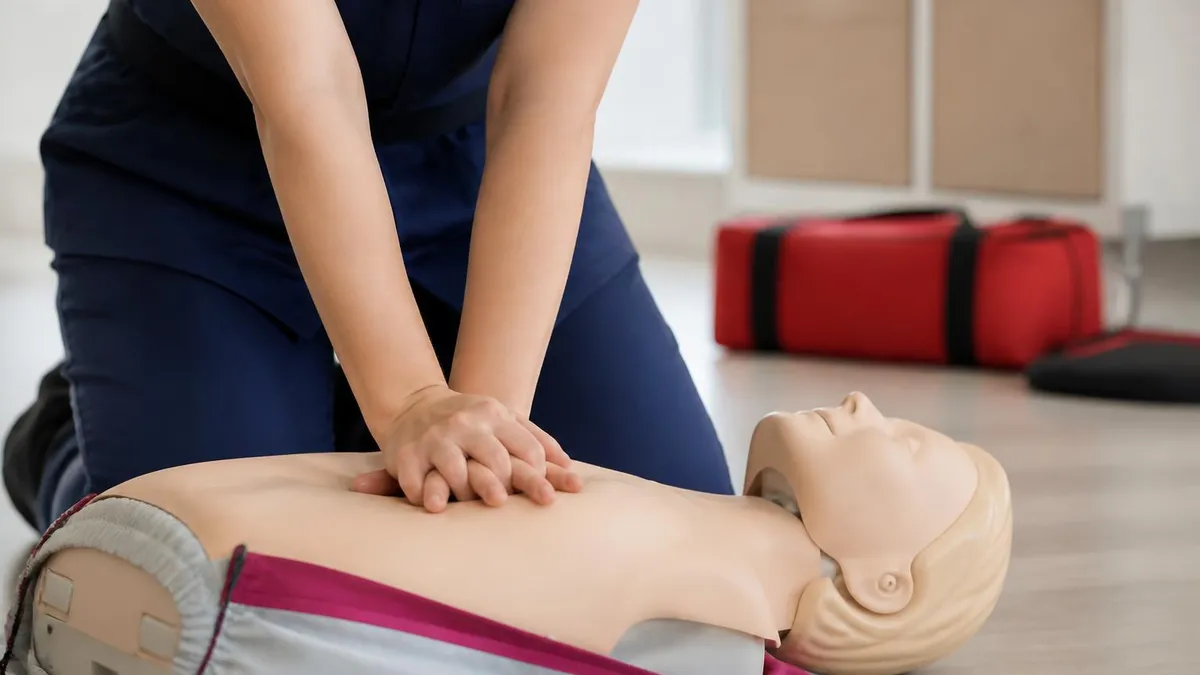
AHA BLS Certification: Course, Renewal, and Exam Guide
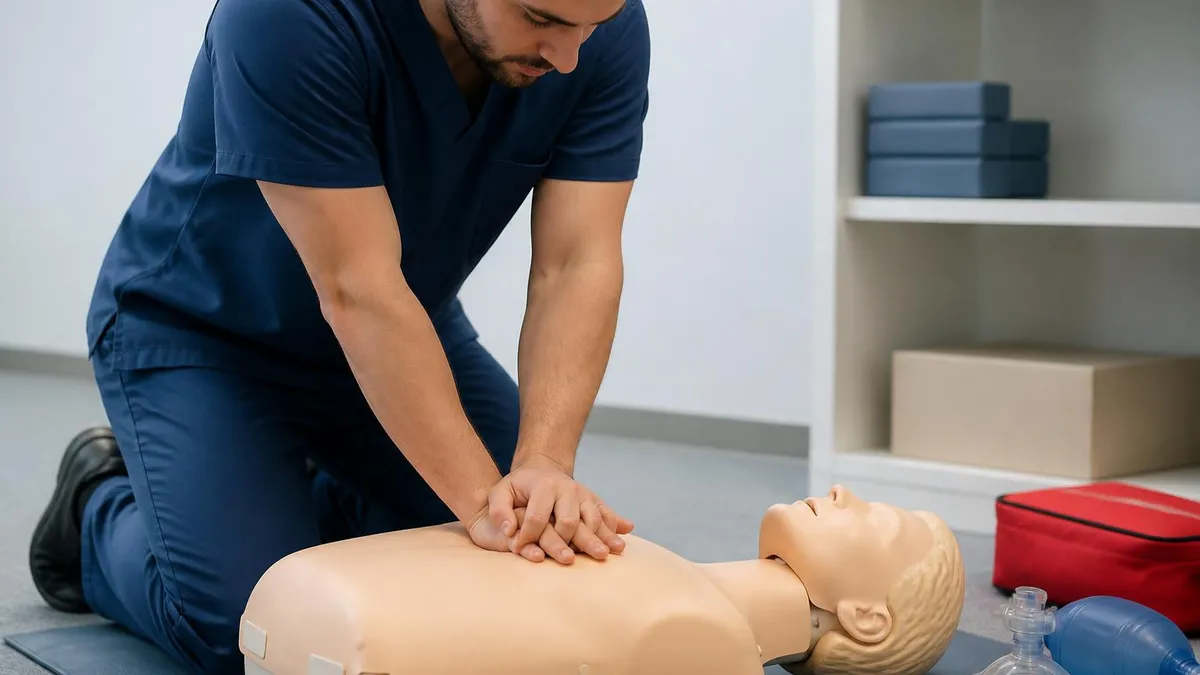
BLS Training: Course Content, Format & How to Get Certified

Online BLS: Complete Guide to Getting Your Basic Life Support Certification
About the Author

Registered Nurse & Healthcare Educator
Johns Hopkins University School of NursingDr. Sarah Mitchell is a board-certified registered nurse with over 15 years of clinical and academic experience. She completed her PhD in Nursing Science at Johns Hopkins University and has taught NCLEX preparation and clinical skills courses for nursing students across the United States. Her research focuses on evidence-based exam preparation strategies for healthcare certification candidates.
Join the Discussion
Connect with other students preparing for this exam. Share tips, ask questions, and get advice from people who have been there.
View discussion (8 replies)