
BLS Final Exam Answers: Complete Study Guide for Your Basic Life Support Certification
Master BLS final exam answers with free practice tests. Covers AHA & Red Cross formats, CPR ratios, AED steps & more. ✅ Pass your exam today.
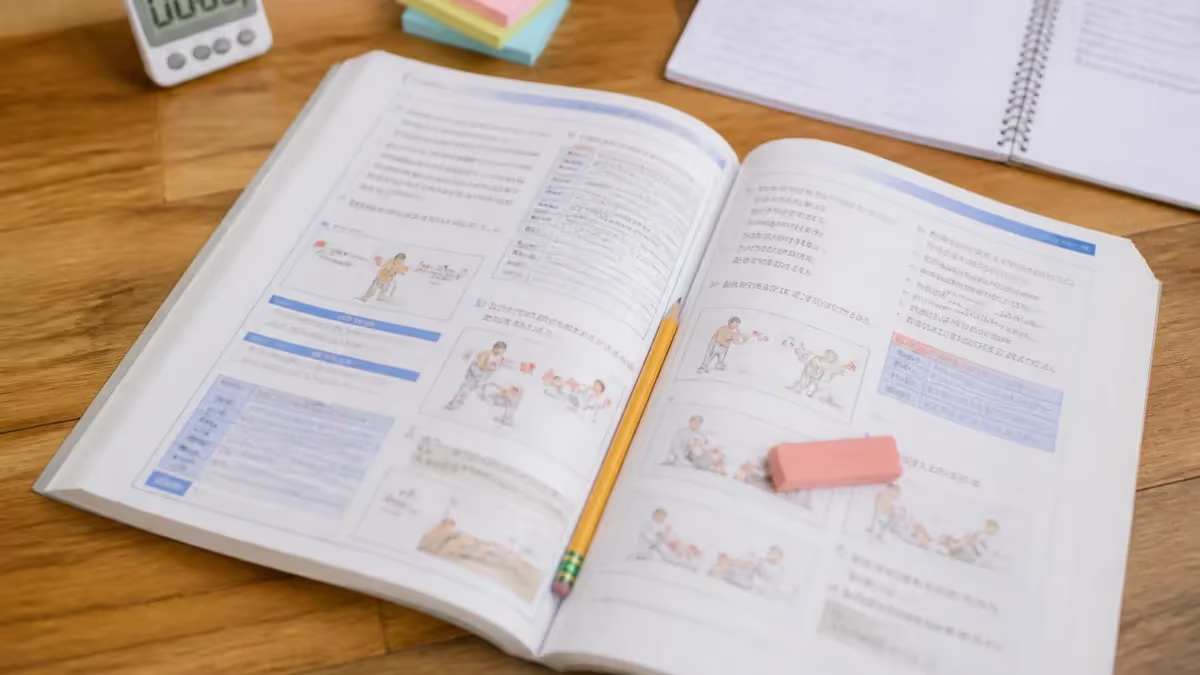
If you are searching for BLS final exam answers to help you pass your basic life support certification test, you have landed in the right place. The BLS exam is a high-stakes assessment used by the American Heart Association, the American Red Cross, and other accredited providers to verify that healthcare workers and first responders can perform life-saving interventions with speed and accuracy. Understanding exactly what the exam tests — and practicing under realistic conditions — is the single most reliable way to walk into that testing room with confidence and walk out certified.
What is a BLS certification, exactly? It is an official credential that confirms you have demonstrated competency in cardiopulmonary resuscitation, automated external defibrillator use, relief of foreign-body airway obstruction, and team-based resuscitation techniques. Employers in hospitals, outpatient clinics, dental offices, fire departments, and EMS agencies require this certification before granting clinical privileges. Most BLS cards are valid for two years, after which you must complete a basic life support renewal class to maintain your standing.
What does BLS stand for? The acronym stands for Basic Life Support — a foundational tier of emergency cardiac care that sits below Advanced Cardiovascular Life Support (ACLS) in the chain of survival. BLS is deliberately designed to be teachable to a wide audience, from experienced physicians to newly hired nursing assistants, because sudden cardiac arrest can happen anywhere and rapid bystander response dramatically improves survival odds. Studies show that high-quality CPR delivered within the first few minutes of collapse can double or even triple a victim's chance of survival.
Many candidates wonder: is BLS the same as CPR? The short answer is no, though CPR is the centerpiece of BLS training. Basic Life Support also covers bag-mask ventilation technique, two-rescuer coordination, infant and child resuscitation protocols, AED operation across age groups, and integration with the broader emergency response system. CPR alone refers to the mechanical act of chest compressions and rescue breaths, while BLS is the full clinical package that includes CPR plus the cognitive and team-based skills required in a professional healthcare setting.
The BLS final exam typically consists of 25 multiple-choice questions drawn from a standardized question bank maintained by the certifying organization. To pass, most providers require a minimum score of 84 percent — meaning you can miss no more than four questions. The test covers compression rate and depth, ventilation ratios, AED pad placement, recognition of shockable versus non-shockable rhythms, and appropriate actions for unresponsive versus responsive victims in various scenarios. Timed practice sessions are the best preparation because they simulate real exam pressure.
Our free bls final exam answers resource gives you access to hundreds of exam-style questions organized by topic so you can identify weak areas and drill them before test day. Each question includes a detailed rationale explaining why the correct answer is right and why the distractors are wrong — a proven strategy for building durable knowledge rather than superficial memorization. Whether you are sitting for the AHA BLS for Healthcare Providers exam or the Red Cross Basic Life Support course assessment, the core content is nearly identical and our practice tests cover it all.
This guide walks you through every major topic area tested on the BLS final exam, explains how to interpret scenario-based questions, compares the AHA and Red Cross formats side by side, and gives you a concrete study schedule to maximize retention in minimum time. Bookmark this page, work through the embedded practice quizzes, and return for review in the days leading up to your exam. Consistent, focused practice is what separates candidates who pass on the first attempt from those who have to reschedule.
BLS Certification by the Numbers
Key Facts at a Glance
| Item | Value | Details |
|---|---|---|
| Exam Questions | 25 | Standard AHA written test |
| Minimum Pass Score | 84% | 21 of 25 correct required |
| Certification Validity | 2 Years | Renewal required every 2 yrs |
| Typical Course Cost | $30–$75 | Varies by provider & format |
| Course Duration | 4–8 hrs | Initial or renewal class length |

BLS Final Exam Format & Structure
| Section | Questions | Time | Weight | Notes |
|---|---|---|---|---|
| High-Quality CPR Skills | 10 | ~18 min | 40% | Compression rate, depth, recoil, ventilation ratios |
| AED & Rhythm Recognition | 6 | ~11 min | 24% | Pad placement, shockable vs. non-shockable, safety |
| Airway Management | 5 | ~9 min | 20% | Bag-mask technique, head-tilt chin-lift, jaw thrust |
| Special Situations & Teamwork | 4 | ~7 min | 16% | Choking, infant/child differences, team roles |
| Total | 25 | 45 minutes | 100% |
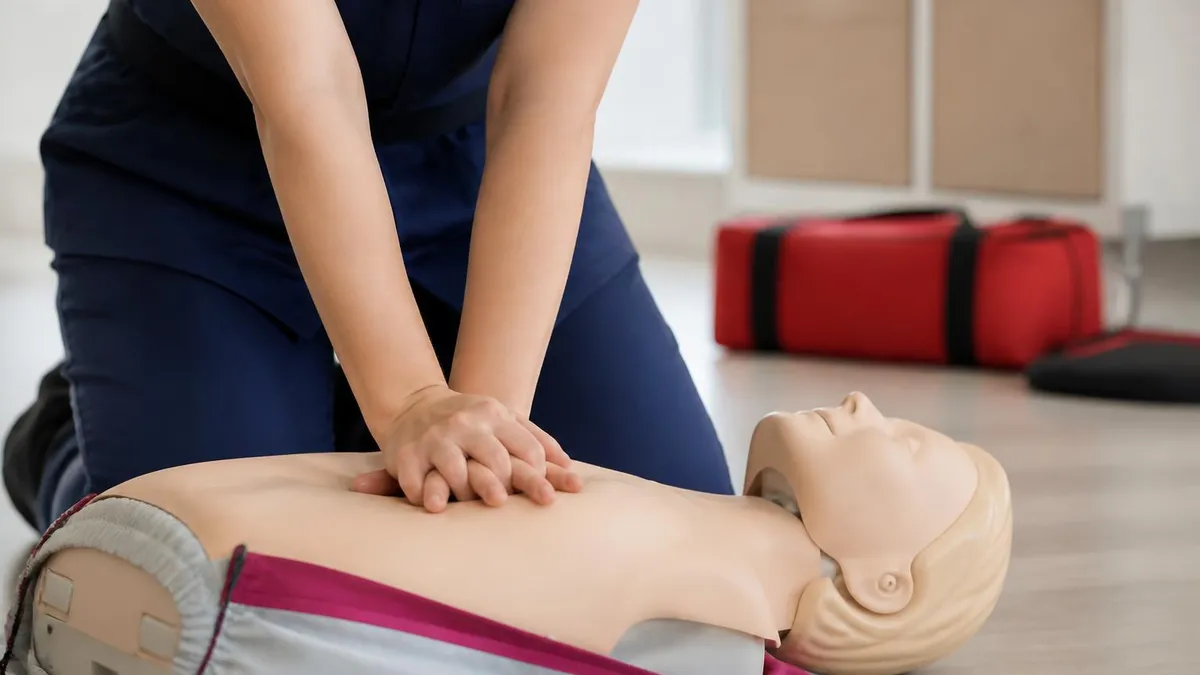
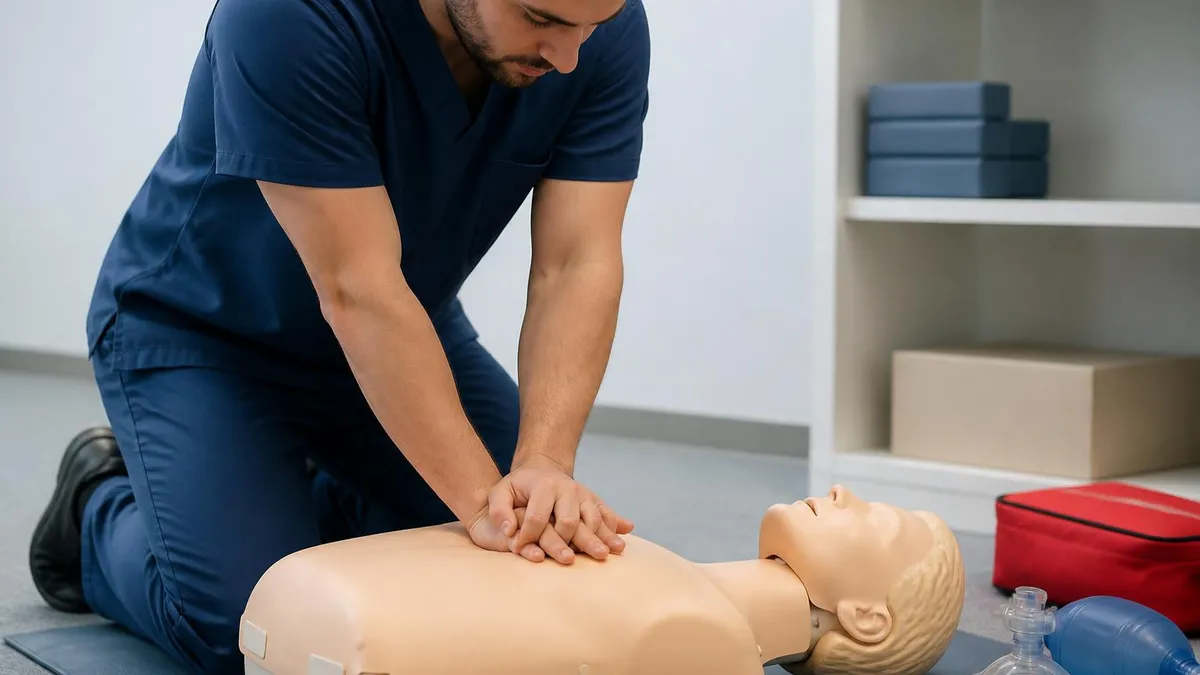
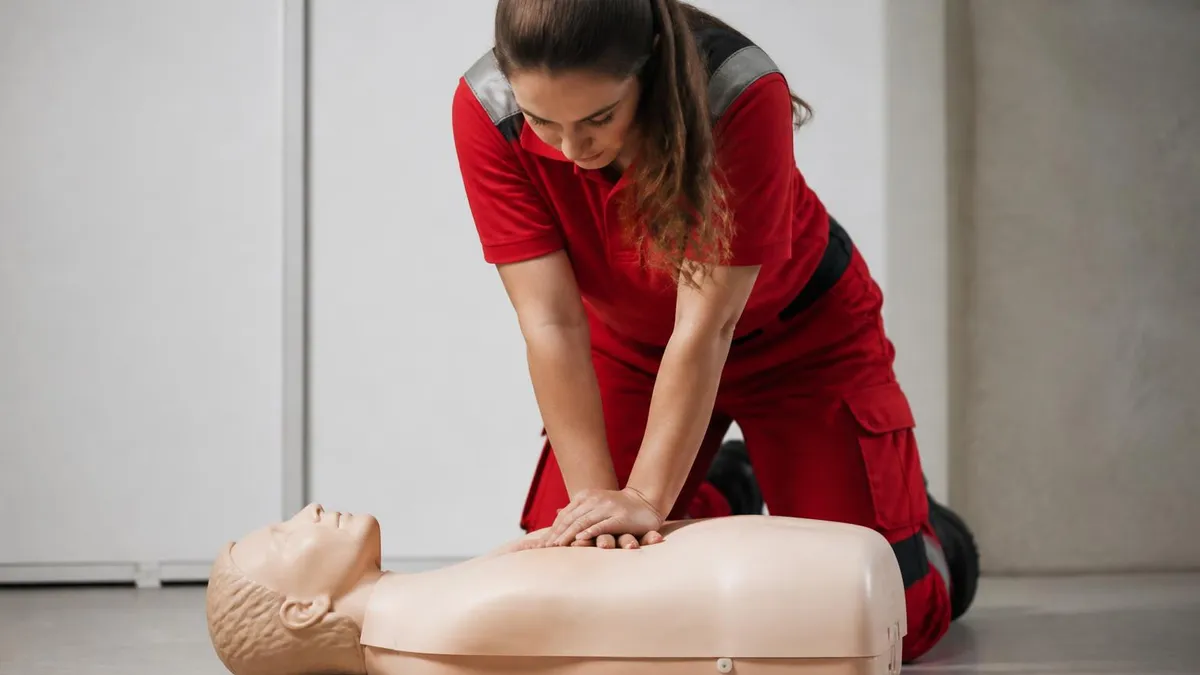
The largest portion of any BLS final exam — roughly 40 percent of all questions — focuses on the mechanics and science of high-quality CPR. The AHA's 2020 guidelines specify that adult chest compressions should be delivered at a rate of 100 to 120 per minute, to a depth of at least 2 inches but no more than 2.4 inches, with full chest recoil allowed between each compression. Exam questions frequently test whether candidates know the upper and lower limits of both rate and depth, because deviating outside these ranges significantly reduces perfusion pressure to the brain and heart.
Ventilation ratios are another heavily tested area. For a single rescuer performing CPR on an adult with no advanced airway in place, the correct ratio is 30 compressions to 2 breaths. Each breath should be delivered over approximately one second and should produce visible chest rise — but should not cause the chest to over-inflate, which increases the risk of regurgitation and aspiration.
When two rescuers are present and an advanced airway such as an endotracheal tube or supraglottic device has been inserted, compressions become continuous at 100 to 120 per minute while the second rescuer delivers one breath every six seconds, independent of the compression cycle.
AED questions make up about 24 percent of the written exam. Candidates must know the four universal steps: power on the device, attach electrode pads to bare dry skin in the correct positions, allow the AED to analyze the rhythm without anyone touching the patient, and deliver a shock if advised while ensuring all rescuers are clear.
The exam tests pad placement for both adults and children — for children between one and eight years old or under 55 pounds, pediatric pads or a pediatric attenuator should be used if available. If only adult pads are present, they can be used with one pad on the chest and one on the back to prevent overlap.
Airway management questions are particularly important for healthcare providers taking the basic life support for healthcare providers track. The head-tilt chin-lift maneuver is the preferred method for opening the airway in an unconscious patient with no suspected spinal injury.
When spinal trauma is possible, the jaw-thrust maneuver should be used to displace the mandible anteriorly without extending the neck. Bag-mask ventilation requires a proper mask seal — the EC-clamp technique uses the third, fourth, and fifth fingers to hold the mask in a C-shape on the face while the thumb and index finger form the clamp grip on the mask body.
Foreign-body airway obstruction (FBAO) is a frequently tested scenario because the correct interventions differ based on whether the victim is conscious or unconscious, adult or infant. For a conscious adult or child with a severe obstruction (unable to speak, cough effectively, or breathe), the correct intervention is abdominal thrusts — the Heimlich maneuver.
For infants under one year of age, the correct sequence alternates five back blows with five chest thrusts, and abdominal thrusts are never used in this age group because of the risk of organ damage. If a choking victim becomes unresponsive, the rescuer transitions immediately to CPR, checking the mouth for a visible foreign object before each ventilation attempt.
Neonatal and pediatric considerations make up a meaningful portion of special-situations questions. For infants, one-rescuer CPR uses the two-finger technique (middle and ring finger) on the lower half of the sternum, while two-rescuer infant CPR uses the two-thumb encircling technique, which generates higher coronary perfusion pressure and is preferred when a second rescuer is available. The compression-to-ventilation ratio for infants and children remains 30:2 for a single rescuer but changes to 15:2 when two healthcare providers are present — a detail that the exam tests repeatedly because it differs from the adult two-rescuer protocol.
Team dynamics and communication are tested in the final question cluster. The AHA emphasizes closed-loop communication, in which the team leader assigns a task, the team member repeats the task back to confirm understanding, and then reports completion. Effective BLS teams use a rotating compression schedule — typically switching every two minutes to prevent fatigue-related degradation in compression quality.
Exam questions may present a scenario and ask which action the team leader should take next, testing whether candidates understand both the clinical sequence and the leadership principles that govern a well-functioning resuscitation team. Review our basic life support exam a answers 25 questions resource for a curated breakdown of the most commonly missed items on the written portion.
AHA, Red Cross & Online BLS Exam Formats Compared
The basic life support exam American Heart Association format is the most widely recognized in the United States and is required by most hospital systems and accredited healthcare programs. The written component contains 25 multiple-choice questions and must be passed with a score of at least 84 percent. The exam is paired with a hands-on skills evaluation in which the instructor observes and scores the candidate's CPR technique using a feedback manikin that measures compression rate, depth, and recoil in real time.
The AHA BLS for Healthcare Providers course is the flagship offering and is designed specifically for nurses, physicians, paramedics, respiratory therapists, and other clinical staff. The HeartCode BLS option allows candidates to complete the cognitive portion online at their own pace before attending a brief in-person skills session with an authorized training center. This blended format has become extremely popular post-pandemic because it reduces classroom time while maintaining the required skills check-off. Certification cards are issued within 24 hours of successful completion.

BLS Online vs. In-Person Training: Pros and Cons
- +Flexible scheduling — complete cognitive content at your own pace from any device
- +Shorter in-person session required (skills check only, typically 2–3 hours)
- +Lower travel burden for candidates in rural or underserved areas
- +Immediate access to digital study materials and practice exams before class
- +Standardized feedback manikins provide objective data on compression quality
- +Certification card issued digitally and accessible same day in most cases
- −Fully online-only certifications are not accepted by most healthcare employers
- −Less peer-to-peer learning compared with traditional classroom environments
- −Technical issues (internet outages, browser compatibility) can disrupt online exam sessions
- −Skills session still requires travel to an authorized training center
- −Self-paced learners may procrastinate and rush the cognitive module close to the skills date
- −Some older healthcare providers find digital exam interfaces less intuitive than paper tests
BLS Exam Day Checklist: 10 Things to Do Before You Test
- ✓Review the AHA 2020 compression rate (100–120/min) and depth (2–2.4 inches) guidelines one final time.
- ✓Memorize the adult single-rescuer 30:2 ratio and the two-rescuer infant/child 15:2 ratio.
- ✓Practice the four universal AED steps out loud: power on, attach pads, analyze, shock if advised.
- ✓Confirm your training center location, parking, and arrival time at least 24 hours before class.
- ✓Bring a valid government-issued photo ID — most AHA and Red Cross sites require identity verification.
- ✓Wear comfortable, flexible clothing that allows you to kneel on the floor and perform chest compressions.
- ✓Eat a balanced meal before the exam — low blood sugar impairs concentration and reaction time.
- ✓Complete at least one full-length timed practice test the evening before to build exam-day confidence.
- ✓Review choking intervention protocols for adults, children, and infants since these are high-yield exam topics.
- ✓Get at least seven hours of sleep the night before — fatigue is the leading cause of avoidable test errors.

The Most Commonly Missed BLS Exam Question
More candidates miss the two-rescuer infant CPR ratio (15:2) than any other single item on the written exam — because it differs from every other two-rescuer scenario. When two healthcare providers perform CPR on an infant or child, the ratio changes from 30:2 to 15:2. This exception is non-negotiable and appears on virtually every version of the AHA and Red Cross written test. Write it down, say it aloud, and quiz yourself on it until it is automatic.
Scoring well on the BLS final exam requires more than memorizing a list of numbers — it requires understanding why each guideline exists so that you can reason through novel scenarios rather than relying purely on rote recall. Exam writers are skilled at constructing plausible distractors that are almost correct, and candidates who only memorized facts without understanding the underlying physiology are the ones who get tripped up by these near-miss answers.
For example, a question might ask what compression rate is appropriate for a 7-year-old child, and the distractors might include rates like 80, 90, 100, and 120 per minute — the correct rate is 100 to 120, identical to adults, but a candidate who only memorized pediatric differences without anchoring the adult baseline may second-guess themselves.
Scenario-based questions are the format most candidates find hardest because they require you to sequence multiple actions correctly within a realistic clinical vignette. A typical scenario question might describe a nurse who finds an unconscious patient in a hospital room and asks what the nurse's first action should be.
The correct answer is to check for responsiveness by tapping the shoulders and shouting, not to immediately start compressions or call for help. Understanding the Chain of Survival — recognize and activate, early CPR, rapid defibrillation, advanced resuscitation, post-cardiac arrest care — helps you sequence these actions correctly even in scenarios you have never seen before.
Time management during the written exam is a skill that requires deliberate practice. With 25 questions and a 45-minute window, you have an average of 1 minute and 48 seconds per question. Most questions should take you 30 to 60 seconds, leaving buffer time for the two or three questions that require careful reading or calculation.
If you reach a question you are unsure about, mark it and move on — returning with fresh eyes after answering easier questions often unlocks the correct answer. Never leave a question blank, since there is no penalty for guessing and a strategic guess gives you a one-in-four chance of earning the point.
Process of elimination is your most powerful tool on multiple-choice exams. Even when you are uncertain of the correct answer, you can almost always eliminate one or two distractors as clearly incorrect, improving your odds significantly.
On BLS exams, extreme answers are usually wrong — if one option says to deliver compressions at 80 per minute and another says 120, the truth is almost always in the middle range that matches published guidelines. Similarly, answers that contradict fundamental safety principles (such as touching the patient while the AED analyzes the rhythm) are virtually never correct regardless of how the question is framed.
Many candidates benefit from creating a one-page reference sheet during their study period that lists all the key numbers they need to know: compression rates, depths, ratios for every age group and rescuer configuration, ventilation rates, AED pad sizes by age, and minimum passing score. Writing these out by hand rather than typing them has been shown in learning science research to improve retention through the motor-cognitive encoding effect. On exam day, you cannot bring notes into the room, but the act of writing the sheet multiple times during your preparation will have already transferred the information into long-term memory.
Practice exams should be used strategically, not just as a final check the night before. The most effective approach is to take a diagnostic practice test at the very beginning of your study period to identify your weakest topic areas, then focus your reading and drilling on those areas first.
Return to practice exams after each study session to measure progress, and end your preparation with a full-length timed simulation that mirrors the real exam format as closely as possible. Research on test-enhanced learning consistently shows that students who practice retrieval of information outperform students who simply re-read course materials, even when total study time is equal.
Peer study groups can accelerate learning dramatically, especially for scenario-based questions. Talking through a scenario with a colleague forces you to articulate your reasoning, which exposes gaps in understanding that silent reading never reveals. If you do not have access to a study group, narrating your answers aloud while working through practice questions achieves a similar effect.
Explaining why an answer is correct — not just which letter to circle — is the cognitive activity that cements knowledge at the level required to perform reliably under exam pressure and, more importantly, in real emergencies where the stakes are far higher than a test score.
Most hospital systems and clinical facilities require an active, unexpired BLS credential on file at all times. If your card lapses — even by a single day — you may be required to complete the full initial course rather than the shorter renewal format, which takes longer and costs more. Set a calendar reminder 90 days before your expiration date to schedule your basic life support renewal class and avoid losing your clinical privileges unexpectedly.
Understanding BLS renewal requirements is essential for any healthcare professional who wants to maintain uninterrupted certification status. The standard BLS card issued by the AHA or Red Cross is valid for exactly two years from the date of successful course completion. Renewal must be completed before the expiration date printed on the card — not after. Some providers allow renewal to begin up to 90 days before expiration without resetting the two-year clock, meaning your new card will be backdated to the original expiration date and carry you forward another full two years from that point.
The basic life support renewal class is shorter than the initial course — typically two to three hours compared with four to eight hours for a first-time student. The renewal format assumes prior knowledge and focuses on refreshing skills, reviewing guideline updates, and demonstrating competency in the hands-on skills station.
The written exam component is the same 25 questions with the same 84 percent passing requirement. Candidates who have kept up with their clinical practice generally find the renewal straightforward, but those who have been in non-clinical roles should allow extra preparation time since perishable skills like bag-mask ventilation deteriorate without regular practice.
Guideline updates from the AHA are published every five years following a comprehensive review of the scientific literature by the International Liaison Committee on Resuscitation (ILCOR). The most recent major update was in 2020 and introduced several important changes: dispatcher-assisted CPR protocols were strengthened, the opioid-associated cardiac arrest algorithm was added, and updated guidance on systems of care was incorporated. Any candidate renewing after a guideline update cycle should specifically review the changed sections because exam questions are revised to reflect current science, and relying on memorized answers from a prior certification period can lead to errors.
For candidates who have let their certification lapse or who are entering a new clinical specialty, taking the full BLS for Healthcare Providers initial course is the appropriate path. The AHA offers this course in three formats: instructor-led (traditional classroom), blended learning (HeartCode online plus skills session), and a fully instructor-led classroom option with no online component. The Red Cross offers comparable formats under the Basic Life Support course name. Both organizations maintain searchable training center locators on their websites so you can find an authorized site near you.
Employer-sponsored training is the most common way healthcare providers access BLS education. Many hospitals maintain their own AHA-authorized training centers and offer courses at no cost to employees on a rolling schedule. If your employer does not sponsor training, the out-of-pocket cost typically ranges from thirty to seventy-five dollars for the course fee, with the exact price varying by training center, geographic market, and course format. Online blended learning options are often on the lower end of this range, while classroom-only formats at private training centers tend to cost more.
International healthcare providers working in the United States should be aware that BLS certifications earned through foreign equivalency programs may not be recognized by U.S. hospitals without additional verification. The AHA and Red Cross both have international affiliates, and certifications earned through those affiliates are generally accepted, but it is always safest to confirm with your employer's credentialing department before relying on a non-U.S. card. If there is any doubt, enrolling in a U.S.-based course through an accredited training center is the cleanest solution and eliminates any credentialing ambiguity.
One often overlooked aspect of BLS recertification is the opportunity it provides to update your skills with the latest evidence-based techniques. The field of resuscitation science is evolving rapidly, with new data emerging on topics like the optimal CPR fraction (percentage of resuscitation time spent performing compressions), the role of vasopressors in cardiac arrest, and post-resuscitation care bundles. Even experienced providers who feel comfortable with basic protocols benefit from the renewal class as a structured opportunity to engage with current research and reinforce skills that may have drifted from optimal technique over two years of clinical practice.
On the day of your BLS skills evaluation, the instructor will assess your performance using a standardized checklist that mirrors the written exam content but in a hands-on format. The skills station typically includes a one-rescuer adult CPR and AED scenario, a two-rescuer adult CPR scenario, and either an infant or child CPR scenario depending on your course track.
Each scenario is observed and scored in real time, and the instructor provides immediate corrective feedback if your technique deviates from guideline parameters. This feedback is invaluable — most candidates who fail the skills evaluation do so because of a single correctable habit, such as not allowing full chest recoil or tilting the head insufficiently during ventilation attempts.
The feedback manikin technology used in AHA-authorized training centers provides a visual and auditory prompt every time your compression rate, depth, or recoil falls outside the acceptable range. Training with this technology during your course is not optional — it is one of the most powerful learning tools available because it gives you objective, real-time data about your performance rather than subjective instructor impressions.
If your training center offers open skills lab hours where you can practice on the manikin outside of scheduled class time, take advantage of this opportunity, especially if you know that hands-on skills are your weaker area.
Compression fatigue is a physiological reality that the exam tests indirectly through questions about team rotation and rescuer switching protocols. High-quality compressions — maintaining adequate rate, depth, and recoil — require significant physical effort and degrade measurably after approximately two minutes of continuous performance.
This is why the AHA recommends rotating the compressor role every two minutes during a real resuscitation, synchronized with the AED's rhythm analysis pause. On the written exam, questions that present a scenario where one rescuer has been compressing for an extended period and ask what the team leader should do are testing your knowledge of this fatigue principle and the importance of proactive rotation before quality degrades.
Medication administration is explicitly outside the scope of BLS — the written exam will never ask you to calculate epinephrine doses or manage a vasopressor infusion, as those topics belong to the ACLS curriculum. However, the exam does test BLS-level pharmacological awareness in two specific areas: the use of naloxone for suspected opioid-associated cardiac arrest and the use of an epinephrine auto-injector (EpiPen) for anaphylaxis.
Both of these interventions are within the scope of BLS-trained responders in many jurisdictions, and the 2020 AHA guidelines added explicit guidance on integrating naloxone into the BLS response for opioid emergencies, reflecting the ongoing public health significance of the opioid crisis.
Documentation and handoff communication are professional skills that the BLS exam touches on through questions about when to stop resuscitation and how to communicate with incoming advanced life support teams. BLS-trained responders should be able to provide a concise, structured handoff using the SBAR format (Situation, Background, Assessment, Recommendation) or equivalent, covering the time of collapse, bystander interventions performed, number of shocks delivered by the AED, and any response to resuscitation observed. Clear communication at the ALS handoff has been shown to reduce the risk of critical information being lost during the transition of care.
Post-cardiac arrest care is not the primary focus of BLS training, but understanding the immediate post-resuscitation period helps candidates answer scenario questions about what happens after return of spontaneous circulation (ROSC) is achieved. When a pulse is detected, BLS responders should continue to monitor the patient closely, be prepared to resume CPR if the pulse is lost, and support ventilation as needed while waiting for the advanced care team to arrive.
The AED should remain connected and powered on because post-ROSC arrhythmias are common and the device may need to re-analyze and deliver additional shocks. Knowing what to do after a successful resuscitation is as important as knowing what to do during one.
Finally, mental preparation is an underappreciated but critical dimension of BLS exam success. Exam anxiety is real and can impair performance even in candidates who are thoroughly prepared on the content. Techniques such as controlled breathing (a slow inhale for four counts, hold for four counts, exhale for four counts) have been shown to activate the parasympathetic nervous system and reduce cortisol levels measurably within two to three minutes.
Practice this technique during your study sessions so it becomes an automatic tool you can deploy in the testing room. Confidence built on genuine competence — earned through consistent, deliberate preparation — is the most reliable antidote to exam anxiety and the surest path to passing your BLS final exam on the first attempt.
Sample BLS - Basic Life Support Practice Questions
Try these questions from our free BLS - Basic Life Support practice tests. The correct answer and an explanation follow each question.
Which of the following is a sign that CPR is effective?
- A. The victim begins moving their limbs voluntarily
- B. Visible chest rise with each rescue breath and palpable pulse with compressions
- C. The victim's skin color immediately returns to normal
- D. The AED advises 'no shock needed'
Answer: B. Visible chest rise with each rescue breath and palpable pulse with compressions
Signs of effective CPR include visible chest rise with each ventilation and a palpable carotid or femoral pulse felt during compressions.
When inserting an oropharyngeal airway in an adult, what is the correct insertion technique?
- A. Insert with the curve pointing down toward the tongue
- B. Insert upside down (curve toward the palate) and rotate 180° as it passes the tongue
- C. Insert sideways and then rotate 90°
- D. Insert straight back, following the curve of the tongue
Answer: B. Insert upside down (curve toward the palate) and rotate 180° as it passes the tongue
In adults, the OPA is inserted with the tip pointing toward the roof of the mouth, then rotated 180° so the curve follows the tongue as it passes the soft palate.
When performing CPR on a morbidly obese patient, which modification may be required?
- A. Reduce compression rate to 60 per minute to conserve energy
- B. Apply greater force to achieve adequate compression depth through the increased chest wall mass
- C. Skip ventilations entirely to maintain compression rate
- D. Position the patient prone for more effective compressions
Answer: B. Apply greater force to achieve adequate compression depth through the increased chest wall mass
Morbidly obese patients have increased chest wall mass, requiring greater force to achieve the 2–2.4 inch compression depth needed for effective CPR.
A rescuer arrives at a scene and finds an adult who is unresponsive. The rescuer suspects an opioid overdose. What action should be taken if naloxone is available?
- A. Administer naloxone before beginning CPR
- B. Begin CPR first, then administer naloxone if available without interrupting CPR significantly
- C. Withhold naloxone and perform CPR only
- D. Administer naloxone and wait 5 minutes before starting CPR
Answer: B. Begin CPR first, then administer naloxone if available without interrupting CPR significantly
CPR should be started immediately; naloxone can be administered by a second rescuer without significantly interrupting CPR.
BLS Questions and Answers

About the Author

Registered Nurse & Healthcare Educator
Johns Hopkins University School of NursingDr. Sarah Mitchell is a board-certified registered nurse with over 15 years of clinical and academic experience. She completed her PhD in Nursing Science at Johns Hopkins University and has taught NCLEX preparation and clinical skills courses for nursing students across the United States. Her research focuses on evidence-based exam preparation strategies for healthcare certification candidates.
Join the Discussion
Connect with other students preparing for this exam. Share tips, ask questions, and get advice from people who have been there.
View discussion (8 replies)