
BLS Classes: Course Options, Costs, and What to Expect 2026 September
📚 BLS classes explained: course formats, costs, who needs certification, and how to register. Compare in-person, blended, and online options.
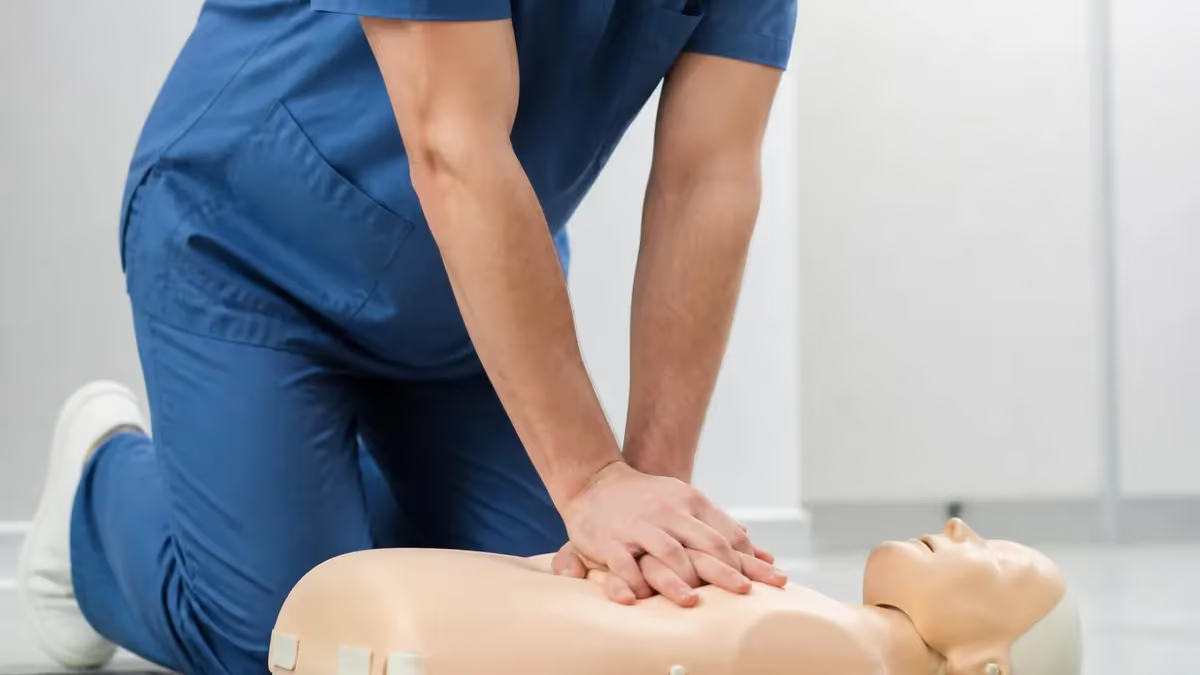
BLS classes are short training courses that teach you how to recognize cardiac arrest, run effective chest compressions, manage choking emergencies, and use an automated external defibrillator. Healthcare workers know the routine.
Nursing students, EMT recruits, dental hygiene candidates, lifeguards, and anyone applying for a clinical job will run into the same requirement at some point: produce a valid BLS card before the start date or lose the offer.
The American Heart Association sets the most widely recognized standard, though the American Red Cross runs an equivalent program that satisfies most employers. Your hospital, school, or licensing board will tell you which provider to use. If they do not specify, AHA is the safer default. Almost every health system in the United States accepts AHA-branded cards without question.
Here is the part that surprises first-timers. A BLS class is not a casual safety briefing. You will work on a manikin, perform two-rescuer CPR with a partner, switch positions every two minutes, and demonstrate a bag-valve-mask seal that actually moves the chest.
The skills test is hands-on. You cannot fake it with multiple-choice answers. Instructors watch for compression depth, rate, recoil, and ventilation timing, and they will fail you if any of those drift outside the AHA range.
This guide walks through everything: who needs the card, which class format fits your schedule, what the cost looks like in 2026, how the testing works, and how to keep the certification active once you have it.

BLS Class Snapshot
Most students think BLS is interchangeable with consumer CPR, and it is not. Heartsaver CPR AED, the basic community-level class, gets you a card that says you can help a relative or coworker.
BLS is the healthcare provider version. It covers two-rescuer technique, infant CPR with two-thumb hand placement, advanced airway considerations, and team dynamics that you will use during a code in a hospital setting.
If a clinical supervisor told you to take a BLS class, do not show up with a Heartsaver card. They are not the same credential and will not be accepted.
Who actually needs BLS? Nurses, paramedics, EMTs, dental hygienists, physical therapists, respiratory therapists, medical assistants in many states, surgical techs, phlebotomists at certain employers, lifeguards, athletic trainers, and every clinical student rotating through a hospital. Even if your specific job title is not on that list, your employer may still require it.
There is also a tier of people who are not required to take BLS but probably should. Parents of young children. Teachers in K-12 settings. Coaches. Camp counselors. Anyone who works around people in environments where help is not immediately available. The course is the same. The card looks the same.
You can take BLS at any age, though most providers ask for at least 12 to 14 years old. There is no prerequisite class — BLS is the entry-level healthcare provider course. Reading material in English is standard, but Spanish-language classes exist in most cities. You do not need a medical background to enroll, but the pace assumes you can keep up with clinical terminology.
BLS classes come in three formats, and choosing the right one matters more than people think. The wrong format wastes a Saturday morning or, worse, leaves you unable to test in time for a job start date.
The classroom-only course is the most traditional option. You arrive, sit through about an hour of instructor-led discussion and video segments, then spend the rest of the session on a manikin. Total time is roughly four hours including the skills test at the end.
You leave with a card the same day in most cases. This format works well if you learn best by doing and you have a clear chunk of free time. It is the only format some employers accept without question.
The blended-learning class splits the experience in two. You complete a self-paced online module at home, usually one to two hours of video and short quizzes, then attend a much shorter in-person skills session, often only 60 to 90 minutes.
This format saves time if your schedule is tight, and it works especially well for people who prefer to absorb material at their own pace. Both AHA HeartCode BLS and the Red Cross blended version meet the same standards as classroom-only courses.
The fully online class is the trap. You can complete the modules and the written exam entirely from home, but you cannot earn a valid BLS card without an in-person or virtual skills check-off. Several non-AHA providers sell what they call online BLS certification, and many employers will not accept those cards.
Three BLS Class Formats Compared
Single 4-hour in-person session, instructor-led video and hands-on manikin work, skills test at the end of the day. Best for hands-on learners or anyone whose employer requires traditional classroom delivery.
1-2 hours of online modules at home plus a 60-90 minute in-person skills check. AHA HeartCode BLS is the most common version. Best for busy professionals who want flexibility but still need a valid card.
Self-paced modules with no live skills test. Cards from these providers are often rejected by hospital HR. Only acceptable if the program partners with a verified in-person skills evaluator.
Cost is the next question, and the answer depends on where you live and who is running the class. In most US metro areas, a standard AHA BLS provider class runs $60 to $110 for initial certification.
Renewal classes are usually $50 to $90 because the skills review is shorter. Red Cross pricing falls in roughly the same band, give or take ten dollars. Hospital-run classes for incoming employees are sometimes free, but you have to actually be employed there to take advantage of that.
Group rates exist and can save serious money. If you are part of a nursing cohort, dental school class, or fire department, ask whether your program has negotiated a discount. Twenty students booking together can drop the per-person cost to $40 or less.
Some training centers also offer reduced rates to students who can show a current ID and class enrollment. It never hurts to ask at registration.
Watch out for hidden fees. The course price usually includes the materials and the digital card. Some providers tack on a separate fee for a physical wallet card, around $5 to $10. Replacement cards, if you lose yours, cost about the same.
The AHA eCard system is the new standard and most employers accept the digital version, so you may not need a physical card at all. Just save the PDF or screenshot the QR verification link before you leave the training center.
What Each Class Section Covers
You will practice high-quality chest compressions at a rate of 100 to 120 per minute, depth of at least 2 inches but no more than 2.4 inches, with full chest recoil between compressions. The 30:2 ratio applies during single-rescuer CPR. With a second rescuer and an advanced airway in place, the team switches to continuous compressions with one breath every six seconds.
Now the testing. The written exam is 25 questions on AHA BLS, multiple choice, taken either online before the in-person session or at the end of the classroom course. You need 84 percent to pass, which works out to about 21 of 25 correct.
Red Cross uses a similar format and threshold. Most candidates pass the written portion without much trouble if they actually watched the video and skimmed the provider manual the night before.
The skills test is where people get nervous, and they should not. Instructors are not trying to fail you. They run through scripted scenarios: a single rescuer finds an unresponsive adult, then a two-rescuer team manages a code, then an infant choking case, and finally an AED arrival with an interruption analysis.
The instructor checks specific items on a printed sheet. Compression rate, depth, recoil, hand placement, breath delivery, and so on. If you miss something, they coach you, you try again, and they sign off if the second attempt looks clean.
Where do students actually fail? Three places. They compress too fast and lose depth. They forget to allow full chest recoil because they lean on the manikin. And they fumble the rescue breath because they do not establish a proper mask seal.
Those three problems account for the majority of remediation. If you spend ten extra minutes on the practice manikin before the test, you will solve all three.
A failed BLS skills test is not the end. Most instructors will remediate on the spot, walk you through the missed steps, and let you retest the same day. If you still cannot pass, you typically have 30 days to schedule a free retest. Bring this up at registration so you understand the specific training center policy before you pay.
Renewal is simpler than the initial class. Your BLS card is valid for two years from the date on the card, not from the date you took the class. Mark it on your calendar 90 days before expiration.
Most employers will not let you work clinical shifts with an expired card, even by one day, so do not cut it close.
Renewal classes are shorter, usually two to three hours, because you only need a quick skills review and a written exam. The blended renewal is especially popular because the online module takes about 90 minutes and the in-person skills check runs 30 to 45 minutes.
Same card, half the time commitment. If your renewal is coming up and your schedule is tight, the blended format is almost always the right choice.
Some employers run their own renewal sessions in-house, especially large hospital systems. If yours does, take advantage. The in-house option is usually free, the instructors know your unit, and the scheduling is built around shift patterns.
The downside is that in-house renewals sometimes lack the same depth of practice time as a commercial training center, so if you feel rusty on the skills, paying for an external class is not a bad investment. Confidence on a manikin translates directly to confidence at a real code.
If your card lapses entirely, you cannot just take a renewal class. You have to retake the full initial certification, which means a longer course and the higher initial-course fee. The grace period after expiration is zero days in most healthcare systems.

Before BLS Class Checklist
- ✓Confirm your employer or school accepts the provider you booked (AHA, Red Cross, ASHI)
- ✓Complete the online module at least 24 hours before the in-person session if you booked blended
- ✓Print the eligibility confirmation email or have it ready on your phone at check-in
- ✓Wear loose clothing that allows kneeling and bending - you will be on the floor with a manikin
- ✓Bring a photo ID, the instructor verifies identity before issuing a card
- ✓Eat a meal before class, four hours on the floor without snacks gets tiring
- ✓Review compression rate, depth, and recoil ranges the night before to reduce skills-test nerves
- ✓Save the AHA eCard email immediately when it arrives, that link is your proof of certification
Here is something most students never hear in class. Your BLS card is verifiable online by anyone with the eCard ID. Employers do check.
The AHA verification page lets a hiring manager confirm your card is real, who issued it, and when it expires. If you ever buy a card from a sketchy website that promises a printable PDF and nothing else, that verification page will turn up empty and your offer will be rescinded on the spot.
The only safe path is to take the class with a recognized provider listed in the AHA training center directory or through the Red Cross. The pros and cons below summarize how most candidates feel after their first BLS class.
BLS Classes Pros and Cons
- +Short time commitment, usually one half-day for initial certification
- +Direct, hands-on training that you will actually use in clinical settings
- +Instructors are experienced and patient, remediation is built into the test
- +Cards verify online, employers trust the AHA and Red Cross brands
- +Renewal is significantly faster than the initial course
- −Cost can sting if you pay out of pocket, especially in big metro areas
- −Some training centers run rushed classes with too many students per instructor
- −Fully online programs from unaccredited providers are sometimes rejected by employers
- −Skills test can feel high-pressure even though instructors are flexible
- −Schedules fill up quickly during nursing student cycle months, book early
One last practical note about choosing a training center. Look at reviews specifically about pass rates and class size. A center that crams 18 students into a session with one instructor and three manikins is going to feel chaotic, and the skills test at the end will feel rushed.
A center with eight students and two instructors gives everyone time to actually practice. The cost difference between a good and a mediocre training center is often only $10 to $20, and the time you save in remediation more than makes up for it.
If you are taking the class through your employer or school, you usually do not get to pick the center. If you are paying out of pocket, take fifteen minutes to read reviews before you book. Look for comments about instructor patience, manikin condition, and whether they let students retest the same day if needed.
A common question from first-time students is whether you can take a BLS class while pregnant or with a back injury. The answer is usually yes, but talk to the instructor in advance.
Most centers will modify the skills test so that you do not have to kneel on a hard floor for extended periods. Some have raised platforms or chairs that let you complete compressions in a way that meets the AHA criteria without putting strain on your back. It is a reasonable accommodation and trainers see it all the time.
BLS Questions and Answers
BLS classes are short, focused, and useful in ways that most certifications are not. You will leave knowing how to save a life. The hands-on skills you practice on a manikin transfer directly to actual cardiac arrest events.
The structure of the course — lecture, video, hands-on, then test — is built around evidence about what actually helps adults learn emergency skills under pressure. That is why the AHA and Red Cross have stuck with the format for decades.
Book the class as early as you can if you have a job start date or clinical rotation coming up. Training centers fill up fast in August and September when the nursing-student cycle restarts, and in January when new hires start at hospitals.
If you can choose between two centers, pick the one with smaller class sizes even if the price is a few dollars higher. The instructor time per student matters more than any other factor.
Whatever you do, take BLS at a recognized AHA or Red Cross training center, not from a website that promises a card in an hour with no in-person component. The card itself is the credential, but the actual skills are what your patients and coworkers will count on when the moment comes.
Another thing worth flagging is the eCard email. After class, the AHA sends a confirmation message that includes your eCard ID and a link. That email is your card. Save it, screenshot it, forward it to a personal account, and store the PDF somewhere safe.
Hospital onboarding will ask for the eCard ID specifically, not just a picture of a card. If you lose the email, the training center can reissue it, but that takes a few days and may cost a small fee. Avoid the hassle by saving it twice the day you receive it.
Some programs also bundle BLS with ACLS or PALS for healthcare workers who need multiple certifications. If your job description requires both BLS and ACLS, look for a combined renewal weekend where you knock out both cards in a single Saturday and Sunday. The discount can be substantial compared to taking them separately.
One final tip for nursing and EMT students. Your school may include a BLS class in your tuition, or it may charge separately. Check before you pay for an outside class. A surprising number of students sign up at a commercial training center only to find out two weeks later that their program already covers the same cost in the lab fees. A quick email to your program coordinator can save you the entire registration fee, and your school usually has slots available at convenient times during the semester.
Show up, work the manikin, get your card, and keep the renewal date on your calendar. That is the whole job.
About the Author

Registered Nurse & Healthcare Educator
Johns Hopkins University School of NursingDr. Sarah Mitchell is a board-certified registered nurse with over 15 years of clinical and academic experience. She completed her PhD in Nursing Science at Johns Hopkins University and has taught NCLEX preparation and clinical skills courses for nursing students across the United States. Her research focuses on evidence-based exam preparation strategies for healthcare certification candidates.
Join the Discussion
Connect with other students preparing for this exam. Share tips, ask questions, and get advice from people who have been there.
View discussion (8 replies)